



Samsung to demo three cinematic Gear VR experiences at Sundance Film Festival

To paraphrase the folks at Oculus, virtual reality could end up having an equally, if not bigger impact on films than it will on games. Samsung also seems to share similar visions for VR, as it has announced three new virtual reality experiences scheduled for this year’s Sundance Film Festival.
Samsung’s new cinematic VR experiences have been developed by Felix & Paul Studios and were created using live action 3D 360 degree recording technology. Each of these short films will be shown off through Samsung’s Gear VR headset at the festival’s New Frontier exhibition from January 23rd to February 1st.

Here’s a brief summary about each of the short films, taken from the press release:
- The World Première of Herders – Mongolian pastoral herders are one of the world’s last remaining nomadic cultures. For millennia they have lived on the steppes, grazing their livestock on the grasslands. Through a series of virtual reality experiences, the viewer is invited into the reality of a nomadic family of yak herders. (7 minutes)
- Wild – The Experience – Fox Searchlight and the Fox Innovation Lab present this virtual reality experience drawing from the film Wild. Viewers enter a fully immersive media environment to join an intimate moment on the Pacific Crest Trail between a woman, Cheryl Strayed (Reese Witherspoon), and her mother, Bobbi (Laura Dern), a vision from the afterlife. (3 minutes)
- Strangers with Patrick Watson – Viewers are invited to spend an intimate moment with the musician in his Montréal studio on a winter’s day. (5 minutes)
Virtual reality may still in its infancy as an artistic medium, but there is plenty of potential to create new and interesting interactive experiences, through both games and film. We could certainly see more of this type of experience in the future, as VR continues to grow.
As part of this year’s exhibition, taking place from January 23 – February 1, attendees will find themselves immersed in the three cinematic virtual reality experiences created by Felix & Paul Studios, using Samsung’s Gear VR technology:
· The World Première of Herders – Mongolian pastoral herders are one of the world’s last remaining nomadic cultures. For millennia they have lived on the steppes, grazing their livestock on the grasslands. Through a series of virtual reality experiences, the viewer is invited into the reality of a nomadic family of yak herders. (7 minutes)
· Wild – The Experience – Fox Searchlight and the Fox Innovation Lab present this virtual reality experience drawing from the film Wild. Viewers enter a fully immersive media environment to join an intimate moment on the Pacific Crest Trail between a woman, Cheryl Strayed (Reese Witherspoon), and her mother, Bobbi (Laura Dern), a vision from the afterlife. (3 minutes)
· Strangers with Patrick Watson – Viewers are invited to spend an intimate moment with the musician in his Montréal studio on a winter’s day. (5 minutes)
Felix & Paul Studios is currently focused on the development of original narrative and non-narrative virtual reality experiences in collaboration with a range of leaders in the entertainment and virtual reality industries. The program will be available to experience at New Frontier, located on the top two floors of the historic Claim Jumper, at 573 Main Street in Park City. Admission to all New Frontier installations is free.
AnTuTu reports most popular smartphones of 2014
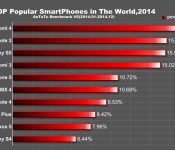
AnTuTu, one of the most trusted and stable benchmarking app recently released a report on the top most popular smartphones of 2014. What can be a better way to bid adieu to 2014 than knowing how smartphones performed against each other? We got to see some new names in this year and though being new, they too didn’t fail to amaze.

So, we will kick off with how smartphones are ranked globally first. Xiaomi, currently in the lead, snatched the global market share by 16.90% with its Mi4. Last to last year that is in 2013, Xiaomi was in second place and so, indeed it has progressed since then. Samsung Galaxy Note 3 and Galaxy S5 being the second and third in the list also got a market share of 15.69% and 15.55% respectively. Not bad Samsung. Some notable runner ups were the Asus Zenfone 5, Meizu MX4 and OnePlus One.

Comparing 2013 with 2014, we see that only Samsung Galaxy Note 3 and Google Nexus 5 are the ones which really progressed. On taking a deeper look at the smartphone rankings country-wise, it was the newest OnePlus One that has managed to capture global interest more than Xiaomi. Xiaomi’s large global market share is mostly because of its popularity in Mainland China. It also stands to prove that China is growing to become a big smartphone market.
Keeping these statistics in mind, I noticed a new trend. That is the rise of Chinese OEMs. Definitely, if we group all the Chinese firms together, they will form a large market share. Also, Samsung held the largest global market share with four of its devices in the top 10. And where the hell are you? Sony? LG? HTC? I don’t see them anywhere on the global list. They sure need to pump out some serious efforts or else this year will also go in vain.
Source: AnTuTu
FEATURED POSTS


The post AnTuTu reports most popular smartphones of 2014 appeared first on AndroidGuys.
Samsung + Blackberry: pros and cons

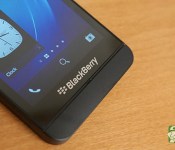
The persistent rumors about the possibility of Samsung buying BlackBerry have become a permanent fixture in the tech press over the last couple of years. Long before BlackBerry officially went up for sale in 2013, there was speculation about possible suitors. It’s only natural that talk turned to the largest, cash-rich, smartphone manufacturer on the scene in Samsung. But companies like Microsoft, Dell, and IBM were also mentioned.
As it turned out no-one was interested. There was to be no tech giant in white armor to ride to the rescue. In September 2013, BlackBerry announced losses around $1 billion and plans to cut its workforce by 40 percent. At this low point, shareholder Fairfax, with 10 percent of the company, announced plans to acquire the rest for $4.7 billion. The deal later fell through when Fairfax couldn’t raise the cash.
Is Samsung interested?
Back in the summer of 2012 Samsung denied it was interested in acquiring BlackBerry (still RIM at the time) or licensing its new BlackBerry 10 platform. What has changed since then?
If you believe Samsung’s mobile CEO, J.K. Shin, the company still isn’t interested. He was quoted by the Wall Street Journal on Monday.
“We want to work with BlackBerry and develop this partnership, not acquire the company.”
It’s worth mentioning that BlackBerry’s share price soars on the back of rumors like this, so even if Samsung was interested it wouldn’t want that to be public knowledge. Though you do have to wonder about the timing. Samsung could have swooped just over a year ago and acquired the company far more cheaply than the $7 to $8 billion price that’s being touted now.
To complicate things, Canada’s Financial Post reported this week that, despite the public rebuttals of both Samsung and BlackBerry, the Korean company is still very much interested in acquiring BB.

Samsung’s Knox secure environment is no match for BlackBerry’s products
What’s in it for Samsung?
There are two credible reasons that Samsung might want to acquire or partner more closely with BlackBerry.
- Patents – BlackBerry has 44,000 patents covering things like wireless communications and encryption technologies, which could obviously be useful for Samsung.
- Enterprise – The foundations of the BlackBerry brand are built on enterprise customers. It’s a market we know that Samsung is interested in.
If the patent portfolio was enough motivation on its own, then you get the feeling Samsung would have looked to do the deal when the patent war was still at its height. It feels as though the litigation is slowing down, but there’s still little doubt that BlackBerry’s patents would be valuable to Samsung.
Samsung’s attempts to break into the enterprise with Knox have not been wildly successful. The perception of Android and Samsung devices in terms of security is not especially good. Samsung’s biggest competitor, Apple, has been making real inroads into the enterprise market and threatening to steal away BlackBerry’s share. Samsung could definitely use some of BlackBerry’s know-how and reputation in the enterprise, and it has a vested interest in halting Apple’s progress.
What about BlackBerry?
The prospect is much more straightforward for BlackBerry. Shareholders might be glad to take above market price right now if they don’t have faith in a comeback. Even if BlackBerry can turn things around, it would seem like a smart idea to align itself with the biggest smartphone player around. If software and services is truly the future of BlackBerry then a close partnership with Samsung could really help it back into the game.
In fact this is already happening. A partnership was announced in November. It brings BlackBerry’s BES12 enterprise mobility management software and Samsung’s Knox for Android together. There’s no way BlackBerry is going to be able to build back a significant share of the market with hardware, so it has to get its software onto more devices.
BlackBerry CEO, John Chen, said of the deal “We’re not about phones this time – we’re about software.”

CEO John Chen managed to stabilize BlackBerry, but is he considering an exit?
Why buy the cow?
One other reason we’ve seen offered that Samsung might want BlackBerry is the software. It would be fair to say that software development is seen as a weak spot for Samsung and a strength for BlackBerry. If Samsung wanted help developing a new operating system or building on Tizen it could do worse than look to BlackBerry. There’s also the potential of QNX for embedded systems as the Internet of Things gathers pace.
Ultimately, the idea that Samsung would sink a large sum of cash into acquiring BlackBerry right now seems fanciful. Samsung can get all the potential benefits by working on some kind of partnership deal instead. With all the talk about declining profits for Samsung, the last thing it needs is to acquire a company that’s still losing money.
For BlackBerry’s part an acquisition also seems unlikely. It looks as though the company may be over the worst. The restructuring could bear fruit given time. Shareholders may be prepared to give Chen a fair crack of the whip. The company has enough going for it that we wouldn’t bet against a healthy software-driven revenue within a couple of years.
Mutually beneficial
What we can agree on is that a partnership would be mutually beneficial, and that’s no doubt why it’s already happening. Samsung gets security software and a touch of BlackBerry’s enterprise reputation. BlackBerry gets its software onto loads of Android devices and provides support for the largest smartphone manufacturer in the world. It’s an obvious win-win.
Could the partnership go further? BlackBerry services underpinning Samsung’s hardware. A merging of software that would see BlackBerry apps pre-installed on Samsung devices? A joint smartphone project for a Samsung-built BlackBerry phone? Maybe, maybe not. Let’s give it some time. The two rivals are still getting used to working together.

BBM remains one of BlackBerry’s best assets
Turning things around
In the middle of 2008 RIM was worth $77 billion based on the share price. It continued to claim a dominant market share into 2010. A lethargic reaction to its changing fortunes was what delivered the killer blow, but the decline has been slow and it hasn’t proven fatal. The hardware heights are gone, but BlackBerry could recover in a new form.
Samsung is fresh onto the downward slide from its peak. Talk of the company being in trouble still feels overblown right now, but Samsung has a tough year ahead. There are plenty of reasons that a similarly sharp decline is unlikely for the South Korean conglomerate, not least diversification, but there’s a lesson for everyone in what happened to BlackBerry.
It would be interesting if a partnership between the two, once fierce rivals, is what turns both their fortunes around.

Samsung working on a wearable sensor for detecting strokes early
 Samsung’s Creativity Lab has been working on a new wearable health sensor for the past two years. This sensor, called the Early Detection Sensor and Algorithm Package (EDSAP), monitors brain waves and give the wearer information to track potential strokes.
EDSAP uses multiple sensors and a complex algorithm that keeps up with brainwave activity. The user can then use a smartphone or tablet to check up on the brainwave activity and predict the probability of a stroke. The sensor won’t do much for treating a stroke, but if the brain waves start to point towards a stroke, you’d know to seek out medical attention before things got serious.
While the sensor can predict the probability of someone having a stroke, it can also keep up with several other neurological health stats, including sleep patterns and stress and anxiety levels.
Currently, the EDSAP is only in the prototype phase, so it won’t see a major hardware release anytime soon. But still, it offers a great proof of concept that could very well make its way into other technology in the medical industry.
source: Samsung Tomorrow
Come comment on this article: Samsung working on a wearable sensor for detecting strokes early
Benchmark reveals new Galaxy Tab 4 8.0 variant with a 64-bit chip

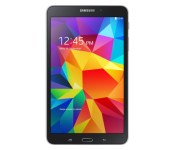
A new benchmark listing has revealed Samsung’s intentions to launch a new version of the Galaxy Tab 4 8.0 sporting a 64-bit processor. The revelation was made by GFXBench, which has spilled the beans on several devices in the past.
This tablet sporting the model number SM-T333 is shown to be packing Qualcomm’s budget ranged Snapdragon 410 SoC, which is used on multiple midrange smartphones that have launched recently.
This chip uses the 64-bit CPU architecture which makes it fully compatible with Android 5.0, although having a 64-bit processor isn’t a prerequisite for running Android Lollipop.

Barring this, the tablet is shown to be packing similar hardware as the current Galaxy Tab 4 8.0 variant which includes the 8 inch 1280 x 800 resolution display, 16GB of internal storage, 1.5GB of RAM, Android 4.4.4 KitKat and a 3.15-megapixel rear camera.
Would you be interested in this new variant of the Galaxy Tab 4 8.0? Let us know below.
Source: GFXBench
Via: Sam Mobile
Come comment on this article: Benchmark reveals new Galaxy Tab 4 8.0 variant with a 64-bit chip
Benchmark reveals new Galaxy Tab 4 8.0 variant with a 64-bit chip
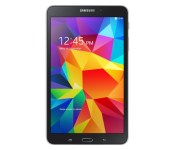
A new benchmark listing has revealed Samsung’s intentions to launch a new version of the Galaxy Tab 4 8.0 sporting a 64-bit processor. The revelation was made by GFXBench, which has spilled the beans on several devices in the past.
This tablet sporting the model number SM-T333 is shown to be packing Qualcomm’s budget ranged Snapdragon 410 SoC, which is used on multiple midrange smartphones that have launched recently.
This chip uses the 64-bit CPU architecture which makes it fully compatible with Android 5.0, although having a 64-bit processor isn’t a prerequisite for running Android Lollipop.
Barring this, the tablet is shown to be packing similar hardware as the current Galaxy Tab 4 8.0 variant which includes the 8 inch 1280 x 800 resolution display, 16GB of internal storage, 1.5GB of RAM, Android 4.4.4 KitKat and a 3.15-megapixel rear camera.
Would you be interested in this new variant of the Galaxy Tab 4 8.0? Let us know below.
Source: GFXBench
Via: Sam Mobile
Come comment on this article: Benchmark reveals new Galaxy Tab 4 8.0 variant with a 64-bit chip
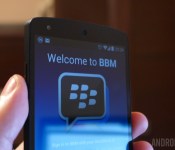
Report: Samsung is actively pursuing BlackBerry despite rebuttals from both sides

According to the Financial Post, Samsung is still trying to take over or buy a significant stake in BlackBerry, even though both sides have categorically denied the rumor.
The Financial Post has managed to get its hands on a document which outlines the business case for a take over and even suggests a possible structure for such a purchase. The document is purported to come from a New York-based independent investment bank, Evercore Partners, and was prepared on Samsung’s request.
Although the document was prepared during the last quarter of 2014, the Financial Post writes that a source familiar with the take over plans has said that Samsung is still interested in buying BlackBerry.
Last week, the news of a potential takeover from Samsung caused BlackBerry’s stock to rise temporarily, but it quickly returned to its nominal levels once the rumor was denied by both parties. “BlackBerry has not engaged in discussions with Samsung with respect to any possible offer to purchase BlackBerry,” the company said at the time. Likewise a Samsung spokeswoman told Reuters that “media reports of the acquisition are groundless.”
The main reason why Samsung would want to buy Blackberry is because of its back-end services and servers.
From the outside Samsung wanting to buy a failing smartphone maker, that has little in common with its own business model, seems like a dumb idea. Samsung already has Android, and Tizen. It doesn’t need a third mobile operating system to maintain. However there is more to BlackBerry than just its handset business. It is probable that the main reason why Samsung would want to buy Blackberry is because of its back-end services and servers. Many corporations, especially in North America, rely on BlackBerry for device management. Its BlackBerry Enterprise Service (BES) has about half the mobile device management market. BlackBerry has also added support for iOS and Android devices.
Back in November 2014, Blackberry and Samsung announced plans to work together to bring Samsung’s Knox security platform to BlackBerry’s business customers. The partnership is designed to bring together BlackBerry’s cross-platform BES12 enterprise mobility management software and Samsung’s KNOX security for Android devices. The partnership was, in part, a reaction to Apple teaming up with IBM to create a set of iPhone and iPad “enterprise apps” aimed at corporate and government customers.
However, $7.5 billion is a lot of money for Samsung to spend to buy its way into the enterprise. I am sure we haven’t heard the last of this story yet, so stay tuned to Android Authority for more coverage as it develops.
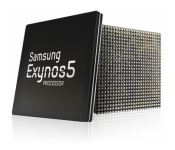
Can Samsung really ditch Qualcomm completely?

Yesterday, Bloomberg reported that Samsung will drop the Snapdragon 810 from the Galaxy S 6 in favor of the Exynos. Utilizing the Exynos is no surprise, but the fact that they would use it for all device variants is.
As you know, the Exynos processor is Samsung’s own processor, so one would think that Samsung would want to use it exclusively. However due to possible supply issues and/or the fact that it doesn’t play well with LTE, Samsung has always used Qualcomm Snapdragon processors for many regions.
However, there has been a lot of press on the Snapdragon 810 overheating, and Bloomberg’s report seems plausible based on that, but the question is if Samsung can really pull it off? The Galaxy S 6 is Samsung’s flagship, and they can’t fool around here. At the same time, they might not have a choice if the Snapdragon 810 is indeed overheating. At the same time, there is no guarantee that Samsung would be able to get the Exynos chip ready to cover all devices. Either way, there could be issues, so maybe they will just stay homegrown to better manage it.
However, ZDNet is now reporting that analysts believe that Samsung will not be able to completely eliminate Qualcomm. They believe there was an issue, but Qualcomm has solved it, and as a result, there is a 2 to 3 month delay. The belief is that the Galaxy S 6 will launch on time in Korea, but shipments to other regions will be delayed to catch up with Qualcomm. There was also another report last week that said that Samsung will actually use the Exynos for most of the early shipments, but transition to the Snapdragon as it becomes available.
This is going to be a very interesting situation. I wouldn’t be surprised if Samsung never mentions the processor brand in any of the press materials when they unveil the Galaxy S 6 in March. This is a very crucial year for Samsung, and they cannot afford production delays or product complaints from customers.
source: ZDNet
Come comment on this article: Can Samsung really ditch Qualcomm completely?

Another year of falling profits expected at Samsung

2014 was not a great year for Samsung. Despite still leading the smartphone market with huge sales, the company saw quarter after quarter of declining revenues and falling profits, reversing consecutive years of financial growth. While still far from struggling, 2015 looks to be another year of smaller profits for Samsung, although the flood gates appear to be closing.
According to data compiled by FnGuide Inc, Samsung is expected to generate 20.8 trillion won ($1.91 billion) in net profit by the end of 2015, a decline of 6 percent from the estimated end of 2014. Between 2013 and 2014, profits are anticipated to have declined by a far more substantial 27.3 percent, from highs of 30.5 trillion down to 22.1 trillion won. Samsung will release official figures for 2014 later this month.http://embed.chartblocks.com/1.0/?c=54c0f3dbc9a61d040cfd3026&t=fd615be3eb12abfUnfortunately for Samsung, both revenues and operating profits have been falling over the past twelve months. Revenue is estimated to have declined to 205.4 trillion won in 2014, a fall of 10.5 percent year-on-year. This marks the first time in nine years that Samsung’s revenues have shrunk YoY. Even worse, Samsung’s operating income is estimated to have dipped 32.2 percent YoY to 24.9 trillion won in 2014, possibly due to the company’s ever increasing R&D budget, amongst other factors.
Although profits are expected to fall again this year, the rate of decline appears to be coming closer to a halt in 2015. A show of stability throughout 2015 could reassure unnerved investors that Samsung is settling into a more stable role in the smartphone market, following years of successive growth as the mobile market quickly expanded with new technologies.
“The record-high earnings in 2013 were possible because Samsung was ahead of everyone else in the competition,” – Roh Keun-chang, HMC Investment & Securities Co.
As we saw throughout 2014, lacklustre revenues from Samsung’s gigantic smartphone business are mostly to blame for the drop in profits. A combination of Western market saturation, stagnation in mobile technologies and the rise of low-cost OEMs in the world’s fastest growing markets are all said to have contributed to a tougher year for the tech giant. Analysts at HMC Investment & Securities Co. forecast a 32 percent YoY fall in profits from Samsung’s mobile division this year.
On the plus side, Samsung’s semi-conductor business is expected to help prop up profits come the second half of 2015. Samsung is moving ahead with smaller manufacturing processes this year and will be well placed to provide products to competing technology firms.
2015 may be the start of a new year, but Samsung still has many of last year’s problems to overcome if it wishes to return profits to an upward trajectory.
What We Know: Samsung Galaxy S6 rumors and leaks thus far

Rather than passing along every single rumor that comes across our plate we’ve opted to cover only those devices that we find most relevant. To that end, the “What We Know” column aims to highlight the flagship smartphone models that are looming on the horizon.
What you’ll find below is a list of rumors, leaks, speculation, images, and other stuff that pertains to the Samsung Galaxy S6. We’ve done our best to gather up the juiciest stuff floating around, even if it conflicts with other reports. Unless otherwise noted, this is all to be considered unofficial and unconfirmed.
Note: this post will be updated continually until such time that the device is announced by Samsung.
Display
According to a BGR source, the screen will be 5.1-inches and will have a Quad HD Super AMOLED display with 557 pixels per inch. Like other recent models from different manufacturers, the screen should be protected by Gorilla Glass 4.
Skip below to the “Edge” section to learn about a potential variation that includes additional display space.
Camera
A tipster close to BGR says we should look for a 20-megapixel rear camera with optical image stabilization and 5-megapixel (f/1.8) front-facing camera with real-time HDR.
Internal Hardware
Details passed along to BGR suggest a 64-bit octa-core CPU is in order however it’s not clear as to who manufacturers the chip. According to a separate Bloomberg report, Samsung will not tap Qualcomm for its processors, citing overheating as an issue.
Storage capacities are alleged to include 32GB, 64GB, and 128GB options, up from the previous generation’s offerings.
Battery, according to BGR, is listed at 2550mAh, and will include built-in wireless charging. What’s more, Quick connect charging should allow for four hours of usage of a simple ten-minute charge.
OS
We should expect Android 5.0 Lollipop with Samsung’s custom software touches, commonly referred to as TouchWiz.
Other Details
A source close to Korean outfit DDaily says the Samsung Galaxy S6 will feature glass on both the front and back, connected by a metal rim. Long-held rumors have suggested we could see a metallic design not unlike the Galaxy Alpha and Galaxy Note 4.
Unlike the Samsung Galaxy S5, the next-gen model is not expected to be waterproof. Instead, we might look for the waterproof feature to be included in a variant; perhaps the Samsung Galaxy S6 Active is in order. Other features tossed about the rumor mill include Cat 6 LTE support as well as Samsung Pay.
Galaxy S6 “Edge” Variant
Details stemming from SamMobile indicate Samsung will offer a variation of the Galaxy S6 that offers dual edge displays. Like the Galaxy Note Edge, these extra bits of screen will bleed over to the side of the device and allow for extra functionality.
Glance Lighting… will light up the Edge area when you receive a call or notifications, when you turn your device over… option to choose favorite contacts and an ability to assign specific colours to them… Calls and notifications… show designated color lighting…
Launch
As was the case with last year’s flagship release, the Galaxy S6 could be introduced at a Samsung Unpacked event. According to Chinese outlet The Chosun Ilbo, March 2 could be a possible launch date.

