



Watch Dogs won’t hit 1080p on either PlayStation 4 or Xbox One

The PlayStation 4 and Xbox One are both plenty powerful, but so far, many third-party games have ended up running better on Sony’s console. That trend apparently continues later this month with Ubisoft’s upcoming cyberpunk hackathon, Watch Dogs. The PS4 may have the upper hand in terms of native resolution as Joystiq noticed, but the game will run at 30fps (the gold standard for open-world games) on both platforms and neither will sport 1080p natively according to publisher Ubisoft. This is contrary to what a PlayStation.com listing said before it vanished over the weekend. The adventures of Aiden Pearce will run at 900p for Sony fans, while Xbox One owners will see 792p on their flat-screens. Because both consoles will upscale the game and output it to your display’s native resolution, it’s a difference you might only notice if both versions are running side-by-side. If you’ll remember, Assassin’s Creed 4 shipped on the PS4 at 900p as well, and received an update to hit full HD after the game launched — we’ll be watching to see if that happens here, too.
Filed under: Gaming, Home Entertainment, HD, Sony, Microsoft
Via: Joystiq
Source: UbiBlog

Xbox One without Kinect is great for consumers, terrible for Kinect game developers

Sure, a $100 price drop on the Xbox One is great for us. First things first, it’s less money to fork over for a new game console. Second, no Kinect, which means no all-seeing eye judging our tawdry lifestyle. But what if you’re a Kinect game developer? What if you’re, say, a member of the studio with the most successful third-party game franchise for Kinect, and you’re in the middle of making an exclusive Disney game for it?
Oh, great. Super great.
– johntdrake (@johntdrake) May 13, 2014
Yup, that about sums it up. And that’s exactly how Harmonix director of publishing and PR John Drake put it just moments after Microsoft made its announcement this morning. Harmonix publicist Nick Chester followed up with the (slightly) more positive, “Now Kinect designers have to work extra hard to innovate and make solid software. Good thing we were already doing that!” Yikes! There’s also an official, far less exciting statement.
Harmonix issued the following, more finessed statement:
“As avid gamers, we’re excited for fans to have more choices out there. As game makers, this platform change doesn’t affect our strategy – it reinforces that we must continue to focus on building innovative, compelling and well-designed motion experiences to motivate consumers to buy our games. We believe that tightly-crafted motion games can be great, genre-defining interactive experiences, as we’ve proven with the Dance Central franchise on Kinect for Xbox 360, and we’re eager to prove it again with Disney Fantasia: Music Evolved this fall on both Xbox One and Xbox 360.”
Filed under: Cameras, Gaming, Peripherals, Software, HD, Microsoft
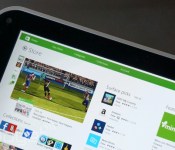
Windows Store now helps you find apps faster, even if they’re for your phone

Although Windows 8.1′s store has a healthy stock of apps, actually finding those apps has been a pain at times. Much of the store’s interface has been hidden, and it hasn’t always been clear where to go if you’re just getting started. Starting today, it’s considerably easier to get around: Microsoft is pushing out a Windows Store update that puts more content front and center. The navigation bar is now a permanent fixture on the screen, and points you to popular areas like the categories and top app charts. You’ll also see themed collections (such as music apps) and multiple featured selections right on the first store page.
The improved shop takes better advantage of Windows’ increasing cross-platform app support, too. Developers can link their desktop software to its Windows Phone equivalent, making it clear that you’ll get both titles — handy if you didn’t realize that there was a pocket-sized version of a hot new release. The store tweaks are rolling out gradually to Windows users, so don’t be dismayed if you don’t see the new portal right away. However, the wait might be worth it if it helps you discover a hidden gem or two.
Filed under: Internet, Software, Microsoft
Via: WPCentral
Source: Windows Experience Blog
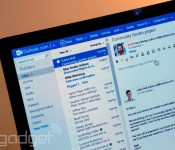
Outlook.com now lets you create extra-specific email rules

If you’re an email power user, you frequently know what to do with messages as soon as they hit your inbox — even if it’s just to avoid dealing with them until later. Microsoft is more than happy to accommodate your exacting requirements, as it just began rolling out a big Outlook.com update that allows for particularly complex email rules. You can now perform automatic actions based on time limits, the read state, email tallies and the familiarity of a contact. If you haven’t read a friend’s message for a day, for example, you can mark it as important so that it doesn’t get buried.
Whether or not you’re that demanding, there are a few other upgrades you’re likely to notice in day-to-day use. You can now respond in-line to an email thread, and it’s possible to undo mistakes in more places. It’s also much easier to sort people depending on whether they’re using Facebook or Skype messaging. You can even switch services in mid-stream; if you’d rather go straight to Skype chat, you can. The Outlook.com refinements will take a few weeks to reach everyone, but it might be worth the wait if you believe that small time-savers make a big difference.
Filed under: Internet, Microsoft
Source: Outlook Blog

The Xbox One price drop isn’t just to boost sales, says Microsoft

This morning, less than a year after Microsoft unveiled its Xbox One, the game console’s price dropped from $500 to $400. How’s Microsoft making up for the price difference? By removing Kinect, of course. The camera/microphone peripheral introduced halfway through Xbox 360′s life cycle was a standard in every Xbox One sold since launch last November, but no longer. As of this June, a second option will exist on retailer shelves. A less expensive option. And Xbox marketing lead Yusuf Mehdi is all about that option:
“We have 80-plus million Xbox 360 users today who want an Xbox One, and many of them tell us, ‘For me, it’s an affordability issue. I’m gonna get there, it’s just a question of time. If you make it more affordable, then I’ll upgrade faster.’ So this is an opportunity to really make it easier for them to get there at their pace.”
Of course, providing that option is in the interest of spurring sales. The issue isn’t that Xbox One consoles aren’t selling, it’s that they’re not selling as fast as Sony’s PlayStation 4. Currently, Xbox One is a couple million units behind PlayStation 4, and it’s impossible to cite those numbers without considering today’s news as directly attributable. Mehdi doesn’t agree.

“For us, it has not really been about that,” he told us in a brief interview this afternoon. First, it’s about that aforementioned choice. Second, the folks at Xbox feel as though, at this point, they’ve completed their goal of “defining a next-generation console.” As such, moving on makes sense (to Microsoft, anyway).
The Xbox One is designed around voice control. You turn it on with your voice. You open games and browse Netflix and everything else, all through voice. For anyone who’s tried navigating Xbox One without Kinect, you already know the sad truth: it’s a mess. Microsoft is thankfully aware of this issue, and is working on a fix. “We do want to find ways to give you some of those shortcuts and make some of the things that we have with Kinect easier with the controller,” Mehdi said. “You can expect to see us do a bunch of things over the coming months to make the experience easier and easier, even if you don’t have a Kinect.”
The changes aren’t coming before E3, but not far after. “We’re still kind of working through that,” he said.

So, beyond pricing, what else inspired the price drop? Kinect voice localization “was not a factor,” Mehdi said, but the upcoming launch of Xbox One in China certainly seems a likely culprit in the removal of Kinect. At very least, it’s a major technical hurdle “You have to develop a local voice model for each country. That takes a bunch of time to get there,” he said. Should the Xbox One show up in new territories without Kinect, you’ll have to forgive the lack of surprise on our faces.
Filed under: Cameras, Gaming, Peripherals, Software, HD, Microsoft

Microsoft lowers Xbox One price to $400 without Kinect

Is the $500 asking price of Xbox One too rich for your blood? Turns out you’re not alone, and Microsoft’s responding: the price of the Xbox One is dropping to $400, and the company’s dropping Kinect from the box as well. Starting June 9th, the Xbox One will be sold in a second bundle sans Kinect (a standalone version of Xbox One’s Kinect will be available “this fall,” should you wish to add one later on). It’s not clear if the $500 model that currently exists will continue to exist after June 9th, though it is clear why Microsoft made today’s move: sales numbers. Though the Xbox One is doing well at around 5 million units, it’s lagging behind Sony’s PlayStation 4 to the tune of several million units.
“There’s a lot about Kinect that I really love,” Xbox head Phil Spencer says in a video released alongside the news. “We’ve also heard from people that they just like to play games with a controller in their hand.” Spencer and co. are painting today’s news as a response to consumers — the blog post is titled, “Delivering More Choices for Fans,” even — but it’s hard to see it as anything other than a straight business decision. Microsoft’s initial coming out for Xbox One was held up by three pillars, one of which was going “all-in” on Kinect. Today’s news rolls back that pillar.
It’s not a question of people using Kinect, apparently. Microsoft says that over 80 percent of Xbox One owners are “actively” using Kinect. The other 20 percent are assuredly stewing in anger over saying “Xbox On” six or seven times without it working.
Today’s news is the latest walkback from Microsoft’s initial vision for the Xbox One, unveiled last May in a day-long Redmond, Wash. event. The price cut is just one of two major announcements from Microsoft’s Xbox division today: the long-running Xbox Live service is taking a variety of services out from behind its paywall (known as an Xbox Live “Gold Membership”), making them free to all Xbox One and 360 users.
Filed under: Gaming, Software, HD, Microsoft
Source: Microsoft
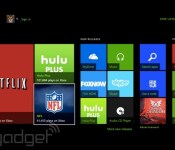
Netflix, Hulu, YouTube and other services now open to all on Xbox One, Xbox 360

In a move that bucks the standard set by Microsoft itself back in 2005, both the Xbox One and Xbox 360 will drop the requirement for an Xbox Live paid membership to access services like Netflix, Hulu and YouTube. Microsoft announced this morning that it would be streamlining its offerings and bringing its prices and structure more inline with those offered by Sony. That means not only cheaper hardware, but also abandoning the need to have an Xbox Live Gold subscription for access to apps and streaming media. It’s a move that certainly makes sense given that sales of the Xbox One are several million units behind the Play Station 4.
Until now, if you’ve wanted to watch Netflix on your Xbox you’ve needed to cough up for Live as well. That’s another $5 a month (at least) for the privilege of enjoying your existing subscriptions — something that never really sat well with many consumers. Reducing the total cost of ownership is one of the key ways to suck in new users. To compliment its efforts on the media front, Microsoft is also bringing Games with Gold and Deals with Gold to the Xbox One in early June. That means free games every month and steep discounts on titles like Ryse: Son of Rome. Now that the playing field seems a little more level (at least in terms of cost) the next-gen console wars will boil down to just a few things: exclusive games, additional functionality and marketing.
Wanna know the full breakdown? Microsoft’s made this handy chart to help out:


If LG’s working on a Windows Phone 8 handset, this is what it’ll look like

A picture is worth a thousand words, which is good, because the above image is all we’ve got. The gadget industry’s person-in-the-know, evleaks, has posted what purports to be a shot of the LG Uni8, the company’s first Windows Phone 8 device. The Uni8 would also be the first LG Windows phone since 2010, back in the days of the Optimus 7 and AT&T’s Quantum. Given that the platform is struggling in the US and Asia, not to mention Microsoft’s newly-minted purchase of Nokia, it seems an odd time for LG to leap back into the fold — not that we’re complaining, mind.
Filed under: Cellphones, Mobile, Microsoft, LG
Via: The Next Web
Source: evleaks (Twitter), evleaks.at

Microsoft’s Cortana could soon control your mood lighting

Microsoft’s Cortana may be younger than counterparts such as Google Now and Apple’s Siri, but the virtual assistant already stands out thanks to some unique features. One prime example is Notebook, which the service uses to learn about your habits and keep track of your preferences. Another is the ability to communicate with third-party apps, opening the door up to plenty of new use cases. But we’re still just getting started; if the hackers at Onion.io have their way, Cortana will soon be controlling the lights in your home, among other automation tasks.
Using Onion.io’s backend for devices connected to the Internet of Things, hackers used voice commands to have Cortana turn lamps on and off, and even print out a basic grocery list. Imagine combining this home-automation functionality with Philips Hue bulbs — Cortana could soon be adjusting the lighting on command for dinner parties or home-movie nights. And voice commands could definitely come in handy for adjusting your house’s temperature, too. It will be exciting to see how companies choose to implement the tech, but if you don’t feel like waiting, you can always grab a Bluetooth module and a Netduino and hack something up yourself.
Filed under: Household, Software, Microsoft
Via: Ubergizmo

Whatever happened to Netscape?

Netscape’s story reads like a proper fairy tale: takeovers, fierce and hostile competition, split-ups, a giant payout and even a dragon! While Netscape may now only be a sweet, sweet memory to those who used it to first discover the web, the browser’s monstrous impact has cemented it as one of the first and most important startups to shape the internet. Netscape’s founders successfully plucked a brilliant idea from academia and pushed it onto the world’s stage at a time when competition didn’t exist, websites were not much more than plain-text blurbs and inline images were still revolutionary. Consider the battle that would ensue between this web pioneer and Microsoft. The “browser wars,” as they came to be known, would ultimately lead to creation of Internet Explorer, Microsoft’s antitrust suit and the formation of the Mozilla Project and Firefox.
Netscape was born the child of University of Illinois graduate Marc Andreessen and Silicon Graphics’ Jim Clark. Andreessen had spent some of his time at university working on the NCSA (National Center for Supercomputing Applications) Mosaic browser and understood full well the potential it offered. With Clark’s help, the two created Mosaic Communications Corporation in April 1994, pulling in many former SGI and NCSA employees. The team then churned out the first point release in October of that year: Mosaic Netscape release 0.9. By the end of December, the company underwent a significant transformation, adopting the name Netscape Communications and launching Netscape Navigator 1.0.

Jim Clark (left) with Marc Andreessen.
The company launched Netscape Navigator into the market without even a glimmer of real competition and the browser went on to become the de facto portal to the web in early 1995. Of course, Microsoft was working feverishly in the background to play catch-up with a browser of its own creation, licensing Mosaic’s tech to build the first iteration of Internet Explorer.
On August 9th of that year, the then roughly 1-year-old Netscape went public with its initial stock offering at $28 per share. By close of day, the company’s valuation skyrocketed to nearly $3 billion. It was around this time that Microsoft was preparing to release Windows 95 and a separate add-on pack: Windows 95 Plus! Pack, which included Internet Explorer 1.0 and TCP/IP, the protocol needed to use the web. At last, Microsoft had arrived with its first effort at a Netscape killer.
The company launched Netscape Navigator into the market without even a glimmer of real competition and the browser went on to become the de facto portal to the web in early 1995.
Netscape and Internet Explorer traded releases in lockstep throughout 1995 and 1996, but by the time Internet Explorer version 3.0 was released, Microsoft had fully caught up and was able to match Netscape feature-for-feature. In an attempt to differentiate from its IE rival and grow its user base, Netscape took a stab at the enterprise crowd and launched the Netscape Communicator 4.0 bundle in late 1996. Communicator added in a Usenet client, web editor, e-mail app and even an address book; in short, it quite handily defined the very early days of sales- and management-driven bloatware. The move, however, failed to gain much traction with the suit-and-tie set.

Netscape’s browser icon through the years.
Netscape continued to develop both Netscape Navigator 3.0 and Communicator 4.0, but the looming threat of Internet Explorer, with version 3 bundled into Windows 95 service release 2, still lingered heavily in the background. The rivalry was compounded even further when Microsoft’s browser team apparently dropped its massive IE logo off at Netscape’s campus the night of Internet Explorer 4′s launch. The Netscape crew understandably took issue with the slight and toppled the giant IE logo over, placing its Mozilla dragon mascot atop it and holding a sign that read “Netscape 72 Microsoft 18.”
In January 1998, Netscape announced its intention to release the source code for Netscape Communicator to the public; a move that gave rise to the Mozilla Organization. Unfortunately for Netscape, this also had the effect of stalling development on its browser platform through much of that year, essentially giving Microsoft the lead it needed. And that summer, Internet Explorer finally overtook Netscape as the most used browser, a mantle Netscape was never able to win back.

Netscape responds to Microsoft’s prank by putting its mascot atop a toppled Internet Explorer logo.
The company, however, was far from being completely wiped out: AOL recognized some value in the struggling company and purchased it in November 1998 for a whopping $4.2 billion. The acquisition did nothing to spur development efforts though, and it wouldn’t be until April of 2000 that preview versions of Netscape 6, based on Mozilla code, saw the light of day. A further two years later, Netscape 7 was released, serving as the last major build version to come from that source code.
AOL recognized some value in the struggling company and purchased it in November 1998 for a whopping $4.2 billion.
Not long after, AOL shuttered the Netscape department and laid off most of the staff in 2003, opting instead to continue development in-house with Mozilla’s Firefox as its code base. The once proud web app was also re-branded as Netscape Browser and AOL eventually outsourced successive releases to Mercurial Communications, a Canadian software developer. Mercurial babysat and pushed out versions 8 through 8.1 of the Netscape Browser between 2005 and 2007 to a public that largely didn’t care any longer. And, in a sad final gasp, AOL cobbled together a dev team to push out Netscape Navigator 9, its first internally built browser effort since version 7. Its release would signal the end of Netscape the browser, as AOL pulled the plug on it in February of 2008.
While Netscape didn’t stand the test of time quite like its chief rival Internet Explorer has, its open-source transition into Mozilla did eventually birth Firefox — a browser success story in and of itself. But Netscape’s precipitous rise and fall in those early internet days wasn’t without lasting effects: Its brief stint at the top and tense rivalry with Microsoft laid much of the groundwork for innovation in the browsing space.
[Image Credit: Associated Press; snafu.de]
 AIVAnet