


Nokia and HTC put patent litigation behind them
Nokia and HTC have settled their ongoing patent disputes and now look to be forming a working relationship. An announcement on Nokia’s press page tells us the two companies have settled all pending litigation and entered into a collaborative arrangement. According to the press release, HTC will make payments to Nokia and the two will work together in the area of 4G LTE patents.
“We are very pleased to have reached a settlement and collaboration agreement with HTC, which is a long standing licensee for Nokia’s standards essential patents…This agreement validates Nokia’s implementation patents and enables us to focus on further licensing opportunities.” – Nokia
“Nokia has one of the most preeminent patent portfolios in the industry…As an industry pioneer in smartphones with a strong patent portfolio, HTC is pleased to come to this agreement, which will enable us to stay focused on innovation for consumers.” – HTC
As to be expected, the full terms of the agreement were not made public.
The post Nokia and HTC put patent litigation behind them appeared first on AndroidGuys.

Nokia and HTC end their patent dispute, agree to license each other’s tech

Nokia and HTC have officially put all this patent litigation nonsense behind them. The two have settled their disputes, signed an agreement to license each others technology, and even decided to explore further opportunities to collaborate. The details are confidential, as they usually are in these circumstances, and the reasoning behind the move are not entirely clear… not that we’re complaining. It could be that Nokia and HTC have realized there are competitors out there with deeper pockets and better stocked patent arsenals, and this alliance is simply to protect themselves against other aggressors. Or, it could be that Nokia is trying to get all its legal ducks in a row ahead of the impending Microsoft acquisition. Whatever the impetus, we’re just glad that this is one less intellectual property rivalry we’ll have to cover.
Filed under: Cellphones, Mobile, HTC, Nokia
Source: Nokia
The week’s best Android rumors (February 7)
HTC Nexus tablet
HTC and Google may again partner for a Nexus product, this time a “high end” tablet. Details are very light at the moment, however it’s rumored for release in Q3 2014.
Asus 8-inch Nexus tablet
Google and Asus will release an 8-inch Nexus tablet by the end of April, says semi-unreliable Digitimes. Rather than fighting it out in the 7-inch space yet again, Google wants to put distance between the larger smartphones and other tablets.

Samsung Galaxy S5
Samsung will reportedly tone down the introduction of the flagship smartphone when it’s introduced later this month, says the New York Times.
As for the hardware, the latest chatter says we should expect a 2.5GHz quad-core Snapdragon processor or an octa-core 64-bit Exynos SoC clocked at 2GHz – varies by market. Additionally, the display may be a 5.2-inch/5.25-inch AMOLED display with WQHD resolution (2,560 x 1,440 pixels). Rounding the specs, we’re told to look for 3GB RAM, 32GB/64GB/128GB internal storage capacities, a 16-megapixel rear camera, a front-facing 3.2-megapixel camera and a 3,200 mAh battery. Reportedly, this is will be the first Samsung flagship to feature an all-metal case.
Samsung Galaxy S5 Active
As we’ve seen with the Galaxy S4, Samsung is alleged to be working on a waterproof version of the upcoming smartphone. It’s not known if it will arrive at the same time as the standard model.
Samsung Galaxy S5 Zoom
Indian import database Zauba is listing a Samsung SM-C115 “mobile camera for R&D purpose”, leading some to assume this is the camera-centric version of the forthcoming flagship.

Samsung TouchWiz UI
Leaked screenshots, which have since been pulled, show flatter user interface elements in Samsung’s S Health app. Presumably, Samsung will employ the same aesthetics across all of its apps in upcoming devices.

Sony’s nearly bezel-free smartphone
Two images posted on Chinese-language Digi-Wo forum might be our first look at Sony’s next flagship smartphone experience. Although they are blurry, the photos do show a handset with almost zero bezel around the screen, something that could lead to smaller devices with bigger screens.

HTC Desire 310
The upcoming Desire 310 may be rather unique as it pertains to the software front. Leaked photos suggest the device could run a stock Android experience with HTC’s BlinkFeed sprinkled atop.
Huawei Ascend P7 “Sophia”
Huawei’s first smartphone to come with KitKat under the hood is alleged to be the 5-inch Ascend P7. Rumors say this model will have a 1080p HD display, quad-core 1.6GHz HiSilicon 910 processor, 2GB RAM, 16GB internal storage, and a 2460mAh battery. The front side should house an 8-megapixel camera with the rear offering a 13-megapixel shooter.
Samsung Galaxy Grand 2 with LTE
Another version of the Samsung Galaxy Grand 2 is on the way, according to a user manual found on Samsung’s website. The key difference between this and the other model is that users can tap into 4G LTE data connectivity.
The post The week’s best Android rumors (February 7) appeared first on AndroidGuys.
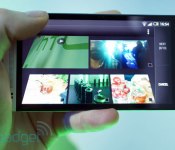
Verizon’s HTC One is finally getting a taste of KitKat

Well, that was quick. Just a few hours after an HTC product manager tweeted the good news, Verizon Wireless customers have found that the much-anticipated KitKat update is landing on their HTC Ones. Start mashing that software update button if you haven’t already, friends.
In addition to Android 4.4.2, the update also packs a handful of performance improvements and HTC’s Sense 5.5 UI. Fans of the HTC One Max are already familiar with HTC’s new Sense tweaks — BlinkFeed is more easily customizable, the Gallery and Music apps have gotten a facelift, and there’s a new Do Not Disturb mode for those private moments — but it’s nice to see them trickle down onto a slightly smaller handset. For those of you keeping score, Sprint earlier this week became the first major US carrier to update the One with KitKat. That leaves just AT&T and T-Mobile to push through the update, but sadly, there’s still no word on when they’ll follow through.
Filed under: Mobile
Via: Droid-Life
Source: Twitter

Here’s a possible sneak peek at the homescreen for HTC’s next flagship

The online rumor mill’s been working overtime where HTC’s upcoming M8 flagship is concerned, with some even going so far as to conjure fake mock-ups of the device. Leave it to @evleaks then to give us our first alleged glimpse of the handset, albeit via the device’s homescreen. From what we can see in the image above, it looks as though HTC’s given Blinkfeed, its Flipboard-like service, a slight makeover. There’s also the presence of onscreen virtual navigation buttons, which gives some weight to the recent gossip we’ve heard about the M8′s build. Beyond that though, it’s hard to tell just how much HTC’s evolved its Sense UI for the device. But with Mobile World Congress just a few weeks away, we should know the full monty soon enough — that is unless HTC’s cooking up a separate event of its own.
Filed under: Cellphones, Mobile, HTC
Source: Evleaks (Twitter)
New High-End Nexus Tablet Could Bear HTC Branding
Seems HTC is taking the headlines today with talks of wearables and KitKat updates. Seems a new report is surfacing overseas that HTC has won a contract to make the next Nexus tablet. In the past we have heard of various OEM’s submitting devices or device designs and outlines, to Google to be the next manufacturer of a Nexus device. Obviously Samsung had their run, LG is doing their thing and ASUS had some of the tablets cornered.
 HTC was the first OEM to build and offer a Nexus phone when the Nexus program first started off. I remember it quite well as it was the first Nexus device and I worked at T-Mobile and that was one of the big network partners it was launched working with. That was before the line took off and carriers started selling them in stores though.
If HTC has been picked up for a new high-end Nexus tablet we fully expect it to be quite a powerful, stock, monster. It would be good for HTC to get back into the tablet market with something in the Nexus line. Their last attempts at the tablet market were lackluster, even though they had some great designs and features. The tablet market has changed quite a bit since then though.
All of this is just chatter crossing the Taiwanese based websites right now. If the chatter is to believed though, we could see a new HTC made Nexus tablet sometime in the 3rd quarter of this year. Now, will it be aluminum bodied with 4 front facing speakers, or go for a more streamlined Nexus look? The better question is if HTC is making a Nexus tablet, will you be down to purchase one?
Source: focustaiwan via Droid-Life
Img via Phandroid
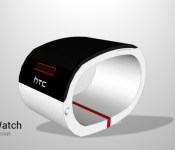
HTC to Jump into the Wearable Technology Game by the End of the Year

HTC needs to start taking that quiet brilliance they have and make it loud. That is simply because we haven’t really seen the brilliance they declare in their slogan they don’t really use anymore. After designing a phone that most tech sites deem as the best smartphone ever designed, they still couldn’t manage to make it sell as well as it could have. Instead, they threw $12 million at Robert Downey Jr. for an ad campaign that lasted about, what…2 or 3 months? Time for a change HTC; and HTC’s Cher Wang chimed in on those changes when interviewing with Bloomberg.
Cher Wang first talks about HTC diving into the wearable technology swimming pool, and how HTC has been considering smartwatches since 2011. “Many years ago we started looking at smartwatches and wearables, but we believe that we really have to solve the battery problems and the LCD light problems,” said Wang. “These are customer-centric problems.” That is the problem plaguing smartwatches, but it would be kind of great if HTC decided to just make a fancy designed watch that wasn’t full touchscreen. Challenge those designers who created the beauty of the HTC One and design a watch that not only nerd boys will where, but the general public.
HTC is very optimistic about 2014, and their marketing strategies are priority one. They are hoping for their first piece of wearable technology by Christmas time, so we will see if they accomplish that goal.
Source: The Verge
HTC promises wearable device by year end
The struggling hardware maker believes this is a turnaround year
HTC has confirmed that they, too, will release a wearable device later this year and join a quickly crowding market. Speaking with Bloomberg recently, HTC Chairman Cher Wang said that one will be available by the Christmas shopping season.
Lest you think HTC happens to just be jumping on a bandwagon, the company advises that they’ve been working on smartwatches and wearable devices for “many years”. But, with problems such as LCD light and battery, it has not been easy bringing something to market.
Regardless of whether HTC was already developing this stuff, they will be perceived as late to the game by the end of the year. Samsung will likely have two generations of their product in the market and there’s stiff competition from the likes of Qualcomm, Pebble, and a host of others.
HTC feels good about this year, however, and thinks 2014 will treat them much better than last year. We’ll see how things get going when HTC’s investor conference kicks off on February 10.
The post HTC promises wearable device by year end appeared first on AndroidGuys.

The science behind having two cameras in the HTC M8 i.e. a dual-sensor camera
 A lot of noise was made yesterday when we spotted an alleged leaked photo of the HTC M8‘s backside. The contention arose, not only due to claims of ‘photoshopping’, but the back of the HTC One’s successor was adorned with what appeared to be two cameras, raising questions of why this would even be necessary. Even if the HTC M8, or HTC One 2, or whatever it will be called, does not eventually release with two cameras on its back, I thought it would be insightful to take a look at the science behind having two cameras in the HTC M8, or more accurately, why a dual-sensor camera is preferable to the standard one camera affair.
To understand why you need two cameras at all, we must first take a look at the Lytro Camera. The Lytro introduced in 2011 a type of technology that would change photography as we know it; in standard photography, your camera focuses on one object and once the picture is taken, the focus of the photo is unable to be changed. The Lytro is able to get around these restrictions by capturing the light field around the entire designated photo area. What this means is that photos from the Lytro can be examined later on and refocused at the users discretion. That a look at what the results can be:
 Both images seen above were taken at the same time; the only difference is that instead of being restricted to focusing on one object, which can potentially be the wrong object, the Lytro allows you to retrospectively change what you are focusing on. As you can see, the Lytro Camera technology is something that can potentially revolutionize photography as it reduces the need for specific apertures.
Along these lines of developing a mobile camera with comparable capabilities, Toshiba actually announced the TCM9518MD module last year which they said would be capable of Lytro-like photography, allowing you to refocus your pictures after taking them. While the module isn’t quite in mass production yet, it looks like plenty of phone manufacturers, like Apple and Nokia, have been hot on Toshiba’s tail trying to develop similar technology, and you can probably see why.
 Which brings us to the rumour that the HTC M8 will have a similar dual-sensor camera. If a dual-sensor camera does make it into the new HTC flagship smartphone, it would be a definitive step in putting the Taiwanese manufacturer back where it wants to be: back at the top of the Android charts after an extended hiatus.
Would you like to see a dual-sensor camera in the HTC M8? Was yesterday’s leak was actually real? Let us know what you think of the technology in the comments below.
Source: Digital Trends (1), (2) via The Phoblographer
HTC says it’s solved the smartwatch battery life issue, still plans to launch wearable this year

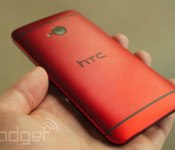
It’s been tough times for HTC. But it’s not going to let a little thing like a competitive, over-saturated smartphone market stop it from dipping its toe into the… competitive, over-saturated world of wearables. Talking to Bloomberg about its offering, Chairman Cher Wang said that the company started looking at smart watches “many years ago,” and that it finally reckons it’s solved the battery issues that have plagued other wearables. Wang added that LCD lighting for these wearables is another problem that the company has tackled and that both were very much “customer-centric problems” — they’re certainly some of the main issues we’ve had with several premium smartwatches seen so far.
Source: Bloomberg

