


Poll: What is the best flagship smartphone of 2014?

We’re nearly halfway into the year and we’ve got a lot of great smartphones out there. Right now we are surrounded by flagships like the Samsung Galaxy S5, HTC One M8, and the Sony Xperia Z2. Looking ahead we have the soon-to-be-released LG G3 joining the fray. Suffice it so say, all of them are amazing smartphones and each would be welcome in our hands. But, just for fun, let’s find out which one of them is the best of the bunch?
Internally, we each have our preferences and favorites, but we want to hear what our readers think. In the poll below we want you to pick the best of the big four releases so far. Which do you prefer? Is it the build quality of an HTC One M8? The sexy stylings of the Sony Xperia Z2? Maybe you’re a die-hard Samsung loyalist. Let’s hear your thoughts on which is deserving of the name “best flagship smartphone of 2014“!
Ready, set, vote!
Once you pick your favorite, head to the comments to back up your vote. Let us know what it is that made you choose that particular model!
The post Poll: What is the best flagship smartphone of 2014? appeared first on AndroidGuys.
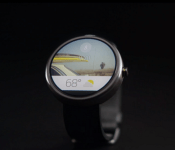
The ‘HTC One Wear’ Running Android Wear could be Out by End of Summer

The smartwatch market is going to be no doubt booming this year. Smartwatches have already grabbed the attention of consumers with various different style watches already out there for you to buy, but now we have Android Wear; the new Android-based smartwatch OS, that Google announced not too long ago. Shortly after the announcement, LG and Motorola announced their watches, the LG G-Watch and the Moto 360. Both running versions of Android Wear, but then we wondered about other OEMs utilizing the Android Wear software. OEMs such as HTC.
HTC briefly chimed in about wearable technology back at the end of 2013, and they indicated that they themselves would be diving into the smartwatch game. Now it seems that a new report coming out of TK Tech News, that claims HTC could have their new smartwatch, dubbed the “HTC One Wear”, out by late Summer. Apparently it will be HTC’s answer to the Moto 360, giving us a round display and being made to premium quality like the HTC One series.
This is all unconfirmed as per usual, but given that Samsung, LG, and Motorola, have got watches in the market, HTC should have theirs out this year if they want to be any kind of completion. Let us know your thoughts about this.
Source: Phandroid
//<![CDATA[
ord = window.ord || Math.floor(Math.random()*1E16);
document.write('’);
//]]>
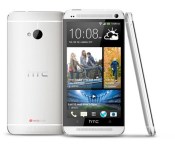
How would you change the HTC One (M7)?

Wouldn’t it have been great if we’d covered last year’s HTC One just before the replacement arrived? Clearly. Since the calendar didn’t work out like that, however, let’s instead take this moment to commence a post-mortem on one of the most critically acclaimed handsets of 2013. Garnering a 92 point Engadget store, a fantastic low-light camera and that amazing body, let’s face it — everyone was envious of this hardware. But has your experience been as flawless as that of our reviewer? Join the forums and share your feelings on the subject.
Filed under: Cellphones, Mobile, HTC
Source: Engadget Product Forums
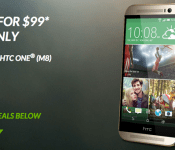
Get an Amber Gold HTC One (M8) for $99 today only

In need of a new smartphone and want to make a bold statement? For one day only, today, you can get the all new HTC One (M8) in Amber Gold for just $99.
The deal started at 12:01 a.m. CST today and runs until supplies last, so if you’re interested, you better hop on this deal quickly.
Note that this is $99 on-contact and you can purchase the device on either AT&T, Sprint or Verizon.
HTC is also offering up to 65GB of Google Drive storage for free for 2 years, plus there is free shipping and the ability to trade in your device for credit towards the new phone.
Hit up the source link to grab your discounted HTC One (M8) now.
Via HTC
The post Get an Amber Gold HTC One (M8) for $99 today only appeared first on AndroidGuys.

HTC One M8 Prime development halted indefinitely

If like the many new HTC One M8 owners around you felt pretty hard done by when HTC announced they were working on an M8 Prime variant, then today you can feel a little bit better about your purchase as it appears HTC have halted development of the M8 Prime indefinitely.
Notorious leaker @evleaks took to Twitter to announce that sources have told him that the HTC One M8 Prime will no longer be worked on and the project has been halted indefinitely. There are no reasons given for the sudden change of heart, but for the time being at least the HTC One M8 will remain the main flagship device for the company.
SOURCE: evleaks
The post HTC One M8 Prime development halted indefinitely appeared first on AndroidGuys.
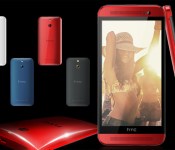
HTC One’s plastic cousin officially shown off with M7 design, M8 guts

It’s no secret that HTC’s prepping a plastic variant of its flagship One (M8) phone, but we’ve never taken a proper look at it until now, courtesy of the company’s China website. And no, this isn’t a leak. Ahead of the device’s June 3rd launch, HTC’s limited edition giveaway campaign unveiled almost everything about the M8 Ace, aka “Vogue Edition,” of the One. The clear product renders — shown in black, white, blue and red options — indicate that this upcoming phone carries a similar design language as the metallic, award-winning M7 from last year; but the new plastic-only construction means you get a cleaner look on both the back and the profile sides.

The page also confirms some main specs that are identical to that of the flagship M8: a 2.5GHz Snapdragon 801 SoC (the M8 for Asia is clocked at 2.5GHz instead of 2.3GHz, by the way), a 5-megapixel front-facing camera, BoomSound front-facing stereo speakers, Motion Launch gestures and extreme power-saving mode. As we already know, the M8′s funky Duo Camera is replaced by a single 13-megapixel camera here, and it appears that the TV remote feature is also absent on the power button. On the flip side, we can just about make out China Mobile’s 4G LTE logo on the back of the phone, which is good news for the locals. There’s no mention on the screen size, but we’ve previously heard from our sources that it’ll be the same 5-inch 1080p panel as found on the M8. The leaked dummy in the above picture, courtesy of Sina Weibo user ASAMKI, suggests the same.
The ultimate question is: How much will HTC be charging us for this so-called Galaxy S5 competitor? Its “mid-range flagship” Desire 816 costs ¥1,899 (about $300) in China, whereas both the M8 and the Galaxy S5 cost ¥5,299 ($850), making for a midway point of ¥3,599 ($580). HTC will really need to stick to the lower half of the price segment to threaten not only Samsung, but also other local brands like Smartisan, Oppo, Vivo, Huawei (all mainly in the ¥3,000 sector), plus the notoriously aggressive duo: Xiaomi and OnePlus (from just below ¥2,000). Will HTC be able to surprise us? Tune in next week to find out.
Filed under: Cellphones, Mobile, HTC
Source: HTC, Sina Weibo
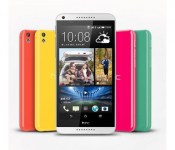
HTC Desire 816 starts selling in India at INR 25,000
The HTC Desire 816 finally went on sale in India this week at a price tag of INR 24,000. HTC Desire 816, a mid-range phablet was announced during MWC earlier this year. It comes with a large 5.5 inch HD screen, quad-core processor, 1.5 GB of RAM, dual SIM card slots and a 13 MP camera at the back.

HTC Desire 816
The Desire 816 competes with Samsung Galaxy Grand 2 and Sony’s Xperia T2 Ultra in its price range. The Xperia T2 Ultra comes with a relatively larger 6 inch screen with HD resolution, similar quad-core processor, Android 4.3 Jelly Bean, dual SIM card slots and a 13 MP camera. Although it gets a bigger 3000 mAh battery, which is higher than the 2600 mAh one on the HTC Desire 816.
Source: MySmartPrice
//<![CDATA[
ord = window.ord || Math.floor(Math.random()*1E16);
document.write('’);
//]]>
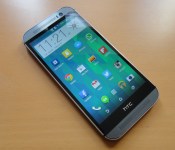
HTC One (M8) Ace rumored as Vogue Edition, expected June 3

HTC One (M8) is most certainly one of the best smartphones out at the moment. HTC’s flagship has been around for some time now and we’ve already seen some leaks regarding some spin-offs, if we can say it that way, of that device. HTC One Remix for Verizon has leaked as well as HTC One (M8) prime and HTC has already launched HTC One mini 2 recently.
This time around we have a leak regarding HTC One M8 Vogue coming from China. This device might as well be HTC M8 “Ace” which has leaked over a month ago. The specifications of the device are allegedly going to be the same as in HTC One (M8), but the design will be significantly different and it will sport only 1 camera on the back, like HTC Desire 816 for example, which has one 13MP camera and a plastic design materials. We don’t exactly have a clear picture of how the phone will look like because we don’t have an image to attach to this leak, but we’re guessing something similar to HTC One (M8) covered in plastic instead of aluminum.
The device should be released on June 3rd, at least in China, and the price should be somewhere around $480. It is also rumored that it will be available in black, white, blue and red colors. What do you think about all this? Would you buy a phone like this?
The post HTC One (M8) Ace rumored as Vogue Edition, expected June 3 appeared first on AndroidGuys.
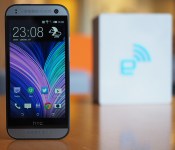
HTC One mini 2 review: A worthy new addition to the premium One clan

HTC created what was undoubtedly one of the best smartphones of last year with the original One. That was later followed up by the One mini, which was surprising in the sense that the handset maker hadn’t before attempted a slimmed-down, scaled-back version of any of its flagship devices. HTC’s nemesis Samsung established this trend when it launched the Galaxy S III mini, and it inspired many discussions about the ethics of slapping the name of top-tier handsets onto lesser devices. (Sony obviously made an executive decision to avoid the “mini” epithet for its Xperia Z1 Compact, which is actually just a smaller, but equally specced version of the flagship Z1.)
The ethical issue is more or less moot now we know what to expect from a smartphone donning the mini title. HTC did a good job of translating many of the premium elements that made the One such a stand-out device in the smaller, cheaper package of the 2013 One mini, making it an attractive option in its own right (cheeky branding or not). Now, HTC has its new darling, the One (M8), and a shot at making another respectable variant with the One mini 2 due to launch next month. Clunky name aside, the mini 2 gives a striking first impression thanks to its M8-like, mainly aluminum casing. Beyond that, has HTC done enough to make the mini 2 a worthy companion to the M8, or are we dealing with a poor, albeit glamorous imitation?
Hardware
It may be called the One mini 2, but there isn’t really anything “mini” about it. Pretty close in size to the OG One, the mini 2 is by no means dwarfed by the M8, although it is noticeably shorter. (On that subject, I’m not sold on how the M8 is proportioned, specifically the length.) Similarities aren’t surprising, of course — the device is supposed to look like the M8, after all, and thankfully it’s very hard to tell the difference when shown one after the other. There’s no secondary camera on the back of the mini 2; the flash is a different shape; and the secondary mic has moved. But otherwise you’ve got that same gorgeous, brushed aluminum with polycarbonate seams that consumes much of the rear, and some of the sides of the handset. There is a slight decline in engineering tolerance compared with the M8, however. Look very closely and you’ll see the odd, thin gap between polycarbonate and metal, or that the nano-SIM tray doesn’t sit as flush to the body as it could do, for instance. I have the gray version of the device, but the mini 2 will also come in silver and gold options, just like the M8.
On the new M8, brushed metal makes up 90 percent of the chassis. That’s scaled back to 70 percent on the mini 2, which is still healthy coverage and the same amount of metal cladding as on the original One (M7). The rim of polycarbonate that marries the back to the two panels above and below the display, and the Gorilla Glass 3 sheet covering it, is a subtle matte black that keeps attention focused on the more premium material — the white plastic used on the M7 and first One mini was far more conspicuous. The volume rocker and microSD tray on the right side are within the aluminum panel’s boundaries and made of metal themselves. The same is true for the nano-SIM tray on the left-hand edge, although I’m confused as to why HTC chose that format for the mini 2 and M8. It’s not a very common one among Android devices, meaning potential buyers will either need a new SIM or risk damaging their current one via mutilation, which just seems unnecessary.

On top of the device, we have the headphone jack and plastic power button, with the micro-USB port on the bottom edge. HTC’s trademark BoomSound stereo speakers sandwich the display, and a multicolored notification LED is hidden within the top grille, while the primary mic is concealed in the lower. On the top metal panel, too, sits a pair of sensors and the front-facing camera. There’s a reasonable bezel surrounding the 720p display, though not an unattractive amount. The difference between the M8 and One mini 2 compared with last year’s models is the absence of Android soft keys, which are now found on-screen when the phones are in use.
The One mini 2, like the bigger M8, is quite simply a stunning device that screams “premium.” It’s light enough, but solid and sturdy at 137 grams (just over 4.8 ounces), and the curved back contours to the palm nicely. The mini 2 is small enough to be easily usable in one hand while not feeling cramped, and there’s no one thing you can point out and say that HTC has really skimped on in creating this smaller handset. The design and brushed-metal exterior are among the main reasons I can see people being drawn to the device, and I’m glad to see HTC taking the same philosophy of limited compromise it did with the first One mini.
Display

In the same way that the M8 has a slightly larger display than the previous One, the mini 2 also bumps the screen size up to 4.5 inches from 4.3 inches on the first mini. The resolution has stayed the same at 720p, which is still plenty of pixels despite a drop from 341 to 326 ppi. At these sizes, I defy anyone to point out meaningful differences in acuity. HTC’s stuck with its Super LCD2 technology for the mini 2, and there isn’t much to complain about. Colors are lucid, and the black and white ends of the spectrum are just as good. You can crank the brightness up to retina-singeing levels, although glare does have a slightly negative impact on sunlight readability. The auto-brightness setting responds well to the environment and even overcompensates on occasion. Viewing angles are also superb, with glare being the only problem past 45 degrees.
If you’re prone to the odd YouTube binge, or tend to use your daily commute to catch up on some TV, then you can do much worse than the One mini 2. The size of the display doesn’t lend itself to extended viewing sessions necessarily, but the 720p resolution means crisp, HD content plays without any annoying letterboxing. Paired with the stereo BoomSound speakers, the One mini 2 is a satisfactory mobile media player for when you don’t have a bigger screen to watch or better audio setup to listen to.
Software

You get the best of both worlds right out of the box on the One mini 2 — as long as you like HTC’s Sense 6 UI running over Android 4.4.2 KitKat, that is. You can check out our deep dive on Sense 6 in the M8 review, but it’s worth noting that not all the tweaks available on that device have made their way onto its miniature counterpart. The new gesture-unlocking feature called Motion Launch isn’t available on the mini 2, and the Zoe camera app isn’t yet compatible, despite being pre-installed on the handset. HTC tells us you’ll be able to use it sometime this summer when it’s “absolutely ready.” Fortunately, Zoe’s neat multimedia collage feature is accessible through the gallery app.
Otherwise, you get the same Sense 6 experience as on the M8. Special features include the new Do Not Disturb mode, an improved version of BlinkFeed, and an Extreme Power Saving Mode that extends battery life by letting you use only the phone’s basic functions. I can’t say what carriers will do with the mini 2 when they get their hands on it, but my review unit is almost entirely devoid of bloatware. All of Google’s services come pre-loaded, as you’d expect — you get 50GB of free Drive storage, too — as well as some of HTC’s software for basic product support and enabling kid or car modes. The only things you might want to remove, but can’t, are Polaris Office 5, KeyVPN and a stock-tracking app, but I can see how that trio might be useful for business types.
If you’re new to HTC’s Sense skin, the main departure from stock Android is visual in nature. It’s actually my favorite flavor of manufacturer skin because it’s clean and light, and thus has minimal impact on performance despite being heavily customized. The thin font style Sense employs looks great on the mini 2′s display thanks to its 326 ppi, and it marries well with the handset’s tight, premium design. Sense is also pretty self-explanatory and user-friendly — the quick-settings menu specifically. The one gripe I have with HTC on the software front isn’t anything to do with the mini 2 itself, but with the fact that you’re forced to use HTC Sync Manager if you want to interact with the handset via your PC. I understand that some users might find direct access to the phone’s and SD card’s file systems intimidating, but Sync Manager’s interface is clunky and the whole experience is reminiscent of the nightmare that is iDevice file management through iTunes. Luckily, there’s a tab within the program that lets you browse folders as normal, but in its current state, I wouldn’t use any of its other functions.
Camera

One of the key differentiators the M8 has over its predecessor is the fancy Duo Camera setup. While the main UltraPixel camera remains largely unchanged, the secondary depth sensor quite literally adds another dimension to the photography experience. None of those swanky after effects is available on the One mini 2, which only has a single rear camera, but HTC hasn’t skimped on imaging. For starters, the M8′s front-facing, 5-megapixel BSI sensor camera with f/2.0 lens has made a direct transition over to the mini 2. So, if you’re into those close-up selfies, prepare to see every blemish and pore (before applying the appropriate flattering filter and putting it up on the Instagrams, of course).
The rear-facing 13MP camera with BSI sensor and f/2.2 lens is no slouch either, but for seemingly every megapixel, I have a corresponding gripe with performance. Don’t get me wrong: In good conditions, you can get some lovely detailed shots out of the thing — it is 13 megapixels of data, after all. You’ve got an exhaustive amount of settings to tweak within the camera interface if you so wish (and you might want to in order to get the best out of it), from scene modes to white balance to filters and more. However, I’m of the mindset that a smartphone camera, especially one of this caliber, should be simple to use and best left on auto.
Even in good conditions, images can occasionally be washed out and lacking in color depth. HDR mode rarely works as intended, although it’s more reliable in the macro range (which is very good, by the way). I didn’t expect the camera’s low-light performance to be as robust as the M8′s UltraPixel camera, but I still would have wanted a little more from the mini 2′s BSI sensor. Shutter lag and shutter speed were my biggest issues with the camera, as there’s a noticeable delay between hitting the shutter key and the picture being processed. Pepper the situation with artificial or limited lighting, and it can get much worse. Any movement within the frame can result in frustratingly blurry images.

The autofocus isn’t as bad, but is still mighty erratic. Sometimes it’s quick and accurate; other times it’s skittish, and once it completely refused to work in a nighttime situation, rendering me unable to take a picture. Generally, as the amount of natural light deteriorated, so would the focus performance. The time it takes for the camera to turn a picture around, especially an HDR shot, isn’t really up to scratch. I don’t know whether that’s because the processor needs an extra second to deal with 13 megapixels’ worth of data, the camera app is not properly optimized for the hardware or the camera module itself was chosen for the spec sheet rather than performance. I’d have much preferred HTC chose something like an 8-megapixel camera that’s truly capable.
Video recording at 1080p is a little better, given there are fewer variables involved. Audio and picture quality are both pretty awesome in sunny conditions, with faltering autofocus and grainy video being the norm when there’s little light available. There are also slow-motion and high-speed (60 fps) modes if there’s a particular scene you think requires more than standard video. Remember, even though the spec sheet reads 13 megapixels, don’t let that fool you into thinking it’s a great smartphone camera. Much like Forrest Gump’s box of chocolates, you never know what you’re going to get.
Performance and battery life

A quick look at the One mini 2′s spec sheet shows it’s half the beast the M8 is, with a 1.2GHz quad-core Snapdragon 400 SoC paired with 1GB of RAM. That might not seem like an acceptable upgrade over last year’s mini, either, which had a 1.4GHz dual-core version of the same processor. I can see why some might begrudge paying over £350 for a handset with the same internal arrangement as the much cheaper Moto G (and incoming LTE variant), or the UK-only EE Kestrel. Having reviewed both of these devices, however, I’m under the impression you really don’t need more expensive, more powerful hardware in the vast majority of circumstances. You’ve also got a hearty 16GB of internal storage to play around with (roughly five gigs are reserved for the Android ROM), which can be supplemented by microSD cards of up to a whopping 128GB.
What’s the point of any more horsepower when you can already play an online multiplayer game of Asphalt 8: Airborne on the highest graphics setting, steam ’round the tracks in Real Racing 3 at flawless frame rates or burn through your opponent’s net in NBA Jam without a stutter? There isn’t one, in my opinion. The mini 2′s excellent gaming performance should give you the hint that cycling through the home screen carousel or app drawer, jumping into non-resource-hungry programs and all the other mundane tasks you use a phone for the majority of the time are quick and fluid too. As you’d imagine, web browsing (in Chrome) draws similar praise.

HTC’s One mini 2 is decked out with all the mod cons: Bluetooth 4.0, NFC, GPS, dual-band WiFi and LTE. These components have been around long enough that they should be easy to get right, and yet I have to raise a small complaint about GPS performance. It’s sometimes very slow to home in on my location, or casts a wide margin of error when it thinks it’s tracked me down. I just wasn’t expecting to have much to say about such a standard feature. The LTE chip works as you’d expect, and in my local South London area, download speeds topped out at 65 Mbps and upload speeds reached 19.5 Mbps on O2′s 4G network, so you know it’s capable of handling those kinds of speeds if the closest cell tower is capable of supplying them. HTC’s BoomSound technology definitely gives audio a rich, well-defined quality you can hear is missing when the setting is switched off, but, as I feel with most smartphones, it’s lacking slightly in the bass range when piping music through headphones. I actually thought bass was better serviced when the mini 2′s front stereo speaker setup was employed, and whichever way you’re consuming music, you won’t be left wanting for more volume.
In our standard battery-rundown test, the One mini 2 ran out of juice after looping video for around six hours and 40 minutes, although the phone didn’t actually have cell reception at the time, and was pulling data down using WiFi. That may have skewed the result slightly, but it’s not particularly impressive for the average-sized, 2,100mAh battery. I found that in day-to-day use, however, the mini 2 held up well. I’d be hesitant to say you could get a full two days out of it, even with relatively modest use, but under normal conditions — some light gaming, a few pictures, a little browsing and email reading — it’ll get you through a full day with ease. There are also the two power-saving modes to keep battery drain to a minimum if you find yourself in a pinch without access to a charger.
The competition

We’ve yet to see HTC’s archrival Samsung announce a miniature variant of the Galaxy S5, which would be the mini 2′s obvious nemesis. Until that happens, if indeed it does, the Galaxy S4 mini and last year’s One mini are probably its closest rivals. The One mini 2 will be launching across Europe and Asia sometime during June, and HTC tells us the price for an unlocked, SIM-free handset will be between £360 and £370 in the UK. The original mini retails for about £100 less, and the S4 mini is slightly cheaper than that again. I’d say, then, that £360-ish is a fair price given the mini 2′s improvements in hardware and design.
If general performance is what you want most out of your phone, then the impending Moto G with LTE is worth a mention, seeing as it also has a 720p display with the same processor/RAM combination as the One mini 2. And it will be cheap in comparison — at £149 in the UK ($219 in the US). Who knows what kind of fight the cheaper M8 Ace might put up against the mini 2, but I feel the biggest competition HTC’s new handset has is with the phone it’s based on. Or rather, the mini 2 is serious competition for the M8. The new One retails for around £520 unlocked in the UK, so for those who want the same premium materials in a smaller form factor, or are willing to lose a few of the M8′s bells and whistles for the sake of a discount, then the mini 2 is a valid option.
From a hardware perspective, Sony’s Xperia Z1 Compact is a very compelling alternative. It’s available for £380 unlocked and dominates the One mini 2 in pretty much every area of the spec sheet. The main thing the mini 2 has over Sony’s shrunken (but not retooled) offering is the premium finish. In the end, choosing a smartphone should be based on personal preference rather than just numbers, as you’ll probably be spending at least a year using it every day. There’s no word on a North American release of the One mini 2 just yet, but I don’t see why HTC would skip such a large region. Depending on new releases that may occur before it lands in NA, and what the pricing works out to be (the mini 2 is over $600 when converted, but such figures are usually highly inaccurate), it may end up being less competitive in that market.
Wrap-up

I’m still stuck on one question when I think about the mini 2: Is it worth the money? It’s significantly cheaper than the M8, but I’m not sure price accounts for all the compromises. I primarily love the look and feel of the device, and HTC did an excellent job of recreating much of the M8′s appeal. The display marries a good resolution with a quality panel, and although the internal hardware has taken a hit in the shrinking process, it’s still remarkably capable and provides enough performance for most apps and features. Even if you’re not a fan of skinned Android builds, Sense 6 is one of the best, and the mini 2 is as up-to-date as it gets with 4.4.2 KitKat right out of the gate.
The 13-megapixel camera looks good on paper, but performance is erratic and often disappointing, so potential buyers need to bear that in mind. Realistically, you’re going to buy the One mini 2 if you like the look of the One mini 2. It’s also a viable proposition for those who either don’t want to shell out for the M8 or weren’t down with the form factor. You’re paying for the brand and brushed-metal design over any stand-out component or feature, and in that case, the price might be acceptable at £150 less than the M8 demands. I’m much more interested in seeing what carriers can do to that price when it actually launches, and I imagine when subsidies begin to kick in, the answer to the question I’m still pondering will be “Yes.”
Edgar Alvarez contributed to this review.
Filed under: Cellphones, Mobile, HTC

IRL: A few weeks with HTC’s One M8 Harman Kardon Edition

When HTC CEO Peter Chou first confirmed the existence of the Harman Kardon edition One M8 at a small press event in New York City, I leaned over to a reporter friend sitting next to me and mouthed a few choice expletives. Wasn’t this Sprint event supposed to be about Spotify? And HD Voice? Where the hell was this coming from? After a few weeks of using the thing, I’m still not entirely sure why this needs to exist… but I’m sort of glad it does.
Let’s back up for a moment first: What’s new about the Harman Kardon edition One? It’s nearly identical to the version we reviewed back in March, albeit with a few twists. There’s the kinda, sorta fetching black-and-champagne trim, for one. It may just be my finicky fingertips, but I can’t shake the notion that the Harman Kardon One’s black finish feels just a little smoother than the gunmetal gray that graces nearly ever other M8 floating around out there. The cosmetics are just a distraction, though — this One’s apparent raison d’être is to knock the socks off audio buffs who just can’t deal with lousy, compressed mobile music quality.
I’ll admit it: I was a skeptic at first. BoomSound did wonders for the original HTC One, but could the company capture some of the same lightning in a new bottle? Further testing revealed that yes, this One’s once-exclusive sound software really does make a difference… even if it’s not always what you were hoping for.

The Harman Kardon One’s musical might shines through thanks to two features you can toggle in the settings. Clari-Fi aims to lift your compressed audio tracks out of the mud, injecting additional oomph and dimension to the gems in your collection. It generally does a good job of it too: The feature manages to help my slew of MP3s sound brighter, more vivid and more alive. Clari-Fi seems to work mostly on mids and highs, so vocals seem crisper and rhythm sections seem bouncier and more percussive… even though thrumming basslines tend to get de-powered a hair. I did notice a dramatic difference as I worked through a spate of low bitrate mp3s, but the effect became more subtle once I started working with higher-quality examples. I’ll be the first to admit that my ears have taken a drubbing from years of loud Japanese rock, so it’s very possible you’d pick up on more nuanced shifts than I did — that said, Clari-Fi does make a difference. While we’re on the subject of high quality files, HTC also talked up this One’s faculty with incredibly high-fidelity 24-bit/192kHz FLAC files… files which I had a hard time finding in the first place. My small suite of FLAC test songs had to suffice, and the HK One rendered them just fine.
LiveStage is a different beast entirely, as it tries to make your music sound (what else?) more live and natural. The cynic would say it just adds more reverb to the mix… and that person wouldn’t necessarily be wrong. If you’re at all familiar with the sort of LiveAudio trickery Jawbone uses in its Jamboxes, you’ll feel right at home with LiveStage. The effect manages to impart your tracks with a little simulated depth, but it just doesn’t jibe with some songs that have been mixed in particular ways — they’ll feel different, and not necessarily right. Perhaps it’s best to think of it as a mixed blessing: LiveStage can make a track sound more lifelike and atmospheric at the cost of losing some of its sheer oomph. Oh, and a minor niggle: When Clari-Fi and LiveStage are enabled, the status bar can get so crowded that the time actually gets pushed off the screen.

All of this hinges on having a solid pair of headphones to work with, and the Harman Kardon AE earbuds that come in the box (boom, you just saved about $80) are no slouch. Despite the crisp mids, jubilant highs, and rumbling basslines these ‘buds bring to the table, they can be a little quirky. Take the clearly marked controls on the in-line mic, to start: the two buttons are emblazoned with plus and minus symbols that would normally correspond to volume controls but they actually change tracks instead. I also found that the included tips just don’t fit right for certain people, and its angular edges can dig into the fleshy cartilage of your ear without remorse.
So, with all that said, should you buy one? If you’re on Sprint and don’t mind a questionable color scheme, the Harman Kardon edition One is probably the way to go — you’re getting the same top-tier smartphone we know and love with a really solid pair of earbuds for an extra $30. Should you find the prospect of a two-toned phone utterly tacky, though, or if you’re handy enough to install all of that supposedly exclusive software on your lonesome, feel free to steer clear and save your money.
Filed under: Cellphones, Mobile, HTC
 AIVAnet