


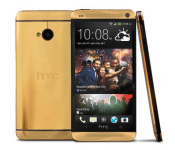
HTC giving away 24K Gold One M7 on Twitter

HTC UK have announced they’re giving away a 24 carat gold HTC One (M7) phone in celebration of winning several Phone of the Year awards last year.
Launching on Saturday and running to June 29th, the giveaway allows Twitter users to have one entry by following and retweeting @HTC_UK’s original twitter post.
To celebrate the #HTCOne winning ‘Best Phone of 2013′ we are giving away one in 24ct REAL Gold. FOLLOW and RT to win pic.twitter.com/KnQXnaguGk
— HTC UK (@HTC_UK) June 21, 2014
Great if anyone wants last years HTC One (M7) and also a phone made of 24ct gold!
The post HTC giving away 24K Gold One M7 on Twitter appeared first on AndroidGuys.

HTC Volantis tablet details leaked

We’ve seen lots of Nexus rumors in the last few months, both smartphone and tablet line. On one hand reports have been saying that the Nexus line is coming to an end in favor of Android Silver, on the other hands however we’ve seen leaks of Nexus 6 and Nexus 8. Nexus line may or may not be coming to an end, but even if that happens it doesn’t mean it will happen this year.
Be that as it may, newest report shows us a render of Nexus 8 tablet made by HTC and its specs, although they refer to it as Nexus 9. The device’s name is HTC Volantis (earlier mentioned as “Flounder”). This report is coming from Android Police and they seem rather certain that the device is coming.
Talking about specs, according to the report the device will feature an 8.9″ display 2048×1440 in resolution (281ppi). It will be powered by Tegra K1 64-bit processor (Nvidia Logan) along with 2GB of RAM. The device will sport an 8MP OIS rear shooter while the one on the front will be 3MP. The device will come with either 16 or 32GB of internal storage and will have stereo front-facing speakers as well as an Aluminum zero-gap construction and should weight 418 grams. There will also be a LTE version of the device and its measurements will be 22.63×15.19×0.79cm or in inches 8.91×5.98×0.31.

Note that the renders doesn’t seem to be final, although the device looks rather Nexusy as it is. 16GB version of the device should cost 399$ while the 32-gig model will be a 100$ more expensive, which brings it to $499. LTE version will raise the price for an additional $100+. The report also says we won’t see this device at Google I/O, it should be release in Q4.
These are some detailed information and they seem quite legit. What do you think of all this?
The post HTC Volantis tablet details leaked appeared first on AndroidGuys.
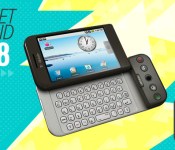
Gadget Rewind 2008: T-Mobile G1 (HTC Dream)

In 2005, a small Palo Alto-based mobile software company called Android Inc. was quietly folded into Google’s growing empire. The acquisition led to the release of the company’s first-ever “Google phone” three years later: the T-Mobile G1 (or HTC Dream as it was mostly known outside of the US). Google’s philosophy for the G1 centered on one-click search and a rich web experience, and leveraging T-Mobile’s 3G network was essential to its success. The G1 was also the first smartphone to run the open-source Android operating system and after just six months on the market, it earned a fifth-place spot amongst top-selling smartphones in the US.
 Andy Rubin, one of the co-founders of Android who went on to become SVP of mobile and digital content at Google, wasn’t new to the mobile device game. His earlier venture, Danger Inc., had found success in 2002 with its Hiptop smartphone, which was rebranded by T-Mobile as the Sidekick. It’s not surprising then that the G1 ended up as a T-Mobile exclusive — after all, its pop-out keyboard was reminiscent of the Sidekick’s swivel screen design. And for consumers in search of an alternative to the BlackBerry smartphones that dominated at the time, the G1 was a welcome option.
The T-Mobile G1 was an odd-looking duck. It was chunky due to the phone’s pop-out keyboard, with slightly larger dimensions than the sleek iPhone 3G released the same year. The G1′s physical keyboard was a necessary evil considering the inaugural Android operating system (1.0) didn’t include a virtual one — this despite its 3.2-inch capacitive touchscreen. That wasn’t the G1′s only design quirk: It also featured a slanted “lip” on its front face that housed a trackball and physical navigation buttons.
Its unique build aside, the G1′s main attraction was its open-source Android environment. With it, Google aimed to stimulate app development and “future proof” the OS with developer contributions over time. The Android Market (now known as Google Play) also debuted in tandem with the G1, offering around 50 applications at the time. All those apps were free, too, since the Market had yet to implement a payment system.
Multitasking, copy and paste, pull-down notifications and home screen widgets: These were some of the fresh features the G1 ushered in. It also, unsurprisingly, came deeply integrated with Google services such as Gmail and Maps. And without a proprietary music application of its own at the time, Google turned to Amazon to provide an MP3 app.
The G1 may have been an unfinished product when it was released, but Google addressed its shortcomings with iterative software updates — now a common and accepted practice for Android devices. Early OS fixes tackled glaring oversights like the G1′s missing virtual keyboard and lack of video-recording ability for its 3-megapixel rear camera.
 A T-Mobile rep compares Apple’s iPhone 3G (at left) with the G1.
A year after the G1′s launch, Verizon released the massively popular Motorola Droid with a slightly tweaked version of Android; a device that would prove a boon for Android device sales and mindshare. Still, Google continued on its own parallel path with HTC, releasing the MyTouch series and the G2. Eventually, however, Google abandoned its partnership with T-Mobile and HTC in favor of its Nexus line: reference devices that would run the latest, unadulterated versions of the Android operating system.
Google’s G1 smartphone holds an important place in the company’s history. Not only was it the first of many devices to run the Android OS, but it also stood out as an open-source alternative to Apple’s iPhone and closed iOS ecosystem. Android’s openness and flexibility led to its rapid adoption by a variety of manufacturers seeking to topple Apple’s success — it also helped that it was free to license. The G1, though primitive in comparison to the current crop of Android devices, was Google’s first step toward the mobile phone market domination it enjoys today.
Did you own a T-Mobile G1? Add it to your Engadget profile as a device you had (or still have) and join the discussion to reminisce or share photos of your device with other like-minded gadget fans.
[Image credit: T-Mobile / HTC (G1 front view); JENS SCHLUETER/AFP/Getty Images (iPhone/G1)]
Filed under: Cellphones, Mobile, Google, T-Mobile

Anonymous tip says HTC One M8 Prime is dead, HTC Nexus 8 coming after Google I/O
 While rumours surrounding the Samsung Galaxy F (or Galaxy S5 Prime) are quite healthy and frequent, rumours regarding its HTC counterpart, the HTC One M8 Prime, appear to have tapered off completely. And based on an anonymous tip passed on to Phone Arena, that might be because the device has been cancelled. According to the tip, instead of the M8 Prime, a second HTC flagship will be released in the second half of the year bearing a 5.2-inch display, aimed at replacing last year’s HTC One Max. The tip doesn’t stop there, though, also saying that the HTC Nexus 8 that we have been expecting won’t be making an appearance at Google I/O next week.
While many of us were expecting the follow-up to Google and LG’s 7-inch tablet to be announced at Google I/O, the tip has said that the HTC-manufactured device will be released at a later date at another event. That kind of takes the wind out of what we expected from Google I/O, but that looks to make Android Wear and its hardware partners the prime focus of the event.
What do you think about the HTC One M8 Prime being cancelled; were you looking forward to it? And are you excited to hear that the HTC Nexus 8 is still on its way? Let us know what your thoughts are in the comments below.
Source: Phone Arena
//<![CDATA[
ord = window.ord || Math.floor(Math.random()*1E16);
document.write('’);
//]]>
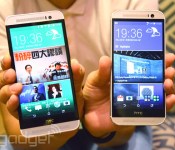
HTC One (E8) hands-on

HTC’s betting big on its recently unveiled E8 by pricing it almost half as much as the similarly-specced M8 in China, so naturally, we had to check it out for the sake of curiosity. To our surprise, the plastic body was quite solid — more so than the Desire 816 — and felt good thanks to the ergonomic curves on the back. The design also looked better in real life than in the official renders, though only time will tell how scratch-proof that glossy body is. Slower camera and lack of TV remote feature aside, the E8 is easily a steal given the near-identical guts as the M8 (Snapdragon 801, 5-inch 1080p screen, microSD expansion and more) plus the reassuring build quality; and there’s even a hilariously large limited edition packaging that doubles as a mood light — check it out in our video after the break.
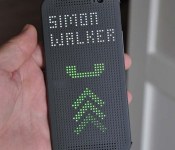
HTC Dot View Case for the HTC One M8. A Cool Idea that Needs Work.
HTC has been on an up and down spiral over the last couple of years as Samsung took the lead in the Android smartphone race. That’s not to say they haven’t made some awesome hardware, but they lost their way a couple of years ago and flooded the market with too many options and nothing spectacular.
With the Release of the HTC One and now the HTC One M8, HTC appears to be on the right track and the release of the HTC Dot View case for the HTC One M8 showed they were thinking out of the box.

The HTC Dot View case protects your phone while still allowing notifications and touch control without opening the case itself. There are a couple of issues that stop it being what it could have been, but it’s still a cool case, just not one that I’d have for myself.
Read the full review now on TheSavvyTechs.

//<![CDATA[
ord = window.ord || Math.floor(Math.random()*1E16);
document.write('’);
//]]>

HTC One Remix leaked with Verizon branding

It seems that Verizon is gearing up to release the HTC One Remix. Folks over at @evleaks leaked an image of a HTC smartphone with Verizon branding on it. The phone is said to be the Verizon’s version of the HTC One Mini 2, and the only difference is that the Remix comes with a smooth metal back. It’s a beautiful device and we will hopefully see it at Verizon soon.
 The device will come with 4.5″ 720p LCD display, Snapdragon 400 quad-core processor, 16GB of storage (plus microSD slot), a 13MP rear non-UltraPixel camera, 2100mAh battery, and Android 4.4 atop which sits HTC’s Sense 6 UI layer.
Are you planning to grab one? Let us know in the comment box below.
Source: @evleaks

The post HTC One Remix leaked with Verizon branding appeared first on AndroidGuys.
HTC One (E8) announced

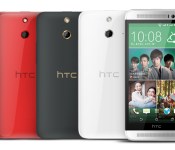
Following the launch of their flagship M8 smartphone, and some recent rumors, HTC has announced their new HTC One (E8) smartphone.
This follows a now-popular trend of ‘lower-end’ phones being built with a hefty set of features and/or specs and being both marketed and priced very aggressively to reach the masses.
This device is quite similar to the M8, with a few design revisions to keep it more accessible (read: affordable) than its flagship cousin. The body of the phone is polycarbonate in lieu of aluminum (but still is uni-body). The E8 loses the HTC “Duo Camera” (which included the “UltraPixel” camera and a 2nd lens, used for an increase in autofocus speed and accuracy), but does retain a more traditional 13MP rear and 5MP front cameras. Also still included is the HTC “BoomSound” speaker arrangement, MicroSD card slot, Android KitKat 4.4, Sense 6, LTE, 5″ screen, and “MotionLaunch” (gesture-based controls without having to wake up the device).
Also a now-popular move, HTC is offering the E8 in a variety of stylish colors, including Polar White, Electric Crimson, Maldives Blue, and Misty Gray.
The questions that remain are availability and price. It’s known that the E8 will initially launch in China, but we are unaware of HTC’s plans to extend the E8′s availability to further regions. Regarding price, that is still up in the air, but if this device is to follow the aforementioned trends, expect it to be much more appealing to the more every-man customer.
As more details and information emerge, we will keep you in the loop!
VIA: HTC
The post HTC One (E8) announced appeared first on AndroidGuys.

HTC’s ‘Vogue Edition’ One (E8) is around half the cost of the M8

Just as we were getting bored of the leaks about the plastic HTC One “Vogue Edition,” the company has finally decided to announce the only thing that we actually care about: its price. Well, according to the announcement in China, this dual-SIM LTE phone — codenamed “E8″ — is launching there for CN¥2,799 or about $450 unsubsidized. That’s almost half as much as the metallic M8 and, more importantly, the Samsung Galaxy S5 — both of which pack near-identical guts as the E8. That’s certainly very competitive, though not quite OnePlus-level competitive. While we wait for an actual launch date for both China and elsewhere, we’ve got a detailed spec sheet after the jump comparing the E8 to the M8. Enjoy!
| HTC One (M8) | HTC One (E8) | |
|---|---|---|
| Dimensions | 146.4 x 70.6 x 9.35mm | 146.42 x 70.67 x 9.85mm |
| Weight | 160g | 145g |
| Screen size | 5.0 inches | |
| Screen resolution | 1,920 x 1,080 (441 ppi) | |
| Screen type | S-LCD3 with Gorilla Glass 3 | |
| Battery | 2,600mAh (non-removable) | |
| Internal storage | 16GB / 32GB | 16GB |
| External storage | MicroSD (up to 128GB) | |
| Rear camera | 4MP UltraPixel, f/2.0, 2.0µm pixel size, 1/3″ sensor size, 28mm lens | 13MP, f/2.2 |
| Front-facing cam | 5MP, f/2.0, BSI, wide-angle lens | |
| Video capture | 1080p | |
| NFC | Yes | |
| Radios |
GSM/EDGE (850/900/1800/1900) (All); CDMA (800/1900) (Verizon, Sprint). HSPA+ EMEA: (850/900/1900/2100) with HSPA+ up to 42 Mbps LTE EMEA: (800/900/1800/2600) |
GSM/EDGE 850/900/1800/1900 MHz (SIM1 & SIM2) HSPA+ 850/900/1900/2100 MHz (SIM1) LTE China: FDD 1800/2100, TDD 2600 (SIM1) |
| Bluetooth | v4.0 with AptX | |
| SoC | Quad-core Qualcomm Snapdragon 801 (2.5GHz in Asia/China; 2.3GHz in other regions); Adreno 330 GPU | |
| RAM | 2GB | |
| SIM slot | Nano SIM | Dual Nano SIM |
| Connectivity | MHL, DLNA, IR, GPS/GLONASS | DLNA, GPS/GLONASS |
| WiFi | Dual-band, 802.11a/ac/b/g/n |
Dual-band, 802.11 a/b/g/n |
| Operating system | Android 4.4.2, Sense 6.0 | |
Filed under: Cellphones, Mobile, HTC
The Duo Camera-bearing HTC One E8 has been officially Announced
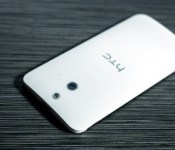
 Is the HTC One M8 a bit too full-on for you? Perhaps something a little bit less aluminium is a bit more up your alley. Well, if you are one of those people, the HTC One E8 that has been announced today may be the phone for you. The One E8 trades its aluminium metal unibody for a polycarbonate unibody (the same material used for phone cases) in the hopes of appealing to the “fashion-conscious” and will be available in “Polar White, Electric Crimson, Maldives Blue, and Misty Gray”.
 Not that many hardware details have been specified in the press release, but guessing from the fact that it has a 2,600mAh battery, BoomSound speakers and access to Sense 6.0 and Dot View cases, there will likely be more than a few similarities between the One E8 and One M8′s specifications. Probably the biggest similarity between the two devices is the inclusion of the Duo Camera, however while the One M8 had 4MP UltraPixel main camera, the One E8 instead just has a regular 13MP camera. Whether this means all the nifty features of the One M8 will no longer be available to the One E8 remains to be seen, but it’s very interesting that HTC has chosen to abandon UltraPixel for this new devices.
No pricing or specific region availability has been stated yet, however HTC says that the HTC One E8 will start becoming available in June. Hopefully changing the unibody to polycarbonate will make the device cheaper. Who’s interested in getting a HTC One E8? Let us know your thoughts in the comments.
Source: HTC
//<![CDATA[
ord = window.ord || Math.floor(Math.random()*1E16);
document.write('’);
//]]>

