


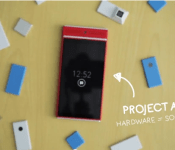
Project Ara will not be moving in with Lenovo, instead will be absorbed by Google’s Android Team
 While Google’s sale of Motorola to Lenovo is all but done and dusted, we’re still yet to find out exactly all the details of the sale and who gets what as part of the agreement. One part of Motorola that we’re most interested to find out the fate of is Project Ara, Motorola’s tantalizing modular phone project that was said to be shaping up quite well by Motorola’s CEO, Dennis Woodside, late last year.
Well, we’ve now learned that the Project Ara team, as well as the entirety of Motorola’s Advanced Technology and Projects group, will be moved to a ‘little’ part of Google‘s company under Sundar Pichai. And yes, that is the Android division. It’s hard to say what Lenovo might have done had they acquired Project Ara, but under the Android team at Google, you would hope the project would get the kind of care that Google typically gives to its other crazy, secret ideas.
What do you think of this sale of Motorola to Lenovo? And are you happy to know that Project Ara will be moved to Google instead of Lenovo? Let us know what you think in the comments below.
Source: Pocket-lint via Android Police
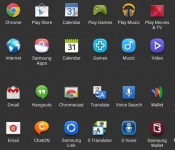
Samsung to back down on copying Google apps
New deal between the two should see less look-alike apps and services on Android
Earlier this week, Samsung and Google inked a patent deal for cross-licensing which should benefit both companies and help in any would-be lawsuits. As part of the terms, Samsung now agrees with Google to stop copying the infamous apps that make up Google’s service portfolio
CES 2014 featured some of Samsung’s current products, a launch of the Galaxy Camera refresh, and new Galaxy Pro tablets. It seems that Samsung has tried to make Android their own system in a sense, but now hopefully that does change. Perhaps the company’s push into Tizen might help place some extra space between them and Google.

As a Samsung user, I can definitely attest to the fact that many of these apps simply just aren’t needed. Hopefully this year we can see Samsung do something more simplified with the oft-overbearing TouchWiz/NatureUX.
Samsung shouldn’t feel the need to recreate something that already exists. On the other hand, when you’re that big, you can stretch out your arms a bit. There’s nothing wrong with trying to woo users to your platform-agnostic services.
There does come a time, however, when even Google has to step in and speak up. While some Samsung apps may have jump-started changes in apps like the default Video player, many owners (that we know of) haven’t much used some of the others. How many of you are using apps and services such as Samsung Apps, ChatON, and Samsung Wallet?
Recode via Android Community (image also courtesy of Android Community)
The post Samsung to back down on copying Google apps appeared first on AndroidGuys.
Lenovo buying Motorola Mobility from Google for $2.91 billion
Numerous sources reported today about a potential acquisition of Motorola Mobility that comes not even three years after Google bought it for $12.5 billion, and Lenovo just made the news official.
The Chinese-manufacturer announced that it entered into “a definitive agreement” with Google to acquire the Motorola Mobility smartphone business in order to strengthen its own smartphone market, basically to give it a presence in the U.S.
The acquisition price is $2.91 billion, subject to certain adjustments, including $1.41 billion paid at close, comprised of $660 million in cash and $750 million in Lenovo ordinary shares. The remaining $1.5 billion will be paid in the form of a three-year promissory note.
Google will maintain ownership of the vast majority of the Motorola Mobility patent portfolio… Lenovo will receive a license to this rich portfolio of patents and other intellectual property. Additionally Lenovo will receive over 2,000 patent assets, as well as the Motorola Mobility brand and trademark portfolio.
Back in August 2011, when Google acquired Motorola Mobility, it had said it was mainly interested in its patent portfolio. After becoming “A Google Company,” we’ve seen successful devices like the Moto X and Moto G, but Google was still reportedly losing hundreds of millions each quarter since the purchase.
While Lenovo said that it will be acquiring the MOTOROLA brand and Motorola Mobility’s portfolio of smartphones, like the Moto X and Moto G and the DROID Ultra series, “Google will maintain ownership of the vast majority of the Motorola Mobility patent portfolio, including current patent applications and invention disclosures.”
Google will also be licensing the patents to Lenovo, who will be receiving over “2,000 patent assets.”
One other interesting thing to note is that Dennis Woodside, CEO of Motorola Mobility, said that the company has “tremendous momentum right now” with the launches of the Moto X and Moto G and that Lenovo’s hardware expertise and global reach should help accelerate that.
Google is supposed to be reporting its quarterly earnings tomorrow, so maybe we will have even more information then.
The post Lenovo buying Motorola Mobility from Google for $2.91 billion appeared first on AndroidGuys.
Google Tells Samsung to Stop Making Storage-Clogging Apps

The Galaxy S4 came out last year, and it ended up being one of the most purchased devices on the market. The phone is loaded with all kinds of apps and features not found in other phones. Features that improved the experience, and features that were useless and stupid. The drawback of having these bloated apps and features, is that very fact: bloated. This causes of course some lags, as well as battery drains; so why put such features or apps if not needed?
According to certain sources, Google met with the Sammy boys and told them to stop developing these storage-clogging apps and features. Instead, work on apps that are more pure to the Android experience. Thank you Google. Yes, the Galaxy line are nice devices with some nifty features, but there are many features and apps that no one will ever use. But Google also told them to stop doing this simply because they want more control of their Android system. They are hating that Chinese manufacturers are running Android on their devices, but using their own UI’s and not placing the Google core apps into those devices.
Not only will Samsung consider dumping or altering the Magazine UX interface in future devices, but, more importantly, new Samsung devices will spotlight Google’s suite of apps to get movies, music and other content at the expense of its in-house developed software, which was once a proud showcase of Samsung’s evolution as a mobile industry leader.
The source was also quoted in saying that, which is a very good thing, because that Magazine UX was pretty laggy when we tried it at CES. Wasn’t appealing to us as well, so we will see what happens with future Samsung devices. Let us know your thoughts about this.
Lenovo Close to $3 Billion Deal to Acquire Motorola from Google [Update 2]
 Well this is certainly something we didn’t ever expect to see. According to Reuters, China’s Lenovo group is nearing the final stages of chatter to close a $3 billion dollar deal to pick up Motorola’s handset division from Google. That was not a miss type at all. The deal is set to not only pick up the company, but of course their patent holdings as well.
Of course the information is coming from sources that are close to the matter, while Google, Motorola and the various groups in discussion on the topic have not commented on the information as of yet. However, it is said that Lenovo will be using a combination of cold hard cash, stocks and deferred payments to close the deal. An official statement and/or announcement on the deal could come from any of the parties involved later today.
Did this totally come out of left field to anyone else?
Source: Reuters
Update: Looks like this story is gangbusters everywhere. China Daily is posting up the news claiming at least $2 billion which includes 10,000 patents. Lenovo is said to be having a press conference Thursday morning to announce what just happened. THis will certainly give Lenovo a leg up and a chance to finally break into the US market finally.
It is also being confirmed from sources at TechCrunch as well. Citing that Google held off on the sale for tax purposes. Which doesn’t surprise us.

Update2: Google has officially confirmed it via their Investor Relations page. Final talley states $660 million in cash, $750 million in Lenovo ordinary shares and the remaining $1.5 billion paid over three years in promissory notes. Final purchase amount totals $2.91 billion and is subject to certain adjustments. Total number of patents that Lenovo is picking up is only 2,000. Along with Motorola Brand and trademarks. Lenovo is also gaining a license to Google sportfolio patents and other intellectual property
“Lenovo has the expertise and track record to scale Motorola Mobility into a major player within the Android ecosystem. This move will enable Google to devote our energy to driving innovation across the Android ecosystem, for the benefit of smartphone users everywhere,” said Larry Page, CEO, Google.
“As part of Lenovo, Motorola Mobility will have a rapid path to achieving our goal of reaching the next 100 million people with the mobile Internet. With the recent launches of Moto X and Moto G, we have tremendous momentum right now and Lenovo’s hardware expertise and global reach will only help to accelerate this,” said Dennis Woodside, CEO, Motorola Mobility.
Need more? Lenovo just tweeted this out.
BREAKING NEWS: Lenovo to Acquire @Motorola Smartphone Business from @Google http://t.co/SD9IlKpqqI pic.twitter.com/9CKsRclzsn
— Lenovo (@lenovo) January 29, 2014
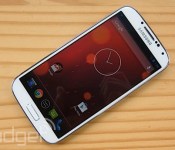
Reported Google deal could see Samsung deliver cleaner Android, less bloat

Google and Samsung agreeing to a 10 year patent licensing deal was good news for Android. But that might only be the tip of the iceberg. According to a report from Re/code the two are working together on a broader initiative that will bring the Samsung version of Android more inline with Google’s vision. The talks appear to have started at CES following the reveal of Galaxy Tab Pro and Note Pro lines, which featured a new skin called Magazine UX. The interface was not only a dramatic departure from the familiar TouchWiz, but from the very core of Android itself. In fact, the panel-based home screen looks a lot more like Windows 8 than Mountain View’s mobile OS. But Re/code’s sources say that future Samsung devices will either feature a drastically scaled back version of Magazine UX or lose the interface all together. Obviously, keeping the Android experience as consistent as possible across devices and brands is good for Google, but it could also help Samsung, which is now looking at maintaining three different Android-based tablet skins.
Google has been pressuring companies to minimize the tweaks to the Android UI (with varying degrees of success) for sometime now. So it balking at Magazine UX should come as no surprise. The more interesting part of the deal reportedly involves Samsung’s in-house apps. For years now the South Korean giant has been promoting its own (often lackluster) products that replicate functions of Google’s core Play Services. For example, WatchON, ChatON and the mSpot-enhanced Media Hub. Sammy has apparently agreed to instead shift focus to the Play store, Newsstand, Hangouts and other Google-built apps. Again, this will bring additional consistency to the Android universe and, considering the size of Samsung’s market share, will broaden the reach of Mountain View’s services.
What isn’t clear, is what concessions Samsung wrangled out of Google to get this deal done. It could simply be that Sundar Pichai threatened to pull access to the Play store if the Galaxy line didn’t, well, get in line. But that seems doubtful. Perhaps the company was promised the next Nexus device or even a seat at the brainstorming sessions for Lemon Meringue Pie (Lollipop? Lik-M-Aid?).
Filed under: Cellphones, Software, Mobile, Samsung, Google
Source: Re/code

Lenovo reportedly nearing $3 billion deal for Motorola’s handset business

According to several sources Lenovo is nearing a rather stunning deal that would put Motorola’s cellphone business in its back pocket for roughly $3 billion. Google snatched up Motorola in 2011 for $12.5 billion. Since then it’s slowly broken the company up, scaled back its device lineup and added its massive pile of patents to its legal arsenal. Now, after losing money for several years straight, Mountain View is reportedly preparing to offload the division on Chinese computer giant Lenovo. The purchase of Motorola will probably also put to bed rumors of Lenovo purchasing BlackBerry… at least for a little while. The company has been looking to step up its mobile efforts for the last couple of years, and Motorola’s existing infrastructure, patent library and brand recognition should help it make a dent here in the US.
The deal hasn’t been officially announced yet, but when (and if) it is there are bound to be plenty of questions. For one, how will the sale of Motorola to a Chinese firm effect the company’s recent efforts to bring manufacturing jobs back to the US? And how will this impact Google’s own expanding manufacturing plans in the future? Or course, we may have also just figured out how exactly Google convinced Samsung to start putting more focus on Play Services.
Filed under: Cellphones, Misc, Mobile, Google, Lenovo
Source: Reuters

Google’s partnering with Samsung and others for new educational devices this spring

Google began its play for the education market late last year with a student-oriented version of the Play Store. Since then, partners of the Google for Education program have provided their classes with learning software and tools on select Chromebooks and Android-based tablets. Today, Mountain View announced two new devices headed for that very lineup this spring: Lenovo’s ThinkPad 11e series and the Toshiba Chromebook, starting at $349 and $299 (respectively). Samsung’s also on board with a classroom-ready edition of its Galaxy Tab 3 10.1 set to launch this April.
And what’s the best way to complement that influx of hardware? Google thinks it’s by adding thousands of K-12 books to Google Play for Education, including popular titles like Bridge to Terabithia and Lord of the Flies. The plethora of digital reads are available for affordable access periods (60, 180 or 360 days) to a few select schools as early as today, but arrive for the rest in the coming weeks.
Filed under: Google
Source: Google

Android climbed to 79 percent of smartphone market share in 2013, but its growth has slowed

Android may have quickly reached the top of the smartphone world, but there are signs that this red-hot growth is cooling off… if only just. Strategy Analytics estimates that the platform claimed nearly 79 percent of smartphone market share in 2013. While that’s both a record high and a big step up from almost 69 percent in 2012, it also represents Android’s slowest annual growth rate since its birth. As the analysts note, Google is facing an increasingly saturated market; there are only so many more customers it can reach.
Not that things were rosy for other mobile operating systems last year. Apple shipped more phones in 2013, but not enough to avoid a dip to 15.5 percent market share. Windows Phone grew to 3.6 percent share, although its one-point improvement over 2012 wasn’t going to make Apple or Google nervous. And for smaller platforms, 2013 was downright ugly. BlackBerry, Symbian and others fell from a collective 9.1 percent in 2012 to just 2 percent. The smartphone market in 2014 is effectively a three-horse race, and it’s doubtful that the rankings will change any time soon.
Filed under: Cellphones, Mobile, Apple, Microsoft, Google
Source: Strategy Analytics

Google hacked together some pretty underwhelming games for Glass (video)

While Google Glass may still be in its infancy, gaming on the wearable is practically in the zygote stages. To help change that, developers at the search giant have cobbled together some games in an effort to “inspire” developers. That said, what Google is offering doesn’t seem too different from what we’ve seen out of other teams. There are five diversions in total (including a Fruit Ninja clone, as well as tennis and a matching game), but there isn’t anything particularly exciting about them. For example, Balance tasks you with keeping a stack of shapes from falling off of your skull via Glass’ baked-in accelerometer. Clay Shooter, on the other hand, has you yelling “pull!” to line up the target with your eyepiece’s crosshairs, and shouting “bang!” to shoot the pigeon — sure to be a big hit in crowded areas. Still, if you’re curious what official Glass games look like, we’ve embedded video after the jump.
Filed under: Wearables, Mobile, Google
Source: Google Developers

