



Daily Roundup: prescription frames for Google Glass, Pebble Steel review and more!

You might say the day is never really done in consumer technology news. Your workday, however, hopefully draws to a close at some point. This is the Daily Roundup on Engadget, a quick peek back at the top headlines for the past 24 hours — all handpicked by the editors here at the site. Click on through the break, and enjoy.

Google Glass gets prescription frames
Google’s making good on its promise to deliver a headset with prescription frames. The eyeglasses are currently available as a $225 upgrade for Google Explorers, but early adopters will be able to pick up a pair as early as this afternoon. Click the link for details about styles and insurance options.

Nintendo denies smartphone mini-games
If the idea of Nintendo mini-games on your smartphone made you feel happy inside, get ready for a letdown. The company confirmed that it has no plans to make its software available to non-Nintendo devices. Click on through for more information.

An early look at in-car iOS
Developer Steven Troughton-Smith found workings of Apple’s expected in-car experience hiding in the public version of iOS 7.0.3. He also managed to crank up a preview of the interface through an emulation of a vehicle display. Click through for a video and more details.

Pebble Steel review
Smartwatches aren’t typically known for their sleek design, but the Pebble Steel is certainly a looker. At $249, Pebble’s new all-metal wearable may cost a bit more, but it’s got the right amount of bling to make up for it. Follow the link for our review.

Chrome apps will soon arrive on Android and iOS devices

Last month, we discovered Google was working on a tool that would port Chrome apps to both Android and iOS. Today, the folks in Mountain View released a developer preview that does just that. Like the early rumblings suggested, it’s based on open-source Apache Cordova, which leverages the software’s native HTML, CSS and JavaScript. This means that the software will get wrapped in the stylings of a native app and can be submitted to each app store for distribution. There’s also a slew of Chrome APIs available that you’d expect to see in mobile apps, including the ability to build in payments, notifications and alarms on top of those offered by the Cordova platform. Now that the tools are in the hands of devs, we’ll have to bide our time until the finished Chrome apps begin to surface.
Filed under: Software, Mobile, Google
Via: The Verge
Source: Chromium Blog
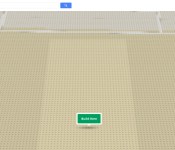
Build anything you want with Legos, in Chrome

Let’s be honest: You’re never too old to play with Legos. Thanks to the latest Chrome experiment (and a little help from WebGL) you can build whatever your heart desires directly from your browser. Using Maps, you’re able to choose a location-specific plot before starting to build, brick by brick. As you might expect, creations can be viewed across Google+ circles with categories for sorting, and tutorials will help hone those plastic contractor skills. If you really wanna get hands-on, use your phone or tablet’s touchscreen for a more tactile feel. Itching to get started? You can begin construction right here.
Filed under: Internet, Software, Google
Source: Google
Google Bringing Chrome Apps to iOS and Android [iOS Blog]
Google today launched Chrome apps for iOS and Android, which will see Chrome-based apps encased in a native application shell that allows them to be distributed through the Apple App Store and Google Play. Currently, Chrome-packaged apps are written in JavaScript, HTML, and CSS, but are able to launch outside the browser, access APIs and work offline.
Developers can access an early developer preview of a toolchain based on Apache Cordova, an open source platform for building native mobile applications with HTML, CSS, and JavaScript. Using the toolchain, developers can wrap existing Chrome Apps with a native shell, which transforms them into apps that can be sold on the App Store.
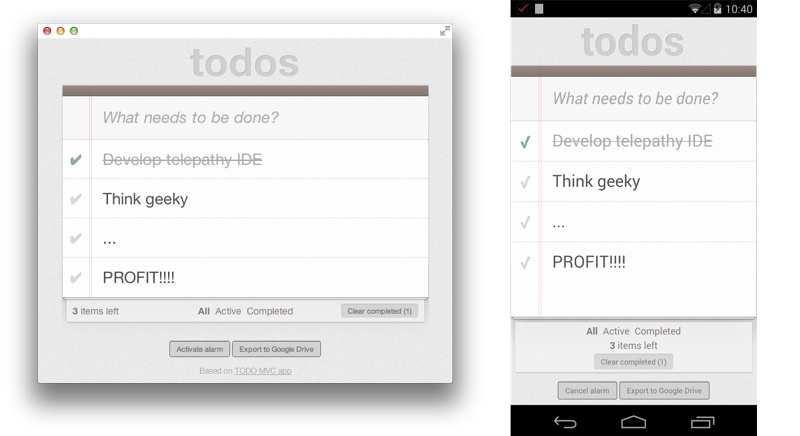 Example of a Chrome To-Do app running on OS X and Android
We provide a simple developer workflow for packaging a Chrome App natively for mobile platforms. You can run your Chrome App on a device or emulator using the command-line or an IDE. Alternatively, you can use the Chrome Apps Developer Tool to run your app on an Android device without the need to install an IDE or the mobile platform’s SDK.
Google has made multiple core Chrome APIs available to Chrome apps that are designed to run on mobile devices, including automatic sign-in via OAuth2, push messaging, storage, alarms, file system syncing able to store and retrieve files backed by Google Drive, and more.
In addition to the Chrome APIs, developers are also able to access APIs supported by the Cordova platform.
Chrome mobile apps come following the September launch of Chrome apps that work offline by default and function as native applications. In December, Google brought Chrome apps to the Mac, following a beta testing period that began in May. Chrome apps on the Mac are designed to function like native Mac apps, working offline, updating automatically, and syncing on any computer where a user is signed into Chrome.
Developers have the opportunity to begin working with Apache Cordova and their Chrome apps beginning today, but it may be some time before consumers see Chrome apps in the App Store.
     |
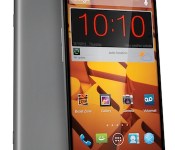
ZTE’s Iconic Phablet comes to Boost Mobile as the Max, available today for $300

ZTE’s Iconic Phablet may have been the worst-named product of CES 2014, but fortunately the company has told us it was merely a placeholder name. Despite it only having been unveiled three weeks ago, it’s already making its way stateside under a much more reasonable (though predictable) name of Boost Max for Boost Mobile, one of Sprint’s prepaid legs. The 5.7-inch 720p device is available starting today sans contract for $300, and it appears that the phone didn’t lose its Multi-Window feature (which works with virtually every app on your device) on its way across the Pacific. It did, however, get bumped down to Android 4.1, two versions lower than the one we played with at CES. On top of this, you’ll also get an 8MP rear camera with 1MP front-facing cam, LTE support, 3,200mAh battery and a 1.2GHz dual-core Snapdragon processor. If you’re disappointed by the name change for some reason, don’t worry — it can forever be an iconic phablet in your heart.
Filed under: Cellphones, Wireless, Mobile, Google, Sprint
Source: Boost Mobile

Google finally launches prescription Google Glass with the Titanium Collection
 We’ve known for some time that Google has been working on prescription Google Glass for some time now, and while we’ve only had sneak peeks whenever they pop up, Google has finally officially launched prescription upgrades for Google Glass Explorers to purchase from tomorrow. Called the Titanium Collection, it includes 4 different titanium frames which can be married with the existing Google Glass and 2 additional sunglasses designs which can also be chosen. Check out Google’s introduction video to the Collection:
Each of these prescription frame designs – Split, Thin, Bold and Curve – can be purchased for $225 USD each (check them out at google.com/glass), though Google is said to be working with VSP, the largest U.S. optical health insurer, to worked out subsidies for Explorers who qualify under their umbrella. However, if none of these styles take your fancy, Google also promises that there is more to come.
As a perpetual glasses wearer, I can’t say that any of the styles particularly jumps out at me as they look quite, for lack of a better description, hipster, but that will probably vary depend on your predisposition; what do you think about these new prescription Google Glass frames?

British government reportedly tracking YouTube and Facebook data without permission

While the NSA has been busy scouring the Angry Birds leaderboards, newly leaked documents report that its British counterpart — the GCHQ — has been monitoring the flow of social media in real-time. The General Communications Headquarters can apparently keep track of YouTube traffic, which links are liked on Facebook and even which Blogger or Blogspot pages are visited. This all comes via documents taken by Edward Snowden that were obtained by NBC News. NBC‘s sources also say that the British spies have been able to physically tap the lines carrying global web traffic to extract key data about specific users as well. This initiative, called Squeaky Dolphin, intends to put broad data trends into context with world events and give the intelligence community a heads up for future anti-government happenings — not for spying on a person-by-person level. What’s more, the GCHQ reportedly shares this information with the US.
The GCHQ has issued a statement claiming that all of its work is carried out within the limits of the law, while the NSA says that it’s only interested in the communication activities of valid foreign intelligence targets. For their part, Google and Facebook say that the spying on unencrypted information was done with out their respective knowledge, and neither company had given the UK government permission to access the data — something we’ve heard before.
Filed under: Internet, Google, Facebook
Source: NBC News (1), (2) (PDF)

Google Glass gets prescription glasses: four styles, $225 each (video)

Remember when Google said its wearable would work perfectly fine with prescription glasses? Well it’s finally delivered, offering a $225 upgrade option for current Google Glass Explorers. Crafted from titanium (whatever else?), the designs are pretty unassuming and classy: they look like glasses frames you’d see at an optometrist. There’s four styles to choose from — Curve, Thin, Split, Bold — making the selection sound more like font categories than frame categories. Google Glass then attaches to the frame through several screws. More styles (in other materials and shapes, possibly) are incoming, but the team behind this launch range (the designs were all done in-house at Google) said their aim was simplicity — it helps that the extra frame-age also helps to obscure the still rather conspicuous Google eye-piece. Early adopters will be able to shop around for frames starting this afternoon and VSP, the largest optical health insurance provider in the US, is working with Google to offer subsidized frames and lenses for those that qualify.
Introducing the Titanium Collection, 4 new frames for #googleglass… and 2 new shades as well http://t.co/6izKSdACKL pic.twitter.com/UXp5n8H3NW
– Google Glass (@googleglass) January 28, 2014
Filed under: Wearables, Google
Source: Google Glass (Google Plus)

Chrome update for iOS now lets you quickly translate text and save on data too

Even though Chrome promised it would bring data compression and an automatic translation bar to iOS a couple of weeks ago, it hasn’t actually rolled out the update until today. As a reminder, the latest mobile browser release from Google includes a site compression feature, that when enabled promises to reduce data usage by up to 50 percent, which should theoretically help save you a little cash on your monthly phone bill. Additionally, it will automatically offer a “Translate” button whenever it comes across a page in a foreign language. Last but not least, it also has a New Tab Page feature that lists a prominent Google search bar and a list of frequently visited sites so that you can search for stuff that much quicker. If that sounds like an intriguing alternative to Safari for you, go ahead and download the latest Chrome 32 update from the source link below.
Filed under: Mobile, Apple, Google
Source: App Store, Google Chrome Releases
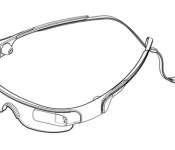
Samsung ‘Galaxy Glass’ will be launched in September?
We all love Google Glass, don’t we? It’s a great innovation by Google, and a gadget of future. Recently, we learned that Samsung will launch their very own wearable glasses, and it seems it’s getting closer. Now according to Korea Times, Samsung will launch the ‘Galaxy Glass’ in September at the IFA trade show. 
This design is of a type [of glasses] with earphones integrated, allowing [users] to take phone calls and listen to music during workouts,” the October patent filing revealed. It will have the ability to connect with smartphones and display notifications through the eyepiece, and the lens is transparent or translucent, the filing further stated.
We learned that Samsung and Google signed a global patent license agreement, hence they will have access to each other patents. Also, Samsung will have access to Google’s Glass patents, which means that we can expect the Galaxy Glass to be something like the original Glass. Back in October, Samsung also filed for a patent for wearable glasses.
If Samsung is jumping into this, I am sure we will see several other technology brands launching ‘smart glasses’ as well. What do you think about it? Tell us in the comment box below.
Source: Korea Times
The post Samsung ‘Galaxy Glass’ will be launched in September? appeared first on AndroidGuys.

