


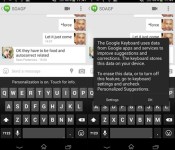
Google Keyboard’s autocorrect gets better if you let it mine your data

Keyboard software updates for Android, or any other mobile device, are relatively unexciting because… well, you know, keyboards. But, if you happen to have opted for Google’s particular stock version by way of the Play Store, you’re about to get a better autocorrect experience. A new update that’s currently rolling out introduces the option for Personalized Suggestions, meaning the app can mine data from any other Google service you use to better serve your swift typing needs. Don’t worry, all that info is apparently stored locally on your phone. And it’s not like you’ll have to dig through menu options to find this particular setting, either. Google’s put it front and center so the first time you fire up the keyboard post-update, a helpful alert message will appear above the keys to make sure you know the deal. You can always turn it off, however, and return to a life less finely autocorrected. The choice is yours: one path leads to unintentional humor and the other to accuracy.
Filed under: Cellphones, Software, Mobile, Google
Via: Droid-Life
Source: Google Play
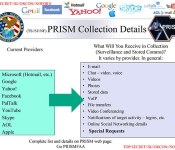
NSA claims that technology firms are aware of its data collection

If you ask technology leaders like Apple or Google, the NSA has been snooping on their customers without permission. However, the NSA has a very different story. Agency general counsel Rajesh De tells an oversight board that these companies are fully aware of and assisting data collection under the PRISM surveillance program, whether it targets servers or internet traffic. There’s a “compulsory legal process” for the firms involved, the attorney says. If accurate, the statement at least partly contradicts repeated claims from these companies that the NSA leaves them in the dark. With that said, it’s still possible for both sides to be right. Leaks from last June suggest that company staff handling these government requests are required to keep the details secret, even when speaking to coworkers — higher-ups won’t necessarily hear about cooperation with the intelligence community.
Filed under: Networking, Internet, Apple, Microsoft, Google, Facebook
Via: CNET
Source: The Guardian
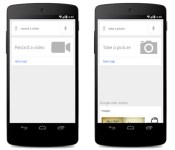
‘Okay Google, take a photo’ comes to Search for Android app

Glass users are all too familiar with the battery of commands required to get the headwear to spring into action. Beginning today, two of those lines are available in the Google Search for Android app. If you say “Okay Google” followed by “take a photo,” your device will launch the camera app. Similarly, “take a video” accomplishes the same, albeit it in movie mode. Of course, we prefer to speak into a smartphone only when absolutely necessary, and with plenty of other methods for launching into photo mode (including, of course, simply tapping the camera icon), this is a feature we don’t plan to use anytime soon.
Filed under: Cellphones, Google
Source: Google
Google Keyboard 3.0 released adding personalised word suggestions
Google’s very own keyboard has today been updated to version 3.0, or more specifically 3.0.19373. The update brings a few minor bug fixes and tweaks, such as a dedicated “ABC” button to switch from emoji.
Of most interest in the Google Keyboard 3.0 update is a new personalised suggestions feature which uses data from other Google Apps and Services to improve suggestions and corrections.
The settings is enabled by default, so will need turning off if you aren’t too happy with Google capturing keyboard info in other apps.
Google Keyboard 3.0 is now available in the Google Play Store.
The post Google Keyboard 3.0 released adding personalised word suggestions appeared first on AndroidGuys.
Looking back: A brief history of Google’s Nexus devices
Sometimes when a smartphone is released, it is very easy to tell what the manufacturer was aiming for. Unlike some popular lines of smartphones like Samsung’s Galaxy S series or HTC’s One series, Google’s Nexus line has received some interesting feedback over the years. Does the term ‘Nexus’ mean what it did when Google started this line? Which one of these devices was truly iconic for it’s time? Let’s take a look back.
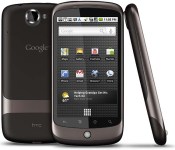
HTC Nexus One

Introduced: January 2010
Android version: 2.1 Eclair – 2.3 Gingerbread
Notable hardware features: HTC used their familiar build for the time – matted plastic with brushed metal accents. Oh, and a trackball. It also sports a 3.7-inch 480×800 AMOLED (or Super LCD) display, 1 GHz Qualcomm Scorpion CPU with 512 MB RAM, 1400 mAh battery, and a 5 MP camera.
How it was sold: The One was sold mainly for developers and launched as $529 unlocked, and offered a “pure Android” experience with an unlockable bootloader. Also, this was Google’s first attempt to sway people to buy a device online without seeing in stores. Perhaps a bit ahead of its time, the Nexus buying experience would evolve over the years.
Despite the lawsuits and patent troubles, the reaction was very positive. These were some of the best specs anyone has ever seen on a smartphone. Everything was great about the phone except for the price, even by today’s standards.
Samsung Nexus S

Introduced: Nexus S: December 2010, Nexus S 4G: March 2011
Android version: 2.3 Gingerbread – 4.1 Jelly Bean
Notable hardware features: Samsung opted for a slimy hyperglaze plastic for their first Nexus, with a slight curve to the screen. It also has a 4-inch 480×800 Super AMOLED display, 1 GHz Samsung Exynos 3 processor, 512 MB RAM, 1500 mAh battery, and a 5 MP camera.
How it was sold: The Nexus S was sold for $530, while the Nexus S 4G was sold for $550. The jump to Gingerbread didn’t change a whole lot, at least talking about the user interface.
At the time, it was one of the best smartphones to date. The first model didn’t support HSPA+, which was a big negative. However, Google seemed to remedy that by offering a 4G model in the coming months. This one wasn’t a huge step up from the One, at least originally, but it did keep users interested in the Nexus line.
Samsung Galaxy Nexus

Introduced: November 2011
Android version: 4.0 Ice Cream Sandwich – 4.3 Jelly Bean
Notable hardware features: Samsung’s second iteration of the Nexus came at us with a completely different design – still plastic, but more textured on the back plate, still keeping the slight curve of the screen and a (very) heavy bottom. This one sports a 4.65-inch 720×1280 Super AMOLED display, 1.2 GHz dual-core ARM Cortex-A9 processor, 1 GB RAM, 1750 mAh battery, a 5 MP rear-facing camera, and a 1.3 MP front-facing camera.
How it was sold: The G-Nex was sold for $399 at launch. Probably the biggest selling feature of this one is the software. The jump from Gingerbread to Ice Cream Sandwich is still the biggest UI overhaul to date, adding tons of new features/improvements.
Due to the software, the Galaxy Nexus became hugely popular. Now, every phone has it’s faults. But it seems to be more apparent than ever in this Nexus. The batter life, though a big jump from it’s predecessor, is terrible. There is no way a smartphone user could get through an entire day on a single charge. That’s to be expected, given the time this phone was relevant. But the phones being launched at roughly the same time had tremendously better battery life that this one. Also, when Android 4.4 Kit Kat was announced, Galaxy Nexus owners were distraught to hear that their phones wouldn’t be receiving the update.
ASUS Nexus 7 (2012)

Introduced: June 2012
Android version: 4.1 Jelly Bean – 4.4 Kit Kat
Notable hardware features: Google decided to rope in popular tablet/laptop manufacturer, ASUS, for their first take at a Nexus tablet. The back was a soft-touch plastic with a golf-ball like texture. It has a 7-inch 1280×800 IPS LCD display, 1.2 GHz quad-core ARM Cortex-A9 processor, 1 GB RAM, 4325 mAh battery, and a 1.2 MP front-facing camera.
How it was sold: The Nexus 7 was announced at Google I/O for $199, bringing Android 4.1 to the table. With the addition of Google Now and other enhancements, the Nexus 7 was a very attractive tablet, especially for the price.
For years, Android tablets have had a big problem. The lack of tablet-friendly applications was a huge negative for Google’s first iteration at a Nexus tablet. Ultimately, the tablet did very well with the common consumer. It was a big change in the Nexus family – not only was it not a phone, but it was aimed at the average consumer. Also, the $199 price point was an invitation for developers to pick one up and start working on tablet-friendly apps.
Samsung Nexus 10

Introduced: October 2012
Android version: 4.2 Jelly Bean – 4.4 Kit Kat
Notable hardware features: Google had Samsung make their 2nd Nexus tablet. This one has a rubbery-soft (very grippy) plastic and front-facing speakers. It has a 10.1-inch 2560×1600 True RGB Real Stripe PLS LCD display, 1.7 GHz dual-core Cortex-A15 processor, 2 GB RAM, a 9,000 mAh battery, a rear-facing 5 MP camera, and a front-facing 1.9 MP camera.
How it was sold: This one was supposed to be announced with the Nexus 4 in an event in New York, but it was cancelled because of Hurricane Sandy. It was still announced later that day for $399. It was running Android 4.2, a notable step up from Android 4.1.
The Nexus 10 was popular, but still carried the same unfortunate handicap that the Nexus 7 had. If the lack of tablet-friendly apps wasn’t apparent enough on the first Nexus 7, it was made very clear on this one. Suffice it to say, it is getting better, but at the time that this tablet was released, it was difficult to find apps that played nicely with a big screen.
LG Nexus 4

Introduced: November 2012
Android version: 4.2 Jelly Bean – 4.4 Kit Kat
Notable hardware features: LG’s first Nexus was beautifully designed. It offered a glass back with a dotted, almost sparkly look to it. It also offered plastic bezels and a screen that curved slightly around the edges. LG”s Nexus has 4.7-inch 768×1280 IPS LCD display, a 1.5 GHz quad-core Snapdragon S4 Pro processor, 2 GB RAM, a 2,100 mAh battery, an 8 MP rear-facing camera, and a 1.3 MP front-facing camera.
How it was sold: Launched alongside the Nexus 10, the Nexus 4 was originally sold for $299. Still aiming at developers, this Nexus offered a very small price point – something the average consumer would be very fond of. It also offered Qi wireless charging – a Nexus family first.
For $299, you’d be hard pressed to find a better smartphone for the price. But for Google to reach that price point, they needed to make some sacrifices. One of those being the lack of 4G. Weird, right? Nexus phones that were released a couple years prior had 4G capabilities, but why not this one? Google seemed to think the HSPA+ support would suffice. There wasn’t much else that didn’t make it on the phone, though. It was a decent step up from the Galaxy Nexus, and showed people that they didn’t need to fork over an entire paycheck for a smartphone.
ASUS Nexus 7 (2013)

Introduced: July 2013
Android version: 4.3 Jelly Bean – 4.4 Kit Kat
Notable hardware features: ASUS got a shot at making a second Nexus tablet. It has a soft-touch back, two long speakers on each end, as well as a big ol’ camera on the back. It has a 7-inch 1920×1200 IPS LCD display, 1.5 GHz quad-core Krait 300 processor, 2GB RAM, a 3950 mAh battery, a 5 MP rear-facing camera, and a 1.2 MP front-facing camera.
How it was sold: The 2013 Nexus 7 was announced at an event called “Breakfast with Sundar Pichai”, Google’s current Senior Vice President, overseeing Android, Chrome and Apps. It launched for $229 – a $30 price increase from the first generation tablet. This one brought Android 4.3 Jelly Bean to the table and a much-improved screen.
The Nexus 7 (2013) has been Google’s most popular tablet to date, fixing just about every gripe that consumers had with the first generation. The speakers are loud and very difficult to cover up, the screen received a much-needed upgrade, and the bezels shrunk on the sides, making the tablet’s screen pop much more. With help from more and more tablet-compatible apps, this device marked Google’s entrance into the mainstream tablet world, offering an affordable, yet glorious competitor to others such as the iPad.
LG Nexus 5

Introduced: October 2013
Android version: 4.4 Kit Kat – 4.4.2 Kit Kat
Notable hardware features: This is LG’s second attempt at making a Nexus phone. The Nexus 5 offers a soft-touch back and a big camera on the back, much like the Nexus 7 (2013). It also offers a 4.95-inch 1920×1080 IPS LCD display, 2.26 GHz quad-core Krait 400 processor, 2 GB RAM, a 2,300 mAh battery, an 8 MP rear-facing camera with OIS, and a 1.3 MP front-facing camera.
How it was sold: The Nexus 5 was announced in a Google+ post for $349, and went on sale in the Google Play Store immediately. It launched with Android 4.4 Kit Kat, and drew people in with its exclusive “Google Now Launcher”.
The Nexus 5 became popular very quickly, mostly due to its price and hardware upgrades. Much like the 2013 Nexus 7, Google fixed most of the complaints users had from the Nexus 4. The addition of 4G bands, a slightly bigger screen, and more durable hardware were it’s best features, by far. The meaning of the term ‘Nexus’ began to change due to the Google Now Launcher. Though still aimed at developers, the consumer market took this one by storm. Google not only offered a cheap price point, but they added exclusivity with some of the services that came with it. Instead of offering a phone with a “pure Android experience”, they opted to give a “pure Google experience”.
Honorable Mention: Google Play Editions

Between the Nexus 4 & 5, Google announced the first ever Google Play Edition smartphones – the GPe Galaxy S4 and the GPe HTC One. Bringing a quality Android experience to top of the line hardware, the GPe phones are a force to be reckoned with… until you look at the price. The GPe Galaxy S4 was announced for $649. Suddenly, the term ‘Nexus’ doesn’t mean cheap anymore. Or, wait… is this a Nexus?
With the promise from Google to receive timely Android updates, the GPe smartphones took an odd spot in the Nexus family, quickly dubbing themselves as the red-headed step children of the group. You love them because they offer a great hardware experience, but that price… oh man, that price. Google is still continuing to announce GPe devices left and right, so here’s the question – what’s their end goal?
Here’s my take, although I may be wrong; it’s the only answer my brain wants to accept as correct. Google has been releasing GPe devices for a while now. At first, it seemed normal for the S4 and HTC One to get the Google treatment. Premium hardware and software, where could you go wrong? Then they started announcing some really odd editions like the Moto G, for instance. The Moto G was already basically a Google-ified smartphone. It ran mostly a stock experience, give or take a few features. So why would they release it?
Manufacturers don’t receive code until the day it’s announced to the public. So with the odd addition of the Moto G to the family, swooping in before they’re whisked off to Lenovo, it gives all of the main hardware manufacturers early code that they wouldn’t have gotten already. Google didn’t have to add any of those phones to their lineup to make any money… they did it for the greater good – early updates for all.
What’s next?
So, does the term ‘Nexus’ mean what it did 4 years ago? Not really. But that’s not a bad thing. There will always be room for the Nexus line in the hearts of pure Android enthusiasts, developers, and consumers who aren’t fond of 2-year agreements. Sure, there are rumors that the GPe devices will take over the Nexus line sometime next year, but one thing is certain: we will always have access to the pure Android experience that we all love.
Sometimes it’s just nice to take a look back and reminisce about devices we love, no? Which of these devices is your favorite? Do you have anything to add about (what I consider to be) the best smartphone line ever? Leave a comment below and we’ll talk!
The post Looking back: A brief history of Google’s Nexus devices appeared first on AndroidGuys.

Moto 360 designer: ‘we wanted to hit that Whoa! mark’

In a live broadcast, designer Jim Wicks showed off a working version of the Moto 360 smartwatch and offered up a few pieces of information about his prized product and the philosophy behind its design. When asked about the inspiration for the 360′s circular design, Wicks mentioned that the shape is an iconic one that people naturally associate with time, as evidenced by the fact that nearly 80 percent of all watches sold globally are circular. “We don’t want to make consumers change for this tech,” Wicks said. “We want to make this tech map to them. With a square concept you might say ‘that’s interesting,’ but you don’t hit that ‘Whoa!’ mark. We wanted to hit that Whoa! mark.” Wicks understands that when it comes to smartwatches, fashion triumphs over functionality — and with the Moto 360, he believes that it passes the crucial test of being fashionable enough that consumers will want to buy it.
Of course, this isn’t Motorola’s first go at a watch. The Moto ACTV taught the company quite a few lessons, one of which was power management. “Our system design for ACTV is what allowed us to run it with a very small battery; and what we invented there went into the Moto X (with Active Display, touchless control and sensor integration). And a lot of the stuff you saw in the Moto X…ended up going into this watch.” While he couldn’t speak about battery life estimates, he specified that power management is a high priority for Motorola.
Wicks also believes that the Moto 360 will appeal to men and women alike. “We’re going after mass appeal by making design decisions around round,” he said. He claims that there are plenty of women who are now buying larger-faced watches, and having a customizable wristband will certainly help make it a good fit for as many people as possible: “From a comfort perspective, we’re allowing ourselves to get maximum reach, from small wrists all the way to large wrists.”
In addition to its circular design and the use of Google’s new smartwatch platform called Android Wear, we also learned that the 360 will feature interchangeable straps, water resistance and a special way of charging the device without USB, although Motorola isn’t ready to disclose any details on what that entails just yet. It’ll also be compatible with Android devices running 4.3 Jelly Bean or higher. Moto confirmed that the watch lacks a camera, a fact that likely won’t come as a disappointment to most potential buyers. Unfortunately, at the moment it also lacks a price, firm release date and word on availability, although the company indicated that it wants to eventually distribute it globally (which we take as a sign that it’ll probably be limited to the US or North America at first). Head below for the full interview.
Filed under: Wearables, Wireless, Mobile, Google
Source: Motorola (YouTube)

10 years of social media’s biggest players and payouts by the numbers

Facebook launched ten years ago in February 2004. A month later, so did this site. Social media hasn’t, doesn’t and won’t stay still. As Myspace rises, Friendster declines. The pattern’s repeated itself a few times already, and even Google hasn’t quite cracked the magic social network formula, at least not yet. The crown currently belongs to Facebook, a company that’s made some big, big startup purchases on the way, although Twitter continues to pack (arguably) more influence. A whole lot has happened in the last decade, but we’ve tried to squeeze the more interesting parts into something a little more visual. Check out the full ‘graphic, right after the break.

Google expands Nexus 5 and Nexus 7 sales to more European countries

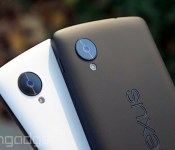
Google may have wowed the world yesterday with the introduction of Android Wear, but it turns out it also had some Nexus-related news tucked away too. Already available in 13 countries around the world, the search giant has quietly expanded sales of the Nexus 5 and Nexus 7 across Europe, listing them on the Play Store in eight new markets. These include Austria, Belgium, Denmark, Finland, Ireland, the Netherlands, Portugal and Sweden, giving customers the option to bypass operators and grab themselves an unlocked Nexus device direct from Google. With the Chromecast finally on sale outside of the US and an influx of Android-powered wearables on the way, Google’s finally making it easier for Europeans to start investing in its expanding product family.
Filed under: Cellphones, Tablets, Mobile, Google
Via: Android Police
Source: Google Play Support

Daily Roundup: Sony’s ‘Project Morpheus,’ the Moto 360 smartwatch and more!

You might say the day is never really done in consumer technology news. Your workday, however, hopefully draws to a close at some point. This is the Daily Roundup on Engadget, a quick peek back at the top headlines for the past 24 hours — all handpicked by the editors here at the site. Click on through the break, and enjoy.

This is Motorola’s new Android Wear smartwatch: Moto 360
Motorola’s new wearable, the Moto 360, takes smartwatch form factor back in time (har), boasting a seriously eye-catching design and circular watchface. Powered by Google’s Android Wear, owners can utilize the power of Now from their wrists. What’s more, this isn’t the Moto 360′s only design. It’ll come in a variety of styles once it launches this summer.

‘Project Morpheus’ is Sony’s virtual reality headset for the PlayStation 4
Sony’s officially jumping into the VR realm with “Project Morpheus.” Now just a prototype, the two-part headset has a 1080p display and packs a 90-degree field of view. And though it’s still unclear how the device will work with consoles, the hardware you see above will double as a developer kit.

Google announces the Android Wear platform
Earlier today, Google unveiled Android Wear: a Nexus-like platform designed to power wearables, featuring contextual updates similar to Now and the same always-listening feature found on the Moto X. This mobile OS will focus on the smartwatch form factor for now, but Google says that’s just the beginning.

Apple’s new 8GB iPhone 5c now available worldwide
It looks like the rumors were true. An 8GB version of Apple’s iPhone 5c is available from several European carriers on multi-year contracts. And though the colorful handset has also arrived for Australia and China via Apple’s online store, we’ve yet to hear word of US availability.
You also might like:
Filed under: Misc
Chromecast officially available across Europe and in Canada starting today

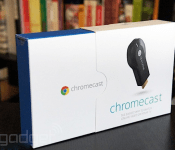
Sure, a few eager Amazon shoppers might have been enjoying the Chromecast on the other side of the pond, more or less straight after it launched in the US. However, those Europeans (update: and Canadians) waiting for an official retail channel, (as suspected) your time has finally come. Google just announced that its popular media streaming TV accessory will be available for customers in the UK, France, Germany, Spain, Italy, Netherlands, Norway, Sweden, Denmark and Finland starting today and will cost £30. Naturally you can purchase via the Play store, but Amazon will be stocking also. If you prefer things a little more bricks and mortar, and live in the UK, they’re also coming to Curry’s — if you hadn’t already heard — and PC World. With the official release in new territories of course comes region specific apps, led by the BBC’s ubiquitous iPlayer which will now play nice with the HDMI dongle. All these new customers, just in time for the inevitable wave of apps, too. It’s almost like they plan these things…
Filed under: Home Entertainment, HD, Google
Source: Google Chrome Blog
 AIVAnet