



Google’s lightweight image format makes YouTube pages load 10 percent faster

We all want the internet to be faster, right? Well, Google is hoping to make that happen one YouTube thumbnail at a time. Its leaner WebP image format has been used on the Play store for some time now, and Mountain View’s latest venue for the faster-loading files its video service. The outfit says that the switch has resulted in up to 10 percent speedier page-loads, and overall it’s shaved tens of terabytes off its internal data transfer rates every day. The Chromium Blog says that this should help lower bandwidth usage for users as it rolls out, and, what’s more, that there’s a test-version of WebP running in Chrome’s beta channel that’s faster yet. How much so? It drops image decode speeds by 25 percent. If that means faster access to super hero videos and pictures of lazy dogs, sign us up.
Source: The Chromium Blog
EFF lawyer questions Microsoft’s ability to search our email, claims it’s open to abuse

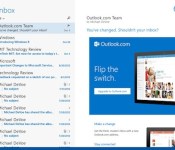
This week Microsoft revealed that, without a warrant, it accessed the Hotmail account of a French blogger in order to track down an employee leaking source code to some of its products, ultimately leading to that employee’s arrest. Microsoft’s actions created an uproar among users, causing it to spell out both its means, and its justification. Microsoft claims it needs to establish if “there is evidence sufficient for a court order” before conducting any searches, as allowed under its terms of service (the ones you read and agreed to). In response, Electronic Frontier Foundation fellow Andrew Crocker calls Redmond’s claim that it can’t obtain a warrant on itself a false premise with massive potential for abuse. Instead of “Warrants for Windows,” he argues that bringing in the FBI and obtaining a warrant is not only possible, but that it would be in line with Microsoft’s policy to require a warrant before revealing user info to others.
Though the process may be legal, a larger queasiness arises because, as worded, Microsoft’s TOS could submit a user’s inbox to those searches merely by violating its Code of Conduct. That could happen by (for example) emailing links that depict nudity, incite or express profanity, or facilitate the sale of firearms. Crocker himself states that, presumably, Microsoft isn’t using these standards as an excuse to dig through Outlook.com inboxes. His problem with its actions is more that by relying only on permission given by internal and external legal teams and its TOS, but not the actual court system, a potential for abuse exists.
As The Guardian details, other providers like Apple, Google and Yahoo (or likely AOL, which owns this blog) have similarly worded policies that could be used to access user data in order to protect their property. We asked Crocker about those, and he states that the EFF’s criticism stands in regards to similar policies, and that, while this particular case likely arose from an unusual set of circumstances, the fact we have no way of knowing if a company accessed our data is troubling (In the update on its policies, Microsoft said it would include data on the number of these types of searches in its bi-annual transparency report). In one case, TechCrunch founder Mike Arrington even claimed that while he cannot be sure, he’s “nearly certain” Google may have accessed his Gmail inbox to sniff out a leaker. Whatever the case, we suddenly have some weekend reading time set aside for the topic of end-to-end encryption with GNU Privacy Guard and “how to setup your own email server.”
Filed under: Internet, Microsoft
Source: EFF, The Guardian

Telling Google Search to “Play Some Music” will now actually result in Music
 As Google continues to evolve and fine-tune the functions available to Google Search and Google Now, the features they bring in with each update seem to become more and more useful and intuitive. The latest feature to join the party is the “Play Some Music” command which, as you might expect, will play music courtesy of Google Play Music.
All that you need to do to take advantage of this new command is to tell your Google Search or Google Now to “Play Some Music” and it will launch Google Play Music and start a “I’m feeling lucky radio” playlist. What should happen is that Play Music will assemble a playlist of music that either exists on your device, is in your library, or if you have an “All-Access” subscription, it will play a selection of songs like those you normally listen to.
This is a pretty cool feature to have; I’m hoping the next update will let you specify the type of music to play e.g. “Play Some Mood Music”. What do you think about this latest edition to the Google commands list? Let us know how you’d like to use it in the comments.
//<![CDATA[
ord = window.ord || Math.floor(Math.random()*1E16);
document.write('’);
//]]>

Ask Google Search on Android to ‘play some music’ and… it will

Sometimes, having your entire music collection in your pocket can be a bit overwhelming. When there are hundreds (or in our case, thousands) of tracks at your disposal, where do you even begin to listen? To help thwart that paralysis of choice, Google is going to do the guessing for you with its latest tweak to Search. From Google Now or the search bar, simply say the magic words “play some music” and your Android device will start playing a random Play Music “I’m feeling lucky” mix that’s based on recent listening habits. With its deep catalog of tunes, it’s pretty easy to imagine that this feature’s benefits increase exponentially if you’re paying for Mountain View’s All Access service, too. Subscriber or not, though, if you’re stuck in a Nine Inch Nails rut, this could be the ticket out.
Source: Google
Google adds HTTPS encryption to Gmail between their servers
Google has always had HTTPS for Gmail since 2010, a secure web protocol which employs certificates to ensure the authenticity of the source of the webpage you are viewing, but it didn’t stop eyes from seeing what was being backed up and sent between the internal servers for Gmail.
The new security introduced recently from Google will prevent this from happening, as Gmail is now fully encrypted as it’s backed up between servers and data centres in the Google infrastructure. That means that unless the recipient who is trying to view the specific email that is encrypted has the private key to decrypt it, it will be unreadable.
…every single email message you send or receive—100% of them—is encrypted while moving internally. This ensures that your messages are safe not only when they move between you and Gmail’s servers, but also as they move between Google’s data centers—something we made a top priority after last summer’s revelations.
This is a welcomed move by Google, which too be honest should have been the default from day one, but with the increased focus on the security of personal information on the web, it’s nice to see Google taking measures to protect Gmail.
The post Google adds HTTPS encryption to Gmail between their servers appeared first on AndroidGuys.

Google’s 3D-sensing phones are taking a trip to the International Space Station

It’s arguably cool enough that Google is working on smartphones that can scan your surroundings, but now those devices are slated to take a spin in space too. How’s that for living in the future? NASA first started sticking smartphones to machines back in 2011 when it used Samsung’s Nexus S as the brains for a trio of robotic SPHERES satellite that use bursts of carbon dioxide to putter around the International Space Station. Those aging handsets will soon get the boot, as two of Google’s Project Tango smartphones will hitch a ride on Orbital’s Cygnus spacecraft when it resupplies the ISS in May. Why? The space agency is interested in seeing if the phone’s spatial sensing abilities can help those floating robots navigate their surroundings better than they can right now. If it’s lucky, NASA’s zeal to upgrade the SPHERES’ brains could ultimately lead to the development of a roaming robot that works as well outside the station (or around an asteroid) as it does inside a tin can hurtling around the earth.
Source: PCWorld

Pocket previews article-saving on Android Wear smartwatches

Earlier this week, Google pulled back the curtain on its Android Wear platform, signaling its intentions to conquer wearables beyond Google Glass. Motorola and LG even announced their own smartwatches based on Google’s software, indicating that the ball is already rolling. What’s next, beside us getting these devices on our wrists? Seeing what cool features third-party developers will cook up, naturally. Pocket, the read-it-later service that works across devices, is showing off an early software development kit that lets you save links directly from your watch. Pocket’s one of the first big companies to jump on board the Android Wear bandwagon, and its prototype takes smartwatch notifications one step beyond “glance and dismiss.”
Pocket’s SDK essentially lets you save notifications — so if you get an ABC news alert, you can swipe and stash it for reading later. You won’t be able to view saved links directly on your watch, though; the prototype is strictly for bookmarking articles and videos. Developers have the option to integrate Pocket’s SDK into their own apps, and we imagine plenty of breaking-news apps, not to mention Twitter, will do so. Pocket for Android Wear is still in the early stages, but you’ll have to wait until summer to get your hands on an Android Wear watch, anyway.
Filed under: Google
Via: The Verge
Source: Pocket
Google makes Gmail more secure in light of NSA snooping

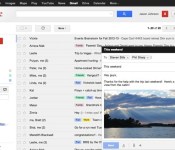
Your Gmail inbox may well be full of chain letters and kitten photos, but Google just announced two security changes that’ll help keep prying eyes away from all your important messages. From now on, Google will always use a secure HTTPS connection when you’re checking or firing off emails. You may remember that Google made such secure browser connections the default back in early 2010, but you always had the option to disable HTTPS if you really believed in the security of your network. The second (and arguably juicier) change is that your messages will be encrypted as they get routed through the company’s many data centers. Google isn’t exactly being coy about why, either. It said in a blog post that internally encrypting those messages became a priority “after last summer’s revelations”… a not-so-subtle way of saying it doesn’t want organizations like the NSA poking around where users don’t want them.
Via: The Next Web
Source: Google

Layar brings its augmented reality to Google Glass

Augmented reality is fun and all, but holding your phone to your face always seemed, to us, like too much effort. Layar agrees, which is why the outfit has now brought its AR secret sauce to Google Glass. Once the APK is installed, saying “OK Glass, scan this” will see the head-mounted wearable find additional content for your right eye. Considering the company’s print expertise, most of these will involve extra value material from magazines, but could also be used to examine maps and real estate listings. The video after the jump says you could also watch movie trailers just by staring at a poster — assuming that you don’t mind your fellow cinema goers thinking you’re a bit odd.
Filed under: Google
Source: Layar for Glass, Layar

Google and Microsoft are using the cloud to track climate change

Data.gov is getting a whole lot greener thanks to its new section dedicated to climate information. The new channel is the product of President Obama’s Climate Data Initiative (PDF), and pulls information that can help predict the effects of climate change and prevent any damage that may result. The raw data comes from the likes of the Department of Defense, NASA and the US Geological Society, but probably isn’t easy to grok for the average person. To help with that, Google and Microsoft have stepped in. Mountain View is donating 50 million hours of its Earth Engine’s computing power — the Global Forest Watch’s backbone — and is partnering with academics in the western US to produce a near real-time drought map and monitoring system.
Redmond, on the other hand, has developed a tool (dubbed FetchClimate) that can both recall historical climate data and forecast future weather trends based on the stockpiles of information stored in Microsoft’s Azure back-end. For example, the software giant says that this could allow state planners to predict extreme rainfall, preventing flood damage to infrastructure and transit lines as a result. These are still early days for the Initiative, but, as times goes on, more applications using its wealth of info will surely surface. For now, though, it’s nice to see tech companies exploit government data instead of the other way around.
Filed under: Internet, Microsoft, Google
Source: The White House Blog, Microsoft Research, Google Maps


