


Android Wear: Zen and the art of smartwatch design

Are you ready for a smartwatch that knows where you are, what information is important to you and, above all, wants you to forget that you’re even wearing it? That seems to be the basic idea behind Google’s Android Wear platform, which promises to deliver contextual, relevant information to you whenever you need it, while fading into the background when you don’t.
With today’s announcement of the Android Wear platform for wearables, much of the discussion has revolved around how Google is following the Android smartphone playbook and focusing on creating an ecosystem that can accommodate multiple manufacturers, with a range of products with different price points and feature sets. And Google has lined up an impressive list of partners, including smartphone makers HTC, LG and Motorola; chipmaker and smartwatch-wannabe Qualcomm; and watchmaker Fossil. Even Samsung, which just last month held a splashy launch for its latest round of Gear smartwatches, is in on the game.
… Google doesn’t see wearable devices as full-fledged computers or smartphone replacements.
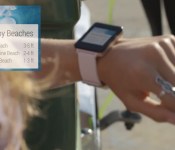
Those partnerships instantly make Android Wear a major platform in this nascent category. However, what’s most interesting about Google’s approach isn’t the business model, which isn’t that different from Microsoft’s SPOT platform of a decade ago. What matters most about Android Wear is Google’s approach to the category. Unlike, say, Samsung, which initially marketed Galaxy Gear as the real-life successor to Dick Tracy’s wrist communicator, Google doesn’t see wearable devices as full-fledged computers or smartphone replacements. They’re designed to help you get snippets of crucial information — like the weather, your flight status or whether there’s a jellyfish warning in effect for your beach — when you need them most, and then allow you to get on with the rest of your life.
The philosophy is consistent with Google’s approach to its first wearable, Glass. The media may obsess about how Glass can be used to pirate movies and play games. But the device, first and foremost, is designed to make it easier to focus on the here and now, while still being able to check to see if your boss sent you that important email you were waiting for. As Glass Senior Developer Advocate Timothy Jordan said at Engadget Expand last year, the best apps for Glass “help technology get out of the user’s way, but [are] there whenever they want [them].”
The philosophy is consistent with Google’s approach to its first wearable, Glass.
The first Android Wear watches extend that idea further, bringing Glass’ location awareness and voice control to a more socially acceptable design. Nobody is likely to ask if you’re recording them, and cops probably won’t pull you over, just for wearing a Moto 360. In today’s Android Wear announcement, Google SVP Sundar Pichai called watches “the most familiar wearable,” and said that devices based on the company’s new platform “understand the context of the world around you, and you can interact with them simply and efficiently, with just a glance or a spoken word.”

Google isn’t the first to treat the smartwatch as a simple way to access actionable information without interrupting the flow of your life. Pebble, for one, takes a similar approach. CEO Eric Migicovsky says developers are encouraged to look for a “subsegment” of their smartphone apps that can work effectively on a small screen. Unlike Pebble, however, Google’s ambitions are to give you access to just about all of the information you can get on your smartphone — but to allow you to do so unobtrusively and with minimal effort. Android Wear apps, according to Google, should “provide the maximum payload of information with a minimum of fuss, optimized to provide tiny snippets of relevant information throughout the day.” User input, according to Google, should take place only “when absolutely necessary.”
In 1991, computer scientist Mark Weiser declared that “the most profound technologies are those that disappear. They weave themselves into the fabric of everyday life until they are indistinguishable from it.” Weiser envisioned a future dominated by “ubiquitous computing,” with invisible technology that is always there. Android Wear, with its Zen-like approach to “allowing you to be connected to the virtual world and present in the real world,” and with a developers’ guide that lists being “unobtrusive” as a key design principle, seems to be an attempt to deliver on Weiser’s promise. The question is, in a world where it’s become socially acceptable to pull out a smartphone in the middle of a meeting, and where the most exciting developments on the gaming front all involve immersive virtual reality environments, is there still a market for technology that just gets out of your way?
Google Voice expected to merge into Hangouts this summer
Following trend with Google moving towards one single app that incorporates the functionality of all their social and communication services, it seems Google Voice is to be absorbed into the Hangouts app this summer.
Once the transfer of Google Voice into Hangouts is complete, you’ll be able to make VoIP calls directly from your Google phone number in the mobile app, just like on the web.
Google has already made its Hangout app take over the function of system-wide SMS handling, and come this summer it seems it’ll be able to handle all VoIP communication too.
The post Google Voice expected to merge into Hangouts this summer appeared first on AndroidGuys.
New Skype for Android promises not to drain your battery

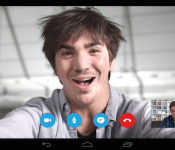
If you’re anything like us, then you know how valuable it is to have great battery life on mobile devices. Which is why a number of apps, like Skype, need to be monitored a little closer than others — in particular, ones that are constantly running in the background. Knowing this, Skype’s releasing a fresh version, 4.7, of its Android application that changes the way it handles your smartphone’s or tablet’s battery. “We are introducing aggressive battery life savings that will allow most of our users to leave Skype running without noticeably affecting battery life,” said Skype in a blog post.
In order to make this happen, message notifications in group chats had to be turned off by default, though there is an option to flip the switch for folks who would like to continue using them. According to Skype, we’ve only seen the beginning, as it expects to further improve battery usage in future versions of its mobile app. We’ll have to see it to believe it, but hopefully it turns out to be true — because mo’ juice, mo’ Flappy Bird.
Filed under: Cellphones, Tablets, Internet, Software, Mobile, Microsoft, Google
Source: Google Play
Big UK retailer lists Chromecast ahead of an official launch

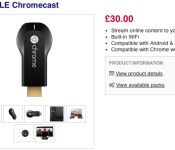
Google’s Sundar Pichai said that Chromecast would be available in many more countries this month, and it now appears that this worldwide launch could be close at hand. Engadget reader Martin has noticed that big UK retail chain Currys is already listing the TV media stick, with nary an official announcement in sight. The company says it’s out of stock, but there’s a plausible £30 ($50) price tag in place. While the entry doesn’t give any clues as to when the Chromecast would reach the country, Google has less than two weeks to make good on its word — we’d reckon that the device arrives sooner rather than later.
[Thanks, Martin]
Filed under: Home Entertainment, Peripherals, HD, Google
Source: Currys

Hardware makers swing into action with new Android Wear
In just one hour after the announcement of Google’s new Android Wear program, we already have quite a few big announcements regarding the new smartwatch OS. LG and Motorola announced their new smartwatches, while the new DevBytes video explains what Android Wear will look like to developers.
LG
LG was very quick to make noise in the space, revealing it’s alleged G Watch. There isn’t much information on the watch quite yet, but there have been some hints revealed in some of the new Android Wear videos. Users will most likely be able to wake their G Watch by saying “Okay, Google”, just like the Moto X. It will most likely be available in Q2, and will act as an entry-point for developers. Here’s a preview as to what the new watch from LG might bring.
Motorola
LG was not the only hardware manufacturer to pull the trigger already. Motorola’s announcement of the Moto 360 recently came to be, and it already looks like a nice competitor to LG’s wearable. Check out more on the Moto 360 here.
DevBytes
Along with all of the announcements today, the new Developer Preview was posted as well. It shows everybody, not only developers, the key features in how Google’s new smartwatch OS will work.
Justin Koh, a developer for Android Wear, explains that the watch’s main goal is, “Giving people the information they need, right when they need it.” Obviously this is an important factor in the new OS, and it’s nice to see Google doing it right (I’m looking at you, Galaxy Gear).
Koh explains the SDK adds functionality so if you dismiss a notification from your watch, it will also dismiss on the phone. If you’d like to take advantage of the Android Wear code, visit the webpage here.
Take a look at the new DevBytes video, previewing the features in Android Wear.
Google, LG, and Motorola went crazy with announcements today, brightening up the path for Android wearables in the future. Are you excited for what’s to come? We sure are! Let us know what you think in the comments!
Source: Google+, Android Wear
The post Hardware makers swing into action with new Android Wear appeared first on AndroidGuys.
This is Motorola’s new Android Wear smartwatch: Moto 360

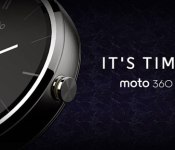
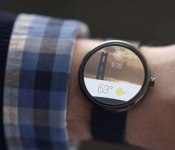
LG went first, and now it’s Motorola’s turn to unveil its Android Wear smartwatch: the Moto 360. Putting an emphasis on the tried-and-true design of classic timepieces, Motorola’s crafted a smartwatch that hews closely to a more traditional, premium look. The Moto 360 boasts a circular, digital watchface powered by Android Wear that grants users access to notifications with, presumably, gestures, as the company’s official line mentions the need for a “twist of the wrist.” There’s also Google Now integration, much like on the G Watch, that’ll make checking in on the weather, sports scores or flights a hands-free affair just by saying, “Ok Google.”
From the looks of it, Moto’s made what’s arguably the sexiest smartwatch we’ve seen to date, but that image above isn’t the only form factor we’ll be seeing. When the Moto 360 launches this summer worldwide, it’ll come in a “variety of styles,” and sport leather or metallic bands. If you happen to live in the US, you’ll be getting first dibs on this Android Wear looker when it debuts.
Filed under: Wearables, Wireless, Mobile, Google
Source: Motorola
Google announces Android Wear, a Nexus-like platform for wearables

Google’s getting into smartwatches in a rather large way. As previously reported, the search giant is extending its Android platform to more wearables than just Glass. In a blog post that went out today, Google announced Android Wear, which is essentially a way for the company to extend its mobile OS to a new category of devices while offering a lower cost for developers and users — think Nexus for smartwatches. Of course, smartwatches are just the beginning, Google acknowledged that there’s plenty more to come, but it was ” starting with the most familiar wearable.”
One of the most eye-catching features we’ve seen so far is the same always-listening experience that we’ve enjoyed on the Moto X. Anytime you need to do something with your watch, just say “OK Google” and everything from pulling up nearby gas stations, to restaurant reservations are just a quick voice command away.
Developing…
[Image credit: Getty Images]
But there’s more to Wear than just putting voice search on your wrist. As the rumors have suggested, it pulls in contextual updates as well, just like Now — putting the power of its preemptive search a quick glance away. Obviously it also pulls in notifications from messaging apps like Hangouts or your social networks. But the real power lies in the ability for developers to extend their applications to your Android-powered smartwatch. For example, Google is already promising that “favorite fitness apps” will offer real time speed and distance tracking. (Get on that RunKeeper!)
We’re still waiting to get details on specific watches, but features like these (and many more) have to be incredibly power efficient to ensure your new fancy piece of digital jewelry actually lasts longer than a day. Expect to start seeing devices working on the new platform sometime next quarter (as luck would have it, Google I/O will be held at the very end of that quarter). And, fingers crossed, maybe Google will announce that Now is opening up to third parties as part of its wearable push.
Filed under: Wearables, Wireless, Mobile, Google
Source: Google
LG G Watch to launch next quarter with Android Wear

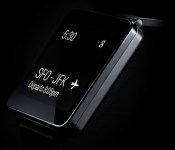
Over the last two years, LG has established a storied history of collaboration with Google. The two companies have worked together on three devices (two Nexus smartphones and a Google Play edition tablet) and today we’re hearing about the fourth — a smartwatch. LG’s latest piece of handywork, known as the G Watch, features Google’s new wearables platform called Android Wear. LG’s keeping quiet on the specs and other details of the new device, but the above image at least gives us a sneak peek of what we can expect. Just by looking at the Now-like flight information on the watchface, we can tell that Google Now features prominently on the platform. And just like on the Moto X, users will be able to initiate voice commands by simply speaking “OK Google.”
LG wants the G Watch to act as a “low barrier to entry” for developers, while offering a Google experience to users at the same time; this likely means that when the watch arrives sometime next quarter (exact date and pricing remains unknown), we can expect it to sell at a rather competitive price point. “The opportunity to work with Google on LG G Watch was the perfect chance for LG to really pull out all stops in both design and engineering,” said Dr. Jong-seok Park, CEO of LG’s Mobile Communications division. “We’re confident that a well-designed device has the potential to take the smart wearable market by storm.”
Filed under: Cellphones, Wearables, Wireless, Mobile, Google, LG

Google’s new Android Wear project adds HTC, LG, Motorola, Qualcomm, Fossil and others for new smartwatches

Last week at SXSW, Android and Chrome head Sundar Pichai said we’d be hearing more about Google’s foray into wearables in two weeks’ time. And it looks like the company’s delivering quite early on that promise. The newly announced Android Wear initiative, which makes a Google-approved SDK available to developers eying the wearable space, will initially focus on smartwatches created by the likes of industry heavyweights like LG, HTC, Motorola, Samsung and Asus. While Qualcomm, Intel, Broadcom, Imagination and Mediatek will also be pitching in on the chip side. The inclusion of Fossil in this Android Wear partner mix will be, from the sound of it, mostly a fashion play. As for when we’ll actually see the fruits of these wearable partnerships, Google’s only committing to the very vague “later this year.” Which means news on these Android Wear smartwatches could land anytime. But for now, at least, LG’s giving us a look at what to expect from the project with its recently unveiled G Watch.
Filed under: Wearables, Wireless, Mobile, Google
Source: Google
Google settles its seven-year YouTube copyright battle with Viacom

Viacom sued Google and YouTube way back in 2007 for allegedly ignoring copyright infringement, and losing the lawsuit in 2010 was no deterrent — the media giant won an appeal two years later. However, that longstanding animosity is now water under the bridge: the two companies have just reached a settlement. The companies haven’t revealed the terms of their deal, although they say that it reflects a “growing collaborative dialogue” between the two sides. YouTube’s gradual shift toward officially sanctioned content no doubt helped, as did a ruling that the site was protected by safe harbor rules so long as it didn’t actively contribute to piracy. Whatever the exact motives, Recode hears from a source that no cash traded hands. If true, the tip suggests that Viacom didn’t believe compensation would be worthwhile after so many years.
Source: BusinessWire

