


Android “L” update screenshots leak

Google has been extremely active as far as Android updates go. At the beginning of June they released Android 4.4.3, followed by Android 4.4.4 which came not even a month after the 4.4.3 update. Now we have some leaked screenshots which could be taken from Android’s next big update, just a day ahead of Google I/O.
These images were discovered in Google’s Chromium Tracker by Reddit user Doopl. They were removed since then. You may notice the “L” icon in the notifications bar on the left as well as the bell icon on the right. It is said they might symbolize “Limited Notifications” mode which should include pop-up notifications and “Limited Interruptions” which should prevent those from appearing. You can also see a chrome window in the background floating in the middle which might suggest yet another option within the OS or Chrome browser itself which would be a welcomed addition to the experience.

These screenshots were taken in 1280×768 resolution which matches up to Nexus 4′s screen resolution, coincidence? Maybe. What do make of this? It would be sweet if Google implemented features like these and if possible announce all of this at Google I/O this year, although this might be just a rumor, nothing else.
Source: Reddit
Via: AndroidAndMe
The post Android “L” update screenshots leak appeared first on AndroidGuys.
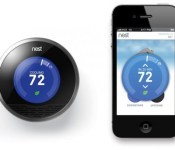
Nest Announces Developer API, Integrates With Mercedes, Google, IFTTT and More [iOS Blog]
Nest Labs today announced the “Works with Nest” developer program, which allows its Nest Thermostat and Nest Protect products to connect to a number of services from the likes of Google, Mercedes Benz, Whirlpool, LIFX and more for enhanced smart-home functionalities.

For example, Nest integration with Jawbone’s UP24 band allows the smart thermostat to begin heating and cooling when a user wakes up, while the Nest Protect can connect with LIFX’s bulbs to warn users of smoke or carbon monoxide. The new program will also allow users to create custom situations with popular service IFTTT, connecting the products to over 100 other products and services.
The Wall Street Journal also notes the Nest Thermostat’s specific integration with Google’s services, which comes after Google bought Nest earlier this year:
The integration will allow those users to set the temperature of their homes with voice commands to a Google mobile app. It will also allow Google’s personal digital assistant, Google Now, to set the temperature automatically when it detects, using a smartphone’s location-tracking abilities, that a user is returning home.
Nest also stated that it will allow developers of garage door openers and similar automated appliances to access and utilize user information. However, Nest co-founder Matt Rogers noted users will have to opt in for their information to be shared with Google, making it a point to emphasize user privacy:
Most of the data that Nest will share – with Google and others – will focus on whether users are at home or not, as detected by sensors on the thermostat. When people link a home device and related account with Nest, the company will not share their email address, name or home address with other companies, Rogers said.
“We’re not becoming part of the greater Google machine,” he said.
The news comes as a number of developers are working on products under Apple’s new HomeKit initiative, which allows home automation devices and their apps to work with iOS services using a single, secure protocol. Companies currently lined up with Apple for HomeKit include iHome, Honeywell, Haier, Philips, Schlage, and Withings.
Last week, Nest Labs announced that it would be acquiring video-monitoring and security startup Dropcam for $555 million to further its smart home initiative. The company also restarted sales of its Nest protect app-enabled smoke detector last week after it was pulled from shelves over safety concerns.
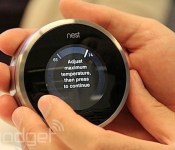
Nest devices start talking to Google, washing machines and your car

Nest’s Learning Thermostat and Protect smoke detector are now part of a much, much larger universe. The company has just launched a developer program that lets third-party apps and devices talk to Nest hardware, making it do things that aren’t possible through official software. The initiative is kicking off with a whole host of partnerships in place, in many cases with feature updates either available now or due in the near future. Chamberlain’s garage doors can now tell your Nest thermostat when you’re home, while Mercedes-Benz lets you check the temperature on the road; Logitech’s Harmony Ultimate remote can lower the heat in mid-movie, and Jawbone’s Up24 fitness tracker can tell Nest when you wake up.
This isn’t strictly one-way interaction, either — Nest gear can control other gadgets under the right conditions. If a Protect discovers smoke, it can tell LIFX light bulbs to flash red and have IFTTT’s phone app text the neighbors. Whirlpool, meanwhile, is going the distance by linking the equipment to its washers and dryers. Nest’s thermostat can not only have Whirlpool machines keep your clothes fresh until you get home, but delay the start of a given cycle to avoid a peak energy consumption period and save money, if you’re using the right power provider.
And yes, the program will eventually include support from Nest’s parent company, Google. Come the fall, Google voice commands will let you set the temperature on your thermostat; Google Now, in turn, will optionally heat or cool your home as soon as you set off on your commute. It’s ironic that Nest’s owner will be late to the home automation party, but the first wave of developers should give you plenty to do while you’re waiting.
Filed under: Household, Google
Source: Nest
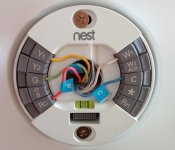
Nest Learning Thermostat has its security cracked open by GTVHacker

While we wait for Google I/O (which starts tomorrow) to find out what will become of the company’s TV platform, a team that we’ve seen bust open the padlocks on Google TV, Chromecast and Roku has a new target. GTVHacker just revealed an exploit for the (now Google-owned, and owner of Dropcam) Nest Learning Thermostat. It could let owners do new and interesting things (like replace the Nest software entirely) but of course, someone with bad intentions could take it in another direction: monitor whether the owner is home via its motion detector, sniff network traffic, or just crank up the temperature a few degrees — all without even opening the device. Interested in how the hack works? Check after the break for more details and a video, and if you’re headed to DEFCON in August, the team has a demonstration planned that’s oh-so-comfortingly titled “Hack All the Things.”
[Image credit: gpshead/Flickr]

So how is it done? The GTVHacker exploit is loaded using Nest’s own pathway for loading software to run its own boot-loader and add an SSH server with root access. In layman’s terms – it sneaks in like a legitimate update, but opens a backdoor giving whoever put it there complete control, and potentially without the device’s owner being aware that anything has changed. A more detailed account of how it works is on the GTVHacker blog, but the team has already packaged the tool as a one-click root + installer that works from Linux (available for download here, Windows version coming soon), so all it takes to run the tool is a PC and a USB cable — so if you see any of your guests loitering in the living room with a laptop and a cord, that’s just one more thing to worry about.
Pre #DEFCON Tease: Using DFU to Root Your Google @Nest. #HackAllTheThings #NoSolderingRequired http://t.co/yqUe5sL7Jk
– GTVHacker (@gtvhacker) June 24, 2014
Filed under: Household, Google
Source: GTVHacker Blog
Nexus 7 from Google Play gets 3-month All Access

Google’s Nexus 7 (2013) may be just a month shy of turning a year old, but that doesn’t mean it isn’t still a great device.
If you’ve been in the market for a new 7-inch tablet, Google is currently offering a deal for anyone who buys a new Nexus 7. The tablet will come with three months of unlimited music from Google Play.
The Google Play All Access provides instant streaming to over 20 million tracks and usually costs $9.99 a month. Google Music recently got updated to provide playlist-based radio stations to aid in music discovery, bringing it in line with offerings from competitors such as Spotify.
After your three months, the price is $9.99, but you can always cancel it if you aren’t satisfied. The service must be setup by Sept. 30 for the deal to apply.
VIA Google Play
The post Nexus 7 from Google Play gets 3-month All Access appeared first on AndroidGuys.
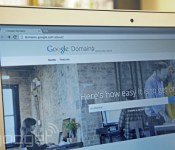
Google wants to sell you your next domain name

Right now, it’s possible to buy a domain name using Google services. You can start the process on Google’s own pages, process the transaction through Google Wallet and manage that domain through Google Apps — but you didn’t actually buy that domain from Google. That’s about to change. Today the search giant announced that it’s testing Google Domains, a registration service that will shift the company away from its dependence on companies like GoDaddy and eNom.
Google says it wants to enable a simple and transparent experience, but it’s not quite ready for a full launch just yet — at present the service is only available to a limited group. When it does launch, however, Google says it will have partnerships with several website building partners, including Shopify, Weebly, Squarespace and Wix. Have an idea for a new website? Check out Google Domains at the source link below and request a registration code.
Via: 9to5 Google
Source: Google Domains

Google Glass goes on sale in the UK for £1,000

Although technically still in the beta phase of development, anyone with the right wallet size can now buy Google Glass in the US. The UK has had little exposure to the eminent wearable outside of special projects, but Google’s decided it’s time to let Brits get in on the fun, too. Early adopters of the UK can hand now over a cool £1,000 ($1,700) in exchange for a pair of Big G’s spectacles, in the first general sale program outside of the US. You can opt for the generic frame, of course, or spring for one of the prescription Titanium collection for a hair extra. Whichever you choose, though, don’t expect to escape funny looks from the vast majority of Brits that’ll finally be seeing the mythical wearable in the flesh for the first time.

HTC Volantis tablet details leaked

We’ve seen lots of Nexus rumors in the last few months, both smartphone and tablet line. On one hand reports have been saying that the Nexus line is coming to an end in favor of Android Silver, on the other hands however we’ve seen leaks of Nexus 6 and Nexus 8. Nexus line may or may not be coming to an end, but even if that happens it doesn’t mean it will happen this year.
Be that as it may, newest report shows us a render of Nexus 8 tablet made by HTC and its specs, although they refer to it as Nexus 9. The device’s name is HTC Volantis (earlier mentioned as “Flounder”). This report is coming from Android Police and they seem rather certain that the device is coming.
Talking about specs, according to the report the device will feature an 8.9″ display 2048×1440 in resolution (281ppi). It will be powered by Tegra K1 64-bit processor (Nvidia Logan) along with 2GB of RAM. The device will sport an 8MP OIS rear shooter while the one on the front will be 3MP. The device will come with either 16 or 32GB of internal storage and will have stereo front-facing speakers as well as an Aluminum zero-gap construction and should weight 418 grams. There will also be a LTE version of the device and its measurements will be 22.63×15.19×0.79cm or in inches 8.91×5.98×0.31.

Note that the renders doesn’t seem to be final, although the device looks rather Nexusy as it is. 16GB version of the device should cost 399$ while the 32-gig model will be a 100$ more expensive, which brings it to $499. LTE version will raise the price for an additional $100+. The report also says we won’t see this device at Google I/O, it should be release in Q4.
These are some detailed information and they seem quite legit. What do you think of all this?
The post HTC Volantis tablet details leaked appeared first on AndroidGuys.

Gadget Rewind 2008: T-Mobile G1 (HTC Dream)

In 2005, a small Palo Alto-based mobile software company called Android Inc. was quietly folded into Google’s growing empire. The acquisition led to the release of the company’s first-ever “Google phone” three years later: the T-Mobile G1 (or HTC Dream as it was mostly known outside of the US). Google’s philosophy for the G1 centered on one-click search and a rich web experience, and leveraging T-Mobile’s 3G network was essential to its success. The G1 was also the first smartphone to run the open-source Android operating system and after just six months on the market, it earned a fifth-place spot amongst top-selling smartphones in the US.
 Andy Rubin, one of the co-founders of Android who went on to become SVP of mobile and digital content at Google, wasn’t new to the mobile device game. His earlier venture, Danger Inc., had found success in 2002 with its Hiptop smartphone, which was rebranded by T-Mobile as the Sidekick. It’s not surprising then that the G1 ended up as a T-Mobile exclusive — after all, its pop-out keyboard was reminiscent of the Sidekick’s swivel screen design. And for consumers in search of an alternative to the BlackBerry smartphones that dominated at the time, the G1 was a welcome option.
The T-Mobile G1 was an odd-looking duck. It was chunky due to the phone’s pop-out keyboard, with slightly larger dimensions than the sleek iPhone 3G released the same year. The G1′s physical keyboard was a necessary evil considering the inaugural Android operating system (1.0) didn’t include a virtual one — this despite its 3.2-inch capacitive touchscreen. That wasn’t the G1′s only design quirk: It also featured a slanted “lip” on its front face that housed a trackball and physical navigation buttons.
Its unique build aside, the G1′s main attraction was its open-source Android environment. With it, Google aimed to stimulate app development and “future proof” the OS with developer contributions over time. The Android Market (now known as Google Play) also debuted in tandem with the G1, offering around 50 applications at the time. All those apps were free, too, since the Market had yet to implement a payment system.
Multitasking, copy and paste, pull-down notifications and home screen widgets: These were some of the fresh features the G1 ushered in. It also, unsurprisingly, came deeply integrated with Google services such as Gmail and Maps. And without a proprietary music application of its own at the time, Google turned to Amazon to provide an MP3 app.
The G1 may have been an unfinished product when it was released, but Google addressed its shortcomings with iterative software updates — now a common and accepted practice for Android devices. Early OS fixes tackled glaring oversights like the G1′s missing virtual keyboard and lack of video-recording ability for its 3-megapixel rear camera.
 A T-Mobile rep compares Apple’s iPhone 3G (at left) with the G1.
A year after the G1′s launch, Verizon released the massively popular Motorola Droid with a slightly tweaked version of Android; a device that would prove a boon for Android device sales and mindshare. Still, Google continued on its own parallel path with HTC, releasing the MyTouch series and the G2. Eventually, however, Google abandoned its partnership with T-Mobile and HTC in favor of its Nexus line: reference devices that would run the latest, unadulterated versions of the Android operating system.
Google’s G1 smartphone holds an important place in the company’s history. Not only was it the first of many devices to run the Android OS, but it also stood out as an open-source alternative to Apple’s iPhone and closed iOS ecosystem. Android’s openness and flexibility led to its rapid adoption by a variety of manufacturers seeking to topple Apple’s success — it also helped that it was free to license. The G1, though primitive in comparison to the current crop of Android devices, was Google’s first step toward the mobile phone market domination it enjoys today.
Did you own a T-Mobile G1? Add it to your Engadget profile as a device you had (or still have) and join the discussion to reminisce or share photos of your device with other like-minded gadget fans.
[Image credit: T-Mobile / HTC (G1 front view); JENS SCHLUETER/AFP/Getty Images (iPhone/G1)]
Filed under: Cellphones, Mobile, Google, T-Mobile

Nest is acquiring Dropcam for $555 million

Google’s Nest has just announced that it’ll be purchasing IP camera company Dropcam for $555 million. Apparently Nest is acquiring the firm on its own without the assistance of Google, its parent company, and will be incorporating Dropcam into the Nest brand. Dropcam makes one of the more popular WiFi surveillance cameras on the market, and most recently released an advanced Pro version for $199 late last year.
 AIVAnet