



Google+ Photos now lets you go back and re-edit pics you already edited

Google+ Photos already saves originals of your edited photos, in case you ever regret some of the more Warholish tweaks you made. Now, Google is letting you go back and edit your edits (editception!), rather than making you start from scratch with the original. So if you like all the filters you previously added, but just wanna crop the shot more tightly, you can do that without having to redo the whole thing. The catch is that this feature only works on Chrome, according to a post from Google employee John Nack, which means Android and iOS users are out of luck for now. Additionally, the company is introducing a feature called Auto Awesome Effects (yep) that automatically applies filters to your photos, videos and gifs as you upload them. As with everything else, though, these effects are reversible; you can undo them if you don’t like the ones Google picked out. Look for both features to start rolling out today, in case you have time for a little image-play.
Filed under: Internet
Via: Android Police
Source: John Nack (Google+)
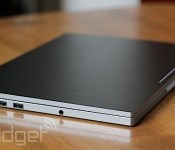
Chromebook Pixel owners get $150 after Verizon abruptly cuts off free LTE

The Chromebook Pixel is undoubtably an expensive offering, starting at $1,299 for the 32GB WiFi-only model and $1,449 if you decide to opt for LTE and 64GB of storage. What made the latter pricing more palatable, however, was that you also got two years of 100MB per month LTE courtesy of Verizon as part of the deal. Or so we thought. As it turns out, apparently Verizon and Google didn’t quite see eye to eye on that, as Verizon recently stopped that service for Pixel owners who bought their Chromebook only a year ago — it seems Verizon thought it was a one year plan instead of two. Thankfully, Google has stepped up to take care of the error by offering a $150 Visa gift card to anyone who bought an LTE Pixel. A spokesperson gave us this statement: “While this particular issue is outside of our control, we appreciate that this issue has inconvenienced some of our users. We are offering gift cards to affected customers.” If you need more assistance, you can visit this Google support page and contact the company for more info. That $150 doesn’t quite make up for a year of lost service, but it might help soothe the woes of those who didn’t get what they were promised.
Filed under: Laptops, Google, Verizon
Source: Computerworld, Google Support

New Google Glass headsets ship with more memory, everyone gets help with photos

Two years after it was introduced, Google Glass hasn’t gotten any cheaper — although it is a bit more stylish with Diane von Furstenberg frames and international now that it’s launched in the UK — but it is getting better. Not just through one of the many software updates that have reached the headset since its debut either, as its hardware has undergone a mild revision. Google announced that new units are shipping with 2GB of RAM, double the amount previously available, among other tweaks that have improved battery life and made voice search better.
The bad news? The new units aren’t coming to existing members of the Explorer Program. Still, everyone with Glass can check out a few new features thanks to a software update, like the viewfinder shown above that helps line up photographs. Also new to Glass are Google Now cards that have been on mobile for a little while, reminding wearers where they parked their car and about any packages that are on the way. The skydive into I/O in 2012 is still one of the more memorable product introductions we’ve seen, and now we’re wondering what else Google has in store for the 2014 conference tomorrow.
Filed under: Wearables, Google
Source: Google Glass (G+)
Google will show off the new ‘L’ version of Android tomorrow

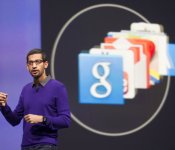
You can move one more item into the confirmed list for tomorrow’s Google I/O keynote: a new version of Android. Your guess is as good as ours as to which L-word treat Google plans to name its next iteration of the mobile OS, but as part of a lengthy profile for Bloomberg, senior VP Sundar Pichai reveals he will offer a “preview” at the developer event. It’s a new approach for Google, in publicly revealing the new version (which may have momentarily surfaced on its issue tracker yesterday) well ahead of its planned release later this year, but similar to the way Apple, for example, is rolling out iOS 8. Also confirmed is Android Wear, complete with manufacturing partners and new devices, while the plans for Android TV are still shrouded in rumor.
[Image credit: David Paul Morris/Bloomberg via Getty Images]
Filed under: Cellphones, Home Entertainment, Software, HD, Mobile, Google
Source: Bloomberg

Tune in to our liveblog of the Google I/O keynote tomorrow!

Google’s developer conference is but an annual affair, and it’s kicking off in 24 hours with its traditional keynote. We’ll be liveblogging it as it happens, and if it’s anything like past years, expect it to be incredibly long (last year’s went on for 3.5 hours, and we’re hearing this one will be around 2 hours) and packed with plenty of news for developers and consumers alike. So if you’re into anything Google-related, you’d best virtually skydive into the Moscone Center with us as we cover all of the company’s crazy antics. Bookmark the link below and meet us there tomorrow!
Google I/O 2014 keynote liveblog
[Image credit: Getty Images]
Filed under: Announcements, Mobile, Google
Shazam, Duolingo and several other apps head to Google Glass

Just ahead of Google I/O, a slew of new Google Glass apps are hitting the MyGlass store. The new downloads include the popular music-recognizing service Shazam and Duolingo, which offers free foreign-language courses. Two fitness-focused apps, Runtastic and 94Fifty Basketball, are also new additions to the Glassware family. Rounding out the list are the GuidiGO personal tour guide, an app for The Guardian, Livestream, MusicXmatch, Goal.com and the game Zombies, Run! Finally, the Allthecooks app has been updated with voice commands, so you can use Glass hands-free while following recipes.
While I/O is expected to be all about Android Wear, Google’s platform for wearables, Google Glass will likely make an appearance as well. The Glass team says Glassware — the fancy term for Glass-specific apps — has grown 80 percent in the past six months, and we may get a look at some of the just-announced additions at the keynote tomorrow.
Filed under: Wearables, Software, Google
Source: Google Glass

Android Wear could make or break the smartwatch

Google is about to determine the future of smartwatches. When it announced Android Wear — its new platform for wearable technology (watches in particular) — I was in London for an industry trade show, along with a number of wearables manufacturers. I’m not sure the timing was deliberate, but there’s no doubt the mood in the room changed once the news broke. If you’re in the business of smartwatches (or wearables in general), with products already in development, and one of the biggest names in technology enters the fray, you’re going to face some big decisions. Get on board with the new platform, or go it alone? Given Google’s success in the smartphone world, Android Wear could make or break smartwatches.
The problem

Right now, the smartwatch corner of the technology “garden” is wild and unkempt. A tangle of different form-factors, software platforms, feature-sets and compatibility issues. Some solve single problems, others want to do it all. The current smartwatch market is a mess. The problem seems to be finding a problem to solve. Phone notifications are usually the starting point, but more specific tasks (often fitness related) are also candidates for upgrading an otherwise regular watch to a “smart” one.
The fact is most smartwatches are flawed. If it’s not poor battery life, or limited phone compatibility, poor app support or niche functionality, it’s cumbersome design, a high price tag or limited geek appeal. There are big names involved, too. But that doesn’t seem to help. Samsung released four Gear watches in the last eight months, and even with the company’s considerable marketing clout and brand recognition, it’d be hard pressed to call any of them a hit with the public.

One watch has, perhaps, caught people’s attention more than most: Pebble. It famously obliterated its Kickstarter goal, and has enjoyed media accolades ever since. But even the mighty Pebble is a rarity to spot out in the wild (beyond certain tech hubs at least). Ask most pedestrians to name a smartwatch brand, and they’ll be more likely to reach for Casio than Samsung, Sony, LG, or Motorola etc..
Why is this? Partly because choosing a smartwatch today is like choosing a smartphone circa 2006 — multiple platforms, designs and features that make each one feel like an island. One from which there is no escape should you not like the weather, or the lack of food. The analogy is true even down to the bespoke chargers that phones once required. Hunting out that specific Motorola/Nokia/whatever charger was a problem we all thought we’d left behind, surely? But here it is again in wrist-worn form.
Wear’s the solution?
The smartphone problem was solved with software. Phone makers (mostly) stopped backing their own horses, and settled on a common solution (Android, Windows or iOS etc.). This allowed hardware makers to concentrate on gear, and gave users some sort of stability in their experience (without diminishing choice altogether). This is the first task Android Wear has to achieve if smartwatches are to progress. The second is that slightly thornier one of problem solving. With phones killing off the need for a watch at all, if we’re to keep glancing at our wrist, it’d better be for a good reason. Most of what we know about Android Wear’s functionality right now is shown off in the video below and looks like a mixture of Google Now and Siri. Of course, we’re going to reserve judgement until we’ve seen it for ourselves.
In the next 24 hours, via Google’s I/O event, we’re going to learn a lot more about Android Wear, and what it can actually do. Beyond the notification and Google Now-like functionality, there are hints at it hooking in to other ecosystems. In the advert above, it ends on what can only be a massive tease about an Android @ Home revival (or refresh), surely? It’s big, mass-appeal functionality like this that could really push smartwatches out of the darker corners of the tech-club and into the warm light of the Main street.
The technical aspects of Android Wear might not be the most important factor though. With Wear, we see Google’s first official dalliance in the watch space. Possibly only Apple’s entrance to the market is more anticipated. In a sense, Wear gives Google’s blessing to smartwatches, which in turn adds legitimacy. Not to mention, with Motorola and LG (and, probably, Samsung) having hardware more or less ready to go, there’s already solid manufacturer support. This is the biggest reset of the smartwatch market so far. If Android Wear can’t gain traction with the buying public now, no number of iWatches is going to help.

What’s on tap for Google at I/O 2014

Don’t let its DevCon facade fool you: Google I/O has plenty of interesting stuff for everyone. Most of the company’s big announcements come during the day one keynote, which we’ll be liveblogging tomorrow morning. This year’s theme is “Design, Develop, Distribute,” a slogan that doesn’t reveal any major clues about what we can expect (aside from the fact that Google is focused on new design, which we’ll cover in more detail later). But that’s what we’re here for — to figure it out! We’ve compiled a handy guide that discusses what to expect — and not expect — to see at San Francisco’s Moscone Center this week.
Android Wear

We’re not exactly taking a shot in the dark by predicting that Google’s new wearables platform will get a lot of attention at the company’s developer conference. Ever since it was officially announced three months ago, Google has given devs access to the platform via emulators and fed them with videos on the subject. Two of its hardware partners, LG and Motorola, also showed off their first Wear-enabled smartwatches, and all three companies have hinted that we should expect more details near the end of June.
While we feel safe placing bets on the chance that Wear will get plenty of face time during Wednesday morning’s keynote, we’re less sure of which hardware we’ll see — aside from the LG G Watch and Moto 360, that is. A Samsung-built Wear device is a solid guess, but what about the handful of other companies committed to supporting Google’s new platform (Fossil, HTC and ASUS)? Those camps have been pretty quiet of late, so it’s unlikely we’ll see a smartwatch from those manufacturers this soon.
Android redesign
Quantum Paper. Sounds like something straight out of science fiction, but it’s actually the rumored code name for a new design framework Google’s been working on for some time. First detailed by Android Police, this project is intended to offer a consistent user experience on the company’s products over multiple platforms, such as Android, iOS and the web. (We wouldn’t be surprised if this extended to Chrome OS as well.) We expect to hear more of this project at I/O, and it would make sense to see the new design elements implemented in a fresh version of Android. It’s been 2.5 years since Android 4.0 Ice Cream Sandwich introduced a completely different user experience; even if we don’t see a full upgrade, we’ll at least come out of I/O with a much better idea of what the next version of Android should look like when it’s ready.
Google Fit
Health monitoring is trendy this year, it seems. In 2014, Apple and Samsung have already introduced platforms that give users the opportunity to gather data about their personal health and provides them with advice on how to improve it. Now it’s Google’s turn to crank out a similar platform, according to Forbes. Known as Google Fit, the service is expected to collect and aggregate health data from apps and fitness trackers. While it’s unclear if this will be baked into Android or just available as a standalone app of some sort, it makes sense for Google to offer a health-related platform for developers and wearables companies. In fact, Fit may encourage more manufacturers to give Android Wear a shot, if Google makes it easy to tie the two platforms together.
Android TV
Television is a tough nut for Google to crack, so the company’s next effort in the space is Android TV. It’s rumored to be a platform that offers a simple user interface (known internally as Pano) focused on helping you find new entertainment options through recommendations. It’ll be similar to the company’s failed Google TV in a few ways, but it’s supposed to feature online media services and games. Developers will be able to create TV apps that have access to voice input and notifications, and content suggestions will sit on the home screen. Netflix and Hulu Plus are expected to be included, as are several other unnamed services.
Google will face the challenge of courting hardware manufacturers to the platform, especially those who may have had lackluster experiences with Google TV or are currently committed to other platforms (such as LG, which uses webOS on its televisions). Still, any company eager to take on Amazon, Apple, Roku and other set-top boxes may adopt Google’s new platform in the hopes of grabbing market share.
ATAP

Google’s Advanced Technology and Projects division is hard at work on two publicly known initiatives: Project Ara, which is focused on building a modular smartphone, and Project Tango, centered on 3D mapping and gaming using phones and tablets. At least one of the I/O sessions is dedicated to the group, so there’s a solid chance we’ll get some more details about one or both projects during the conference — and who knows, maybe the company will even reveal something completely new that we haven’t seen before, but we won’t hold our collective breath for that.
Wild cards

Now, we’ll go over a few of Google’s other projects that may show up at I/O. First up is the connected-car experience. Earlier this year at CES, Google announced the Open Automotive Alliance. The coalition, which consists of partners like Audi, Hyundai, GM and Honda, was formed to create an Apple CarPlay-esque platform that would let you use your car’s dashboard as a control center for your Android phone. It’s possible that we’ll hear some more details about the project, which is currently rumored to be known as Auto Link.
But what about Nexus? Over recent months, we’ve heard buzz about a new HTC-built tablet called the Nexus 9, but we’ve also heard the same thing about a Nexus 8 as well. Regardless, we don’t expect to hear much about either device this week, but we won’t rule it completely out of the picture either.
Speaking of which, there likely won’t be any details about the rumored Android Silver program. With Silver, Google reportedly wants to offer a premium Nexus-like experience with multiple manufacturers in which Google itself will volunteer to help with marketing and development costs; these phone and tablet makers would also get preferential treatment when it comes to getting updated with new versions of Android.

Nest’s recent acquisition of Dropcam is still too fresh for Google to discuss strategy or plans of any sort, but don’t count the thermostat maker completely out of the picture. The company announced yesterday that third-party devs can now build apps and devices capable of talking to the hardware, so there’s a very good possibility that we’ll hear more about this from Nest this week. We’d also love to hear more from Google’s home automation group known as Android@home. It was announced in 2011, but has gone largely untouched since it initially began. Could Nest help tie it in with some of Google’s other products? Perhaps.
Lastly, Google Glass has opened up to UK developers (as well as the public) recently, but it’s still technically not a consumer-facing product yet. Google’s mentioned that it’ll arrive for consumers sometime this year, so there’s a possibility that we’ll see the next version of the wearable and get more details on public availability and pricing.
[Image credit: Getty Images]
Filed under: Announcements, HD, Mobile, Google
Deezer joins the small list of music streaming apps that support Chromecast

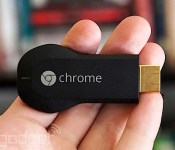
Google’s Chromecast dongle is, first and foremost, a cheap piece of hardware for flinging video from various devices to the biggest screen in your home. It makes sense, then, that you should also be able to stream music to your TV just as easily — not everyone has a dedicated audio setup or convenient ways to connect to one wirelessly, after all. There’s plenty of music on YouTube, of course, but Rdio, Pandora and Google’s own Play Music are the only high-profile music services to include Chromecast support so far. Streaming outfit Deezer (which still doesn’t operate in the US) is set to join those ranks tomorrow when it updates its Android and iOS apps. Multiple users will even be able to connect to the same dongle and fight over who has the worst taste. There is one catch to streaming through Chromecast, however: you’ll need a paid Premium+ account to do so, although you need one of those to use Deezer’s mobile apps, anyway. No free option is a bit of a downer, but at least Deezer’s made something of an effort, which is more than can be said for that other popular music streaming service.

Filed under: Displays, Home Entertainment, Peripherals, HD, Google
Via: The Next Web
Source: Deezer
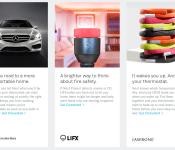
Nest kicks off ‘Works with Nest’ developer program

Google’s Nest is going to be the center of your home and connected life. You know all of that “Internet of Things” chatter you hear about? The Nest Learning Thermostat is about to help make that a reality. At least, that’s the hopes with their “Works with Nest” certification program and developer tools.
Announced late last night, the developer program already has some key partners lined up to participate. Names here include Logitech, IFTTT, Whirlpool, Chamberlain, Jawbone, and Mercedes-Benz. What will each of these companies do with Nest? You’d be surprised. Take the Jawbone, for instance, which is able to detect when you’re sleeping and then tell the Nest to adjust the temperature in your house. Another company, LIFX, is able to turn all of the lights in a house red whenever smoke is detected. For deaf users or those with hearing impairments, this visual cue is just as good as the audio one that comes with a smoke detector.
The post Nest kicks off ‘Works with Nest’ developer program appeared first on AndroidGuys.

