



California requires manual controls before Google’s car hits public roads

One of the unique features inside Google’s self-driving car is that it doesn’t sport a steering wheel or a set of pedals. That won’t fly on public roads in California though, so the folks in Mountain View are faced with adding them or sticking to closed-course testing. New regulations that go into effect next month require autonomous vehicles to let the driver take “immediate physical control” should the need arise. Google says it’ll adhere to the rule by installing a temporary steering wheel and pedals in its 100 prototype cars set to begin testing on private roads in September.
Filed under: Transportation, Google
Source: Wall Street Journal
.CPlase_panel display:none;
Google Chrome now freely available in Cuba

If Chrome were human, he’d/she’d be puffing on authentic Cuban cigars right about now. The browser’s finally made its way to the Caribbean country, where it was blocked, along with other Google services, for the longest time. While Mountain View didn’t directly blame US trade sanctions for the delay, the company intimates in its announcement post that it’s the reason why the country’s residents couldn’t officially install the browser. Of course, enterprising Cubanos have likely found a way to download Chrome long ago, but now people can easily install it across platforms (iOS, Android, Windows, Mac OS X, etc.) by accessing a special portal.
Google says it’s always working to make its products available in more areas as trade sanctions evolve, like how it released Picasa, Chrome and Google Earth in Iran and Syria years ago. So, we’re crossing our fingers that our friends in the island nation (where phone and computer sales were allowed but a few years ago and internet access is still very limited) can enjoy the tech titan’s other services.
[Image credit: Wikipedia (Cuban cigar)]
Via: CNET
Source: Google
.CPlase_panel display:none;

Google Glass’ new features let you switch chat methods on a whim

Some of Google’s rapid-fire Glass updates have been more useful than others, but its latest is something you’re likely to appreciate — especially if you’re a socialite. The wearable’s 20.1 upgrade gives you a much better contact system (shown below) that gives you quicker access to your friends. You can reach 20 of your favorited and recent contacts through voice, and your phone’s entire address book is easily accessible. It’s also much easier to switch communication methods. If you want to jump from email to Hangouts to deal with a heated conversation, you only have to swipe to make it happen.
There are a few more tricks up Glass’ sleeve. It can now show you nearby events, like concerts; you’ll also see a currency converter in Google Now when you’re traveling, and a wider range of voice commands should keep you from reaching for the touchpad for simple tasks like changing the volume or sending a photo. Android users should get all the new features as soon as they update Glass, while iOS users will have to wait roughly a week to get the needed MyGlass app.

Filed under: Wearables, Google
Via: Google Glass (G+)
Source: Google Glass Support, Glass Community
.CPlase_panel display:none;

SoundCloud gets ads, but will soon let you pay to get rid of them

Often billed as the “YouTube of music,” SoundCloud has become the number one choice for up and coming artists looking to share their tracks with the world. However, despite boasting a userbase that’s four times bigger than Spotify’s, the startup has found it difficult to turn that activity into revenue. The company hopes it can change that with the launch of a new Premier tier for “On SoundCloud” that will bring ads to the service, and also allow artists and record labels to start monetizing their music.
The launch shouldn’t come as a surprise. In July, the company was rumoured to be cutting deals with major record labels in order to help get “On” off the ground. According to the New York Times, things haven’t really progressed with the bigger players, mainly due the complex nature of the company’s music platform. SoundCloud is home to a huge number of remixes and mashups, and Universal, Sony and Warner Music are pushing to get their share of royalties from those additional tracks. Despite the setback, SoundCloud will use licensing agreements to begin delivering ads, starting in the US, and will direct most of the revenue back to performers or providers.
While you can expect to see or hear the “occasional” ad from Red Bull, Jaguar and Comedy Central in the near future, SoundCloud says it is working on a subscription option to make them go away. However, the company hasn’t made it clear whether premium account holders (people who already pay to upload their tracks) will be served ads. With Google readying the launch of “YouTube Music Key,” with paid access to full artist catalogs, concert footage and remixes, SoundCloud could soon feel the full force of the real YouTube for music. Good news for labels, but also fans — as long as they’re willing to put up with ads or put down cash for a subscription.
[Image credit: Thomas Bonte, Flickr]
Via: New York Times
Source: On SoundCloud
.CPlase_panel display:none;

Google sees over 1 million daily takedown requests for pirate links

While sites like The Pirate Bay are busy improving the experience for the torrent-loving crowd, Google’s facing the task of processing an extreme amount of removal request for pirate links. According to a recent transparency report on the matter, Google is now seeing more than 1 million DMCA takedown notices per day. In the previous week alone, for instance, the tech giant was asked to remove about 8 million results from its search engine. As TorrentFreak points out, the amount of copyright removal notices sent to Google has seen a tremendous spike in recent times — it wasn’t long ago that the number of takedown requests was in the low-hundreds for the entire year. With the growth of the internet as a whole, however, it’s easy to see how that’s come to be. You can peruse the report in full here, if you’re into that sort of thing.
[Image credit: will never stop us/Flickr ]
Via: TorrentFreak
Source: Google
.CPlase_panel display:none;
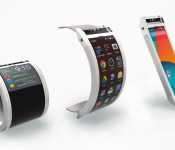
Google Nexus 360 – The smartphone of the future

91mobiles.com Unveils a Futuristic Wearable Smartphone that’s Truly ‘Smart’
~ The Google Nexus 360 Concept Phone~
91mobiles.com, India’s largest gadget research website for mobile phones and personal technology has come up with the Google Nexus 360 concept phone, a creative visualisation that offers a glimpse into the future of smartphones, imagining how these devices will evolve in the coming years. The idea is to showcase a concept that pushes the envelope when it comes to what is possible, but is still rooted in reality, and can become commercially viable in just 3-4 years from now.
 Some of the key issues at hand
With the flood of mobile computing devices, users now prefer carrying a single device that can take on multiple roles and adapt as per needs. Next, wearable technology is evolving rapidly, but the approach is still very fragmented since most existing products can’t be used standalone. Device security and multiple notifications are two other areas that are often pain-points for consumers.
The approach
The idea then, was to come up with a concept of a single device that can tackle all these issues in one shot. For this purpose, the 91mobiles.com team factored in user suggestions, studied various prototypes and innovative technologies (from the likes of Molex, Dai Nippon Printing, Solicore and LG), some already available in today’s phones, to come up with an ideal yet achievable concept.
Key features – a conventional smartphone that transforms into a wearable
- A phone that converts into a watch: use it as a conventional phone, or wear it as a wristband… with the full range of features available in both modes.
- Flexible polymer OLED display: offers great usability and vibrant visuals.
- Embedded Bluetooth headset: can be docked on the side of the device, and draws power from it for charging.
- An integrated fingerprint scanner and heart rate monitor: take care of security, health monitoring and sleep tracking. Integrated sensors and apps capture related data.
- A tube camera that’s on your wrist: makes shooting easy, and allows snapping pics from different angles. The same high-resolution camera doubles up as primary camera, along with shooting selfies.
- Always-on e-ink display on the side: makes sure users don’t miss out on notifications.
- Designed for all-weather use: IP67-certified for resistance to the elements.
This design is an amalgamation of several successful smartphones and technologies that prevail today and takes their use to the next level. The Google Nexus 360 concept device holds relevance to smartphone users, enthusiasts, device designers, device makers, and design Institutions as well as global smartphone brands.
Why Google?
91mobiles.com chose the Google brand for this concept since the search titan has always been at the forefront of innovation, and has the flexibility to partner with a specific hardware manufacturer that can build to its spec.

Google Nexus 360 concept
Hardware specifications of the Google Nexus 360:
- 5-inch Full HD resolution display but with a wider aspect ratio of 2.40:1
- Qualcomm Snapdragon 801, quad-core processor with clock speed of 2.5GHz
- 3GB of RAM
- 64GB / 128GB storage options (non-expandable)
- 16- Megapixel rotating tube camera with LED Flash and software Image stabilization and support for 4K Video recording
- 4G/ LTE connectivity
- Dual Band Wi-Fi, Bluetooth 4.0, NFC
- Biometric fingerprint scanner embedded under the home button
- Optical hart rate monitor at the back of the device
- IP67 certified device
About 91Mobiles.com
91mobiles.com is the largest gadget research & reviews site in India. It provides information and tools to help you decide which gadget to buy and where to buy it from. 91mobiles.com provides information on over 1,000 mobile phones launched in India every year, including specifications, pictures, videos, reviews, and the best deal for each. Over 30 million people visited 91mobiles.com last year and browsed over 150 million pages on the website to research gadgets.

.CPlase_panel display:none;

Back to School 2014: The 11 best smartphones

If you’re in the market for a new handset to accompany you on campus this fall, your timing’s just right. You couldn’t ask for a better selection of choices, and plenty of the phones in the gallery below are downright budget-friendly. That said, if you can hold off for a bit, you might want to see what Apple and Samsung have in store — both companies are expected to announce new smartphones within the next month. Note that we’ve listed devices based on their unlocked and contract-free prices, though you’ll pay less up front if you sign up with a carrier. Oh, and don’t forget to check out the rest of our Back To School guide for more product picks.
Filed under: Cellphones, Mobile, Apple, Samsung, Sony, HTC, Nokia, Google, LG
.CPlase_panel display:none;

UK tries to protect kids by rating music videos like movies

While David Cameron’s broadband filters are doing an admirable job of shielding Britain’s young eyes from adult content, the government reckons it can do more. That’s why, as from October, it’ll treat music videos like movies and begin placing age ratings on them. The Prime Minister announced the new program during a speech yesterday, noting that the government will work with the British Board of Film Classification (BBFC) to “protect [..] children from some of the graphic content music videos” hosted on YouTube and Vevo.
The pilot, which will run for three months with assistance from Google, has also been backed by the the three biggest music labels in the UK — Sony, Warner Music and Universal — letting them assign three age-suitable labels (12, 15 or 18) to videos with adult-themed content. It’s not yet known how it will be enforced, but parents will be provided with an option to block videos according to their ratings. Whether they’ll choose to enable the feature remains to be seen (many haven’t enabled the so-called ‘porn filter’ on their home internet connections), but we’re sure enterprising teenagers will find a way to navigate around it anyway.
Filed under: Google
Via: Mashable
Source: Gov.uk
.CPlase_panel display:none;

The world’s largest solar thermal power plant is incinerating thousands of local birds

A common sight in the sky above the world’s largest solar thermal power plant is a “streamer,” a small plume of smoke that occurs without warning. Closer inspection, however, reveals that the source of the smoke is a bird which has inadvertently strayed into the white-hot heat above the plant’s many reflecting mirrors. Because the BrightSource Energy plant near Ivanpah uses supercritical steam rather than photovoltaic energy, the sun’s heat is reflected off more than 300,000 mirrors to a single point, which is used to drive a steam turbine. The downside of that, of course, is that it’s lethal for any wildlife that strays into the picture — a problem that was recognized well before the facility opened, but now the government has gotten involved.
Government wildlife inspectors believe that insects are drawn to the highly reflective mirrors, which in turn lures local birds to their doom. BrightSource feels that the issue has been overblown, claiming that only 1,000 living creatures will die in a year, but the Center for Biological Diversity believes the actual figure is closer to 28,000. The US Fish and Wildlife service is pushing for more information and an accurate calculation of the deaths before California grants the company any more permits for solar plants. That’s because the next planned facility, close to the California – Arizona border, is directly beneath a flight path used by rare birds like the Golden Eagle and Peregrine Falcon.
Filed under: Misc, Science, Google
Source: CBC
.CPlase_panel display:none;

AT&T’s gigabit internet beats Google Fiber to Silicon Valley

Well, this has to be awkward: the first company to bring gigabit internet to Silicon Valley isn’t Google, it’s AT&T. The telco’s ultra-high speed U-verse service will land in Cupertino in a few months, meaning that Apple employees (or any other subscribers in the area) will be able to test AT&T’s claim that you can download 25 songs in a single second sometime soon. AT&T’s senior VP of U-verse Eric Boyer tells Bloomberg that bringing Gigapower to the city is a “no brainer” considering how intrinsic bandwidth is to the area. For its part, Google has plans to expand Fiber’s rollout into nearby San Jose, but when that’ll happen is anyone’s guess — maybe this could, ahem, speed that along.
[Image credit: Associated Press]
Filed under: Internet, Apple, Google, AT&T
Source: PRNewswire
.CPlase_panel display:none;


