



Brazilian judge tells Apple and Google to pull Secret from people’s devices

Secret’s app is ostensibly meant for office gossip and getting transgressions out of your system, but it has also been abused by bullies wanting to intimidate and shame others. Well, one Brazilian judge is fed up with that misuse — enough so that he’s ordering Apple and Google to remove Secret not just from their respective local app stores, but from people’s devices. Microsoft also has to yank Cryptic, an equivalent Windows Phone app. If the companies don’t take action within 10 days, they face fines of 20,000 Reals ($8,876) per day. That’s a drop in the bucket given their massive revenue streams, but it’s reasonable to say that they’d rather not pay that much just to keep one title available in one country.
The request is certainly feasible. All three companies have removed apps from their stores, and they can technically pull or block software installed on gadgets. However, that last measure is primarily used as a last resort, such as in the event of a malware outbreak; Apple, Google and Microsoft might be reluctant to act unless they have no choice. Whether or not they’re stuck isn’t clear. Brazil’s Constitution bars anonymous attacks that don’t let you defend yourself, but there are arguments both that the data isn’t truly anonymous (Secret knows the culprits) and that the ban hurts freedom of expression. Don’t be shocked if one or more tech firms contest the ruling.
Filed under: Cellphones, Tablets, Internet, Mobile, Apple, Microsoft, Google
Via: 9to5Mac
Source: Estadao (translated)
.CPlase_panel display:none;
Google search trends highlight America’s digital divide

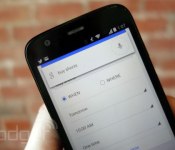
While the rest of us were out frolicking in the sun, The New York Times‘ Upshot blog spent the early part of the summer sussing out which counties in the United States were the easiest and hardest to live in. After a little extra prompting from Google’s chief economist, editor David Leonhardt and the Upshot team used Google Correlate to dig into what these groups on either side of the digital divide were searching for online. Some terms — the like “Oprah” and “Super Bowl” – are searched for by just about everyone. As you might’ve guessed, though, those search terms ultimately diverge… pretty wildly.
In the so-called easiest locales (which scored best when it came to education, median household income, unemployment rate, disability rate, life expectancy and obesity) the terms that correlate most strongly with easy living locations include “elph,” “jogger” and “nb-4l”. Apparently those who live in well-to-do areas had plenty of questions about Canon digital cameras. And the top three search terms for those living in harder areas? “Free diabetic,” “antichrist” and “38 revolver”. The list speaks to a dramatic difference in what people concern themselves with when their life circumstances skew in one direction or another. It doesn’t take long to notice certain trends popping up, either — technological tidbits pepper the rest of the easy life list, while religious references figure prominently in its rougher counterpart. These particular rabbit holes run deeper than you might think, so it’s definitely worth checking out the full Times piece for more.
Source: NYT Upshot
.CPlase_panel display:none;
Google’s panoramic Photo Sphere Camera app reaches the iPhone

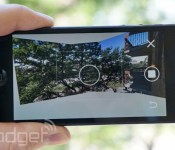
Google’s all-encompassing Photo Spheres are no longer limited to Android users and those comfy with photo stitching software — the internet giant has just released a Photo Sphere Camera app for the iPhone-toting crowd. As before, it lets you create 360-degree panoramas just by spinning around in place. You can both share the resulting masterworks with others (including the Google Maps community) and check out others’ spheres in the Views hub. It’s overkill if you’re perfectly content with alternative panoramic apps or plain old landscape shots, but it’s hard to object to having one more way to liven up your vacation photos. Swing by the App Store to check out Photo Sphere for yourself.
Filed under: Cellphones, Internet, Mobile, Google
Via: Gizmodo
Source: App Store
.CPlase_panel display:none;

ASUS teases smartwatch for September 3rd event

If we’re honest, it’s reasonable to assume that ASUS will announce a smartwatch on September 3rd. After all, if the rumors saying that the company’s working on an Android Wear device aren’t enough, then the pretty obvious teaser image should be. According to those pesky rumor-mongers, the unit will be priced between $99 and $149, making it the cheapest Google-approved wearable on the market. We’ve also heard, thanks to our own sources on the grapevine, that despite the lower price, the watch will use similar hardware to both the Gear Live and G Watch. The only concession apparently being in the battery life department, which will linger somewhere between the 300mAh on the Gear Live and the 400mAh found on the G Watch. Still, whatever the truth, there’s only a fortnight to go before we’ll find out for ourselves.
Filed under: Wearables, ASUS, Google
Source: ASUS (Twitter)
.CPlase_panel display:none;
Project Tango tablet teardown reveals its custom 3D mapping gear

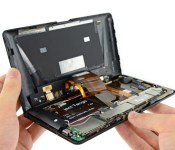
If you’ve been wondering just what parts let Google’s Project Tango tablet work its 3D mapping magic, iFixit is more than happy to show you. The DIY repair outlet has torn down the experimental Android slate to reveal a truly unique sensor array. While it resembles a Kinect at first, Google notes that it had Mantis Vision build a custom infrared projector (which bathes the world in a light grid) that works in tandem with the 4-megapixel IR camera; there’s no way you’d replace either with off-the-shelf parts. The big, dual-cell 2,480mAh battery was also made to order, since the ATAP team wanted to let developers draw as much power as necessary for their 3D-savvy apps. The Tango tablet is undoubtedly a very clever design, then, but you’ll have to handle it with kid gloves if you ever try it — you probably won’t get another one if it breaks.
Source: iFixit
.CPlase_panel display:none;
Nabi’s Big Tabs are kid-friendly Android tablets the size of computer monitors

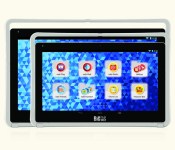
The term “big” seems like a bit of an understatement when it comes to the Big Tab HD, a new lineup of tablets that are no smaller than 20 inches. Produced by Fuhu, these massive slates are essentially a larger version of the company’s DreamTab series: The $449 20-inch version comes with a 1600×900 “HD+” display, while the $549 24-inch model sports a 1920 x 1080 Full HD panel. The new tabs, which will be available this fall, are designed primarily to educate and entertain kids, thanks to its simplified (and parentally controlled) Android-based Blue Morpho user interface. Of course, it could be helpful to seniors and for playing games as a family or group of friends. The tabs come with an adjustable and removable frame that gives it the ability to stand up at nearly any angle, but it also doubles as a coffee table device if you want to play games together.

Weighing 13 lbs and at nearly a full inch thick (0.9-inch, to be precise), this isn’t something you’ll be toting around everywhere you go, so chances are that you’ll want to stick this in one room and keep it there most of the time; it definitely isn’t something that the kids will be taking with them to school or a friend’s house. But that’s exactly what Fuhu’s intended the Big Tab to be used for — as a hub for activities like learning, watching movies and family gaming.
If you’ve seen Easy Mode or Kids Mode in other Android devices, the Blue Morpho interface will look familiar. The on-screen icons are huge and the text is easy to read. Just like the DreamTabs, the Big Tabs will feature a selection of DreamWorks movies, in addition to titles from Disney, Nickelodeon and others; there’s a curated App Zone designed specifically for kids, although parents can add in whatever Android apps they want. The grown-ups also have the ability to give Nabi coins to the kids, which is a special currency that they can earn for finishing chores, homework or any of the learning activities on the tablets. There’s even a service that lets kids do instant messaging, text their parents and sharing pics.
Parents enjoy a password-protected admin mode, which lets them take control over which apps, games and content are used, impose time limits on specific apps, monitor screen time, set up chore lists and offer rewards if the kids are doing what they’re supposed to do. As parents, you can also view progress and tweak controls using a smartphone app.
The tabs come with a 1,650mAh battery, 16GB internal storage and a quad-core NVIDIA Tegra 4 chipset, so they’re not intended to be top-of-the-line. But it’s easy to see how many parents might be into such a device: the large screens are ideal for watching movies, playing board-style games at the kitchen table and going through various learning activities. If you’re into keeping the kiddos safe and on task, this is certainly an effective way of doing it.
Filed under: Tablets, Wireless, Google
.CPlase_panel display:none;

YouTube ‘Music Key’ leak reveals Google’s streaming plans

Filed under: Cellphones, Home Entertainment, Mobile, Google
Source: Android Police
.CPlase_panel display:none;

The government shouldn’t be in charge of smartphone kill switches

Few things are worse than realizing your smartphone’s been stolen. Your personal information is now in the hands of a dishonest soul, who can decide to either erase and sell the device or — even worse — do whatever they want with your contacts, photos and texts. If it’s happened to you, you’re not alone; millions of people have gone through the same nightmarish experience. The technology to deter thieves, known as “kill switches,” exists, but it’s up to phone makers and carriers to implement it.
Most major phone companies have committed to adding kill switches to their products, and some have already begun selling phones with the tech included. A handful of state governments, like California and Minnesota, don’t believe this is good enough, so they’re passing bills that mandate anti-theft measures in every phone sold in those states beginning next year. This seems like a great idea, but let’s take a closer look at what exactly these laws mean and if they make sense.
What is a kill switch?

The most basic definition of a kill switch is a feature that allows an owner to render a phone useless after it’s been lost or stolen. In theory, it’s supposed to deter thieves from being able to sell your phone or access any of the data on board; if every phone can be disabled remotely, why would thieves even bother trying to steal them anymore? If anything can be done to curb smartphone theft, it’s worth considering. An FCC report states these types of theft comprised nearly 30 to 40 percent of robberies in most major cities across the country in 2012. And it appears to be getting worse: According to Consumer Reports, 3.1 million Americans had their smartphones stolen in 2013 alone, which is a jump from 1.4 million in 2012.
There are two kinds of kill switches: Hard and soft. The former would “brick” the phone so it becomes a permanently disabled hunk of circuitry, never to be enjoyed or loved again, while the latter — the more popular alternative among companies and legislators — can be reversed as long as you have the authorization to do so. (At this moment, every existing switch is soft, as hard switches are much more difficult to implement.)
Even if your phone doesn’t have a kill switch, it likely can be remotely locked and wiped. This clears all of your personal data from your phone and reverts it back to the way it was when you bought it. Android’s official Device Manager is an example of this. Problem is, your device can be sold and reused. If you activate a kill switch and the thief can’t figure out how to bypass your authorization (more on that later), he or she has a useless and unsellable phone.

Regardless of government involvement, some companies are already adding soft kill switches to their products. Apple added Activation Lock to iOS 7 last year, which allows users to turn on Lost Mode (using Find my iPhone) and prevents others from unlocking your device without your Apple ID and password. Samsung’s added a similar feature called Reactivation Lock to the Galaxy Note 3 and Galaxy S5 that does essentially the same thing. Both options are opt-in, which ensures that your phone doesn’t get disabled by pure accident. That said, it also means a lot of phones will still be vulnerable if they’re stolen, so thieves still have a good shot at success if they snatch your handset.
A few preliminary studies show that kill switches have already caused a drop in smartphone theft. Police officers in London and San Francisco reported a noticeable drop in iPhone robberies (24 percent and 38 percent, respectively) between the six-month period before the feature came out and the six-month period after. This is an encouraging report, but it’ll be even more telling as a larger chunk of the wireless industry follows Apple’s and Samsung’s lead.
Within the next year, we may see exactly that — if you trust tech companies to live up to their word. Google and Microsoft have vowed to incorporate kill switch tech into the next major releases of Android and Windows Phone; and the CTIA, a lobbying group that represents nearly every wireless carrier and manufacturer in the country, teamed up with the US branches of LG, Samsung, HTC, Huawei, Motorola and Nokia, as well as the five largest US networks, to commit to adding “baseline anti-theft tools” to their devices by July 2015. Curiously, phone insurance provider Asurion was also listed as one of the supporters of the CTIA’s pledge; the company makes money by convincing people they need insurance to cover stolen phones, so the fact that it’s even voicing support for anti-theft measures is important.
Government to the rescue!

Phone makers and carriers may be getting their gears in motion, but it’s not enough for the government. In May, Minnesota passed a bill requiring that any smartphone manufactured (and sold or purchased in the state) on or after July 2015 “must be equipped with preloaded anti-theft functionality or be capable of downloading that functionality.” Additionally, it mandates manufacturers and carriers submit a report describing the anti-theft tool they use.
At first, it sounds like this is a foolproof method of ensuring that all phones will now come with a built-in kill switch, but the text of the bill is incredibly vague. It never mentions a kill switch, nor does it even specifically describe what the anti-theft functionality is supposed to do. Furthermore, it also doesn’t have to be installed on the device at launch; at minimum, it needs to be available as a free download for anyone who wants it.
Last week, California passed a very similar bill after its second run through the state Legislature, and it’s awaiting a signature from Governor Jerry Brown. In this case, the text of the bill, known as SB962, is more clear: It states that any smartphone manufactured on or after July 1, 2015, must have anti-theft functionality included at the time of sale. As long as the essential features of the phone are rendered inoperable when it’s stolen, it doesn’t matter if it’s a hardware or software solution. The feature should, “when enabled, be able to withstand a hard reset … and prevent reactivation of the smartphone on a wireless network except by an authorized user.”

The bill specifies that a soft switch is required; it must be reversible so that the owner can reuse their phone if it’s recovered. It’s also opt-out, which implies that manufacturers can enable the kill switch right out of the box as long as they let the user disable it at any time.
Arguably, California’s bill is important because it could impact devices all across the country. Since the state boasts a good chunk of the nation’s smartphone buyers, it likely doesn’t make sense for manufacturers to push out state-specific firmware. And because most companies are already committed to adding kill switches to their products anyway, this is simply more incentive for them to do so on all of their devices — precisely what the government wants.
Enforcing kill switches on a state-by-state basis might be messy, so it makes sense that it’s also being considered on a federal level. Members of Congress have proposed the Smartphone Theft Prevention Act, which is very similar to California’s in that a soft kill switch be made available to all new phones. It hasn’t been brought to the floor yet, and there’s no indication of if or when it’ll actually be voted on.
That’s a bad thing?

Just because these laws may seem innocent and even helpful doesn’t mean they’re the best idea for the consumer. If companies are already adopting kill switches, do we really need the government getting in the way? The Electronic Frontier Foundation (EFF), a nonprofit that focuses on defending digital civil liberties, doesn’t think so. The group argues that numerous kill switches are already available to the end user, either as built-in features or as third-party approaches (such as Lookout, Avast, Prey and others). And once the government gets in the way, SB962 could potentially “lock in” options that aren’t as effective and could therefore stifle competition and innovation among third-party developers. “Technology is fast; the law is slow,” the EFF’s Adi Kamdar said. The other issue, the EFF claims, is that the bill isn’t specific enough in its language regarding who’s “authorized” to activate the kill switch. If it’s not explicitly defined, the group argues, what’s stopping the government or wireless providers from considering themselves authorized to do it as well?
Even the CTIA, which (as mentioned earlier) voiced its support for the installation of kill switches in April, opposes SB962 for several reasons. The CTIA argues that the bill doesn’t make mention of educating consumers on smartphone theft and how to protect yourself; a stolen-phone database was established late last year and the government hasn’t given it enough time to prove its usefulness; state law may interfere with federal smartphone requirements, such as the mandate that each phone gets 911 service at all times; and if individual states pass bills with different requirements, it’ll make it more difficult for manufacturers to produce phones that can be sold in all 50 states.
Finally, other opponents of the measure, such as California state Sen. Mark Wyland, believe that the maximum $2,500 penalty that manufacturers would have to pay per phone is too high — especially if the wrong devices accidentally get shipped to California instead of some other part of the country. “It’s a big burden on a retailer to ensure that every single product they sell meets every single standard,” Wyland told the LA Times.
California and Minnesota may be the first states to pass legislation, but they may not be alone for long. New York and Illinois are also discussing similar measures, and other states — especially those with high rates of smartphone theft — could follow along as well. Additionally, a group of elected officials and law enforcement leaders signed the Secure Our Smartphones Initiative in June 2013, which calls for a hard kill switch in every device.

Kill switches in their current form aren’t foolproof, either. They can’t be activated without an internet connection, so the thief can simply activate airplane mode before the victim realizes the phone is missing. Hackers may also be able to find ways to bypass the switch and falsify authorization. After Apple introduced Activation Lock, a few loopholes were found in the phone’s security that allowed knowledgeable thieves to bypass the kill switch; the iPhone has fallen victim to a few of these bugs, and to its credit, Apple is often quick to fix them. But will other manufacturers take care of similar issues in a timely and effective manner? Especially when they require additional carrier tests before they can roll out? Proper and successful kill switch implementation takes time.
Sadly, although there are plenty of reasons to oppose legislation, state mandates still hold more weight than the CTIA’s commitment. Just because a group of companies have agreed to add anti-theft tech to their phones, doesn’t mean they’re held to a blood oath. The agreement isn’t an enforceable contract, nor will ramifications befall any of them if they fail to get it done in time.
There’s no longer any reason a phone shouldn’t have kill switches installed, but companies — not the government — need to be in charge of making sure the functionality is done properly. State involvement isn’t anywhere close to a perfect solution, but without their interference, individual companies won’t be held accountable if they sit on their hands and take forever to add this functionality to their phones. States like New York and Illinois aren’t going to wait around and see if companies will stay true to their word; if the wireless industry puts it off for too long, the government will simply take matters into its own hands.
[Image credits: Getty Creative (pickpocket), Getty Images (Killswitch Engage, California chambers)]
Filed under: Cellphones, Wireless, Mobile, Apple, Microsoft, Google
.CPlase_panel display:none;

Google’s getting ready to open its web services to kids

13 is a big year in a young one’s life: you’ve officially tip-toed into adolescence, your body starts to go a little batty and you can finally sign up for a Google account. According to a new report from The Information, though, Google is gearing up to unleash its services on an even younger audience, and it’s dealing with stringent legal requirements so it can start courting kids. Among the bits Google reportedly has in the works are a child-friendly version of YouTube (hard as that can be to imagine) and an online dashboard that allows parents to keep tabs on their kids goings-on as they flit around online.
Here’s the thing, though: trying to get your web services cleared for kids is a total pain. Extending its reach in a such a way means Google has to fight to comply with Coppa, a federal law that calls for (among other things) the strict and thoughtful handling of data collected from children. This whole rigmarole is made trickier by the fact that there are really two kinds of Google accounts: ones created from a traditional computer that require a user to provide their age (whether they’re honest about it is another story entirely) and ones created from Android devices that don’t have ages tied to them. The Information reports that you won’t be able to create one of those age-less mobile Google accounts before long, though it’s unclear how Google’s going to address about the ones that already exist.
So like we said, a total pain. The fact that Google’s pushing anyway highlights just how important this group of potential users is to them. Sure, kids get condoned access to tools they’ve never been able to use before, but Google gets a chance to hook new (and hopefully lifelong) users while they’re young. What’s a few legal headaches when you’ve got a big ol’ growth engine just sitting there waiting to be fired up?
Source: The Information
.CPlase_panel display:none;
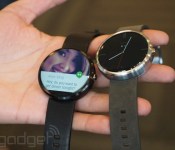
Motorola’s Moto 360 smartwatch pops up at Best Buy two weeks early

You don’t have to wait until Motorola’s September 4th event to get more details regarding the Moto 360 smartwatch, it seems — Best Buy appears to have the scoop over two weeks early. The big-box retailer has posted a product listing for the timepiece that appears to reveal many (though not all) of the specifications. Reportedly, the device’s signature not-quite-circular display is a 1.5-inch, 320 x 290 LCD. You’ll also find a heart rate sensor and a pedometer, so the 360 may be a good fit if you’re an amateur athlete.
Best Buy isn’t saying just when the gadget will ship, although it’s listing the same $249 price that we saw a couple of months ago in a contest. That’s a good deal for what’s arguably much nicer-looking wristwear than either the G Watch or Gear Live. However, it’s probably wise to take the pricing (and possibly the specs) with a grain of salt. Motorola warned us back in June that pricing wasn’t set in stone, and the mention of 802.11n WiFi is odd when existing Android Wear devices only use Bluetooth to communicate with your phone. As such, it won’t be alarming if there are at least a few surprises left when the Moto 360 makes its official debut next month.

Filed under: Wearables, Google, Lenovo
Via: Droid-Life
Source: Best Buy
.CPlase_panel display:none;

