


Wearable device shipments have soared in the past year

In case you had any doubts that wearable devices were catching on, Canalys just delivered some tangible proof. The analyst group estimates that the tech industry shipped roughly 4.5 million smartwatches and fitness trackers in the first half of 2014, or nearly 700 percent more than it managed a year earlier. Not surprisingly, most of the watches were Samsung devices — the Korean company’s rapid-fire Gear watch releases made it almost ubiquitous. Pebble and Sony also did well in this fledgling space. Fitbit and Jawbone, meanwhile, moved many of the simpler wristbands.
Having said this, wearables are still far from hitting the mainstream. Mobile device makers shipped over 300 million smartphones in the second quarter of the year alone; smart wristwear ultimately represents a drop in the bucket. And that’s also assuming that it’s selling well. Samsung’s quick reinvention of the Gear line was an admission that it didn’t have many fans early on. Shipments may be up across the board, but it’s possible that some of the companies involved are struggling. All the same, interest isn’t likely to cool down any time soon — between the arrival of Android Wear and rumors of watches from Apple and Microsoft, the category may just be getting started.
Filed under: Wearables, Samsung, Google
Source: Canalys
.CPlase_panel display:none;

Google’s modular phone gets cheaper thanks to a new processor

One of the biggest challenges behind Google’s modular Project Ara phone platform has been getting processors to play nicely with the technology. How do you let someone swap out the very heart of their device as easily as they would a memory card? By creating a CPU for that very purpose, that’s how. Rockchip has started work on a system-on-chip with modular tech built-in; your phone won’t need any bridge chips or other special tricks to let you switch processors on a whim. You won’t see the hardware in action until a Rockchip-based Ara prototype arrives in early 2015. However, the plans show that Google’s vision of a completely upgradable handset is both feasible and potentially inexpensive. Don’t be surprised if some of the earliest Ara phones (or rather, their parts) easily fit within your budget.
Filed under: Cellphones, Mobile, Google
Source: Google ATAP (Google+)
.CPlase_panel display:none;

Street View cars used to sniff out gas leaks, plots ’em on a map

Gas leaks are huge trouble. Leaky pipes are not only prone to exploding (which is already terrible, of course), they also spew out methane — a greenhouse gas more potent than carbon dioxide in contributing to climate change. The bad news is, nobody’s been monitoring gas leaks closely, so Google Earth Outreach and the Environmental Defense Fund teamed up to do the job back in July. Now, the results for the project’s pilot tests are out, and they confirm what everyone suspects: old gas pipes do leak a lot more than new ones. In order to effectively survey large areas, the pair attached methane-detecting sensors to Google’s famous roving vehicles: Street View cars. They then sent these dual-purpose vehicles to Boston, Indianapolis and Staten Island, whose results you can see in the images after the break.
The pair’s already working with gas companies and their regulators in hopes that these findings will help them prioritize repairs. That doesn’t mean they’re already done, though: EDF and Google plan to unleash even more methane-sniffing Street View cars to other cities in the coming months.
Boston (where the Street View car found a leak almost every mile):

Staten Island:

Indianapolis (where the gas pipes are obviously new):

Filed under: Science
Via: Good
Source: Environmental Defense Fund
.CPlase_panel display:none;

Chromecast software vulnerability paves way for another root exploit

Google regularly rolls out Chromecast updates that plug up previous root-friendly exploits, but there’s a new method you can use if you want complete control over your streaming device. A group of hardware hackers (fail0verflow, Team Eureka and GTVHacker) have not only discovered a vulnerability in the latest Chromecast software, but also developed a way to exploit it and give you root access. This lets you tinker with the HDMI dongle, enable and disable stuff like software auto-updates and change any setting you wish, among other things. The team’s calling it “HubCap,” and it works on both newly updated and brand new, fresh-out-the-box Chromecasts. You’ll need extra hardware to make it happen (a USB development board called Teensy used to root PS3s back in the day), but if you’re dead set on rooting your Chromecast, head over to XDA Developers for the full set of instructions.
[Thanks, CJ]
Filed under: Home Entertainment, HD, Google
Source: XDA Developers
.CPlase_panel display:none;

Google buys design firm behind OLPC and Slingbox

Man, Google’s checkbook is really getting a workout this summer. According to a report from Bloomberg, the search giant just acquired yet another company, and unlike the other two companies it bought this month, it isn’t an mobile app startup No, no: its latest target is a small product design firm called Gecko, and Google’s looking to bring those design smarts to bear on its ambitious Google X projects.
You might not heard of Gecko, but you’ve almost certainly come across one of the products they’ve helped design. There’s the original Fitbit, for one, to say nothing of Jawbone’s early Bluetooth headsets, the friendly looking One Laptop Per Child notebook and a whole host of Dell PCs over the years. Gecko’s technical bonafides and awfully pretty designs seem almost beyond question, but what’s still unclear is what projects Gecko will start (or has already started) pitching in on. There are some we could probably cross off the list, though: Google’s internet-beaming balloons might not need a facelift, and there isn’t a lot you can do to gussy up a pair of smart contact lenses. Gecko’s forté lays in consumer tech design – perhaps the next big Google Glass revision (which the folks in Mountain View have been trying to inject with style for a while now) will look like something people will actually want to wear.
Via: Bloomberg
Source: Gecko Design
.CPlase_panel display:none;

[OP-ED] Why a 5.9-inch Nexus 6 makes perfect sense for Google
 The supposed codename for the Nexus 6, “Shamu”, couldn’t been more descriptive – for a device that is rumoured to have a 5.9-inch display, it is nothing short of a ‘whale’ of a phone. Plenty of people have already sworn off the phone, saying that if it really is 5.9-inches, that it will be much too big a phone for them. And that’s probably the truth of it, but somehow I don’t think Google minds too much. Let me explain.
We’ve long associated the Nexus line of devices with fantastic value and as all-round great devices with entries in every major form factor an Android fan could hope for. It started with phones, then tablets were added, and it appears that the emphasis is strongly on phones again. But the 5.9-inch Nexus 6 threats to break that trend, not because it’s not going to be good value or provide fantastic performance, but because it’s simply not a device that many of us want or, perhaps more literally, are able to hold in one hand. But what if that isn’t the point of the device? What if that isn’t the point of any of the Nexus devices?
 Let’s rewind to something that head of Android and Nexus engineering at Google, Dave Burke, said at Google I/O earlier this year when he was questioned about the status of Nexus and confirmed that “we are still invested in Nexus”; it’s what he said shortly after that which is the most interesting:
“When we are working, there are sort of two outputs. We’re building a Nexus device and we’re building the open source code. There is no way you can build the open source code without the phone or tablet or whatever you are building. You have to live and breathe the code you are developing… You can’t build a platform in the abstract, you have to build a device (or devices). So, I don’t think can can or will ever go away. And then, I think Nexus is also interesting in that it is a way of us explaining how we think Android should run. It is a statement, almost a statement of purity in some respects. I don’t see why we would ever turn away from that, it wouldn’t make sense.”
Without reading too far into Burke’s passage, it should be sufficiently obvious that Google is using the Nexus as its hardware platform to match its software development needs – devices for developers, if you will. It stands to reason then that Google would want to continue to try and cater for devices of all shapes and sizes, and while they have had smartphones with screen sizes from 3.7-inches (Nexus One) right up to 5-inches (Nexus 5), Google has yet to really support phablet devices in any capacity.
 “But doesn’t Google want their devices to be a commercial success,” I hear you ask? Quite simply, I would say no. Many of us will remember when the Nexus 4 was launched, it went out of stock almost immediately. That was attributed to a lack of supply, but not because manufacturer of the phone, LG, didn’t make enough; it was because Google didn’t anticipate that people would like the device so much. LG has previously said that they simply get orders from Google to make a certain number of devices, after which the relationship is over. So as a commercial exercise, it wouldn’t seem like the Nexus is a particularly good one, but what’s happened is that Android has gotten so good as an operating system that even the average person can appreciate the speed and functionality of stock Android, which has caused a huge increase in popularity.
This isn’t to say that Google is simply ignoring its customers or deliberately going out of their way to burn bridges by making a whale-sized phone. But for Android to continue developing as a platform and to make it as robust as possible with devices of all shapes and sizes, I believe that a 5.9-inch Nexus 6 makes perfect sense for Google to release later this year.
But that’s me just rambling: what do you think about the rumoured 5.9-inch Nexus 6? Do you think I’m wrong about the Nexus line?
//<![CDATA[
ord = window.ord || Math.floor(Math.random()*1E16);
document.write('‘);
//]]>
The post [OP-ED] Why a 5.9-inch Nexus 6 makes perfect sense for Google appeared first on AndroidSPIN.
.CPlase_panel display:none;

Apple blocks access to Secret in Brazil after anti-bullying ruling

A few days ago, a Brazilian judge ordered Apple and Google to pull Secret from the local app store and wipe it from the handsets of whose who had downloaded it. The same ruling covered Microsoft, who was ordered to do the same to Windows Phone clone Cryptic. So far, however, only Apple has begun to comply with the order, after suspending fresh downloads of the app to iOS accounts registered in Brazil. According to local news media, the company hasn’t started pulling the software from individual handsets, but that’s still more than Google or Microsoft have done. Both companies claim that they’ve not been directly notified of the widely-reported ruling, although it’s more likely that they’re waiting on a final decision from the courts before taking any action.
Filed under: Internet, Software, Mobile, Apple, Microsoft, Google
Via: GigaOM
Source: CenarioMT (Translated), DM.com (Translated)
.CPlase_panel display:none;
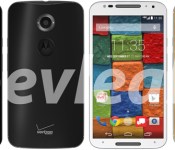
Motorola’s Moto X sequel spotted

Want a good, clear look at one of the devices Motorola is expected to unveil at its September 4th event? You’ve got it. As a parting shot, retiring leaker Evan Blass (aka @evleaks) has posted press images for Motorola’s next big flagship smartphone, frequently known as the X+1. It largely confirms what previously appeared in some dimly-lit photos, including dual camera flashes, a wooden back option and Moto E-style front-facing speakers. There are a couple of new tidbits, though. The Verizon logo leaves no doubts about one of the supporting US carriers, and we’re curious about those dots on the top and bottom bezels — are they Fire phone-like face tracking cameras, plain old screws or something else? You’ll get the full scoop in a couple of weeks, but this serves as a nice (if very unofficial) teaser.
Filed under: Cellphones, Mobile, Google, Verizon, Lenovo
Source: @evleaks (Twitter)
.CPlase_panel display:none;

Google’s ‘Knowledge Vault’ seeks the answer to life, the universe and everything

Google’s Knowledge Graph is pretty good at telling you who was the 37th president of the US, or what the square root of 342345 is. Ask it more complex questions, like “why does the sun set at night?” and it’ll still send you off to find the answer yourself. Next week in New York, Google researchers will present a paper on its “Knowledge Vault,” which Kevin Murphy of Google Research, describes as “the largest repository of automatically extracted structured knowledge on the planet.” Knowledge Vault applies machine learning (unlike Knowledge Graph which is an extension of community supported tools) to automatically trawl webpages, assimilating their facts, information and connections therein. Not only does this mean it’s faster, it can continually grow and update itself. The net result will be a huge database of knowledge, the likes of which would have been unimaginable just years ago.
The real-world implications are that services like Google Now (or Siri et al) could get a huge boost in smarts — tapping into a much deeper well of understanding, knowing what, how and why things are related. This could lead to much more intelligent web services, or truly explode any limits of augmented reality (“ah, you’re in Berlin, and sent an email last week about museums, perhaps you want to visit the Museum Berggruen“). Unsurprisingly this comes at a privacy cost; analysts are expecting Google to leverage services like Gmail that contain your data (plus the data that’s public/online) bundled in with the rest of the world wide web. While there are no timelines on when we might see this implemented in live services, don’t be surprised when it’s not just your proximity to Sir Bacon that freaks you out, but how and why you’re so close, plus favorite films you have in common, and where you can go and see them locally.
Filed under: Science, Software, Google
Via: New Scientist
Source: CIKM
.CPlase_panel display:none;

Acer’s Chromebox CXI ships next month for $180

Have a spare display sitting around that you want to turn into an (albeit limited) PC? You might consider picking up a Chromebox. The tiny low-powered machines, which run Google’s Chrome OS, are best for basic productivity apps and content consumption, but if you don’t need to do any complex processing, they might be a solid fit — especially if you’re on a very tight budget. Today, Acer announced a new model of its own, the Chromebox CXI. There’s an Intel Celeron (Haswell) processor, a 16GB SSD, plenty of connectivity and support for two displays. One version includes 2GB of RAM and ships next month for $180, while a model with 4 gigs of RAM will run you $220. Both include a keyboard, mouse and mounting kit in the box.
Filed under: Desktops, Google, Acer
Source: PRWeb
.CPlase_panel display:none;

