


The Future of Google Now

Google Now is one of the most innovative, useful features to be released in the last few years. It truly makes your smartphone a smart phone. It provides you with information before you even ask for it. It saves you from being stuck in traffic, fumbling through your email to find your plane ticket, and even helps you remember where you parked your car. What else can Google do to make it better?
Google just applied for a patent for “active watching,” to help better pinpoint where input for a task is coming from so as to get better results in speech-to-text. What else could be in store?
I would love to see the current features be fine-tuned, and be made better. For example, currently you can search for flights right from Google Now. However, once you find one and want to book it, you have to go to the site that Google found the particular flight from and book it from there. It’d be nice if I could tell Google “Find me a flight from Phoenix to Los Angeles next Tuesday afternoon for under $200 and book it,” and it’d go ahead and do it, sending me a confirmation email afterwards. Is this the ultimate form of laziness? Maybe. But would it be cool? Absolutely! This could then tie into better usage on Android Wear devices.
Our own Scott Webster says he’d like to be able to ask “Where’s my wife?” and Google Now would show him on a map where she is (with the person’s location settings turned on for sharing). This could be useful for so many reasons, but particularly in emergencies if your loved one is lost.
AndroidGuy Mitch Montague would like to have the ability to change the phrase “Okay, Google” to anything he’d like such as “Hey Nexus.” He also wants to see the ability to change system functions, such as turning Wi-Fi on and off, exist natively in the app (considering you can currently do this by other means).
Our Cooper Le says he’d like to see offline support, to set things such as alarms or reminders without a data connection.
Rob Vanasco would like to see better natural conversation, such as Google Now asking for clarification to a question it doesn’t understand, or ask for more details to give you a better result.
Jason Lund loves Google Now, but feels he doesn’t think about it enough to use it. Some way for Google to prompt him to use it would be good.
Henry Wiygul wants inter-app communication, so that if you find a great article while in Chrome, you can ask Google to “Share this on Twitter” without leaving Chrome, similar to what Project Hera is.
What features would you like to see? Do you use Google Now on a regular basis?
Deals, Discounts, Freebies, and More! Click here to save today!
The post The Future of Google Now appeared first on AndroidGuys.
.CPlase_panel display:none;

Starbucks’ shake-to-pay and tips now work on Android too

Love Starbucks but hate feeling left out of the shake-to-pay fun because the device in your pocket is running Android instead of iOS? Those days are over, my caffeine-craving friend. An updated version of the titular app has hit Google Play and it’s packing the aforementioned payment option as well as digital tipping. The coffee juggernaut’s rewards system is now on the payment screen too — all in time for the Seattle outfit’s declaration that autumn is officially here.

Filed under: Cellphones, Wireless, Mobile, Google
Via: Android Community
Source: Google Play
.CPlase_panel display:none;
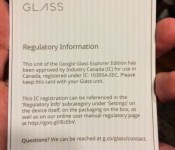
Oh Canada: Next stop for Google Glass looks like Canada
 News around Google Glass has died down a lot over the last year. While the wearable craze is still alive and well, the glasses form factor has gone a bit too quiet lately. Still, that’s not going to stop Google spreading Glass everywhere else. There’s no official word yet, however the above image seems to suggest that Google Glass has regulatory approval to be sold and used in Canada.
This, of course, is only an indication that Google Glass will eventually be sold in Canada, but gives us very little to go on in terms of timing and pricing. Google Glass is already available in the U.S. and U.K. so it’s only a matter of time before it becomes available in more corners of the world (Australia’s still waiting – hint hint).
What do you think about Google Glass becoming available in Canada? Any Canadians out there interested in getting some Glass on your face? Let us know your thoughts below.
Source: Android Police
//<![CDATA[
ord = window.ord || Math.floor(Math.random()*1E16);
document.write('‘);
//]]>
The post Oh Canada: Next stop for Google Glass looks like Canada appeared first on AndroidSPIN.
.CPlase_panel display:none;
Google wants websites to work more like apps, even offline

Google wants to get rid of frustrating 404 error pages and make websites still feel interactive even if you’re not connected to the internet. So, the company has recently developed a new technology called “Service Workers,” and Google software engineer Alex Russell talked about it at length during the O’Reilly Velocity conference in New York this week. To be precise, Service Workers is a new browser standard that will allow websites to store documents locally (similar to apps), in order to render cached pages or any other interactive content anywhere you are. Say, you’re loading a website just as you enter a tunnel or reach an area with no coverage, you’ll then see an older version of the site instead of getting an error message. As Russell puts it, “We want to load something instead of nothing.”
Also, since the new standard stores data locally, it speeds up the website loading process. It first shows you the interface or cached page saved on your device, while simultaneously updating it — you won’t have to wait for a particularly large image to show up, for instance, before the rest of the website comes to view. Google still has to develop Service Workers further before we see it implemented on all browsers, but you can read more about how it works in Russell’s paper published by the World Wide Web Consortium.
.CPlase_panel display:none;

Android L’s newest security feature: out-of-the-box encryption

Apple isn’t the only one that’s making its software a lot more secure, and erm, fed-proof — Google’s upcoming Android platform will apparently be encrypted by default, according to The Washington Post. The publication didn’t clarify whether it’s Android’s full-disk encryption, which Google first rolled out in 2011, but it did say that nobody can access the encrypted device (not even the company), unless they know its four-digit pin. Does that mean users will be forced to nominate a passcode upon setup? We don’t know for sure, but with encryption in place, Mountain View (just like Apple) won’t be able to assist authorities in searching your phone, so long as you keep your passcode a secret.
Company spokeswoman Niki Christoff told the Post that keys/passcodes are not stored online or anywhere off your device, so Google has no way to share them. Also, with this update, you won’t even have to think or figure out how to switch encryption on, since you’re protected from the start. Google has apparently been developing this Android L feature for months, because while feds generally can’t search phones without a warrant, it wants its software to be more resistant to government snooping.
Filed under: Cellphones, Tablets, Mobile, Google
Source: Washington Post
.CPlase_panel display:none;
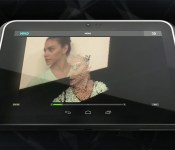
The Aquila tablet scans our world in 3D to help build better virtual ones

Your tablet can fire off emails and help you rotate beautiful, Escherian worlds, but can it capture the world around you in glorious 3D? Probably not, but the newly revealed (and Android-powered) Aquila from Mantis Vision and Flextronics can. Most of its spec sheet reads like any other top-flight tablet’s would — it’s got a 8-inch screen running at 1900 x 1200 and a punchy Snapdragon 801 chipset ticking away in there — but the telltale dual image sensors ’round the back make it clear this isn’t your average Android slate. By capturing regular color footage and infrared depth data, the Aquila can put together an awfully detailed spatial representation of your surroundings.
What’s that? ‘Mantis Vision’ sounds a little familiar? You’re probably remembering their work with Google on Project Tango which (what else?) saw one of their impressive 3D sensors crammed into one of Mountain View’s 7-inch tablets. Of course, Mantis Vision isn’t the first to try and marry tablets and 3D cameras — the folks at Occipital (you know, they made that RedLaser app back in the day) built an iPad-mounted 3D sensor called the Structure and launched it on Kickstarter around this time last year. Its success means there’s at least some demand for these sorts of tools, and Mantis Vision may just have the right hardware at the right time. Alas, this thing isn’t meant for Joe Q. Everyperson… yet. Right now, Aquila is targeting software makers who want to break into three dimensions in hopes that its M4VD system becomes the standard everyone works with. Developers can try and nab one of their own for $925 at Qualcomm’s Uplinq conference, but the technology could find its way into consumer-grade tablets by next year.
Via: Gizmodo
Source: Mantis Vision
.CPlase_panel display:none;

Tech giants team up to build friendlier security tools

If there’s one overarching, fundamental truth about the internet, it’s that you’re never as safe as you think you are. Dropbox, Google and the Open Technology Fund get that all too well — that’s why they (along with a slew of security researchers) teamed up to launch a new organization called Simply Secure. The name says it all, really — everyone involved knows there are plenty of effective digital security tools floating around, but not very many of them are designed with friendliness and ease of use in mind. That’s where Simply Secure comes in.
The group (headed by former Google project manager Sara Sinclair Brody) wants to develop its own open-source tools that wrap powerful online security measures in a tasteful, thoughtfully designed veneer that means the less-than-tech-savvy get to be as safe as we nerds without poring through tomes or scrutinizing FAQs. It’s still early days for the project, so it could be a long while before we catch a glimpse of what the team actually cooks up. Still, Google managed to paint a (pretty vague) picture of what Simply Secure might tackle on its Online Security blog, noting that the group will work the developers of projects like Open Whisper Systems and Guardian to make them easier to average folks to grok.
Via: BusinessWire
Source: Simply Secure
.CPlase_panel display:none;

Larry Ellison steps aside as Oracle CEO, former HP exec Mark Hurd promoted

Usually the only time we talk about Oracle is in relation to its battle with Google over Java and the use of related APIs in Android, but not today. At the age of 70, co-founder Larry Ellison is stepping down from the post of CEO and moving to a new post as Executive Chairman of the Board and CTO. Taking over the reins of the enterprise software company is the duo of Safra Catz and Mark Hurd. You’ll recall Hurd as the former CEO of HP, who resigned from that company over a sexual harassment investigation and false expense reports, and then became the target of an (eventually resolved) lawsuit when he joined Oracle four years ago. His awkward exit resulted in collateral damage to HP acquisition Palm, and by extension webOS. The trio of Ellison, former CFO Catz and Hurd will share responsibilities going forward, with Ellison stating in the press release that the only difference is “Safra and Mark will now report to the Oracle Board rather than to me.”
[Image credit: NBAE/Getty Images]
Pictured above at a Golden State Warriors game, it doesn’t appear that Larry is going to sink his billions into a team Ballmer-style as Oracle claims he will “keep working full time and focus his energy on product engineering, technology development and strategy.” Of course, with an array of boats, planes, islands and everything else a net worth in the neighborhood of $50 billion gets you, we’re figuring a vacation or two is due.
Source: Oracle
.CPlase_panel display:none;

Google’s CEO is pushing for hyper-efficient airports and other moonshots

The Google we already know controls our pockets, makes sense of the web and wants to understand our behavior. That one company already has such extensive reach is pretty crazy, which also raises a weighty question: What would a Google 2.0 look like? According to a new report from The Information, CEO Larry Page has been trying to figure out just that. As the story goes, he rounded up the company’s brass over a year ago to suss out what big problems were really worth tackling and to set Google’s course accordingly.
Some of the concepts, like the creation of a Page-controlled research and development division, only make sense considering all the cool stuff co-founder Sergey Brin has gotten his fingers into at Google X. Still others are, as you might expect from a man worth billions, a little more out there. Consider the tedium of travel — Page wasn’t content to let Google X have all the fun trying to fix transport with its self-driving cars, so he pondered the possibility of making air travel more hyperloop-y by building a new kind of uber-efficient airport (though how it’d work is really anyone’s guess). Oh, and the thought of building an entire model city apparently crossed his mind too (might we suggest a self-sufficient oil rig first?). At the very least, one of those Google 2.0 initiatives — the company’s push to make its services available to kids — is known to be inching toward fruition.
Pushing Google to rethink its role as a major technological force in the world may seem like a big move on Page’s part, but that’s nothing new. He is, after all, the guy who tried to get rid of all the company’s project managers (in fairness, there were only six at the time) in one shot early on in Google’s life. The search giant already has a handful of moonshots under its belt, and if Page’s plan sticks around, they may just be a sign of a bigger, broader Google to come.
Source: The Information
.CPlase_panel display:none;

SlingPlayer support for Chromecast brings an obvious combination together

Watching Netflix or Plex streams on your Chromecast is great, but what about when the game is on? Sling has enabled its apps on iPhone, iPad and Android phones (Android tablets coming soon) to help with just that situation. Just tap the Cast button in the apps, and you can send video to Google’s $35 dongle. Similar to Sling’s integration with Apple TV and Roku, once the video is playing, you can use the app as a remote control, or close it and do something else while the video keeps playing. The only bad news? Chromecast support requires one of the company’s newer boxes: 350, SlingTV/500 or M1. Still, both devices already make sense for frequent travelers, and now they’re better together. The SlingTV is also getting a tweak, as the Android phone and iPhone apps can now control its living room UI directly, without the included remote.
Filed under: Home Entertainment, HD, Mobile, Google
Source: Sling Blog
.CPlase_panel display:none;

