


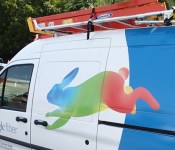
Google Fiber proves it’s serious about fast internet with a new leader

Worried that Google Fiber would just be a momentary fascination for the folks in Mountain View? Don’t be. Google has confirmed to the Wall Street Journal that it recently hired Dennis Kish, one of Qualcomm’s bigger senior vice presidents, to lead its gigabit internet efforts. While it’s not clear why Kish came onboard beyond his “operational expertise,” he’s no stranger to managing big tech projects. Among other work, he played key roles in both Qualcomm’s Mirasol display efforts and ST-Ericsson’s connectivity business. That kind of know-how could be crucial given Google’s expansion plans, especially if rumors of mobile phone service pan out. It’s too soon to gauge Kish’s influence, but a high-profile hire like this suggests that Fiber’s super-fast data service is only going to get bigger — and that your local telecom giant may well get some genuine competition.
[Image credit: Neerav Bhatt, Flickr]
Filed under: Networking, Internet, Google
Source: Wall Street Journal, Dennis Kish (LinkedIn)
.CPlase_panel display:none;

What you need to know about the future of paying for stuff

We’ve virtualized much of the rest of the modern life — why not payments? Plane tickets, banking and many other aspects of our lives now live on our phones. Payments still exist in the world of paper and plastic.
Google has Google Wallet; Visa has payWave; MasterCard has PayPass; and American Express has ExpressPay. Apple just announced its own, with Apple Pay. If you’ve heard of any of these credit card services other than Apple’s recently announced system and maybe Google’s long-running program, we’re impressed. You’re in the minority; heck, one quarter of US citizens don’t even own a standard credit card, nonetheless a virtualized one. But virtual payments are more prevalent by the year, and Apple Pay is giving the concept a much-needed publicity boost. So, all that said, let’s talk about the future of payment.
Don’t throw away your wallet just yet.
WHAT IS IT?

When it comes to virtualized payment systems, we’re not talking about paying with your credit card number online, or even services like PayPal. We’re talking about the act of paying at a physical store with virtual means: your phone, for instance, or some forms of credit card. Perhaps you’ve got a special key for use at the gas pump, where you wave it near a part of the pump and you’re good to go? Same concept, except this is all payment scenarios (at major retail chains, anyway).
Google and Apple are using NFC — “Near-Field Communication” — to make this work. That means exactly what it sounds like: You put your phone or card near a reader and the reader accepts payment. We’ve got a video of Apple Pay in action right here!
http://www.engadget.com/embed-5min/?sid=577&playList=518408292&responsive=false
Pretty simple, right? What’s actually going on behind the scenes is a bit more complex, of course, but the implementation is meant to be painless. Ideally, even more painless than pulling out your credit card. And more secure, too.
HOW DOES IT WORK?
Here’s where things get technical, so bear with us for a moment. There are two main standards being used: NFC and ISO/IEC 14443. We already know that NFC stands for “near-field communication,” but it’s worth also knowing that NFC devices produce a very weak radio frequency. This radio frequency is what allows them to communicate with payment systems, and it’s that same radio frequency that the ISO/IEC 14443 uses: 13.56 MHz.
Technical junk aside, what matters here is that both systems play nice with each other. And that’s good, because a variety of credit card companies use the non-NFC system. Since those companies already outfitted retailers with their systems, no major change needs to be made for NFC-enabled phones to simply work as payment all over the USA. The list of vendors signed up for Apple Pay thus far is testament to that: Bloomingdale’s, Disney Store and Walt Disney World Resort, Duane Reade, Macy’s, McDonald’s, Sephora, Staples, Subway, Walgreens and Whole Foods Market.

Google Wallet similarly offers a stand-in for credit and debit cards; enter debit/credit information to the app, then use the phone as your payment device at participating retailers. And all those retailers where Apple Pay works? Google Wallet nows works there too, thanks to the fact that there are established standards for how these payment systems work, and those standards aren’t governed by a single company.
IS IT SECURE?

As you likely expect, this is a sticky situation. Let’s break it down, piece-by-piece:
- Do Google and Apple keep my credit card information? The short answer is no. The longer answer still starts with no, but also points out that your debit/credit information is probably on file with both companies anyway through Google Play and iTunes. There’s no reason to believe that either company can’t be trusted with keeping that data safe, but Target customers and PlayStation Network users may feel differently.
- Could my phone be stolen and used as payment? Also no, at least not easily. In the case of Apple Pay, you need a fingerprint ID to use it. In the case of Google Pay, a PIN is required.
- Could my phone be stolen and debit/credit card info removed? Still no. Part of NFC’s standardization is an aspect called the “secure element.” This is the chip where personal information is stored, securely and encrypted.
The question that really matters here is one of comparative security. Is virtualized payment more secure than traditional means? We’d argue yes, it is. Retailers in the US rarely check identification for debit/credit card use, and matching signatures is a remnant of the past. There are inconveniences that come with the new method — the inability to lend a family member a credit card, for instance — but those issues will assuredly work out in time.
WHAT ARE THE ALTERNATIVES?

Much of the world outside of the US has adopted a newer form of credit card which uses a built-in microchip and a PIN (sometimes called “Chip and PIN technology”). This “smartcard” has vastly reduced card fraud, but it never caught on in the US. It’s certainly an alternative, but not one that’s very effective if you don’t live in Europe. Smartphones, however, are worldwide.
A similar concept exists in the US, though it uses technology similar to NFC. It’s this technology, in fact, that led the charge for virtualized payment in retail stores. It’s no surprise that Visa, Mastercard, American Express and a mess of major US banks are on board with the new NFC tech from the likes of Apple and Google — it’s an evolution of technology they’re already using.
WANT EVEN MORE?
If statistics are your kinda thing, a great resource for this piece was the CreditCards.com. Perhaps you think this whole virtualized payment thing is a solution to a non-existent problem? The New York Times‘ Upshot section agrees. For the standards built into NFC tech, the Smart Card Alliance has you covered. Maybe you just want to watch Tim Cook excitedly introduce Apple Pay? CNET‘s got that.
[Image credit: Google (Google Wallet), AP Photo/Marcio Jose Sanchez (Apple Pay), Alamy (Chip and PIN card)]
Filed under: Cellphones, Wearables, Internet, Software, Mobile, Apple, Google
.CPlase_panel display:none;

Diane Von Furstenberg’s designer Google Glass frames come to the UK

When Google Glass went on sale in the UK in June, deep-pocketed early adopters could choose between the basic frame or one of the more stylish options from Google’s Titanium collection for some extra cash. Well-heeled fashionistas that weren’t exactly enamoured with Google’s range have some new options today, courtesy of designer Diane Von Furstenberg. The “DVF” collection, which dropped stateside a few months ago, is now available to Brits exclusively at online fashion outlet NET-A-PORTER. There’s only one style for the ladies, and it comes in five different colors with matching sunglass lens replacements. These retail for £1,250 a piece, whereas the range for gents is slightly cheaper at £1,120. Men have a wider choice of three frame designs, which also include bonus sunglass lenses. They’re certainly prettier than the raw frames, and perhaps a little less conspicuous, too. Because you wouldn’t want to draw attention to yourself now, would you?
Filed under: Wearables, Google
Source: NET-A-PORTER, Google (Twitter)
.CPlase_panel display:none;

Yes, Unreal Engine 4 is coming to Samsung Gear VR too

The latest game development toolkit from Epic Games supports Oculus Rift and Sony’s Project Morpheus, but what about virtual or augmented reality on mobile devices? That’s coming, too — and apparently pretty soon. Road to VR has noticed that on Epic’s publicly-accessible “Unreal Engine 4 Roadmap” task-board two new bits were added to the VR to-do list: Samsung Gear VR and Google Project Tango support. They’re labeled as September and October projects, and as Road to VR notes, the VR project category has been empty since Oculus’ and Sony’s features have been completed. If anything, this yet another example of just how versatile Unreal Engine 4 is when it comes to what the engine’s games can run on. Maybe Amazon’s Fire phone is up next? After all, there’s precedent (sort of).
http://www.engadget.com/embed-5min/?sid=577&playList=518395534
Filed under: Cellphones, Gaming, Tablets, Mobile, Samsung, Google
Via: Road to VR
Source: Unreal Engine (Trello)
.CPlase_panel display:none;
The Android Silver program is now apparently on Google’s backburner

Image courtesy of Android Police
We previously reported that the Android Silver program was looking less and less likely a few months ago, and appears that its flame has all but been extinguished. The Information is reporting today that Android Silver has indeed been put on ice after its chief proponent within Google, Nikesh Arora, departed the company. This prompted key stakeholders to question the program’s ability to succeed even though they acknowledged the need for Google to compete with other premium device manufacturers, something Android Silver would have allowed them to do.
Another reason for the scepticism for Android Silver is the lukewarm reception it received from the manufacturers who would have been involved, particularly after it was made clear the manufacturers would have to make concessions. And with Android One taking emerging markets by storm, officially launching earlier this week, and the omnipresent Nexus devices, Google has more than enough on its plate moving forward. That isn’t to say that Android Silver couldn’t be revived in the future, but it seems the climate at Google and its partners is not quite right yet.
What do you think about the demise of Android Silver? Would you have liked a premium Android Silver device? Let us know your thoughts in the comments below.
//<![CDATA[
ord = window.ord || Math.floor(Math.random()*1E16);
document.write('‘);
//]]>
The post The Android Silver program is now apparently on Google’s backburner appeared first on AndroidSPIN.
.CPlase_panel display:none;
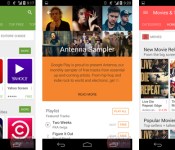
Android’s new flatter design is taking over the Play Store app soon

Google may have already given Android’s Play Store a big makeover this summer, but it’s not done yet — there’s another revamp coming this year. Android Police has posted shots of a pre-release Play Store 5.0 update that’s very clearly guided by Google’s Material Design concept. While it’s not quite as dramatic an overhaul as what we saw a few months ago, it’s still a pretty noticeable change. Swaths of bright, solid color are everywhere, and there’s even more of an emphasis on title pictures. You should get some extra function to go with this form, too; code buried in the update hints that you’ll get to restore apps on a per-device basis, making it much easier to recreate your setup from an old phone. It’s not certain just when the new Play Store will go live, but it’s reasonable to presume that you’ll see it around the same time as the similarly-styled Android L update.
Filed under: Cellphones, Tablets, Mobile, Google
Source: Android Police
.CPlase_panel display:none;
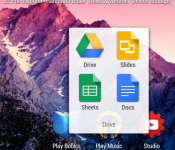
Bug fixes, Performance Improvements and Icon Changes in Google Docs, Sheets and Slides [APK Download]
Google is pushing out a few updates today for a couple of apps. Google Docs, Sheets and Slides are all receiving some sort of update. All three apps are being listed with bug fixes and performance improvements. While Google Sheets gets a small addition of being able to add and edit Notes on cells.
I didn’t notice anything insanely new in any of the apps. I did however notice a slight change to the icons that reside on your device. On all three the folded corner has been rounded off. On Slides the white square slide has been reduced from two to one. On Sheets the cells are all the same size. On Docs the lines are thicker and closer together. You might be able to see the difference below. The old icons are on the right and the new icons are on the.

 If you don’t see the updates yet, feel free to hit the links below to grab the APK and side load it at your leisure.
Download link – Google Docs apk
Download link – Google Sheets apk
Download link – Google Slides apk
//<![CDATA[
ord = window.ord || Math.floor(Math.random()*1E16);
document.write('‘);
//]]>
The post Bug fixes, Performance Improvements and Icon Changes in Google Docs, Sheets and Slides [APK Download] appeared first on AndroidSPIN.
.CPlase_panel display:none;
Google Play Services 6.1 is released with Analytics, Drive and Google Fit improvements [ APK Download]
 It appears that Update Wednesday is truly upon us, and it’s not even Wednesday in some places. It appears many of Google‘s core apps are getting an update today, including Docs, Sheets, YouTube and it appears Google Play Services 6.1 is also being pushed out today. We didn’t expect to see another major revision of Play Services before Android L was released, particularly seeing as version 5.0, the last major revision, was released just after Google I/O a few months ago. Still, we’re not complaining, and it looks like there are some big changes that will make some people happy.
As detailed on the Google Developers blog, the version 6.1 update includes updates to Analytics to add Enhanced Ecommerce analytics support from Google Tag Manager, an update to the Google Drive Android API, as well as changes to the Google Fit Developer Preview after it was first announced and released after Google I/O. While this update doesn’t seem like this would need a whole new version number, perhaps this is Google’s way of gearing up for an Android build release, which we’re expecting to see sometime in the next month or so.
Google says it is pushing out the update from today, but for those who want the update now, we have the updated APK available for download below:
What do you think of the latest Google Play Services update? Let us know your thoughts in the comments.
Source: Google Developers Blog
//<![CDATA[
ord = window.ord || Math.floor(Math.random()*1E16);
document.write('‘);
//]]>
The post Google Play Services 6.1 is released with Analytics, Drive and Google Fit improvements [ APK Download] appeared first on AndroidSPIN.
.CPlase_panel display:none;
Chromecast finally plays nice with Disney videos, Twitch streams

Heads up, Chromecast owners – your $35 media-flinging dongle just got a new infusion of oomph. Google announced on its official Chrome blog earlier today that users can now stream content from a slew of Disney apps (think WATCH Disney, WATCH Disney Junior and WATCH Disney XD for the young’uns) as well as iHeartRadio and Twitch (which just might be a little salt in the wound since Google couldn’t quite make the deal work). You may rejoice if you’re the type to binge on cheesy, over-the-top, emotionally charged television too since DramaFever’s app have been given the same treatment — now you’ve got another way to plow through your backlog of Coffee Prince episodes on a bigger screen. Can you think of a better way to spend a lazy weekend? We sure can’t.
Filed under: HD
Source: Official Chrome Blog
.CPlase_panel display:none;

Google makes it easier to create and share your own maps

Google has had tools for creating custom maps for a while, but they haven’t been very accessible — especially not if you’ve wanted to find your friends’ creations. It should be easier to track down those hand-made tourist guides and trail markers after today, though. Google has relaunched Maps Engine Lite as the much catchier My Maps, and has expanded the Google Maps Gallery to include everyone‘s projects, no matter what their focus. So long as you want to make your cartography public in the first place, anyone can find it sitting alongside the Gallery’s usual historic and government info. Google will transition every Maps Engine Lite user to My Maps by the end of the year, but you can upgrade early if you just can’t wait to share your favorite bike path with the rest of the world.
Source: Google Maps, Maps Gallery, Google Play
.CPlase_panel display:none;

