


What is a fanboy?
In almost any phone article on any website, you will find people fighting over what phone is better. These arguments range from iPhones vs Android phones to different Android manufacturers and every spot in between. Some of the people in these debates have good points while others do not, but regardless of the validity of each person’s opinion, you will see one word thrown around more than any other. That word is fanboy. You will see commenters say this to each other and to the writer of the article. However, people do not seem to understand what the term means and just attribute it to anyone who does not share the same opinion they do. This is completely wrong and we need to stop the overuse of fanboy towards those who do not share the same characteristics.
Who is a fanboy?
To decide whether to call someone a fanboy, we first need to figure out what exactly a fanboy is. The first sign you are talking to a fanboy is that they only buy a certain phone brand and do not have any reasons for that. Apple fanboys will often say that iPhones are the best because there is an apple on it. This same characteristic is also seen in fanboys of Android OEMs such as Samsung, LG, HTC, and Motorola. They buy their phones because it is a certain brand and nothing else. Another key sign that you are talking to a fanboy is that they think every other phone is terrible. Regardless of how good another phone is or how awesome a new feature on it is, fanboys of other phones will not say anything good about it. If a fanboy does compliment another phone, it will be backhanded. They will say something like, “That 2K screen is really nice, if you like a phone that cannot fit in your pocket,” or, “The thinness of that phone is cool, but you are just going to put a case on it”. The biggest giveaway that you are talking to a fanboy is that they will never admit that their brand makes a mistake. No matter how blatantly obvious the mistake is, fanboys will defend it as long as they can. Whether this is a protruding camera, large bezels, laggy software, or poor build materials, fanboys will not recognize these as flaws and rather commend them or say they do not exist or matter. If you are talking to someone who is exhibiting these traits, then you are probably talking to a fanboy.
Who is not a fanboy?
Now it is time to look at those who prefer a certain brand but do not fall into the fanboy category. While these people may only buy a certain phone, they actually have respectable reasons for doing so. Examples include people buy iPhones because they are integrated into the Apple ecosystem, or people who buy HTC phones because they love music and the HTC One speakers are fantastic. If they have good reasons for owning the phones they do, then they are not a fanboy. These phone users also respect other phones and are able to accept when another manufacturer does something better than their preferred company. It is also possible for them to like other phones even though they prefer a certain brand. Odds are, you will never hear someone like this claim that their brand is the best at everything. Another characteristic of these non-fanboys (for lack of a better term) is that they can accept it when their company makes a mistake. They do not try to overlook it or hide it because they know that all companies make mistakes. If you are talking to someone like this, then they do prefer a certain phone but are not a fanboy.
What kind of fanboys are there?
Now that we have determined who is a fanboy and who is not, we can move on to the different types of fanboys. The most common form of fanboy seen on tech sites is a phone fanboy. These are the ones that prefer a certain phone from a certain maker. You have iPhone fanboys, Samsung Galaxy Note fanboys, HTC One fanboys, Nexus fanboys, Moto X fanboys, and every fanboy in between. You can easily find them in the comment section of almost every article on every tech site. A less common type of fanboy is an operating system fanboy. These are people who prefer Android or iOS but do not have a certain phone that they are loyal to. Instead, they argue that their operating system is the best and every other one is terrible.
When is the word fanboy appropriate?
We have discussed who are fanboys, who are not fanboys, and what kind of fanboys there are, and now we are on to when the term fanboy is okay to use. The answer is simple – never. Sure, people are fanboys and they are relatively easy to spot; however, nothing good will ever come from calling someone else a fanboy. People should not be criticized because they prefer a certain type of phone or type of operating system regardless of their reasons. Be together. Not the same.
The post What is a fanboy? appeared first on AndroidGuys.

Google explains why it’s not fixing web security in old Android phones

You might not be happy that Google isn’t fixing a web security flaw in your older Android phone, but the search giant now says that it has some good reasons for holding off. As the company’s Adrian Ludwig explains, it’s no longer viable to “safely” patch vulnerable, pre-Android 4.4 versions of WebView (a framework that lets apps show websites without a separate browser) to prevent remote attacks. The sheer amount of necessary code changes would create legions of problems, he claims, especially since developers are introducing “thousands” of tweaks to the open source software every month.
Ludwig suggests a few things you can do to avoid or mitigate problems, though. For a start, he recommends surfing with browsers that don’t use WebView but still get updates, like Chrome (which works on devices using Android 4.0) and Firefox (which runs on ancient Android 2.3 hardware). Hackers can’t abuse the vulnerable software if you’re not using it, after all. The Googler also tells app creators to either use their own web rendering tech or limit WebView to pages they can trust, like encrypted sites.
The advice should help if you’re either a tech-savvy user or write apps. However, it still hints that quite a few people will remain at risk until those older releases of Android ride into the sunset. Many Android device owners aren’t aware of alternatives to the stock Android browser, or can’t easily get them (you have to jump through hoops to install Chrome if you can’t use the Google Play Store, for instance). Also, there’s no simple way to tell whether or not an app is using WebView. The chances of an attack are low if you’re careful, but it could take a long, long while before the majority of Android gadgets are truly safe from WebView-related web exploits.
Filed under: Cellphones, Tablets, Internet, Mobile, Google
Via: Android Police, Wall Street Journal
Source: Adrian Ludwig (Google+)

CEO: “Today, Cyanogen has some dependence on Google. Tomorrow, it will not.”

Kirt McMaster, the outspoken CEO of Cyanogen Inc., has been in the news lately for expressing some controversial opinions on things like Google’s “tyrannical” control over Android or Samsung’s complete inability to build a decent mobile operating system.
But the opinions expressed on Thursday at The Information’s “Next Phase of Android” event in San Francisco are his most contentious yet. Not only has McMaster clarified his views on Google’s control over Android, but he laid out Cyanogen’s vision for a future devoid of any Google reliance.
To remove all doubts right from the get go, here’s how McMaster introduced himself: “I’m the CEO of Cyanogen. We’re attempting to take Android away from Google.” Asked to detail his vision, McMaster explained that Cyanogen wants to provide a version of Android that is open down to its core, that partners can use to build highly integrated services, in a way that is not possible right now with Google’s Android.
“We’re making a version of Android that is more open so we can integrate with more partners so their servicers can be tier one services, so startups working on [artificial intelligence] or other problems don’t get stuck having you have to launch a stupid little application that inevitably gets acquired by Google or Apple. These companies can thrive on non-Google Android.”
McMaster said Google Now is a model of a service that plugs into the core of the system, in a way third-party apps cannot. He went on to say that Aviate launcher (owned by Yahoo, one of the companies rumored to have shown interest in buying Cyanogen) could gain that sort of access to the innards of the Android OS, if it were to partner with Cyanogen.
So Cyanogen sees itself as a platform for other companies to build services that integrate deeply into Android, which is not possible with the Google-controlled Android. Won’t that infuriate Google? Of course it will, but Cyanogen isn’t worried, because its future is free of Google:
“We’ve barely scratched the surface in regards to what mobile can be. Today, Cyanogen has some dependence on Google. Tomorrow, it will not. We will not be based on some derivative of Google in three to five years. There will be services that are doing the same old bulls— with Android, and then there will be something different. That is where we’re going here.”
McMaster sees his company as a “white horse that opens the entire platform up.” “Google is running the table, and nobody likes that,” he said.
Right now, Cyanogen needs Google for its suite of services, like the Play Store, Gmail, and Maps. By imposing certain conditions to companies wishing to install these apps on their devices, Google has so far maintained a firm, if veiled, control over its platform. Companies that fork Android are shut down from Google apps, making it very difficult to create viable competing Android-based platforms. Amazon, which spent years creating alternatives to Google’s apps, is the one notable exception.
Cyanogen wants to solve this problem by working with partners, and by supporting alternative app stores. In fact, Kirt McMaster said Cyanogen would have its own app store in 18 months.
For the full transcript of the event, including commentary from Nextbit, the company building Baton, an app syncing service built into the next version of Cyanogen, check out The Information (paywalled).
It remains to be seen if Cyanogen’s grand ambitions will ever materialize. There are huge obstacles to overcome, not the least being Google’s attitude towards Cyanogen. So far, Cyanogen has enjoyed access to Google’s apps for its OnePlus and Micromax commercial implementations. It’s not clear how Cyanogen plans to play it cards, as it still needs Google to play nice for now. But its plans are clearly diverging from that.

Two Sundance experience apps available for Google Cardboard owners

Google Cardboard owners have the opportunity to experience the Sundance Film Festival from afar. Two Sundance experience apps are available right now in the Play Store and virtually bring people to the event. Evolution of Verse (or just VRSE) is an “expanding universe of Virtual Reality experiences.” The app combines beautiful landscapes and high quality sound for an immersive setup with Google Cardboard. The other app is Kaiju Fury and it places viewers in the midst of a battle between two massive creatures. Both creatures destroy the city as the military works to put an end to them.
Don’t have any way to use Google Cardboard? Then purchase the affordable equipment!
Hit the break for download links.
Play Store Download Link (Kaiju Fury)
Play Store Download Link (Evolution of Verse)
Source: Google
Come comment on this article: Two Sundance experience apps available for Google Cardboard owners

Google addresses WebView security concerns, makes recommendations on how to stay safe

If you are still waiting for Google to do something about the WebView vulnerabilities in older Android releases, you may not be a fan of their official response to the matter. Google says they’ve already fixed it, sort of, but at least offered ways that you can protect yourself and your data going forward.
In a recent Google+ post, echoing an older DevBytes video and our own take on the matter, Google has addressed the WebView issues that have been of growing target for complaints of the free and open source Android OS. Android releases prior to KitKat, that is, versions 4.3 and older, have a known code injection flaw in the WebView element.
WebView is broken, don’t use it
WebView is a tool within Android that allows apps to display web content within the app, you’ve all seen these before as ads at the bottom of a free game or an in-app web based help page. Although the Google+ post goes on to describe a few best practices, the underlying message is unforgiving and clear, WebView is broken, so don’t use it.
Perhaps Google’s advice is easier said than done, especially for the casual gamers in the crowd, but disabling the default Android browser and installing Chrome, Dolphin or another full web browser is good advice regardless the issues. Developers, please familiarize yourself with the best practices for your apps, to keep us secure.

Now, didn’t you say that Google fixed the issue? Well, yes, sort of. Google took the time in the Google+ post to explain that they have limited resources for working on older versions of Android. Plainly put, Android 4.4 KitKat included the fix to the WebView bug. Keeping in mind that KitKat is over a year old now itself, having been through versions up to 4.4.4 before giving way to Android 5.0 Lollipop, which is also a couple versions in already. Android 5.0.2 Lollipop is already shipping out to some devices.
Bottom line, users of devices running Jellybean and older are just out of luck. Please take the precautions discussed, or have a look at installing a custom ROM, if one is available for your Android unit.
Is this an acceptable response from Google, or should they dedicate more staff to fixing older Android releases? Before you answer, I might suggest taking a look at the latest Android distribution numbers.
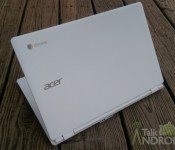
Research suggests that Windows 10 will not have a major impact on the Chromebooks

According to a new report from Digitimes Research, Microsoft’s recently announced unified Windows 10 experience would not have a massive impact on the Chromebooks which is eating its way through the notebook marketshare with each passing month.
Microsoft is using a unification system with Windows 10 which will bring together its mobile, tablets and PCs with the same apps running seamlessly across devices. This can be partially likened to what Apple is doing with iOS and Mac OSX.
However, the steadily increasing Chromebook sales will be hard to contain, according to the report. Chromebooks are affordable and offer seamless integration with Android devices, which pegs the odds in its favor.
While Microsoft will still dominate the notebook segment, it probably won’t see as much success as it is currently expecting. It is being said that Windows tablet sales will see growth in the current year, which is offering some hope for Microsoft.
But as it stands, it seems like Google and Apple will continue to dominate the mobile segment while Chromebooks slowly sneak up on the PC marketshare.
Source: Digitimes
Come comment on this article: Research suggests that Windows 10 will not have a major impact on the Chromebooks
Google’s Nexus Player is about to hit retail stores
Up until now, Google’s Nexus Player has only been available on the official Google Play Store. Now, the latest from Gigaom shows that the Nexus Player will be hitting virtual shelves of Newegg starting January 25th and is available for pre-order.
The Newegg website lists the Nexus Player for $99.99 as well as the game pad for $39.99. It is unknown when the device will hit actual storefronts, but Gigaom found a thread on Reddit where a few users are finding the Nexus Player popping up at certain Wal-Marts. If you are the type that you must see what you’re buying in person, you might not have to wait too long.
The Nexus Player, which was introduced back in October alongside the Nexus 6 and Nexus 9 is made by Asus, runs a version of Android 5.0 Lollipop, sports a 1.8 GHz Intel Atom processor, 1 GB of RAM, and has 8 GB of storage.
Source: Gigaom
The post Google’s Nexus Player is about to hit retail stores appeared first on AndroidGuys.
Google reveals Mac security holes before Apple’s fix is ready

Microsoft isn’t the only big tech firm grappling with surprise security flaw disclosures these days. Google’s Project Zero security unit revealed at least two unpatched vulnerabilities in OS X (Yosemite appears to have mitigated a third) that theoretically help attackers take control of your Mac. The search company says it privately notified Apple about the holes back in October, but automatically published the details after Project Zero’s usual 90-day cutoff period. Apple’s usual policy is to decline comment on exploits like this until it has a solution. However, relief is at least relatively close — iMore reports that an upcoming Yosemite update (10.10.2) is expected to tackle these flaws. The main question is whether or not Apple can deliver its fix before malware writers find a way to use those bugs for sinister purposes.
Filed under: Internet, Software, Apple, Google
Via: CNET
Source: Google Security Research (1), (2), (3)

Android development tools could be heading to Chrome OS

Quite soon, Chrome OS users could have access to Android development tools. An issue posted on the Google Code site reveals that the Android Debug Bridge (ADB) and recovery/flashing tools are working with Chrome OS. The ADB tool allows for data to be sent between devices. Flashing makes it possible to do something like installing a custom ROM on a connected device. The tools would be accessible through the Chrome Shell.
We are not aware of a potential release date since nothing is official.
Source: Chromium
Via: OMG! Chrome!
Come comment on this article: Android development tools could be heading to Chrome OS

Google will sell the Nexus Player at a store near you

Google is rolling out their Android TV powered Nexus Player in a big way. Starting this Sunday, January 25th, you can expect to see the hockey puck of a device on sale at a large selection or retail and online stores.
Nexus Player was brought to life shortly after Android TV was announced at Google I/O last June. At the show, developers got their hands on the ADT-1, a device that can best be described as the developer focused predecessor to the Nexus Player.
The media streaming Nexus Player began selling in the Google Play Store last year for $99. That price will remain through retailers moving forward. Although, much like the frequent sales that can be found for the Chromecast, we expect to see some deals come through for the Nexus Player as well.

One of the Nexus Player’s biggest tricks is the ability to connect its companion wireless gamepad, allowing you to bring your favorite Android games to the big screen. We’ve had the chance to try this out, and while we think the Nexus Player is a great unit, you likely will not be selling your PS4 or Xbox in favor of the Android TV powered unit. The gamepad will also sell through retailers for about $50.
Google is destined to make this a big year for Android TV, and the increased functionality of the device and connectivity with Android 5 Lollipop phones and tablets should continue to add value to the unit.
So, if you are in the market for an Android TV device, but are not a fan of purchasing through the Google Play Store, get ready to head on over to your local Walmart or log into your Newegg account to pre-order your Nexus Player today.
Is increased availability a selling point for you, or is the Nexus Player still not the device you are looking for?

