


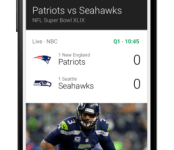
Google and the NFL finally partner, highlight clips and more coming to YouTube

The NFL can’t ignore Google and YouTube’s power anymore. A deal has been reached that brings highlight clips to YouTube in time for the Super Bowl and beyond. It’s not just YouTube as Google search results will provide more detailed information on games, which include kickoff times as well as the networks airing the games.
Google will promote the NFL on YouTube and other places, but they will also share revenue from ads that appear with the highlight clips and search results with the NFL.
Now before you go thinking that full games will come to YouTube, that’s not in the cards for now. The NFL wants fans to watch the games on the TV networks since they have paid a ton of money for those rights. Google will steer fans to both the networks and NFL.com, but in-game clips will be something fans will enjoy on YouTube starting as early as this week’s Super Bowl.
Now the only question I have is if the score in the above image will really be 0 – 0 with 10:45 left in the first quarter?
source: re/code
Come comment on this article: Google and the NFL finally partner, highlight clips and more coming to YouTube
Google seeking the best of Sprint and T-Mobile
For some time now, it has been announced Google is looking to launch their own mobile service through a mobile virtual network (MVNO). An MVNO that will be running on Sprint’s and T-Mobile’s networks although Google would be offering its own voice and mobile data plans. While an MVNO is certainly not a new concept, there are dozens of other MVNOs that already resell wireless services of AT&T, Verizon, T-Mobile, and Sprint. Google will just be added to the mix and seeks to shake things up in the mobile industry.
Google already has a huge following through its search engine and customers that flock to purchase mobile devices that use the Android OS. It also has a lot of muscle in the marketing department so as they look to promote this service, the sky is the limit to what Google can accomplish.
How will it affect the rest of the wireless industry? Similar to its Fiber broadband service, Google seems intent on cutting its prices on wireless service while finding its own way to also improve network services. Lower prices and an improved network service is always a plus for customers. The Wall Street Journal reported that Sprint has already inked a deal with Google. The WSJ is also reporting that Google’s services will search for the best possible Sprint or T-Mobile cellular or Wi-Fi signal to route text messages, voice calls, and data traffic.
When will this happen? According to various news sources, Google is looking to launch this program sometime later this year although no actual date has been released. It is also said that there are no other details about what actual prices of the service and what kinds of other products will be offered. All we can do is wait and see as any new information surfaces.
Sources – The Wall Street Journal and C/Net
The post Google seeking the best of Sprint and T-Mobile appeared first on AndroidGuys.

Google partners with WePay to extend Wallet support to 200,000 online stores

Around 200,000 online stores will now be able to support Google Wallet as a payment method. Google has partnered with payment processor WePay, putting the former’s Instant Buy feature in the online stores. Instant Buy allows Google Wallet users to make purchases with just two clicks whether they are on the web or a mobile device. It removes the process of inputting payment information repeatedly. Everything is secure in a Google Wallet account and can be used from site to site.
Here is some of what WePay had to say about its partnership with Google:
Although Google Wallet is our first of announcement of its kind, you can expect to see more like it soon. Our goal is to make it as easy as possible for any online platform to take advantage of mobile wallet technologies, no matter what those technologies are. We started with Google Wallet because Android is shipped on the majority of smart phones globally, and Google Wallet can be used both in native applications and on the mobile web. That means it currently serves the most users in the most contexts, and that makes for an excellent first step.
By teaming up with Google, WePay is the first payment company of its kind to enable partners and their end-users to support Google Wallet without having to spend the time and effort to integrate with Google themselves.
InvoiceASAP is the first of our partners to adopt the new service, instantly enabling its more than 200,000 small businesses users to accept Google Wallet.
WePay is also working to partner with Apple Pay users.
Do you use Google Wallet? Let us know in the comments if this partnership has you excited.
Source: WePay
Via: VentureBeat
Come comment on this article: Google partners with WePay to extend Wallet support to 200,000 online stores

Law enforcement wants to shut down Google’s Waze for ‘stalking’ police

Waze, the popular map application now owned by Google, has offered a few really convenient features to make driving easier. Waze allows users to easily avoid traffic congestion, car accidents, road closings and even police traps. While convenient for the general public, certain law enforcement officers in the US claim that it’s a ‘stalking app’, and can be used to track down police officers for the wrong reasons.
Los Angeles Police Chief Charlie Beck voiced his concerns in a letter sent to Google’s chief executive on December 30th, explaining that Waze has the potential to be “misused by those with criminal intent to endanger police officers and the community.” The only known connection between police attacks and Waze is one case regarding a certain Ismaaiyl Brinsley and his Instagram account. Brinsley killed two NYC police officers on December 20th, 2014. Brinsley apparently shared to his Instagram account a screenshot of Waze tracking police officers, threatening to kill them. Investigators involved in the murders do not believe Brinsley used Waze to track the officers, largely due to Brinsley throwing out his smartphone more than two miles away from the crime scene.
Additionally, a few more officers are becoming more outspoken regarding their views on the app. Sheriff Mike Brown of Bedford County, Virginia voiced his opinion at the National Sheriffs’ Association meeting on January 23rd:
The police community needs to coordinate an effort to have the owner, Google, act like the responsible corporate citizen they have always been and remove this feature from the application even before any litigation or statutory action.
Whether or not the law enforcement officers have a legitimate case against Google, they still bring up a valid point that should be taken into consideration. How do you feel about the officers’ qualms with the app? Should Google take out this feature before something drastic happens? Let us know what you think in the comments.

Google and NFL deal puts football highlights on YouTube

It had to hurt when Facebook made a deal with the NFL to play video clips before YouTube, but Google has finally announced its own pact with the league just in time for the Super Bowl. There’s now an NFL YouTube channel for official highlights, and Google will also show video, scores, broadcast times and other info in its search results. For instance, typing in “New England Patriots” now brings up the score and a recap of the team’s AFC championship game against the Colts, along with a video preview for the Super Bowl. Re/Code reported that in exchange for access to in-game footage, Google will split ad revenue with the league.
YouTube will only carry clips and not entire games to avoid competing with the NFL broadcasters — NBC will livestream the entire Super Bowl, for instance. However, it’s a long-overdue step for the NFL, which has only recently dabbled in selling digital content rights. It’s also a welcome change for fans, as YouTube’s NFL previews and recap packages are quite complete (see below), and don’t appear to be region locked — good news for Euro fans and expats. YouTube has now struck deals with all four major US sports leagues, and conversely, it’s now possible to catch NFL highlights on Twitter, Facebook and YouTube.
Filed under: Home Entertainment, Google
Source: Re/Code

Google’s wireless service could launch nationwide in first half of the year

More details have emerged about Google’s secret plan to become a wireless service provider.
The Information and the WSJ reported last week that Google is readying the launch of its own MVNO service, using Sprint’s and T-Mobile’s networks. Now WSJ is back with a few more details on how Google wants to disrupt the highly competitive wireless industry.
According to the WSJ, Google’s current goal is to launch its service in the first half of 2015, though this timeframe is subject to change; a launch that was previously scheduled for October 2015 was cancelled. Contrary to speculation that the service would be initially limited to a small number of test markets, Google’s service is likely to be offered nationwide, says the report.
Google’s wireless service will rely heavily on Wi-Fi connections
Google’s wireless service will rely heavily on Wi-Fi connections, with cellular service bought from T-Mobile and Sprint as fallback when Wi-Fi is not available. Google already has a deal in place with Sprint, though the carrier reportedly used a volume clause to protect itself from giving too much access to Google.
At least initially, Google doesn’t want to lower prices, one person familiar with the matter said. The actual goal is to give users excellent service without them having to commit to a long-term carrier agreement. But Google is working on a technology that would see wireless providers bid for connections in real time, ensuring that the user gets the smallest price. Indirectly, this competition could lead to smaller prices, the source said.
There are already companies out there using Wi-Fi to bring prices down. Just last week, FreedomPop launched a plan that gives customers access to 10 million Wi-Fi hotspots for just $5 a month. Google will presumably attempt something similar. The company could even rely entirely on data, giving users access to Google Voice over data, instead of conventional voice access. Google is also interested in the use of currently unused radio spectrum to build a network of Wi-Fi hotspots in certain cities.

The Nexus 6 nearly had a fingerprint sensor in its dimple

Motorola’s Nexus 6 almost had a fingerprint sensor, but Apple spoiled the idea. In an interview with UK newspaper The Telegraph, former CEO Dennis Woodside (who now leads Dropbox) reveals that the handset’s dimple was supposed to play home to a discreet recessed sensor, but its supplier couldn’t meet its quality demands. “Apple bought the best supplier,” Woodside explains, “so the second-best supplier was the only one available to everyone else in the industry and they weren’t there yet.” At least Moto didn’t just, y’know, throw one in anyway.
We’ve known about Google’s ambitions to match Apple’s TouchID with its own fingerprint solution since December. An Ars Technica investigation of the Nexus 6’s firmware revealed support for the feature was removed late in the development cycle — presumably when Motorola worked out the sensor wasn’t up to scratch. Apparently, there was an API that all Android devices and developers could tap into, opening the door to things like payment authentication and app security measures. Given the work that Google’s already put into this, dont’ be surprised to see such features coming to Android soon.
Filed under: Cellphones, Mobile, Google
Source: The Telegraph
Verizon confirms no data rollover plan
After T-Mobile launched their “Data Stash” rollover program which was quickly followed by another similar program by AT&T, it was expected for Verizon to follow their footsteps instinctively just to avoid losing its large customer base and to create more potential “high-quality” customers. However, it seems that the nation’s largest wireless carrier is not interested in providing any such service.
Verizon Chief Financial Officer, Fran Shammo has opinions about how Verizon aims to tackle the market loss. “We are a leader, not a follower.” he said in an interview. “We did not go to places where we did not financially want to go to save a customer. And there’s going to be certain customers who leave us for price, and we are just not going to compete with that because it doesn’t make financial sense for us to do that.” he added.
It is not news to us that Verizon has never been a fan of trends that go against their business model. Back in 2007 when AT&T offered its Data Rollover plan for voice minutes, Verizon was firm about their position and never really offered any kind of advantage over other carriers. I am not sure if that was a good or a bad thing.
Shammo also has some say about the Google’s wireless service. It’s evident that Google is working closely with T-Mobile and Sprint to offer its own wireless services through their infrastructure in a way that Google becomes a virtual network provider. Verizon has no interest in doing that even. Rather, it’s more like Verizon is trying to stay above the fray. Shammo says that it’s Google’s way of spurring higher internet speeds into the market at low-costs. Some other notable example being Google Fiber and Project Loom. Google probably have no interest in entering the Telecommunications territory either.
No matter what, Verizon won’t be acting as a Google’s wireless reseller. I am not sure what kind of business plan they have but surely it will cost them a hefty market share. Let’s see what action they take in order to tackle that.
Source: CNet
The post Verizon confirms no data rollover plan appeared first on AndroidGuys.
Android Authority this week

This week was all about rumors, as a steady stream of details about Samsung’s and HTC’s next flagships trickled out. We have a good idea of what to expect from the One M9/Hima, with key details including a 20MP camera, larger battery, and an iterative design. Samsung did a little better at keeping the Galaxy S6 under wraps, but we still got a few juicy tidbits about the phone’s design and specifications. In other news, the Snapdragon 810 was in the spotlight, WhatsApp launched its first desktop client and banned 3rd party clients, Google’s plan to become a carrier leaked, and Cyanogen’s CEO revealed his vision of a Google-free operating system.
Inside AA HQ
It was a quiet week behind the scenes at AA HQ, with few public-facing changes, but quite a lot of work going on in the background. We’ve made some changes to the AA homepage, replacing the “hero menu” with a carousel showcasing our most recent videos. Our YouTube team is doing such a great job churning out great videos, that we feel this change will bring you more value in the long run.
We’re also ramping up our sister sites SoundGuys.com and TabTimes.com, with more news coverage and featured pieces, and adding some team members to bring you great content. We still have a long way to go with these properties, but we’re confident we can make them reference websites in their respective niches, just like AA is your source for all things Android.
Today, we’re giving out a Nexus 6 in our weekly sweepstakes! Throw your name in the hat here. Good luck!

Friday Debate podcast
The stuff you shouldn’t miss
Here are some interesting posts for your Sunday reading:
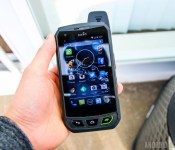
- Review: Lanh does his best to break the rugged Sonim XP7
- Review: How is Samsung’s new batch of metal mid-rangers? We review the Galaxy A5
- Feature: Microsoft announced some cool things this week. We look at how Android is impacted
- Review: Jewels from Asia: we review the Meizu MX4 Pro
- Feature: Andrew ponders the implications of Google entering the wireless industry
- Feature: Simon weighs the pros and cons of a potential Samsung-Blackberry marriage
- Opinion: Bogdan looks at HTC’s year ahead and why it’s time for the company to grow again

Top news of the week
And here are the top news in the Android world this week:
HTC One M9 rumors
- Alleged HTC One M9 “Hima” pics leak, possibly prototype version
- Bloomberg: One M9 to feature 20MP rear camera, smartwatch coming along
- Alleged HTC M9 “Hima” cases leaked (updated)
- More details about the HTC One M9/Hima emerge

Nowhereelse.fr Render
Snapdragon overheating
- Samsung drops Snapdragon 810 in favor of Exynos for Galaxy S6 – Bloomberg
- Qualcomm’s 2015 roadmap reportedly outed, rumored to bring Snapdragon 820
- LG denies G Flex 2 and Snapdragon 810 overheating issues
Whatsapp news
- (Updated) WhatsApp begins crackdown on unlicensed 3rd party clients
- WhatsApp comes to the desktop, with a catch
Galaxy S6 rumors
- Rumor: Samsung Galaxy S6 to launch at MWC 2015, but no LG G4
- More details about Galaxy S6 edge’s special features surface
- Rumor: Galaxy S6 could feature glass back panel and non-removable battery

Google going wireless
Cyanogen’s fighting words

Sound off
We always want to hear your feedback. Whether it’s criticism or praise, feel free to tell us what you think about Android Authority’s content, design, and community. Comment here or get in touch with us on our social channels:
Happy Sunday!
Cyanogen to attempt a Google free Android
The Information, an online subscription based news site, recently had an event in San Francisco on the “Next Phase of Android.” According to Android Authority, Cyanogen had a lot to say when it came to their future as well as the industry’s.
With an opening statement that hid nothing back, Kirt McMaster introduced himself as, “…the CEO of Cyanogen. We’re attempting to take Android away from Google.” As the interview continued, McMaster clarified by expressing that Android is currently limited in how apps can interact on a base system level, so his company would create their own version of Android to rectify this, with more possibilities for app developers and less Google influence. The bold statements didn’t stop there however, with another statement saying that Cyanogen will have their own version of the Google Play Store within 18 months. Until then, they will encourage alternative app stores on the Android platform.
These are massive goals for any company to set for themselves, let alone achieve, and whether or not they are actually viable remains to be seen. There are many challenges facing Cyanogen in the future, such as achievement of enough of a loyal fans to switch from Google to Cyanogen apps, creating their own ecosystem and dealing with the imminent security threats that could arise with allowing applications deeper system integrations.
The post Cyanogen to attempt a Google free Android appeared first on AndroidGuys.

