



Future DualShock 4 update for PlayStation 4 will add option to dim light bar (updated!)

It may seem like minor news, especially considering the hoopla over Sony’s Virtual Reality this week at GDC, but the PlayStation 4′s DualShock 4 controller is about to get a firmware fix. In an interview with Geoff Keighley of Spike TV, Shuhei Yoshida, Sony PlayStation’s head of Worldwide Studios, confirmed that a future firmware update (we’re not sure if it’s console- or controller-specific like on Xbox One) will give gamers the option to turn off dim the controller’s light bar. If you own a PS4, then you know just how preciously short-lived the DualShock 4′s battery life can be. The ability to muffle that glaring light should help extend the DS4′s longevity, but only slightly. Still, it’s a major boon for the community, and those of us that like our controllers to be less of a night light and more of a gamepad.
Update: Yoshida clarified on Twitter that the firmware update will only dim the DualShock 4′s light bar, not disable it entirely.
@geoffkeighley no, I said dim the LED, not turn off
– Shuhei Yoshida (@yosp) March 20, 2014
Source: Geoff Keighley (Twitter)

PlayStation Network’s first original TV show is an adaptation of the ‘Powers’ comics

Sony executives have revealed the company’s first entry into original content for the PlayStation, a TV show based on the Powers series of comics. Sony Pictures Television is producing the show, made up of ten one-hour episodes focusing on a detective who investigates cases involving people with superhuman abilities. Sony’s push for original PlayStation Network-exclusive video content is moving forward alongside its planned internet TV service, and will have competition from Xbox that includes a Steven Spielberg-produced series based on the Halo games. So far, Sony hasn’t said if there will be an extra charge to watch the show or if it will be included with the PlayStation Plus package somehow, but its PSN exclusivity only applies in the US — internationally Sony Pictures will license it to networks just like Breaking Bad or Justified.
The Hollywood Reporter mentions Powers has been under development for FX since 2011 when a pilot starring Jason Patric wasn’t picked up, and attempts at adapting the source material for TV or movies have been under way for more than a decade. Unlike Microsoft’s Halo project, we know some of the names attached to this show, at least behind the camera. Writer Charlie Huston has been working on the project with series creator Brian Michael Bendis and producers include several names attached to the Circle of Confusion company along with Bendis and co-creator Michael Avon Oeming. In previous videogame generations console exclusives consisted of games and occasionally services, but it looks like Sony and Microsoft’s next battleground is the one already occupied by internet video streamers like Netflix, Amazon and Hulu.
Thank you to everyone for your warm wishes on the new Powers television situation. More updates as they happen.
– BRIAN MICHAEL BENDIS (@BRIANMBENDIS) March 20, 2014
Filed under: Gaming, Home Entertainment, HD, Sony
Source: The Hollywood Reporter, Wall Street Journal, Deadline

Infamous Second Son: The Joystiq Review

There’s a stark duality at the heart of the Infamous series. The original Infamous was built on a solid foundation, putting players in the role of a modern-day superhero with a repertoire that expanded gameplay in satisfying, meaningful ways throughout its campaign. Its sequel boasted a number of improvements, but its mechanics weren’t always explored to their fullest potential.
Playing through InFamous 2 recently reminded me of the series’ darker half. Though its upgradable superpowers were impressive and its parkour mechanics were fun, its story missions frequently came up short. Throughout the campaign, protagonist Cole MacGrath was too often saddled with repetitive arena fights and escort missions — a poor fit for a man who can shoot lightning from his fingertips.
Infamous: Second Son emphasizes the series’ strengths in its debut appearance on the PlayStation 4, easily trumping previous Infamous games while showcasing the power of Sony’s latest console. In the process, it drastically overhauls the series’ defining elements, stripping away the weaker parts and focusing on what works best. If you found previous Infamous games more frustrating than fun, Second Son‘s gleefully destructive superheroics will win you over as a fan.
Click here for more
Filed under: Gaming, Software, HD, Sony
Source: Joystiq

Playdate: We’re livestreaming Infamous Second Son for PS4!

Welcome ladygeeks and gentlenerds to the new era of gaming. The one where you get to watch, and comment, as other people livestream gameplay from next-gen consoles. Since our live gameplay of Titanfall for Xbox One went over so well, we’ve decided to make this a regular feature for any major, new release, quirky indie, or, really, any game we deem worthy enough. Because games! They’re fun!
Are you a good guy or are you a bad guy? It’s a morality tale as old as time itself — or, maybe it’s just as old as the first inFamous on PlayStation 3 back in 2009. Cole, the protagonist of the series’ previous two titles, may be dead (we think?), but his legacy lives on in Delsin, the new superhero/villain (it’s your choice, really) at the heart of Sucker Punch’s inFamous Second Son. The game, set for release tomorrow, is Sony’s first in-house AAA exclusive for the PlayStation 4. And lucky you, we’re here to play it live so you can virtually try before you buy. It’s all happening just after the break.

Playing video games well can get you into a top South Korean university

Chung-Ang University ranks among the top 10 schools in South Korea, and you know what can get you in other than good grades and connections? Being really, really good at video games. Beginning next year, professional gamers can apply for a spot at the university’s Department of Sport Science. Since that department’s also in charge of students with more traditional sports backgrounds (you know: soccer, basketball, snowboarding etc.), it’s safe to say Chung-Ang recognizes the more sedentary players as athletes, as well.
While this news might sound like something from The Onion, it’s not such a bizarre development for a country where competitive gaming is huge — players train as hard as any athlete and matches are even shown on TV. In fact, gaming in the country is big enough that US immigration officials (after some convincing, anyway) granted a couple of pro-gamers athletic visas in the past. With a school possibly honing players’ skills even more, we wouldn’t be surprised if the immigration ends up giving out more pro-athlete visa in the future.
[Image credit: y6y6y6/Flickr]
Filed under: Gaming
Via: Gizmodo, Ubergizmo, Kotaku
Source: PGR21
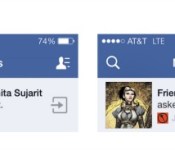
Facebook’s game notifications are getting more detailed, slightly less annoying

Everyone is friends with that one guy who can’t stop playing Facebook games — and who more importantly, can’t stop asking you to join him. Now a request from your BFF can tell you he’s in the market for an extra cow in FarmVille without forcing you to load up your own virtual farm up to see what he wants. At GDC Wednesday Facebook announced it’s giving developers the option to add a little more detail to notifications. So instead of a generic “request” you’ll know specifically what your buddy is hoping for. Facebook is responsible for an astounding 735 million referrals into games every day, and more than 375 million people play Facebook-connected games every month. Detailed notifications are a small change, but one that could make the Facebook gaming experience slightly less annoying for everyone.
Filed under: Gaming
Source: Facebook Developers

Valve’s free pro-gaming documentary hits iTunes, Steam and YouTube (video)

If you didn’t make it to Free to Play‘s San Francisco premiere last night, Valve (yes, that Valve) has you covered. The Dota 2 tournament doc is now available on iTunes, Steam and YouTube for the very reasonable price of zero dollars. The Valve-produced documentary clocks in at a little over an hour, and, as SlashGear has noticed, the gaming giant has also released a few outtakes and behind the scenes clips as well. We’ve embedded everything after the break should you want to give it a peek for yourself. If you’re in the dark about exactly why the game’s so popular, maybe watching players from all over the world duke it out for a million-dollar top prize will clear a few things up.
Filed under: Gaming, Home Entertainment, Internet, HD
Via: SlashGear
Source: Valve (YouTube)

Flappy Bird’s coming back, but you probably don’t care

This is the digital age of ADD, people, so let’s be real about one thing: most of you probably don’t care about the disappearance of Flappy Bird anymore, nor the fact that it’s coming back. But for those of you that do still wish to tap that bird’s flapping wings once more past Nintendo-ish green pipes, there’s a ray of light ahead. Turns out, creator Dong Nguyen wants to see his mobile game return to the iOS and Android platforms that sent buckets of cash and internet vitriol his quiet way. Nguyen tweeted the news out, but didn’t indicate when Flappy Bird would return as a downloadable free-to-play game on the App Store, saying only that it wouldn’t be soon. Which is even more reason to believe that when it does comeback for a second act, most of you will have moved on to some other fad or meme, or dogecoin-branded dating sim. The Horror!
[Image credit: Getty]
@painfullpacman Yes. But not soon.
– Dong Nguyen (@dongatory) March 19, 2014
Filed under: Cellphones, Gaming, Software, Mobile
Via: Yahoo
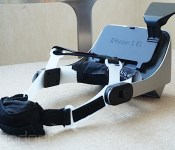
Prototype headset mirrors your phone screen in an awkward attempt at virtual reality

The verdict on virtual reality seems to be in: the future of the technology is in fully immersive, face bound ski-goggles that block out your physical perceptions in favor of digitally created wonderlands. Well, unless you’re looking at Seebright’s AR/VR head-mounted display prototype. The company brought an early version of its developing headgear to GDC and it’s.. well, very different. Unlike the hardware we’ve seen from Sony, Oculus and GameFace, Seebright’s headgear leaves the user’s peripheral wide-open by suspending a smartphone above their field of view and reflecting it in front of them with a low-hanging mirror. To be honest, it’s a little bizarre.
As a standard virtual reality headset, Seebright’s HMD prototype is uncomfortable — it’s hard to feel immersed in a virtual world if your perception of reality remains intact. The mirror reflecting the headgear’s host-smartphone’s display only fills out center of the user’s view, giving the their peripheral vision every opportunity to break their suspension of disbelief. We found this to be extremely distracting in gaming experiences: the dark asteroid fields of Starfighter 12 (an on-rails shooter demo) felt out of place floating in Seebright’s well-lit hotel suite.

Company CEO John Murray told us that the prototype also had a partially transparent half-mirror, designed to convert the headgear into an augmented reality display. This idea has more promise, but unfortunately, the transparent screen wasn’t available for testing just yet. It’s just as well: the HMD prototype was particularly top heavy and fairly uncomfortable. A external battery pack lives on the back strap, acting as a counterbalance, but it isn’t enough. Compared to lighter and more comfortable feeling (and fully-integrated) VR headsets, Seebright’s prototype is just awkward.
That said, the company is aiming for a different demographic. The company told us it hopes to give the final device a price that will make it an “impulse purchase,” something you can give as a gift without breaking the bank. It also says there are plenty of revisions on the way, which will hopefully iron out some of the comfort and balance issues. Got a strong neck? Stay tuned: the company says it will be launching a Kickstarter campaign next month.

Valve’s new Steam controller feels familiar, but strange

Valve’s original vision for a PC gamepad was an arresting deviation from the norm: touch sensitive control pads in place of dual-analog thumbsticks and a full-on touchscreen in lieu of actual buttons. The company’s latest revision – codenamed “D0g” after the character from Half Life 2 – skews a little more traditional, replacing the curious touchscreen with eight regular buttons. Is it a loss worth lamenting? We caught up with Valve at GDC 2014 to find out.
On a whole, not a lot has changed between Steam’s last controller prototype and its new kit: subtle vibrations still tick from under its two large touchpads, and its ergonomic body is as comfortable as ever, if a bit less polished than the last model we saw. Internal batteries give it a bit more heft, of course, and the body may have minor tweak, but the major revisions are apparent: buttons. Eight new toggles pock the face of Valve’s latest gamepad, taking up the traditional role of the d-pad and A, B, X and Y functions. They feel a little smaller than the average controller button, but are no less responsive for their form factor. As for the touchpads? They’re still a little flighty. Although they still work wonders at emulating traditional mouse movement, twitch-based FPS gameplay still feels hyper-sensitive and frankly, a little odd.

On their own the buttons feel good, but we couldn’t help but wonder what we lost in their implementation. Valve told us it envisioned the touchscreen as displaying non critical information — like Steam community notifications — but notes that its gameplay functionality may yet live on. The software developed to utilize the abandoned screen’s “Ghost mode” can be applied to the controller’s touchpads, allowing a player to assign multiple actions to the surface of either pad, but only activating them when a secondary button is depressed. Valve couldn’t say if this kind of implementation would appear in the final hardware, but told us it’s still experimenting with the software designed for the touchpad.
Valve told us it hopes to launch the consumer controller sometime this fall, but warned us that the tentative window was far from solid — the controller is designed to be iterative, and the company plans to continue to tweak and revise it even after launch. We were even told that the orphaned touchscreen could return in a future revision, but we’re not holding our breath. People seem to like buttons.
Filed under: Gaming

