


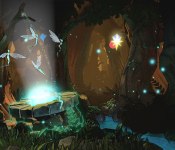
Playdate: We’re livestreaming ‘Fantasia: Music Evolved’ on Xbox One!

The developers at Harmonix Music Systems know a thing or two about music. And we’d hope so, it is in the company name, after all. The studio’s latest Kinect game, Fantasia: Music Evolved, is quite a bit different than anything they’ve done previously, though: it puts players under Mickey’s wizard cap from the classic animated movie of the same name and has them remixing pop songs and classical tracks from the likes of Beethoven and Dvorak with rhythmic gesture controls. Sounds pretty neat on paper, right? But, it’s natural to be skeptical of the title considering the general hit-or-miss nature of Microsoft’s motion sensor. Well, you can come back here at 7 p.m. Eastern / 4 p.m. Pacific and see for yourself as we broadcast live gameplay from the Xbox One. We even have a download code to give away during the stream, too!
[For the record, I’m playing Fantasia: Music Evolved on an Xbox One, using a retail copy (download) provided by Harmonix. I’m streaming the game over wired internet using the Xbox One Twitch app. All that to say, “This game will likely look prettier and run more smoothly on your home equipment. Streaming conditions vary!”]
http://www.twitch.tv/engadget/embedWatch live video from Engadget on www.twitch.tv
Filed under: Gaming, Home Entertainment, HD
Source: Twitch

Here’s how Nintendo’s Amiibo toys work in Super Smash Bros. for Wii U

Nintendo was dropping Smash Brothers info-bombs left and right last night, but the company also felt compelled to dive a little deeper into how the Wii U version of the game will play with those curious little Amiibos. You know, the Nintendo character-themed figurines that both look adorable and store game information via NFC? Now, thanks to the marketing wizards in Redmond, we’ve got a four-minute chronicle of young love, combat and tiny figures that explains just about everything. Key takeaways? You’re not actually playing as your Amiibo character — instead, the little avatar springs to life as a support character, getting in people’s faces and generally having a grand ol’ time once you tap the figure to your Wii U’s gamepad.
Once they’re in the game, you can level up their stats, too (the cap sits at Level 50, or so the video would have us believe), either by wailing on your Amiibo directly or lugging it into battle against others. Since all of that stat and level data can be stored on the Amiibo itself, it should be a piece of cake to lug your partner to and fro (it doesn’t appear in the video, but you’ll presumably touch it to the Gamepad once more when done to lock all that data down). Perfect companion for those ridiculous eight-person Smashfests? Nintendo certainly thinks so, if only because deep integration into already-popular games means its little figures are more than just your run-of-the-mill Skylanders knock-offs. Just remember that Amiibo pickins’ will be a little slim at first: the first batch of twelve are all Smash characters and will hit in late November, followed by another wave of six just in time for the holidays.
Filed under: Gaming, Software, HD, Nintendo
Source: Nintendo (YouTube)

‘Fantasia: Music Evolved’ and its origins in the Kinect-hacking scene

The developers at Harmonix aren’t afraid to hit the reset button if something isn’t working correctly. Chances are, strumming a plastic Stratocaster changed quite a bit before you ever even started playing “Creep” by Radiohead in Rock Band. Same goes for stepping to the beat of Lady Gaga’s “Poker Face” in Dance Central, too. That willingness to start from square one time and again? Well, it’s carried through to the developer’s latest Kinect title, Fantasia: Music Evolved, out now for Xbox 360 and Xbox One, as well. The team’s aim, seemingly regardless of project, is for whatever you’re doing in one of their titles to seem perfectly obvious and natural.
“There’s a huge willingness to throw stuff away and start over,” Fantasia‘s lead programmer Mike Fitzgerald says. “It feels like [the final product] just works, when in reality it took a long time and a ton of work to make [gameplay] invisible.”
The Police’s “Message in a Bottle” in Fantasia: Music Evolved
To do that this time around, Harmonix turned to the Kinect-hacking scene for its Disney-funded project. At the outset, the team was keeping a close eye on what garage-based developers (and likely a few rock stars) were doing with Microsoft’s do-all sensor, using its SDK as they saw fit for all manner of things. Harmonix brought in Jason Levine. He’s well-known in the Kinect community, and has done live stage performances using Redmond’s camera setup to track his body position for real-time visualizer backgrounds. He seemed like a perfect fit to consult on a game that ultimately turns you into a conductor on songs ranging from “Night on Bald Mountain” to more contemporary fare like “Royals” from Lorde.
Levine’s position-tracking input can be seen in the game: the silhouette at the bottom of the screen that reflects your motions back to you. That bit became one of the game’s core design elements, letting you see what it was the Kinect was watching you do in real-time as a sort of positive reinforcement. “It’s different from Fruit Ninja [Kinect] in that you have to manage your silhouette,” lead designer Jonathan Mintz says. Meaning, it’s getting the rhythm of your movements synced with the actions onscreen — not just swiping at fruit randomly as it flies in front of you. “We don’t care about positions; what we care about is timing,” he adds. “We let the player find a style of motion that works for them; then they listen to the music and watch the [gesture] cues to get a sense of rhythm.”
Jason Levine at New York City’s Hardware Hack Lab
The inherent problem with basing a game off of hacks, apparently, is teaching others how to use them. “If you build a tool for yourself — like a 3D DJ controller-like Kinect hack — you can perform it really well,” Mintz says, “but it’s got this really steep learning curve.” That can make it hard for anyone else to use. “It’s probably more frustrating than learning an instrument, where at least you know what fret you’re holding.” he adds. He likens it to learning a theremin, an electronic instrument that you don’t even touch for it to produce different sounds. “You have to learn how to move in space and you can get these outrageous results.”
To combat this with Fantasia, individual movements are taught to the player on a song-by-song basis until the training wheels come off and songs start getting more and more complex.

A group of French theremin players
Mintz says that while creating a hack might look impressive, making it fun is completely different. That’s where partnering with Disney has its advantages. Mintz says that Walt and Co. afforded the team “a lot” of time to get the actual game aspects of their hack right and, perhaps most importantly, to make it enjoyable. Implementing a structure that guides players through the complexities of the title at a deliberate pace before taking the training wheels off completely was paramount as well. “That’s where having the time to figure out the structure that would help as many people be able to do that as possible was really great,” Mintz says. In practice, the progression in the game feels pretty natural and after a few songs of training, the skills that make it feel like you’re behind the music control come in.
“Getting something functional on the hardware is doable, right? That’s why you see all these cool hacks out there,” he says. “Taking the time to build that into a game context where there’s a really strong design around it, where there are goals and things for the player to explore with it? That seems like the harder part.”
It’s difficult because any tech demo can be fun for five minutes, but stretching it into a 10-hour or more experience that people actually want to come back to takes work, along with, naturally, some talent and a willingness to keep exploring new avenues when older ones aren’t panning out. It takes a bit of a maturity to not have tunnel vision or get stuck on an incorrect solution to a problem, too — something forged in the hobbyist scene. If something isn’t doing what you want, you either have to find a creative way around it, or just take a step back in the project and start fresh.
“Night on Bald Mountain,” from Fantasia
In the embryonic stages, Fantasia was more like a puzzle-based point-and-click adventure, but with gesture controls. That led to an issue of trying to avoid overwhelming the player with the user interface so that he or she wouldn’t literally be flailing about, not knowing what to do next — actions that clashed with the game’s target audience of kids and families.
“It always felt to me that it was giving players a point-and-click adventure’s inventory puzzle, but the inventory was anything you could physically do in front of the camera,” Mintz says. There was much waving about in vain attempts to solve puzzles, and the feature was ultimately scrapped, but it led to Fantasia‘s 3D cursor system in the end. What’s in place now is nigh-invisible, and surprisingly intuitive.
There was even a two-handed mode at one time, where each extremity represented a cursor, and you were spreading paint around a given scene. While it might seem like a waste, these failures eventually led to the game’s final form: more or less putting you in Mickey Mouse’s wizard cap to conduct an orchestra (or pop song) — often two hands at a time, and remix music set to some pretty wild visuals.
“It’s a matter of seeing [a hack] in a game context and with a whole host of other problems,” says Fitzgerald. “Not the least of which is what will people pay you for? [laughs]“
[Image credit: AFP/Getty Images (Theremin players)]
Filed under: Gaming, Home Entertainment, HD, Microsoft
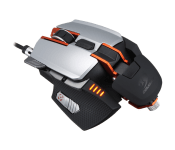
Which gaming mice are worth buying?
 The peripherals you play with can be just as important to your gaming success as actual skill. A suboptimal keyboard or sluggish mouse can open the door to defeat, which is why it’s a good idea to pick up equipment specifically made for the job. But like a lot of specialized tools, gaming mice don’t come cheap, and you wouldn’t want to spend a pretty penny on one only to find it lacking in speed or features. We don’t review mice very often here at Engadget, so we’ve consulted the opinions of trusted critics to find some recent options that can help pave a path to victory.
Filed under: Gaming, Peripherals

‘Don’t freak out!’ and other tips for surviving layoffs as a video game developer

The game industry is capable of building incredible worlds, engrossing us with believable characters, and empowering us to destroy (or create!) both. The unfortunate side of all that enchantment is the shaky business models that much of the industry are built on, which leads to cyclical, annualized layoffs that affect even the most successful franchises. Just look at the recent history of Joystiq‘s layoffs tag: it’s ridiculous. Why is this the case? Kotaku‘s Jason Schreier did an excellent job reporting that last year, right here, so we’re not going to duplicate efforts. This piece is about what you can do, should you find yourself being put through the wringer this holiday.
Oh, and yes, the annualized layoffs tend to happen around the holidays (which coincides with many companies’ financial quarters ending). Sucks, right?
Seattle-based animator Floyd Bishop took to his website, GameDevTalk, and laid out a list of best practices should you encounter the ever-swinging scythe of layoffs. First and foremost? Make sure you actually listen when human resources is walking you through the proceedings.
“There will be lots of information, and you’re still reeling from the initial shock. Try to write things down, if you can. If you didn’t hear something, or have a question, ask it now. They may also have some hand outs ready for you that tell you what happens next. Be nice! This is not a fun day to work in human resources.”
Okay, okay — that’s pretty general “I got laid off” advice. Fair enough. If you’re of the game developer variety, though, Bishop’s got targeted advice too. For instance, get your work online immediately, and sign up for job newsletters from the biggies. “Sites like Gamasutra, Creative Heads, and even Indeed have both job listings and job alert email lists,” Bishop points out.
Despite video games going mainstream, the industry that creates those games remains surprisingly small. As such, Bishop recommends, “Do not instantly talk trash about the studio you were just let go from.” Is it tempting? Sure is! These are the bastards who just fired you, right? Yes, they are, and they may also be the people who hire you for a new project in five years.
Bishop of course has far more detail than we’ve put in here, so we suggest heading over and reading the full piece if you’re in the regrettable position of being laid off as a game dev this holiday.
[Image credit: AP Photo/Elaine Thompson]
Filed under: Gaming, Software, HD, Sony, Microsoft, Nintendo
Source: GameDevTalk

You can soon watch a doc about virtual reality on Oculus Rift

If you’d rather that your non-game Oculus Rift experiences be nonfiction, it looks like that wish is coming your way rather soon. Next week, Zero Point hits Steam and it offers full 360 degree views of a Department of Defense military training camp, a beach scene and even the extremely crowded LA Convention Center during E3 2013. The rub of the video is that it’s the first of its kind — a documentary about virtual reality, filmed in VR and made for the platform. It’s very meta. Each scene is explorable, with either head tracking, a game controller or a mouse running the action. It’s apparently compatible with all past-and-future Oculus dev kits, and will cost $15 come its October 28th release. However, IGN notes that if you purchase before November 4th it’ll only run you $12. Want a preview before you buy? Of course you do; just head past the break for that.
Filed under: Gaming, Home Entertainment, HD
Via: IGN
Source: Steam
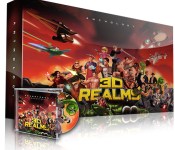
‘Duke Nukem’ and ‘Wolfenstein’ gaming house 3D Realms is back

The early ’90s were a simpler time: Mullets were acceptable, everyone was wearing Zubaz pants and rocking your dad’s flannel didn’t make you a hipster. In an effort to bring us back to the era when grunge ruled the earth, the folks at formerly-defunct 3D Realms has bundled 32 of its classic games into one package and is selling ‘em DRM-free over at its website. What’s in the collection of almost everything the company produced? A killaton of games (and a remastered soundtrack, apparently), that’s what; including, but not limited to: Duke Nukem 3D, Commander Keen: Goodbye Galaxy, Wolfenstein 3D and Wacky Wheels. The anthology will set you back $40, but if you act within the next two days you can get it for half of that. There’s a video after the break if you need a refresher course on who the company is, too. 3D Realms also promises that in the coming months it’ll have much more to talk about including its in-development games. Come get some, indeed.
Filed under: Desktops, Gaming, Home Entertainment, Software, HD
Source: 3D Realms

‘Super Smash Bros. for Wii U’ adds an eight-player mode for double the madness

Think you know everything there is to about Super Smash Bros for Wii U? Think again: during today’s Smash-centric Nintendo Direct event, the gaming giant announced an eight-player mode for absolutely bananas action. How will you even keep track of all that madness on the Wii U? We’re willing to find out. There are sure to be some more announcements coming out of the broadcast, and we’ve embedded the live player just after the break.
Update: Remember the create-a-stage feature from Super Smash Bros. Brawl? Well it’s back in the Wii U version and it’s gotten a pretty big upgrade thanks to the console’s touchscreen-based Gamepad. You can now draw out your custom levels using the stylus (sorta like Mario Maker) and even share them online with others. Pretty neat!
Filed under: Gaming, Home Entertainment, HD, Nintendo
Source: Nintendo

Let’s look at each game console’s lineup of exclusives for holiday 2014

Can you smell that? It’s the aroma of game lovers’ tears everywhere as they realize their bank accounts likely can’t sustain buying every title coming out in the annual deluge of fall video game releases. That’s to say nothing of the amount of time you’d need to play absolutely everything that’s come out since September. Or even on November 18th alone! But what is each console offering exclusively this holiday? That’s a bit more manageable, and we compare them below.
With a few exceptions, nearly everything made by a third-party developer (i.e., one not working solely with Microsoft, Nintendo or Sony) is available on PC, so we’re going to leave those out of the conversation. Platform-exclusive goodies don’t count here either — adios, Far Cry 4!
Sony’s PlayStation 4

Sony made its bed at E3 this year and is now getting comfy under that (likely luxurious) comforter. During its near-two-hour-long media briefing, it mentioned first-party retail games exactly three times. And in that trio, only one title was an original game for the PS4 that was coming out this year. That was none other than the adorable 2D platformer, LittleBigPlanet 3. The other two? The Last of Us: Remastered and Uncharted 4: A Thief’s End. While LBP3 will likely be every bit as whimsical and charming as previous efforts, it isn’t exactly the first thing that comes to mind as a tentpole fall release that’ll move loads of consoles — especially not when it releases the same day as Far Cry 4 and the Grand Theft Auto 5 remaster: November 18th. Not that the PS4 needs much help with that anyway; last we knew, over 10 million of them have been sold so far.
Considering what we’ve been able to experience of it, it’s pretty apparent why the already-released racer Driveclub wasn’t given any time on the stage at E3 this past June. The game is pretty in spots, but an absolute bore to play, which is all the more disheartening given that the developer’s previous work was the over-the-top (and excellent) MotorStorm franchise. That’s to say nothing of how the game’s been hamstrung by connectivity woes that render its key feature, a socially driven online experience, utterly unusable.
PlayStation’s fall commercial featured third-party games exclusively.
No one really expects a system’s launch to have amazing games, but here we are almost a year later and the PlayStation 4 still doesn’t have a killer app. Even Sony itself seems to acknowledge this with TV spots that feature third-party games exclusively. Hell, the PlayStation Twitter account’s header image is for the trio of those titles in the commercial — not one of its internally developed games. At this point in its predecessor’s lifecycle there was the first Uncharted as well as Ratchet and Clank Future: Tools of Destruction to look forward to; neither Driveclub nor LBP 3 look to stand up to that legacy. Looking ahead, Sony’s got The Order: 1886 (originally scheduled for a fall 2014 release) coming early next year, in addition to the hugely anticipated Bloodborne, the next game from the Dark Souls team. For now, though, the PS4 is a hard sell when it comes to games that you can’t get anywhere else.
Nintendo’s Wii U

Super Smash Bros. Those three words alone could be enough to carry Nintendo through this holiday season, but the gaming giant has a pair of other games to help lighten Mario and Co.’s load too. Not only is Smash absurdly anticipated — the 3DS version beyond whet our appetite — but it’s also releasing on two platforms and has its own set of Skylanders-esque figurines (dubbed amiibo). Nintendo’s had a relatively good year so far, and if Mario Kart 8 was any indication, we can expect the Wii U version of its mascot-laden fighting game to flex some serious muscle when it comes to moving a few consoles come November 21st and beyond.
Then we have the just-released Bayonetta 2 (like, this week), a game that’s likely to please the hardcore crowd with its frenetic pacing and old-school approach to action and combat. Granted, it earns every bit of its Mature rating, but series fans know what they’re getting into with this one. You’re a witch who fights angels and demons on the back of a fighter jet, among other places. Seriously. Who can’t get behind a premise like that?
Taking a step away from the violent side of things is Captain Toad: Treasure Tracker, a spin-off from last year’s incredibly good Super Mario 3D Land. In Captain Toad, you’re navigating the adorable, mushroom-adorned Toad through a variety of puzzles in themed worlds that should be familiar to anyone who played 2013’s Mario release. Wait, you didn’t? For shame! At least you can make up for that this year.
Surprisingly, Nintendo’s first-party line-up is incredibly strong this season. The Japanese company’s reputation rests on its ability to make games that no one else can or seemingly wants to. Even without a proper Mario or Legend of Zelda release this holiday (we’re excepting Hyrule Warriors as a side game rather than series entry), Nintendo proved that it has what’s needed to compete against the likes of its relatively younger opponents with practiced ease.
Microsoft’s Xbox One
Perhaps more than any console maker, Microsoft has the most to prove this fall. Redmond came out on the losing end of a PR battle when it announced confusing (and somewhat consumer-hostile) policies for the Xbox One last year, not to mention it costing $100 more than its closest rival, the PS4. Phil Spencer and Co. responded in 2014 by doubling down on games, hoping to shed the image forged by a previous management regime. At the firm’s media event at E3 this year, it spent the entire time talking about games and a majority of that was devoted to platform exclusives and first-party titles. The company line that it was all about “games, games, games” wasn’t a hollow promise and this fall’s crop of Xbox One releases shows it.

Let’s start with Forza Horizon 2: It’s excellent. Unlike Driveclub, it’s a social-based racing game that worked as promised from the outset. Beyond that, though, it’s an absolute blast to play. From racing against a bullet train as The Clash’s “Train in Vain” blasts over your car’s stereo, to challenging a buddy’s ghost to a head-to-head race only to see it drive his Hemi ‘Cuda up a hillside in effort to gain the lead, there’s loads to see and do in the game. In fact, both Ben Gilbert and I have stopped playing Destiny to soak in as much of virtual Nice as possible. You should not miss Forza Horizon 2.
When it was first teased at E3 2013, no one quite knew what to make of Sunset Overdrive. It was a parkour-style open-world something from the folks at Insomniac Games (Ratchet and Clank and Resistance franchises for PlayStation), but that’s all anyone really knew. What a difference a year made, however. What we played of the punk-rock take on Crackdown and to a certain extent, Tony Hawk Pro Skater, though, at E3 this year made us believers. It’s unapologetically a video game; bright, stylized and flashy, with a highly saturated color palette that emphasizes cartoony fun over everything else. Hell, there’s a weapon that shoots ricocheting vinyl records at energy-drink-crazed mutants and an RPG that uses teddy bears as ammunition. It’s the best kind of ridiculous.
And how could anyone forget Halo: The Master Chief Collection? We broke the news that it was coming, and since then it’s been impossible to ignore. Microsoft is going all-out for this release and including every multiplayer map that’s ever been in a Halo game into the package, as well as fully remastered versions of classic Halo 2 arenas and a totally overhauled campaign for the sequel. What else? The other three numbered Halo releases running at 1080p and 60 FPS.
Perhaps even more than Nintendo, Microsoft was in panic mode this past year. Given the improvements that’ve been made to the Xbox One’s system software and the price drop that brings parity between it and the PS4, the Xbox One is the best environment to play games that you can’t get anywhere else this fall. If all goes well, maybe Redmond will take to touting sales numbers of its own soon enough.
Filed under: Gaming, Home Entertainment, Software, HD, Sony, Microsoft, Nintendo

Sid Meier’s Civilization: Beyond Earth: The Joystiq Review

Viewed through the idea that it’s a standalone expansion to Sid Meier’s Civilization 5, Sid Meier’s Civilization: Beyond Earth streamlines gameplay in the long-running strategy series to enhance the pace of the historically-strapped franchise. As a spiritual successor to Sid Meier’s Alpha Centauri, however, it’s a cut-rate disappointment.
Beyond Earth is best described as an epilogue to the events of Civilization 5. Humanity has ruined the planet and must commit itself to starting all over again on another rock and potentially making the same mistakes. And so, various nations make conglomerate factions and shoot for another spherical mass to explore, expand, exploit and exterminate (4X) on in the strategy game.
Why I wish Firaxis had never mentioned Beyond Earth as a spiritual successor to Alpha Centauri is that this game doesn’t look like it was given the financial resources to kick off a new franchise. It feels like it had the budget of a Civ 5 expansion, where asset creation went into making a visually interesting game world, but not its overall presentation. The characters are painfully dull and inarticulate. The tech and wonder voiceovers are all done by one person, but in many cases are attributed to faction leaders within the game (who do have their own voices). The experience doesn’t feel luxe. Firaxis has been the benchmark in accessible strategy games and it’s owned by triple-A publisher Take-Two Interactive, but I’ve seen stronger production values from independent European competitors.
Click here for more
Source: Joystiq

