



Apple and Google/Motorola Agree to Settle Patent Litigation, Work Together on Patent Reform
Apple and Google/Motorola Mobility have agreed to a settlement and will dismiss pending patent litigation between the two companies, according to a court filing referenced by Reuters.
As part of the settlement, Apple and Google have agreed to work together “in some areas of patent reform”. Apple and Google have been in patent disputes for years. This particular settlement does not include a patent cross-licensing agreement, which is sometimes included in patent settlements.

In a joint statement, the companies said the settlement does not include a cross license to their respective patents. “Apple and Google have also agreed to work together in some areas of patent reform,” the statement said.
Apple still has numerous patent lawsuits in the works against a vast array of companies, most notably Samsung. Earlier this year, Google announced it was selling Motorola Mobility to Lenovo for $2.91 billion.
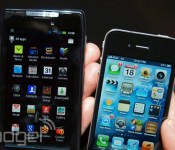
Apple and Motorola agree to drop lawsuits against each other, work on patent reform

And just like that, the longstanding legal battle between Apple and Motorola appears to be winding down. The two smartphone giants have reached an agreement that will see them drop patent lawsuits against each other. The truce doesn’t involve technology licenses, but Apple and Google (still Motorola’s owner at this point) say they’ll “work together in some areas of patent reform.” Neither side is revealing what this entails, although it won’t be surprising if it involves efforts to curb the patent trolls that they face.
The companies haven’t said what prompted the change of heart. However, it comes hot on the heels of an appeals court reviving patent claims from Apple and Motorola that had been dismissed in 2012. The phone makers faced the prospect of renewing a fight over some relatively old (and no longer very valuable) infringement allegations — peace may simply be the more pragmatic option. Whatever led to the decision, it’s good news for those who’d rather see phone makers compete in stores than in the courtroom.
Filed under: Cellphones, Mobile, Apple, Google, Lenovo
Source: Reuters

Google Buys Visual Translation App ‘Word Lens’, Makes It Free for Limited Time [iOS Blog]
Google has bought the popular iOS and Android visual translation app Word Lens to “incorporate [the] technology into Google Translate’s broad language coverage”, according to a statement on Quest Visual’s website.
The software uses a smartphone camera to translate signs in real time into the users native language. The technology is remarkable and used by many world travelers. Previously, translation packs were available as in-app purchases, but Quest Visual has made all the packs and the app itself free for a limited time.

The company did not say how long the app will be available for free, so interested users should download it while it is available. Translations are available between English and Russian, Portuguese, German, Italian, French and Spanish.
Word Lens is a free download from the App Store. [Direct Link]
Apple Details Expanded 4K Display Support Included in OS X 10.9.3
Apple today updated its 4K display support page following the OS X 10.9.3 update, detailing the enhancements that have been made to 4K display support.
Running OS X 10.9.3, the 2013 Mac Pro and the 2013 Retina MacBook Pro now support several new 4K displays, including the Sharp PN-K321, ASUS PQ321Q, Dell UP2414Q, Dell UP3214Q, and the Panasonic TC-L65WT600. Previously, only the Sharp and ASUS displays were officially supported.
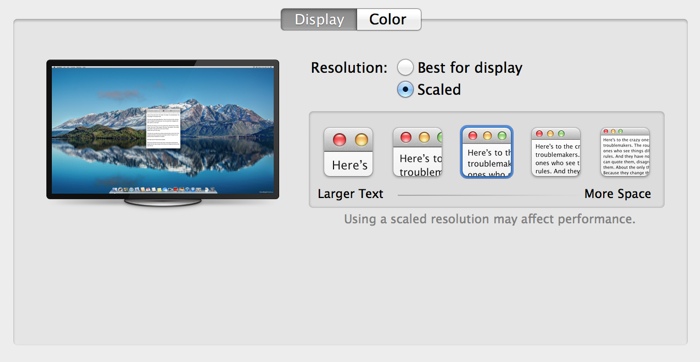
There’s a new section on display adjustments and Retina scaling, introduced to allow the resolution of 4K displays to be adjusted much like the display of the Retina MacBook Pro, improving the size and readability of text and other on-screen elements.
The revamped support page also notes that both the Mac Pro and the Retina MacBook Pro are now able to support 60 Hz 4K output for the five supported displays, using multi-stream transport, a feature previously limited to the Mac Pro. With the higher refresh rates, response times for tasks like game playing and video editing will be improved. Detailed instructions are given for enabling the option:
MacBook Pro (Retina, Late 2013) or Mac Pro (Late 2013) also support 60 Hz displays using multi-stream transport (MST). These displays need to be manually configured to use MST. Follow the steps below to use the display’s built-in controls to enable this feature.
– Sharp PN-K321: Choose Menu > Setup > DisplayPort STREAM > MST > SET
– ASUS PQ321Q: Choose OSD menu > Setup > DisplayPort Stream
– Dell UP2414Q and UP3214Q: Choose Menu > Display Setting > DisplayPort 1.2 > Enable
– Panasonic TC-L65WT600: Choose Menu > Display Port Settings > Steam Setting > Auto
Your Mac will automatically detect an MST-enabled display. However, your display may require a firmware update to support 60Hz operation. Please contact your display vendor for details. If your specific DisplayPort display is not listed above, check with the display’s manufacturer for compatibility information.
First released yesterday, OS X 10.9.3 with enhanced support for 4K displays can be downloaded via the software update tool in the Mac App Store.

Apple Being Sued Over Phone-Switching iMessage Issue
 Apple is facing a lawsuit over a long-standing issue that prevents iPhones from sending text messages to the Android phones of former iPhone users, reports Bloomberg (via BusinessInsider). Filed by a former iPhone customer, the lawsuit alleges that the user ceased getting messages from iPhone owners after she switched to a non-Apple device.
This is a problem that has afflicted many former iPhone users that switch from an iPhone to another device. After an iPhone is disabled, the users face an issue where iMessages sent from other iPhone owners are routed to a deactivated iPhone rather than being forwarded as a text message to an active phone, causing text messages to disappear.
Earlier this week, former Lifehacker editor-in-chief Adam Pash claimed that Apple is aware of the iMessage issue and unable to provide a fix. An Apple customer support representative told Pash that the iMessage bug is “a problem a lot of people are facing” and that the company’s engineering team “is working on it but is apparently clueless as how to fix it.”
These errors with iMessage have been a known issue since 2011, which is when the messaging service was first introduced with iOS 5. Apple advises iPhone owners to disable iMessages before deactivating their phones in order to remove the device from their system, but some users have experienced problems even after disabling iMessage.
Some users have had success calling in to Apple to have their numbers removed from the iMessage system and in 2012, TechCrunch detailed a fix involving unregistering products on a user’s Support Profile, which has also worked for some people experiencing iMessage issues after switching to a non-Apple device.
Filed in San Jose California, the lawsuit is currently seeking class action status.
OS X 10.9.3 Bug Hides ‘/Users’ Folder for Some Users
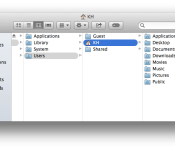
Apple yesterday released OS X 10.9.3 with support for 4K displays, contact and calendar syncing improvements, and more. Many (but not all) users are, however, experiencing a bug in the update that hides the /Users folder.
The /Users folder is a top-level folder that contains the home folder and personal files for each user on a Mac. It’s not clear why only some OS X users lose access to the /Users folder, but the inability to browse this folder could be problematic for some Mac owners affected by the glitch.
A range of solutions for the bug have been suggested with varying degrees of complexity, with perhaps the simplest noted by Kirk McElhearn and Chris Breen of Macworld:
Launch Terminal (/Applications/Utilities), enter “sudo chflags nohidden /Users”, and press the Return key. You’ll be prompted for your user password. Enter it, press Return again, and the Users folder will be visible as it once was.
This solution is not, however, a permanent one, as the issue will reappear if the machine is restarted and the fix will need to be applied again.
Breen goes on to outline a more permanent solution that involves creating an AppleScript for running the Terminal command and saving it as an application to run at login.
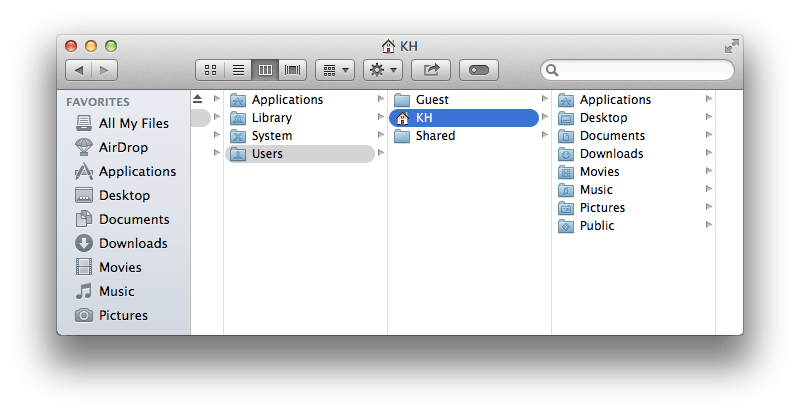
Another recommendation comes from The Loop‘s Dave Mark, who suggests creating an alias for the folder that will remain accessible even with the folder itself hidden.
For a more permanent solution, [after manually navigating to the hidden folder] control-click on the /Users folder and select Make Alias from the contextual menu that appears. Though the /Users folder will become hidden again when you close your Finder window, the alias will stick around.
For many users, the bug will not have a significant impact on their Mac usage, as they can still access their own home folders through shortcuts in the Finder sidebar. Consequently, some users who are not inconvenienced by the bug may prefer to simply wait for Apple to address it in a future update.
Alleged ‘iPad Pro’ Model Shows What the Giant Tablet Might Look Like In-Hand
A model said to be an industrial prototype of the upcoming 12.9-inch “iPad Pro” has surfaced, giving a look at what the larger tablet might look like in-hand. Discovered on Chinese Twitter-like site Weibo by Nowhereelse.fr [Google Translation] the machined aluminum is said to be a reference for creating cases and other accessories.
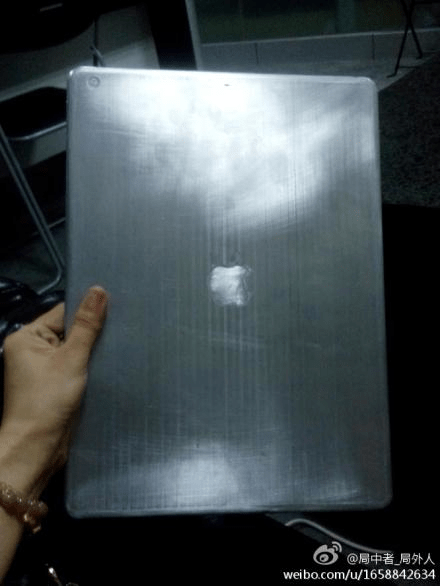
The design of the mockup is very rudimentary and while it is said to be the iPad Pro, it is impossible to determine the exact size of the prototype from the photos. It is also not clear if this “prototype” is based on any type of legitimate specifications as Apple is said to be multiple months away from releasing a larger tablet. Along with a larger size, the model also has an Apple logo and a rear camera cutout. At 12.9-inches, the iPad Pro would be similar in size to a 13-inch MacBook Air and quite a bit larger than the existing 9.7-inch iPad Air.
 Rendering of a 12.9-inch iPad next to a 13-inch MacBook Air
News that Apple was testing displays for a larger 12.9-inch iPad first surfaced in July of last year in a report from The Wall Street Journal. While initial rumors suggested Apple could release the device in 2014, reliable analyst Ming-Chi Kuo has pointed towards a possible 2015 launch date for the device, while Digitimes indicated in March that development on the tablet had been shelved in favor of other projects.
Rumors have suggested the iPad Pro, if released, will adopt many of the same design elements offered in the current iPad Air and Retina iPad mini, including an ultrathin chassis and narrow side bezels. It is also rumored to include an ultra high-definition display.

Pioneer’s NEX In-Dash Systems to Receive CarPlay Firmware Update in a ‘Few Weeks’
Pioneer announced earlier this year that its latest aftermarket NEX infotainment systems will be compatible with CarPlay, allowing customers to install the Apple technology in an existing automobile. The hardware requires only a firmware update that is expected to be available in “a few weeks”, putting the company on or even slightly ahead of its original “early summer” schedule.

Pioneer was in San Francisco this week showcasing the technology, which provides drivers with an integrated experience for placing phone calls, using maps, listening to music and messaging via Siri. As noted by Macworld, demo cars included the high-end $1400 Pioneer AVH-8000NEX system, which contains an in-dash capacitive touchscreen that allows the driver to tap on the infotainment screen to interact with the CarPlay system. CarPlay also supports hands-free operation using Siri to control many of the available functions.
Macworld did note some issues with Siri’s ability to handle background noise in the car, but Pioneer’s Ted Cardenas pointed out that with Siri’s ability to learn and improve over time, those background noises will become less of a distraction as Siri learns to pick out the driver’s voice.
The current version of Apple’s Carplay technology requires a Lightning cable connection between the iPhone and the receiver, limiting its usage to the iPhone 5, iPhone 5s and iPhone 5c. Rumored wireless support over Wi-Fi connection has not been confirmed by Apple, but even then the feature would require updated hardware for Pioneer, as the current NEX systems do not support Wi-Fi connectivity.
Pioneer is one of the first automobile electronics companies to offer an aftermarket CarPlay system to customers who don’t want to purchase a new car in order to experience the feature. Alpine also announced its own series of aftermarket CarPlay receivers, but they are expected to arrive later this year.

Carl Icahn Buys Additional 2.8M Apple Shares Raising Stake to Nearly $4.5B [Mac Blog]
 Activist investor Carl Icahn has purchased another 2.8 million Apple shares worth some $1.65 billion according to a regulatory filing from Thursday (via The Wall Street Journal). In total, Icahn now owns more than 7.5 million shares of Apple, bringing his stake to almost $4.5 billion.
Icahn’s investment follows Apple’s April announcement of a dramatic increase in its share repurchase authorization to $90 billion, up from $60 billion. Apple will also implement a 7:1 stock split in June and plans to return more than $130 billion to shareholders under its capital return program by the end of 2015.
Prior to Apple’s announcement, Icahn had pushed Apple to increase its stock repurchasing program in a meeting with CEO Tim Cook. Icahn abandoned a legal effort to have shareholders recommend an increased share repurchase in February after Apple repurchased $14 billion in stock following its January earnings call.
After Apple announced its boosted stock repurchasing plans, Icahn said he was “extremely pleased” with the company’s results, noting that the stock was still “meaningfully undervalued.”
EFF Report Highlights Apple’s Efforts to Protect Consumer Data, Increase Transparency
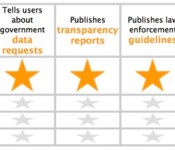
The Electronic Frontier Foundation (EFF), a non-profit digital rights group, today released its annual “Who Has Your Back” report, ranking companies on their efforts to protect user privacy and resist government data demands.
Apple was awarded a full six stars in all of the categories the EFF measures, including requiring a warrant for content; telling users about government data requests; publishing transparency reports; publishing law enforcement guidelines; and fighting for users’ privacy rights in courts and in Congress.

The EFF notes in its report that Apple has made a “remarkable” improvement over the course of the last year when it comes to user privacy policies, as it only earned a single star in past years. The report, which is based on publicly available information, does not include secret surveillance orders.
Apple earned credit in all 6 categories in this year’s Who Has Your Back report. Apple’s rating is particularly striking because it had lagged behind industry competitors in prior years, earning just one star in 2011, 2012, and 2013. Apple shows remarkable improvement in its commitments to transparency and privacy.
After the public revelation of PRISM, a top secret intelligence gathering program run by the U.S. National Security Agency, Apple made several moves towards increasing transparency about data requests to assure users it was not participating in the program.
The company issued a “Commitment to Customer Privacy” statement and began disclosing information on government data requests and its own policies, which include asking for warrants for information. It also released a “Report on Government Information Requests” back in November, and has pledged to implement a policy to notify users of information requests from law enforcement.
In addition to its new transparency policies, Apple also joined the Government Surveillance Coalition to urge the U.S. government to agree to greater transparency over demands for user data and Apple CEO Tim Cook met with Barack Obama and other tech executives to discuss government surveillance in August of 2013. In March, Apple hired Sabrina Ross to oversee the protection of consumer data and in May, the company released guidelines for law enforcement requests, specifying what information the company can and cannot retrieve from devices after receiving a search warrant.
In an interview with ABC, Cook publicly discussed the NSA’s surveillance operations and once again assured users that the Government does not have access to Apple’s servers. “They would have to cart us out in a box for that. And that just will not happen,” he said. “I’ve been pushing very, very hard to open the books and be totally transparent.”
Along with Apple, Dropbox, Facebook, Google, Microsoft, Twitter, and Yahoo also received a full six star rating from the Electronic Frontier Foundation.
Note: Due to the political nature of the discussion regarding this topic, the discussion thread is located in our Politics, Religion, Social Issues forum. All forum members and site visitors are welcome to read and follow the thread, but posting is limited to forum members with at least 100 posts.

