


Apple’s App Store Guidelines Now Allow for ‘Approved’ Virtual Currencies in Apps
 Apple has updated its App Store review guidelines to allow for “approved” virtual currencies in apps, paving the way for new types of currencies to be traded and maintained on iOS devices, reports Reuters.
11.17 Apps may facilitate transmission of approved virtual currencies provided that they do so in compliance with all state and federal laws for the territories in which the app functions.
The move is interesting given Apple’s past tendencies to remove and deny apps that promote virtual currencies, namely those having to do with the popular Bitcoin currency. Last year, Apple notably required the developers behind private messaging app Gliph to remove the app’s Bitcoin sending capabilities, or face deletion from the App Store.
Apple’s actions on Gliph also shed light on the company’s overall relationship with Bitcoin apps. It was reported that Apple had told a number of developers behind Bitcoin-related apps that their apps contained content “that is not legal in all the locations in which the app is available,” and were non-compliant with Apple’s policies.
However, with Apple’s new App Store guidelines on the matter, it is now possible that apps like Gliph could indefinitely allow for virtual currencies like Bitcoin to be traded. While it is ultimately up to Apple as what is allowed in its apps, the company’s updated policy marks a completely new position on the issue of virtual currencies.

[OP-ED] Why I think iOS 8 is good for Android

A banner spotted at WWDC 2014 prior to Apple’s keynote – courtesy of The Verge
Today’s tech news has been dominated by the announcements made by Apple at WWDC 2014 happening now in San Francisco. As many expected, Apple is making their yearly iteration to their mobile OS platform, iOS, bringing it to iOS 8 sometime in Fall this year. And as usual, some of the improvements that Apple is making in iOS 8 bear some eerie resemblance to features already featured on Android; some commenters have already said that this seems more like Google I/O 2011 rather than WWDC 2014, but we’ll leave that argument there. The last few iterations Apple has made to iOS have been huge in bringing the platform back into contention with Android on a functionality level which some have suggested should worry Android and Google. However, I think it’s actually the opposite: I think that iOS 8 is good for Android, and here’s why.

Image courtesy of The Verge
The upgrades to iOS are extensive, and a full list of those can be found pretty much anywhere you look on the internet today. Widgets, predictive text, third-party keyboards, or automatic photo backup are all nice, but we’ve seen it all before, some of which Android has had for many years. The improvement that caught my eye, however, is the actionable notifications. This currently only has a very basic implementation on Android right now, suffice to issue basic button commands, but Apple’s implementation will allow you to complete entire actions, like reply to a message, all from the notification. While it remains to be seen how useful this actually is in reality, it’s made more interesting by the fact that this isn’t available on Android yet. And this is where this becomes useful to Android.

Image courtesy of The Verge
Depending on how these features are accepted by its users, Android may choose to do something similar in the next major iteration of Android. If you’re an Apple fan and you somehow feel incensed or smug about the suggestion that Android should copy Apple, just remember that Apple has been catching up to and copying Android for years; notification bars in iOS 7 and now widgets and third-party keyboards in iOS 8 should be evidence enough.
 And really, the argument shouldn’t be who’s copying who, or even who is better than the other. Sure, fans on either side of the fence are going to fight to the death about who copied who and who’s done what functionality better. But at the end of the day, the people who benefit most from these two gargantuan mobile platforms doing battle is us, the consumers. While it’s arguable which platform is making better progress lately, it’s kind of a false dichotomy as the competition between the two drives them to improve things for the common good.
So the next time someone tells you that iOS has something that Android doesn’t have, remember that the competition is a good thing and that you can be sure that Android and Google will have something in store to one-up Apple in the future, and inevitably, vice versa somewhere along the track.
What do you think about Apple announcing iOS 8? Do you think the competition between Apple and Google is a good thing for mobile platforms? Let us know your thoughts below.
Sources: The Verge, Android Police
//<![CDATA[
ord = window.ord || Math.floor(Math.random()*1E16);
document.write('’);
//]]>
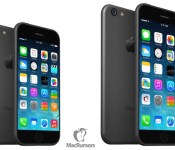
Apple Solves Battery Issues with 5.5-Inch iPhone 6, Looks to Ship 20 Million Units in 2014
Recent rumors surrounding Apple’s upcoming iPhone 6 have pointed to two models for the device: a 4.7-inch version set to launch later this year and a larger 5.5-inch version for late 2014 or early 2015. While Apple previously released the iPhone 5s and iPhone 5c at the same time last year, reports have indicated that issues with the 5.5-inch iPhone 6 battery life and display technology will force the company to launch both phones at separate times later this year.

Now, a new report from Chinese site Laoyaoba (Google Translate, via GforGames) claims that Apple has solved its battery issues with the 5.5-inch iPhone 6, as the company will partner with Chinese manufacturing company Sunwoda Electronics to manufacture 20 million batteries for the device. Apple’s main battery supplier Dynapack will also help with production, however the Taiwanese-based company has reportedly struggled to keep up with demand.
The report also notes that Apple is aiming to build 20 million 5.5-inch iPhone 6 units by the end of this year, which follows a rumor last month that stated the company’s desire to build a total of 80 million iPhone 6 units in 2014. If true, this would mean that the majority of iPhone 6 units would be of the smaller 4.7-inch version, perhaps indicating that the larger version will be hard to find until supplies improve later next year.
In addition to a larger screen, Apple’s iPhone 6 is expected to include a thinner profile, a faster A8 processor, and an improved camera in the form of optical or electronic image stabilization. Apple has also included an option for developers to size apps for devices referred to as “Resizable iPhones” in its release of Xcode 6 earlier today, which likely further indicates that iPhones with larger displays are coming.
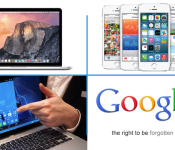
Engadget Daily: Apple announces OS X Yosemite, iOS 8 and more!

Today, we watched Apple unveil OS X Yosemite, iOS8 and its own smart home platform, went hands-on with ASUS’ new Zenbook NX500, learned about Samsung’s Tizen-based smartphone and more! Read on for Engadget’s news highlights from the last 24 hours.

Apple reveals iOS 8 at WWDC, available for free this fall
Today at its 25th annual developers conference, Apple unveiled iOS 8, the newest version of its mobile operating system. Design-wise, it looks a lot like iOS 7, but there’s a bunch of brand new features under the hood, including a health app, widgets, and yes, third-party keyboard support!

OS X Yosemite: Apple’s latest desktop operating system is free this fall
Apple’s next desktop operating system is called Yosemite, and will arrive as a free upgrade this fall. Besides getting a few slight UI adjustments, the OS gained a pumped-up version of Spotlight and Safari, as well as a new AirDrop feature that let’s you seamlessly transfer work between all of your Apple devices.

ASUS Transformer Book V is a Windows hybrid laptop with a detachable Android phone
Today, ASUS released the Windows-powered Transformer Book V and it’s, well, an interesting combination of a 2-in-1 laptop and dockable Android smartphone. Between both devices, the Book V packs five different combinations of software and hardware. Crazy, right?

What you need to know about the ‘right to be forgotten’ on Google
Thanks to a recent case between Google and Europe’s biggest court, European users have the “right to be forgotten.” Read on as our own Matt Brian breaks down the ruling and what it means for you.
You also might like:

New Apple CFO Luca Maestri Appears on Apple Leadership Page [Mac Blog]
 New Apple CFO Luca Maestri’s profile has appeared on the company’s executive page just a couple days after officially being named CFO, succeeding longtime CFO Peter Oppenheimer.
Luca Maestri is Apple’s senior vice president and Chief Financial Officer reporting to CEO Tim Cook. As CFO, Luca oversees the accounting, business support, financial planning and analysis, treasury, M&A, investor relations, internal audit and tax functions at Apple. Luca joined Apple in 2013 as vice president of Finance and corporate controller, and has worked closely with Apple’s senior leadership since his arrival.
Apple announced the transition in early March. Oppenheimer will stay on through the summer, transitioning the balance of his responsibilities to Maestri until he officially retires in September.
Before joining Apple in 2013, Maestri was CFO at both Xerox and Nokia Siemens Networks. His 25 year career saw him with leadership roles at General Motors at multiple locations throughout the world, including South America, Europe and Asia Pacific.
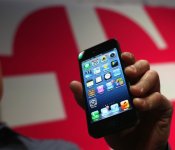
iOS 8 lets your iPhone make WiFi calls on T-Mobile

[Image credit: John Moore/Getty Images]
Filed under: Cellphones, Wireless, Mobile, Apple, T-Mobile
Source: T-Mobile
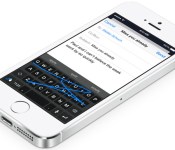
SwiftKey, Swype and Fleksy are already making iOS 8 keyboards

When Apple revealed that iOS 8 would allow third-party keyboards, one big question came to many people’s minds: would some of the better-known Android keyboards make the leap? In short, yes. SwiftKey says it has “already started” porting its heavily customizable software to iOS; Swype tells Engadget that it “can’t wait” to support Apple’s platform. Fleksy, meanwhile, is going so far as to take sign-ups for a beta program and vows to be “one of the first” with a solution. The odds aren’t high that you’ll get something like Google Keyboard on your iPhone (we’ve asked to be sure), but you won’t be hurting for input methods when iOS 8 is ready this fall.
Filed under: Cellphones, Tablets, Mobile, Apple
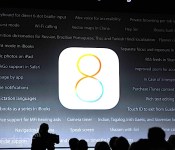
Here are a few lesser-known new features in iOS 8

Widgets! Quicktype keyboard! Hey, Siri! Interactive notifications! Like most new versions of Apple’s mobile OS, iOS 8 comes with its fair share of features that, in theory, will help improve the experience from the previous version. Our list of new features covers nearly every highlight from Apple SVP Craig Federighi’s presentation, but every year there’s always one slide filled with additional enhancements they don’t have enough time to call out individually on stage, and every year that slide disappears within a few seconds. So, what else will iOS 8 offer that wasn’t specifically called out by Hair Force One?
Admittedly, there’s a reason why the majority of these features only get a few seconds of precious keynote time: A lot of them simply aren’t that interesting to the average end user. New languages and refined dictionaries, for instance. There are, however, quite a few gems that are worth paying a little more attention to, and even a few that may not be fully explained until consumers get their hands on the OS for themselves.
First, we already wrote about support for WiFi calling, a feature T-Mobile currently touts on most of the Android devices and Windows Phones it carries. This service, which gives you the ability to use WiFi networks to make calls, is extremely handy when you’re in an area with spotty cellular coverage but more than capable WiFi signal.
If you’ve used an iPhone in the past, you likely have found yourself frustrated by unexplained battery drain. Is a rogue app sucking your battery dry? Who knows! Fortunately, Apple appears to have heard your cries of annoyance, as it’s introduced battery usage by app; now you can go into the settings menu and find out which apps are utilizing significant portions of your storage space.
Privacy fans will like this one: iOS 8 will list DuckDuckGo as a default search option in Safari, in addition to Google, Bing and Yahoo. We won’t blame you if you haven’t heard of the search engine before — essentially, its whole reason for being is to not track your searches. You won’t have to worry about your interests or other information getting sent to advertisers, for instance.
iOS 8 will also offer a few new enhancements to the camera app: Separate focus and exposure controls, as well as instant burst mode and a camera timer. Apple’s preferred to keep its camera app as simple as possible, so this is certainly adding a layer of complexity that wasn’t there before.
And here’s one for the iPad users: Panoramic mode. Its absence in iOS 7 was a bit of a head-scratcher, but Apple has finally determined that there are plenty of people out there who actually do use their tablets to take photos. Why not make the best of the experience by adding in the ability to take panoramic shots?
Also on the list of iOS 8 features is FaceTime call waiting. It’s a nice enhancement if you use the video chat service on a regular basis, since there’s always a possibility that someone else wants to set up a FaceTime call with you at the same time.
Finally, given the huge push Apple’s making in China — it landed a deal with China Mobile, the largest carrier in the country, earlier this year — it makes sense to offer more local support. Namely, iOS 8 adds lunar calendar, navigation and vector map support for Chinese users.
Naturally, this isn’t the full list: iOS 8 users will also enjoy things like multi-device support for made-for-iPhone hearing aids, the ability to purchase iTunes content using Siri, travel time notifications, rich text editing in the Notes app, flyover city tours, built-in iBooks support and Braille keyboard for direct six-dot input. Of course, there may be other stuff added in between now and the final public release, but we’ll have to wait for the Fall to know what else will make the cut.
Filed under: Cellphones, Software, Mobile, Apple

T-Mobile Says It Will Support Wi-Fi Calling for iPhones Running iOS 8 [iOS Blog]
Earlier today at its Worldwide Developer Conference keynote address, Apple displayed a slide from its presentation listing many under-the-radar features and improvements the company has made to iOS 8. One of them was Wi-Fi calling, which allows users to make regular phone calls over Wi-Fi rather than a cellular network.
 Soon after the event, T-Mobile took to its corporate blog to announce that it would support Wi-Fi calling on its network.
One of the best things about T-Mobile Wi-Fi Calling is that it’s so simple to use. You don’t need to activate anything or download a special app. Just connect to any available Wi-Fi network, check that Wi-Fi Calling is turned on on your capable smartphone, and make a call (or send a text, email, etc.) as you normally would. That’s it.
Wi-Fi calling allows networks to ease strain on its bandwidth and potentially speed up the network for other things. It also allows users to experience higher quality calls, to preserve both minutes and data and is a smaller drain on battery life during calls.
iOS 8 is available to developers now and launches for the public in the fall.
2014 Apple Design Award Winners Announced: Threes, Sky Guide and Monument Valley Among Winners
At an event at WWDC this evening, Apple announced the winners of its prestigious Apple Design Awards, highlighting an array of apps from utilities to games on both iOS and the Mac. Apple’s Design Awards were created to recognize apps that “raise the bar in design, technology, and innovation.”
Along with significant recognition, Apple gives winners one of nearly every product it makes, including a new Mac Pro.
iOS and Mac
– Threes [iOS]
– Leo’s Fortune [iOS]
– Blek [iOS]
– Yahoo! News Digest [iPhone]
– Device 6 [iOS]
– Storehouse: Visual Storytelling [iPad]
– Sky Guide [iOS]
– Monument Valley [iOS]
– Day One [Mac]
– Cinemagraph Pro [Mac]
Student Winners
– PanoPerfect [iOS]
– Addimal Adventure [iPad]
2013 winners of the Apple Design Awards included Letterpress, Yahoo! Weather and Evernote. In 2012, winners included Jetpack Joyride, Paper and Sketch.
Thanks Lindsey!

