


LaCie Upgrades Rugged Hard Drive With Integrated Thunderbolt Cable [Mac Blog]
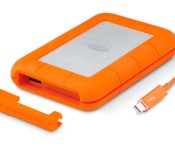
LaCie has upgraded its Rugged Hard Drive, adding an integrated Thunderbolt cable and improved damage resistance. The SSD version, available in 250 and 500GB capacities, achieves transfer speeds of up to 387MB/s. There is a USB 3.0 interface as well, though only the Thunderbolt cable is permanently attached.
The integrated Thunderbolt cable allowed LaCie to increase protection against water and dust because the dust cap can be left on even when the device is in use. When not in use, the bus-powered Thunderbolt cable tucks into the case and is protected by the cover. LaCie says the SSD version of the drive can withstand up to two-meter drops and conforms to the IP54 durability standard. LaCie has also increased the warranty from two years to three.

“My assignments take me to the top surf spots all over the world,” said Surfer Magazine staff photographer Zak Noyle. “So it’s imperative that my equipment is ready for any challenge. The LaCie Rugged’s speed allows me to deliver projects quickly, and its resilience to water, sand and drops make me confident that my photos are protected. From the beaches of Oahu to Tahiti, the LaCie Rugged has never let me down.”
The new LaCie Rugged drive goes on sale today in 250GB ($300) and 500GB ($500) solid state versions, plus 1TB ($220) and 2TB ($300) 5400RPM hard drive versions.
Apple Researching Solar Cell Ambient Light Sensors Embedded in Displays
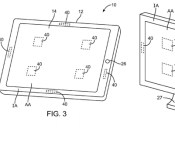
Apple continues to explore the various ways solar cell technology can be used to enhance the operation of electronic devices with a new patent application no. 20140152632 published on Thursday by the U.S. Patent and Trademark office. The document describes a method of using solar cells as ambient light sensors for an iPad, iPhone, or other display-equipped device, reports Patently Apple. The patent application was filed in December 2012, but was just published today.

One advantage to integrating the ambient light sensor into the display would be the ability to reduce bezel sizes around the display, allowing more of the device’s surface to be dedicated to display. For example, the iPhone currently includes several components embedded in the bezel above the display, including the earpiece, FaceTime camera, ambient light sensor, and proximity sensor. Moving at least some of those components into the display itself could allow Apple to reduce the height of the top bezel.
According to the patent, a solar cell’s ability to sense incoming light could be connected to circuitry that adjusts the display brightness in response to the solar cell input, as with current sensors. When not being used to adjust the display, this solar cell technology could provide a trickle charge to the device’s battery.
An electronic device is provided with a display and a solar cell ambient light sensor that receives light through a portion of the display. The solar cell ambient light sensor may include one or more thin-film photovoltaic cells. A voltage that accumulates within the thin-film photovoltaic cell in response to ambient light is sampled and converted into ambient light data. The device includes control circuitry that modifies the intensity of display light generated by the display based on the ambient light data from the photovoltaic cell. The solar cell ambient light sensor is attached to a transparent cover layer, a color filter layer, or any other layer of the display. When the accumulated voltage is not being sampled for ambient light measurements, the voltage may be used to provide charge to a battery in the device.
Apple has long expressed an interest in solar cell technology with patent applications and solar-related rumors extending back at least six years. More recently, Apple was awarded a patent that describes a method of integrating a solar panel into a mobile touchscreen device with a flexible display.
Big Ass Fans Unveils iOS Compatible ‘Haiku’ Smart Ceiling Fan [iOS Blog]
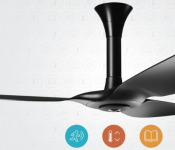
Big Ass Fans has unveiled the new ‘Haiku’ ceiling fan with ‘SenseME’ technology, which is billed as the world’s first smart ceiling fan and features an on-board computer that utilizes a companion app on iOS devices. The ceiling fan is composed of a durable bamboo material and boasts an array of sensors that automate a number of tasks, such as adjusting fan speed and powering the fan on and off. The fan also learns a user’s preferences based on weather conditions and a person’s tendencies in a room.

SenseME monitors a room’s occupancy and local temperature conditions, adjusting Haiku’s speed when conditions change so the space is always pleasant. If you make changes to the speed, SenseME remembers and makes more personalized speed adjustments in the future; after all, comfort is personal. Haiku with SenseME turns any room into a comfortable, energy-efficient Micro Environment.

The Haiku’s companion app provides the user with additional functionalities, including the ability to set schedules for the fan and select from a number of different control modes. The app allows users to group fans, and can also work without a home Wi-Fi network, utilizing the LAN provided by the fan’s onboard Wi-Fi radio. iOS 7 devices compatible with the Haiku’s companion app include the 5th generation iPod Touch, iPhone 4, iPhone 4S, iPhone 5, iPhone 5c, iPhone 5s, and iPads running iOS 7.
The Haiku with SenseME could also be a prime candidate for certification under Apple’s new HomeKit initiative, which allows home automation devices and their apps to work with Apple’s apps using a single, secure protocol. While Big Ass Fans and the Haiku are not currently listed under Apple’s partners for the program, it is likely that this will change if the product gains enough notoriety.
The Haiku with SenseME can be pre-ordered in fan diameters of 52” and 60” at a starting price of $1,045 with the first units being shipped in 8-12 weeks. Users may also choose to include a smart LED light on the fan for $95. 

Argue about the offside rule in Portuguese with Rosetta Stone’s Futebol app

We’re big fans of Football English Soccerball, but even we aren’t hardcore enough to be able to discuss the technicalities of the game in Portuguese. Thankfully, and just in time for the World Cup, Rosetta Stone (amongst others) is unveiling a Futebol Edition of its travel app, helping you to say escanteio (corner kick), un meio-campista (midfielder) and por favor, queremos saber onde fica o estádio (excuse me, we’re looking for the stadium). The app, which is available for free on iOS and Android will give you tips on navigating public transport, but since all of the data is offline, it won’t rinse your data connection as it does so. We’ve tried the app and it’s missing a few practical phrases (o árbitro é um bastardo) but otherwise it’s golden.
Filed under: Software, Mobile, Apple, Google
Source: Rosetta Stone (App Store), Rosetta Stone (Google Play)
Apple Begins Asking Developers to Turn On Family Sharing for iOS 8 and OS X Yosemite Apps
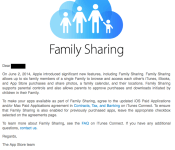
Just a couple days after announcing Family Sharing, a feature that allows families to share iTunes and App Store purchases, Apple has begun emailing developers to ask them to turn on the feature in their iTunes Connect developer portal.
While Family Sharing is a significant addition to the App Store, the opt-in requirement for developers could see some declining to allow their apps to be shared amongst as many as six accounts with no extra charge.

To make your apps available as part of Family Sharing, agree to the updated iOS Paid Applications and/or Mac Paid Applications agreement in Contracts, Tax and Banking on iTunes Connect. To ensure that Family Sharing is also enabled for previously purchased apps, leave the appropriate checkbox selected on the agreements page.
Family Sharing also allows families to share calendars, reminders, photos and locations. It also allows parents to monitor and approve downloads and purchases made by their children remotely. The feature is likely to get turned on and tested in the iOS 8 betas before going live when iOS 8 is available for the public later this year.

Apple’s New iPhone TV Ad ‘Strength’ Focuses on Fitness Accessories and Apps
Apple has debuted a new TV ad called “Strength” during the first game of the Stanley Cup finals, focusing on fitness accessories and apps for iPhone 5s.
The ad uses the song “Chicken Fat” by Robert Preston, which was created in 1961 to get schoolchildren to more daily exercise. It also showcases accessories like Misfit’s Shine activity tracker and apps like weightlifting trainer Stronglifts, showing how users can use the iPhone 5s to increase their health.
The ad once again ends with the tagline “You’re more powerful than you think”, which debuted alongside Apple’s “Powerful” ad in late April.

Apple Now Creating TV Ads Internally, Still Collaborating With Longtime Ad Agency
A new report by Bloomberg highlights how Apple has shifted to producing more of its recent TV ads internally as opposed to relying on its longtime ad agency, TBWA/Chiat/Day and its iPhone unit, Media Arts Lab.
The report notes that Apple’s changes came after marketing chief Phil Schiller considered ending its partnership with TBWA in January 2013, as previously shown in leaked emails during the company’s second patent trial with Samsung. The relationship between the two companies had been strong for many years, as Chiat/Day and Apple famously worked on the iconic ’1984′ ad for the Macintosh. The effectiveness of Apple’s relationship with TBWA/Chiat/Day reportedly started to weaken after the death of Steve Jobs in 2011, as ads for Siri involving various celebrities and the ‘Genius’ TV spots were poorly received.
Instead of parting ways with TBWA however, Apple began building its own ad team, notably hiring ad veteran Tyler Whisnand away from Media Arts Lab to head its creative team. Apple also hired renowned music director David Taylor and a number of other veteran advertising executives to fill out its team. Meanwhile, TBWA made changes internally, promoting James Vincent, who had a working relationship with the late Steve Jobs, to CEO while extracting him from day-to-day operations.
Since then, both Apple’s in-house ad team and TBWA have worked on a number of successful ads, with the former creating the initial “Your Verse” iPad TV ad that aired this past January, and the latter helping with a recent TV spot that highlighted the iPad Air’s use in music composition by conductor Esa-Pekka Salonen. However, Apple has also required TBWA and its internal team to compete on each campaign in order to ensure quality.
So far, the in-house efforts have helped stanch a decline in the impact of Apple’s ads since Jobs died, according to ad-monitoring company Ace Metrix Inc. Apple’s average score from this survey of hundreds of consumers fell in 2013 to 548 – just slightly higher than the overall average score for advertisers – – from 621 in 2011. So far in 2014, Apple’s median score has risen to 564, according to Ace Metrix.
Finally, Schiller and creative executive Hiroki Asai are also now said to be determining whether Apple should push digital marketing more following the launch of an ad campaign for the iPhone 5c on Tumblr this past March. It was reported by Ad Age last year that Apple would be adding for digital agencies to help out its online marketing strategy, which would be a shift from Jobs’ approach to only focus on TV and print ads.
Jobs reportedly disliked the idea of showing Apple’s products in low-resolution online ads, and applied the same distaste to campaigns on social media as Apple could not have full control of its intended message.
‘Swift’ Programming Language Been in Development for Four Years, “Major Focus” Since 2013
 The Swift programming language was as close to a “One More Thing” as there was at the WWDC Keynote this week, debuting to significant cheers from the developers in the audience. Immediate reaction after the keynote suggested Swift was “huge news” and the future of development on Apple products.
Apple says Swift code is “concise yet expressive”, interactive and fun. For coders, the introduction to Swift is available on the iBooks Store but Chris Lattner, head of Apple’s Developer Tools department, shared additional information on Swift on his personal webpage (via TechCrunch).
Now that Swift is public, Lattner revealed that he began working on Swift in mid-2010, with a team of coders “contributing in earnest” late in 2011. Last July, Swift finally became the major focus of Lattner’s Developer Tools Group.
The Swift language is the product of tireless effort from a team of language experts, documentation gurus, compiler optimization ninjas, and an incredibly important internal dogfooding group who provided feedback to help refine and battle-test ideas. Of course, it also greatly benefited from the experiences hard-won by many other languages in the field, drawing ideas from Objective-C, Rust, Haskell, Ruby, Python, C#, CLU, and far too many others to list.
The Xcode Playgrounds feature and REPL were a personal passion of mine, to make programming more interactive and approachable. The Xcode and LLDB teams have done a phenomenal job turning crazy ideas into something truly great. Playgrounds were heavily influenced by Bret Victor’s ideas, by Light Table and by many other interactive systems.
Lattner says that he hopes to make programming “more approachable and fun” with Swift, getting rid of extraneous materials to make programming easier to learn.
“We’ll appeal to the next generation of programmers and to help redefine how Computer Science is taught,” Lattner writes.
Evidence of Upcoming Retina iMacs Showing Up in OS X Yosemite Beta
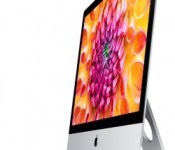
 Evidence of upcoming iMac updates is continuing to accumulate, and the latest hint points toward support for models equipped with Retina displays. As noted by Macbidouille [Google Translate], the OS X Yosemite developer preview includes a new file defining display scaling resolution options for a machine identified as an iMac.
The unreleased machine was first spotted last week in the OS X 10.9.4 beta, but today’s discovery includes the observation that Retina-resolution display support is included.
The file includes a series of scaling resolution options for this machine, maxing out at 6400 x 3600 pixels, or 3200 x 1800 as a Retina display. The display itself would carry a somewhat lower native resolution, perhaps 5120 x 2880 to simply pixel double the current 27-inch iMac, but as with the Retina MacBook Pro higher resolutions are specified and generated by the machine before being scaled back down.
The first of these resolutions indicates hexa “00001900 00000e10″ is therefore a resolution scaling of … 6400 x 3600 (probably 3200×1800 HiDPI).
Continues and is 5760×3240 (2880×1620 HiDPI) 4096×2304 (2048×1152 HiDPI), etc..
(There are other resolutions, just make the conversion from hex)With this alone, it is not possible to guess the native resolution of the machine. This is a resolution that does not appear in the file, since it is native and does not have to be “scaled”.
Knowing that there is a gap between the values of 5760 and 4096, one can imagine something between these two (probably 5120×2880, 2560×1440 or in HiDPI), but this is speculation.
As an example of how these higher-than-native resolution options are used, while the 15-inch Retina MacBook Pro has a native resolution of 2880 x 1800 (giving screen real estate of 1440 x 900 as Retina), the system is capable of generating a 3840 x 2400 desktop that is then scaled down to give the real estate of a 1920 x 1200 display.
In the case of this iMac, a similar scenario would see the initial 6400 x 3600 screen scaled to display as 3200 x 1800 on the Retina iMac.
Apple has been rumored to be working on Retina iMacs ever since the debut of the Retina MacBook Pro in 2012, but the company has likely been challenged by the large number of pixels needed for the desktop machine, particularly the 27-inch model. Recent rumors have pointed toward a lower-priced version of the iMac to help address emerging markets, but Retina models are likely also in the works.
As was seen with the MacBook Pro, Apple may initially move to split the iMac lineup with Retina models initially coming in at higher price points alongside existing or slightly cheaper non-Retina model pricing. Over time, the line would be consolidated as prices for the components needed to support Retina displays come down.
Apple’s new Lightning spec allows for smarter, better-sounding headphones

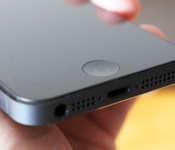
When Apple first unveiled its Lightning connector, there was a debate about whether or not it was needed at all: what can this proprietary tech do that standard micro-USB can’t? Well, it looks like we’re going to find out soon. Sources for 9to5 Mac understand that Apple has published a new specification that lets headphone makers use an iOS device’s Lightning port for audio instead of the normal 3.5mm jack. On a basic level, this allows headsets to launch apps and carry more than just the usual playback controls. However, there’s reportedly an advanced spec that permits a lot more — headphones could include digital-to-analog converters and other processing that overrides what’s in the device. If you’re not happy with the fidelity of the built-in hardware, a new pair of cans could provide an upgrade.
Since Lightning can also supply power in both directions, either new spec could eliminate a number of electricity-related problems. External audio processing wouldn’t always need a separate energy source; you could do active noise cancellation that draws only on the host device for power. You could alternately charge an Apple gadget through batteries that are built into the headphones or attached with a pass-through cable.
Whether or not manufacturers take up the spec is another matter. To support Lightning without abandoning listeners on other platforms, companies would have to either bundle extra cabling or else sell multiple versions of the same gear. Those feats are easy for higher-end brands, but may be tougher for newer or more budget-conscious outfits. Even if others are skittish, though, the tech could come in handy now that Apple owns Beats — future official headphones could both sound better and integrate well with your iPhone.
Filed under: Cellphones, Home Entertainment, Peripherals, HD, Mobile, Apple
Source: 9to5 Mac

