



iOS 8 Prompt Asks Users Whether Apps Can Continue Using Location Data [iOS Blog]
A MacRumors reader has sent in a screenshot of a prompt in iOS 8 that double checks with users asking if they want to continue giving location info to apps.

Since iOS 6, Apple has required apps to get explicit user permission before accessing personal data and device information, with iOS 8 now allowing users to determine whether they want apps to keep using location data.
Apple’s original move to require apps to ask for permission came in 2012 after it was discovered that apps such as Path were uploading users’ address books without asking for authorization. While Path eventually deleted the information, a pair of U.S. Congressmen sent a letter to Apple asking for information on specific data collection policies, causing Apple to make changes.
Since then, Apple has made a number of moves to better comply with concerns over privacy, which include adding the ability to report apps that do not comply with privacy requirements and asking iOS users if Location Services should be enabled during setup.
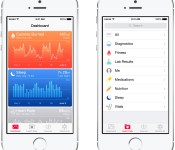
HealthKit Includes Native Bluetooth Support for Some Accessories, Eliminating Need for Companion Apps
HealthKit supports some medical Bluetooth accessories natively, allowing accessory makers to skip developing apps for iOS and focus on their hardware, according to 9to5Mac.

The accessories that will be built-in and supported natively by HealthKit include heart rate and blood pressure monitors, glucose sensors, and health thermometers. Apple is using official standard specs for Bluetooth LE devices from http://Bluetooth.org, which is what allows iOS 8 to automatically establish a connection with the devices listed above without the manufacturers worrying about anything on the software side.
HealthKit can automatically detect these Bluetooth medical devices and gather data from them, syncing them to the new Health app without the user having to do anything in a third-party app, making it easy for users to find health information in a single place. Additionally, device makers won’t have to spend resources and time making an app rather than focus on their hardware.
HealthKit and the Health app are available to developers in the iOS 8 now. All three will launch in the fall for the general public.

Apple Acquitted in Mexican ‘iPhone’ Naming Lawsuit [iOS Blog]
The Mexican Institute of Industrial Property (IMPI) has resolved the dispute between Apple and Mexican telecommunications company iFone over the rights to the phonetic name “iPhone”, acquitting Apple of any wrongdoing, reports El Universal [Google Translate].

The IMPI found that the “iPhone” trademark can only be infringed by iFone’s fellow telecommunications companies. Because Apple is a hardware company and does not own a wireless network, it is not technically infringing the trademark.
Instead, the IMPI will fine Mexican telecommunications companies Telcel, Iusacell and Movistar and require them to remove “iPhone” advertising and branding from its stores within 15 days. Apple will still be allowed to sell iPhones, however.
Apple has been fighting this case since 2009, losing the court case in November 2012 and then losing an appeal in March 2013.

Tim Cook Visits Apple’s New Austin Campus, Says ‘Exciting’ Products Coming
Apple CEO Tim Cook visited Apple’s brand new campus in Austin, Texas today at its opening celebration, according to various Apple employees. Cook recapped the announcements Apple made at WWDC earlier this week and teased that “exciting” new products are on the way, reports 9to5Mac.
 Image via Spencer O’Dell
Apple SVP of Internet Software and Services Eddy Cue was also in attendance, commenting about Beats Music and Beats Electronics. Cook also reportedly talked about new hires, mentioning how new retail head Angela Ahrendts was the best person for the job.

Many Apple employees took to Twitter and Instagram to share Cook’s visit to the campus, which is similar in style to the current Cupertino headquarters and complete with advanced facilities for Apple support, engineering and operations. Only part of the first phase of construction has been completed, with the complete first phase expected to finish by the end of 2015 and the entire project to be completed by 2021.
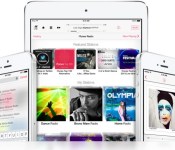
Apple Managers Didn’t Know How Spotify Worked, Engineers Used Pandora Over iTunes Radio
Engineers working on iTunes Radio prefer to listen to Spotify and Pandora because they were better platforms, according to a new report from Buzzfeed. It claims that not only did those employees prefer Apple’s competitors over its own radio service, but it says middle management was willfully ignorant about how Spotify worked, thinking it was just another streaming service.
It’s “why they thought iTunes Radio would be a Spotify killer,” said one employee. The piece alleges that Apple has been overly focused on driving downloads on iTunes and slow to adapt to a shift in user listening preferences towards subscription-based services.

Past and current employees in the company with direct knowledge of iTunes and Apple’s services Ping and iTunes Radio told BuzzFeed that Apple engineers involved with those products often preferred to use Spotify and Pandora. “Everyone’s excuse was it’s because we work on iTunes, running and closing the app after every code change,” one source said. “But it’s really because Spotify has all the free music with a real social platform.” In their personal time, sources said, employees used Spotify and Pandora.
Apple employees confirmed that management actively ignored iTunes’ streaming competitors, with some managers refusing to open or use Spotify. One source said that as recently “as last year,” some members of management didn’t even know that Spotify was an on-demand streaming service, assuming it was just a radio service.
The disconnect between employees, along with a belief that Spotify and Pandora weren’t real threats to iTunes, may have been a significant contributing factor to Apple’s slowness to embrace streaming music. A reluctance to cut into its iTunes sales was also likely a factor, as it was the platform that revolutionized the music industry back in 2003.
According to a recent report from The Wall Street Journal, Apple’s main goal with iTunes Radio was boosting both device sales and sales of iTunes music, which largely ignored the real problem — the growing popularity of on-demand streaming music and the products being offered by competitors. iTunes Radio was viewed as a “baby step” into the streaming music industry when what Apple really needed was a leap.
Apple had a similar issue back in 2010 when it launched Ping. Designed as a social networking and music recommendation service, Ping was created to push users to purchase songs rather than as a true effort towards improving recommendations, which ultimately led to its failure in 2012. “The biggest reason why Ping failed was because Apple was not interested in making a network — they were interested in making a purchase pusher,” said one of Buzzfeed‘s sources.
With the purchase of Beats, it appears that Apple is finally ready to make a significant leap into the streaming music industry, though a cautious one. The company reportedly plans to keep Beats as a standalone brand rather than integrating it directly into iTunes, which gives it a safety net should the service ultimately fail.
Along with the streaming music service itself, Apple is also gaining fresh blood for its music endeavors. Beats co-founders Jimmy Iovine and Dr. Dre, both of whom are set to join Apple as employees, both have extensive experience in the music industry and an invaluable rapport with a younger generation of listeners.

PayPal ‘Kicking the Tires’ on Integrating Touch ID Into its Mobile Apps
PayPal is already working to incorporate the fingerprint scanning capabilities of the iPhone 5s into its mobile apps, likely planning to use the technology to authenticate users and confirm payments through the use of a fingerprint rather than a password.
Apple first announced a Touch ID API for developers on Monday, which will allow the feature to be integrated into third-party apps for the first time. According to a PayPal source that spoke to Business Insider, PayPal developers attended a developer session on Touch ID at Apple’s Worldwide Developers Conference yesterday to learn about the new API.

“It seems to be a fairly easy API to use, but we’re still kicking the tires,” the PayPal source tells us.
Anuj Nyar, PayPal’s senior director of global initiatives, confirmed in an email that company developers had attended the session.
At the current point in time, Apple’s Touch ID feature is limited to unlocking the iPhone and making purchases for apps and music within the iTunes Store. Apple has previously faced significant scrutiny over privacy concerns with Touch ID, which is likely why it has taken nearly a year for the company to allow developers access to the feature.
Since the release of the iPhone 5s, Apple has worked to overcome security concerns by releasing extensive documentation on Touch ID, which works through a “Secure Enclave” within the iPhone’s A7 chip, using a secure boot process and other security measures to prevent both Apple and any other third parties from accessing Touch ID data.
Touch ID for developers works in conjunction with Keychain, unlocking Keychain items through a simple yes/no verification process that identifies successful fingerprint matches. During Monday’s keynote, Apple software chief Craig Federighi assured iPhone users that fingerprint data remains protected and inaccessible to developers.
PayPal’s main app currently allows users to send and request money and to make payments via the service in retail stores, restaurants, and more. Several features require a password to login or confirm payments, steps that may be simplified with Touch ID.
Apple may have plans to build Touch ID into a complete payment service in the future, as the company is said to be working on a mobile payments solution. According to Apple CEO Tim Cook, mobile payments were “one of the thoughts behind Touch ID.” Apple has also reportedly been in talks with PayPal about a possible payments partnership, so it is no surprise that PayPal is eager to be at the forefront of Touch ID app integration.

Philips Shows Off Prototype Hue Notification Center Widget for iOS 8 [iOS Blog]
Philips today tweeted an image demonstrating how the Philips Hue app for its iPhone-controlled line of lights might look when integrated into iOS 8′s Notification Center.
As seen in the image, adding a Hue widget to the Notification Center would potentially give users direct access to an off switch and a selection of light scenes.

This is a concept prototype to show the use of extensions to provide access to hue from the notification centre! pic.twitter.com/xC92LAgVfq
— Philips Hue Dev (@philipshuedev) June 5, 2014
Currently, the Philips Hue line of lights, which includes various bulbs and accent lights, is controlled through the Philips Hue app and through various third-party apps. Access to Hue controls in Notification Center would make it much simpler for users to turn off lights or choose their favorite scenes, as it would not require an app to be launched.
As described during Apple’s annual Worldwide Developers Conference, iOS 8′s Notification Center allows third-party apps to create widget extensions to display information directly in the “Today” view. Right now, Apple limits Today view to integration with its own stock apps like Calendar, Stocks, and Weather, but with iOS 8, users will be given far more customization options thanks to third-party integration.
iWatch Component Production Said to Start Gearing Up This Month, September Launch Speculated
Production of components for Apple’s iWatch is reportedly starting later this month, leading to speculation by Cantor Fitzgerald analyst Brian White that the device will see a launch as soon as September alongside the iPhone 6.
With the theme around wearable technology at Computex this year, our research has uncovered more data points as it relates to Apple’s “iWatch.” Our meeting with a tech supply chain company highlighted that initial production of certain “iWatch” components is scheduled to begin later this month and there are plans for a sharp acceleration into fall.
Given the trajectory of this ramp and our experience analyzing other product ramps at Apple, we expect the “iWatch” to be unveiled with the iPhone 6 in September. Since our research suggests the first iteration of the “iWatch” is more of a companion device, and thus requires a connection to an iPhone, we believe unveiling the two new devices at the same time makes sense.
White believes the iWatch will be available at several pricing increments much like the iPhone and the iPad, indicating that prices could start at $199 to $229 to compete with other smart watches currently on the market.
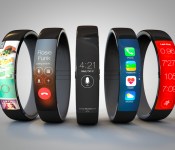
 iWatch concept by Todd Hamilton, based on the Nike FuelBand
Several other rumors have pointed towards a fall launch for the iWatch, with KGI Securities analyst Ming-Chi Kuo predicting a third quarter launch, which has also been echoed by various Asian news sources including the Economic Daily News and Digitimes. Apple is also likely aiming for a fall launch for its 4.7-inch iPhone 6, which could see the two devices unveiled together.
Little physical information has surfaced on the iWatch thus far, but supply chain rumors have suggested the device will come in two separate sizes (1.3 inches and 1.5-1.7 inches) to accommodate different sized wrists. It is also said to include a multitude of biometric sensors to measure various health metrics and it is also expected to interface with the new Health app in iOS 8.
White also believes that the 5.5-inch iPhone, which was rumored to be delayed due to production issues, could launch alongside the 4.7-inch iPhone and the iWatch. He released a report detailing his reasons yesterday and today confirms that research is “uncovering more evidence that the 5.5- inch iPhone 6 will launch this fall.”
Having previously predicted seemingly outlandish products such as the “iRing” able to control an Apple television set, Brian White does not have a particularly solid track record when it comes to predicting Apple’s plans, but with multiple rumors converging on a fall release date for both the iWatch and the two versions of the iPhone, it is possible we will see all three products before the end of the year.

Tech CEOs push US Senate for stronger surveillance reform

The CEOs of AOL, Apple, Dropbox, Facebook, Google, LinkedIn, Microsoft, Twitter and Yahoo! all agree: more needs to be done to reform the government’s snooping capabilities. That’s the thrust of a letter that appeared online yesterday, anyway. Though the list of signatories contains a handful of rivals, all of them agree that the version of the USA Freedom Act that recently passed through the US House of Representatives still sucks and that the US Senate needs to fix it.
Why? Well, it was originally meant to stop the NSA’s bulk collection of metadata (like who emailed you or when you called someone) outright, but some (including the nine companies who issued the letter) believe the version of the act that passed was watered down to the point where it could easily be exploited. Naturally, there’s still a raging debate on just how valuable and safe that bulk collection actually is. The undersigned nine also call for greater transparency when it comes to user data requests it receives from the government, though that’s not a surprise considering how frequently they already bring up the issue. Just take a peek at, say, Facebook’s most recent transparency report — you’ll find that the social giant received between 0 and 999 national security requests for data. Painting in strokes that broad is unsatisfying at best and obscurantist at worse, which is why companies like Twitter are weighing legal options to push for more specificity.
Source: Reform Government Surveillance

Jony Ive and Bono to Appear at Cannes Lions Festival to Discuss (RED) Partnership
The organizers of the Cannes Lions International Festival of Creativity today announced that they will be honoring Bono with the first ever LionHeart Award later this month at the 61st annual festival. The award is being given for Bono’s work with the (RED) campaign to raise funds for the fight against AIDS.

Alongside the honor, Bono and Apple design chief Jonathan Ive will participate in an on-stage interview to discuss their collaboration on the campaign, which has seen contributions from the purchase of (PRODUCT)RED Apple products reach $70 million. Ive last year also partnered with friend and designer Marc Newson to auction off a number of one-of-a-kind items, including a unique red Mac Pro and rose gold-plated EarPods, to benefit the (RED) campaign.
In an exclusive seminar for Cannes Lions delegates, Bono will join Jonathan Ive, Apple Inc’s Senior Vice President of Design, in a discussion moderated by Shane Smith, CEO and Founder of VICE Media, and introduced by Anne Finucane, Global Strategy and Marketing Officer of (RED) partner, Bank of America. Bono and Jonathan Ive will discuss the success of (RED) and [its] unique collaboration with global partners – including Apple, (RED)’s largest corporate contributor to the AIDS fight – and the record-breaking (RED) Design Auction curated by Jonathan Ive and Marc Newson. The auction resulted in $44 million for the Global Fund on World AIDS Day last year.
The 45-minute interview, which will represent a relatively rare public appearance for Ive, will take place on June 21. It is unclear whether video of the interview will be made available after the event, but we have contacted festival organizers to inquire about the possibility.
(Thanks, Joe!)

