


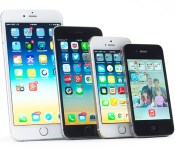
Apple’s (probably not broken this time) new iOS 8 update is ready to download

It’s take two for Apple’s first update to iOS 8. After the company released a version yesterday that cut off cellular connections and TouchID for the iPhone 6 family, there’s a new one available now. According to an Apple spokesperson, less than 40,000 device were affected by yesterday’s glitch — a large number, but maybe not that big when sales of the new devices are already at 10 million and climbing. Version 8.0.2 also carries the fixes we were expecting yesterday which should get HealthKit apps going and fix some third-party keyboard issues, among other tweaks. We understand if you’re not in a hurry to try this one out, but the update is available via iTunes or the software update option on your Apple device. If you’re bravely rushing once more unto the breach, please let us know how it goes in the comments.
Photos by Will Lipman.

Filed under: Cellphones, Tablets, Mobile, Apple
Source: Apple
.CPlase_panel display:none;
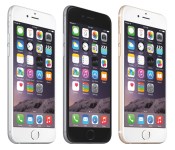
Apple’s Second Wave iPhone 6 and 6 Plus Launch Kicks Off With Online Availability in Several Additional Countries
Apple Online Stores around the world have begun accepting orders for the iPhone 6 and 6 Plus as part of a second wave launch that will see the devices become available in more than 20 additional countries.
The two devices are now available for order online in multiple different countries, and will become available in local retail stores in the morning. The iPhone 6 and 6 Plus are already on sale in stores in New Zealand, where it is just after 11:30 AM.

Second wave launch countries for the iPhone 6 and 6 Plus include Austria, Belgium, Denmark, Finland, Ireland, Isle of Man, Italy, Liechtenstein, Luxembourg, Netherlands, New Zealand, Norway, Portugal, Qatar, Russia, Saudi Arabia, Spain, Sweden, Switzerland, Taiwan, Turkey and United Arab Emirates.
Many countries where the iPhone 6 and 6 Plus are available for purchase online are displaying shipping estimates of five to seven days for both devices, for all colors, carriers, and capacities. In many cases, these shipping estimates are better than the shipping estimates for new orders placed in first wave launch countries, but estimates may change as available supply per country dwindles.
Initial iPhone 6 and 6 Plus sales in the United States, UK, Australia, Canada, France, Germany, Hong Kong, Puerto Rico, and Singapore topped 10 million during the first weekend that the devices were available for purchase, which Apple CEO Tim Cook said “exceeded expectations.”
Apple has plans to bring the new iPhones to 115 countries by the end of 2014.
.CPlase_panel display:none;
Apple Releases iOS 8.0.2 With Fix for Cellular Issues, Broken Touch ID
 Apple has just released iOS 8.0.2, its second update to iOS 8 designed to fix major issues introduced with iOS 8.0.1, which went out to iPhone owners on Wednesday. After installing iOS 8.0.1, many iPhone 6 and 6 Plus users found that their cellular service was disabled and that Touch ID was non-functional.
Apple pulled the iOS 8.0.1 update approximately an hour and fifteen minutes after it was first released, but not before numerous iPhone users were able to download the software. The company announced an investigation in the afternoon, and in the evening, released a support document saying iOS 8.0.2 was in the works and directing users to fix the problem via an iTunes restore to iOS 8.
iOS 8.0.2 is available immediately as an over-the-air download and presumably fixes all of the issues that were introduced with iOS 8.0.1. iOS 8.0.1 contained a fix for a major HealthKit issue that was discovered just before the public release of iOS 8, prompting Apple to remove all HealthKit enabled apps from the App Store. Following iOS 8.0.1 and iOS 8.0.2, these apps will be able to return to the App Store. The updates also bring fixes for third-party keyboards, Reachability, Photo Library, SMS/MMS messages, and more.
.CPlase_panel display:none;

Apple Invites Reporters Into Testing Lab, Details iPhone 6 Plus Durability Tests
Earlier today, Apple released a statement to several different media outlets in response to reports about the iPhone 6 Plus bending within user pockets, stating that bending from normal use was “extremely rare” and suggesting only nine customers had complained about bending issues.
In addition to outlining its rigorous testing policies, Apple has now invited reporters from both CNBC and The Verge to its testing facility to see the machines that it uses to test its products in person. The lab contains an array of different testing equipment, with Apple’s head of engineering Dan Riccio telling CNBC the iPhone 6 was “the most tested product we have ever done” and that Apple had not tested another phone as exhaustively.
http://player.theplatform.com/p/gZWlPC/vcps_inline?byGuid=3000313669&size=530_298
“As we add more and more features, we have to find out a way to break them before customers do,” Riccio told The Verge. According to Apple, 15,000 separate tests were conducted on both the iPhone 6 and the iPhone 6 Plus. “The bottom line is that if you use enough force to bend an iPhone, or any phone, it’s going to deform,” said Riccio.
When asked about the reports of bending, Apple’s head of marketing, Phil Schiller, called them “extremely rare occurrences” reiterating to CNBC that out of millions of iPhones sold, Apple had only received nine complaints. He also told The Verge that Apple “designed the product to be incredibly reliable throughout all your real world use.”
Apple also outlined some of the different durability tests conducted on the iPhone 6 Plus to The Wall Street Journal, explaining that it’s subjected to three-point bend tests, which place pressure on the iPhone to ensure it can handle reasonable force, and pressure-point cycling, which places “substantial” force on the enclosure hundreds of times. The iPhone is also subjected to torsion testing, which twists and torques the device, and there were sit tests simulating real-life scenarios.
 Torsion test image, courtesy of The Verge
Apple pointed to five different tests that new iPhones go through in the development process, including what is known as “pressure point cycling test” when it applies substantial force on the display and enclosure hundreds of times while the phone is held by the sides. Apple said this process bends the enclosure repeatedly to ensure that the iPhone can be bent and pressed at reasonable force throughout its life.
Another test, according to Apple, is called the “sit test.” This test simulates sitting on a hard surface with the phone in the back pocket of a pair of tight jeans. Apple said it runs the phones through thousands of cycles testing the phone in different positions.
In addition to all of the above testing, Apple also tested the phone in real-life, handing iPhone 6 and 6 Plus devices out to “hundreds of company employees” to use in various situations to test for durability and performance.
Reports of the iPhone 6 Plus’s weakness to bending first surfaced on Monday, after multiple MacRumors forum members shared images of devices that had bent subtly while in a pocket. The bending issue then went viral after a YouTuber posted a video of the iPhone 6 Plus warping out of shape when bent in his hands.
Given the significant amount of media attention the bending has received over the course of the last few days, it has been difficult to determine how many users were truly affected by iPhone 6 Plus bending during real world usage. According to Apple, the number of affected users is comparatively low based on how many devices are now out in the wild.
Despite keeping quiet on the issue for several days, Apple has directed support staff to replace affected phones under warranty following a visual inspection. “In this case, as in many things, we tell customers that if you think something’s occurred that shouldn’t have with your device, go to AppleCare, go to The Genius Bar, and let them take a look at it,” Schiller told The Verge. “And we’ll see if your product is having an experience it shouldn’t have and is covered under warranty.”
Additional photos of Apple’s testing equipment and details on the testing process can be found in The Verge‘s original report on Apple’s testing facility.
.CPlase_panel display:none;

FBI Concerned With New Default Encryption Settings in iOS and Android Devices
The FBI has been in talks with Apple and Google about the way the technology companies are marketing the privacy features in their smartphones, according to FBI Director James Comey (via The Huffington Post). Comey says that he is concerned that the two companies are “marketing something expressly to allow people to place themselves above the law.”
Comey’s remarks come following both privacy changes introduced with iOS 8 and a new privacy site that Apple introduced last week, explaining that the company has altered the way encryption works in iOS 8. Apple no longer stores the encryption keys for devices in iOS 8, making it impossible for it to unlock content on devices under police request.

“Unlike our competitors, Apple cannot bypass your passcode and therefore cannot access your data,” reads its new privacy site. “So it’s not technically feasible for us to respond to government warrants for the extraction of this data from devices in their possession running iOS 8.”
Shortly after Apple announced the encryption changes to iOS 8, Google announced that the next generation of Android, set to be released next month, will also encrypt data by default, providing the same encryption protections to its smartphones that a passcode provides to iPhones.
According to Comey, though he understands the need for privacy, he believes government access to electronic devices is necessary in some cases.
“I like and believe very much that we should have to obtain a warrant from an independent judge to be able to take the content of anyone’s closet or their smart phone,” he said. “The notion that someone would market a closet that could never be opened — even if it involves a case involving a child kidnapper and a court order — to me does not make any sense.”
He goes on to say that one day, it may matter “a great, great deal” that the government be able to infiltrate “a kidnapper’s or a terrorist or a criminal’s device.” His goal, he says, is to have a “good conversation” in the country “before that day comes.”
The exact nature of the talks between FBI officials and Apple and Google remains unknown, with Comey only stating that the discussion has been over the “marketing of their devices.”
Note: Due to the political nature of the discussion regarding this topic, the discussion thread is located in our Politics, Religion, Social Issues forum. All forum members and site visitors are welcome to read and follow the thread, but posting is limited to forum members with at least 100 posts.
.CPlase_panel display:none;
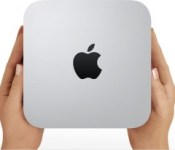
New Mac Mini Finally Coming in October Alongside New iPads?
 At just under two years since its last update, the Mac mini seems to have become the forgotten part of Apple’s Mac lineup, with a number of fans of the small desktop waiting for any word of a potential update.
As they typically are with Mac products, rumors and leaks regarding the Mac mini’s future have been relatively rare, with essentially nothing having appeared on the radar since a reference to a “Mid 2014″ Mac mini surfaced on an Apple support page as a likely error several months ago.
MacRumors has now received word that Apple is planning a Mac mini update possibly launching next month alongside new iPad models and presumably OS X Yosemite. While we have been unable to obtain corroborating information of an imminent update, the mere possibility of an update as soon as next month is likely to be welcome news to Mac mini fans. The single source has provided no additional details on what to expect in terms of a next-generation Mac mini, but has provided accurate information in the past.
The timing of such an update would be a bit odd, as it is unclear what processors Apple would use in these machines. Next-generation Broadwell processors from Intel appropriate for the Mac mini are not scheduled to arrive until early next year, and the current Haswell processors are no longer cutting edge as Intel has been forced to prolong their shelf life due to continued delays with Broadwell.
Still, the Mac mini is not generally intended to be a workhorse machine with the fastest processors (although they are popular as servers), so Apple may be willing to launch the updated models with Haswell refresh processors released earlier this year. The Mac mini typically uses the some of the same processors as the MacBook Pro except shifted several months later, meaning that an updated Mac mini released next month could use some of the processors from the late July MacBook Pro update.
.CPlase_panel display:none;

Mac Pro Models Now Available From Apple’s Online Refurbished Store
Apple has recently added the Mac Pro to the refurbished section of its online store, giving customers the opportunity to purchase the professional-level desktop at a 15 percent discount compared to a brand-new machine for the first time since the computer’s December 2013 release.
There are several different configurations available, ranging in price from $2,549 for the 3.7GHz quad-core machine with 12GB RAM and 256GB storage to $7,479 for the 2.7Ghz 12-core machine with 32GB RAM and 1TB storage. All available refurbished Mac Pro models ship within 3 to 5 business days.

All of Apple’s refurbished products, the Mac Pro included, have been thoroughly tested for reliability and come with the same one-year warranty offered with standard products.
Apple’s 2013 Mac Pro made waves when it was released, due to its radically redesigned cylindrical form factor and the fact that the machine is the first to be assembled in the United States. It features Ivy Bridge E processors, dual GPUs, Thunderbolt 2, and fast PCI Express-based flash storage.
.CPlase_panel display:none;
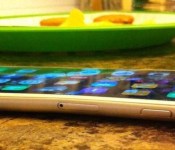
Apple: Bending in iPhone 6 Plus From Normal Use ‘Extremely Rare’, Only 9 Customers Have Complained
Apple has commented on the ongoing complaints about the iPhone 6 Plus bending in user pockets, telling CNBC that the new iPhones include steel/titanium inserts to reinforce stress locations and that they use the “strongest glass in the industry.”
The company went on to say that only nine customers had complained about bent iPhones, suggesting the issue is not as widespread as it has appeared in the media. It also stated that both the iPhone 6 and 6 Plus have met or exceeded testing for strength and durability, and that bending in the iPhone 6 Plus during normal use is “extremely rare.”

Reports of the iPhone 6 Plus’s weakness to bending first began trickling in on Monday, after several MacRumors forum members shared images of devices that had bent while in a pocket. The bending issue went viral after a YouTuber posted a video of the iPhone 6 Plus warping out of shape when bent in his hands, which caused significant damage near the device’s volume buttons.
Given the media attention the bending received, it was difficult to tell how many users were truly affected by iPhone 6 Plus bending during real world usage. Though Apple kept quiet on the issue until today, the company has been directing its support staff to replace affected phones under warranty following a visual inspection.
.CPlase_panel display:none;
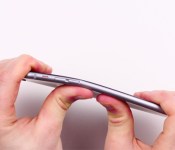
Apple responds to bent iPhone 6 complaints, all nine of them

By now, you’ve likely heard a thing or two about the new iPhones’ flexibility, and Apple has offered a word on the matter. The Wall Street Journal reports that the Cupertino-based outfit only received nine complaints of bent devices and that the damage occurring due to regular use is “extremely rare.” It also maintains that both the new iPhone 6 and its larger sibling went through durability testing to insure they’d stand up to daily use. Of course, the interwebs have been littered with videos of folks purposely trying to flex their mobile wares in far from “normal” conditions. Unfortunately, there’s no word on if tight trousers are in fact to blame.
Filed under: Cellphones, Mobile, Apple
Source: The Wall Street Journal, CNBC (Twitter)
.CPlase_panel display:none;
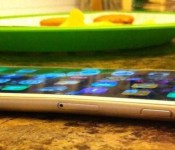
Samsung, HTC, BlackBerry, and Others Mock ‘Bendability’ of Apple’s iPhone 6 Plus
Competition between mobile phone manufactures is fierce with handset companies using social media and other public platforms to call out their competitors. It’s not surprising then to see a wave of tweets and comments from big name companies like Samsung and HTC mocking Apple following its recent iPhone 6 Plus bending controversy.
LG and HTC were among the first to attack Apple, commenting on Twitter shortly after the #bendgate controversy began to escalate. At the same time, BlackBerry CEO John Chen mentioned the bending issue during the company’s launch of its new Passport handset, saying “I challenge you to bend the Passport,” reports CNET.
Designed to withstand the most demanding environments. Like your pockets. #HTCOneM8
— HTC USA (@HTCUSA) September 24, 2014
Our phone doesn't bend, it flexes…on purpose. #bendgate pic.twitter.com/d1DudxDQgf
— LG USA Mobile (@LGUSAMobile) September 24, 2014
Samsung, Nokia Deutschland, and even candy maker and Android sponsor KitKat also joined in on the mockery, noting that their products don’t bend.
Curved. Not bent. #GALAXYNoteEdge pic.twitter.com/OTPIYlI07f
— Samsung Mobile (@SamsungMobile) September 25, 2014
These social marketing efforts are a response to Apple’s controversy in which some iPhone 6 Plus users were accidentally bending their 5.5-inch handsets after placing them in their pockets. While the prevalence of the issue appears fairly low, photos of warped iPhone 6 Plus units spread like wildfire, with subsequent “bend test” videos showcasing how much the iPhone 6 Plus was susceptible to bending.
According to The Next Web, Apple reportedly is looking into the issue “with an insane amount of detail.” A support representative also confirmed Genius technicians may replace bent phones under warranty following a visual inspection. Such inspections typically reject bent iPhones for warranty coverage, however, and it is unclear how much latitude Geniuses will have with this issue.
.CPlase_panel display:none;

