


What’s Coming in iOS 8.1: Apple Pay, SMS Relay, Instant Hotspot, Camera Roll, and More
During yesterday’s iPad-centric media event, Apple executives announced that the first major update to iOS 8, iOS 8.1, would be released to the public on Monday, October 20.
First seeded to developers at the end of September, iOS 8.1 promises to bring a quite a few significant features to the operating system, offering new services and finally allowing Yosemite users to access the full functionality of Continuity.
While some major Continuity features like Handoff and Phone calls on the Mac are working for users who have both an iOS 8 device and a Mac running OS X Yosemite, other features, like SMS relay and Instant Hotspot will not be available until Monday, when iOS 8.1 is released.
With SMS relay, both Macs (running Yosemite) and iOS devices like iPads are able to receive SMS messages that have been routed through a user’s iPhone. Currently, while iPads and Macs can receive iMessages, SMS messages are limited to iPhones. When SMS relay is functional, an SMS message that has been received will be forwarded to iPads and Macs, and users will be able to answer all of their messages on any device. It’s also possible to start SMS-based conversations directly on a Mac or iPad.

Instant Hotspot is another facet of Continuity that will be enabled with iOS 8.1. This feature lets a Mac remotely activate the Personal Hotspot capabilities of an iPhone when the two devices are near each other. The Mac can automatically detect an iPhone with Hotspot and users can connect to a Hotspot via the Mac’s Wi-Fi menu without needing to remove the iPhone from their pocket.

While these two Continuity features were originally slated to launch alongside iOS 8, Apple added a small footnote to its iOS 8 press release suggesting the features were unfinished and would come with the iOS 8.1 update.
iOS 8.1 will enable Apple Pay, a major new service and Apple’s first foray into mobile payments. When Apple Pay becomes available on October 20, hundreds of retailers will be prepared to start taking payments using the service, and numerous banks will be on board. With Apple Pay, iPhone 6 and 6 Plus users can make purchases solely via their iPhone at any store that accepts contactless payments.
Along with Apple Pay and Continuity features, iOS 8.1 will bring several other minor changes as well, as detailed during Thursday’s event. Many users were unhappy with the disappearance of the Camera Roll, which Apple announced will be reinstated in iOS 8.1, and beta iCloud Photo Library access will be provided to all iOS 8.1 users.

iCloud Photo Library is designed to store all of a user’s photos and videos, making them accessible on all of their iOS devices. iCloud Photo Library is tied to a user’s iCloud account, using the storage space of their iCloud plans. With iCloud Photo Library, photos are kept in the cloud with a smaller version available on iOS devices, taking up less storage space. iCloud Photo Library will also tie in to the upcoming Photos app for the Mac, but until that is available, iCloud Photo Library will only be available on iOS devices.
Finally, iOS 8.1 may bring several bug fixes, including a fix for an ongoing Bluetooth issue that has caused some iOS 8 users to have trouble pairing their phones with their Bluetooth devices. Apple has not provided a time for the release of iOS 8.1, stating only that it plans to release the software on Monday.

OS X Yosemite Launch Brings Fully Functional iCloud Drive to Mac and iOS
With yesterday’s launch of OS X Yosemite, Apple’s iCloud Drive file storage system is now functional across the company’s products. Many users were frustrated following the launch of iOS 8 last month by the incompatibility between the new iCloud Drive system used with that operating system and the previous Documents in the Cloud system used on OS X Mavericks. The difference in launch dates between iOS 8 and OS X Yosemite temporarily left some users unable to sync their documents between devices if they elected to upgrade to iCloud Drive on their iOS devices.
That issue is now fixed with OS X Yosemite launching to the public, and Craig Federighi gave a very brief walkthrough of the feature at yesterday’s media event, outlining how Mac and iOS apps can automatically generate their own folders for file storage accessible across devices and platforms.

iCloud Drive can also be used in a similar manner to Dropbox, Box, and other cloud storage services in that any type of file can simply be dragged and dropped into the iCloud Drive folder on Mac or iCloud.com and be synced across devices. Access is a bit more limited on iOS where there is no iCloud Drive app allowing access to all files, but the service still allows users of iCloud Drive-enabled apps to view and save files related to that app that are stored and synced with iCloud Drive.
Apple’s iWork updates yesterday extend compatibility beyond the core OS X and iOS apps, and APIs are available to allow third-party developers to offer iCloud Drive support for their apps.
iCloud Drive taps into users’ general iCloud storage allotments, with all users receiving 5 GB of space free of charge. But with iOS device backups and the upcoming iCloud Photo Library potentially requiring significant amounts of space, many users will find themselves looking to upgrade to paid storage tiers, which begin at $0.99 per month for 20 GB of space and go up to $19.99 per month for 1 TB.

Here’s why Apple doesn’t have a MacBook Air with a Retina display

Another Apple event has come and gone, and there’s still no MacBook Air with a Retina display. I won’t blame you if you’re frustrated — now that there’s a 5K iMac, the Air is Cupertino’s last screen-packing computer to ship without an extreme-resolution screen. For that matter, competitors haven’t had qualms about releasing their own ultraportable laptops with extra-crisp visuals. So, what gives? Is Apple holding back? The company may not be offering answers, but it’s most likely that the technology needed to make a Retina-equipped Air simply isn’t ready for prime time. As much as Apple would like the Air to hop on the high-res bandwagon, it may have to wait until a whole bunch of pieces fall into place. Read on to see what I mean.
You can summarize the biggest problem with two words: battery life. Stuffing more pixels into an LCD typically requires not just stronger backlights (since there’s less light reaching each pixel), but also graphics processing powerful enough to draw all that extra content. You only need to look to one of Apple’s own products, the third-generation iPad, for an example of the challenges involved. Apple had no choice but to give the tablet a bulky battery and a graphics boost (the A5X chip) if it wanted a Retina display using 2012-era backlighting and computing power; it wasn’t until the iPad Air that you saw a no-compromise design. Yes, the MacBook Pro line has had Retina tech since 2012, but it had a thicker chassis to accommodate both a bigger battery and a faster, costlier processor. The MacBook Air doesn’t have that luxury. It has to cram both a low-power display and a quick-yet-efficient processor into a very slim, affordable machine.

The display side of it isn’t that tough any more. There are already super-thin laptops that still wield high-grade LCDs, such as ASUS’ latest Zenbook, and the 5K iMac is loaded with energy improvements (such as brand-new LED backlighting) that could help a portable. It’s the visual horsepower that’s harder to manage. Chips based on Intel’s new Broadwell architecture should deliver that ideal blend of miserly power consumption and faster graphics, but they’re not truly ready yet. The Broadwell-based chips that make the most sense for a Retina MacBook Air, the low-voltage U models, aren’t likely to show until early 2015; the Core M you see in newer systems like Lenovo’s Yoga 3 Pro is efficient, but it isn’t exactly speedy. Apple has to either sit tight or make do with CPUs that might not be swift enough to meet its needs… and will definitely be obsolete in a matter of months.
We’ve already seen the troubles that emerge when PC builders put Retina-level screens in their Ultrabooks before the technology is truly mature. Remember the mediocre 5-hour battery life of Toshiba’s original Kirabook, or the so-so 6.5-hour lifespan of the Yoga 2 Pro? Samsung’s ATIV Book 9 Plus manages a very respectable runtime of nearly nine hours, but that still doesn’t compare well to the 12-plus hours of the current 13-inch MacBook Air. Apple likely doesn’t want to take a big step backward in longevity just for the sake of a Retina display, and it may only complicate things if there’s a new form factor (such as a rumored 12-inch screen) or additional performance demands.
There’s no question that the MacBook Air remains late to the Retina party, and that you’ve been missing out if you couldn’t justify buying either a MacBook Pro or a suitably equipped Windows PC. Who wouldn’t want a better laptop display that makes pixels all but disappear? Having seen the hurdles to making this system, though, it’s no wonder that you can’t buy one just yet. Quite simply, Apple has put itself into a corner — it can’t give the Air a Retina display right now without making noticeable compromises in battery life, portability and speed. There are signs that it’ll overcome those obstacles soon, but for now, you’ll have to be patient.
iPhone 6 and 6 Plus See Low-Key Launch in China as Uber Delivers Phones in Shanghai [iOS Blog]
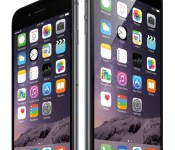
Following a successful week of pre-orders, Apple today started selling its iPhone 6 and 6 Plus in China. The launch was relatively calm with hundreds of people reportedly waiting in lines at each retail store amidst strong security, according to The Wall Street Journal.
About 100 customers waited in line Friday morning outside Apple’s store in Beijing’s upscale Sanlitun shopping district, which opened its doors at 8 a.m. for buyers who had pre-ordered their new wares—the iPhone 6 and iPhone 6+. That was in part because the phone also went on sale at midnight elsewhere, including offices of China’s biggest telecom carriers.
This orderly gathering is a marked difference from some previous iPhone launches which were marred by fights and near riots by waiting mobs of mostly scalpers.

Those waiting in line reportedly were interested in the bigger screen of the new iPhone with customers opting for the pricier 5.5-inch iPhone 6 Plus over the 4.7-inch iPhone 6. This preference also was apparent in pre-orders with Chinese e-commerce site Jingdong Mall (JD.com) processing more reservations for the iPhone 6 Plus.

As retailers handle in-store customers, car service Uber, which is known for occasionally offering delivery of offbeat items such ice cream or playtime with kittens, offered on-demand delivery of their 16 GB iPhone 6 units in Shanghai earlier today. Customers who requested the Uber service were able purchase a phone from an authorized specialist who was driven to the customer’s desired location.
Beyond China, Apple this month is expanding its iPhone 6 and 6 Plus to 36 additional countries in Europe, Asia, the Middle East, Africa and Latin America. It is the company’s fastest iPhone rollout ever, with a goal to launch the iPhone in 115 countries by the end of the year.

iPad Air 2 and iPad Mini 3 Now Available for Pre-Order
Apple has begun accepting online pre-orders for the iPad Air 2 and the iPad mini 3 in the United States and several other countries around the world. Rumors have suggested that initial supplies of the iPad Air 2 might be somewhat constrained, so prospective buyers should make their purchases as soon as possible. All models are currently showing shipping estimates of 2-4 business days in the U.S. store.
AT&T is also accepting pre-orders on cellular models of the iPad Air 2 and iPad mini 3 with shipping estimates of 6-10 business days.
Announced on October 16, Apple’s second-generation iPad Air offers several significant improvements over the original iPad Air, including a thinner design, an A8X chip, Touch ID, 802.11ac, support for LTE Advanced, an improved 8-megapixel camera with an f/2.4 aperture, and an anti-reflective screen coating that cuts down on glare.
The iPad mini 3 offers the same internals as the iPad mini 2 (aka the iPad mini with Retina display), but it does come with Touch ID and a new gold color option.

Available in white/silver, white/gold, and black/space gray, the iPad Air 2 is available in 16, 64, and 128GB configurations, with the Wi-Fi only models priced at $499, $599, and $699, respectively. Wi-Fi + Cellular models carry a $130 premium over Wi-Fi models and are priced at $629/$729/$829 for 16/64/128GB capacities.
The iPad mini 3 is also available in white/silver, white/gold, and black/space gray, and it also comes in 16, 64, and 128GB configurations. The corresponding Wi-Fi only models are priced at $399, $499, and $599, while the Wi-Fi + Cellular models are priced at $529, $629, and $729 for 16, 64, and 128GB configurations.
Both models can be pre-ordered immediately from Apple’s online store. The company has not yet provided information on when the iPad mini 3 and the iPad Air 2 will be available in stores, giving an availability date of “later next week.”
Apple aesthetics: A look at the iMac’s design history

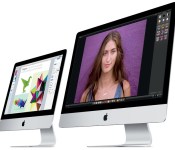
A new version of Apple’s iMac desktop machine doesn’t always come with a retooled exterior. As has become the norm with the MacBook Air and MacBook Pro, a spec boost via new internals is the case more often that not. This week, in addition to packing in a load of updated components, the company outfitted the all-in-one option with a new high-res Retina display that should translate to some stellar views. With a product line that dates back to the late ’90s, let’s take a closer look at the iMac’s notable design changes over the years.
Apple Store Down Ahead of iPad Air 2 and iPad Mini 3 Pre-Orders
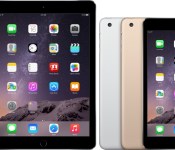
Apple has taken its online store down to prepare for the launch of iPad Air 2 and iPad mini 3 pre-orders. When Apple announced the two new tablets, it said pre-orders would be available starting on October 17, although the company did not specify a time pre-orders would start.
Given the short amount of time between the announcement of the iPad Air 2 and the iPad mini 3 and the start of pre-orders, it is unclear whether other retailers and carriers will be prepared to offer iPad pre-orders.

Apple’s iPad Air 2, which includes several upgrades like Touch ID, an A8X chip, an improved camera, 802.11ac Wi-Fi, and an anti-reflective screen, is available in 16, 64, and 128GB capacities. Pricing in the United States starts at $499 for the entry-level 16GB Wi-Fi only model and goes as high as $849 for the Wi-Fi + Cellular 128GB model.
The iPad mini 3, which has been updated with Touch ID and a new gold color option, is also available in 16, 64, and 128GB configurations. Pricing for the iPad mini 3 begins at $399 for the Wi-Fi only 16GB model and goes as high as $729 for the Wi-Fi + Cellular 128GB model.
Apple has not announced when the iPad Air 2 and the iPad mini 3 will be in stores or when the two tablets will begin shipping out to customers, giving only an availability date of “later next week.”
Belkin Announces Keyboard Cases and Folio Covers for iPad Air 2 and iPad Mini 3 [iOS Blog]
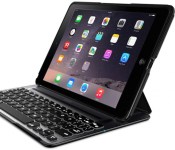
Belkin has announced a lineup of new cases made for Apple’s new iPad Air 2 and iPad mini 3, including new keyboard cases and a variety of protective covers catered to the design of both tablets.
 The QODE Ultimate Pro Keyboard for the iPad Air 2
The QODE Ultimate Pro Keyboard for the iPad Air 2 ($149.99) features an improved keyboard layout that features the same amount of keys as a laptop, and also includes three brightness levels for backlighting. The keyboard is rated for up to one year of continuous battery life and also has adjustable landscape and portrait modes with two viewing angles.
 The QODE Ultimate Keyboard for iPad Air and iPad Air 2
Belkin is also offering the QODE Ultimate Keyboard for the iPad Air 2 ($129.99), which features a foldable design, three adjustable viewing angles, and up to six months of battery life. The QODE Slim Style Keyboard ($99.99) for the iPad Air and iPad Air 2 offers a folio-style cover and Bluetooth keyboard in one that contains a built-in stand and flexible corner tabs.
 Slim Style Cover and Slim Stripe Cover for iPad Air 2 and iPad mini 3
In addition to the keyboard cases, Belkin is also launching a variety of new covers for both the iPad Air 2 and iPad mini 3 that are similar to Apple’s own Smart Covers. Each cover can fold into a keyboard stand and features smart-wake technology. Made for the iPad Air 2 ($49.99) and iPad mini 3 ($39.99), the Slim Style Cover includes a curved, form-fitting design with a velvet finish, while the Stripe Cover for the iPad Air 2 ($39.99) and iPad mini 3 ($34.99) comes with a classic folio style. Belkin is also offering a Classic Cover for the iPad mini 3 ($29.99) that features a slim two-tone design and a Chambray Cover for the iPad Air 2 ($39.99) that features a folio style with a chambray finish.
 Classic Cover for the iPad mini 3 and Chambray Cover for the iPad Air 2
Belkin’s new protective covers for the iPad Air 2 and iPad mini 3 are available to order now at its official website. Belkin’s QODE Ultimate Pro Keyboard Case and the QODE Ultimate Keyboard Case for the iPad Air 2 will be available starting in December.
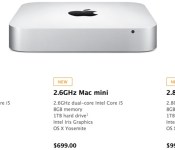
Apple Stops Selling Mac Mini With OS X Server, No Longer Offers 2TB Storage Option [Mac Blog]
Apple today updated the Mac mini, introducing significant upgrades including Haswell processors, Intel HD 5000/Iris graphics, 802.11ac Wi-Fi, and PCIe-based flash storage options for the higher-end models.
Though Apple continues to offer three separate Mac mini options priced at $499, $699, and $999, it does not offer an OS X Server option as it has done in the past. Previously, the high-end Mac mini came with OS X Server and offered two 1TB hard drives for a total of 2TB of storage space.
Apple’s new Mac minis max out at 1TB of storage space, with the high end model coming equipped with a 1TB Fusion Drive or up to 1TB of PCIe-based flash storage.

The Mac mini with Server configuration initially shipped with an OS X Server version of OS X, but later models came with the standard version of OS X and a separate OS X Server package. Later, Apple went on to release OS X Server in the App Store, essentially making the Mac mini with OS X Server obsolete.
While the new Mac minis can’t be expanded to 2TB of storage space, they have two Thunderbolt two ports and four USB 3.0 ports, allowing for plenty of external storage options.
Apple’s new Mac minis are available today from the company’s online store, with prices starting at $499.

GT Advanced to Eliminate 727 Jobs at Mesa, Arizona Plant [iOS Blog]
GT Advanced Technologies today notified City Council members in Mesa, Arizona that it plans to permanently eliminate 727 jobs at its sapphire plant. Layoffs will include 524 production workers, 108 technical positions, 70 management jobs, and 25 administrative jobs.
Affected employees were notified about their impending layoffs on Thursday. Layoffs will start on Tuesday and employees will be “separated from employment” beginning on December 15, according to a notice provided by Linda Luman, GT’s vp of human resources.

News that GT would eliminate hundreds of positions first surfaced last week, after the company asked the court for permission to “wind down” operations at its Mesa, Arizona manufacturing plant. The facility, which was purchased and outfitted by Apple, has been operational for less than a year.
GT Advanced first filed for bankruptcy earlier this month, after Apple withheld a $139 million loan payment because the sapphire supplier failed to meet necessary technical milestones. According to court documents and securities filings, GT may have begun having issues with sapphire production as early as February.
Apple gave GT Advanced a $440 million loan for purchasing sapphire equipment, but according to information leaked during the GT’s court proceedings, the sapphire company was unable to produce sapphire up to Apple’s standards, leading Apple to stick with Gorilla Glass for the iPhone and the iPhone 6.
GT Advanced has plans to shut down its Mesa, Arizona plant, and it has also asked for court approval to void its contracts related to the operation, calling the terms of the contracts with Apple “oppressive and burdensome.” The company will wind down operations over the course of the next few months, keeping on a small number of workers to monitor ongoing sapphire growth.
Once the current sapphire boules have been prepared for sale, employees will clean and decommission furnaces and then clean the plant itself, with a final closure coming on December 31. Apple has not commented publicly on the matter beyond its initial pledge promising to work to preserve jobs in the area.

