


Apple CEO Tim Cook: iPhone 6 and 6 Plus Demand ‘Far Outstripping’ Supply
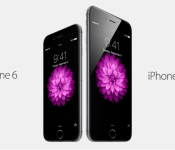
Apple CEO Tim Cook commented on the balance between supply and demand for the iPhone 6 and iPhone 6 Plus during today’s earnings call, stating that demand is far outstripping supply despite a satisfactory production ramp-up. Cook noted that available data makes it unclear as to when supply will catch up with demand, and that the company was “not close” to having a balance between supply and demand at the end of Q4 2014.

Supplies for the iPhone 6 and iPhone 6 Plus have remained tight since the launch of both devices last month, as new iPhone 6 orders still show a shipping estimate of 7-10 business days while the iPhone 6 Plus is still showing a shipping delay of 3-4 weeks. It is worth noting that the iPhone 6 has been mostly available at Apple’s own stores and other retail locations, while the iPhone 6 Plus has a constrained supply in-store.
According to a report by The Wall Street Journal, Apple delayed plans to mass produce the larger 12.9-inch iPad in order to shift its resources towards the iPhone 6 Plus as it has remained unsatisfied with the production output from its suppliers for its larger iPhone. A report from earlier this month also stated that the company is shifting its production balance towards the iPhone 6 Plus which may gradually improve its supplies of the larger phone.

Apple wants all iOS apps to use 64-bit code starting in February

Apple may have only introduced 64-bit computing to iPhones and iPads a little over a year ago, but it’s already preparing for the day when legacy 32-bit code is gone for good. The Cupertino crew is now telling developers that their iOS apps must include 64-bit support from February 1st onward. While the company won’t kick out existing titles, both new apps and updated releases will have to make the switch. Theoretically, this is easy — developers just have to build apps using the most recent tools and standard settings.
The switch could have a meaningful impact on the apps you use. At the least, it should reduce the need for iOS to juggle both 32- and 64-bit code. That’s good for performance, whether or not there are meaningful upgrades to the apps themselves. The move may also spur more developers to fine-tune their apps for the A7 and A8 chips in recent iOS gear — even if they don’t need to use higher-precision 64-bit math, that could still lead to faster games, media players and other demanding titles. It’ll likely take much longer for Apple to drop 32-bit support altogether, but the ball is clearly rolling on that transition.
Filed under: Cellphones, Tablets, Mobile, Apple
Via: 9to5Mac
Source: Apple Developer
Apple Sells 12.3 Million iPads in Q4 2014, Sales Down for Third Quarter in a Row [iOS Blog]
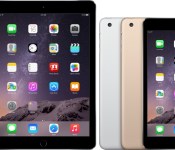
Apple’s iPad sales are down for the third straight quarter according to the company’s earnings for its fourth fiscal quarter of 2014, selling a total of 12.3 iPads which is down from 14.1 million units in the year-ago quarter. The company has sold 68 million iPads in 2014 and has sold 237.5 million iPads total. The news comes after the company announced its new iPad Air 2 and iPad mini 3 last week at its special media event.

Earlier this year, Apple CEO Tim Cook commented that the drop in iPad sales over the past two quarters was just a “speed bump” for Apple. In the company’s third-quarter earnings call, Cook highlighted overall sales of more than 225 million iPads since the device launched in 2010 and suggested the tablet market as a whole was still “in its infancy.” The CEO also stated at the time that “significant innovation could be brought to the iPad” ahead of this year’s new iPad releases.
The new iPad Air 2 and iPad mini 3 will go on sale this week, although the company focused primarily on the former at its event. The iPad Air features a faster A8X processor, a Touch ID fingerprint sensor, a profile that is just 6.1 mm thick, and a new gapless laminated display that produces sharper images. Meanwhile, the iPad Mini 3 includes a few changes aside from the Touch ID home button and a new gold color option.
Apple is also said to be preparing to launch a new 12.9-inch iPad Pro early next year, although some reports have claimed that mass production of the larger tablet has been put on hold to shift resources towards iPhone 6 plus production. The display of the larger tablet will reportedly near ultra high-definition quality and will likely ship with the faster A8X processor.

iTunes by the Numbers: $4.6B Revenue for Q4, $18B Total Revenue in 2014, 85B App Store Downloads [iOS Blog]
 During its financial results call covering the fourth fiscal quarter (third calendar quarter of 2014), Apple shared details on the success of its iTunes Store, which has become an increasingly important revenue source for the company in recent years, mainly due to the ever-growing popularity of the App Store.
$4.6 billion in revenue marks Apple’s most successful iTunes quarter ever, up $2 billion from last year, and its $18 billion in revenue for 2014 is $2b higher than last year’s $16 billion in total iTunes revenue.
According to Apple CEO Tim Cook, Apple hit an all time high in App Store revenue, with growth of 36 percent compared to Q4 2013. Apple has seen cumulative app downloads of 85 billion, up 10 billion since July. Along with “tremendous” growth in the App Store, the iTunes Store saw all-time record billings, up 22 percent year over year.
Overall, Apple posted revenue of $42.1 billion and a net quarterly profit of $8.5 billion, or $1.42 per diluted share, compared to revenue of $37.5 billion and net quarterly profit of $7.5 billion ($1.01 per diluted share) in the year-ago quarter.
Apple Acquired 20 Companies Across 2014, 7 In Fiscal Fourth Quarter
During today’s fourth quarter earnings call, Apple CEO Tim Cook announced that Apple purchased 20 companies over the course of 2014, including seven companies during the fiscal fourth quarter. Of the 20 companies purchased, some remain known, but many remain unknown.
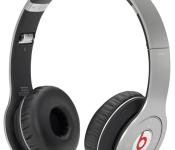
Apple’s biggest purchase of fiscal 2014 was Beats Electronics, which the company bought for $3 billion in May. With the acquisition, it gained Beats popular line of headphones, the Beats Music music service, and it took on Jimmy Iovine and Dr. Dre, aka Andre Young, as executives.

Other recent known acquisitions in fiscal 2014 include iPad-publishing platform Prss, book recommendation platform BookLamp, radio streaming app Swell, social recommendation service Spotsetter, and low-power display company LuxVue.
Last quarter, Apple announced that it had acquired 30 companies thus far in fiscal 2014, which brings the total number of acquisitions since last October up to approximately 37. While some of those acquisitions were known, many of Apple’s acquisitions were kept quiet, going under the radar.
The technology from Apple’s acquisitions will undoubtedly make its way into future products and updates, and details on its acquisitions may become apparent over time.
Earlier this year, Apple CEO Tim Cook said Apple was “on the prowl” for additional companies to acquire and that Apple is always looking at acquisition space to avoid letting “money burn a hole in our pocket.”

Apple Sells Record-Breaking 5.5 Million Macs in Q4 2014 [Mac Blog]
Apple today announced during its earnings call that it sold 5.5 million Macs in the fourth fiscal quarter of 2014, which is the highest quarter ever for Mac sales. The 5.5 million Macs sold is up almost 1 million year-over-year and represents a 21% growth from 2013, creating $6.6 billion in sales. The company also noted that it sold a total of 19 million Macs for all of fiscal 2014, saying that sales were particularly strong for the MacBook Pro and the MacBook Air. 
Apple launched updated models for nearly all of its Macs in 2014, aside from the redesigned Mac Pro which was released last year. The MacBook Air was updated in April and brought a price reduction along with slightly faster Haswell processors, while the MacBook Pro saw a minor update in July which also brought Haswell and Crystal Well processors that improved battery life. Last week, Apple launched a new 27-inch iMac with a high-resolution “Retina 5K” display, and updated the Mac mini for the first time in three years with Haswell processors and new Intel HD Graphics.
The company is also rumored to be working on a new 12-inch MacBook, which will feature a new ultra slim design and a high-resolution Retina display. Reports have suggested that the new MacBook will come in the iPhone color variants of Silver, Gold, and Space Gray, and will integrate fan-less internals with a Broadwell-Y low-power Core M processor along with the possible adoption of USB Type C. The 12-inch MacBook is said to be launching in mid-2015.

Apple CEO Tim Cook: Apple’s ‘Creative Engine’ Has Never Been Stronger
During today’s fiscal fourth quarter earnings call, Apple CEO Tim Cook said that “obviously” the company is working on new products, but that he was going to keep things in the “cone of silence.”
I’m not sure what to say. I’m not going to give any hints. We look at a lot of different things and we’re fortunate to have a lot of creative people here that want to change the world and have a lot of great ideas.
Cook went on to say that Apple’s “creative engine” had never been stronger and the company had never been more passionate, as evidenced with Apple’s recent launches of Apple Pay and Apple Watch. Apple Pay, said Cook, is “classic Apple,” with the company taking something old and outdated and focusing on making something “very elegant.”

Cook also extolled the virtues of Continuity, which allows Macs and iOS 8 devices to integrate in new and innovative ways. “Use your imagination and think about where Continuity goes,” said Cook. He went on to say that it would be “incredibly important” going forward for customers.
Cook said that Apple’s investors should look at what Apple’s done and what it has delivered, along with the skills of the company. Apple is the “only company on the planet” that has the ability to integrate hardware and software at a “world class level” according to Cook, but the company always has “more ideas than resources” to deal with. He also said as a personal investor, he “feels great” about products that are coming up in 2015.
While Cook declined to mention what products Apple might be working on, rumors have suggested the company has several new devices in the works that could significantly boost future sales, including a 12-inch Retina MacBook Air and a 12.9-inch iPad, dubbed the “iPad Pro” by the media.
Apple’s iPhone business soars while the iPad languishes

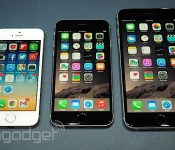
Apple just dropped its 4th quarter earnings a few moments ago, revealing that the folks in Cupertino raked in $42.1 billion in revenue and $8.5 billion in pure profit — more than enough to take care what it might owe in back taxes. More interestingly, the company moved a total of 39.3 million iPhones over the past three months, along with 12.3 million iPads and 5.5 million Macs. Word that Apple’s mobile business had a bang-up three months is hardly a shock — a record-breaking 10 million iPhone 6/6 Pluses were sold over its first weekend, which CEO Tim Cook said beat all previous milestones “by a large margin”. Here’s the thing though: iPad sales didn’t just dip from last quarter, they dipped year-over-year, too. In fact, the number of iPads Apple has moved this time around was the lowest since the company started reporting tablet sales separately in 2012.
Now, this by itself isn’t necessarily a shock either. Bigger ticket products like the iPad are things that people tend to hold onto for longer, and we’ve only just seen a new batch of iPads (well, one new iPad and one very mildly tweaked one) make their debut. Stalwarts will say just give it some time, the iPad’ll pick up steam again, and it very well may do so — there’s an iPad at nearly every notable price point now. With the launch of a device like the iPhone 6 Plus, though, a device that for many people will ably straddle the line between the iPhone and the iPad Mini, it’ll be interesting to see if the iPad manages to regain it’s former sales glory. The fact that the iPad Mini wasn’t barely touched this year won’t help matters — it got all of what, five sentences dedicated to it during the iPad Air 2’s grand unveiling? Sure, part of that is almost certainly due to the cost and complexity of shrinking components and refining design, but the continued (some would say overwhelming) demand for Apple’s bigger iPhones may wind up eating away at the iPad’s relevance in some very curious ways.
(Brief parting aside: If you want some really interesting numbers, next quarter will factor in the new iPhones’ momentum in China, and the one after that will chronicle Apple’s typical holiday explosion. We’re expecting a doozy.)
Update: Apple’s talking iPad on its earnings call right now — it says this quarter’s sales were consistent with its expectations, and apparently did really well in Japan. The iPad also remains the United States’ education tablet of choice. Later, during the Q&A session, Tim Cook said Apple looks at this iPad dip as a “speedbump and not a huge thing” and went on to note that he personally sees a “great future” for the company’s tablets.
Source: Apple

Apple Pay With iPhone 6 Demoed in McDonald’s Purchase
With Apple Pay enabled through an update to iOS 8.1 earlier today, users are now able to use Apple’s payments service in a variety of retail locations. Apple’s Apple Pay launch partner McDonald’s is one location that’s already accepting Apple Pay payments, as demoed in the video below.
Making an Apple Pay purchase is so simple that giving a food order becomes the most lengthy part of the ordering process. As seen in the video created by YouTube user John Ross, McDonald’s payment systems are set up to accept contactless payments.
Ross, who is using an iPhone 6 with iOS 8.1 installed, makes his order and then his credit card (stored within Passbook) opens automatically as he nears the payment terminal. While holding a finger on the Touch ID fingerprint sensor, he holds his phone near the point-of-sale system to make the payment for the food. It takes a couple of tries as the cashier appears to forget to press a button, but once a payment is ready to be accepted, it took only seconds for Ross to make the payment.
After the payment was accepted by McDonald’s, the Passbook screen displayed a check mark and there was a confirmation beep to let Ross know his payment had gone through. The transaction data was also displayed directly on the Passbook screen after payment was made.
During the transaction, at no point did the cashier see Ross’s card or his name, and his card number (replaced with a unique Device Account Number in Passbook) was not stored by McDonald’s, keeping the transaction completely private.
Apple Pay is limited to the iPhone 6 and iPhone 6 Plus in retail locations as it requires the NFC chip built into those devices to function. The iPhone 6 and 6 Plus along with the iPad mini 3 and the iPad Air 2 will be able to make purchases in participating apps, however, and when it is released, the Apple Watch will be able to be used in retail stores to make Apple Pay payments.
Apple Reports Q4 2014 Year-End Results: $8.5 Billion Profit on $42.1 Billion in Revenue
 Apple today announced financial results for the third calendar quarter and fourth fiscal quarter of 2014. For the quarter, Apple posted revenue of $42.1 billion and net quarterly profit of $8.5 billion, or $1.42 per diluted share, compared to revenue of $37.5 billion and net quarterly profit of $7.5 billion, or $1.01 per diluted share in the year-ago quarter.
Gross margin for the quarter was 38 percent compared to 37 percent in the year-ago quarter, with international sales accounting for 60 percent of revenue. Apple also declared an upcoming dividend payment of $0.47 per share, payable on November 13 to shareholders of record as of November 10. The company currently holds $155.2 billion in cash and marketable securities.

For the full fiscal year, Apple generated $182.8 billion in sales, a new record for the firm, with $38.5 billion in net income. In fiscal 2013, Apple made $35 billion on $170.9 billion in sales. In 2014, Apple sold 18.9 million Macs and just shy of 14.4 million iPods, its lowest total for that category since 2004.
It sold a record 169.2 million iPhones on the year, up 150 million from 2012, and the company has now sold more than 590 million smartphones in total. It sold 68 million iPads in 2014 and the company has now sold 237.2 million tablets.
“Our fiscal 2014 was one for the record books, including the biggest iPhone launch ever with iPhone 6 and iPhone 6 Plus,” said Tim Cook, Apple’s CEO. “With amazing innovations in our new iPhones, iPads and Macs, as well as iOS 8 and OS X Yosemite, we are heading into the holidays with Apple’s strongest product lineup ever. We are also incredibly excited about Apple Watch and other great products and services in the pipeline for 2015.”
Apple’s guidance for the first quarter of fiscal 2015 includes expected revenue of $63.5-66.5 billion and gross margin between 37.5 and 38.5 percent.

Apple will provide live streaming of its fiscal Q4 2014 financial results conference call at 2:00 PM Pacific, and MacRumors will update this story with coverage of the conference call highlights.
Live Updates – No need to refresh 


