



T-Mobile’s John Legere Talks Apple SIM, iPhone 6 Demand, and Landing the iPhone
T-Mobile CEO John Legere today took the stage at Re/code‘s Code/Mobile event in Half Moon Bay, California, where he spoke on the new Apple SIM, demand for the iPhone 6 Plus, and the importance of selling the iPhone.
According to Legere, the launch of the iPhone 6 and 6 Plus was T-Mobile’s biggest phone launch the company had ever seen, and Legere called demand for the iPhone 6 Plus “mind blowing.” He said that it skewed very differently from what the company anticipated, and while he couldn’t comment on the current demand ratio, he said at one point it was around 55/45 rather than the 75/25 or 80/20 projected in favor of the iPhone 6. Legere said that while the backlog is coming down, it will be awhile before the company is able to provide devices to everyone.

While on stage, Legere sorted out much of the confusion surrounding the Apple SIM, which is designed to allow users to easily switch from carrier to carrier with their iPad Air 2 or iPad mini 3. According to Legere, when bought from Apple, the SIM card in the iPad Air 2 and the iPad mini 3 offers customers complete flexibility, letting them choose Sprint, T-Mobile, or AT&T.
iPad Air 2 and iPad mini 3 devices that Apple sent to T-Mobile and AT&T for sale include Apple SIMs that are pre-coded to each carrier, which means the SIM cards can’t be used interchangeably. Because the iPads purchased directly from Apple are usable with any participating carrier (Verizon has opted out), Legere recommends that users purchase the iPad Air 2 and the iPad mini 3 directly from an Apple Store.
Apple SIMs from an iPad Air 2 or iPad mini 3 purchased from the Apple Store and then associated with a T-Mobile plan will remain unlocked and usable with other carrier plans, but an Apple SIM activated on an AT&T plan will be permanently locked to the carrier, requiring a new Apple SIM if a user wants to switch plans.
John Legere also commented on the importance of the iPhone, stating that “[a] store without the iPhone is sh*t,” and attributing much of T-Mobile’s recent success to its partnership with Apple. Legere noted one of his tasks upon taking the reins of T-Mobile two years ago was to do whatever it took to land the iPhone, and he accomplished it, noting that he was willing to “get down on his knees” to make a deal happen.
Just ahead of Legere’s appearance at Code/Mobile, T-Mobile announced its Q3 2014 earnings, noting that it saw its biggest growth quarter in the company’s history. T-Mobile added 2.3 million customers during the quarter (1.4 million postpaid net adds), with revenue up 10.6 percent to $5.7 billion. T-Mobile also announced that it hit its LTE goals for 2014, bringing LTE service to 250 million customers.
Since 2013, T-Mobile has been on a quest to revamp the mobile industry with a series of Un-carrier initiatives that have thus far seen it uncoupling device fees from service charges, encouraging customers to switch to T-Mobile by paying early termination fees, offering a JUMP! upgrade plan, providing unlimited texting and 2G data in 100 countries, letting customers test drive an iPhone at no cost, offering free streaming music, and bringing Wi-Fi calling to all T-Mobile customers with compatible devices.
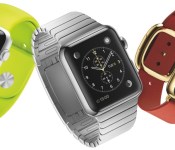
Tim Cook on Apple Watch: ‘You’re Going to Wind Up Charging It Daily’
Apple CEO Tim Cook took the stage today at the WSJ.D conference in Laguna Beach, California, where he commented on an array of topics including the Apple Watch, Apple Pay, Apple TV, and more.
Unsurprisingly, Cook said that Apple is “excited” about the upcoming launch of the Apple Watch, and he’s impressed that Jony Ive and his team had the foresight to understand that “something you wear has to be personal” and that it can’t be “geeky.”

Cook divulged some new information on the Apple Watch’s battery, which has previously gone unmentioned by Apple. Cook says that people will use it so much that it will need to be charged on a daily basis. “You’re going to wind up charging it daily,” he said, declining to provide a specific battery life for the device as Apple is still examining how people use it.
Battery life on the Apple Watch has been in question since long before the device launched, with early reports suggesting Apple was having trouble getting the device to last longer than a day. While the company was originally aiming to have the Apple Watch last three to four days, it appears that battery life may be closer to the iPhone’s battery life, requiring a charge on a nightly basis. Apple employees have also suggested that the device may only last for a full day of usage, which is why Apple designed an easy charging system.
The Apple Watch connects to a magnetic charger that’s much like the MagSafe chargers supplied with the Mac, snapping easily to the back of the device. High-end versions of the Apple Watch even ship in a luxury box that doubles as a charging stand. Apple likely has not commented officially on the Apple Watch battery as it is continuing to finalize the software for the device ahead of its early 2015 launch.
An official rough transcript of Cook’s comments during the interview, which also covered the Mac, the iPhone, Apple’s taxes in Ireland, plans for a low cost iPhone, and Cook’s thoughts on Carl Icahn, can be found over at The Wall Street Journal, and a second comprehensive live blog from Fast Company‘s Harry McCracken also has details on exactly what Cook shared during the conversation.

Tim Cook on iPod Classic: ‘We Couldn’t Get the Parts Anymore’ [iOS Blog]
 During the Q&A portion of his interview at the WSJ.D conference tonight, Tim Cook was asked about the iPod classic, which was finally discontinued last month five years after its last update.
Cook said Apple primarily stopped making the device because it was no longer possible to source the necessary parts from anywhere in the world. Apple does not have plans to reintroduce the iPod classic due to a shrinking audience and the engineering costs that would be needed for a new version, but Cook pointed towards the iPod touch, which has almost the same amount of storage space, as a viable option.
Observers had speculated Apple was waiting for a 128 GB iPod touch before discontinuing the iPod classic, but while the iPhone and iPad have gained 128 GB options, the iPod touch has yet to do so. Still, with Apple unable to source parts for the iPod classic, the company was left with no choice but to end sales of the descendent of the original iPod.
The iPod classic’s 1.8-inch hard drives were typically supplied by Toshiba, with the last generation using a 160 GB drive. Toshiba launched a 220 GB version in early 2011 that gave some hope the iPod classic might receive an update, but one never came to pass and Toshiba has long since discontinued its entire line of 1.8-inch hard drives.
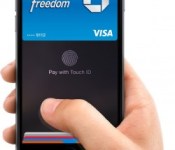
Apple Had More Than 1 Million Card Activations During First 72 Hours of Apple Pay
 During the first 72 hours that Apple Pay was available, Apple saw more than one million credit and debit card activations, according to Apple CEO Tim Cook who took the stage today at the WSJ.D conference in Laguna Beach, California.
Cook himself told the audience that he used Apple Pay himself at Whole Foods after the service launched, commenting on how easy it was. “You’re no longer fishing for your credit card,” he said. “It’s the first mobile payments system that’s easy, secure, and private.”
According to Cook, the early ramp of Apple Pay “looks fantastic,” and though it’s only been available for a short time, Apple Pay accounts for more mobile wallets in the U.S, than all other mobile payment options combined.
During the interview, Cook commented on CVS, Rite Aid, and other retailers’ decisions to opt out of Apple Pay, saying that “over the long arc of time” retailers will need to do what shoppers want. Ahead of launching Apple Pay, Cook says Apple looked at multiple other payment solutions available on the market and didn’t find any of them to be easier than using a wallet.
Retailers, he believes, will ultimately adopt Apple Pay because it’s the more secure option, able to prevent fraud incidents like the breaches experienced by Target, Home Depot, Staples, and more, in recent months. Cook reiterated that Apple Pay is secure and that Apple is not collecting data on its customers. “We’re not big brother. We’ll leave that to others.”
Cook also commented on Apple’s wider privacy policy, saying “Your data is yours” and reiterating that Apple is not in the business of monitoring its users. Apple does not keep iMessage data or retain search history.
“If law enforcement wants something, they should go to the user to get it,” he said. According to Cook, it is up to users, not Apple, to choose whether or not it’s okay for the government to access their data. “We’re designing a Fort Knox kind of thing.”
During the interview, Cook also spoke on the Apple Watch, stating that he expects users to will need to charge it on a daily basis, and he commented on the iPod classic, revealing that the company could no longer source parts for the device. An official rough transcript of Cook’s comments during the interview can be found over at The Wall Street Journal.
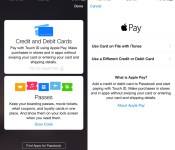
Apple Responds to CVS/Rite Aid Controversy: ‘Overwhelmingly Positive’ Response, Working to Add Merchants
Last week, news surfaced that popular drugstore Rite Aid was disabling support for NFC and Apple Pay in its retail stores and over the weekend, CVS followed in its footsteps. Apple has now commented on the situation, telling Business Insider that it’s working to get as many merchants on board with Apple Pay as it can.
The feedback we are getting from customers and retailers about Apple Pay is overwhelmingly positive and enthusiastic. We are working to get as many merchants as possible to support this convenient, secure and private payment option for consumers. Many retailers have already seen the benefits and are delighting their customers at over 220,000 locations.
Both CVS and Rite Aid are members of Merchant Customer Exchange or MCX, a team of retailers that are designing their own payments system to compete with Apple Pay.

Headed up by Walmart, which has also publicly stated that it won’t be supporting Apple Pay, MCX is composed of several different retail outlets and restaurants, including Best Buy, Lowe’s, Old Navy, Southwest, Target, 7 Eleven, Dunkin Donuts, Hobby Lobby, and more.
MCX’s payment solution, CurrentC, is currently in testing in Minnesota and takes a decidedly different approach to mobile payments. CurrentC does not use NFC, instead basing payments around the scanning of QR codes with a smartphone camera. CurrentC is highly beneficial to merchants, but appears to be of questionable value to customers given that it requires both a social security number and a driver’s license number, along with access to a bank account.
Despite only being available in Minnesota at the time being, MCX’s CurrentC app has received hundreds of negative reviews from Apple Pay supporters. Android and iOS users on reddit have also teamed up to call for a boycott on all MCX partners, as disabling NFC support to prevent Apple Pay purchases also disables Android-based payment solutions like Google Wallet.
Though quite a few big name retailers have opted out of Apple Pay, Apple has signed on with several major partners including Macy’s, Chevron, Disney, McDonald’s, Nike, Petco, Whole Foods, and more. Apple Pay is accepted at the retail stores of any of its partners, and at any store that accepts NFC payments.
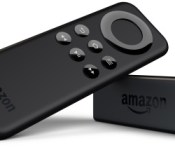
Amazon Launches $39 ‘Fire TV Stick’ to Compete With Chromecast, Apple TV
Amazon today announced the launch of a new Fire TV Stick, designed to compete with Google’s Chromecast and Apple’s Apple TV. The Fire TV Stick is a media streaming stick much like the Chromecast, designed to allow users to plug it in to the HDMI port of a television to access content like TV shows, movies, games, and more.
The Fire TV Stick offers a dual-core processor, 1GB of RAM, 8GB of built-in storage, and dual-band/dual-antenna MIMO Wi-Fi. It can be controlled with a remote control, a smartphone, or voice control through an app. According to Amazon, it offers 50 percent more processing power than the Chromecast, along with 2x the memory and 32 times more storage.

“Fire TV Stick is the most powerful streaming media stick available–a dual-core processor, 1 GB of RAM, 8 GB of storage, dual-band and dual-antenna Wi-Fi, included remote control, voice search with our free mobile app, easy set-up, an open ecosystem, and exclusive features like ASAP for instant streaming,” said Jeff Bezos, Amazon.com Founder and CEO. “The team has packed an unbelievable amount of power and selection into an incredible price point–Fire TV Stick is just $39.”
In addition to allowing users to access Amazon Prime content, the Fire TV Stick also supports third-party apps like Netflix, Hulu Plus, WatchESPN, Spotify, Pandora, and more, delivering much of the content that’s also available on competing products like the Chromecast, the Apple TV, and products from Roku.
The Fire Stick offers “Fling” technology, letting users switch between viewing content on their televisions and Fire Phone or Fire tablet, and it provides wireless mirroring from both compatible Amazon products and those that support Miracast. It also supports various Amazon technologies like X-Ray for looking up movie, music, or TV show information, and it utilizes Whispersync to sync all of a user’s content.
Amazon also has the Fire TV, a set-top media streaming box that’s a closer competitor to the Apple TV than the Fire TV stick, but the slimmed down plug in-based media sticks from Amazon and Google are far cheaper than the Apple TV, which still costs $99.
While Google and Amazon have concentrated on offering a slimmer portable media solution to consumers, Apple is said to be working on a revamped set-top box that might include support for third-party apps and games along with deeper integration with cable TV channels. It is unclear when Apple might launch its revised set top box, as development has reportedly been delayed several times over the course of the last two years.
Amazon’s Fire TV Stick is priced at $39, but for the next two days, Amazon Prime members will be able to purchase the device at a discounted price of $19.

Concept Video Demonstrates Apple Watch-Style Interface on iPhone [iOS Blog]
Apple’s upcoming wearable, the Apple Watch, takes advantage of a unique interface that arranges apps with circular icons in a cluster-based design for quick and easy access with the device’s included Digital Crown, or scroll wheel.
YouTuber Lucas Menge has created a mockup of what the Apple Watch interface might look like when translated to a larger device, like the iPhone. As with the Apple Watch, Menge’s concept lets users zoom in and out on the app landscape, viewing one small cluster of apps or all the apps installed on the device.
The interface incorporates app names, which deviates from the design on the Apple Watch, and simple swipes allow users to scroll through the apps installed on the phone. Tapping when zoomed out will zoom into the area that’s been tapped, and when zoomed in, a tap on an icon launches an app.
Menge, whose design was inspired by a mockup post created by 9to5Mac‘s Michael Steeber, has published his prototype code for the design on GitHub. Apple Watch, with its unique Watch OS operating system, will be available beginning in early 2015.

Wells Fargo Enticing Users to Try Apple Pay With $10-$20 Credits
While some merchants are pushing back against Apple’s new Apple Pay mobile payment service as they work on their own competing solution, banks are putting their weight behind Apple’s solution that seeks to streamline the current experience of using a credit or debit card.
In an effort to encourage users to adopt Apple Pay, Wells Fargo has just launched a program offering credits of up to $20 just for trying out the service. Wells Fargo credit card users can receive one-time $20 credits, while debit and prepaid card users can receive $10 credits simply by using their iPhone 6 or 6 Plus to complete an Apple Pay purchase on their cards through November 30.

Credit card customers will receive $20 credits on their statements within 1-2 billing cycles, while debit and prepaid customers will receive $10 credits on their linked Wells Fargo checking accounts within 45 days.
Banks have been strong supporters of Apple Pay, as the Touch ID authentication offers improved security over traditional credit cards, reducing fraudulent purchases for which banks assume responsibility. Apple does take a small cut of transactions processed using Apple Pay, but that amount appears to be a worthwhile tradeoff for these banks.
(Thanks, Matthew!)

New Version of Outlook for Mac Leaked in Screenshots, Release Date Still Unclear
Earlier this year, rumors suggested that Microsoft was preparing to launch a new version of Office for Mac in 2014, and now images of what is said to be a new version of Outlook have surfaced on Chinese site cnBeta [Google Translate], suggesting Microsoft is drawing closer to releasing updated Mac Office software.
Depicting “Outlook for Mac 16,” the images show a new version of Outlook that’s been updated with a new OS X Yosemite-style look, adopting translucent menu elements and a flatter overall design. The interface takes on a “simple, modern style,” according to cnBeta, which is “more intuitive” and it includes support for Retina displays much like Office 2011 for Mac.

The design is said to be more unified with both the Windows version of Office and the iPad version, making it easier to switch between platforms. The new Office for Mac and Outlook for Mac are said to take advantage of cloud file sharing, allowing users to swap between devices and to collaborate on projects. It’s also much simpler to share documents with an entire team and Outlook for Mac will integrate with OS X Yosemite’s Notification Center.

Microsoft’s last major Office for Mac release came in October of 2010, more than four years ago, and there’s been little information about an updated version of the software since then.
A presentation given earlier this year by Thorsten Hübschen, Business Group Lead at Microsoft Germany, suggested that Microsoft would debut a new version of its Office productivity suite for the Mac in 2014, and a Microsoft representative later confirmed that employees were “hard at work” on the next version of Office for Mac.
But with this leaked version of Outlook reportedly carrying the version 16 label and Microsoft only nearing a public preview of Office 16 for Windows ahead of a launch next year, the company’s plans are somewhat unclear. Mac versions of Office typically follow their Windows counterparts by only a few months, but it has been two years since the launch of Office 2013 for Windows (version 15) and a corresponding Mac version has yet to appear.
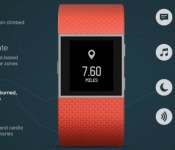
Fitbit Announces ‘Surge’ Fitness ‘Super Watch’, Two New Activity Trackers
Fitbit today announced three new wearable devices, including the Surge, described as a “fitness super watch,” the Charge, an update to the Fitbit Force activity tracker, and the Charge HR, which tracks a user’s heart rate.
Positioned as Fitbit’s most advanced wearable yet, the Fitbit Surge offers GPS tracking, continuous heart rate monitoring, and the activity tracking that’s been standard in Fitbit’s early wearables, keeping track of steps, distance traveled, calories burned, floors climbed, sleep quality, and various other fitness-based activities like running and cardio workouts.

Available in Tangerine, Black, and Blue, the Surge has a black and white touchscreen display. Aside from tracking various activities, it also allows users to control their music and it includes customizable watch faces able to display incoming smartphone information like call and text notifications. It is not possible to answer phone calls or texts from the device, but its limited capabilities allow it to offer up to five days of battery life on a single charge.
Compared to Apple’s upcoming Apple Watch, the Surge offers many of the same fitness capabilities, but cuts the vivid color display and the deep iPhone integration in favor of extended battery life. The device is also unable to offer many of the cutting edge vibration and pressure technologies built into the Apple Watch, but it is available at a lower price.
Alongside the Surge, Fitbit has also released two simpler wearable devices that are the successors to the Fitbit Force, the wearable activity tracker that Fitbit recalled for skin irritation issues. The Charge and the Charge HR take on the same design as the Fitbit Force, offering the same capabilities like monitoring sleep and tracking steps taken, distance traveled, calories burned, stairs climbed, and more.
Both devices are identical, but the more expensive Fitbit Charge HR includes a heart rate monitor that continuously measures heart rate much like the Surge. The standard Fitbit Charge does not include heart rate monitoring capabilities.
Earlier this month, Apple removed Fitbit’s line of activity tracking devices from its stores and ceased selling the device. While it is unclear why the company pulled the activity trackers from its stores, the move did follow Fitbit’s announcement that it had no plans to integrate with Apple’s HealthKit and it comes ahead of the launch of Apple’s own wearable device, the Apple Watch.
Though it no longer offers the Fitbit line of activity trackers, Apple continues to sell other fitness tracking devices like the Jawbone UP and the Nike Fuelband. It is unclear if Apple will continue to allow these devices to remain in stores or if it will cease selling all competing activity trackers ahead of the early 2015 launch of the Apple Watch.
Fitbit’s standard activity tracker, the Charge, is available for purchase for $129.95. The Charge HR, which includes continuous heart rate tracking, will be available in early 2015 for $149.95, and the Surge, Fitbit’s sensor-laden fitness wearable, will also be available in early 2015 for $249.95.

