


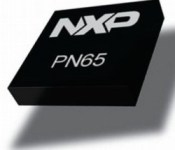
Apple’s NFC Ambitions Extend Beyond Apple Pay to Building Security, Transit Ticketing
 Apple is pushing NFC in the iPhone 6 and 6 Plus for Apple Pay, but the company may have bigger plans for the wireless technology beyond mobile payments. A report from The Information claims Apple has been in talks with technology providers about using NFC for building security access and public transit ticketing.
The Apple representatives have talked to technology providers like HID Global and Cubic, which enable secure access to buildings and transit fare systems, respectively, said people briefed on the discussions. Spokespeople for the companies declined to comment about any discussions with Apple, but executives there discussed how they could integrate their systems with the iPhone.
Apple debuted NFC in its iPhone 6 and 6 Plus and is using the short-range wireless technology for mobile payments processing.The technology has wide-ranging applications beyond payments, including a replacement for office and hotel security cards, home automation processes and more.
Besides the iPhone 6 and 6 Plus, Apple has also included an NFC chip in the new iPad Air 2 and Retina iPad Mini 3 to provide secure element of Apple Pay information for in-app purposes on those devices. Future iterations of the device, could however, add antennas and other components to enable NFC functionality for a variety of purposes.
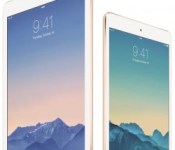
iPad Air 2 Display Praised for Antireflective Coating, but iPad Mini 3 Display Still Lags
 With the iPad Air 2, one of Apple’s main selling points has been the improved display, which includes a new bonded construction that eliminates the air gap between the display and the cover glass, as well as a new antireflective coating to reduce glare in situations with high ambient light.
Ray Soneira of DisplayMate Technologies has now put the new display to the test, finding that the antireflective coating is indeed a significant improvement for the iPad and a major step above competing tablets, but in overall performance competitors are still doing better than the iPad. Apple receives only minimal credit for the bonded display, as it is mainly catching up with competitors on that aspect.
A major innovation for the iPad Air 2 (that is not fully appreciated) is an anti-reflection coating on the cover glass that reduces ambient light reflections by about 3:1 over most other Tablets and Smartphones (including the previous iPads), and about 2:1 over all of the very best competing Tablets and Smartphones (including the new iPhone 6). […]
However, other than the new anti-reflection coating and bonded cover glass, the display on the iPad Air 2 is essentially unchanged and identical in performance to the iPad 4 introduced in 2012, and is actually slightly lower in performance than the original iPad Air (for example 8% lower Brightness and 16% lower display Power Efficiency) – most likely the result of an obsession with producing a thinner Tablet forcing compromises in the LCD backlight.
With competitors such as Samsung, Amazon, and Microsoft offering better color accuracy, viewing angles, and power efficiency, Soneira finds the improvements in the iPad Air 2 insufficient to move the device to the top of his tablet display rankings, and the Samsung Galaxy Tab S retains its number one position.
Moving on to the iPad mini 3, Soneira unsurprisingly finds that the display is unchanged from the one used in the previous generation, unsurprising given that Apple kept the specs of the iPad mini identical with the exception of the Touch ID home button and a gold color option. Soneira notes the unchanged display is a “major disappointment”, as the iPad mini 2’s display has been rated poorly for color gamut and accuracy.
In 2013 the mini was given a Retina display, but remained with a reduced 62 percent Color Gamut – the only current iPad or iPhone without a full Color Gamut. Now, in 2014 the new iPad mini 3 still only has a 62 percent Color Gamut, plus it was denied the new enhanced anti-reflection coating and bonded cover glass of the iPad Air 2.
Soneira again points to competitors offering higher-quality displays on their tablets, concluding that the iPad mini 3 is “embarrassingly mediocre and way overpriced” considering its $399 starting price tag and significantly poorer display performance compared to both competitors and the iPad Air 2.
Full details on Soneira’s testing of the new displays are available in his extensive report.
Apple Pay Competitor CurrentC Detailed as Convoluted System With Minimal Consumer Benefit
With recent moves by pharmacy chains CVS and Rite Aid to disable Apple Pay or even NFC payments entirely at their stores, a separate mobile payments initiative backed by these and other major retailers is gaining significant attention. This consortium of merchants, which includes Best Buy, Walmart, Lowe’s, and many more, is known as Merchant Customer Exchange (MCX) and is developing a mobile payments solution known as CurrentC.
Though it is supported by major retailers attempting to work around the credit card swipe fees charged by banks and card issuers, CurrentC may be hindered by a complicated user interface and security concerns as detailed in a report by TechCrunch.

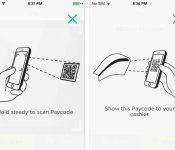
Unlike Apple Pay, which uses NFC to process payment wirelessly, the CurrentC system uses a dedicated app and relies on QR code scanning to process a consumer’s payment. The app stores receipts as well as provide access to loyalty accounts, which can be used to apply discounts at participating retailers.
To use CurrentC, consumers must have an active account that requires them to set up a bank account as a payment source and confirm their identity by providing their driver’s license and social security number. This sensitive information is stored in the cloud and not on the phone.
When you sign up for CurrentC, you’re supposed to add your bank account. This lets CurrentC process payments for you without retailers having to pay the steep credit card processing fee. You can also add retailers’ loyalty credit cards or gift cards as payment methods.
Payments are pulled automatically from the bank account linked to the user’s account via Automated Clearing House (ACH) transactions, a system adopted as a way to help merchants avoid paying the approximately 2-3 percent fee levied by credit card companies. MCX also provides retailers with consumer intelligence information, allowing them to send targeted ads and discount offers to consumers based on their purchase history.

CurrentC notes it may share info with your device maker, app store, or developer tool makers. Oddly, it will collect health data. Precise location information is used to verify you’re at the retailer where you’re making a transaction, and if you opt in it can be used for marketing or advertising. CurrentC notes that you can opt in to be able to capture and store photos in the app for a hypothetical visual shopping list or other features down the road.
In 2012, MCX reportedly ramped up its efforts to entice retailers to join its mobile payments system., asking participating merchants for an upfront fee of up to $500,000 and requiring them to sign three-year exclusivity deals. These deals appear to be the reason Rite Aid and CVS disabled unofficial access to Apple Pay in their stores, although it is unclear why they waited until after the service went live and customers were using it before disabling their systems.
CurrentC is currently in beta testing and on target for a 2015 launch, which positions it behind Apple’s already existing Apple Pay system. It is reportedly being pilot tested in Minnesota at select retailers before rolling out nationwide next year. Because the payments do not require NFC or Bluetooth LE, the system will be compatible with a variety of Android and older model iPhones.
Adoption may be slow as retailers must modify their point of sales systems to accept these payments. Consumers may also balk at a system that requires the cloud storage of sensitive information and a cumbersome checkout process that relies on QR codes accessed through a separate app and tied to direct bank withdrawals. To compensate for these detractors, MCX reportedly will push retailer discounts and loyalty purchases to entice consumers to adopt this upcoming mobile payments system.
CVS and Rite Aid Officially Disable Apple Pay Support At Stores Nationwide
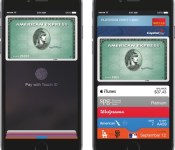
Last week, multiple reports indicated that pharmacy chains CVS and Rite Aid were disabling near field communications (NFC) payment terminals at some of their locations in order to stop the use of Apple Pay. Now, The New York Times reports that both drug chains have officially disabled Apple Pay from working at their stores nationwide.

A spokeswoman for Rite Aid said that the company “does not currently accept Apple Pay” and that the company was “still in the process of evaluating mobile payment options.” Representatives from CVS did not respond to interview requests from The New York Times. Apple declined to comment on the actions from both stores. However, chief emerging payments officer at MasterCard Ed McLaughlin said that “consumers should have the ability to pay any way they want” and that the company “looks forward to [CVS and Rite Aid] turning on the functionality back on in their stores.”
Many believe that Rite Aid’s and CVS’s moves to disable Apple Pay support is related to their participation in the Merchant Customer Exchange (MCX), which is a group consisting of other retailers like Walmart, Best Buy, and Gap. MCX is developing its own mobile payment system known as CurrentC, which will be available next year according to a claimed internal Rite Aid message.
Apple Pay launched last week and is accepted at over 200,000 locations in the U.S. Rite Aid and CVS competitor Walgreens has been one of the biggest supporters of Apple Pay, as the feature is available at many of its over 8,000 stores around the United States.
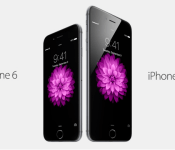
Pre-Orders for iPhone 6 and 6 Plus Top 100,000 in South Korea, Outpace Samsung Galaxy Note 4 [iOS Blog]
Pre-order estimates for Apple’s iPhone 6 and iPhone 6 Plus in South Korea have topped 100,000 in South Korea and have outpaced pre-orders made for the Samsung Galaxy Note 4 last month, reports The Wall Street Journal.

Pre-orders for both devices began last Friday for the country’s three biggest mobile carriers including SK Telecom, KT Corp and LG UPlus. KT Corp said that it received a combined total of 10,000 orders in one minute for both devices, and received 50,000 orders in thirty minutes. LG UPlus, which is controlled by LG Corporation and is selling the iPhone for the first time, said that it received 20,000 orders within 20 minutes. SK Telecom declined to give specific figures, but announced that the first and second batch of pre-orders were already booked by customers with a third round beginning this morning.
The report notes that there were 30,000 pre-orders for the Samsung Galaxy Note 4 before it launched in Korea last month. A spokesperson for LG UPlus shared a similar account, noting that pre-orders for the Galaxy Note 4 did not match the pace of pre-orders for the iPhone 6 and iPhone 6 Plus.
The iPhone 6 and iPhone 6 Plus will launch in South Korea and 22 other countries on October 31st. Apple also expects to launch in the iPhone in 115 countries by the end of the year, totaling to its fastest rollout ever.
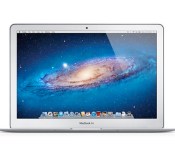
How would you change the 13-inch, mid-2013 MacBook Air?

Meet the new boss, broadly the same as the old boss. Except this variation of Apple’s thin-and-light mobile PC was packing Haswell, Intel’s power-sipping wonder chip, capable of giving the 2013 MBA its 12-plus-hour battery life and nippy speed. When we sat this down in front of Tim Stevens’ hands, his only grip was that the device was lacking a retina display, although we’re probably still a year or two away from that taking place. Still, we imagine plenty of you out there picked up one of these devices, so why not hop on the forum and tell us if you’d have taken a MacBook Air with a four-hour battery life in exchange for some pixel-dense goodness.
Source: Engadget Product Forums

Retailers blocking Apple Pay and Google Wallet as they build their own service

A slew of retailers are taking a stand against mobile payment services like Apple Pay and Google Wallet. They are blocking the mobile payment services from Apple and Google (and even SoftCard) because one of their own will be launching next year. Companies including Old Navy, Lowes, Dunkin’ Donuts, Sears, Best Buy, Stop & Shop, Walmart, Wendy’s, and a bunch of gas stations are behind the CurrentC mobile payment service scheduled for 2015.
The benefit of using CurrentC will be the lack of processing fees as the credit card companies are not at all involved. CurrentC is designed to work by taking funds from the user’s checking account. With the credit card companies taken out of the equation, retailers behind CurrentC will offer exclusive promotions as an incentive.
Via: The Verge
Come comment on this article: Retailers blocking Apple Pay and Google Wallet as they build their own service

Drug stores drop Apple Pay and Google Wallet to push their own payment tech

If you’re bent on using Apple Pay or Google Wallet for your shopping, you may have to be finicky about your choice of drug stores. Both CVS and Rite Aid have shut off their support for NFC-based payments just days after Apple Pay went live. Try to tap your phone and you’ll get an error, or nothing at all. The companies haven’t publicly discussed why they’re cutting off the handy feature, but this is ultimately an attempt to stifle competition. Both pharmacies are part of the Merchant Customer Exchange, a retailer group whose its own mobile wallet system (CurrentC) reaches these stores in 2015; as a memo obtained by SlashGear suggests, they’d rather deny all NFC payments than risk building support for rivals. Suffice it to say that this will be very inconvenient if you’re a frequent customer, and you’ll currently have to visit the likes of Duane Reade and Walgreens if you want to avoid paying with old-fashioned cash or plastic.
[Image credit: Justin Sullivan/Getty Images]
Filed under: Cellphones, Internet, Mobile, Apple, Google

CVS Stores Reportedly Disabling NFC to Shut Down Apple Pay and Google Wallet
 Earlier this week, pharmacy chain Rite Aid shut down unofficial support for the Apple Pay and Google Wallet mobile payments systems, resulting in an outcry from users who have been testing out Apple’s new system since its launch on Monday. Rite Aid was not an official Apple Pay partner, but the payments system generally works with existing near field communications (NFC) payment terminals anyway, and many users had had success using Apple Pay at Rite Aid stores early in the week.
It now appears that fellow major pharmacy chain CVS is following suit and as of today is shutting down the NFC functionality of its payment terminals entirely, a move presumably intended to thwart Apple Pay. Google Wallet services are obviously also being affected by the move.
Multiple reports on Twitter and the MacRumors forums have indicated that CVS has sent an email to its stores indicating that NFC support is to be turned off. It is still relatively early in the day in the U.S., but we are now starting to see reports of NFC indeed being turned off at CVS stores.
The reason behind Rite Aid’s and CVS’s moves to disable unofficial Apple Pay support in their stores is presumably related to their participation in Merchant Customer Exchange (MCX), a retailer group developing its own mobile payments system known as CurrentC. A claimed internal Rite Aid message shared with SlashGear supports this notion, instructing cashiers to explain to customers that Apple Pay is not supported but that MCX’s solution will be available next year.
 Rite Aid internal memo regarding Apple Pay
Rite Aid’s and CVS’s moves are also in stark contrast to competitor Walgreens, which has fully embraced Apple Pay and is one of Apple’s launch partners for the service. With over 8,000 stores around the United States, Walgreens has been one of the most popular locations for those testing out Apple Pay over the first week of availability.

Who’d have thought the Power Mac G5 made a good bench?

Like it or loathe it, you have to admit that the design of the Power Mac G5 was a very clever way of getting around the system’s legendary thermal issues. It was no surprise that the ol’ cheesegrater was kept around for the Mac Pro, at least until last year’s solid-state revolution. But what of the numerous G5 chassis that are now lingering in attics, skips and warehouses? If you don’t want to gut one to use for your own high-end PC, then Klaus Geiger is more than happy to turn them into furniture. As part of his Benchma[(R)]c project, two G5 cases and a plank of Walnut is all you need to make a pretty nifty park bench. There’s more images down at the source, but you’ll have to excuse us, as we’re just off to put our collection of Rodrigo Alonso furniture on eBay.
Filed under: Apple
Via: The Verge
Source: Projektgalerie (Translated)

