


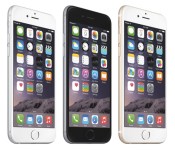
Apple May Add Force Touch and Pink Color Option to Next iPhones, Screen Size to Stay the Same
Apple will add pressure-sensing Force Touch technology to its next-generation iPhones, reports The Wall Street Journal in an article that covers a range of new details on the iPhone 6s and iPhone 6s Plus. Currently built into the upcoming Apple Watch and 12-inch Retina MacBook, Force Touch lets devices distinguish between a light tap and a hard press, enabling new gestures.
According to the report, which is sourced from Apple suppliers, Apple’s next-generation iPhones will continue to be available in 4.7 and 5.5-inch screen sizes, with plans to “keep the resolution similar.” New colors are a possibility though, and Apple is said to be considering adding a pink option to its existing space gray, silver, and gold iPhone lineup.

Production may begin on components for the next-generation iPhones as early as May, but The Wall Street Journal notes that Apple often tests technologies and designs with various suppliers that may not make it into finalized products.
Today’s report echoes several other reports that have also pointed towards Force Touch for the next-generation iPhone. Supply chain sources first hinted at Force Touch technology back in January, and those rumors seem more plausible now that the feature has been incorporated into both the Apple Watch and Apple’s recently announced MacBook.
Beyond the Force Touch rumors, little is known about the next-generation iPhones, which will likely be called the “iPhone 6s” and the “iPhone 6s Plus.” The devices are expected to receive upgraded A9 processors and have been rumored to include features like camera upgrades, more RAM, and improved Touch ID. Apple will presumably release the new iPhones in September.
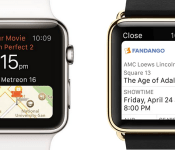
Fandango Announces Apple Watch Movie Ticket App [iOS Blog]
Fandango announced late last night that its popular movie ticket buying service will be featured in a full-fledged Apple Watch app when the device launches on April 24.
Eagle-eyed viewers may have caught a glimpse of the app in yesterday’s debut of the new ad for the Apple Watch, but the company’s announcement brings more details on the online ticketing service’s upcoming app for Apple’s new wearable.
Ticket purchasing and checking out will still occur on Fandango’s official website, according to the company, with the new Watch app acting mainly as a retainer for a user’s purchased tickets. Following the syncing of a user’s account on the Apple Watch, a “mobile barcode ticket” will appear on the Watch app, which the company says can be scanned by the ticket-taker at a movie theater for “easy access to the theater.”

“Fandango continues to build award-winning iOS apps that leverage Apple’s latest technologies including Siri and Passbook, enabling fans to easily discover new movies, get the latest trailers, information and buy tickets,” said Fandango President Paul Yanover.
“We’re excited to be one of the first apps available for Apple Watch, which takes movie-going to a whole new level by providing quick access, once you’ve purchased tickets, to movie times, theater location and more movie info conveniently on your wrist. We think the Apple Watch will ignite consumer excitement and help build momentum for the category.”
The Fandango Apple Watch app won’t just function as a glorified movie ticket, however, but will also remind users of upcoming showtimes related to their ticket purchases, provide directions to the theater, detail information on a chosen theater’s amenities, and include a running “countdown-to-showtime” clock for those killing time before a matinee.
As the company points out, the launch date of the Apple Watch, and subsequently of the Fandango Apple Watch app, lies just a week ahead of the May 1 opening for Marvel’s Avengers: Age of Ultron, and thus the numerous summer blockbusters premiering over the next few months.
Though ticket purchasing is still reliant on the Fandango website, and it’s unclear whether every theater will accept the scannable barcode tickets, the simplicity of the new Fandango Watch app definitely looks like something movie-goers planning to invest in an Apple Watch should be excited for.
The Apple Watch will be up for pre-order on April 10, before its official launch two weeks later on April 24. Following yesterday’s “Spring Forward” event, MacRumors has more information regarding the Watch’s battery life, band options, and a curated list of all the new videos and most important news stories from the event.
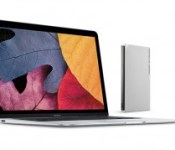
LaCie Announces First USB-C External Hard Drive Supporting New MacBook [Mac Blog]
 LaCie on Tuesday announced the Porsche Design Mobile Drive as the world’s first external hard drive with a built-in USB-C port. The LaCie Mobile Drive features a reversible cable that supports Apple’s latest MacBook with USB-C technology, delivering data transfer speeds up to 100 MB/s for quickly transferring photos, videos and other files or backing up with Time Machine.
“The LaCie™ Mobile Drive features a USB-C port — the user-friendly connector of the future. This new technology makes the LaCie Mobile Drive incredibly easy to connect, since both ends of the cable are identical and the connector is reversible. As a result, there is no need to worry about which end goes to which device or about plugging it in upside down.”
The LaCie Porsche Design Mobile Drive is made with a 3 mm-thick solid aluminum enclosure designed to match the look of Apple’s latest MacBook and other anodized aluminum products. The external hard drive will be available next quarter in 500GB, 1TB and 2TB capacities, and also includes an adapter with standard USB 3.0 (Type-A) or USB 2.0 ports for backwards compatibility with older Macs or USB-equipped devices.
Pricing information was not disclosed.

High-End Retail Shops Around the World Preparing to Showcase Apple Watch
During yesterday’s Apple Watch event, Apple CEO Tim Cook suggested the high-end Apple Watch Edition will be available in limited quantities at a select number of stores. He was likely referring to some of the pop up shops we’ve seen under construction, in upscale department stores Galeries Lafayette in Paris and Selfridges in London.
Women’s Wear Daily has shared some more information on the locations where we will see the $10,000+ Apple Watch Edition and other versions of the Apple Watch shown off around the world. Described as “shop-in-shops” in high-visibility locations, each of Apple’s pop up stores will ensure customers looking to make major purchases will get the best service possible.
At Selfridges, the Apple Watch will be displayed in the aptly named Wonder Room, which houses high-end jewelry and watches in a brightly lit room decked out with treasure-filled glass cases. At Galeries Lafayette, the Apple Watch will be displayed among European brands on the first floor of the facility, and at the Isetan Department Store in Shinjuku, Tokyo, the Apple Watch will be displayed on the ground floor.
Other speciality fashion stores will also sell select Apple Watch models, including Colette in Paris, where the Apple Watch had its fashion world debut, Dover Street Market in London and Tokyo, Maxfield in Los Angeles, The Corner in Berlin, and Lane Crawford in Hong Kong, Shanghai, Beijing, and Chengdu. All of these are fashion-oriented upscale stores.

Unlike with the iPhone and the iPad, Apple will likely be keeping a tight rein over which of its resellers are able to offer the Apple Watch. As it is positioned as a fashion accessory, it makes more sense for customers to be able to walk into a high-end store to make an Apple Watch purchase rather than a Best Buy or an AT&T store.
For the Apple Watch Edition especially, Apple wants to create a special, one-on-one buying experience that’s not exactly possible with today’s crowded retail Apple Stores. There have been hints that Apple is planning to redesign many of its retail locations to facilitate Apple Watch sales, and some of those changes may be implemented ahead of the Apple Watch’s April 10 debut date.
Apple vice president of special projects Paul Deneve commented on Apple’s plan to sell the Apple Watch in speciality stores, saying that shopping for a watch is a “deeply personal” experience.
“The experience of shopping for an Apple Watch is a deeply personal one. The department stores and specialty stores that we’re working with are some of the best in the world at offering such experiences, so it was natural for us to see our product there,” said Paul Deneve, Apple’s vice president of special projects who joined the tech company after years helming fashion houses including Yves Saint Laurent, Lanvin and Nina Ricci. “Given the very focused distribution that we’ve pursued for this launch, every door that sells Apple Watch will provide a unique experience for every customer that walks in.”
Apple will begin accepting pre-orders for the Apple Watch on Friday, April 10. At that time, the company will also be displaying the Apple Watch in its retail stores for customers to try on, and it’s likely many of the pop up shops may open their doors at that time. The Apple Watch’s official launch date is April 24.
USB-C in 12-Inch MacBook Adds Limitations but Opens Up Possibilities
Apple’s newest MacBook is one of the first computers to take advantage of the USB Type-C specification, which was finalized in August of 2014. USB-C uses a small reversible connector that’s similar in size to a Lightning connector, but slightly larger.
In addition to delivering power to the Apple MacBook (it’s capable of delivering up to 100 watts at 20 volts), USB-C has a DisplayPort alternate mode for connecting monitors, cables, docking stations, and more, plus it supports USB 3.1 data transfers up to 10Gbps, and it also has support for VGA and HDMI connections. It’s able to deliver bi-directional power, meaning it lets the MacBook be charged and through the same port, it lets the MacBook charge other devices.

USB-C is an upgrade from USB-A, the standard USB ports that many of us are used to on our computers, and USB-B, which we know best as Micro-USB, the ports built into many phones and portable electronic devices. In addition to its impressive data and power transfer rates, USB-C has the benefit of being easy to plug into devices, like the Lightning cable.
Apple’s adoption of USB-C might seem like something of an annoyance because it requires users to buy expensive adapters and adjust to an all new connection, but it’s actually a huge step forward for the company that opens up the possibility of a whole range of new Apple-compatible accessories and devices.

USB-C is the first non-proprietary charging system that Apple has introduced. MacBooks use MagSafe and iOS devices use Lightning connectors, both of which were designed by Apple, giving Apple strict control over how they’re used.
Apple lets product developers incorporate Lightning connectors and ports through its MFi (Made for iPhone) certification program, but the company does not have a MagSafe licensing program and has not allowed hardware manufacturers to create products that use the MagSafe connection in MacBooks.
This forces manufacturers who create items like MacBook backup batteries to use the actual connectors from Apple’s AC adapters, grafted onto their products. Apple has not looked kindly on this practice in the past, and has levied a lawsuit against at least one company using this method to create hardware for the MacBook.

With the USB-C port in the MacBook, Apple will not have control over the products that are developed for it, paving the way for a whole range of accessories that were not possible before, like backup batteries.
The future of USB-C is bright, but for early adopters, the USB-C experience might be somewhat frustrating because the notebook has a single USB-C port. Apple sells adapters, but the adapters only include one USB-C port, meaning it’s not going to be possible for MacBook buyers to charge their devices and use a product like LaCie’s new USB-C Porsche Design Mobile Drive at the same time using a USB-C port.
 One of Apple’s new USB-C adapters
Presumably manufacturers are already at work creating hubs that will include multiple USB-C ports for use with the myriad products that are going to use the new specification, but currently, someone wanting to use a USB-C storage drive would have to decide between charging and accessing data or using the older USB-A port for data transfers.
USB-C is a brand new technology, but with Apple embracing it, it won’t be long before we see tons of companies racing to produce USB-C compatible products. Apple will also undoubtedly spur its competitors to adopt the standard as well. It may not be long before we’re able to charge a whole range of our devices with a single cable, ending the days of having to carry around MagSafe chargers, USB cables, Micro-USB cables, Lightning cables, and more.

Leaked Documents Suggest CIA Work on Hacked Version of Xcode, OS X Installer Exploit
 United States Central Intelligence Agency researchers have been working for years to crack the security of Apple’s iPhone and iPad, and may have done so through the creation of a modified version of Xcode, Apple’s software development tool designed for developers.
According to secret documents obtained by The Intercept, at a 2012 “Jamboree” that focused on security flaws found in various electronics, CIA researchers outlined both a hacked version of Xcode and a modified OS X updater that could be used to install malicious software like keyloggers.
The modified version of Xcode, the researchers claimed, could enable spies to steal passwords and grab messages on infected devices. Researchers also claimed the modified Xcode could “force all iOS applications to send embedded data to a listening post.” It remains unclear how intelligence agencies would get developers to use the poisoned version of Xcode.
The malicious version of Xcode could potentially be used to extract private data from devices that installed apps built by the hacked Xcode. Some of the things researchers said could be done with Xcode included installing “remote backdoors” in Mac apps, embedding an app developer’s private key into iOS applications (letting the government masquerade as the targeted developer), forcing iOS apps to send data from an iPhone or iPad to a “listening post,” and disabling core security features on iOS devices.
None of the documents detail how the Xcode and OS X installer exploits have been used by the CIA, and they also don’t state whether the efforts have been successful, but as noted by The Intercept, they suggest that the government’s efforts to crack the security technology companies employ is a continually ongoing effort.
Apple and the U.S. government have been at odds over privacy and security issues in recent years. A 2013 document leak suggested that Apple and other tech companies were working with the government on a secret project called PRISM, which allegedly provided the government with direct access to customer data on company servers.
Apple and multiple other technology companies like Google vehemently denied their participation in such a program and have since gone to great lengths to ensure the public that they’re not involved in the government’s spying attempts. Apple, Google, Facebook, Microsoft, and other companies banded together to ask for greater surveillance transparency and the ability to share more info on government data requests with consumers, which was ultimately successful.
Apple launched a privacy site in September of 2014 outlining the privacy features of its products and services and offering detailed information on government information requests. Across 2014, Apple CEO Tim Cook began putting a heavy emphasis on the importance of privacy, and with iOS 8, Apple significantly increased the encryption protection on iOS devices. Prior to iOS 8, Apple had the ability to access data on iOS devices with a company-held encryption key, and now, that no longer exists. Google has made similar changes.
The FBI has strongly opposed Apple’s efforts to increase the security of its iOS devices, with FBI Director James Comey insisting that government access to electronic devices is necessary in some cases. Apple has reportedly been in talks with FBI officials over its security changes, but Apple CEO Tim Cook has maintained Apple’s commitment to privacy and security.
At the White House Cyber Security Summit in February, Cook said customer trust means everything to Apple. “When it comes to the rights of customers and citizens, we’re all talking about the same people,” he said. “People have entrusted us with their most personal and precious information and we owe them nothing less than the best protections we can possibly provide by harnessing the technology at our disposal.”
Note: Due to the political nature of the discussion regarding this topic, the discussion thread is located in our Politics, Religion, Social Issues forum. All forum members and site visitors are welcome to read and follow the thread, but posting is limited to forum members with at least 100 posts.
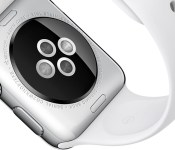
Apple Watch Has 8GB of Storage, Limited to 2GB for Music and 75MB for Photos
Apple confirmed that all three editions of the Apple Watch will ship with 8GB of internal storage, according to 9to5Mac. Apple Watch users will be limited to up to 2GB of songs and up to 75MB of photos that are locally stored on the device and can be listened to or viewed without a paired iPhone. Songs can be synced using the Apple Watch companion app on compatible iPhones running iOS 8.2 or later.

2GB of music works out to anywhere from 200 to 500 songs depending on the audio quality, while the report claims that 75MB of photos will equal to over 100 photos that are automatically compressed for reduced file size on the Apple Watch. A portion of the remaining storage capacity is likely allocated to the Apple Watch’s operating system, and will store application binaries and resources when a native SDK is released.

New MacBook Pro and Air Benchmarks Comparable to Mid-2014 Models
The newly refreshed 13″ Retina MacBook Pro announced on Monday is seeing comparable performance to the mid-2014 model, according to the latest Geekbench benchmark. The early 2015 model with an Intel Core i5 processor clocked at 2.7GHz achieved a single-core score of 3043 and a multi-core score of 6448, a minor variance from last year’s low-end 13″ Retina MacBook Pro single-core score of 3056 and multi-core score of 6554.

The latest 11″ MacBook Air, with an Intel Core i5 processor clocked at 1.6GHz, also performed comparably to its predecessor in Geekbench benchmarks, with its single-core score of 2753 and multi-core score of 5486 marginally higher than the mid-2014 model‘s scores of 2430 and 5291 respectively. Meanwhile, the new 13″ MacBook Air had modestly lower scores, although more benchmarks will need to be averaged before results are conclusive.

John Poole of Primate Labs, the makers of Geekbench, claims that the latest MacBook Pro and Air may see slight performance improvements after OS X Yosemite gets through first-boot housekeeping, so further benchmarks results will be needed for those models as well to determine accurate performance. Nevertheless, it is clear that this year’s refreshed MacBooks deliver only negligible improvements over the year-ago models.
The results are largely unsurprising given Intel’s focus on improving battery life versus performance with its latest Broadwell processors. The new MacBook Air and Pro lineups also have faster graphics and flash storage, two areas where improvements should be more noticeable over last year’s models. The refreshed 13″ Retina MacBook Pro in particular is up to 40% faster than the previous model with Intel Iris graphics.
Apple refreshed the MacBook Air lineup yesterday with Intel Broadwell processors, Thunderbolt 2 and Intel HD Graphics 6000. It also refreshed the 13″ MacBook Pro with similar improvements, including Intel Broadwell processors, Intel HD Graphics 6100 and all-day battery life. The latest MacBook Pros also gained a trackpad with built-in Force Touch technology that detects a small tap versus a deep press and performs a different action accordingly.
Apple Donates Over $50 Million to Increase Diversity in the Tech Industry
 Apple’s annual shareholders meeting is currently underway at the company’s headquarters in Cupertino, California, and one big item on the agenda, according to Apple’s human resources chief Denise Young Smith, is a plan to partner with a few non-profit organizations on an effort to bring more women, minorities, and veterans into the tech industry (via Fortune).
The deal is said to be a multi-year effort worth $50 million, and to start off, Apple is partnering with the Thurgood Marshall College Fund, a non-profit which focuses on supporting students enrolled in “historically black colleges and universities.”
The two will work together in expanding the role of minorities in the field, with Apple planning to donate over $40 million to the organization.
“Historically, other organizations have provided scholarship dollars or focused on whatever area matters most to them,” says Johnny Taylor, president and CEO of the Thurgood Marshall College Fund. “What differentiates this partnership with Apple is that it hits on everything that we do—it is the most comprehensive program ever offered to an HBCU organization.”
The company will partner with a separate, female-focused non-profit, the National Center for Women and Information Technology, to help with increasing the presence of women in the field. Apple will donate $10 million to the fund, with a four year plan to double recipients of the organization’s scholarships and internship programs.
Tim Cook will allow Rev. Jesse Jackson a few moments to speak during the shareholder meeting taking place today, and USA Today met with Jackson beforehand. He noted that the start of a more diverse presence in the tech field, most notably in Silicon Valley, is just beginning.
“President Obama said in Selma (Ala.) this weekend ‘the march is not yet over,’” Jackson is scheduled to say in a statement. “In Silicon Valley, the march for diversity and inclusion is just beginning. Several companies are implementing new diversity and inclusion strategies, most notably Intel’s landmark $300 million diversity Initiative.
“Apple and this thriving Silicon Valley are solving the world’s most challenging and complex problems. Diversity and Inclusion is a complex problem — if we put our collective minds to it, we can solve it, too. (Apple CEO) Tim (Cook), with Apple and your creative leadership, sensitivity and commitment, we know it can be done.”
Jackson has worked with Apple in these regards for over a year now, and has attended the shareholder meetings of other companies like Google, Hewlett-Packard, Facebook, Verizon and eBay, in a similar capacity to what he has planned today during Apple’s meeting.
Note: Due to the political nature of the discussion regarding this topic, the discussion thread is located in our Politics, Religion, Social Issues forum. All forum members and site visitors are welcome to read and follow the thread, but posting is limited to forum members with at least 100 posts.

Google Launches ‘Google Calendar’ App for iPhone [iOS Blog]
Towards the end of last year, Google unveiled a new Calendar app for Android users. The Calendar was able to pull events from Gmail, suggest titles, people, and places to add to events based on past usage, and it had a Schedule View that offered photos and maps of calendar destinations.
At the time, Google promised to bring the app to iOS, and as of today, Google is debuting Google Calendar for the iPhone. The iOS app has all of the same features that were first available in the Android version of the app, including a clean design, the aforementioned Schedule View, and the ability to pull in events from Gmail. Google Calendaris compatible with all iPhone calendars, including Exchange and iCloud.
Get the official Google Calendar app for your iPhone to save time and make the most of every day.
– A new Schedule View – See your schedule at a glance with photos and maps of the places you’re going.
– Events from Gmail – Flight, hotel, concert, restaurant reservations and more are added to your calendar automatically.
– Assists to fill in your calendar – You can quickly create events with smart suggestions for event titles, places and people.
– Different ways to view your calendar – Speedily switch between viewing a single day to getting an overview of multiple days at once
– All your calendars in one, easy place – Google Calendar works with all calendars on your phone, including Exchange and iCloud.
Google Calendar can be downloaded from the App Store for free. [Direct Link]

