


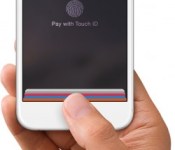
GameStop and Marriott International Announce Apple Pay Partnerships
 More news continues to circulate following yesterday’s Apple Watch-centered media event, with today bringing confirmation that two big new companies, GameStop and Marriott, are partnering with Apple to support Apple Pay.
First announced yesterday, Marriott confirmed that it will be the first hospitality company to offer Apple Pay to its customers. The roll-out will begin sometime this summer and launch in eleven total Marriott-owned locations like The Ritz-Carlton, EDITION Miami, Renaissance Hotels, and Marriott Hotels.
“Approximately 75 percent of our guests travel with one or more mobile devices, and it is even higher among 25-35 year olds – a group that will make up a much larger proportion of our guests over the next three years,” said George Corbin, senior vice president, Marriott Digital. “Millions of customers already use Marriott Mobile to quickly book a hotel, check-in, or check out. Now, Apple Pay can make it virtually effortless.”
Guests can expect the usual ease-of-use in placing their iPhone 6, 6 Plus, or following its April 24 launch, Apple Watch, near a contactless reader at the front desk to pay for their room. The company also announced an app for the Apple Watch that will allow Marriott Rewards members advanced check-in, notifications for when their room is ready, and an easier check out process upon leaving a hotel.
Following in Marriott’s footsteps, popular video game and technology retailer GameStop confirmed that it will launch nationwide support for Apple Pay, meaning “more than 4,200 U.S. stores”, beginning this month. The company hopes the Apple Pay support will grant customers a more secure and hassle-free purchasing experience in its shops.
“We are excited to make it easier and more convenient for our customers to shop at GameStop,” said Jason Cochran, senior vice president of U.S. stores at GameStop. “Providing a positive, memorable customer experience is our top priority. Incorporating the latest in mobile technology, like Apple Pay, into our stores is another way we are offering customers options to help simplify their purchases.”
A few competitors have recently entered the contactless payments market, but Apple’s still fairly new Apple Pay service has continued to grow since its initial launch last fall. At yesterday’s media event, Tim Cook noted that since its October launch, the service has expanded to 2,500 banks with nearly 700,000 merchants supporting Apple Pay across the U.S.
Griffin Announces Charging ‘WatchStand’ for Apple Watch [iOS Blog]
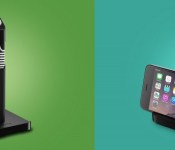
Griffin yesterday announced the WatchStand, which the company calls the first entry into its “new line of products for Apple Watch.”
The stand is set to be a nightly solution for more easily charging the Apple Watch. Like other Griffin products, the stand itself doesn’t include its own charging cable, but users will need to snake in their own MagSafe charger through the stand during the initial set-up of the device.

“The introduction of the Apple Watch ushers in what is bound to be the next generation of wearable technology,” said Mark Rowan, President of Griffin Technology. “Griffin has long been at the forefront of developing solutions for Apple’s newest devices and we’re continuing that legacy with our WatchStand charging dock for Apple Watch.”
Griffin notes that the stand is compatible with all versions of the Apple Watch and provides an “easy viewing angle” when charging. The pedestal will also accommodate both a vertical and horizontal orientation, allowing personal preference to each user laying their Watch on the stand to charge.
Although there is no in-house storage for an iPhone cable, the WatchStand does provide a small dock underneath the Watch pedestal to store a user’s iPhone, providing a neat and organized solution to charging and displaying both devices.
Unfortunately, the Griffin WatchStand won’t be available on the Apple Watch’s April 24 launch date, but has been given a more general “Summer 2015″ release window. The company did note, however, that the stand will retail for $29.99 when it launches.
Apple labored over the perfect interface for its Watch Activity app

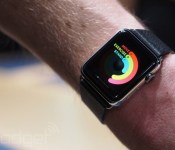
Apple’s Watch designers did a lot of reps on the Workout and Activity apps before arriving at the final design, according to an internal memo dug up by 9to5 Mac. The company’s in-house fitness guru Jay Blahnik detailed the design process of the Watch’s key apps, saying “we kept asking ourselves, what could we do to measure all-day activity that would be more useful than traditional all-day activity trackers?” To arrive at the answer, the company decided to build both apps in-house, in order to “build our own knowledge base from the ground up” rather than using off-the-shelf software.
He went on to say that while building the Workout app was hard enough, “we wanted to build something iconic” for Activity. They built that app around the guiding philosophy of “sit less, move more and get some exercise,” but tried hundreds of interface designs to get that across. “The first time we saw the current Activity Rings design that ended up being the final design in the app, we knew that was it. Simple, elegant, unique, easy to view, visually motivating and fun.” He added that he hopes that seeing how lazy or active you’ve been at a glance will “motivate (you) to do more.” We’d hope that the $349 minimum entry ticket would be motivation enough.
Source: 9 to 5 Mac
Apple buys itself some time with £59 Apple TV price cut

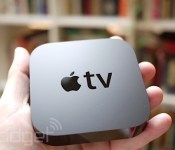
How long can the current Apple TV survive? The sleek streaming box has stayed the same, more or less, for just over three years now. Sure, there’s been a steady stream of new apps and software features, but the components and basic experience have barely changed. Meanwhile, we’ve seen Roku, Amazon, Google and others bombard the market with rival hardware that offer new, modern takes on navigation and discovery. We’re still waiting on a major Apple TV refresh, but in the meantime the company has dropped the price of its set-top box yet again; now, you can pick one up for £59 rather than £79 in the UK.
It’s hard not to see this latest discount as a stop-gap measure. Price drops are always welcome, of course, but after three years even the most devout Apple fans will be hoping for an upgrade. Even so, the Apple TV is still a competitive bit of kit. If you compare it side-by-side with other sub-£100 set-top boxes, the list of features that it’s missing out on is still relatively small. Most of the major streaming services are there (Amazon’s Prime Instant Video is a notable exception) and AirPlay streaming is still invaluable for Mac, iOS and even Android users, if you’re willing to download a third-party app like AllCast.
At £59, it’s also a tad cheaper now than most of its biggest rivals. It’s an unusual tactic for Apple, which normally prides itself on offering a best-in-class experience with a luxurious price-tag to match. Settling for second-best and undercutting the competition just isn’t its style. Nevertheless, it’s a move that could shift a few more Apple TVs off store shelves. At least until the company launches its long-rumoured Apple TV successor, which some suspect is now cancelled or stuck in development limbo due to uncooperative TV providers. Alas, the wait for truly à la carte TV channels and programming continues…
Filed under: Home Entertainment, Apple
The Apple Watch Battery Will Be Replaceable [iOS Blog]
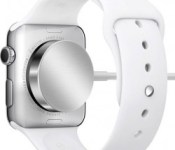
 New details are still emerging about the Apple Watch following yesterday’s big “Spring Forward” event in San Francisco, with a new report pointing to a completely replaceable battery for Apple’s new wearable.
Following the event yesterday, an Apple spokesperson disclosed to TechCrunch that the Apple Watch “battery is replaceable.” The big missing piece of information of course relating to how much the process will cost, if it will be done in both Apple’s retail stores and online, and how long it will take.
There’s still well over a month to the Watch’s launch, so no doubt this will be another piece of information Apple fills out as the April 24 release date gets closer.
Well, when it comes to the battery at least, owners of Apple Watch will be able to extend its lifespan. An Apple spokesman confirmed to TechCrunch the “battery is replaceable”. Albeit, it’s not clear how much it will cost to send in your wearable to Apple to get it returned with a new cell in place.
The other potential obsolescence issue relates to the processor. It’s not clear whether Apple will offer any kind of CPU and/or RAM upgrade to existing owners. At the time of writing Apple had not responded to our request for clarification.
There had been much talk over the Watch’s battery life leading up to the event, with Apple yesterday confirming all-day battery life with mixed usage for the device. This boils down, according to the company, to 90 time checks, 90 notifications, 45 minutes of app use, and a 30-minute workout with music playback via Bluetooth over the course of 18 hours.
As TechCrunch points out, given the Apple Watch Sport’s target audience, the battery itself may face the most intense usage compared to the other models, which means its lower entry point makes more sense for yearly, or bi-yearly, upgrades.
A large amount of information came out of the Apple event yesterday, including detailed prices of the numerous versions of the Apple Watch, specific information on its battery life, and the pricing tiers of the various bands. The Watch will be available for pre-order April 10 and launch officially in the United States, Australia, Canada, China, France, Germany, Hong Kong, Japan and United Kingdom on April 24.
Apple issues security patches to protect devices from the FREAK bug

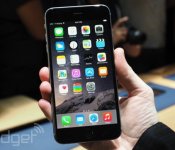
In addition to launching new MacBooks and revealing its smartwatches’ release date, Apple has also issued software updates to protect its devices from the FREAK bug. If you recall, the security flaw allows hackers to force weaker encryption on Safari (and Android browser) users visiting certain websites, including a few owned by the government. The weaker encryption makes it easier and faster for them to break into users’ accounts and steal sensitive info, that’s why Cupertino promised to issue a patch as soon as possible. To secure iPhones and iPads, you just have to install iOS 8.2, which also comes with Apple Watch support. MacBook users who have OS X Mountain Lion, Mavericks or Yosemite installed will get an update notification, while those who own the company’s streaming box have to download Apple TV 7.1. The latest software updates also come with other security patches for both Mac and iOS, so don’t forget to download them when you can.
Filed under: Cellphones, Laptops, Apple
Via: Apple Insider
Marriott hotels to start accepting Apple Pay this summer

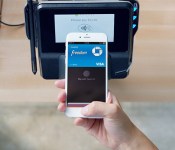
Hey, did you know Marriott already promised to stop trying to block personal WiFi devices? If that convinces you to stay in one of its hotels again, don’t forget to bring your iPhone 6 or 6 Plus: the chain will soon start accepting Apple Pay. To check in, you’ll only need to go to the contactless reader at the front desk and hold up your phone (or Apple Watch) to pay — a beep and a vibration will indicate if the transaction’s a success. The company will begin its staggered rollout this summer, starting with 11 hotels in the US, which we’ve listed below the fold. Marriott, by the way, is also developing an app for the Apple Watch that’s similar to Starwood Hotel’s. You can use it to check in before you get to the hotel, checkout and even get notification when your room is ready. The company says the app will be available when Cupertino’s smartwatches hit the market, which we’ve just learned will happen on April 24th.
The first 11 Marriott hotels to get Apple Pay:
- The Ritz-Carlton New York, Central Park
- The Ritz-Carlton Washington D.C.
- EDITION Miami
- JW Marriott Chicago
- Renaissance New York Times Square Hotel
- San Francisco Marriott Marquis
- San Francisco Airport Marriott Waterfront
- New York Marriott Downtown
- San Jose Marriott
- Courtyard Chicago Downtown/Magnificent Mile
- Courtyard Los Angeles L.A. Live
- Residence Inn Los Angeles L.A. Live

Filed under: Cellphones, Wearables, Mobile, Apple
Via: iMore
Apple Raises Prices on Several Products in Many Countries Amid Strong U.S. Dollar
While Apple discounted the Apple TV to $69 in the United States this afternoon, it also raised the prices on several products across many countries due to the strength of the U.S. dollar. A wide selection of Apple products, including the iPhone, iPad, iPod touch, MacBook Air, MacBook Pro and Thunderbolt Display, are now more expensive in Canada, Australia, New Zealand, France, Denmark, Sweden, Finland, Portugal and multiple other countries to reflect currency adjustments.

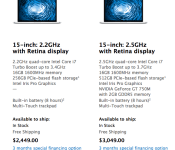
Apple now charges up to $3,049 for the 15-inch Retina MacBook Pro in Canada
A spot check of the Apple Online Store in Canada, for example, reveals that Apple has increased the price of the unlocked iPhone 6 from between $749-$969 to $839-$1,099, Thunderbolt Displays from $999 to $1,199, and 15-inch Retina MacBook Pros from between $2,099-$2,699 to $2,449-$3,049. Apple also hiked the price on the 15-inch MacBook Pro in France, with the base model now starting at €2,249 up from €1,999, and the higher-spec model up to €2,799 from €2,499.
Apple has made similar price adjustments in countries around the world today in order to ensure parity with United States pricing, following a period in which several Apple products were actually priced at a bargain compared to American prices. For instance, prior to the pricing adjustment, the Thunderbolt Display retailed for $999 in Canada, the same price as in the United States, which converts to around $799 in U.S. dollars based on the average conversion rate over the past month.
The updated prices went into effect following the return of the Apple Online Store at the conclusion of Apple’s “Spring Forward” media event in San Francisco this afternoon. Should the U.S. dollar weaken, as happened in July 2011, Apple will continue to make the necessary adjustments in order to ensure that its products and services are as consistently priced as possible throughout the world. In some cases, international prices will remain higher than U.S. prices as a buffer against currency fluctuations.

Apple Announces ‘ResearchKit’ Aimed at Medical Research [iOS Blog]
Apple SVP of Operations, Jeff Williams, today announced “ResearchKit”, a new open source software framework in the vein of HomeKit and HealthKit that will turn an iPhone into “powerful diagnostic tools for medical research.” The new software aims to assist doctors and scientist gather data at a faster and more accurate rate via the accessibility of the iPhone.
Williams mentioned multiple conditions that ResearchKit will be aimed at, including: Parkinson’s, Diabetes, Cardiovascular disease, Asthma and Breast cancer. Apple also promised it “will not see your data” when reiterating on Privacy of the new ResearchKit app.

“iOS apps already help millions of customers track and improve their health. With hundreds of millions of iPhones in use around the world, we saw an opportunity for Apple to have an even greater impact by empowering people to participate in and contribute to medical research,” said Jeff Williams, Apple’s senior vice president of Operations. “ResearchKit gives the scientific community access to a diverse, global population and more ways to collect data than ever before.”
When given permission, ResearchKit will attain user data like weight, blood pressure, glucose levels and asthma inhaler use, most measured thanks to third-party devices and apps. The service will also give researches a more streamlined experience in recruiting and gaining data from study participants, allowing users to answer surveys and input data right from the app.
ResearchKit will be released next month, and those first five apps mentioned by Williams at the conference are going to be available today.
Follow the rest of our March 2015 event coverage for the latest Apple Watch information.
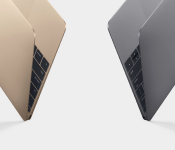
Apple Announces 12-Inch Retina MacBook With Revamped Trackpad, Starting at $1,299
At today’s “Spring Forward” media event, Apple announced its much-anticipated ultra thin 12-inch MacBook, with prices starting at $1,299. The new notebook, which features a 12-inch Retina display with a resolution of 2304 x 1440, offers a full Mac experience in the lightest and thinnest Mac form factor to date

The 12-inch MacBook is separate from the company’s MacBook Air and MacBook Pro lines. It weighs 2 pounds and is 24 percent thinner than the existing MacBook Air at 13.1mm. It’s available in three iPhone and iPad-style colors: gold, silver, and space gray.
With the new MacBook, Apple has introduced a redesigned keyboard, featuring a new butterfly mechanism for the keys to make them both more stable and more precise. The edge-to-edge keyboard offers keys with 17 percent more surface area and a redesigned feel.
“Apple has reinvented the notebook with the new MacBook, and at just two pounds and 13.1 mm, it’s the thinnest and lightest Mac ever,” said Philip Schiller, Apple’s senior vice president of Worldwide Marketing. “Every component of the MacBook reveals a new innovation. From its fanless design, ultra-thin Retina display and full-size keyboard that’s 34 percent thinner, to its all-new Force Touch trackpad, versatile USB-C port and breakthrough terraced battery design, the new MacBook is the future of the notebook.”
Apple’s new MacBook also includes a completely revamped trackpad, with built-in Force Touch. Force Touch can detect the amount of pressure placed on the trackpad, introducing a whole range of gestures. For example, a hard press using Force Touch brings up a Map in mail, or a Wikipedia entry in Safari, much like right clicking does now. The trackpad also includes haptic feedback, giving users tactile feedback from the trackpad when using it. The trackpad is customizable, letting users choose how much pressure is required to initiate a force press.
The 12-inch MacBook uses an Intel Core-M processor that starts at 1.1GHz with Intel HD 5300 graphics. It has entirely silent operation because it’s the first MacBook to use a completely fanless design. Internally, the logic board is 67 percent smaller than the logic board in the MacBook Air, and Apple’s designed new custom-shaped batteries for the device to eke out as much battery life as possible.
According to Apple, the new MacBook has an “all-day battery” life at 9 hours of web browsing and 10 hours of iTunes movie playback.
To allow for its ultra thin design, Apple has used a single USB-C port in the MacBook, which combines several functions into a one port: power, USB data transfer, DisplayPort, HDMI, and VGA capabilities. The MacBook does not use the traditional MagSafe charging method that’s available in other MacBooks.
The entry-level MacBook is priced at $1,299 and includes a 1.1GHz dual-core Intel Core M processor, 8GB of memory, 256GB of flash storage, and Intel HD graphics 5300. There’s also a 1.2GHz version with 8GB of memory and 512GB of flash storage available for $1,599. There will be additional configure-to-order options as well.
The new MacBook will begin shipping on Friday, April 10 through the Apple Online Store and from Apple retail stores and Apple Authorized Resellers. 

