


Belkin Announces New Line of USB-C Cables, USB-C to Gigabit Ethernet Adapter [Mac Blog]
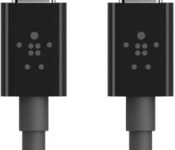
 Popular Apple accessory maker Belkin today announced a line of new cables and adapters designed to work with the newly announced 12-inch Retina MacBook, which ships with a single USB-C port.
Most notably, the company has announced a USB-C to Gigabit Ethernet Adapter, which will allow the 12-inch MacBook to be connected to Gigabit Ethernet networks using its USB-C port. Apple is not offering its own USB-C to gigabit ethernet adapter, so users who want that functionality will need a third-party accessory like this one. Belkin has not yet added the adapter to its website, but it will be priced between $19.99 and $29.99.
Belkin is also offering a range of other USB-C cables, which are listed below:
– USB-C Cable ($29.99)
– USB-A to USB-C Charge Cable ($19.99)
– USB-A to USB-C Cable ($29.99)
– USB-C to Micro USB-B Charge Cable ($19.99)
– USB-C to Micro USB-B Cable ($29.99)
– USB-C to Mini USB-B Charge Cable ($19.99)
– USB-C to USB-B Charge Cable ($19.99)
Belkin’s cables and the Gigabit Ethernet Adapter will be priced between $19.99 and $29.99 and will ship early this summer.
ResearchKit Receives Thousands of Sign-Ups Following Launch
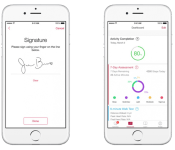
Less than twenty-four hours after Apple unveiled ResearchKit, the open source medical framework has received thousands of sign-ups, according to Bloomberg. The report claims that Stanford University researchers awoke on Tuesday morning, the day after Apple’s “Spring Forward” media event, to discover that 11,000 people signed up for MyHeart Counts, a cardiovascular disease app built using ResearchKit.
“To get 10,000 people enrolled in a medical study normally, it would take a year and 50 medical centers around the country,” said Alan Yeung, medical director of Stanford Cardiovascular Health. “That’s the power of the phone.”
ResearchKit is an open source software framework aimed at revolutionizing medical studies by making them more readily available to millions of iPhone users worldwide. When given permission, the framework uses the iPhone’s various sensors to collect user data such as weight, blood pressure, glucose levels and asthma inhaler use, information that Apple hopes will open up new possibilities for researchers.

Apple will also enable users to answer surveys and input data directly from ResearchKit apps, although researchers caution that information collected from an iPhone user may be misleading due to various potential flaws. For starters, the report claims that iPhone users are more likely to have a graduate or doctoral degree than Android users, and the demographic differences can allegedly skew the results.
“Just collecting lots of information about people — who may or may not have a particular disease, and may or may not represent the typical patient — could just add noise and distraction,” said Lisa Schwartz, professor at the Dartmouth Institute for Health Policy and Clinical Practice, in an e-mail. “Bias times a million is still bias.”
Meanwhile, an iPhone user simply hitting a button by accident or giving his smartphone to someone else can also result in misleading data. Nevertheless, there are issues with data collected through traditional clinical trials as well, and ResearchKit allowing people to engage in medical research more easily is still valuable and, as Apple claims, could transform the way that medicine is approached forever.
Twelve South Announces HiRise Charging Stand for Apple Watch [iOS Blog]
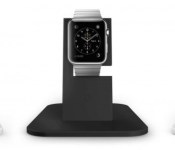
Twelve South on Wednesday unveiled the HiRise for Apple Watch, a brushed metal stand designed to hold all three editions of the wrist-worn device. The stand showcases the entire Apple Watch, allowing you to interact with the screen while it is charging, and features a non-slip rubber base, silicone accents and leather landing pad to keep the smartwatch secure and protected.

HiRise for Apple Watch, similar to the iPhone version of the stand, is slightly angled so that you can easily interact with the Apple Watch from a bedside table or countertop. The watch band tucks away cleanly behind the stand’s metal frame, with the silicone accents preventing any scratches or scuffs. A pop-out disk on the back of the stand keeps the Apple Watch’s magnetic charging cable out of sight.
HiRise for Apple Watch will be released in May for $49.99 on Twelve South’s website, available in silver and gray options. Those interested in the product can sign up to Twelve South’s mailing list with their name, email address and country of residence to receive updates when the product becomes available.

App Store and iTunes Among Apple Services Experiencing Downtime
 A number of Apple services are experiencing an extended period of downtime, including the App Store and iTunes Connect. The iOS and Mac App Stores are displaying various error messages to users about being unable to connect or certain items being unavailable, as spotted by The Next Web, and iTunes Connect and TestFlight are also down for developers.
The outage is affecting a significant number of users in the United States, Canada, Australia, United Kingdom, India and many other countries worldwide. The downtime appears to have been ongoing for several hours this morning, although Apple has yet to update its System Status page to reflect the downtime for the iOS App Store, Mac App Store, iTunes Connect, TestFlight or any other affected Apple services.
@AppStore is the store down atm keep getting this message. Tried restarting already. pic.twitter.com/dM9qgQtgU0
— Calumk (@Calumk4) March 11, 2015
This post will be updated as the status of the outage changes.

Apple Watch Knock-Offs Already On Sale in China [iOS Blog]
Following Apple’s Apple Watch-dominated media event on Monday, a few manufacturers in China have today already begun selling imitators of the device in Shenzhen’s Huaqiangbei commercial area, and online, according to the South China Morning Post.
Perhaps the most identical to the Apple Watch is the Zeaplus Watch, an aluminum-bodied smartwatch available in silver, gray, and gold. According to the company’s website, it detects heart rate and includes a pedometer to count steps and calories. Interestingly, the Android and iOS-compatible Zeaplus Watch has a slot for a SIM card and allows users to make and receive calls from their wrist without needing to be tethered to a smartphone.

According to the South China Morning Post, the Zeaplus Watch has a detachable 2-megapixel camera at the bottom of the watch which can be taken off to take a picture. This ability “markets the watch as a covert spying device”, though no mention of it is made on the company’s website.
The device is aimed to launch at the end of March, and as of now, no information is known of it besides the short snapshot of bullet-points rotating on the Zeaplus homepage. A similar smartwatch device sold by the company sells for $69 currently, so the Zeaplus Watch could retail around that price point.
The Huaqiangbei shopping district is known for being the centralization of electronic, digital, and hi-tech knock-offs in the area, so it’s unsurprising the Apple Watch is the newest piece of tech being imitated by the manufacturers and merchants of the area.
The fact that such devices are on the market so early – some companies launched their Apple Watch imitator months ago – underscores the speed at which Chinese shanzhai (knock-off) manufacturers are able to bring copies to the market.
Since the early 2000s, companies in Shenzhen have been the centre of the mainland’s shanzhai industry, which churns out electronic goods that imitate well-known brands very quickly – concept to delivery is often achieved within weeks – and very cheaply, often at less than half the price of the genuine product.
A few other Apple Watch knockoffs have popped up, including Zhimeide’s D Watch, which aims for an Apple Watch Sport look and claims to have a 7.5 day battery life. Prices on the D Watch range from about $30 to just $50. A few other fake Apple Watches spotted in the wild go as low as $15. With over a month until the official launch of the Apple Watch, there’s no doubt that the off-brand imitations will just continue to grow.
WSJ: The next iPhone will get a force-sensitive touchscreen

Apple’s recently announced MacBook and Watch both understand the difference between a gentle press and a hard shove. It should surprise nobody that the company is likely to add this technology, dubbed Force Touch, to the next generation of iPhones. The Wall Street Journal has called around its circle of people familiar with the matter, who all say that it’ll be the headline feature for the iPhone 6S and 6S Plus. In addition, those in the know believe we’ll soon get a fourth color option to choose from: pink.
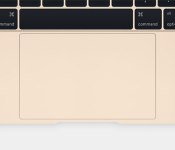
Broadly speaking, Force Touch enables a new level of control by responding to the heaviness of your touch. At the launch, Apple’s Phil Schiller showed how you could speed up a fast forward action just by pressing harder on the MacBook’s touch pad. On an iPhone, hard presses could replace toggles (stab the screen for a capital letter, for instance) as well as making media controls and apps more responsive. It’s just a rumor for now, but one that ticks all of the boxes marked “plausible.”
Filed under: Cellphones, Apple
Source: Wall Street Journal

Apple Pay Now Supported at JetBlue, Office Max and 12 Other Retailers
Apple Pay support has been extended to 14 additional retailers in the United States, including Bashas’, Coca-Cola Vending, Dan’s Fresh Market, Dick’s Fresh Market, Fuddruckers, Jamba Juice, Jersey Mike’s Subs, JetBlue, Lin’s Fresh Market, Maceys, Office Max, Pep Boys, Regal Cinemas and Walt Disney World, as spotted by AppleInsider.

Apple CEO Tim Cook announced on Monday during the company’s “Spring Forward” media event that Apple Pay support will be rolling out at some 40,000 Coca-Cola vending machines across the United States, with the mobile payments service now accepted at over 700,000 locations nationwide. Apple Pay remains limited to the iPhone 6 and iPhone 6 Plus in the United States, although Apple has expressed plans to launch the service in other countries.
GameStop and Marriott International also announced Apple Pay support this week.
Hilarious Apple Watch parody sheds light on why one model costs $10,000
I love Apple season – not because I like their devices, but because of all the parodies that come out to make fun of the devices that Apple has just announced. Of course, most recently Apple has announced its most poorly named device, the Apple Watch, and inextricably released it in three models – two of […]
The post Hilarious Apple Watch parody sheds light on why one model costs $10,000 appeared first on AndroidSPIN.
High Apple Store Traffic Distorting Mall Rent, Lifting Mall Sales [Mac Blog]
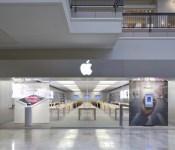
Apple Stores’ ability to generate a high rate of foot traffic in malls is allowing Apple to win “sweetheart deals” from mall operators while increasing mall sales 10%, according to a new Wall Street Journal report.

Apple draws so many shoppers that its stores single-handedly lift sales by 10% at the malls in which they operate, according to Green Street Advisors, a real-estate research firm. That gives Apple the clout to negotiate extremely low rents for itself relative to its sales, while creating upward pressure on prices paid by mall neighbors who might not benefit from the traffic.
Mall operators usually strike deals with department stores that allow them to pay low common area fees and almost no rent in exchange for drawing traffic to the mall. Smaller non-department stores generate most of the rental fees collected by mall landlords, paying as much as 15% of their sales a square foot in rent.
Because Apple Stores bring in so much traffic that leads to increased sales in other parts of the mall, Apple has been able to win rental agreements that see it paying as little as 2% of its sales a square foot. Typically, rents paid to mall operators are based on how much the retailer expects to sell, which is influenced by overall mall traffic.
Average-grossing Apple Stores can garner $6,000 in sales a square foot, while higher grossing Apple Stores net $10,000 in sales a square foot, sources tell the WSJ. At 45 enclosed malls, Apple’s share of gross sales averaged 14% in 2013, up just over 10% from 2002.
While Apple’s success in retail affords it sweetheart deals, it also gains breaks in other forms of payment to mall landlords. For example, some landlords require tenants to pay additional rent if sales exceed a certain trigger. Apple doesn’t have to pay that additional rent, while its neighbors do.
Additionally, because of Apple’s influence on mall traffic, retailers have begun asking mall landlords to exclude Apple as an example at the negotiating table, largely because its success is an extreme case compared to other non-department store mall retailers.
Apple invests $50 million to get more minorities working in tech

Just like Intel, Apple is also pledging millions of dollars to various initiatives in an effort to make its workforce a lot more diverse than it has been these past years. When its diversity report was published in 2014, Tim Cook promised to be “innovative in advancing diversity,” and now Apple’s VP of Human Resources has revealed some of the company’s plans. In an interview with Forbes, Denise Young Smith said Cupertino is earmarking $40 million for the Thurgood Marshall College Fund, which supports students enrolled in historically black colleges and universities (HBCUs). The non-profit will create a database of computer science students studying at HBCUs, so Apple can offer them training, scholarship and even paid internships.
Another $10 million is going to to the National Center for Women and Information Technology (NCWIT). This non-profit, on the other hand, plans to use the money to double the number of women enrolled in four-year-degree programs that it supports through internships and scholarships. Since the the money will be doled out over the next four years, it could benefit up to 10,000 middle schoolers when they eventually go to college or university. Fingers crossed this move paves way to a time when at least one female exec takes the stage during an Apple keynote.
Apple seems to be focusing on hiring more women and minorities at the moment. But Young Smith also told Forbes that the iDevice-maker eventually wants to expand its diversity efforts so that its workforce “reflect[s] different lifestyles and sexual orientations.” The company has already begun doing that by talking to military leaders about the possibility of providing tech training to veterans, but there are no solid details about that initiative yet.
Source: Fortune

