


Various Moto X, Moto G and Moto E Devices to See Android 4.4.3 Updates This Week
 Motorola has announced via their official blog that they will begin rolling out Android 4.4.3 to the Moto X, Moto G and Moto E this week. The breakdown is a bit more interesting though, here is what Motorola had to say in regards to which version of the devices will be getting it.
- Moto X T-Mobile users
- Moto G users who bought online in the U.S. (includes Moto G 4G LTE) and at retail in Brazil
- Moto E users who bought online in the U.S. For Moto E users, you are still up for the next major Android update as well. Consider this the cherry on top.
Not as cut and dry as you would think. The update will include the fancy new dialer that has been talked about to death already in the last 24 hours. Not to mention several stability, framework, security fixes and enhancements to the power profile capabilities. All that means is it should be faster with less issues and stay charged longer.
In addition to the boost to 4.4.3, there are a number of little changes that will be made to each device during the update process as well. The Moto X will see better image quality, more realistic flash coloring and improved photos in low light conditions with the front camera. Both the Moto X and Moto G will gain a “pause/resume” button while taking videos and motorola Alert.
Source: Motorola Blog via Phandroid
//<![CDATA[
ord = window.ord || Math.floor(Math.random()*1E16);
document.write('’);
//]]>
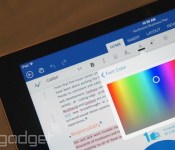
Touch-enabled Office could be headed to Android ahead of Windows 8

Microsoft has been quite overt with its mobile-minded strategy, and now it seems a touch-friendly version of Office is headed to Android next — before it arrives on Windows 8. ZDNet reports the productivity suite will outfit Google’s OS ahead of Microsoft’s own devices, the latter of which is now said to be pushed to early 2015. When speaking at the Code Conference last week, CEO Satya Nadella disclosed that touch-enabled Office apps hit the iPad first due to its massive lead in market share. That being said, with the bulk of mobile users on iOS and Android, it seems Microsoft is truly taking aim at bringing its popular software to as many users as possible, even if they aren’t using its OSes on the daily.
Filed under: Tablets, Software, Microsoft
Via: Android Central
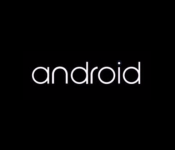
Google might have quietly changed the Android logo

The Android logo has remained pretty much unchanged ever since its inception but now a new 17-second video posted by @upleaks reveals the boot animation of the LG G Watch and a new logo.
The new Android logo appears entirely in a lower case font, with a softer feel to it than the previous somewhat robotic typefont of the previous logo.
Whilst Google hasn’t officially published any confirmation of it changing the Android logo, we are left to wonder if this is just attributed to Android Wear, or if we’ll begin to see the new softer logo rolled out in a wider sense.
SOURCE: TheVerge

The post Google might have quietly changed the Android logo appeared first on AndroidGuys.
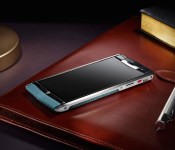
Vertu’s Signature Touch puts the luxury back into specs

It’s been a year and a half since luxury phone maker Vertu ditched Symbian in favor of Android, thus slowly catching up with the rest of the mobile market. Its first Android phone, the Ti, fell behind the curve with its dual-core processor, tiny battery and low screen resolution; then the more affordable Constellation arrived with a larger screen but also let down by a similar chip. Somewhere along the line, though, Vertu finally decided “enough is enough.” The result is this good-looking Signature Touch which, for a change, packs pretty much everything you’d expect on a modern flagship smartphone: a 2.3GHz quad-core Snapdragon 801 chip, a 4.7-inch 1080p display, Cat 4 LTE radio (with bands covering many parts of the world), NFC plus Qi wireless charging.

The goodies don’t stop there. Most notably, the 13-megapixel main camera is actually certified by the renowned camera maker Hasselblad, so we look forward to giving it a test drive. Then there’s the acoustics part: This new model packs a pair of speakers that are tuned by Bang & Olufsen, which should sound just as loud and crisp as the ones on the Ti. And if you’re into it, the speakers also support Dolby Digital Plus surround sound. While they’re at it, Vertu also got B&O to help craft the optional over-ear headphones, which feature aircraft-grade aluminum, lamb leather and volume remote control. You can even get a Vertu-branded Bluetooth speaker for the phone, but it likely won’t sound as good as the B&O-tuned headphones.
The Signature Touch also features a 2.1-megapixel front-facing camera, 64GB of storage (no microSD expansion) and a modest 2,275mAh battery. Like its predecessors, this Android 4.4 device is hand-assembled with several tough materials, including Grade 5 titanium for the casing, toughened zirconia for the ear pillow and a large piece of fifth-gen sapphire crystal for the screen. Then you get to pick the skin — calf, lizard or alligator — and a color it offers, if any (we dig the Claret Leather and Pure Jet Red Gold editions). You end up with a 192g-heavy, 10.65mm-thick device, which is a given for such a tough, masculine luxury device.
Speaking of luxury, Vertu’s renowned concierge service plus exclusive access to events are included with this new phone, and you can check them out via their respective apps. However, it’s worth reminding that the concierge service is only free for the first year, and then it’s about $2,800 each year should you wish to keep using it. The Signature Touch also comes with the Vertu Certainty package, which includes iPass’ complimentary global WiFi, as well as Kaspersky’s security apps plus Silent Circle’s communication encryption service.

As nice as the Signature Touch sounds, let’s face it: Most of us here will never splash out $10,300/€7,900 for the base model, let alone $14,900/€11,500 for the maxed-out Pure Navy Lizard flavor. But then again, it’s made for folks with extraordinarily deep pockets, instead of us mere mortals. On the bright side, we won’t need to feel sorry for those who end up buying this surprisingly up-to-date bling phone, and Vertu deserves at least a pat on the back for finally recognizing and fixing its age old problem. Now, do excuse us while we set up a crowdfunding page to help us get a, ahem, review unit.
Filed under: Cellphones, Mobile
HTC One (E8) announced

Following the launch of their flagship M8 smartphone, and some recent rumors, HTC has announced their new HTC One (E8) smartphone.
This follows a now-popular trend of ‘lower-end’ phones being built with a hefty set of features and/or specs and being both marketed and priced very aggressively to reach the masses.
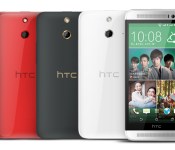
This device is quite similar to the M8, with a few design revisions to keep it more accessible (read: affordable) than its flagship cousin. The body of the phone is polycarbonate in lieu of aluminum (but still is uni-body). The E8 loses the HTC “Duo Camera” (which included the “UltraPixel” camera and a 2nd lens, used for an increase in autofocus speed and accuracy), but does retain a more traditional 13MP rear and 5MP front cameras. Also still included is the HTC “BoomSound” speaker arrangement, MicroSD card slot, Android KitKat 4.4, Sense 6, LTE, 5″ screen, and “MotionLaunch” (gesture-based controls without having to wake up the device).
Also a now-popular move, HTC is offering the E8 in a variety of stylish colors, including Polar White, Electric Crimson, Maldives Blue, and Misty Gray.
The questions that remain are availability and price. It’s known that the E8 will initially launch in China, but we are unaware of HTC’s plans to extend the E8′s availability to further regions. Regarding price, that is still up in the air, but if this device is to follow the aforementioned trends, expect it to be much more appealing to the more every-man customer.
As more details and information emerge, we will keep you in the loop!
VIA: HTC
The post HTC One (E8) announced appeared first on AndroidGuys.

HTC’s ‘Vogue Edition’ One (E8) is around half the cost of the M8

Just as we were getting bored of the leaks about the plastic HTC One “Vogue Edition,” the company has finally decided to announce the only thing that we actually care about: its price. Well, according to the announcement in China, this dual-SIM LTE phone — codenamed “E8″ — is launching there for CN¥2,799 or about $450 unsubsidized. That’s almost half as much as the metallic M8 and, more importantly, the Samsung Galaxy S5 — both of which pack near-identical guts as the E8. That’s certainly very competitive, though not quite OnePlus-level competitive. While we wait for an actual launch date for both China and elsewhere, we’ve got a detailed spec sheet after the jump comparing the E8 to the M8. Enjoy!
| HTC One (M8) | HTC One (E8) | |
|---|---|---|
| Dimensions | 146.4 x 70.6 x 9.35mm | 146.42 x 70.67 x 9.85mm |
| Weight | 160g | 145g |
| Screen size | 5.0 inches | |
| Screen resolution | 1,920 x 1,080 (441 ppi) | |
| Screen type | S-LCD3 with Gorilla Glass 3 | |
| Battery | 2,600mAh (non-removable) | |
| Internal storage | 16GB / 32GB | 16GB |
| External storage | MicroSD (up to 128GB) | |
| Rear camera | 4MP UltraPixel, f/2.0, 2.0µm pixel size, 1/3″ sensor size, 28mm lens | 13MP, f/2.2 |
| Front-facing cam | 5MP, f/2.0, BSI, wide-angle lens | |
| Video capture | 1080p | |
| NFC | Yes | |
| Radios |
GSM/EDGE (850/900/1800/1900) (All); CDMA (800/1900) (Verizon, Sprint). HSPA+ EMEA: (850/900/1900/2100) with HSPA+ up to 42 Mbps LTE EMEA: (800/900/1800/2600) |
GSM/EDGE 850/900/1800/1900 MHz (SIM1 & SIM2) HSPA+ 850/900/1900/2100 MHz (SIM1) LTE China: FDD 1800/2100, TDD 2600 (SIM1) |
| Bluetooth | v4.0 with AptX | |
| SoC | Quad-core Qualcomm Snapdragon 801 (2.5GHz in Asia/China; 2.3GHz in other regions); Adreno 330 GPU | |
| RAM | 2GB | |
| SIM slot | Nano SIM | Dual Nano SIM |
| Connectivity | MHL, DLNA, IR, GPS/GLONASS | DLNA, GPS/GLONASS |
| WiFi | Dual-band, 802.11a/ac/b/g/n |
Dual-band, 802.11 a/b/g/n |
| Operating system | Android 4.4.2, Sense 6.0 | |
Filed under: Cellphones, Mobile, HTC
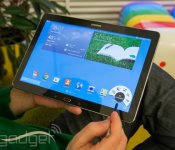
Samsung’s Galaxy Tab 4 and Note Pro reach AT&T sporting giant price tags

Want to get one of Samsung’s latest and greatest Android tablets with fast LTE data on AT&T? You can snag one very soon… but it might cost you a pretty penny. The carrier will offer both the Galaxy Tab 4 10.1 and Galaxy Note Pro 12.2 on June 6th at respective prices of $380 and $799 on-contract. While those figures are in the ballpark of what you’d expect for big, cellular-equipped slates, they’re not exactly pocket change. And you’ll want to be sitting down before you look at the off-contract prices. The ‘budget’ Tab 4 will cost $480 without obligations, while the Note Pro will set you back $900 — $50 more than its already expensive Verizon counterpart. If you have the cash to burn, though, these are solid options for staying online during your next big trip.
Filed under: Tablets, Wireless, Samsung, AT&T
Source: AT&T Consumer Blog

[OP-ED] Why I think iOS 8 is good for Android

A banner spotted at WWDC 2014 prior to Apple’s keynote – courtesy of The Verge
Today’s tech news has been dominated by the announcements made by Apple at WWDC 2014 happening now in San Francisco. As many expected, Apple is making their yearly iteration to their mobile OS platform, iOS, bringing it to iOS 8 sometime in Fall this year. And as usual, some of the improvements that Apple is making in iOS 8 bear some eerie resemblance to features already featured on Android; some commenters have already said that this seems more like Google I/O 2011 rather than WWDC 2014, but we’ll leave that argument there. The last few iterations Apple has made to iOS have been huge in bringing the platform back into contention with Android on a functionality level which some have suggested should worry Android and Google. However, I think it’s actually the opposite: I think that iOS 8 is good for Android, and here’s why.

Image courtesy of The Verge
The upgrades to iOS are extensive, and a full list of those can be found pretty much anywhere you look on the internet today. Widgets, predictive text, third-party keyboards, or automatic photo backup are all nice, but we’ve seen it all before, some of which Android has had for many years. The improvement that caught my eye, however, is the actionable notifications. This currently only has a very basic implementation on Android right now, suffice to issue basic button commands, but Apple’s implementation will allow you to complete entire actions, like reply to a message, all from the notification. While it remains to be seen how useful this actually is in reality, it’s made more interesting by the fact that this isn’t available on Android yet. And this is where this becomes useful to Android.

Image courtesy of The Verge
Depending on how these features are accepted by its users, Android may choose to do something similar in the next major iteration of Android. If you’re an Apple fan and you somehow feel incensed or smug about the suggestion that Android should copy Apple, just remember that Apple has been catching up to and copying Android for years; notification bars in iOS 7 and now widgets and third-party keyboards in iOS 8 should be evidence enough.
 And really, the argument shouldn’t be who’s copying who, or even who is better than the other. Sure, fans on either side of the fence are going to fight to the death about who copied who and who’s done what functionality better. But at the end of the day, the people who benefit most from these two gargantuan mobile platforms doing battle is us, the consumers. While it’s arguable which platform is making better progress lately, it’s kind of a false dichotomy as the competition between the two drives them to improve things for the common good.
So the next time someone tells you that iOS has something that Android doesn’t have, remember that the competition is a good thing and that you can be sure that Android and Google will have something in store to one-up Apple in the future, and inevitably, vice versa somewhere along the track.
What do you think about Apple announcing iOS 8? Do you think the competition between Apple and Google is a good thing for mobile platforms? Let us know your thoughts below.
Sources: The Verge, Android Police
//<![CDATA[
ord = window.ord || Math.floor(Math.random()*1E16);
document.write('’);
//]]>
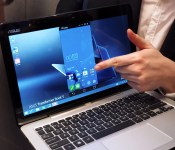
Up close with ASUS’ quirky Windows laptop / Android phone hybrid

Computex hasn’t even officially started, and we’re already blown away by ASUS’ rather eccentric Transformer Book V from this morning. The name doesn’t tell the whole story; it’s actually a Windows 8.1 hybrid laptop that lets you dock a Android phone on its back — a bit like the PadFone concept except the tablet has its own brain. That’s right, you can use both the 12.5-inch tablet and the 5-inch LTE phone simultaneously with their own brains. When docked, you’re shown the phone’s live Android phone interface within Windows (as pictured above), but you can also toggle the full Android tablet interface. It’s easily the most versatile product we’ve seen of late, but is it practical?
First of all, we should note that the Transformer Book V is apparently still about six months away from market, which may explain why ASUS only had one prototype available for hands-on. The design wasn’t even final; it’s supposed to look very much like the ZenFone 5. Understandably, the early software didn’t perform that well at the time: I couldn’t swipe between Android home screens in the windowed mobile interface, for instance. That said, I could launch Android apps just fine in the window, and it didn’t take long for the Android mobile interface to pop up in Windows after docking. It’s like Motorola’s Webtop implementation but much more powerful. On a similarly positive note, switching between the Android tablet interface and Windows was just a matter of pressing one button on the keyboard.
Since the docked phone is recognized as an external device in Windows here, you’ll still have to handle file transfer the usual way via Windows Explorer, rather than through a more seamless experience with some sort of drag and drop action over the Android interface (at least not for now, anyway). On the bright side, you can transfer files and charge the docked phone without a cable nor having the phone lie around the laptop. Another plus is with tethering enabled, you also have yourself an LTE-enabled Windows or Android laptop.
For a tablet of such size, 800g is a pretty nice weight, and this means you’re still under 1kg in total when you dock the 140g phone. There was no mention on the weight of the keyboard dock, but I found the full package to be of acceptable weight — my guess is somewhere just around 1.6kg. This is based on the fact that the slightly larger 13.3-inch Transformer Book T300 has an 800g keyboard dock with a built-in battery, so the Transformer Book V’s battery-less dock should be slightly lighter.
Due to the prototype nature of the device we played with, we’ll save our hardware comments for a mass production unit. The only complaint we have so far is that the tablet’s 1,366 x 768 display is an eyesore for those who are used to much sharper screens; though if — and it’s a big “if” — this product does take off, there’s a good chance that the displays will be upgraded.
Regardless, we think ASUS is at least headed in the right direction: the tablet dock is no longer dependant on the phone; and in fact, it’s a full-fledged Windows PC on its own but with the versatility of having Android run in Windows or run natively. But as with many products, this concept’s success will ultimately depend on the pricing. We also hope this Windows/Android hardware combo doesn’t mean ASUS has given up on the idea of a Windows Phone-powered PadFone.
Hands-on photos by Zach Honig.
Filed under: Cellphones, Laptops, Tablets, Mobile, ASUS
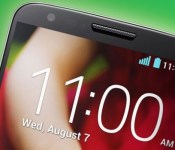
Tip: Get the LG G3 SmartK Keyboard for any Android device

When LG unveiled their LG G3 they also showed off their Smart Keyboard which claims to improve contextual recognition and decrease the margin for input errors by 75%, as well as a ton of customisation, including the ability to adjust the keyboard height. Now, any rooted Android device can enjoy LG’s Smart Keyboard.
The guys over at XDA have managed to extract the LG Smart Keyboard from the ROM of the G3 and have made it available for all rooted Android devices running Android KitKat 4.4.
You can either flash it via recovery or install the .APK.
SOURCE: XDA
The post Tip: Get the LG G3 SmartK Keyboard for any Android device appeared first on AndroidGuys.

