


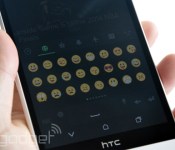
New emojis let you throw shade with a single symbol
 http://www.engadget.com/2014/06/17/250-new-emoji/
Someone once said that a picture is worth a thousand words, so a smiling, yellow face is probably worth at least 160 characters. If you ever found the current run of emoji a little too stifling, some 250 new ones could be en route to help recreate the rest of your favorite album covers. But don’t check your Android or iOS device for shiny turds and other icons just yet, because, as The Verge points out, it’s up to those platforms to implement the Unicode Consortium’s new symbols on their own. Given Apple’s push for more diversity in emoji, that could happen sooner than you think. Just what new glyphs are there, though? Alongside some slightly more aggressive icons, a printer, trackball and “old personal computer” are among the lengthy list over on Emojipedia. You know, technology that teenagers know all about. Once you start seeing the likes of those (and the Vulcan split-finger greeting) popping up in Snapchat and elsewhere on your phone, you’ll know who to thank.
Filed under: Cellphones, Mobile
Via: The Verge
Source: Unicode, Emojipedia

Parallels’ new remote desktop apps let you control your PC like a phone

Remote desktop apps have an easier time working on tablets, where you have a lot of display area to work with, but they’re frequently awkward on smartphones. Wouldn’t it be nice if you could control a PC at home like it was just another phone app? Parallels is tackling that challenge head-on with smartphone-friendly versions of its Access app for both Android and the iPhone. Much like the earlier iPad release, the new titles give you a remote view of your Mac or Windows PC that’s optimized for your mobile platform of choice. You can launch programs, select text and type almost as if the computer’s software were built for a small screen. On the Android client (which also handles tablets), Parallels will even let you create shortcuts to jump directly into favorite desktop apps.
The wider support comes alongside a bundle of fairly hefty upgrades. It’s now possible to wake up your computer in some circumstances, so you won’t have to always leave it running for Access to work. You can also choose from extra screen resolutions if you need to see more of your desktop at a glance, and apps can borrow your device microphone for speech recognition or a quick voice chat. Those on iOS have the added perk of a file browser that makes it easier to track down that all-important presentation.
For some, the biggest change may be the cost of entry. Parallels has cut its personal subscription price from $80 to $20 for one year, and $35 for two years ($30 if you sign up by the end of June). That’s obviously a much better value, particularly if you only occasionally need to reach your PC. There’s also a new business tier that lets companies hook up five people for $50 per year. All the new apps are free to try for a couple of weeks, so it won’t hurt to give them a shakedown. Who knows — they might save your bacon the next time you leave your laptop at home.
Filed under: Cellphones, Tablets, Software, Mobile
Source: Parallels
Moto X+1 details and potential launch date surface

Motorola is getting ready for their next big device, which will be known as the Moto X+1. We now have more information and leak shots of the smartphone, courtesy of TK Tech News. According to the source close to Motorola, it will feature a 1080p display (we heard about a 5.2 inch one), 2GB of RAM, 16GB, 32GB or 64GB of storage, a better camera and a microSD card support.
When you think about Moto X, a phone with mid-range specs comes to your mind, but it seems Moto X+1 will change that perspective and the smartphone will be good enough to go head to head with big boys like HTC One and Samsung S5.
They further said that Motorola will release it in August or September.
 Are you looking forward to Moto X+1 as well? Do you think it can revive Motorola’s legacy? Let us know in the comment box below.
Source: TK Tech News
The post Moto X+1 details and potential launch date surface appeared first on AndroidGuys.

Does RAM matter? Here’s the top RAM-packed Android smartphones

As device functionality develops and you begin using your smartphone for more resource intensive tasks, the age old question is beginning to rear its head as to if RAM in your smartphone really affects performance that much, and should it play a part in your purchasing decision.
That’s why we’ve listed the RAM installed in the latest Android smartphones to give you an idea of the most common RAM capacity on this years flagships.
Whilst the Samsung Galaxy Note 3 is out in front with 3GB of RAM, clearly the market is currently opting for installing 2GB of RAM into most of the flagship devices. So does a smartphone really need more than 2GB of RAM.
RAM, or Random Access Memory, is a place where data is held temporarily to present to the CPU and is constantly reading and writing to memory blocks at extremely fast rates. Resources running in RAM can be called at a far quicker rate than just from your internal or external storage. Running apps use RAM to performs their tasks so theoretically the more RAM you have the more apps you can have open right? Well, kind of. Android is a lot better at managing applications and allocated memory than it used to be but in the same breath applications are becoming significantly more resource hungry.
So despite only the Samsung Galaxy Note 3 having 3GB of RAM, the smartphone market have opted for 2GB of RAM as the optimal memory to have installed in a smartphone given the current architecture in devices. Couple this with how well Android manages available memory and 2GB is more than sufficient for current resource requirements – go ahead and check out how much RAM memory your device has available.
Whilst 2GB of RAM is sufficient now, the whole story will be different when 64-bit Android is officially rolled out. So back to the original question of if RAM matters in your purchasing decision? The answer is to an extend; it’s not so much of a case of the maximum amount of RAM matters, but more of a case of the minimum, and you should be thinking very carefully before purchasing a device with anything less than 1GB of RAM in 2014.
The post Does RAM matter? Here’s the top RAM-packed Android smartphones appeared first on AndroidGuys.

Kyocera Hydro XTRM (T-Mobile Business) Review

At First Glance
The Kyocera Hydro XTRM is a 4G LTE capable Android powered handset with an IP57 Rating against water and dust. This device is available in the United States (see: U.S. Cellular), on the T-Mobile Business and MetroPCS networks. Maybe it’s just me but I feel the Samsung Galaxy S5 Active borrows a few design cues from the Kyocera Hydro XTRM; however, stylistically this is pretty standard with durable devices these days.
Design and Hardware
The XTRM features a standard dark panel around the display with average bezels around the sides. The top and bottom, however, have quite a bit more bezel, providing less of a screen-to-device ratio than we would have preferred.
Around the sides, there is a thick border trim that almost feels like a bit of a metal border. On the rear of the device, you’ll have a removable “micro diamond-cut” plastic battery door with an O-ring seal to protect against water.
There’s a 2000mAh removable battery packed in, with microSIM and microSD card support. The dual-core Qualcomm Snapdragon S4 Plus SoC (MSM8960) powered at 1.2GHz runs the device with 1GB RAM, and allows for basic/standard smartphone. It, of course, also comes with your basic GPS, WiFi, Bluetooth, etc. Memory will be 4GB, with only 1GB user available, however storage can be expanded via a MicroSD card up to 32GB.
Display
With a color plastic overlaid TFT LCD display and 480 x 800 resolution, the 4-inch display isn’t wonderful but gets the job done without looking bad or vastly hindering visibility. It’s worth noting that this unit feels much smaller in hand as compared to other smartphones on the market.
Durability

The Hydro XTRM can sit under water (~1m deep) for up to 30 minutes and is dust and shock resistant. In other words, you’ll be better protected against accidental damage than with most other devices. To be extra safe, it is always best to ensure that the battery door with the water-seal is fully and securely tight and sealed before getting this phone anywhere near water. This smartphone does not have any of those potentially annoying MicroUSB or headset port covers, yet manages to be water resistant.
We’ve dunked this phone in water, dropped it here and there, ran water directly over the device and much more; the Hydro XTRM was not phased by any of our bad behavior. It’s able to take life’s spills without problems, but do remember the phone should not be used regularly underwater and should be dried immediately after getting wet of course.
Sound Quality
Audio quality was surprisingly pleasing with this device. Our test calls proved to be loud and crisp, which we expected as many users will be using this phone around construction or loud noise areas. The area where we were most impressed by was the speaker/speakerphone volume which was loud but not as quite crisp as the earpiece.
Software and Battery Life
This smartphone runs Android 4.1.2 Jelly Bean out of the box. While certainly not the latest, it definitely runs just fine and is compatible with most everything found on the Google Play Store. There is, of course, a small downside to not having Android 4.4 KitKat. Specifically, we’re referring to usage of resources and security improvements. Hopefully we’ll see an update at some point for this model.
Kyocera has a bit of a funky skin running over 4.1; frankly, it reminds me of Android 2.3 manufacturer overlays (with a 4.1 hybrid style). Simplicity was kept in mind, while keeping the best features of Jelly Bean.
Battery Life is tricky with this phone, averaging at around 5-6hrs with light usage with data on. Strangely, on some days with heavier usage we received around 10-14hours, or the polar opposite of 3-6hrs. Sadly, it was pretty inconsistent in our testing. It is worth mentioning that the coverage area during testing was being upgraded on T-Mobile which may have contributed to the fluctuation in consistency. The phone does features a Battery ‘MaxiMZR’ similar to other Power Saving modes with other devices, something we have yet to see in stock Android in even the latest versions as of the publish of this article.
Camera
There is a 5-megapixel camera on the rear of the phone with a 1.3-mgapixel front-facing shooter. Both are pretty basic in terms of quality with no standout features to share here. Note there is an LED flash included on the rear of the phone.Overview & Cost
This device did take a bit of getting used to as a daily driver during our testing period as we came from a higher powered smartphone. Indeed, we noticed the differences after using something more robust. Average, and first time buyers, though, may not see any visible lag or under-performance. Kyocera sticks to what’s important for industrial users and the more accident prone customer. If you are looking for the latest and greatest (with or without element resisting features), this device is most certainly not for you.
The Hydro XTRM is a great choice for those needing a basic and durable Android smartphone that can handle the elements. Summarily, it’s a decent 4G LTE handset with essential functions and few extra gimmicks.
Whether you need this as a basic device, backup, or nearly weatherproof phone, check out the XTRM. U.S. Cellular has recently discontinued this model however you can find the Kyocera Hydro XTRM at T-Mobile Business (pricing varies) and for $79.99 at MetroPCS.
The post Kyocera Hydro XTRM (T-Mobile Business) Review appeared first on AndroidGuys.

Samsung hints that its next Galaxy Note phone will have a quad HD display

It’s no surprise that Samsung would make a new Galaxy Note smartphone given the series’ very healthy sales, but just how is the company going to improve on the design of the Note 3? By giving it a quad HD screen, apparently. The company has posted a web profile for an unannounced SM-N910A (the Note 3 for AT&T is the SM-N900A) that includes a 2,560 x 1,440 display, hinting that the future Galaxy Note will pack visuals roughly as sharp as LG’s G3. It also backs what we’ve heard about Oculus VR getting greater-than-1080p OLED screens from the Korean tech firm. There aren’t any other big clues in the profile, but they come on the heels of import data that suggests the next Note will maintain the same 5.7-inch screen size as its predecessor — Samsung may be resisting the urge to produce a truly gigantic phone like the G Pro 2 or Lumia 1520.
As for what’s behind that new panel? That’s tougher to prove. SamMobile claims that the new Note will be powered by a speedier Snapdragon 805 or Exynos 5433 processor (depending on the market) and ship with a newly stabilized 16-megapixel camera. Those make sense when Galaxy Notes are historically more powerful than the Galaxy S models they follow, but nothing’s set in concrete — we wouldn’t rule out a surprise or two. If the profile is accurate, though, fans of Samsung’s larger handsets have at least a visual upgrade to look forward to this year.

Filed under: Cellphones, Mobile, Samsung, AT&T
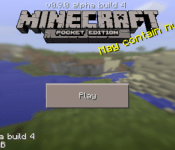
Whatcha Playing? Minecraft PE by Mojang

Plenty of times it has been proven that a game does not need to have fancy graphics; sometimes it just needs a good story, or fun mechanics i.e. how the game plays. One great example of this is Minecraft. With very simple graphics, no story, and a choose-your-own way of playing, this game rose to the number 1 sold app in the Google Play Store. This one game proved that even indie games can be on the same level as major labels like EA or Activision. This video game inspired even the greatest of video game creatures to branch off and make indie games.

What The Game Is About:
Nothing really. No joke you play as a character you can name and one day soon with an update change the way it looks, and just do what you desire in this game. This game has two modes of play styles. One for the creative type and the other for those who like to survive. In creative mode you are given every block in the game to create what you can imagine and with each update, it is like adding extra colors on your pallette. The other mode of play is survival. This is not for the faint hearted. Your are randomly placed with nothing and have to live however you want. Want to build a house, you have to gather the materials needed. Need to fight off monsters you need to create a sword to kill monsters faster. Want to play survival without the monsters? You can, there is an option for peaceful mode so no monsters will spawn.

Who Is This Game For?
Anyone who loves Lego toys. I can not explain it any clearer. I a full grown adult that still to this day plays with Lego toys. It is a good thing I have kids because it gives me an excuse to buy them. However they are expensive and create a big mess. Minecraft PE however is a digital version of this so the only thing that you have to worry about is battery life.

Final Thoughts:
I bought this game when it first released on the Android Market, now called Google Play Store. There is no other game that I have ever played in my life that would come close to the hours spent playing this game. The best part is once I get bored with the game it would get an update that adds more fun features to the game. One of the things I also enjoy about this is the local multiplayer. I can play with my kids and be amazed each time of what they build.

In conclusion, this is a great game that every once and a while gets better. Even though it is a mobile version it inches closer to the original PC version. Right now would be a good time to get into the game with the newest update coming soon, bringing plenty of goodies along with it. Even though it is an expensive game, it is one that is hard to put down once you start.
//<![CDATA[
ord = window.ord || Math.floor(Math.random()*1E16);
document.write('’);
//]]>

Firefox OS apps run like native apps on Android

The beauty of apps written for Firefox OS is that they’re basically just web apps — they’re built primarily on Java Script and HTML5. That means if you can run the app on Mozilla’s mobile operating system, you can run them in its browser too. In fact, if you install Firefox 29 on Android, you can run so-called Open Web Apps (OWA) on your Google-powered phone. Not only that, but they’re not confined to the browser. Apps installed from the Firefox OS Marketplace are treated just like native apps. They get their own icon in the launcher and home screen, can be uninstalled from the menu and run without the usual browser UI clutter (such as an address bar or back button). Of course, the performance probably won’t match truly native apps, and most won’t abide by Android’s interface conventions. Still, there are some developers who might enjoy the idea of building an app once and running it across all platforms.
Via: Android Community
Source: Mozilla
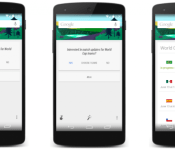
Did Google just leak the existence of Android 5.0?
 Google isn’t normally a company gives away much information before they are ready to do so, and they seem to have become masters at teasing future products with relatively inane details. One tactic that they are known to use is showing the number of the next major Android software build in the clock of Google app screenshots. The latest example of this has been when Google showed off their new World Cup features in Google Now. Perhaps only subtle enough for the people who know Google’s tactics, the clock in these screenshots shows the time “5:00″ which suggests the next build of Android will be Android 5.0.
Previous times that Google has used this method of teasing has included Gingerbread (2:30), Ice Cream Sandwich (4:00), and Jelly Bean (4:20). Current screenshots that Google uses features the time 4:40 of course representing the current build of Android, Android 4.4 KitKat. We’ve long wondered whether the next version of Android would be 4.5 or 5.0, but this latest tease from Google surely confirms that it is going to be Android 5.0, and with Google I/O just a few weeks away, it seems almost inevitable that we’re going to see something related to Android 5.0 at the event.
What do you think of the next build of Android being Android 5.0? What do you think it’s going to be called? Let us know your thoughts in the comments.
Source: Twitter via TalkAndroid
//<![CDATA[
ord = window.ord || Math.floor(Math.random()*1E16);
document.write('’);
//]]>

Compare the best Android smartphones on the market today

Deciding which Android smartphone to buy can often be a difficult decision, with many different manufacturers offering varying specs, hardware combinations, and screen sizes.
If you’re undecided about just which Android smartphone you would like to purchase, then check out our handy comparison chart below. We’ve ranked the latest and greatest Android smartphones from ratings calculated by you to reveal just which devices are topping the charts.
Do you agree with the rankings? Drop us a comment in the section below to tell us what your favourite device of all time is, and why.
The post Compare the best Android smartphones on the market today appeared first on AndroidGuys.
 AIVAnet