


Android personal unlocking will bypass security in ‘trusted environments’

Google wants to make it faster to unlock your Android device in trusted environments with a new feature called “personal unlocking.” For instance, if your Bluetooth watch is connected and nearby, you’ll be able to swipe open your home screen without an unlock code. If the watch is off, however, you’ll need to punch in the code. It also won’t challenge you for a code under certain conditions like your locations, and even by sound of your voice. That’s part of the new Material Design UI coming up for future versions of Android which you’ll see in the upcoming versions.
Filed under: Cellphones, Mobile, Google
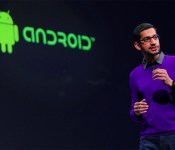
We’ll see a new version of Android previewed at Google I/O, Sundar Pachai confirms

Sundar Pachai, head of Android, has been talking to Bloomberg ahead of Google I/O which is about to start in a few hours. They’ve talked about all sorts of things, but what caught our eye was an apparent confirmation we’ll see a new version of Android previewed at this year’s Google I/O.
I’m willing to bet this is what most of you have been wanting to see at Google I/O, aside from maybe some Android Wear software and hardware. Well, we’ll see at least a piece of it. Don’t get your hopes all the way up though, we’ll see it previewed, not released. That will probably happen later this year.
While you wait for the Google I/O to kick off in order to see the new Android in all its glory, check out some leaked screenshots which allegedly show a piece of it.
Source: Bloomberg
Via: Pocketnow
The post We’ll see a new version of Android previewed at Google I/O, Sundar Pachai confirms appeared first on AndroidGuys.
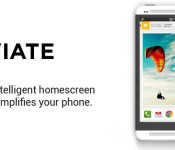
Yahoo Aviate: Flight out of beta

Yahoo Aviate, after spending quite some time in beta, is finally ready for the public. Yahoo has removed the invite system and the app no longer requires you to have an invite code for access. They have also added a UI update providing a cleaner launcher than before.
For those who aren’t yet familiar with this home replacement app, Aviate is an “intelligent” homescreen that shows you different shortcuts and widgets based on your location and current activities. It uses where you are and the time of day to show you what you would need at that moment.

- Wake up, and Aviate automatically shows you how long you’ve slept, the weather and news for the day.
- When at work, Aviate gives you easy access to all the apps you need to get your job done, plus intelligent calendar features like one-tap calling to conference calls, emailing to meeting attendees and more!
- While on the road, Aviate automatically gives you traffic conditions and directions home.
- Go to dinner, and Aviate automatically shows you photos, tips and restaurant reviews.
- Plug in your headphones, and Aviate shows you music apps and extra information about the artist/band you’re listening to, like recent Tweets, upcoming concerts and bios.
Aviate is supports devices running Android 4.0 and above. With the update out of beta, Aviate added a Favorite Contacts function to keep the people you contact the most one swipe away. This is all done automatically without the need for the user to manually set contacts.
Everything is done automatically. Your apps get categorized by genre and they are placed on the corresponding “space” for you. It is an automated launcher designed to have what you need ready before you need it.
Source: Yahoo
The post Yahoo Aviate: Flight out of beta appeared first on AndroidGuys.

How to watch Google I/O keynote live stream

Google I/O is Google’s biggest event of the year. There are many of you who will want to check out Google’s keynote and probably some other stuff that will be live streamed from this year’s Google I/O. You can do all that if you follow this link.
Google I/O keynote is starting in a couple of hours at Moscone West Convention Center in San Francisco. 9am PDT, which converts to 4pm GMT or 12pm EDT. Sundar Pachai already confirmed we’re about to see the next version of Android previewed at this year’s Google I/O. We’ll also see some Android Wear hardware and software, so if you’re interested in purchasing Moto 360 or LG G Watch for example or just interested in Android Wear in general stay tuned. This is just a piece of the puzzle though, Chrome will definitely be a part of the event along with a bunch other Google stuff. We’ll get mainly software news, but who knows, aside from Android Wear hardware we might even get a preview of a new Nexus tablet if not see it released in the next 2 days.
For our Google I/O predictions visit this link. We’ll do our best to get you the latest news from Google I/O as they happen, so stay tuned to AndroidGuys, SmarterWatching and ChromeWatching for that.
The post How to watch Google I/O keynote live stream appeared first on AndroidGuys.

Meet the multilingual robot newscaster with a very human face

Pepper the robot looks like a robot, thanks to an almost-anime design. What then, of Kodomoroid (above, center) and Otonaroid (right)? Both androids have found employment at Japan’s National Museum of Emerging Science and Innovation, as part of its new ‘Android: What is human?’ exhibit. Kodomodroid (‘child android’) can recite news (and weather) reports from around the world in a variety of voices and languages. Meanwhile, Otonaroid (‘adult android’) is steered by a human nearby and will work as a guide for the exhibition. Museum visitors will be able talk with the adult robot (as well as take control themselves), but will they be able to look either android in the eye?
This exhibit is right in the center of the Uncanny Valley: the dip in comfort we feel when robot (or anything) becomes something almost human. These androids look human, but they’re certainly not and it’s an odd feeling when you’re stood right in front of you. When your eyes meet, it’s weird and probably why I got flustered trying to talk to the robots. But it’s that very sensation and the bigger questions that robots pose which form the backbone of this exhibition. What is human? How far do androids have to go to become indistinguishable from humans? Do we even want that? To help frame the question, the museum’s collaborated with ATR Hiroshi Ishiguro Laboratories — you might recall Ishiguro’s Geminoids series, and there’s a similar attention to detail, if not more, on these animated mannequins.

Each one is made down to the detail, with plaster casts of their muse as well as special kind of silicone to better replicate the appearance of human skin and muscle. We managed to get up close to the adult model and touched her hand in what we hoped was the least creepy way. The surface is understandably cold, but it really does feel like skin: there’s a texture and a give to it… and that feels odd too. We talk a little in English, more in Japanese and lip sync isn’t exact, more of an estimate, although the Otonadroid will mimic its human controller’s head and even eye movement. The arms can also move, but this is more for the overall effect than any particular function: these androids are getting closer to the human aesthetic, even if there’s still a few tells — they’re not meant for mechanical tasks.

The child robot remains half-hidden behind its desk, but the adult one is on full show: her hands fidget, she blinks, looks around, even bows when she needs too. Both robots are utilizing information from outside their own remit. With the newscaster, she’s parsing existing news, even if the pronunciation is pretty spot-on, and we’re told that in the near-future she’ll do it in multiple voices — and languages. She’s setting up her broadcast residence within the Miraikan, and will give visitors news reports and weather forecasts throughout the day. Between the two humanoid robots, the Miraikan has added Ishiguro’s Telenoid to the exhibition.

Admittedly, Telenoid is a veteran android. It’s been around for a few years and is another remotely-controlled robot, coated in a similarly silicone skin, although this one’s certainly less humanoid. Then again, that face probably gave it away. The face is intentionally minimal, however: the robot was designed so that whoever ‘steers’ it will project their personality to it. It’s meant to be gender- and age-neutral. When we got to talk to it, the oddest part was lifting it up to our lap, as suggested by the museum staff. When you pick up a kid or a baby, there’s typically a degree of squirming, but Telenoid is more passive — only its neck and facial features move. The controller is positioned only a few meters away, and visitors will be able to talk and control Telenoid, which is monitored through an overhead camera and mics hidden behind the robot.

The exhibition is a rare chance to get up close with these high-end (and presumably expensive) robots and includes several other bots — even the world-famous Asimo. But what’s next? For Kodomoroid, it’s her (pre-programmed) dream to have her own TV show. She also wants to branch out into gourmet reporting — even though she doesn’t eat.
The exhibition opens today at the Miraikan, Tokyo.

Google will show off the new ‘L’ version of Android tomorrow

You can move one more item into the confirmed list for tomorrow’s Google I/O keynote: a new version of Android. Your guess is as good as ours as to which L-word treat Google plans to name its next iteration of the mobile OS, but as part of a lengthy profile for Bloomberg, senior VP Sundar Pichai reveals he will offer a “preview” at the developer event. It’s a new approach for Google, in publicly revealing the new version (which may have momentarily surfaced on its issue tracker yesterday) well ahead of its planned release later this year, but similar to the way Apple, for example, is rolling out iOS 8. Also confirmed is Android Wear, complete with manufacturing partners and new devices, while the plans for Android TV are still shrouded in rumor.
[Image credit: David Paul Morris/Bloomberg via Getty Images]
Filed under: Cellphones, Home Entertainment, Software, HD, Mobile, Google
Source: Bloomberg

Tune in to our liveblog of the Google I/O keynote tomorrow!

Google’s developer conference is but an annual affair, and it’s kicking off in 24 hours with its traditional keynote. We’ll be liveblogging it as it happens, and if it’s anything like past years, expect it to be incredibly long (last year’s went on for 3.5 hours, and we’re hearing this one will be around 2 hours) and packed with plenty of news for developers and consumers alike. So if you’re into anything Google-related, you’d best virtually skydive into the Moscone Center with us as we cover all of the company’s crazy antics. Bookmark the link below and meet us there tomorrow!
Google I/O 2014 keynote liveblog
[Image credit: Getty Images]
Filed under: Announcements, Mobile, Google
Icon packs that you must have on your Android device…Round Two

I’m an icon addict to the point of where I really need some serious intervention. But don’t call anyone quite yet, just let me present to you what I want to show off today, then decide if you want to make that call. That’s right, I’m going to show you some of the newest, hottest, most amazing icon packs in the Google Play Store today that you need to have installed on your mobile device. You can check out some of our older posts on this same subject here: Android Icons You Must Have as well as my first edition of this post from a couple of weeks ago here: Icon Packs You Must Have(Round One)
The good thing about the icon packs that I’m going to show you today is that they are so very simple to install and easy to set on your device. And when you do get them set on your device, they will theme your homescreen icons as well as all of your icons in your app drawer. That way everything looks nice, neat and uniform. Now, let’s get started with the first icon pack of several for the day.
NOTE: THIS ARTICLE IS SPREAD ACROSS FIVE PAGES
OffCorner Round by OffCorner Dev

I’m a sucker for round icons and I think OffCorner Dev knows this because he first released OffCorner Icons in a square format. Then I mentioned how nice they were and that I’d love to see them in a round version, and a couple of days later, even though he was doing finals and such, he provided me with a beta APK. I instantly fell in love with icons as you can see, the icon image itself isn’t centered on the background like you see in most all other icon sets. Something unique and different, along with the flat/simple design.
With over 880 icons, a dashboard app and an icon request tool, you can’t go wrong for only $1.29. Updates are quite frequent as well, making OffCorner Round a must have icon pack for all icon addicts like myself!

The1Lucent by The1Dynasty

The1Lucent by The1Dynasty is something a bit different than what we’ve been seeing here as of late. It’s not a long shadow icon set and this is really nice to see Roberto do something totally original. Using no background behind the icon, this set really stands out, especially with the bright, vibrant colors he chose to use along the way for a lot of the icons. You won’t find another icon set similar to The1Lucent anywhere around town.
Priced at only $1.99, The1Lucent provides you with 750+ hand-crafted icons to make your homescreen and app drawer superb to all others. Plus you get several custom made wallpapers as well as full support for the Muzei Live Wallpaper app.

The post Icon packs that you must have on your Android device…Round Two appeared first on AndroidGuys.

What’s on tap for Google at I/O 2014

Don’t let its DevCon facade fool you: Google I/O has plenty of interesting stuff for everyone. Most of the company’s big announcements come during the day one keynote, which we’ll be liveblogging tomorrow morning. This year’s theme is “Design, Develop, Distribute,” a slogan that doesn’t reveal any major clues about what we can expect (aside from the fact that Google is focused on new design, which we’ll cover in more detail later). But that’s what we’re here for — to figure it out! We’ve compiled a handy guide that discusses what to expect — and not expect — to see at San Francisco’s Moscone Center this week.
Android Wear

We’re not exactly taking a shot in the dark by predicting that Google’s new wearables platform will get a lot of attention at the company’s developer conference. Ever since it was officially announced three months ago, Google has given devs access to the platform via emulators and fed them with videos on the subject. Two of its hardware partners, LG and Motorola, also showed off their first Wear-enabled smartwatches, and all three companies have hinted that we should expect more details near the end of June.
While we feel safe placing bets on the chance that Wear will get plenty of face time during Wednesday morning’s keynote, we’re less sure of which hardware we’ll see — aside from the LG G Watch and Moto 360, that is. A Samsung-built Wear device is a solid guess, but what about the handful of other companies committed to supporting Google’s new platform (Fossil, HTC and ASUS)? Those camps have been pretty quiet of late, so it’s unlikely we’ll see a smartwatch from those manufacturers this soon.
Android redesign
Quantum Paper. Sounds like something straight out of science fiction, but it’s actually the rumored code name for a new design framework Google’s been working on for some time. First detailed by Android Police, this project is intended to offer a consistent user experience on the company’s products over multiple platforms, such as Android, iOS and the web. (We wouldn’t be surprised if this extended to Chrome OS as well.) We expect to hear more of this project at I/O, and it would make sense to see the new design elements implemented in a fresh version of Android. It’s been 2.5 years since Android 4.0 Ice Cream Sandwich introduced a completely different user experience; even if we don’t see a full upgrade, we’ll at least come out of I/O with a much better idea of what the next version of Android should look like when it’s ready.
Google Fit
Health monitoring is trendy this year, it seems. In 2014, Apple and Samsung have already introduced platforms that give users the opportunity to gather data about their personal health and provides them with advice on how to improve it. Now it’s Google’s turn to crank out a similar platform, according to Forbes. Known as Google Fit, the service is expected to collect and aggregate health data from apps and fitness trackers. While it’s unclear if this will be baked into Android or just available as a standalone app of some sort, it makes sense for Google to offer a health-related platform for developers and wearables companies. In fact, Fit may encourage more manufacturers to give Android Wear a shot, if Google makes it easy to tie the two platforms together.
Android TV
Television is a tough nut for Google to crack, so the company’s next effort in the space is Android TV. It’s rumored to be a platform that offers a simple user interface (known internally as Pano) focused on helping you find new entertainment options through recommendations. It’ll be similar to the company’s failed Google TV in a few ways, but it’s supposed to feature online media services and games. Developers will be able to create TV apps that have access to voice input and notifications, and content suggestions will sit on the home screen. Netflix and Hulu Plus are expected to be included, as are several other unnamed services.
Google will face the challenge of courting hardware manufacturers to the platform, especially those who may have had lackluster experiences with Google TV or are currently committed to other platforms (such as LG, which uses webOS on its televisions). Still, any company eager to take on Amazon, Apple, Roku and other set-top boxes may adopt Google’s new platform in the hopes of grabbing market share.
ATAP

Google’s Advanced Technology and Projects division is hard at work on two publicly known initiatives: Project Ara, which is focused on building a modular smartphone, and Project Tango, centered on 3D mapping and gaming using phones and tablets. At least one of the I/O sessions is dedicated to the group, so there’s a solid chance we’ll get some more details about one or both projects during the conference — and who knows, maybe the company will even reveal something completely new that we haven’t seen before, but we won’t hold our collective breath for that.
Wild cards

Now, we’ll go over a few of Google’s other projects that may show up at I/O. First up is the connected-car experience. Earlier this year at CES, Google announced the Open Automotive Alliance. The coalition, which consists of partners like Audi, Hyundai, GM and Honda, was formed to create an Apple CarPlay-esque platform that would let you use your car’s dashboard as a control center for your Android phone. It’s possible that we’ll hear some more details about the project, which is currently rumored to be known as Auto Link.
But what about Nexus? Over recent months, we’ve heard buzz about a new HTC-built tablet called the Nexus 9, but we’ve also heard the same thing about a Nexus 8 as well. Regardless, we don’t expect to hear much about either device this week, but we won’t rule it completely out of the picture either.
Speaking of which, there likely won’t be any details about the rumored Android Silver program. With Silver, Google reportedly wants to offer a premium Nexus-like experience with multiple manufacturers in which Google itself will volunteer to help with marketing and development costs; these phone and tablet makers would also get preferential treatment when it comes to getting updated with new versions of Android.

Nest’s recent acquisition of Dropcam is still too fresh for Google to discuss strategy or plans of any sort, but don’t count the thermostat maker completely out of the picture. The company announced yesterday that third-party devs can now build apps and devices capable of talking to the hardware, so there’s a very good possibility that we’ll hear more about this from Nest this week. We’d also love to hear more from Google’s home automation group known as Android@home. It was announced in 2011, but has gone largely untouched since it initially began. Could Nest help tie it in with some of Google’s other products? Perhaps.
Lastly, Google Glass has opened up to UK developers (as well as the public) recently, but it’s still technically not a consumer-facing product yet. Google’s mentioned that it’ll arrive for consumers sometime this year, so there’s a possibility that we’ll see the next version of the wearable and get more details on public availability and pricing.
[Image credit: Getty Images]
Filed under: Announcements, HD, Mobile, Google
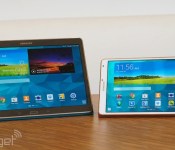
Samsung Galaxy Tab S review: slim design, long battery life, stunning screen

It’d be silly of me to talk about tablets in the past tense — we still write stories about them daily and clearly, we review them, too. But of the ones we’ve seen lately, most have been low-end; mid-range at best. The market for high-end slates, once crowded with companies big and small, now looks more like a fraternity. At this point, the only players left are mostly big names like Apple, Microsoft, Sony. And, of course, Samsung. The outfit just announced the Galaxy Tab S, its flagship tablet for 2014. Available in 8.4- and 10.5-inch sizes, it comes armed with the best possible specs, including a stunning 2,560 x 1,600 Super AMOLED screen, 12-hour battery life and a slim build that measures just 6.6mm thick. In addition, Samsung added a fingerprint reader (still a rarity on tablets) and free goodies like popular magazines, Dropbox storage and a six-month Wall Street Journal subscription. The tablet’s up for pre-order now, starting at $400 for the 8-inch model and $500 for the 10-incher. So, you can’t test-drive it yet, but, as it happens, I’ve been playing with it for almost a week. Suffice to say, I’ve enjoyed myself. Mostly.
Hardware
Let’s call a spade a spade: The Galaxy Tab S is basically a blown-up version of the Galaxy S5. Available in “Dazzling White” and “Titanium Bronze” (brown, really), the Tab S has a plastic rear lid with a grid of dots on the back that look like dimples. Yep, just like the GS5. And the similarities don’t end there. Both devices mix rounded corners with blunt-cut sides that make it easy to hold. Even the home button is the same: an oval-shaped key with a fingerprint reader built in (more on that later).
It so happens I find the design pleasant. Elegant, even. My colleague Brad Molen, who reviewed the GS5, was less impressed, calling the look “inoffensive” (ouch, Brad). But none of that matters, really; it’s irrelevant if either of us likes the design. What I can say — and what I think you’ll find more helpful — is that regardless of whether you dig the aesthetic, this is most certainly a well-made piece of hardware. Part of it’s the build quality: Though the plastic might not be as premium-feeling as metal, it’s basically immune to both scratches and fingerprints, meaning it continues to look pristine much longer than you’d otherwise expect it to. Then there’s ergonomics: The blunt edges, pancake-flat back and soft-touch finish on the rear make it comfortable to hold.
There’s also the size to consider. At 6.6mm thick, the two Galaxy Tab S tablets are skinnier than both the iPad Air and the iPad mini with Retina display. (Sony’s Xperia Z2 Tablet beats them all, at 6.35mm thick.) The Galaxy Tab S is lighter than Apple’s tablets, too: The 10-inch version weighs a pound (the same as the 9.7-inch iPad), while the 8-inch model comes in at 0.63 pound (10 ounces), beating out the Retina display iPad mini. I say all that to illustrate how dang thin this guy is. It’s one thing to parrot Samsung’s marketing material and say it’s as thick as five credit cards. It’s another to tell you that it’s even thinner than two popular tablets that are already known for being skinny.
Ready for a quick tour? Both the 8- and 10-inch models have the same camera setup: a 2-megapixel webcam up front, and an 8-megapixel shooter with LED flash around back. For navigation, you’ve got back and multitasking keys, both built into the lower bezel next to the home button. The selection of ports is the same too, though the layout is going to be different, considering the 10-inch tablet was designed for landscape use, and the 8-inch model was primarily meant to be used in portrait. Starting with the 10-incher, you’ve got the power/lock button up top, along with a volume rocker and an IR blaster, allowing you to use the device as a remote. Stereo speakers line both the left and right sides, with a headphone jack on the left, and a microSD reader on the right capable of supporting 128GB cards. The right edge is also home to a standard micro-USB port for charging. On the smaller model, meanwhile, the power/lock button, volume rocker, microSD slot and IR emitter are all on the right, with the speakers spread across the top and bottom. The headphone jack and micro-USB socket are also on the bottom, exactly where you’d expect to find them on a tablet this size.

That’s about it for the hardware tour. Well, except for one thing. Peek around the back and you’ll see two circles, which depress, like trapdoors. These are called “Simple Clickers” and are there to attach Samsung’s optional cases. These include the Simple Cover ($40), which only covers the screen, as well as the Book Cover ($60-plus), which wraps around the whole device and can also stay propped up at one of several screen angles. Both cases are well-made, with holes for the camera and they come in an assortment of cheerful color options. Most importantly, of course, both have little nubs that stick out, allowing you to press the case into the back of the tablet.
It’s a nice idea in theory: Once those suckers are in, you can hold the tablet by the case if you want to. That thing is staying put. The problem is, it’s a huge pain to use. First, you have to carefully line up the two nubs against their respective holes, and then you need to push them in one by one. Even now, after I’ve had time to practice, I usually don’t get it right on my first try. And in order to be successful, I typically have to use two hands to press the tablet and case into each other. Ripping the case off requires a bit of force — and makes an unpleasant noise, to boot. Thankfully, at least, Samsung says there will be third-party cases as well. Hopefully some of those will be the kind you can just slip on and off.
Display

You’ll notice I gave the display its very own section, even though it is technically “hardware.” That’s partly because I had a lot to say, and partly because the screen is clearly, indisputably the star of the show. What can I say? Samsung killed it. The screen here is a spec lover’s dream, with 2,560 x 1,600 resolution on both the 10-and 8-inch models. On the 10-incher, that resolution translates to a pixel density of 287 ppi; the 8-incher is noticeably crisper, at 360 ppi. Either way, that’s even sharper than both of the current-gen iPads, whose screens come to 264 ppi for the iPad Air and 326 ppi for the Retina display mini.
Alright, now that we’ve got that out of our system, let’s pull up our pants and put the measuring tape away. Even setting aside the raw specs, this is a stunning display. In particular, it’s a Super AMOLED panel, and while that won’t sound revolutionary to anyone who’s used one of Samsung’s recent phones, it’s fairly uncommon for a tablet. In fact, the last time Sammy tried a Super AMOLED panel on one of its slates was with the Galaxy Tab 7.7, which was prohibitively expensive — precisely because of the impressive screen technology. Since then, the price seems to have come down, which means the benefits of Super AMOLED are much easier to sell. In particular, the blacks here are black; the whites are white; and the colors are vibrant, if a little oversaturated. If you’ve handled a phone like the GS5, you know what I’m talking about.
What’s more, there’s an RGB sensor inside that adjusts the color balance depending on your surroundings. So, if you find yourself in a swank lounge with purple mood lighting (in which case you should really get off your tablet and socialize), the display will adjust itself accordingly. I should add, too, that the screen is super bright — bright enough that I could use it in direct sunlight and frame shots like the one below. I’ll talk more about the camera in a bit, but suffice to say, having a tablet this thin, with this bright a screen, makes photography more enjoyable than it would be otherwise.

Software

The Galaxy Tab S arrives on the heels of the Galaxy S5, which ushered in some big changes to Samsung’s TouchWiz skin — namely a flatter, more modern UI. You can bet, then, that Sammy’s new tablet has a similar look and feel. Underneath it all, the Galaxy Tab S is running Android 4.4 KitKat on top of Samsung’s Magazine UX — the same paneled, Windows 8-like layout that had Google a bit upset after Samsung’s last round of tablets were revealed. The companies have since agreed to work together on future products, to bring Samsung’s user experience more in line with stock Android. I can’t say this looked like a stock Android device right out of the box, but after I removed a bunch of those homescreen tiles, I felt a little more at home.
Even so, given that this is a Samsung product, running Samsung’s software, you’ll of course get various other features you wouldn’t find on a stock Android device. These include the usuals, like S Voice; Multi Window Mode, for viewing two apps side by side; and Samsung’s Milk Music service, which until recently has been available for phones only. As on the GS5, you’ll find older Samsung features like Smart stay, Smart rotation and Smart pause, but they’re now tucked out of sight. Don’t worry, though: A new search bar in the settings menu means those features are still easy to find.
There are other similarities to the GS5. Chief among them: that fingerprint reader I mentioned earlier. As on the Galaxy S5, the fingerprint sensor here is built into the home button, and can be used to log into the device, make transactions using your Samsung account and buy stuff on eBay. You’ll find the fingerprint option in the settings menu, at which point you’ll have to go through a setup process that involves swiping your finger across the home button eight times. In all, you can register up to three fingers per user. Mastering the perfect swipe — not too fast, centered on the home button, finger covering the whole button — is difficult. In fact, even now that I’ve been playing with the device for nearly a week, it still routinely takes me two if not three tries to get it right. There have also been multiple occasions when I’ve failed five times in a row, and had to wait 30 seconds to try again. (Note: Samsung will also have you set up an alphanumeric password, which you can enter anytime you get fed up with the fingerprint scanner.)

Also like the GS5, the Galaxy Tab S comes with 50GB of Dropbox storage, free for two years. In fact, it comes with an entire suite of free stuff, a package known as “Galaxy Gifts.” This, too, first debuted on the GS5, and includes things like six free months of Wall Street Journal access and a yearlong subscription to Bloomberg Businessweek. There are other items, including a bunch of magazine “samplers,” but these just include a handful of stories, not the whole issue. That said, if you were curious about, say, that Monica Lewinsky essay in Vanity Fair, but didn’t want to buy the whole issue (ahem), this might nonetheless be your lucky day. And hey, if all this strikes you as fancy bloatware, you can simply choose not to download it.
Speaking of magazines, the Galaxy Tab S also ushers in an app called Papergarden, which offers full-issue magazines you’d otherwise have to pay for. In the US, these titles include biggies like Cosmopolitan, Elle, Vogue, GQ, Rolling Stone and US Weekly. Users in other countries get to enjoy Papergarden too, though the selection will vary. To be clear, this isn’t like Next Issue when it comes to selection: Not all popular titles are there, and you don’t have access to back issues. You also have to submit a credit card just to download a full issue for free. Still, it’s a nice perk for people who enjoy magazines, but don’t like them enough to buy them, much less subscribe for a whole year.
I’m not done yet. For those of you with families, the Galaxy Tab S has a new Kids Mode that lets you create separate user accounts for the little ones, with restricted access if there are apps you don’t want them messing with. (Note: Kids Mode doesn’t come pre-installed, though there’s a shortcut for downloading it.) Additionally, a new Multi User Mode lets you add up to seven user accounts, complete with separate passwords and different sets of fingerprints. Finally, there’s version 3.0 of SideSync, Samsung’s app for transferring files between your tablet and your phone or PC. New in this version: the ability to forward calls from your handset to your slate, using either WiFi or LTE. The bad news: For now, at least, it only works with the GS5. So, uh, we hope you have a Galaxy S5 handy.
Camera

Both Galaxy Tab S’s have an 8-megapixel rear camera and LED flash, along with a lower-res, 2.1-megapixel shooter around front — more or less the same setup used in the Galaxy Note Pro 12.2, Galaxy Tab Pro 8.4, and the Galaxy Note 10.1 2014 Edition. Basically, then, you should expect identical imaging performance between the two Galaxy Tab S models, and also across Sammy’s recent tablet lineup. As we’ve found in the past, color reproduction is good, and the camera is quick to focus as you line up your shot (if for some reason it doesn’t lock on where you want it to, there’s always tap-to-focus). Low-light shots are grainy, but then, what did you expect from a tablet camera, anyway?
As it happens, I took all my sample shots in auto mode, because that’s how I believe most consumers will use the device, but you can also choose from one of several specialty modes, including “Beauty face,” panorama, HDR and dual camera. Additionally, you can adjust the ISO, metering modes, flash and face detection from the settings menu.
It’s a similar story with 1080p video recording. Like other Engadget reviewers who’ve tested recent Samsung tablets, I found my sample footage to be pretty smooth, though the occasional gust of wind put a damper on the audio quality. Even then, the tablet picked up on a wide range of noises — sirens, traffic, people talking nearby — without any of those elements sounding distorted.
Performance and battery life
| Samsung Galaxy Tab S ** | Sony Xperia Z2 Tablet | Galaxy Note 10.1 2014 | iPad Air *** | |
|---|---|---|---|---|
| Quadrant 2.0 | 18,597 | 18,877 | 19,530 | N/A |
| Vellamo 2.0 | 1,672 | 1,622 | 2,735 | N/A |
| SunSpider 1.0.2 (ms) | 1,109 | N/A | 1,069 | 393 |
| 3DMark IS Unlimited | 12,431 | N/A | N/A | 15,328 |
| GFXBench 3.0 Manhattan Offscreen (fps) | 5.5 | N/A | N/A | 12.7 |
| CF-Bench | 31,695 | 37,902 | 31,567 | N/A |
|
*SunSpider: Lower scores are better. **Average scores for the 8.4- and 10.5-inch models. ***Not all of our Android benchmarks are cross-compatible with iOS. |
||||
Whichever screen size you get, the Galaxy Tab S has the same specs: three gigs of RAM, and an eight-core Exynos 5 Octa chip, the same one found inside certain versions of the Galaxy Note Pro 12.2 and Galaxy Note 10.1 2014 Edition. In case you haven’t been keeping up with our Samsung tablet reviews, here’s what you need to know: The Exynos 5 actually includes two quad-core processors, only one of which is active at a given time. These include a 1.9GHz chip for heavier-duty tasks, and a lower-powered 1.3GHz one for the more menial stuff. The idea is to extend battery life by using the more powerful cores only when necessary (but to still have them ready to go when you need the extra horsepower).
To scan the benchmark table above, you’d assume the Galaxy Tab S performs roughly in line with other top-of-the-line tablets, including the Sony Xperia Z2 and, of course, the 2014 Note 10.1, which uses the same chipset. What the numbers don’t capture, though, is how uneven the performance can be. What’s most frustrating is that while the tablets excel at the hard stuff, like rendering graphically detailed games, they stumble over the little things. Though neither of my two test units ever crashed or froze on me, I routinely observed a slight delay when launching apps or tapping a text field and waiting for the onscreen keyboard to come up. Meanwhile, though, Need for Speed: Most Wanted ran smoothly — and looked fantastic on that 2,560 x 1,600 Super AMOLED screen, to boot. I also had no problems with Multi Window Mode; I was able to quickly set up two side-by-side windows, as well as swap in new apps when necessary.
All told, the performance here isn’t bad by any means; it’s just not as brisk as I expected it to be, given the way the chip was designed. I’m inclined to say that Samsung can address some of this low-level sluggishness with a firmware update. That said, Brad described similar performance hiccups when he reviewed the 2014 Note 10.1 last fall, which means Samsung has already had plenty of time to work out some of the kinks with its Exynos 5 chip. I still believe Sammy could improve the performance via a software update. It just doesn’t bode well that the chip’s performance hasn’t changed in the months since it debuted: Has Samsung been listening to us?
If it’s any consolation, the as-yet-unreleased LTE models are supposed to use a Snapdragon 800 chip instead of the Exynos 5, so maybe performance will be snappier there.
| Tablet | Battery Life |
|---|---|
| Samsung Galaxy Tab S (10-inch) | 12:30 |
| Samsung Galaxy Tab S (8-inch) | 12:22 |
| Microsoft Surface 2 | 14:22 |
| iPad Air | 13:45 (LTE) |
| Apple iPad mini | 12:43 (WiFi) |
| Apple iPad mini with Retina display | 11:55 (LTE) |
| Apple iPad (late 2012) | 11:08 (WiFi) |
| Apple iPad 2 | 10:26 |
| Samsung Galaxy Note Pro 12.2 | 10:04 |
| Apple iPad (2012) | 9:52 (HSPA) / 9:37 (LTE) |
| Acer Iconia W4 | 9:50 |
| Nexus 7 (2012) | 9:49 |
| Microsoft Surface RT | 9:36 |
| Toshiba Encore | 8:45 |
| Sony Xperia Tablet Z | 8:40 |
| Sony Xperia Z2 Tablet | 7:57 |
| Nexus 10 | 7:26 |
| Dell Venue 8 Pro | 7:19 |
| Samsung Galaxy Note 8.0 | 7:18 |
| Nexus 7 (2013) | 7:15 |
| Samsung Galaxy Tab Pro 8.4 | 7:13 |
| Samsung Galaxy Tab 3 10.1 | 6:55 |
According to the product pages on Samsung’s website, the 10-inch model’s 7,900mAh battery can last through up to 12 hours of video playback. Ditto for the 8-incher: It, too, is rated for 12 hours, despite having a smaller, 4,900mAh cell. As it turns out, the Galaxy Tab S performs even better than advertised. The 8-inch tablet managed a solid 12 hours and 22 minutes of video playback, while the 10-incher made it to exactly 12.5 hours. Mind you, that was with the screen brightness fixed at 50 percent and WiFi on, but not connected; surely, if we allowed the brightness to dip even lower, we could have squeezed out more runtime. Should you need more juice, by the way, you can enable “Ultra power-saving mode,” which turns the screen to black-and-white and only enables certain key apps. Basically: For emergency use only.
Configuration options and the competition
The Galaxy Tab S is up for pre-order now, with shipments starting sometime in July. In the US, prices start at $400 for the 8-inch version and $500 for the 10-incher. Both start with 16GB of built-in storage, though Samsung will also be selling 32GB models in select countries. Meanwhile, that LTE model I mentioned is coming later this year, and is expected to sell on all the major US carriers: AT&T, Verizon, Sprint and T-Mobile. No word on how long you’ll have to wait for that, though.
All told, as you can see, it’s a solid choice, with hardly any flaws to speak of. That said, we can think of a few other tablets you should be considering. If you’re dead-set on something running Android, the Sony Xperia Z2 ($500-plus) is even thinner and lighter than the Galaxy Tab S, not to mention waterproof. Then again, it suffers from relatively short battery life and a super-glossy, lower-res screen (not that 1,920 x 1,200 resolution is “low,” per se). Meanwhile, you might also consider Samsung’s Galaxy Note Pro 12.2 ($750 for 32GB) and the Note 10.1 2014 Edition ($550-plus). Neither is as thin or light as the Galaxy Tab S, but they have 2,560 x 1,600 screens and support pressure-sensitive pen input — the one thing the GTab S doesn’t offer.
It’s also worth noting that Google’s 2-year-old Nexus 10 is still around for a reasonable $399. Having been out for two years, it’s overdue for a refresh, and a replacement could be coming soon, though its 2,560 x 1,600 screen makes it relevant even today. Across the aisle, there’s Microsoft’s Surface 2, starting at $449. It’s a handsome device, and the built-in kickstand is a convenient feature you won’t find on any of these other tablets. That said, if I had to choose, I’d still pick the Galaxy Tab S, as it’s thinner, lighter and cheaper, with a better screen and a bigger app selection.
Finally, the elephant in the room: the iPad. If you prefer Android, you may as well skip this section — we think you’ll be very happy with the Galaxy Tab S. If you’re OS-agnostic, though, the Galaxy Tab S takes on the iPad Air and Retina display iPad mini nearly spec for spec, with the GTab winning out in thinness, lightness and screen resolution. The prices are basically the same too, with the 8-incher starting at $399 and the bigger model going for $499. The one thing you might want to consider is that tablet-app selection is still better on iOS than on Android. That said, both are excellent products; start by picking the OS you like best and go from there.
Wrap-up

The Samsung Galaxy Tab S is good. Really good. With long battery life, a stunning screen and an especially thin and light design, it’s a near-perfect product. My main hang-up is that the performance doesn’t always feel as brisk as it should (the forthcoming LTE edition uses a different chip, and has the potential to be faster, but it’s unreasonable to ask someone to pay extra for the kind of performance they should have gotten on the WiFi-only models). In addition, the fingerprint scanner, though nice to have, can be temperamental — so much so that I’ve more than once locked myself out of my own tablet. That said, I believe Samsung can address these two minor performance issues via a software update. And even if it doesn’t, this is still an excellent piece of kit. If I may, I’d offer the same advice I would to prospective iPad buyers: Unless you want the extra screen real estate for watching movies, just buy the 8-inch version. It’s cheaper, with a crisper screen, identical camera and just as much horsepower as the bigger model. Either way, you can’t go wrong.

