


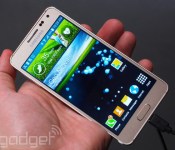
The Samsung Galaxy Alpha is smaller, lighter and more elegant than the GS5

With a 4.7-inch 720p display, 6.7mm profile, 115g (4.06 ounce) weight and aforementioned design language, the Alpha is tight, light, slim and classy. Since it’s a little smaller than most modern-day flagships and comes with straight sides and chamfered edges, it’s very easy to hold onto without losing my grip or feeling uncomfortable. The sides are also mostly flat until they approach the corners, where they curve slightly outward.
Despite the new design, the removable back still looks more like the Galaxy S5 than the Note 4; the latter has more of a leather-like appearance, whereas the Alpha’s polycarbonate back uses a series of very tiny divots. The back itself is flat except where it slopes inward toward the edges. The phone will come in five different colors, and some definitely look better than others; this is one of those times in which the gold version actually looks a little better than the black one, since some of the front and back colors blend better with the sides than others do. The 12MP camera (not quite as high quality as the GS5 or Note 4) sits in the top middle, with an LED flash and heart rate monitor module to its left.
With a smaller screen, the lower-resolution display is completely fine; everything looked crisp and sharp. It also comes with the same fingerprint scanner as the flagship phones. The only thing that truly concerns me with the Alpha right now is the 1,860mAh battery, which is quite limited for today’s standards (its battery is significantly smaller than the GS5’s). It also doesn’t come with external memory, so the 32GB internal storage will have to do.

The Alpha will come in two versions, much like many of Samsung’s other phones: An octacore Exynos 5-powered option, which comes with four 1.8GHz Cortex-A15 cores for higher performance and four 1.3GHz Cortex-A7 cores for smaller tasks, and a 2.5GHz quad-core Snapdragon 801 version. Both options will come with 2GB RAM. Samsung uses this two-model setup often, in which the Exynos model is typically sold in Korea and other select countries, while the Snapdragon model goes to the remaining regions like the US and Europe.
With a few exceptions, the Alpha seems to look like another Galaxy S5 mini of sorts, but with better specs and more elegant design. While Samsung is still keeping quiet on pricing — it’ll likely be dictated by region and carrier — it’ll likely be higher-priced than many of its competitors. If it manages to be competitively priced, however, the Alpha could easily become a hit among shoppers who want something more on the classy side without getting a monster-sized phone.
Photos and video by Zach Honig.
Filed under: Cellphones, Wireless, Mobile, Samsung, Google
.CPlase_panel display:none;

Chrome on Android is the latest Google app to get a cleaner, flatter look

Google’s “Material Design” was a major part of this year’s I/O conference and now it’s rolling out to an Android app you probably use a lot more than the Play Store: Chrome. The browser’s stable version is the latest recipient of the not-quite-flat façade and fancy animations. Lest you think the mobile web-surfing tool’s new tricks are only skin deep, however, Mountain View has added a bit more functionality, surely. Signing into the application with your Google account now logs you into the search giant’s websites, like Groups, as well. It’s pretty easy to see where Page and co. see the hierarchy of importance for their apps, given the sequence of what’s getting the Material Design threads and when. Should Gmail be next in line, it likely wouldn’t surprise too many people. The odds of Google Voice getting these new duds anytime soon? Slim — but that’s just a guess.
Filed under: Cellphones, Tablets, Internet, Mobile, Google
Source: Google Play
.CPlase_panel display:none;

Philips’ new curved TV and 4K media player run on Android

Philips has just revealed a new lineup of 4K TVs, along with a way to actually play something on them. The standout model is the 55-inch curved Philips 8900 model that brings Smart TV features via Android. That gives access to the Google Play Store for apps, games and content and an interface that smartphone users may find less miserable more comfortable. The set itself uses Philips’ three-sided Ambilight and micro dimming to adapt the viewing experience to your room, along with a 1,000 Hz refresh rate, high-quality upscaling and a curved “ribbon” stand. Unlike Samsung and others, Philips didn’t explain exactly why it thought a curved screen was a good thing, other than hyping its “striking appearance” (hey, at least they’re honest).

Philips (or rather TP Vision, the awkwardly-named company that markets Philips TVs) also showed off the Philips 9100, a flat, high-end model UltraHD TV in 55- and 65-inch sizes. It also gets Smart TV functions powered by Android, and the 1,000 Hz refresh rate, upscaling, and four-sided Ambilight glow. But the model’s piece de resistance is Spotify integration, letting you control music with your smartphone, without actually tying it up for streaming. Unlike the curved model, it also ships with a 50 watt subwoofer.
For the budget set, TP Vision launched the Philips 7900 UltraHD TVs in 49- and 55-inch sizes. Those models are also powered by Android, but have knocked-down specs like two-sided Ambilight only (instead of four-sided), and 600Hz refresh rates — two features that purists won’t care about anyway. Like the rest of the models, the 7900 also sports minimal bezels.

Finally, if you’re tired of upscaling HD content, TP Vision also announced the Philips Media Player UHD 880, joining Samsung, Sony and a few others with such a box. It’ll work with all the new Philips models as well as those from 2013 and use a new HEVC streaming format (aka H.265), the standard used by video services like Netflix. The UHD 880 will be powered by Google’s upcoming Android L OS, giving users the store, apps and games that also come on the TVs. Other features include WiFi, ethernet, USB and HDMI 2.0. It’ll run 249 euros when it arrives in Europe early next year, but if you bought an 8000- or 9000-series model like the first two above, Philips will throw it in for free. Meanwhile, all three new 4K model lines will arrive to Europe in Russia sometime this quarter, but there’s no word yet on pricing.
Filed under: Home Entertainment, HD
.CPlase_panel display:none;
Android Wear BeeLink: Connect to Android devices from your smartwatch [‘Watch’ This App]
One of the biggest complaints from smartwatch users is that it’s a difficult process to connect the smartwatch to their different Android devices. Users oftentimes find it to be a confusing, tedious process, and just plain hard to switch from one device to another. If this is a problem you have, then the Android Wear BeeLink app might… Read more »
The post Android Wear BeeLink: Connect to Android devices from your smartwatch [‘Watch’ This App] appeared first on SmarterWatching.
Read the rest at SmarterWatching.com!
The post Android Wear BeeLink: Connect to Android devices from your smartwatch ['Watch' This App] appeared first on AndroidGuys.
.CPlase_panel display:none;
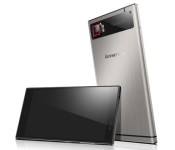
Lenovo reveals the Vibe Z2, its very first 64-bit smartphone

It seems that Lenovo are the latest company to jump on the 64-bit bandwagon with their new Vibe Z2 smartphone, a device that sees the company keeping up with the latest architecture.
The 64-bit device sports a 1.4-GHz quad-core processor, 5.2-inch screen at 720p, 32GB of internal storage, dual SIM, a 13-Megapixel camera, and a 3000mAh battery.
The Vibe Z2 will cost $429 when it launches in October beginning in China first, and then Asia, Europe, and Latin America shortly after.
The post Lenovo reveals the Vibe Z2, its very first 64-bit smartphone appeared first on AndroidGuys.
.CPlase_panel display:none;
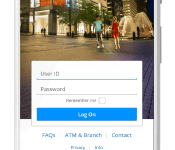
Chase gets a much needed UI update
![CF955B255E95_Moto_X_1_PORTRAIT[1]](https://i0.wp.com/www.androidguys.com/wp-content/uploads/2014/09/CF955B255E95_Moto_X_1_PORTRAIT1.png)
Chase Mobile is the mobile app that can be used to monitor and manage your Chase bank account. For a good while, Chase Mobile has used the same old UI that was just plain ugly. It might have passed as modern about 2 years ago, but in the current age, it was obvious to everyone that it needed an update.

“The UI could use a tweak or 20…”
This quote from one of the Play Store ratings describes how just about every person who uses Chase Mobile felt about the app. It was clunky and painful to use. Everything functioned flawlessly, but the UI was so bad that I almost cried every time I switched from my carefully crafted homescreen over to the terror that was Chase Mobile.
Well good news everyone! Under the cover of the IFA excitement and the Motorola event, JPMorgan Chase has updated the Chase Mobile app with a refreshed UI that is a lot nicer on the eyes. The update includes:
- New user interface with enhanced navigation and updated menu design
- Enhancements to improve Chase QuickDepositSM photo capture experience
- External Transfers: Transfer funds between your Chase account and your accounts at other U.S. financial institutions
Version 3.18 of the Chase Mobile app is a much needed update bringing the app up into the current tech world.
![Screenshot_2014-09-04-20-20-40[1]](http://www.androidguys.com/wp-content/uploads/2014/09/Screenshot_2014-09-04-20-20-401.png)
The post Chase gets a much needed UI update appeared first on AndroidGuys.
.CPlase_panel display:none;

Nokia’s bringing HERE Maps back to iOS

Already a big deal on Windows Phone and soon to make its way to Android via Samsung, Nokia’s kept quiet over whether HERE Maps will make ever make a return to Apple devices. More than eight months after it pulled the original HERE Maps app from the App Store, citing iOS 7 compatibility issues that “harmed the user experience”, the company has now confirmed that a new iOS app is indeed on the cards. Speaking with the Wall Street Journal, Nokia SVP Sean Fernback admitted that after the launch of the first app “went horribly wrong,” the mapping team has regrouped and is now on course to launch a revamped iOS and new Android app before the end of the year. Given that we’re likely to see a new iPhone (or iPhones) in less than a week, Nokia’s unique mapping features, like true offline maps, will need to work flawlessly on iOS 8 if it’s to avoid a repeat of last time.
Filed under: Cellphones, Internet, Software, Mobile, Nokia
Source: Wall Street Journal
.CPlase_panel display:none;
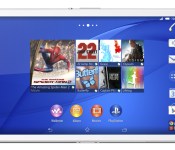
Sony’s Xperia Z3 Tablet Compact stuffs full performance into an 8-inch slate

Sony had a minor hit when it unveiled the Xperia Z1 Compact, which crammed a full-power smartphone into a smaller frame; now, it’s hoping to repeat that success with tablets. Its new Xperia Z3 Tablet Compact is not only one of the thinnest (6.4mm) and lightest (0.6lbs) 8-inch tablets you’ll find, but is actually more powerful than the full-size Z2 Tablet. It still has a 1080p display, 3GB of RAM, waterproofing, an 8.1-megapixel rear camera and a 2.2-megapixel front shooter, but runs a speedier 2.5GHz Snapdragon 801 processor. The Compact should also last for a very healthy 13 hours of non-stop video playback.
There are a few hefty software upgrades, to boot. Besides the audio upscaling also seen in the new Z3 phones, this is Sony’s first tablet with PlayStation 4 Remote Play — you can not only control your game console from the tablet, but use it as a primary screen if someone’s hogging the TV. You can even buy a custom mount for your DualShock 4 controller so that you don’t have to find a safe resting spot for the slate.
Sony expects the Z3 Tablet Compact to hit shelves in the fall. It’s not revealing full launch details at this point, but there will be both WiFi-only and LTE models.
Source: Sony Mobile
.CPlase_panel display:none;
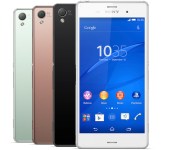
Sony announces its latest flagship smartphone, the Xperia Z3

We hope you weren’t getting too comfy with the months-old Xperia Z2 — Sony has just unveiled another range-topping Android smartphone, the Xperia Z3. It’s really a subtle evolution of its predecessor. You’ll still find a 5.2-inch, 1080p display, a 20.7-megapixel camera and waterproofing, but there’s now a more rounded aluminum frame. Sony has also added a new, wide-angle 25mm lens (to fit more into a shot) and extra-high ISO 12,800 light sensitivity. It’s a little bit faster as well, with a speed-bumped 2.5GHz Snapdragon 801 processor instead of the 2.3GHz chip you saw in the Z2.
There are some new media experiences, too. The Z3 has brought its DSEE HX audio upscaling technology to improve the quality of compressed music, and there’s digital noise cancelling that cuts out nearly all ambient sound. For photographers, Face In lets you capture your reaction to a shot as the same time as you take it; you can add drawings to pictures, build movies with a new editor, shoot scenes from multiple angles using multiple phones, and add sound to photos.
You’ll get the Z3 sometime this fall. Sony hasn’t immediately announced carriers, but there will be at least one version with North America-friendly LTE data.
Filed under: Cellphones, Mobile, Sony
.CPlase_panel display:none;
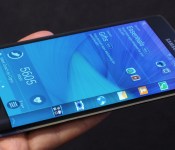
The Galaxy Note Edge: Samsung’s first smartphone with a bent display

It’s been over a year and a half since Samsung briefly (and from a distance) showed off the Youm, a prototype of a smartphone with a curved display that wrapped around the right-hand side. While it seemed like a far-off reality at the time, Samsung announced today that the Youm’s spiritual successor — aptly named the Galaxy Note Edge — would be coming out this fall. Sure, mass-producing a phone with a bent screen is a tremendous display of manufacturing prowess, not to mention something to show off at parties, but is there more to this unique handset than eye candy?
The Galaxy Note Edge is, in almost every respect, a Note 4. Almost all of the hardware and software enhancements that I outline in my Note 4 preview are present and accounted for in the Edge. The primary difference, obviously, is the 5.6-inch Quad HD+ bent display (the “plus” in Quad HD+ refers to the 160 rows of extra pixels used on the side display), and any variance in hardware here is to account for the phone’s unique design: It’s 3.8mm wider and 2.2mm shorter than the Note 4, and comes with a smaller 3,000mAh battery. If your hands already experience fatigue with the Note 3 or similarly large phones, the Edge likely isn’t a good choice for you — not only because it’s so much wider (though that’s a significant factor), but also because the right side of the phone, where the screen meets the back, is actually quite sharp and an uncomfortable place to grip the phone. (Insert obvious “cutting edge” or “bleeding edge” joke here.)
There’s a special kind of beauty to the Note Edge that comes as a result of its brand-new form factor. Aside from a very brief encounter with the Youm prototype phone at CES 2013, we’ve never actually seen a device with a bent display. Despite the fact that it’s not as comfortable as the Note 4, Samsung did a great job of blending its counterpart’s design language with the form factor. It’s a very sleek-looking device, and I found it hard to stop staring at it — even when trying to play with some of Samsung’s other products. The phone maker will definitely be charging a premium for the Edge, but it will at least come with some serious bragging rights and a whole lot of people suddenly paying attention to you (or your phone, at least).

But the edge display isn’t just a pretty face. Since the whole point of the phone’s very existence is the screen, Samsung made sure to add enough functionality to put it to good use. In fact, it serves many different purposes, and once developers have access to the SDK (which Samsung says should come out very soon), there will be plenty more ways to take advantage of it. That is, as long as you’re a right-handed user. Since the display bends only on one side, it isn’t quite as convenient for left-handed users; Samsung believes this shouldn’t come as a deterrent because it’s easy enough to just flip the phone around and use it upside-down instead. This would be fine in theory, but it’s still a huge inconvenience if you plan on using the home button or making phone calls at all.
The UI of the bar is straightforward and basic, since there isn’t much you can do with a narrow strip of display space. Often, what’s shown here will depend on the app: If you’re in the camera or watching videos, this strip becomes a sidebar containing all of your shortcuts and settings so they don’t take up other valuable screen space or get in the way. However, you can still access a plethora of different types of bars, whether in or out of the app; notifications, weather info, stock tickers, clocks, news feeds, quick shortcuts and even games are available from nearly every screen. There’s only one game — a Simon-like memory game — available right now, but I’ll be interested to see what else developers can come up with. Swipe up on the bar to reveal a settings button that lets you manage which types of bars are displayed and in which order. If you swipe down on the bar instead, a toolbar pops up. Here you’ll find options like a timer, stopwatch, flashlight and a ruler (the latter is actually a really clever use case).

The settings menu is your key for adding your own customized stuff. You can take any image and crop out a narrow, 160-pixel strip; although I didn’t see much functional value in this, having the ability to show off pictures of the family or your pets can be a neat touch. However, as developers start adding the edge display SDK to their apps, I’ll be interested to see what kinds of stuff they come up with. I’d love to have to-do lists show up here, as well as incoming tweet mentions, Facebook messages and any custom notes, among other things. Basically, any type of viewable information could find a home here.
One of the handiest use cases for me is the night clock, which does exactly what it sounds like — a black-and-white digital clock will appear while the screen is dark. So whether you’re sleeping in bed and your phone is on the nightstand, or if you’re just at your desk and want to see the time, the bent display makes this a rather ideal option. It’s probably not enough to justify spending the extra money for a new phone, but it’s just one example of the flourishes Samsung has added to give the edge screen enough functional value, instead of being just another way for the company to show off its manufacturing talents.

I couldn’t help but feel as though this is a work in progress (and very much a niche product for now), but this shouldn’t come as a surprise because it’s the very first of its kind to hit the market. A year from now, provided there’s enough excitement and developer interest, it could be a very different story.
Zach Honig contributed to this post.
Filed under: Cellphones, Wireless, Mobile, Samsung
.CPlase_panel display:none;
 AIVAnet