


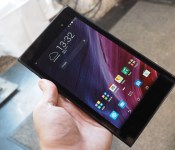
ASUS’ MeMO Pad 7 gets a new chic look, lighter body and sharper screen

It’s IFA, so of course ASUS is going to launch a new tablet. This time it’s a new MeMO Pad 7 (ME572C) that not only sports a different Intel Atom chip (the 64-bit quad-core Z3560 that clocks up to 1.83GHz), but it also has a new chic look that’s “inspired by clutch bags and wallets,” as well as a screen upgrade to a whopping 1,920 x 1,200 resolution (323 ppi) — a nice jump from the predecessor’s 1,280 x 800 panel. The new Android 4.4 tablet is also thinner at 8.3mm and slimmer at 269 grams, thanks to its fiberglass body, duralumin frame and slim screen bezels. Other features include 2GB of RAM, 16 or 32GB of internal storage, up to 64GB of microSD expansion, up to 16GB of free cloud storage, dual speakers and 5MP/2MP cameras.
Come late Q3 or early Q4, the new MeMO Pad 7 will be available starting from €199 (about $260) with red, gold and black color options; and there will also be an LTE version (ME572CL) if you don’t mind paying a bit more.
.CPlase_panel display:none;
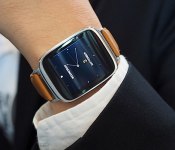
ASUS’ stylish ZenWatch is all about security, remote control and wellness

After its routine pre-show teasers, ASUS’ first smartwatch has finally been unveiled at IFA in Berlin. It’s no secret that this Android Wear-powered ZenWatch isn’t joining the party of circular watchfaces, but it’s certainly done a nice job at packaging the 1.63-inch, 320 x 320 AMOLED touchscreen (as featured on Samsung’s Gear Live). The body consists of a curved stainless-steel case surrounded by a rose-gold-colored band inset, and the top is dominated by a piece of 2.5D curved Gorilla Glass 3. You also get a genuine stitched-leather strap with a quick-release clasp out of the box, but you can swap it with your own 22mm band to suit your mood.
In terms of specs, the ZenWatch uses the same 1.2GHz Snapdragon 400 SoC as the Samsung Gear Live, the LG G Watch and its circular cousin, the G Watch R. You also get 512MB of RAM, 4GB of internal storage, a 1.4Wh battery, Bluetooth 4.0 (duh), a microphone and a bio sensor that can monitor your heart rate plus activity. With its IP55 rating, you can take the ZenWatch into the shower to give it a good scrub. (Hey, smartwatches need love, too.) When you’re low on battery, simply pop the ZenWatch on its charging cradle — it’s much prettier than the G Watch’s — to juice it up.
For the sake of consistency, ASUS has gone ahead and ported some of its ZenUI elements — including the elegant design and apps — from its recent portable devices over to the ZenWatch. Naturally, you’re given a selection of watch faces to play with, so the real novelty lies within the ZenWatch’s pre-loaded functions. These include “Watch Unlock” which lets you unlock your phone or tablet by simply touching the ZenWatch’s watch face, “Tap Tap” which lets you toggle a pre-assigned function by double-tapping the watch, plus the self-explanatory “Cover to Mute,” “Find My Phone,” “Remote Camera” and “Presentation Control.” The ZenWatch also has a wellness manager that tracks your heart rate, step counts and relaxation levels, plus it provides tips to help you reach your goals.
The prerequisite for using these features is that you need to install the ZenWatch Manager phone app, which also lets you set your watch face and locate the watch, as well as syncing the “What’s Next” schedule manager plus “Do It Later” to-do list between your ZenUI phone and the watch. You’ll also need to install the Remote Camera app and the ASUS Remote Link app on your phone — the latter for using “Presentation Control” on the ZenWatch.
Alas, at €199 (about $260), the ZenWatch costs more than its Android Wear competitors, so hopefully there will be a bundle discount in select markets. Expect it to hit the stores some time between late Q3 and early Q4 this year.
Daniel Cooper and Brad Molen contributed to this report.
.CPlase_panel display:none;
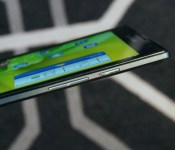
Lenovo unveils super-thin, super-light tablet (and the price isn’t bad, either)

Tablet fatigue: We have it, you have it. We all have it. That said, we’d be remiss if we let IFA go by without mentioning Lenovo’s new Android slate. The Tab S8, as it’s called, is an 8-inch device that manages to be almost as thin as both the Retina display iPad mini and the new Samsung Galaxy Tab S 8.4. In particular, it measures 0.31 inch thick and comes in at 0.65 pound, making it lighter than the iPad and almost as light as the Tab S. More importantly, though, Lenovo’s listing it at $199 — about half the price of what Apple and Samsung are selling.
For the money, it even looks like it performs decently, thanks to seven-hour battery, 8-megapixel rear camera, 1,920 x 1,200 screen, 2GB of RAM and a quad-core Intel Atom processor — a first for Lenovo’s Android tablets. On the software side, it runs an unskinned version of Android 4.4 KitKat, so you’re off the hook on software updates until Android L comes out. All told, it actually seems like it might be a good deal. Hopefully we’ll test one ourselves; if not, you can pick one up this month and write a user review for us.
.CPlase_panel display:none;

Meizu’s MX4 is a big phone that’s surprisingly comfy to hold

Xiaomi may be the darling of tech publications when they look to the Chinese smartphone market, but let’s not forget that Meizu is the real pioneer of community-centric phone brands. As such, Meizu is sparing no effort to one-up its arch rival with its latest flagship phone, the MX4, as announced in Beijing earlier today. Thanks to the MediaTek MT6595 SoC, we’re looking at an octa-core (four 2.2GHz A17 and four 1.7GHz A7) device that can connect to both FDD-LTE and TD-LTE networks right out of the box, thus beating the Xiaomi Mi 4 whose LTE variants aren’t due until end of this year. More importantly, the MX4 manages to undercut the 3G-only Mi 4 by about $16 to $33 off-contract, depending on the storage capacity.
Like its predecessor, the MX4′s 5.36-inch IPS screen maintains an unorthodox 5:3 aspect ratio, but with a slightly bumped-up resolution of 1,920 x 1,152. Compared to the standard 16:9 smartphones these days, the MX4 benefits from an eye-friendlier home screen as the icons are more spread out, plus the wider body can accommodate a slightly bigger pop-up video player — a feature on Meizu’s Flyme OS 4.0, which is a heavily but prettily customized Android 4.4 ROM — when you’re holding the phone in the usual portrait mode. The screen also takes up 79 percent of the phone’s front side and has a narrow 2.6mm bezel, both of which look rather impressive. Meizu added that it’s co-developed a screen sealant with Loctite that helps absorb shock impact, in order to reduce the chances of shattering one’s screen when the MX4 hits the floor.

Despite the large screen, the MX4 is actually a phone I’ve enjoyed holding the most in its size category. First of all, it’s only 147 grams heavy and 8.9mm thick (yet it still packs a built-in 3,100mAh battery) thanks to its aircraft-grade aluminum body — one that claims to be harder than that of the iPhone 5s. Secondly, the MX4 carries an ergonomic curvature that’s similar to that on the MX3, so there are no edges that would otherwise dig into the palm. To get to the MX4′s Micro SIM slot, you can now simply peel off the flexible back cover, as opposed to using a pin to push and peel the hard cover off the MX3. The downside of that is you may feel the seam between the aluminum frame and the plastic cover, so hopefully the final production units will have a tighter fit.

Last but not least, the MX4 packs a 20.7-megapixel f/2.0 main camera and a 2-megapixel front-facing camera. While the latter’s resolution is rather disappointing, it does offer a live beautification mode, which lets you preview the enhancements on your eyes, chin and skin before taking selfies. As for the main camera, its 1.2μm pixels will apparently handle dark environments just fine, plus its speedy image signal processor can handle 25 fps continuous shooting in 10-megapixel mode, 720p slow motion capture and even 30 fps 4K video capture. For the icing on the cake, there’s a dual tone LED flash for better results when using flash.
The MX4 will be launching on September 20th globally, though only China prices are available at the moment: The 16GB model is just CN¥1,799 (about $290), whereas the 32GB flavor is CN¥1,999 (about $325), and the 64GB model costs CN¥2,399 (about $390). Pretty aggressive, right? And for the record, only the gray edition will be available to begin with, followed by a white edition and a gold edition. Much like the Smartisan T1, you can also purchase a liquid plus screen protection warranty for just CN¥89 (about $15) per year.
| Meizu MX4 | Meizu MX3 | |
|---|---|---|
| Dimensions | 144 x 75.2 x 8.9 mm | 139.0 x 71.9 x 9.1 mm |
| Weight | 147g | 143g |
| Screen size | 5.36 inches | 5.1 inches |
| Screen resolution | 1,920 x 1,152 (418 ppi) | 1,800 x 1,080 (415 ppi) |
| Screen type | IPS LCD | IPS LCD |
| Battery | 3,100mAh (non-removable) | 2,400mAh (non-removable) |
| Internal storage | 16GB / 32GB / 64GB | 16GB / 32GB / 64GB / 128GB (China Mobile only) |
| External storage | None | None |
| Rear camera | 20.7MP Sony IMX220, f/2.2, 1.2μm | 8MP Sony IMX179, f/2.0, 1.4μm |
| Front-facing cam | 2MP Sony IMX208, f/2.0 | 2MP Sony |
| Video capture | Up to 4K 30fps | 1080p 30fps |
| NFC | None | Yes (except for 16GB version) |
| Radios | Up to LTE | GSM/GPRS/EDGE/WCDMA/HSPA+ |
| Bluetooth | v4.0 | v4.0 |
| SoC | 2.2GHz A17 x 4 + 1.7GHz A7 x 4 octa-core MediaTek MT6595; PowerVR G6200 GPU | 1.6GHz A15 x 4 + 1.2GHz A7 x 4 octa-core Samsung Exynos 5410; PowerVR SGX 544MP3 GPU |
| RAM | 2GB | 2GB |
| SIM slot | Micro SIM | Micro SIM |
| WiFi | 802.11b/g/n/ac | 802.11b/g/n |
| Audio | Unknown | Wolfson WM5102; triple-mic noise reduction |
| Operating system | Android 4.4, Flyme OS 4.0 | Android 4.2, Flyme OS 3.0 |
Filed under: Cellphones, Mobile
.CPlase_panel display:none;
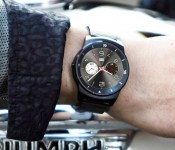
Android Wear updates will let you leave your phone at home

One of the biggest gripes of smartwatch ownership is the (usual) dependency on your smartphone; do you really want to carry two devices when you’re going out for a run? If you’re an Android Wear fan, you won’t have to in the near future. Google tells CNET that “several” updates are coming to its wearable platform before the end of the year, some of which will let you cut the figurative cord. Bluetooth headset support will let you put some music on the watch to listen at any time. GPS support will let you map your run while leaving your phone at home, although you’ll logically need a watch with position tracking built-in — in other words, don’t expect it to show up on your early G Watch or Gear Live.
The first of these updates is due this week, and it should improve both navigation and voice commands. Google hasn’t said just when some of the deeper feature upgrades are coming, but at least one of them will include that previously promised support for custom watch faces. Android Wear might have felt a little undercooked when it first launched, but it’s obvious that Google wants to fill out the feature list very quickly.
Filed under: GPS, Wearables, Mobile, Google
.CPlase_panel display:none;
Android Wear will soon support GPS, Bluetooth headsets and Third-Part Watch Faces
Android Engineering Director, David Singleton, has confirmed a few things this morning in an interview with CNet. Soon, Android Wear will officially support GPS, Bluetooth Headset pairing and third-party watch faces.

We have all known that third-party watch faces would be supported with Android Wear at a later date. It was confirmed a while back when Wayne Piekarski talked a little bit about the subject via Google+. He reassured the world that the watch face API would be coming soon. At the time, they recommended that developers that had already created the custom faces hold off on publishing them to the Play Store for the time being. As for the GPS and Bluetooth Headset support, David Singleton had this to say;
One of the things we’re going to be able to do is add the ability for these devices to start working with some of the other devices you might wear on your body. So we’ll have an update coming that allows you to pair a Bluetooth headset with your watch. And that means you can play music stored on your watch directly on your Bluetooth headset.
Alongside that, we’re introducing GPS support for the platform. So that’s obviously only for devices that have the GPS hardware. But we’re excited about those two features together because it unlocks a whole set of new use cases…
If you’re someone who likes to go for a run, it might be convenient to be able to leave your phone at home. So you can start recording your track with GPS on the watch. You can throw on some music and have a really enjoyable run. And when you come back home, everything will be synced up with the apps running on your phone.
Google’s Android Wear platform will be a constantly evolving arena. It will give manufacturers a variety of ways to approach the development of wearable devices and allow them to add or leave out a whole host of connection options to capture price points across the boards. There is a lot coming too, Singleton also made mention that there are multiple updates coming to the platform before the end of the year. Sadly, he didn’t offer up a time frame for which updates might offer some of the functions mentioned above.
Source: CNet Via: 9to5Google
//<![CDATA[
ord = window.ord || Math.floor(Math.random()*1E16);
document.write('‘);
//]]>
The post Android Wear will soon support GPS, Bluetooth headsets and Third-Part Watch Faces appeared first on AndroidSPIN.
.CPlase_panel display:none;
Now TV comes to the Chromecast

Ever since Now TV launched, subscribers have cried out for Sky to include support for more streaming devices. Today, the company answered some of its critics by announcing that it’s built Chromecast functionality into its Now TV apps on both iOS and Android. If you own one of Google’s £30 streaming dongles, you’ll now be able to beam movies, TV shows and sports coverage over to your big screen by simply hitting the new Chromecast icon inside the updated apps. While Sky knows today’s launch will give customers less of an incentive to buy its £10 Now TV set-top box, it hopes it’ll be able to lure new subscribers to the service as it battles Netflix and Amazon for a share of the UK streaming market.
Filed under: Home Entertainment, HD, Google
Via: The Next Web
Source: Now TV (App Store), (Google Play)
.CPlase_panel display:none;
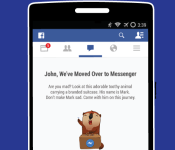
Sound Off! Are you sticking with Facebook Messenger?

Facebook’s Messenger app isn’t new — it’s been around since 2011. It was up to users to decide if they wanted a separate app or if they liked exchanging messages inside the regular Facebook app. Now if users tap the message icon on Facebook, a message appears telling them to move over to Messenger. It’s no longer an option; it’s a requirement Facebook put in place to deliver “the best mobile messaging experience possible.”
This sudden shift isn’t sitting too well with users, evidenced by a 1.5-star rating in the App Store and lots of complaints on Twitter, ironically. Though I used to send messages often, it’s not important enough to warrant having another app on my phone and so I’ve parted ways with that feature. Doesn’t matter how adorable Pusheen may be. What’s your take? If you’re using Facebook regularly, have you complied with Facebook’s demand or have you given up? Head on over to our forums and let it out.
Filed under: Software, Mobile, Facebook
.CPlase_panel display:none;
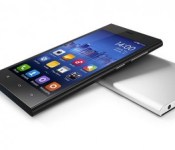
Xiaomi Mi 3 temporarily discontinued in India in order to pitch for Redmi 1S

Here’s some disappointing news for all the Indians who were unable to purchase the Xiaomi Mi 3 in a series of ‘Flash Sales’. Manu Jain, Head of Xiaomi Indian has confirmed that they have decided to temporarily discontinue the Xiaomi Mi 3 in India in order to shift their focus towards the more affordable Xiaomi Redmi 1S which will be available starting September 2. The last sale of the Xiaomi Mi 3 was on August 26 – and like all its previous sales, all the phones vanished within seconds. Hugo Barra has confirmed that the company has managed to sell over 95,000 units of the Mi 3 across India from all of its flash sales which created a stir in the Indian smartphone market.
“Over next few weeks, we will focus on Redmi 1S, and Mi 3 won’t be available. We will take the final call after few weeks, once we have more visibility / data points.”
Xiaomi RedMi 1S is an entry-level smartphone by Xiaomi which has been launched in India at a dirt-cheap price of INR 5,999. It features a 4.7-inch HD IPS LCD display, a 1.6GHz quad-core Qualcomm Snapdragon 400 processor, 1GB RAM and 8GB of internal storage. It features dual SIM card slots, an 8MP camera on the back and a 1.6MP camera on the front. Xiaomi RedMi 1S is up for pre-order exclusively on Flipkart and will be available in a variety of colors. It will go on sale next week, only pre-registered buyers will be able to buy the phone on September 2.
Xiaomi Redmi 1S Specifications
- 4.7-inch IPS LCD screen, 1280 x 720 pixels, 312 ppi, Gorilla Glass 3
- Android 4.3 Jelly Bean, MIUI v5.0
- 1.6 GHz quad-core processor, Adreno 305 GPU, 1 GB RAM
- 8GB of internal storage, microSD card slot
- 8MP primary camera, autofocus, single LED Flash, 1080p video recording and 1.3MP secondary camera
- dual-SIM (3G + 2G), Wi-Fi b/g/n, Wi-Fi Direct, DLNA, Bluetooth v4.0, A-GPS and microUSB v2.0 port with OTG
- 2,000 mAh battery
Xiaomi is all set to launch the 5.5-inch mid-range phablet, the Redmi Note in India sometime in October while the recently launched the Mi 4 will be launched in December.
//<![CDATA[
ord = window.ord || Math.floor(Math.random()*1E16);
document.write('‘);
//]]>
The post Xiaomi Mi 3 temporarily discontinued in India in order to pitch for Redmi 1S appeared first on AndroidSPIN.
.CPlase_panel display:none;
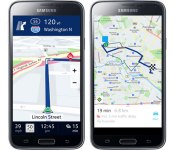
Nokia’s HERE Maps is coming to Android as a Samsung exclusive

Relations between Google and Samsung are already a little tense, but the Korean smartphone maker may just have elevated those frustrations a little further. Extending its existing deal to provide mapping data on Samsung’s Tizen wearables, Nokia (the part that wasn’t sold to Microsoft) today confirmed that it will bring HERE Maps to Android for the first time, giving Samsung Galaxy smartphone owners advanced access to its own Google Maps alternative.
After Nokia jettisoned its smartphone division, the company doubled-down on HERE, striking deals with a few of its former rivals, including Amazon, Jolla and, of course, Samsung. The app itself comes with many of the features you’d find in Google Maps, but also excels in some areas where Google doesn’t. A couple of examples include true offline maps, which are currently supported in 95 countries, and LiveSight, which lets users navigate to landmarks by following virtual signs on their screen. If you don’t own a Samsung smartphone, don’t fret, Nokia says that HERE Maps will come to other Android devices by the end of the year (note: you can still use Google Maps, even on a Samsung handset). The HERE Maps beta will make its way to Galaxy phones when the 3G-enabled Gear S smartwatch goes on sale, which is expected sometime in October.
Filed under: Cellphones, Internet, Software, Mobile, Samsung, Nokia, Google
Source: HERE
.CPlase_panel display:none;
 AIVAnet