



How ‘Lollipop’ was decided for Android 5.0

Well, Android 5.0 is here, and it has been named Lollipop! Throwing almost everyone off! Not a surprise, as Google did the same thing last year with KitKat. To help explain it all, Google has released a video showing the intense screening process they went through to find the right desert, and Lollipop was just too sweet!
So there ya have it! Lollipop for the win! Can’t wait for muffins and… Oreo? Mmmmm…
For now, we’ll just stick with the amazing-ness that is Android Lollipop. Check out the details for it here. Nexus 6, Nexus 9, and Nexus Player articles have all been posted as well.
via YouTube
 |
The post How ‘Lollipop’ was decided for Android 5.0 appeared first on AndroidGuys.

Blocks’ modular smartwatch will talk to your iPhone

Blocks first unveiled its modular smartwatch with a plan to use Android Wear, much as Project Ara smartphone will use a special version of Android. However, there has been a change of plans — and it’s good news if you’re not of the Google persuasion. The team now says that it’s using a version of the open source Tizen platform that should support Android, iOS and Windows Phone, so you probably won’t have to give up a favorite device just to try this out. The Blocks team also has access to Intel’s newest processors thanks to a prize from a recent design challenge, and modules will have removable covers that let you change both the style and functionality of your wristwear. This is still an incredibly ambitious project that may not pan out as planned, but it’s evident that the pieces are quickly falling into place.
Filed under: Wearables, Samsung, Intel
Source: Phonebloks

Androidify update overhauls with new design, GIFs, and new items

When Google introduces something new, it seems like everything happens at once. One of the lesser known but certainly fun announcements from today’s Nexus extravaganza is the update to Androidify. The app allows users to create themselves (or anyone else) in the form of an Android-like character. Google has brought a ton of exciting new features to Androidify including character animations, GIFs, new items, and additional language support. Of course, you will notice a new user design with the introduction of Android 5.0 Lollipop.
Finally, Google encourages everyone to share characters on the Androidify website for use in a television commercial or YouTube video.
Hit the break for the gallery and download links.


Come comment on this article: Androidify update overhauls with new design, GIFs, and new items
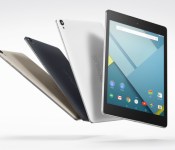
Nexus 9 specs

The Nexus 9 might be the most anticipated Nexus tablet since the original. As you can see from the specs below it doesn’t disappoint. Preorder for the Nexus 9 will begin October 17th with the launch following on November 3rd.
Manufacture:
-HTC
Price:
-$399 for the 16 GB, WiFi only
-$479 for the 32 GB, WiFi only
-$599 for the 32 GB, with LTE
Display:
-8.9″; 2048×1440; 4:3 aspect ratio
Processor:
-NVIDIA Tegra K1(64-bit) Dual-Core processor at 2.3 GHz
-LTE model uses Qualcomm MDM9625M modem
Operating System:
-Android 5.0 Lollipop
Memory:
-16 GB and 32 GB for WiFI only
-32 GB for LTE
RAM:
-2 GB DDR3
Network:
-HSPA+/LTE
Connectivity:
-3.5 mm stereo audio jack, NFC, Bluetooth 4.0 with aptX, WiFi 802.11ac, Chromecast
Camera:
-Rear: 8MP with BSI, f/2.4, 1080p video
-Front: 1.6MP with BSI, 720p video
Sound:
-Front-facing BoomSound speakers
Battery:
-6,700 mAh Li-Polymer
-Includes Googles Project Volta battery saving technology
Accessories:
-Keyboard Folio, cover
|
The post Nexus 9 specs appeared first on AndroidGuys.
Nexus player specs

With Android 5.0 Lollipop, Google released alongside it the Nexus player.
Specs
Display output
HDMI out (1920×1080@60Hz)
Chipset
1.8GHz Quad-core, Intel Atom
Imagination PowerVR Series 6 Graphics 2D/3D Engine
Memory
1GB RAM
8GB Internal storage
Connectivity
Bluetooth 4.1
MicroUSB 2.0
Wifi 802.11ac 2×2 (MIMO)
Remote
2AAA batteries
40g
37mm x 140mm x 16mm
Physical specifications
Mass: 235g
120mm x 120mm x 20mm
|
The post Nexus player specs appeared first on AndroidGuys.

Android 5.0 Lollipop officially announced with new Nexus products

Today is a big day in the world of Android. Google announced via it’s blog the newest and biggest version of Android: Android 5.0, or Android Lollipop. There is a lot to sort through here, so stick with us as we go through all the new features coming to an Android device near you.

First, Android Lollipop will fit screens of all sizes: from smartwatches, to smartphones, to tablets, to automobile screens, and your TV. With this, Android Lollipop will not only be fluid across all your devices, but can sync together allowing you to stop in one place and pick up in another. So if you’re watching a movie on your Android TV device, and want to finish in bed, you can pick up where you left off on your tablet. If you’re listening to a song on your phone, and get in your car, you can pick up the song and continue on your way.

Next is Material Design, which was previewed at Google I/O. This brings fluidity and motion onto your device that makes everything fit together. We’ve seen a lot of this already through some of Google’s updated apps, but Android Lollipop will tie it all together in the OS. Each device will provide the information you need the best way it will work. It has more responsive, natural motion, with visual elements that feel familiar. On your watch, that means a snippet of an email. On your tablet that means the message is shown alongside your message list.

Android Lollipop will have the ability to control notifications at a much greater level. You can access and reply to messages from your lock screen, and you can set what notifications come through at a certain time. Whether that’s getting priority messages based on the person and content of the message only during sleep, or silencing everything during a meeting. Calls will also not interrupt while watching a video, allowing you to ignore the call or accept it without pausing the video.
Android Lollipop will also have much better battery life, with a battery saver feature giving you up to 90 minutes more usage. It also provides greater management of your battery, by letting you know the estimated time until your device dies, or estimated time it will be fully charged.
Android Lollipop will have better security, with a guest mode, and a special pin that you can give to your friends with their own unique profile. Android Smart Lock allows you to pair your device to another trusted device to allow easy unlocking. Encryption is enabled out of the box, and there is better protection against vulnerabilities.
Quick Settings has been updated, allowing you to view them with two swipes down from the top of the screen. New controls like flashlight, hotspot, screen rotation, and cast screen control. Easier on and off toggles for Wi-Fi, Bluetooth, and location (no more long pressing?). Manual brightness control will now be built-in, and adaptive brightness will adjust more intuitively.
Connectivity is improved with Android Lollipop, allowing seamless transition from Wi-Fi to cellular connection. Also, there is improved Bluetooth connectivity, with a new BLE peripheral mode.
ART is now the new runtime (instead of dalvik), with faster and more fluid performance. There is also support for 64-bit devices (like the Nexus 9).
Also a big update is a bunch of new Media enhancements and features. These include lower latency audio input, multi-channel audio stream mixing, USB audio support for microphones speakers etc. OpenGL ES 3.1 brings console level graphics and performance to your device.
Mobile photographers rejoice! A slew of new features include capture of full resolution frames at 30 fps, support for raw formats, control of capture settings for the sensor, lens, and flash per individual frame, and capturing of metadata like noise models. Also, there’s new “video technology with support for HEVC main profile to allow for UHD 4K 10-bit video playback, tunneled hardware video decoding to save power and improved HLS support for streaming”.
OK Google has been updated, allowing for more support of waking your device by your voice (needs digital signal processing support). The site also says “Talk to Google on the go to get quick answers, send a text, get directions and more”. Not quite sure what that means as this is already possible, but more than likely it’s greatly improved with greater control.
Along with all of this Accessibility has been improved, more languages added (15 more to be exact), and device set up has been improved with the ability to tap a new device with a current device by NFC and be done. Tap &pay is improved, print preview and page range support, “Revamped display for battery, Bluetooth, data usage, and Wi-Fi settings and new search functionality”, easier sharing, when hardware supports it the device will wake up when you pick it up or tap the screen twice, and “Improved hardware keyboard accessory support including support for multilingual, emoji input, search key, and improved app and system key chords”.
*Takes a deep breath* Wow, that was a lot to go through! This is easily the biggest update they have ever had. On their blog announcement, Sundar Pichai mentions there are over 5,000 APIs for developers. Are you ready for this? I’m not sure I am!
With the announcement of this, they also announced the Nexus 6, made by Motorola, the Nexus 9, made by HTC, and the Nexus Player made by ASUS. If you visit one of those pages (which will be listed below) you will see they are sticking with the Nexus 5 as well (presumably for those that don’t want a 6″ screen on their phone). Preorders for the Nexus 9 and Player start October 17, and will be released November 3, while the Nexus 6 will be available for preorder later this month, and released sometime in November.
Are you excited about all this?
sources: Official Google Blog announcement, Android, Nexus 6, Nexus 9, Nexus Player, Nexus 5
|
The post Android 5.0 Lollipop officially announced with new Nexus products appeared first on AndroidGuys.
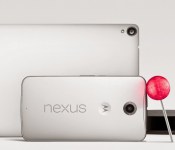
Google makes Android 5.0 Lollipop official; headed to Nexus 4, 5, 7, 10 and GPE devices in coming weeks
It is certainly a big day in the Android world. Google announced the Nexus 6, the Nexus 9 and the Nexus Player. All three are beautiful devices that many of us are eager to put to work in our lives. All the new devices were announced with Android 5.0, or Lollipop. Which is Android L’s official name. Sorry Lava Cake and Lemon Drop fans.

What’s new in Lollipop? A whole bunch of stuff that many already know about thanks to Google I/O and the developer preview. Material Design is the big key visual element that the new OS brings to the table. It also brings along over 5,000 APIs for developers to use towards making other products play nicer together. Like Google Fit and such. There is the new notification control, the trusted Bluetooth Connections, guest user modes, battery saver mode and few other goodies. Google outline much of it at Android.com.
While Lollipop is great news, even better news is where the new version of Android will land in terms of the previous Nexus family. There are no specific dates mentioned yet, but Google does note that the Nexus 4, 5, 7 and 10, along with Google Play Edition device will all see Lollipop updates in the coming weeks. I am sure that is going to make Nexus 4 owners particularly happy.
Source: Google Blog
//<![CDATA[
ord = window.ord || Math.floor(Math.random()*1E16);
document.write('‘);
//]]>
The post Google makes Android 5.0 Lollipop official; headed to Nexus 4, 5, 7, 10 and GPE devices in coming weeks appeared first on AndroidSPIN.
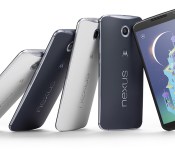
Google reveals the $649 Nexus 6, pre-orders begin on October 29th

Forget the pomp and circumstance that comes with a formal launch event — Google just outed the new Nexus 6 on its official Android blog, and it’s just about everything the rumor mill said the Motorola-made device would be. The Nexus 6 is the first phone to run Android 5.0 Lollipop, and while it might look like a super-sized version of this year’s Moto X — down to the dual speaker grilles and the lock button/volume rocker placement along the phone’s edge — it packs plenty of notable improvements over its smaller, non-Nexus cousin.
A 5.9-inch Quad HD screen? Check? A more powerful Qualcomm Snapdragon 805 chipset, clocked at 2.7GHz? You betcha. Hefty 3,220mAh battery? Of course. It’s as if Motorola addressed nearly every issue we had with the Moto X, and capped things off with a big ol’ Nexus logo on the back. In fact, the only components that don’t seem to have been upgraded are the 13-megapixel camera and dual-LED flash on the Nexus 6’s back (and that’s sort of a shame). What’s a bit curious is that the Nexus 6 seems to come with at least one Motorola-conceived feature that isn’t part of stock Android: Ambient Display debuted on the Moto 360, and fires up the screen when it can tell the user wants to check the time or their notifications.
That’s great and all, but what about the really juicy tidbits? Well, the Nexus 6 will be available with either 32 or 64GB of internal memory (no word on a microSD slot, alas) and you’ve got your choice of Cloud White and Midnight Blue color schemes. Pre-orders for the Nexus 6 will kick off on October 29th with a full retail launch to follow some time in November, but expect to shell out more than a few pretty pennies for it. You’ll be able to nab your own 32GB Nexus 6 sans contract for a whopping $649, making it the most expensive Nexus phone to date (though the decidedly non-Nexus Sony Z Ultra came in at the same price). Itching to pick it up with a little carrier discount? Not to worry: AT&T, T-Mobile, Sprint, US Cellular and Verizon Wireless will all be getting the Nexus at some point, and if a recent slip-up is any indication, it could be damn cheap. An error on AT&T’s site suggested that the 6 could go for as little as $49.99 with a two-year contract — if true, that’d make the Nexus half the price of the Moto X.
Filed under: Mobile
Source: Google Nexus
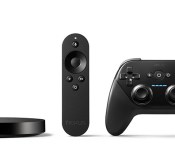
Google’s Nexus Player offers streaming and gaming for $99

Remember the Nexus Q? Yeah, we’d rather forget it, too. Google regained its streaming cred with the Chromecast, and now it’s looking to offer up another set-top box. The compact Nexus Player will handle streaming, games and run Android apps. An included remote wrangles navigation with voice controls for finding the content you’re after on the ASUS-made gadget. For those gaming sessions, a $39 controller can be tacked on as an additional purchase.
The Nexus Player will offer much of the same functionality as Mountain View’s diminutive dongle, adding the ability to leverage those mobile apps as well. It’s also the first device to run Android TV, an effort detailed back at I/O and promised to arrive alongside Android L, er… Lollipop. And yes, you’ll be able to “cast” stuffs from other devices to your TV. In terms of content options, you can expect Netflix, Hulu, Food Network, Travel Channel and more for now — but there’s no mention of either WatchESPN or HBO Go. Inside, the unit packs a 1.8GHz quad-core Intel Atom processor, 1GB RAM, 8GB of storage and Imagination PowerVR Series 6 graphics. Intel tells us that 64-bit chip is capable of “console-like graphics” alongside 1080p video streaming. As you might expect, the Player will connect to your TV via HDMI with WiFi for grabbing content and Bluetooth for the included remote.
If all of that sounds somewhat familiar, Amazon’s Fire TV touts a similar set of entertainment abilities for the same price. Of course, one taps into Prime Instant Video while the other leverages the Google Play repository. Speaking of cost, the $99 unit will be available on November 3rd, however if you’re anxious to lock one down, you can pre-order the Nexus Player on October 17th.
Filed under: Gaming, Home Entertainment, Google
Source: Google

Next-gen LG flagship could get huge camera upgrade

The LG G3 features a 13 MP camera that is pretty great. It is just one of the features that helped to make the G3 one of the best Android phones of the year. It doesn’t sound like LG is resting on it’s laurels, news is starting to leak out that the camera in next years flagship could be a pretty significant upgrade. Today, at the Korea Electronics Show (KES), LG unveiled a new 20.7 MP camera module with improved optical image stabilization (OIS). The module even includes increased correction angle from 0.5 to 0.7, this allows for more compensation for unwanted movements. The camera has quickly become the focus of most smartphones, so an improvement like this should help keep LG right out in front of their competitors. It will still be awhile before we see any concrete information regarding the next LG flagships, but these pieces certainly help us fill in the blanks.

Source G for Games
|
The post Next-gen LG flagship could get huge camera upgrade appeared first on AndroidGuys.

