


Local multiplayer is coming to Android games

Ever wish that you could just whip out your Android device and harass a passer-by to play games with you? It’s the sort of thing that Nintendo DS users, for example, have been using thanks to that company’s StreetPass feature, but, until now, hasn’t been available on Google’s smartphones. Now, however, the company has an added an update to its games infrastructure that enables “ambient, real-time” games with more than one user – so long that the game relies upon Google’s home-grown multiplayer backend. Still, maybe don’t sprint into the street and start challenging people to a dual, because they might get the wrong idea.
Filed under: Cellphones, Gaming, Mobile, Google
Source: Android Developers (G+)

T-Mobile Nexus rumors: No WiFi calling for Nexus 6?

If you’re a customer of the un-carrier and are yearning for a new Nexus device, we have some information you need to hear. A highly placed T-Mobile employee gave us a rough release schedule for the new Nexus 9 and a juicy rumor concerning the Nexus 6. Our source was hesitant to say much because nothing is set in stone yet. Keep in mind that this is preliminary information, so take everything with a grain of salt and don’t be surprised if some of these details change between now and the release.
First up is the Nexus 9. It sounds like you’ll be able to get your hands on your very own Nexus 9 on November 12th. There’s a catch though, you will need to physically visit a store if you want your tablet at the earliest possible moment. Right now, T-Mobile isn’t sure about offering a pre-order for the Nexus 9. However, there is a pre-registration page up. If you pre-register, you will be notified if T-Mobile decides to offer pre-orders or when the company releases the device for sale. Also, T-Mobile hasn’t announced their price for the device yet, but you can expect the pricing to fall in line with other carriers.
Up next is the Nexus 6. As we all know by now, Google tapped Motorola to build this Nexus device. The big rumor concerning the Nexus 6, is that it will lack WiFi calling out of the box. This is strange because T-Mobile has really been pushing WiFi calling recently. Not only does WiFi calling help to make up for T-Mobile’s smaller network, it also allows customers to use their own WiFi network to make calls. This can be a godsend if you live in a basement apartment or live in an area where T-Mobile’s network is lacking. Supposedly, an update will be pushed out to the Nexus 6 in the next 6-8 months that will add WiFi calling, but this could leave a lot of early adopters hanging out to dry. It will be interesting to see how quickly T-Mobile addresses this issue. All things considered, this should be a minor issue to most customers. The Nexus 6 looks to be a great device and will surely serve you well if you decide to pick one up.
Source T-Mobile
 |
The post T-Mobile Nexus rumors: No WiFi calling for Nexus 6? appeared first on AndroidGuys.
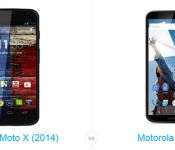
Nexus 6 vs Moto X (2014): A civil war within Motorola

Google has finally announced their long-rumored and leaked Nexus 6. As expected, this phone is being manufactured by Motorola, who also fairly recently announced their newest flagship, the Moto X (2014). So, how do the two newest phones from Motorola compare to one another? Read on to find out!
http://smartphones.findthebest.com/w/61ugskDkIBL
One of the things to note, is that the Moto X (2014) is a more average sized smartphone with a 5.2″ screen, while the Nexus 6 is definitely a phablet with a massive 5.96″ screen. However, the Nexus 6 has a nicer display with a whopping 493 ppi, while the Moto X has 424 ppi. Both are AMOLED displays, so their the same in that regard, which means the Nexus 6 comes out on top here.
The battery is a weird tie, with the Nexus 6 getting way more talk time at 24 hours, while the Moto X has 13 hours. However, the Moto X has 576 hours on standby while the Nexus 6 has 300 hours. The Moto X has a 2,300 mAh battery, while the Nexus 6 has a 3,220 mAh.
The Nexus 6 likely has better performance, with a newer Snapdragon 805 processor, and 3 GB of RAM, and the newest version of Android (though the Moto X should update soon).
Cameras are the same, except the Nexus 6 will have Optical Image Stabilization. The Nexus 6 will have wireless charging, while Moto X will not.
It’s also worth noting that the Moto X has a lot of choice with Moto Maker, allowing you to make your device your own. Moto X also has Moto Voice, Moto Display, and other features. The Nexus 6 will have a feature like Moto Voice, but without the ability to customize a hotword.
To top it all off, the Nexus 6 costs $649 unlocked, while the Moto X costs $499 unlocked.
After all is said and done, it’s hard to choose a winner here. Each has its own advantages and disadvantages, and the Nexus 6 will only have newer software for a little bit as it’s expected the Moto X will be updated very soon. Honestly, I think it comes down to preference. The Nexus 6 is a much bigger device, so you’d have to be looking for a bigger display to get it.
We’ll leave it up to you. Vote in the comments below: Which do you think is a better device, Nexus 6 vs Moto X (2014)
|
The post Nexus 6 vs Moto X (2014): A civil war within Motorola appeared first on AndroidGuys.

Google puts ad revenue to good use with R&D growth

Google isn’t a search company or a software developer. Its real business is advertising. Most of the money flowing into Mountain View (and there’s quite a lot of it: $16.5 billion this quarter to be exact) comes from ads. The company could simply build up a war chest or snatch up some more startups, but clearly its eyes are on the future. With Larry Page at the helm Google has branched out beyond browsers and mobile operating systems to delivery drones, internet-delivering balloons and whatever Glass is. A year ago Page told investors he wanted to spend more on “speculative” research and development projects. At the time its R&D budget had just seen a $1 billion growth over the previous year. Since then Google has added nearly another $2 billion. Over the first nine months of 2014 has pumped $7 billion dollars into R&D projected, including $2.7 billion in the last quarter alone. Obviously, not all of that money is being funneled into Google X, but it’s clear that the experimental arm is adding quite a bit to the company’s expenditures. Loon and Calico aren’t just about generating goodwill though. Clearly the more consumers Google can reach and the longer those consumers are alive, the more ads it can serve.
While the projects that grab the most headlines tend to be things like self-driving cars, it’s other efforts that are more important for the future of Google. Its experiments with Project Loon, millimeter wave wireless, and more prosaic programs like Android One are what will allow the company to ensure it can continue to grow by reaching consumers in emerging markets like India and Indonesia. Even something as mundane as app trials that don’t require a full download can have a serious impact in nations where mobile data is slow, expensive or both. While countries like the US and UK are still the biggest markets for Google, the rest of the globe is becoming increasingly important. In fact revenue outside of those two nations grew at a much faster rate — 26 percent year-over-year (versus just 15 percent in the US and 10 percent in the UK). Its content delivery services like Play Music, Movies and Books have also entered a strong era of international expansion.
The R&D spending for the quarter was quite a bit higher than some had expected, but as CFO Patrick Pichette explained during the company’s earnings call, a lot of that had to do with the 3,000 new employees Google added in the last three months. Most of those hires were in the “tech” space according to Pichette, especially in the field of engineering. The significant spending on hiring and R&D may hurt the company’s bottom line in the short term, but we’re sure the Pichette and the rest of the executive team would argue you have to spend money to make money.
Filed under: Misc, Internet, Google
Source: Google

RollerCoaster Tycoon 4 Mobile makes its debut on Android
Atari announced in June that RollerCoaster Tycoon 4 Mobile would be making its way to Android this winter. The game company has finally delivered today as they announced the titles availability in a free-to-play fashion. The mobile experience version looks and feels much like its original variants that made their first appearance in 1999. The title is a simulation that gives you the ability to build and create a running theme park. The really fun part about the title is the ability to construct and design your own roller coasters, hence the game’s name. Although, I spent many hours on previous PC versions without ever building my own custom coaster.
 RollerCoaster Tycoon 4 is free, but that also means they added in some in-app purchases for Coins and Tickets. Tickets get your rides built faster and as well as allow you to buy specialty coasters, parts, decorations and other various items that can’t be bought with coins. Coins are your more traditional currency for building and expanding. You can earn those through completing objectives and from your various rides and concessions stands earnings.


 The good news though is that you can link your park to other devices. This is either done through Google Play Games, if you choose to use it, or through a verification code that you can prompt for through the settings screen. While I enjoy the title, any hardcore work or major expansion is quite a bit easier, at least for me, on a tablet screen. Being linked though, I can make changes and collect funds while I am on the go. This does bring up another issue though. RCT4 is heavily reliant on a data connection to properly play the title. If you have no data connection you are limited to editing coasters and re-organizing where things are placed. They will sync up when you get back in service. This also means you can’t collect any profits while in offline mode either.
RCT4 will be a grinder sim for those that don’t care to spend real cash on in-game currency. While it is still playable, and I think rather enjoyable in short bursts, others who need to be able to play offline and not have to check back in ever few hours to complete something, might find it a bit irritating. It is worth a look if you are a theme park junkie, sim fanatic, or just remember playing the originals and want to take a trip back in your life on your mobile device. Hit the link below to go pick it up.
//<![CDATA[
ord = window.ord || Math.floor(Math.random()*1E16);
document.write('‘);
//]]>
The post RollerCoaster Tycoon 4 Mobile makes its debut on Android appeared first on AndroidSPIN.

Android 5.0 Lollipop Upgrade Watch

Wednesday was a big day in the Android world, as Google announced the biggest update to Android ever: Android 5.0 Lollipop.
While this is great news for Android enthusiasts, the bad news is this update still has to go through all the phone manufacturers, and even then the carriers before it gets to the user. While this can make one groan, the bright side is we seem to be in a time where more manufacturers realize the importance of timely updates.
We have this page that we will update whenever we get news of an update schedule from manufacturers. This is quite the task with as many manufacturers and then carriers there are, but we will do our best to be timely.
What I can tell you (at least about the major manufacturers) is this: Motorola is easily the quickest (except for Google, naturally) with updates, as last year’s Moto X got KitKat within weeks of its release. HTC has not had a great track record, but in June they announced they will bring Android Lollipop to all their HTC One (M8) and HTC One (M7) within 90 days of receiving the software from Google. Samsung, LG, and Sony all are very obscure and do not communicate regarding their updates.
Without further ado, here are all the newest details regarding Android 5.0 Lollipop upgrade:
Motorola announced not long after Google that they will be updating many of their devices released in the past year (and even past). We reported on this yesterday, but here is the link to their blog announcement here, and the page they will update with all update info here.
Below is what is confirmed by Motorola:
- Moto X (1st Gen)
- Moto X (2nd Gen)
- Moto G (1st Gen)
- Moto G (2nd Gen)
- Moto G with 4G LTE
- Moto E
- Droid Ultra
- Droid Maxx
- Droid Mini
We will update as soon as we have dates for these devices.
HTC has announced that they will follow-up on their promise, and that their last two flagships will get the update within 90 days of receiving final software from Google. After that, the update will reach “other One family members and select devices”. Here is their update page here.
Below is what is confirmed by HTC, with our estimated time of upgrade:
- HTC One (M8) – (ETA) middle of January
- HTC One (M7) – (ETA) middle of January
- Other One family members – (ETA) sometime 2015
- Select devices – (ETA) sometime 2015
We will update as soon as we have dates for these devices.
That’s all we have for now. Again, this will be updated as soon as we hear!
|
The post Android 5.0 Lollipop Upgrade Watch appeared first on AndroidGuys.
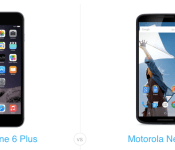
Nexus 6 vs iPhone 6 Plus: The battle of the phablets

So Google have now announced their new flagship device, we can finally see their response to Apple’s iPhone 6 Plus. For most, the decision on which device to get is simple as it is the platform that dictates the buying decision, but for some, platform doesn’t play as an important part in the decision.
We’ve stacked up the Nexus 6 against the iPhone 6 Plus in a pure spec comparison to see how the two compare, since the size profile of the two devices are very similar.
One of the main observations of the Nexus 6 is the sheer size of the screen, but despite it having a larger screen than the iPhone 6 Plus, the height of the two devices is almost identical – to give some perspective on the size of the Nexus 6.
The Nexus 6 wins on pretty much every other front, having more RAM, higher clocked CPU, higher PPI, better rear camera, and bigger battery.
So if you’re in the market for a phablet-sized device and don’t mind about OS, then there’s a clear winner here, and that’s the Nexus 6. But even if you’re set on iOS and you’re just here to check out the competition, with the sheer specs of the Nexus 6, combined with Android Lollipop, the competition is looking far more appealing than it was back in the days of Gingerbread, which is probably the last time iOS users dabbled in Android when it was a new platform.
So avid Android users and curious iOS users, the Nexus 6 is the device to buy if you’re in the market for a plus-sized device and pre-orders go live tomorrow, 17th October.
Let us know in the comments if you’re buying the Nexus 6, and if so what device you’re coming from.
|
The post Nexus 6 vs iPhone 6 Plus: The battle of the phablets appeared first on AndroidGuys.

Facebook ‘Safety Check’ lets friends know you’re OK after a major disaster

Despite the frivolous nature of most social media interactions, Facebook’s latest new feature is intended for use only in serious situations. Unveiled today in Japan, Safety Check notifications are pushed to users when a natural disaster hits and area you have listed as your location, where you’ve checked in on Nearby Friends, or where you recently logged in from. Tech companies like Google and Facebook have worked to connect people after significant disasters in the past, and Facebook says the project is an extension of the Disaster Message Board its Japanese engineers rolled out after the 2011 earthquake and tsunami there. Safety Check is rolling out globally on Android, iOS, feature phones and the desktop — there’s a demo video (embedded after the break) to explain how it all works.

A simple I’m safe / I’m not in the area set of buttons can push an update (and comments, if you enter them) that’s visible only to people on your friends list, intended to quickly give some piece of mind when they notice a USGS report for your zipcode — or worse. If you simply have friends who are in the area of a natural disaster, there’s a notification when they check-in as safe that can take you to a list of their updates.
A truly useful tool, or just a cagey way to try to take some of the creepiness out of the apps’ location tracking features? We’re figuring the latter impression doesn’t hurt from Facebook’s perspective, but in this connected age it’s also a reflection of how people really use the net in trying times. Additionally, it can take some pressure off of overloaded infrastructure with everyone trying to call affected areas after disasters hit, and of course, save you from a post-tragedy chewing out for failure to let people know you’re fine. C’mon, just call your parents / friends / casual acquaintances once in a while, it’s not that hard.
(function(d, s, id) var js, fjs = d.getElementsByTagName(s)[0]; if (d.getElementById(id)) return; js = d.createElement(s); js.id = id; js.src = “//connect.facebook.net/en_US/all.js#xfbml=1”; fjs.parentNode.insertBefore(js, fjs); (document, ‘script’, ‘facebook-jssdk’));
Filed under: Internet, Mobile, Facebook
Source: Facebook

Moto devices to get Lollipop makeover

Among all the big announcements today was a little update from Motorola talking about updates coming to a number of Moto devices.
Since Motorola and Google partnered on the Nexus 6, Motorola got a head start on prepping Android Lollipop for Moto devices. In their announcement today, they report,
…we are excited to confirm that this latest and greatest Android release will also come to our other devices as part of our ongoing software strategy to provide fast updates to our pure Android experience.
Motorola doesn’t give exact dates as to when the devices will get the update, but they were able to share a list of which Moto devices will get the benefit of Lollipop.
- Moto X (1st Gen. & 2nd Gen.)
- Moto G (1st Gen. & 2nd Gen.)
- Moto G with 4G LTE
- Moto E
- Droid Ultra, Droid Maxx, and Droid Mini
More to come. Stay tuned Moto-heads, and Droid-dudes.
Source [The Official Motorola Blog]
|
The post Moto devices to get Lollipop makeover appeared first on AndroidGuys.

Android L (5.0 Lollipop) Developer Preview Builds Will Be Available On Friday, October 17th

The newly announced Android 5.0 lollipop has a developer release date- Friday, October 17th. The lollipop SDK will come out with it as well. You will be able to install this build on a number of nexus devices including the Nexus 5 and Nexus 7. This build still has the “developer preview” name so it won’t be the absolute final version, but it will be far more stable than the preview that came out months ago.
Stay tuned here for more information on all things nexus, lollipop and Google here on AndroidGuys!
|
The post Android L (5.0 Lollipop) Developer Preview Builds Will Be Available On Friday, October 17th appeared first on AndroidGuys.

