


Best Motorola Phones in 2018
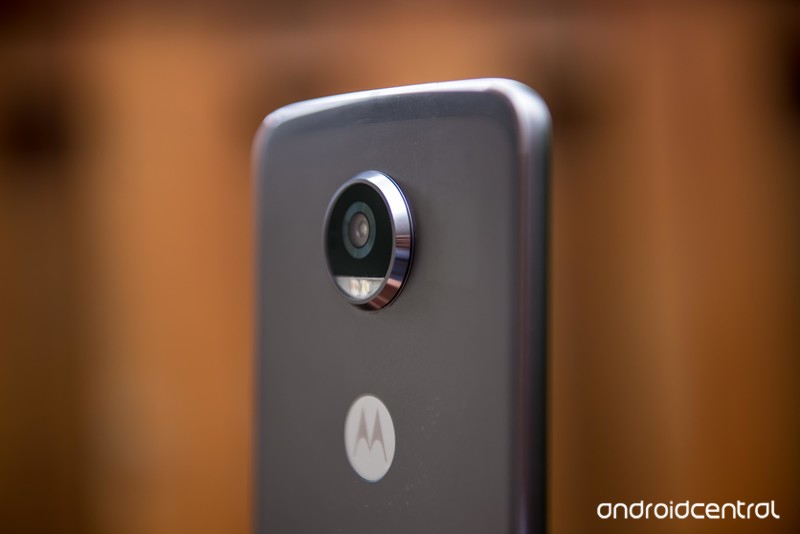
Motorola continues to make compelling phones in a few different categories
The last few years have been one of quiet overhaul for Lenovo-owned Motorola, bringing all of its disparate product lines, from the inexpensive Moto E to the premium Moto Z, into a familiar aesthetic. We’ve seen a bunch of new phones come out in 2018 that cement Motorola as the budget king while also trying to get its Moto Z series in line with other budget flagships on the market.
With new phones like the Moto Z3 Play and another one coming in August, there’s plenty of reasons to be excited about Motorola in 2018 and beyond.
Moto Z3 Play
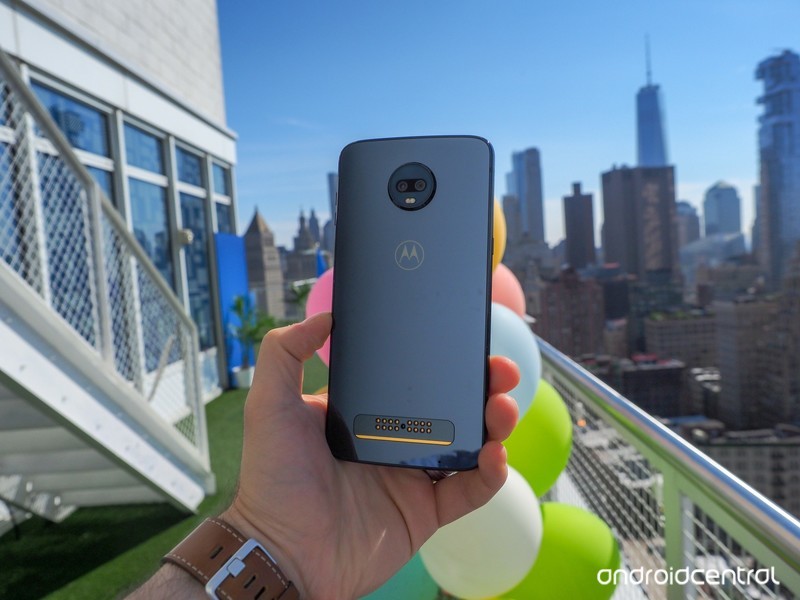
Released June 2018 The latest phone in Motorola’s Moto Z lineup is a minor improvement over its predecessor, but the Moto Z3 Play is still impressive nonetheless. For $499, you get a tall 18:9 display with plenty of power in the Snapdragon 636, along with a dual camera that goes the distance in most lighting environments.
Best of all, the phone still supports all the same Moto Mods that have been available since the first Moto Z device was released in 2016.
See at Amazon
Moto E5 series
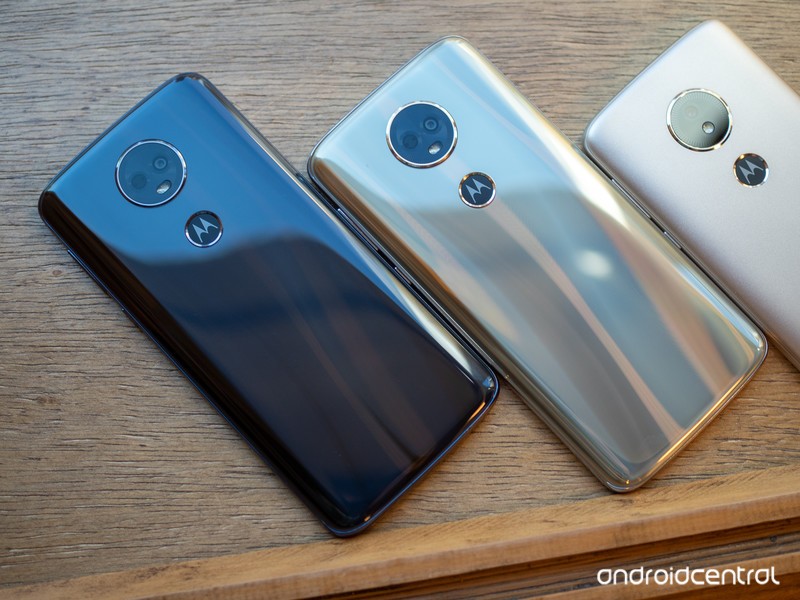
Released May 2018 Motorola went bigger and more versatile with its Moto E5 series, featuring a regular model, a Play, and a Plus — just like the G6 lineup. Once again, only two of the models, the E5 Play and E5 Plus, are available in North America, but they’re both interesting for their own reasons. The Moto E5 Play features a durable black plastic body with a removable battery; the Moto E5 Plus has a large 6-inch screen and a massive 5000mAh battery.
See at Amazon
Moto G6 series
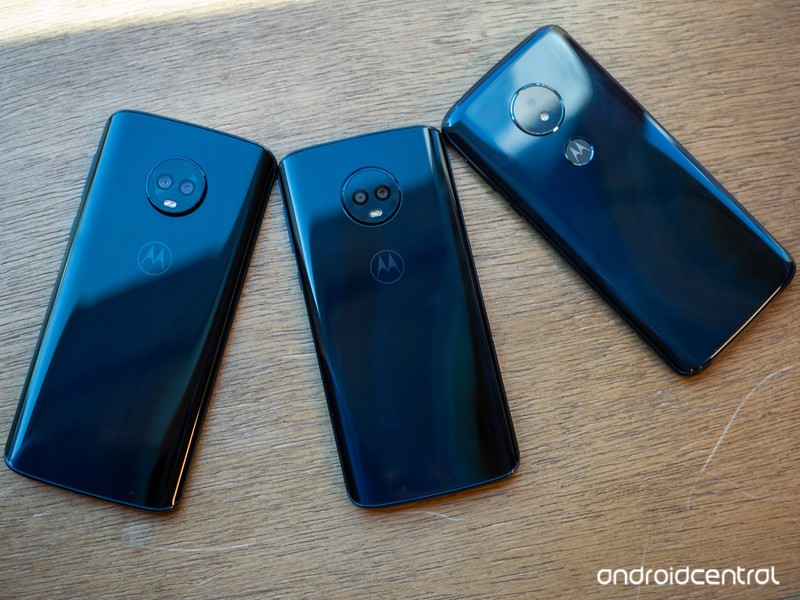
Released April 2018 With the Moto G6 series, Motorola cements itself as the most capable manufacturer of budget devices in the world. With three devices at three distinct price points, the G6 Play, G6, and G6 Plus are separated only by their specs, but they share the same tall, glass-clad body and 18:9 screen aspect ratios.
While the Moto G6 Plus isn’t available in North America, it’s widely available in Europe, Asia, and South America. The Moto G6 and G6 Play are available in North America unlocked or through various carriers.
Where to buy the Moto G6
See at Amazon
Moto X4
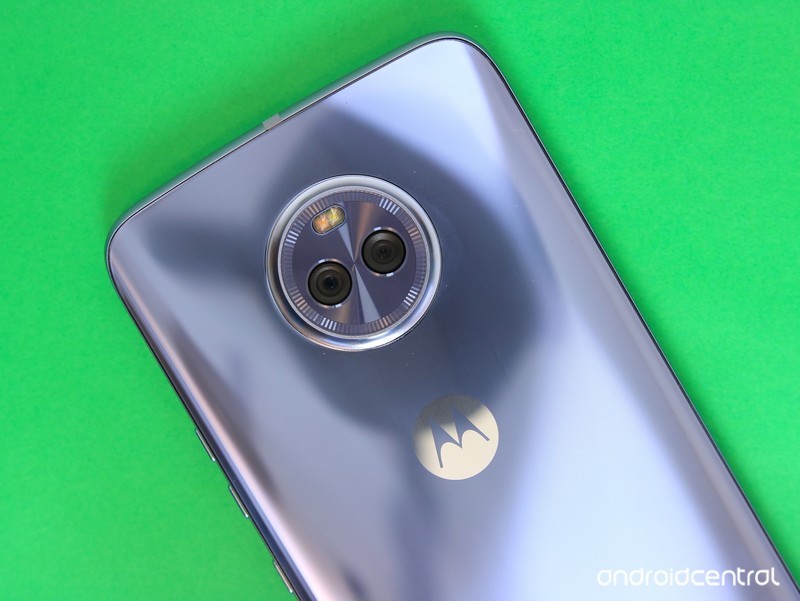
Released October 2017 The Moto X4 was the rebirth of the beloved Moto X lineup that disappeared shortly after Lenovo bought Motorola from Google. Now covered in glass, the Moto X4 was the first phone to ship with Amazon’s Alexa assistant built-in, and featured all of Motorola’s staple software features, including Moto Display. It was also Motorola’s first phone to feature a wide-angle secondary camera.
See at Amazon
Moto Z2 Play
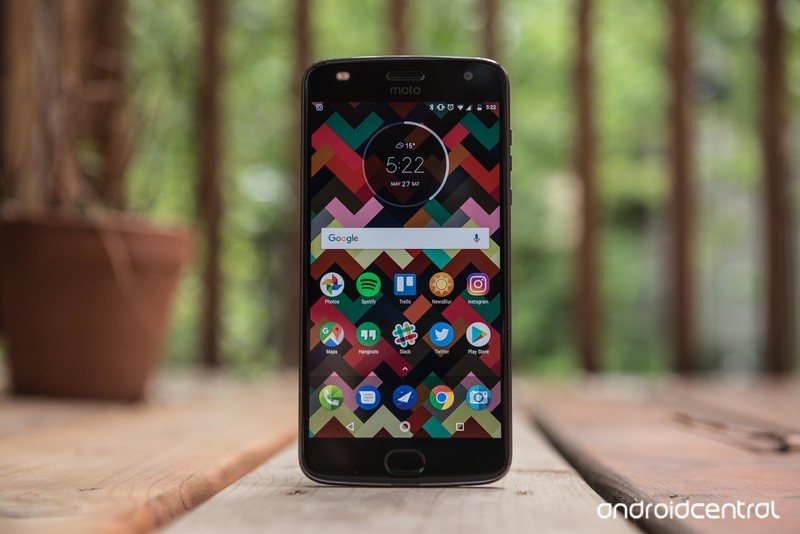
Released June 2017 Motorola followed up the Moto Z Play pretty quickly, and the Moto Z2 Play is a worthy sequel that tries to bridge the gap between the more affordable Play and the regular “Z” flagship from 2016. The phone features a much sleeker design than its predecessor, shaving a full millimeter of thickness, but doing so cuts down on the battery by 15%.
Aside from the improved, all-metal chassis, the Z2 Play sports a much-improved 12MP camera with a wider aperture and Dual Pixel Focus technology, as well as a newer version of the oft-lauded Moto Display feature that we’ve grown to love so much.
Of course, the Z2 Play also supports Moto Mods, and was announced alongside three new add-ons that are also compatible with older versions.
Moto Z2 Play review
See at Motorola
Moto G5 and G5 Plus
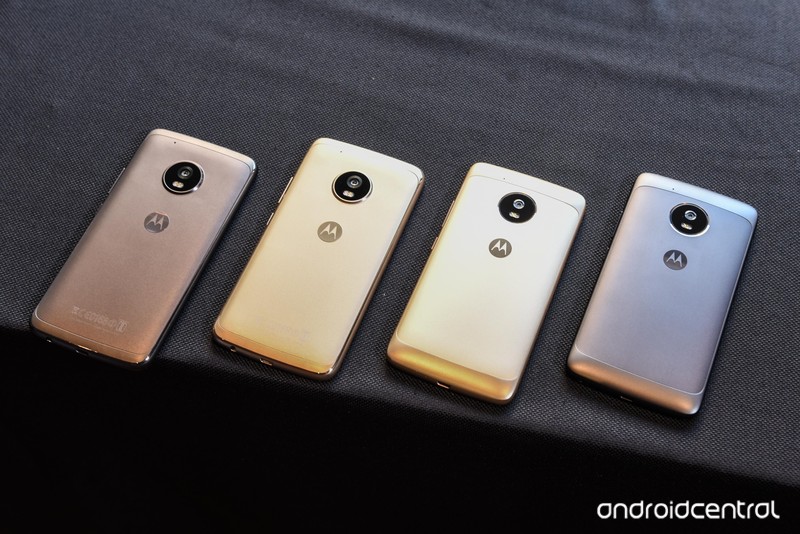
Released March 2017 The Moto G5 series features two models of differing size, capability, and price. The Moto G5, which is not officially available in the U.S., cuts costs by sticking with plastic and only a splash of metal, while the G5 Plus goes decidedly mid-range with its Snapdragon 625 chip and up to 4GB of RAM. Both models feature improved cameras and batteries, but the G5 Plus manages to compete with devices twice the price thanks to a large-pixel sensor and a wide-open lens.
The Moto G5 and G5 Plus also reinforce a recognizable design language that began in 2016 with the Moto Z and Z Force. A wider, easier-to-use fingerprint sensor (now on the cheaper model, too), rounded sides and a circular camera module maintain visual continuity with the Moto Z line, and the metal makes both phones feel very good.
The Moto G5 Plus is still available, but it’s been largely supplanted by the Moto G6 series (above).
Moto G5 Plus review
See at Amazon
Updated July 2018: This post has been updated with the latest Motorola phones that you need to care about.
Cover a large home in strong Wi-Fi with the $219 Netgear Orbi 3-pack system
Wi-Fi Blanket.
The Netgear Orbi home mesh networking system 3-pack is down to $219.48 on Amazon. Just clip the $30 coupon to get in on the discount. This same kit sells for around $294 usually, and this price is the lowest we’ve ever seen.

The Orbi mesh networking system covers up to 6,000 square feet in high-performance Wi-Fi. It can produce speeds up to 2.2Gbps, and these satellites are designed to be compact so they can be placed conveniently throughout your home. All the satellites share a single name so you won’t have any network interruption when you go from room to room. Use the free Orbi app to set it all up in minutes.
See on Amazon
Astropad Standard and Studio Apps Updated With Support for Luna Display Adapter, Which is Now Available for Pre-Order
Astropad today introduced new updates for both its Astropad Studio and Astropad Standard apps, bringing support for the Luna Display adapter, which is also now available for pre-order.
Introduced as a Kickstarter project last year, the Luna Display is designed to turn any iPad into a wireless second display for the Mac.
Astropad alone mirrors the Mac display, but Luna Display is designed to extend the Mac display rather than simply mirror it.
The Luna Display adapter plugs into a Mac using Mini DisplayPort or USB-C, and then after downloading the app, the Luna Display serves as an extension of the Mac, letting Mac content be accessed directly from an iPad.
Both of the Astropad apps now support Luna Display, and the Luna Display itself can be pre-ordered from the Luna Display website for $69.99.

Astropad also announced today that it is discontinuing all support for third-party styluses. The company says that third-party styluses deliver poor performance compared to Apple Pencil and create engineering complexities.
Astropad no longer recommends third-party styluses for artists. Support will cease at the end of 2018 to allow Astropad to focus on optimizing its apps for the Apple Pencil.
Astropad Standard can be downloaded from the App Store for $29.99. [Direct Link]
Astropad Studio, which costs $11.99 per month for syncing and monthly feature updates, is free to download initially. [Direct Link]
Tag: Astropad
Discuss this article in our forums
Pinterest Gains Collaborative ‘Activity Feed’ Tool to Make Event Planning Easier
Pinterest today announced the launch of a new social collaboration tool, called the “activity feed” for group boards. This section of the app will let members weigh in with a quick like or comment, @ mention another user, or start a new thread, and includes updates when members add new pins, create new sections, new members join, someone likes or comments, and more.
The app had comment support before, but each comment had to be attached to a specific pin. Now all comments will be organized in the activity feed so that conversations are easier to follow, and users will be able to start threads of their own on the collaborative board for all members to see, or under specific activities in the feed.
Pinterest is hoping to further facilitate the use of its platform as a party-planning tool for birthdays, weddings, and other events by introducing deeper social features that keep its users within the app. Earlier this year, the company introduced a “Following” tab that makes it easier to discover new ideas from users you follow.
The majority of Pinners use group boards to collaborate with family and friends as they plan parties, events and projects together. These updates are in direct response to requests from Pinners just like these, and they’re part of our ongoing effort to make Pinterest a more productive place to bring events and other projects to life.
The group activity feed will be available starting today across Pinterest’s mobile apps and on the web.
Tag: Pinterest
Discuss this article in our forums
Procreate for iPad Gains New Liquify Filter, Warp Transform Mode and Symmetry Drawing Guide
The Procreate app for iOS was today updated to version 4.1, introducing several major new features that will enhance the drawing and art creation experience on the iPad.
A new Metal 2-powered Liquify feature lets artists push, pull, expand, pinch, and twirl their art using either touch-based gestures or Apple Pencil pressure for more control.
The Symmetry Drawing Guide in Procreate 4.1 lets users mirror strokes as they paint, with customizations that include half, quadrant, or radial devision with both mirror and rotational modes. Symmetry can be used with any brush or paint tool, along with Liquify and ColorDrop for unique works of art.
A new Warp Transform mode offers 16 adjustable nodes and depth layering, and it can be used alongside the existing Freeform and Distort Transform modes, while a new Layer Select gesture option lets users select a layer by touching the layer’s content.
The built-in Perspective tools in Procreate have been improved with 2D and Isometric Guides, offering more control over grid measurements. Drawing Assist also snaps lines to guides for faster, more precise sketches.
Other notable improvements include Brush Set import and export, a 30-second time-lapse export option, and a color invert option for layers.
Procreate 4.1 is a free update for existing users. New users can download Procreate from the App Store for $9.99. [Direct Link]
Discuss this article in our forums
Mac Mini Refresh, New Low-Cost Notebook, Apple Watches With Larger Displays and More Coming This Fall
Apple is working on updates across its entire product line for the second half of 2018, according to a new investor’s note shared this morning by reliable Apple analyst Ming-Chi Kuo, with refreshes expected for iPhone, iPad, Mac mini, MacBook Pro, iMac, and Apple Watch.
Much of what Kuo has to share has been mentioned before, but he provides a nice overview of what we can expect to see this fall along with some interesting new tidbits on Apple’s upcoming product lineup.
- iPhone – There are three iPhones in the works, two OLED models in 5.8 and 6.5-inch sizes and one lower-cost LED model that will be available in a 6.1-inch size. All three will feature Face ID and upgraded A12 processors. While the two OLED models will have dual-lens cameras, the lower-cost model will feature a single-lens camera.
- iPad Pro – Apple is working on two new 11 and 12.9-inch iPad Pro models that are equipped with a full-screen design similar to the iPhone X and no Home button, with Apple to replace Touch ID with Face ID.
- Mac mini – Kuo didn’t have a lot of information to share on the Mac mini, but he says a processor upgrade is expected. The Mac mini has not been updated for more than 1,300 days, aka over 3 and a half years. It’s not clear if additional upgrades will be included, such as a redesigned chassis, but at least some kind of refresh is on the horizon.
- MacBook Pro – Processor upgrades expected.
- MacBook – Processor upgrades expected.
- New Low-Priced Notebook – Kuo believes Apple is designing a new low-priced notebook. He originally said that this would be in the MacBook Air family, but now has changed his mind. Previous rumors have suggested this machine could be a 12-inch MacBook, so Apple may be planning to expand the MacBook lineup with an additional low-cost option to replace the MacBook Air.
- iMac – Kuo says to expect a significant display performance upgrade, but he does not go into detail about what this will entail and we haven’t heard additional iMac rumors at this time. He says the iMac, like other Macs, will get a processor refresh.
- Apple Watch – Apple is working on two new Apple Watch models for 2018 that will have bigger displays and enhanced heart rate detection features. The two Apple Watch models will measure in at 1.57 inches (39.9mm) and 1.78 inches (45.2mm), compared to the current 38 and 42mm sizes. Rumors have not been clear on whether the Apple Watch itself will be larger or if the bigger display will come from a reduction in bezels.
Kuo wraps up his note with a prediction that the highly-anticipated AirPods and the AirPower will go into mass production in the third quarter of 2018, suggesting a late fall launch. Apple first announced the AirPower in the fall of 2017, but has reportedly run into some problems with production. Recent rumors have said Apple is aiming for a September launch for the AirPower.
Kuo doesn’t provide details on when we might see refreshes to Apple’s other product lines, but the company could be planning to launch all of the new products at its annual September event, which is typically held during the first or second week of September.
In the past, Apple has also held separate October events when there is a heavy fall product lineup to unveil, so Macs and iPads could also come in that month.
Related Roundups: iPad Pro, iMac, Mac mini, MacBook Pro, Apple Watch, watchOS 4, watchOS 5, MacBook, 2018 iPhones, AirPodsBuyer’s Guide: 10.5″ iPad Pro (Don’t Buy), iMac (Don’t Buy), Mac Mini (Don’t Buy), MacBook Pro (Don’t Buy), Apple Watch (Caution), 12.9″ iPad Pro (Caution), MacBook (Don’t Buy), AirPods (Caution)
Discuss this article in our forums
Common LG G7 ThinQ problems, and how to fix them
Julian Chokkattu/Digital Trends
The LG G7 ThinQ is an interesting phone that offers great sound quality, speedy software, and solid battery life. It’s a solid, if unremarkable, flagship, but it doesn’t always work as expected. We’ve been digging around to find the most commonly reported LG G7 ThinQ problems and we’ve identified possible workarounds or fixes to help you overcome them.
It’s a glass phone, so if you don’t want problems with cracks or scratches, you’ll want to start by investing in one of the best LG G7 ThinQ cases.
Problem: Backlight bleed
There have been quite a few reports of backlight bleed on some LG G7 ThinQ handsets. This is when the backlight that’s used to light up the LCD is coming through at a certain spot and illuminating it more than it should. There are threads at XDA Developers forum and on Reddit about this problem and it mostly seems to appear at the bottom of the screen to the right of the home icon.
Solution:
- There’s no fix for backlight bleed, as it’s a manufacturing issue. If your LG G7 ThinQ has backlight bleed, then you’ll want to contact LG, your carrier, or your retailer and arrange for a replacement handset.
Issue: Battery percentage not appearing
A few people have been complaining that the battery percentage isn’t showing in their notification panel, even when it’s turned on in the settings, as in this XDA Developers forum thread. Luckily, it’s easy to fix.
Possible fix:
- Start by going to Settings > Battery and make sure that Battery percentage on status bar is toggled on. Go to Settings > Display > New Second Screen and make sure it’s set to Standard. You should also go to Settings > Display > Display size and turn it all the way down to the smallest.
- If none of that worked, then back up your files and try a factory reset. This will wipe your phone. Go to Settings > General > Backup & Reset > Factory Data Reset and tap Reset phone.
Glitch: Auto brightness too dark
There are discussions at the XDA Developers forum and on Reddit about the auto brightness on the LG G7 ThinQ being too aggressive and making the screen too dark. Some people have also found that they’re unable to adjust the brightness level when auto-brightness is turned on – this seems to be specific to T-Mobile.
Workarounds:
- If you’re able to adjust the brightness level while auto-brightness is on, then go to a dark environment and drag the brightness slider as low as you want it to go to recalibrate it. This should set a minimum brightness for that light level.
- Go to Settings > Display and toggle Auto off, then set the brightness level as low as you ever want it to go and toggle Auto back on.
- There is a brightness boost icon at the left end of the brightness bar that you can tap to boost the brightness level.
- Try an app like Lux to get more control over your screen’s brightness.
Problem: Camera lag
We noted a little camera lag in our review, and it’s something that has cropped up in discussions on Reddit and at the XDA Developer forum and Android Central forum. Some people are having issues with the time between tapping the shutter button and the photo being taken; others have found that it takes a while for the photo to save to the gallery.
Workarounds:
- Try opening the Settings in the camera and turn HDR off and then test to see if it’s faster. Unfortunately, the quality won’t be as good, but you may notice that the lag is gone.
- The problem is more pronounced indoors or in low-light conditions, so try to snapshots in well-lit environments. Unfortunately, this is par for the course with cameras in general.
- Open the camera and tap Mode > Manual Camera. You can adjust various settings in here including the shutter speed, which is second from the end on the right.
- If your problem is with slow saving to the gallery, you might test without a MicroSD card in the phone to see if that’s slowing things down.
That’s it for issues so far but check out our LG G7 ThinQ tips and tricks to get more out of your phone.
Editors’ Recommendations
- LG G7 ThinQ vs. LG G6: Out with the old, in with the new
- LG G7 ThinQ vs. Samsung Galaxy S9 Plus: Clash for the heavyweight title
- LG V35 ThinQ vs. LG G7 ThinQ: Which phone prevails in stablemate showdown?
- Take control of your LG G7 ThinQ with these helpful tips and tricks
- LG G7 ThinQ vs. iPhone X: Which phone comes out on top?
Hinge wants to make first dates easier, launches ‘Most Compatible’ feature
Sometimes, swiping left and right a dating app can become mundane — especially if those matches continuously wind up unsuccessful in real life. With Hinge’s new “Most Compatible” feature, the company hopes to change that by providing you with people it thinks you’d be most interested in dating but will also be interested in dating you.
For those unfamiliar with Hinge, the dating app is a bit different than others on the market. Rather than only relying on physical traits through photos, Hinge offers a variety of questions for you to answer in order to inject more personality and fun into your profile. That way, when someone lands on your profile they can “like” one of your answers rather and even comment on it rather than only swiping right on a photo.
Users will find the new feature in the discover section of the app. Every 24 hours, Hinge will send you a new recommendation based on new information it learns about its members. It acts like every other potential match on the app, so you can view their profile, “like” a specific part of it, and choose whether you’re interested.
But how does this work? It uses machine learning to identify your tastes based on your behavior within the app. Hinge essentially builds a “taste profile” for you that then allows the algorithm to figure out who you would be most likely interested in all the way down to who you would least likely be interested in. You’re then paired with the person who is also most likely interested in you — also known as your most compatible.
With the new feature, Hinge hopes to solve what it considers a reoccurring issue in online dating — too many options that provide a small number of successful results. By providing users with informative suggestions based on an algorithm that is constantly learning new things about them, Hinge found its users are eight times more likely to go on a date with someone they’re most compatible with.
“People are used to seeing a lot of people when you go on to a swiping app, there’s always an endless number of people on there for you. And what we’ve found is restricting people’s choice doesn’t really serve them … people will then just go to other services where they find more people,” Hinge CEO Justin McLeod told Digital Trends. “What we’re trying to do is help you focus on the best person that we think would be great for you … so you can cut through the clutter of people that you’ve not going to be interested in or people who aren’t going to be interested in you and really focus.”
The Most Compatible feature is currently rolling out on Hinge. The app is available for download on iOS and Android.
Editors’ Recommendations
- The best dating apps of 2018
- ‘Wingman’ matchmaking app makes dating less dreadful for you and your friends
- Money can’t buy you love, but it may buy you more compatible picks on Tinder
- Tinder’s parent company Match Group swipes right on Hinge
- The best iPhone apps available right now (July 2018)
Sirin Labs’ crypto-phone could change the way we pay with our mobiles
Previous
Next
1 of 18

Andy Boxall/Digital Trends

Andy Boxall/Digital Trends

Andy Boxall/Digital Trends

Andy Boxall/Digital Trends

Andy Boxall/Digital Trends

Andy Boxall/Digital Trends

Andy Boxall/Digital Trends

Andy Boxall/Digital Trends

Andy Boxall/Digital Trends

Andy Boxall/Digital Trends

Andy Boxall/Digital Trends

Andy Boxall/Digital Trends

Andy Boxall/Digital Trends

Andy Boxall/Digital Trends

Andy Boxall/Digital Trends

Andy Boxall/Digital Trends

Andy Boxall/Digital Trends

Andy Boxall/Digital Trends
A year and a half ago, Sirin Labs had what its chief marketing officer describes as an almost religious moment, which ultimately resulted in the creation of a game-changing smartphone. It’s called the Finney phone, and it may be coming at exactly the right time to assist in bringing about a sizeable change in our everyday lives.
Intrigued? The Finney is a smartphone that connects you to the world of cryptocurrency, integrating blockchain technology and key cryptocurrency tools, with one of the world’s most secure mobile operating systems to keep everything safe. At this point, due to the overexposure this tech has been having recently, you’re either desperate to read on, or about to quickly navigate away. If you’re in the latter camp, wait just a second.
Sirin Labs knows it’s dealing with an industry that’s confusing, dense, and seemingly made up of buzzwords. The company understands this problem, and has genuinely made the Finney phone simple to use, opening up a fascinating new technology in a way that’s understandable and interesting to the average human being.
We’ve seen a prototype of the phone, and sat down with the people bringing it to life, in order to have our minds changed about what initially sounds like a niche device useful only to a few billionaires around the world.
Simple to use
In the U.S. alone, Sirin Labs research discovered 25 million people have cryptocurrency tokens and are therefore likely to be actively speculating. It’s difficult to call that a niche, and it’s obvious by the amount of press, the countless seminars and conventions, and money that’s being made from it and blockchain technology that there is a highly motivated community behind cryptocurrency. They’re the ones who will love the Finney phone first; but once the geeks are onboard, Sirin Labs is coming for you.
 Andy Boxall/Digital Trends
We asked Nimrod May, Sirin Labs’ chief marketing officer, if the Finney phone will be the device for people to get started with cryptocurrencies. He emphatically replied, “Absolutely, 100 percent, yes.” Developed by Sirin Labs’ team of 70 over the past 18 months, many of whom were already blockchain and cryptocurrency fans before the project started, the company wants Finney to bridge the gap between the blockchain and the mass market. Sirin Labs co-CEO Zvika Landau explained the vision for the Finney phone’s user friendliness further.
Once the geeks are onboard, Sirin Labs is coming for you.
“Most people are afraid of cryptocurrencies, and don’t know where to start,” Landau said. “The user experience we want is one that is so simple, you won’t need to understand how blockchain technology works, you won’t need to understand how to sign a transaction, or what happens in the background at the time.”
Think of the Finney phone with its integrated cryptocurrency support as an alternative to an iPhone with Apple Pay, or an Android phone with Google Pay. That’s how Sirin Labs envisages its potential impact. It’s acutely aware of how much hand-holding it will need to still do, and will not only transform its London store into an educational center-style showroom, but also hold events and meetups around the world to get people started.
Technology and security
At the moment, crypto transactions are complicated, with multiple tokens, security threats, no central organization for protection, and complicated wallets for storing cryptocurrencies accessed either online, or offline with the help of hardware like a USB stick. Hardly the most user-friendly system, or one that encourages anyone to make fast, real-world payments.
 Andy Boxall/Digital Trends
The Finney phone streamlines all this, and aims to take away the hassle. You may remember Sirin Labs’ first phone, the monstrously expensive, hand-finished Solarin phone with its Android-based Sirin OS software, which focused on high levels of security. The Finney phone’s version of Sirin OS uses 80 percent of the Solarin’s software, with additional measures directly related to cryptocurrency use added in. Specifically, it includes a multi-layer cyber security suite, a DApp decentralized app store, a token conversion system, and an embedded cold storage wallet.
The cold wallet gives the Finney its wow factor.
The cold wallet gives the Finney its wow factor. While phones with pop-up cameras have become popular this year, the top of the Finney phone extends up to open the cold wallet and reveal a 2-inch second screen for the authentication key. When the screen is closed the cold wallet, which uses its own separate micro-controller unit (MCU), is totally shut down. Your wallet is safe and disconnected from the internet. The private key is kept in a separate secure zone, similar to that used on the Solarin phone.
You slide up the screen manually, it’s not motorized, and on the version we tried the action was smooth and nicely dampened. Too nice, actually, and the temptation was there to flip it up and down subconsciously. This wouldn’t be a good thing, and would activate the wallet endlessly, so Sirin Labs is engineering it so there’s enough resistance to stop that temptation.
Specifications
We haven’t tried the phone outside of sliding up and down the cold wallet, as the device was a non-working prototype made to show the design, therefore we cannot comment on any aspects of the software, its operation, or actually carrying out a transaction using the Finney.
 Andy Boxall/Digital Trends
What we do know is a complete rundown of the specs. It has a Snapdragon 845 processor with 6GB of RAM at its heart, along with a 6-inch, 18:9 aspect ratio screen — yes, it has a notch — and a 12-megapixel single-lens camera on the back. The selfie camera has 8 megapixels, there’s a 3,280mAh battery inside, and 128GB of internal storage space. The body style is reminiscent of the Solarin, with flowing curves on the ends and sides, but without the expensive materials that pushed the price of its first phone into the stratosphere.
The Finney phone costs $1,000, and is currently being produced by Foxconn. It will launch in November and be available to buy almost immediately afterwards, with the final dates still to come. It can be pre-ordered through Sirin Labs site now, if you’re really keen. The second desktop device discussed when the Finney phone was first officially announced will not come at launch, but in 2019, a year when Sirin Labs has big plans.
Future plans
Over the coming year, Sirin Labs will connect Finney phones to a blockchain network, which will run services that use Sirin Labs own SRN token. Beyond that, the Sirin OS is open source and other manufacturers will be able to create their own super-secure blockchain phones, plus Sirin will release a software development kit to help integrate apps and tokens. While names were not mentioned, Sirin Labs said it has been approached by “six or seven” manufacturers already. Prior to our meeting, rumors spread that Huawei is investigating a blockchain phone, although it has not been officially tied with Sirin Labs yet. The company won’t have a say in how these other devices are developed, or force the use of a second screen for the cold wallet; but it plans to protect its brand by eventually adding a “Sirin OS Inside” style tag to devices.
The timing of the Finney phone is fascinating.
What about the SRN token? This is Sirin Labs own cryptocurrency, and its initial coin offering (ICO) raised $157 million. When you buy the Finney phone, you’ll be able to do so with a credit card; but Sirin Labs will convert that payment into SRN tokens. The harsh reality, if that’s what it is, is Sirin Labs isn’t a hardware manufacturer expecting to make money from its devices. It likely expects to make money from a service — in this case the SRN token and its blockchain ecosystem. It’s the same approach Apple took with the iPhone and the App Store.
The potential is there too, because of the simplicity envisioned by the team. The Finney phone brings together a token conversion system, a cold wallet, lots of security, and everything else one needs to use cryptocurrencies into a single, easy to use device. Using the Finney phone to pay will be as simple as using the camera to scan a barcode, then the onboard cold wallet to secure the transaction. That’s it.
Risk and potential
Except, not really. Options are limited for regular people to use cryptocurrencies in everyday situations. It’s almost solely used for speculation, fundraising, and for purchases of questionable legality at the moment. There are other decentralized apps and services, such as the Brave browser — which will be pre-installed on the Finney phone — or games like CryptoKitties, but it’s not for your weekly shop yet. It also doesn’t instantly make entering the cryptocurrency world any less financially risky than it is now.
However, things are changing. The risks associated with cryptocurrency won’t affect the Finney phone or Sirin OS, and are mostly caused by speculators.
“As more people adopt cryptocurrency for daily usage, it will become more stable, which will encourage more people to use it,” Landau told Digital Trends.
The Finney phone has the potential to lessen the turmoil by speeding up the adoption of cryptocurrencies around the world. The timing of this phone is fascinating, coming when attention on blockchain and cryptocurrencies is at fever pitch. May knows the opportunity is there, saying, “If you come with the right product and the right technology, you have the chance of changing the world.”
He is first to admit the pretentiousness of the statement, but it’s impossible to deny the prospects here, and only the shortsighted would fail to be excited by them. However, like cryptocurrency itself, it now needs to live up to the hype.
Editors’ Recommendations
- Before crypto nirvana, blockchain needs to solve these basic problems
- Volition is a blockchain-powered collectible card game that you print at home
- Here’s everything we know about the HTC Exodus smartphone
- From the doctor to the DMV, blockchain can make governments swift and secure
- Why Mastercard is ripping a page from Bitcoin’s book
Hackers can purchase government login credentials for cheap on the dark web
McAfee’s Advanced Threat Research team recently discovered that hackers have access to many organizations that have weak credentials when using Microsoft’s Remote Desktop component in Windows-based systems. Access to these organizations — whether it’s an airport, a hospital or the U.S. government — can be bought for little money through specific shops on the dark web.
Microsoft’s Remote Desktop Protocol (RDP) essentially allows you to connect and use a Windows-based PC from a remote location. When those login credentials are weak, hackers can use brute force attacks to gain the username and password for each connection. McAfee found connections up for sale across various RDP shops on the dark web ranging between a mere 15 to a staggering 40,000 connections.
“The advertised systems ranged from Windows XP through Windows 10,” says John Fokker, McAfee’sHead of Cyber Investigations. “Windows 2008 and 2012 Server were the most abundant systems, with around 11,000 and 6,500, respectively, for sale. Prices ranged from around $3 for a simple configuration to $19 for a high-bandwidth system that offered access with administrator rights.”
Among the list of devices, services and networks on the menu are multiple government systems on sale worldwide, including those linked to the United States. The team found connections to a variety of healthcare institutions including medical equipment shops, hospitals, and more. They even found access to security and building automation systems at a major international airport selling for a mere $10.
The problem doesn’t just revolve around desktops, laptops, and servers. Internet of Things devices based on Windows Embedded are also on the menu such as point-of-sale systems, kiosks, parking meters, thin client PCs and more. Many are overlooked and not updated, making them a quiet entryway for hackers.
Black market sellers gain RDP credentials by scanning the internet for systems that accept RDP connections, and then use tools like Hydra, NLBrute and RDP Forcer to attack the login using stolen credentials and password dictionaries. Once they successfully log into the remote PC, they don’t do anything but put the connection details up for sale.
After hackers pay for a connection, they can bring a corporation down to its knees. For instance, a hacker could pay a mere $10 for a connection, infiltrate the network to encrypt the files of every PC, and demand a $40,000 ransom. Compromised PCs can also be used to deliver spam, misdirect illegal activity and mine cryptocurrency. Access is also good for stealing personal information and company trade secrets.
“We found a newly posted Windows Server 2008 R2 Standard machine on the UAS Shop,” Fokker writes. “According to the shop details, it belonged to a city in the United States and for a mere $10 we could get administrator rights to this system. UAS Shop hides the last two octets the of the IP addresses of the systems it offers for sale and charges a small fee for the complete address.”
The solution, according to McAfee, is that organizations need to do a better job at checking all their virtual “doors and windows” so hackers can’t sneak in. Remote access should be secure and not easily exploitable.
Editors’ Recommendations
- You have to get an invite for Walmart’s personal shopping service, Jetblack
- Chrome now supports the new password-free login standard
- Seeking a paleo, gluten-free, or diabetes-friendly meal kit? Sun Basket delivers
- Windows 10 vs. MacOS vs. Chrome OS
- Microsoft Surface Go hands-on review

