


Apple Confirms 2018 MacBook Pro Keyboard Has ‘Membrane’ to ‘Prevent Debris From Entering the Butterfly Mechanism’
In an internal document distributed to Apple Authorized Service Providers, obtained by MacRumors from a reliable source, Apple has confirmed that the third-generation keyboard on 2018 MacBook Pro models is equipped with a “membrane” to “prevent debris from entering the butterfly mechanism.”
Image Credit: iFixit
The relevant excerpt from the service document:
Keyboard and Keycaps
The keyboard has a membrane under the keycaps to prevent debris from entering the butterfly mechanism. The procedure for the space bar replacement has also changed from the previous model. Repair documentation and service videos will be available when keycap parts begin shipping.
In its teardown of the new 13-inch MacBook Pro with Touch Bar last week, the repair experts at iFixit were first to discover the thin, silicone barrier underneath the keycaps, and theorized that it was to prevent dust indeed.
Publicly, Apple has only confirmed that 2018 MacBook Pro models feature an “improved third-generation keyboard for quieter typing,” but many suspected that the silicon membrane was actually to prevent “contaminate ingress,” fancy speak for the crumbs from your sandwich that you ate at your desk for lunch.
Following years of anecdotal complaints from customers, and a few class action lawsuits, Apple initiated a worldwide service program last month, offering free repairs of 2015-and-later MacBook and 2016 and 2017 MacBook Pro keyboards, which are equipped with low-profile butterfly switch mechanisms.
We’ve already reported about the service program in more detail, but the gist is that those particular MacBook and MacBook Pro models can experience issues with sticky, unresponsive, or inconsistently functioning keys when small particles like dust or crumbs get stuck underneath the shallower keycaps.
We’ve reached out to Apple for comment.
More details to follow…
Related Roundup: MacBook ProBuyer’s Guide: MacBook Pro (Buy Now)
Discuss this article in our forums
Apple Highlights Upcoming Retail Grand Openings in Milan and Walnut Creek
Apple this week has begun highlighting the impending grand openings of two new retail locations in Milan, Italy and Walnut Creek, California.
Apple Piazza Liberty in Milan will see a grand opening on Thursday, July 26, and in celebration Apple has put together a collection of colorful pieces of art and photographs created by twenty Italian artists and designers.
On a new webpage on Apple.com, the company highlights the artists and the Apple products they used to create their works. These include product designer Valerio Sommella (iPad Pro, Procreate, and iMac Pro), musician Charlie Charles (iMac), illustrator and animator Stefano Colferai (iPhone X and MacBook Pro), and more.
Every day in Milan, artists and designers reinvent the future. Twenty of them asked what they will do tomorrow, and here are their answers: a snapshot of the city’s creative energy.
Apple discovered the artists and incorporated their creations into the tagline of the new store ahead of the grand opening, which visitors can see on nearby barricades: “Cosa farai domani, Milano?” or “What will you do tomorrow, Milan?”
 Colferai’s project (left) and Apple Piazza Liberty (right) via @stefanocolferai on Instagram
Of course, Apple Piazza Liberty will host a variety of Today at Apple sessions, including live music in the location’s amphitheater on opening night by musician LIM, a “crazy self-portraits” session with Olimpia Zagnoli on July 27, a photographic laboratory with Piotr Niepsuj on July 28, and a “draw the summer” class on July 29. Local customers can begin signing up for these sessions on July 20.
In the U.S., another Apple retail location will be opening around the same time as the Milan store, this one on Saturday, July 28 in Walnut Creek, California. Opening at 10:00 a.m. local time, the relocated store is taking the place of a former California Pizza Kitchen and will now be named Apple Broadway Plaza.

The former location lacked many of the modern features of Apple’s new retail store initiative, so Apple Broadway Plaza will debut with an emphasis as a local community gathering space that can be used for Today at Apple sessions. The building is located in the Broadway Plaza outdoor mall in Walnut Creek, and has been under construction for over a year.
For more on the latest of Apple’s retail plans, be sure to visit our Apple Stores Roundup.
Tag: Apple retail
Discuss this article in our forums
BlackBerry to use the oldest trick in the book to push new keyboard phone
BlackBerry may have another device on the list for 2018 — a lower cost version of the Key2. Evidence of its possible existence comes from a leaked picture allegedly showing what’s being called the BlackBerry Key2 Lite, which shows the back of a phone with BlackBerry’s familiar logo, and a Key2-like shape.
The device differs from the Key2 slightly. The chassis on the device pictured has a red color, and will apparently be made of plastic rather than metal. It’ll come in a blue or copper color as well, according to mobile leaker Evan Blass, who posted the picture on Twitter. The dual-lens camera BlackBerry introduced on the Key2 is present though, although the specifications may not be the same. While the Key2’s rear panel is also textured, the effect is different on the Key2 Lite.
Apparently codename BlackBerry Luna, the cheaper materials used in the device’s construction should make the phone cheaper to buy than the Key2, which starts at $650. What’s interesting is that being called the Key2 Lite and sharing the Key2’s basic design, means the phone will have a physical keyboard, potentially introducing the feature to a wider audience. Outside of the expensive KeyOne and Key2, the only other Android-based BlackBerry phone you could buy was the all-touchscreen BlackBerry Motion.
We’ve already had indirect hints about the Key2 Lite. When Digital Trends spoke to BlackBerry’s global head of device portfolio Gareth Hurn in January, he told us there would be two phones with keyboards released in 2018. The BlackBerry Key2 turned out to be the first, and now it appears the Key2 Lite will be the second.
When will the phone arrive? Blass mentions in a subsequent tweet the phone could launch at the end of August or in September, potentially at the IFA technology show in Berlin, which begins on August 31 and runs until September 5. We don’t know anything about the specification yet, or if BlackBerry will remove some of the Key’s special keyboard functionality to lower the price further. It’s always possible the Key2 Lite will use the KeyOne’s keyboard, just with the Key2’s improved design.
We’ll keep you updated with BlackBerry Key2 Lite rumors here.
Editors’ Recommendations
- The best BlackBerry Key2 cases
- BlackBerry Key2 vs. BlackBerry KeyOne: A stunning successor
- BlackBerry Key2: Everything you need to know
- BlackBerry Key2 review
BlackBerry KEY2 picking up July security patch in latest update
The KEY2 is picking up its first security patch via an OTA update.

BlackBerry is rolling out a software update to the KEY2 that includes the July 01, 2018 security patch. The phone made its debut last month running Android 8.1 Oreo out of the box along with BlackBerry’s security suite. We’re still digging through the update, but the latest build removes the Wi-Fi calling feature — it’s likely BlackBerry will re-introduce it in a future update.

There’s plenty to like in the KEY2. It has a fantastic keyboard, and has much more robust hardware in the form of a Snapdragon 660 chipset, 6GB of RAM, up to 128GB of storage, Wi-Fi ac, Bluetooth 5.0, and a 3500mAh battery. The device isn’t exactly affordable at $650, but if you’re looking for a physical keyboard coupled with decent hardware, there isn’t anything else out there that comes close.
BlackBerry KEY2
- BlackBerry KEY2 review
- BlackBerry KEY2: Everything you need to know!
- BlackBerry KEY2 specs
- BlackBerry KEYone review: Coming home
- Join our BlackBerry KEY2 forums!
Buy the BlackBerry KEY2
Vivo NEX with pop-up camera launches in India for ₹44,990 ($650)
Vivo NEX undercuts the OPPO Find X by $200 in India.

Vivo unveiled the innovative NEX a month ago in China, and the phone is now making its way to India. The phone retails for the equivalent of $700 in China, but Vivo is selling the NEX for just ₹44,990 ($650) on Amazon India. That’s a fantastic deal when you consider the tech on offer.
The Vivo NEX is powered by a Snapdragon 845, and comes with 8GB of RAM and 128GB of storage — that’s the default variant in India. There’s also a 4000mAh battery with Vivo’s own fast charging tech, dual 12MP + 5MP cameras at the back — with the primary camera featuring Sony’s IMX363 imaging module, along with 4-axis OIS and 1.4um pixels.
The highlight is the 92% screen-to-body ratio, facilitated by a retractable front camera that’s hidden away when not in use. The slider pops up in under half a second, and aside from being an elegant solution to the notch, it just looks cool.

That’s not all, as the NEX also comes with an in-display fingerprint sensor. Vivo claims it’s faster than the sensor it used in the X21, and after using the phone for two days, that is indeed the case. On the software side of things, the Vivo NEX is running Android 8.1 Oreo based on Funtouch 4.0, and while the skin leaves a lot to be desired, it is very well optimized for the hardware.
We’ll have much more to share regarding the Vivo NEX in the coming weeks, so stay tuned. In the meantime, be sure to take a look at our hands-on post. If you’re looking to pick up the NEX, Amazon India is offering a flat ₹4,000 cashback on HDFC credit and debit cards, and there’s a slew of financing options available from Bajaj Finserv and leading financial institutions.
With the OPPO Find X costing ₹59,990 ($870), the Vivo NEX is a relative bargain. Amazon is also touting an assured buyback value of ₹22,495, so if you’re planning to upgrade after ten months (the offer is valid up to 11 months), you’ll get half the device’s value after returning the NEX.
See at Amazon India
Catalyst Galaxy S9 Impact Protection Case review: Jack of all trades
Catalyst provides excellent protection in a sleek, stylish package.

Way back in 2014, a Kickstarter was launched for an iPhone 4 case called the EscapeCapsule. It was a fully-enclosed waterproof case that went on to collect nearly $55,000 in funding from almost 600 backers, and today, the company is known as Catalyst with a case for just about every Apple product you could think of.
This July, Catalyst finally expanded outside of the Apple ecosystem and launched its Impact Protection Case for the Samsung Galaxy S9 and S9+.
Even though most Android users are probably unfamiliar with the company, Galaxy S9 customers should pay close attention as this is one of the best cases you can buy for the phone.
Catalyst Galaxy S9 Impact Protection Case

Price: $39.99
Bottom line: Offers more than enough protection in a slim, good-looking package.
The Good
- Drop-protection up to 9.9-feet
- Surprisingly thin and light design
- Textured, easy-to-press buttons
- Optional wrist lanyard is included
The Bad
- Fewer colors available compared to iPhone cases
See at Amazon

This thing does it all
Catalyst Galaxy S9 Impact Protection Case What I like
As the name “Impact Protection Case” suggests, this is a case that’s designed to be a bit more rugged than the average bear.
Catalyst promises drop-protection up to 9.9-feet (or 3-meters) with a unique Impact Truss System that helps to absorb the impact of particularly nasty falls, and in my experience, this results in more than enough protection to keep your phone safe and secure no matter what you’re doing.
The sides of the case feature a rugged rubber finish that feels great in the hand, the textured buttons are very easy to press, and the back features a clear finish so you can still appreciate the design of your S9.
Despite all of this security, wireless charging still works like you’d expect and Catalyst includes a free wrist lanyard that you can attach to the bottom-right corner to ensure you always know where your phone’s at.
A few other highlights include extra-wide cutouts for the 3.5mm headphone jack and USB-C port, the orange buttons against the blue frame for the color I have look stunning, and popping the case on and off is much easier than some competitors.
While all of that would be great on its own, what really struck me the most about this case is how it doesn’t really add any unnecessary bulk to the S9. The phone is still very manageable in the hand and doesn’t feel much heavier at all. As someone that hates cases but gets anxiety when carrying a phone naked, this is a great middle ground.

The cost of luxury
Catalyst Galaxy S9 Impact Protection Case What I don’t like
As for what I don’t like about Catalyst’s Galaxy S9 case, there’s not a lot.
There are three excellent colors to choose from right now (Stealth Black, Blueridge Sunset, and Clear), and while all of these look great, I’d like to see the Coral, Sunset, and other eye-catching shades from the iPhone X case brought over at some point down the road.
Also, while the $39.99 price is reasonable considering the quality of case you’re getting, I can understand how some people may be turned away from it.

Catalyst Galaxy S9 Impact Protection Case
I wasn’t sure what to expect going into this review, but after rocking the Catalyst Impact Protection on my S9 for the past few days, I’ve been exceedingly happy with it.
As mentioned above, the case looks great, has incredibly tactile buttons, and offers fantastic protection from all angles without making the S9 overly bulky.
Add that together with good button cutouts, the free lanyard, and a solid choice of color combos, and there’s not much to complain about.
5
out of 5
It’s disappointing that not all of the colors from the iPhone X Impact Protection Case made their way over here and the $39.99 price tag might be too rich for some, but those two small gripes aside, this is a phenomenal accessory that every S9 and S9+ owner should look into.
See at Amazon
Samsung Galaxy S9 and S9+
- Galaxy S9 and S9+: Everything you need to know!
- Galaxy S9 review: A great phone for the masses
- Complete Galaxy S9 and S9+ specs
- Galaxy S9 vs. Galaxy S8: Should you upgrade?
- Join our Galaxy S9 forums
Verizon
AT&T
T-Mobile
Sprint
Deal: Verizon now offering BOGO offers on the Google Pixel 2 and 2 XL

If you still haven’t had the chance to pick up a new Google Pixel 2 or Pixel 2 XL, there’s no better time than right now as Verizon is currently offering a sweet deal.
For a limited time, when you buy a Google Pixel 2 or 2 XL on an installment plan, you’ll get another Google Pixel 2 for free! If you go with a Google Pixel 2 XL instead, you can get a second one discounted after receiving $649.99 in credits — you don’t even need to trade in a smartphone in order to be eligible for this deal.
Conditions:
- Must sign up for a 24-month installment plan
- Google Pixel 2: $27.08/month in handset payments
- Google Pixel 2 XL: $35.41/month in handset payments
- Credit will appear on your monthly bill up to $649.99 over a 24-month period (will appear within 2 billing cycles)
- Must sign up for a new line with Verizon to be eligible
Verizon’s eligible plans start at just $55/month for 5GB of data and unlimited talk and text. If you don’t use up your data allowance for the month, your remaining balance will roll over to the next month. You also don’t need to worry about paying data overages if you use too much data—simply turn on “Safety Mode” from “My Verizon” and your data will simply be slowed down until your next billing cycle begins.
See at Verizon

What is a ‘blockchain phone’ and how does it work?
Everyone is a node, your data is a block, and it all forms a chain. Yeah, it’s complicated.
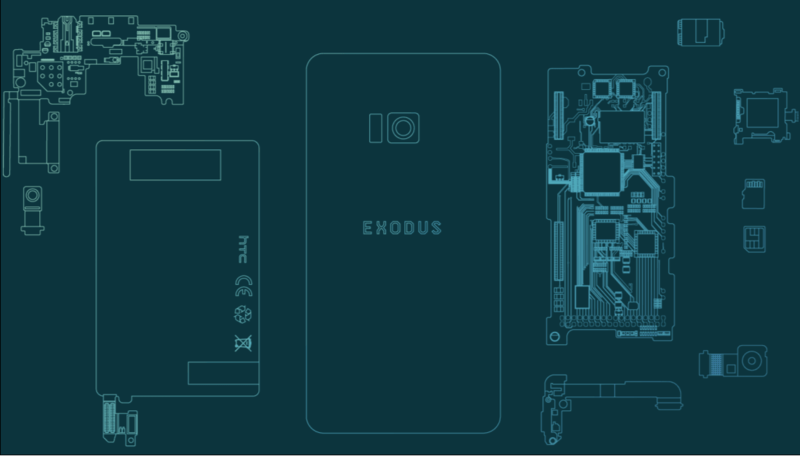
HTC plans to release the Exodus this October, and it will be the world’s first blockchain phone. We know the project is spearheaded by Phil Chen, the genius behind the HTC Vive, and that blockchain means the phone will have something to do with cryptocurrencies like BitCoin. That’s not a lot of information and it fails to answer the two biggest questions: What exactly is a blockchain phone and how does all this work?
There’s a lot of “informed speculation” going on around the HTC Exodus. HTC isn’t saying much because they need to surprise us come October, and it’s hard to know exactly what the company means when they say blockchain phone and describe their vision around it. But we do know what blockchain technology is and how it could be used in a phone.
What is the blockchain?
Don and Alex Tapscott, the authors of Blockchain Revolution say:
“The blockchain is an incorruptible digital ledger of economic transactions that can be programmed to record not just financial transactions but virtually everything of value.”
The keywords here are incorruptible digital ledger because that’s what the blockchain is at its core.
A blockchain is essentially a shared database with no master copy.
A blockchain is an encrypted and shared database that’s spread across more than one computing device. This means that every person with access can modify that ledger without waiting for someone else to finish any edits. There are complicated algorithms in place to keep duplicate entries out based on the actual time they were created or changed, so the database updates and every client gets the changes and they are always in sync. A blockchain is considered to be secure not because the database is encrypted, but because there is no single “master” copy to edit or corrupt — the blockchain database on your computer is considered to be as valid as the database on any other computer.
With potentially millions of computers hosting the blockchain database, it’s also available to the public and verifiable by anyone who has the need and means to verify it. Remember, no matter where the blockchain is accessed, it has the same data because of the software behind it that reconciles any and all entries every 10 minutes. This makes a blockchain a great way to host decentralized data for cryptocurrency. Anyone can access the chain and use software like a currency wallet to spend and manage their alternative currency. Nobody can hack into the chain because there is no master copy to hack.
Blockchain technology is perfect for something like cryptocurrency.
As mentioned, the data is reconciled every 10 minutes. Every change to the data is accounted for, duplicate entries are sorted and separated by the actual time of the transaction, and every copy on every computer is updated. These changes or transactions are called blocks. The group of computers that host the data are called nodes and they form the chain.
The most important thing you need to know when you see anyone talking about the blockchain is:
- A blockchain is transparent and the data is available to anyone who has software that needs to access it.
- There is no master copy and as long as enough computers host the data, there would never be a computer powerful enough to find every copy and corrupt it.
- Any change to the data (such as a BitCoin transaction) happens through a validation system that apps like a coin wallet can interact with. Every node in the chain validates each transaction to ensure that it’s valid.
- A blockchain keeps a record of every transaction (change to a data point) and each transaction holds information about where it originated.
This is why blockchain technology is the right way to keep records for cryptocurrency. It’s decentralized — no person or group can manipulate it — and each node acts as an administrator so no single part of the chain can go “rogue” and foul things up. But there are other potential uses for a blockchain. Things like landholder records and title deeds could use a blockchain, or a complete stock market could be built using a blockchain and any middleman such as a broker would become unnecessary. Any type of database that has individual records that need to be assigned to an individual identity could use blockchain technology. Because a blockchain uses public/private encryption key pairing, each transaction is secure and easy to identify.
How will you use blockchain in a phone?
You can already make your phone act as a node in a chain through digital wallets for cryptocurrency, like the Coinbase app.
But let’s face it — getting “in to” something like BitCoin or Ethereum is not easy for the beginner. HTC could change that dynamic by including a robust wallet in the phone with a user interface that’s friendly and walks you through the process of investing in and using digital currency for everyday transactions. The company also mentions “Trusted Hardware” on the Exodus website so it’s possible that there will be an extra layer of security to keep your identity safe as well as your digital wallet.
HTC could have a new and unique way to store your data, but do we really want it?
But it sounds like HTC has a higher set of goals in mind. There’s talk of decentralized data for applications and secure on-device storage for your personal information instead of using the cloud. Seeing how HTC plans to secure data in a system that’s open to the public, such as a blockchain, is going to be interesting is this is the case.
Depending on just what HTC plans to use blockchain technology to do there is also a chance that the company will have found a new and unique marketing angle — HTC is also a set of nodes in any chain and has unique access to your shared data and can offer a system similar to what Google does, where you’re profiled and targeted when it comes to advertisements.
One thing is certain, the HTC Exodus will be one of 2018’s most interesting phones.
All of this is speculation. It’s almost certain that the HTC Exodus will be a gateway into cryptocurrency use and include user-facing (and possibly unique developer options) apps and utilities to connect to large clearing houses like Coinbase. Past that, we;ll just have to wait until October and find out. I’m certainly interested in checking out the first blockchain phone, and I’m sure plenty of us feel the same.
Huawei Targets 200 Million Phone Sales Globally in 2018, Closing in on Apple
Chinese mobile maker Huawei expects to ship 200 million smartphones globally by the end of the year, bringing it within range of Apple as the second-largest vendor worldwide behind Samsung (via The South China Morning Post).
The target was announced by mobile chief Richard Yu Chengdong as the Chinese company launched the latest additions to its mid-range smartphone line-up, the Nova 3 and Nova 3i. Yu said Huawei had shipped 100 million phones as of July 18, the fastest pace of shipments Huawei has seen in years.
Huawei’s Nova 3i
“Previously Huawei reached the 100 million shipments mark on December 22, 2015, October 14, 2016 and September 12, 2017. As it’s only taken just over six months to reach the target this year, we are now aiming for shipments of 200 million units by the end of 2018,” Yu said during the product launch.
Huawei’s success comes despite headwinds in the global mobile market affecting top brands like Apple and Samsung. In the 2017 fiscal year, Apple sold 216.76 million iPhones, but reported declines in shipments of 2.8 percent in the first quarter of 2018. Market-leader Samsung finished the year with 317.3 million shipments, but also reported declines in Q1 2018, amounting to a 2.4 percent fall in sales.
Huawei meanwhile shipped a total of 39.3 million phones during the first three months of 2018, gaining ground on Apple’s 52.2 million units over the same period, according to an IDC research note released in May.
Huawei calculates its global mobile shipments by combining its Huawei phones and budget Honor-branded phones, which have taken off in the second quarter in Southeast Asian markets, especially India, according to Zaker Li, a senior industry analyst with IHS Markit who spoke to the Morning Post.
“Given that the second half is normally the peak season for smartphone sales as major brands will all release their flagship phones, it will not be difficult for Huawei to exceed 200 million units of phone shipments if it has already completed half of that now,” Li said.
Since 2013, Huawei’s long-term goal has been to become the largest smartphone vendor globally, ahead of Samsung and Apple. Hopes of making that target received a major boost late last year, when Huawei reportedly began discussions with carriers AT&T and Verizon about selling its flagship Android smartphones in the United States as early as 2018.
In January, however, AT&T reportedly dropped plans to carry Mate handsets from the Chinese company at the last minute, after U.S. lawmakers told the carrier it could put future government contracts under threat.
Currently, U.S. customers have to resort to retailers such as Best Buy or Walmart, or Huawei’s direct sales website, to purchase one of their devices, reducing the brand’s visibility in the country. Huawei is due to release its next-generation flagship Mate series in the third quarter this year.
Tag: Huawei
Discuss this article in our forums
Xiaomi Mi Max 3 goes live with 6.9-inch display and massive 5500mAh battery
The latest instalment in the Mi Max series picks up an 18:9 panel and dual rear cameras.

When Xiaomi launched the first Mi Max back in 2016, it was venturing into untested waters. With a screen size of 6.44 inches, the Mi Max became the manufacturer’s largest phone, and the 4850mAh battery meant it easily lasted two days on a full charge. The phone turned out to be a surprise hit in markets like India, where the large display and the enormous battery made it the ideal device for consuming multimedia on the go.
Last year, Xiaomi doubled down with the Mi Max 2, offering an even larger 5300mAh battery, a more polished design, and Quick Charge 3.0 over USB-C. Exactly a year later, Xiaomi has unveiled the Mi Max 3 in China, with the device featuring a tablet-sized 6.9-inch display and a gargantuan 5500mAh battery.
Like the rest of Xiaomi’s 2018 lineup, the Mi Max 3 offers an 18:9 IPS LCD panel with an FHD+ (2160 x 1080) resolution. Round the back, the phone has antenna lines at the top and bottom, but the key addition is the dual camera setup that shares the same sensor as the Redmi Note 5 Pro — a 12MP camera with 1.4um pixels joined by a secondary 5MP shooter with 1.25um pixels. You get an 8MP camera up front, and the phone has Xiaomi’s AI-assisted camera features that allow you to take better selfies.

The Mi Max 3 is also powered by the same Snapdragon 636 chipset featured in the Redmi Note 5 Pro, and the octa-core 1.8GHz platform is more than able to handle everyday tasks with ease. Other specs include Wi-Fi ac, Bluetooth 5.0, 3.5mm jack, USB-C, and dual VoLTE, and the phone comes in at 221g, and has dimensions of 176.15 x 87.4 x 7.99 mm. On the software front, it is running Android 8.1 Oreo based on MIUI 9.5, but should pick up the update to MIUI 10 shortly after launch.
The Mi Max 3 will be available in three color options — Black, Champagne Gold, and Blue — and two variants: a base model with 4GB of RAM and 64GB of internal storage that retails for the equivalent of ¥1,699 ($250), and a version with 6GB of RAM and 128GB of storage for ¥1,999 ($300). For now, the Mi Max 3 is limited to China, but given that the series has seen a decent amount of success in India, Xiaomi will be looking to bring the device to the country shortly.
What do you guys make of the Mi Max 3?

