


Italy Fining Apple 10M Euros for ‘Dishonest Commercial Practices’ Related to iPhone Throttling
Nearly one year after reports began circling about Apple’s throttling of older iPhones with degraded batteries, Italy’s antitrust authority is now fining Apple 10 million euros (about $11.5 million USD) for “planned obsolescence” of its smartphones (via The Korea Herald). The fine on Apple follows Italy’s investigation into iPhone battery slowdowns that began back in January, and the Italian authority is also fining Samsung $5.7 million for similar reasons.
In a statement, the Italian authority said that “Apple and Samsung implemented dishonest commercial practices” with their respective smartphones, thanks to operating system updates that “caused serious malfunctions and significantly reduced performance, thus accelerating phones’ substitution.”
This is the definition of planned obsolescence, which Apple has refuted numerous times in the past. Most recently, Apple’s VP of marketing Greg Joswiak called the idea of planned obsolescence “the craziest thinking in the world.”
According to Reuters, Apple was fined more than Samsung because it failed to give customers clear information about how to maintain or eventually replace smartphone batteries.
The anti-trust body said in a statement that some Apple and Samsung firmware updates “had caused serious dysfunctions and reduced performance significantly, thereby accelerating the process of replacing them”.
It added the two firms had not provided clients adequate information about the impact of the new software “or any means of restoring the original functionality of the products”.
When the reports began circulating in December 2017, claims were made that Apple was deliberately slowing down older iPhones that weren’t operating at peak battery performance. In a response, Apple said it was aiming to smooth out the high power draw peaks that can result in shutdowns and other problems in older devices so that its customers had “the best experience.”
Eventually, it was discovered that Apple quietly implemented a power management feature into iOS 10.2.1 that prevents older iPhones from shutting down during times of peak power draw, which rolled out in January 2017. Because the feature was not widely publicized until the accusations against Apple took place, many customers felt deceived by the company. In response, Apple apologized for not better explaining its actions and now offers $29 battery replacements for the iPhone 6 and later until the end of the year. On January 1, 2019, battery replacements will cost $49.
Furthermore, iOS 11.3 launched in the spring with detailed information about battery health so that customers can know if the state of their battery is impacting processor performance. With the update, the power management feature can also be turned off.
Over the course of the year, an increasing amount of countries and customers have investigated or sued Apple over “secretly throttling” older iPhones. In the spring, Apple faced more than 60 class action lawsuits over the incident, and these eventually became consolidated in one courtroom in the U.S. District Court for Northern California.
In an earnings call over the summer, Apple CEO Tim Cook explained that Apple has never done an internal analysis on how many people have bought a battery replacement instead of purchasing a new iPhone, because that statistic wasn’t a factor in their decision to offer the discounted batteries. “It was never about that for us,” said Cook. “It was about doing something great for the user. Treat users and customers well and you have a good business over time. That’s how we look at that.”
Tags: Italy, iPhone Slowdown
Discuss this article in our forums
Google Follows in Apple’s Footsteps With Free 4K Movie Upgrades and Cheaper Prices of $20 and Under
Google this week announced that it will now automatically upgrade all previously purchased films from participating Hollywood studios to 4K, even if those movies were originally bought in SD or HD. The company is also reducing the price of new 4K movies on its Google Play store to match SD/HD prices of $19.99 and below. Previously, 4K films on Google Play rose to as much as $30.
These new updates match numerous practices that Apple has implemented on the iTunes Movies store starting with the launch of the Apple TV 4K in September 2017. With the rollout of 4K support in iTunes, customers’ back catalog of HD movies were automatically upgraded to 4K where applicable, and Apple promised all new 4K releases would remain at a competitive price of $19.99.
Apple never specified that SD movies were getting a boost to 4K, but some users have noted that select films upgraded from SD to HD to 4K over time. Still, other users have not seen any updates to their SD iTunes movies, perhaps due to missing rights from certain movie studios, so Google’s promise of both SD and HD upgrades to 4K should be an easier transition for those with a bunch of old movies in the Google ecosystem.
Google will also notify users when their movies are upgraded to 4K, and point out which ones were upgraded in the Play Movies and TV app, which is a feature that iTunes lacks at this point. For Apple users curious about this aspect of their film collections, the third-party Cheap Charts iOS app [Direct Link] has an “Upgraded to 4K” section with a reverse chronological list of films that recently received the picture quality update in iTunes.
Apple struggled to get Hollywood’s major studios to support 4K films at $19.99 — and Disney still remains notably absent from any 4K support on iTunes Movies — but eventually many of the major studios backed Apple’s decision. The same appears true for Google Play, with new films from studios like Sony Pictures, Universal, and Warner Bros. available in 4K at $19.99 and under, but new Disney films like Incredibles 2 are only listed as HD compatible.
Additionally, Google announced that users can now watch content in 4K using the Play Movies and TV app on most 4K Samsung Smart TVs (in addition to previous support for 4K Sony Bravia TVs). The company says it’s working on adding support for LG TVs as well. Lastly, the smart TV app for Samsung, LG, and Vizio TVs has been updated with a modern look and feel for an overall “better experience,” according to Google.
Google has been expanding its Play Movies and TV app throughout the year, in March introducing a feature that accumulated content from numerous streaming services into one centralized watchlist. Similar to Apple’s TV app, Play Movies and TV now lets users discover new shows and movies, and find which streaming service to watch them on, adding all of the content into their watchlist. In this area, Google notifies users when content is available to buy and rent, if the price has dropped, and if it’s now available to stream.
Tags: Google, Google Play
Discuss this article in our forums
Smartphone makers are vomiting a torrent of new phones, and we’re sick of it
As the dust settled on Huawei’s Mate 20 event, we were left wondering about the death of the traditional release cycle for smartphones. The Chinese company unveiled three new phones in the shape of the Mate 20, Mate 20 Pro, and the surprise Mate 20 X, all coming hot on the heels of the recently released Mate 20 Lite.
This wave of new flagships comes just six months after Huawei unveiled the P20, P20 Pro, and Porsche Design Mate RS. Sifting through these phones to decipher the differences is a confusing exercise. Has anyone taken the time to figure out who each model is supposed to be for? It doesn’t feel like it.
Scattergun approach
This new scattergun approach to smartphone release seems to be infecting much of the industry. And it’s joined by a growing tendency to update phones more frequently, immediately rolling out incremental improvements that would have previously been held over for an annual event.
The Zony Xperia XZ2 XZ2 Compact, XZ2 Premium, and XZ3.
LG has been releasing perplexingly small updates, going from LG V30 to V40 ThinQ, by way of the V30S ThinQ and V35 ThinQ, in just a year, during which it also found time to release the LG G7 ThinQ. We’re not convinced a slightly bigger screen, or a new camera, on their own are enough to merit a whole new model. It’s arguable where the excessive update threshold lies, but LG has definitely exceeded it.
Sony turned out the Xperia XZ2, XZ2 Compact, XZ2 Premium, and XZ3 all within six months. Except for the fact that the Compact is obviously smaller, the differences between these phones are minor and distinctly confusing.
Don’t even get us started on Huawei’s sub-brand, Honor, which has been churning out an enormous number of similar phones.
Samsung has long split the year into two big events, one for the Galaxy S in two sizes and one for the Note range. It has traditionally remained quiet about midrange and budget offerings, saving all its marketing focus for the big devices, but the recently announced quad-lens Galaxy A9 seems to be an exception that’s set to muddy the waters.
It’s not just the expensive end of the market that’s doing this — perhaps the worst offender over the last year is Motorola, now under Lenovo. We’ve seen the Moto E5, Moto E5 Play, Moto E5 Plus, Moto G6 Play, Moto G6, Moto G6 Plus, Moto Z3 Play, Moto Z3, and the Motorola One. It’s so much, we have a guide just to help you navigate all these phones. Rumors suggest we’ll be getting four new phones in the G range alone next year. The differences between these phones are not big enough to make them truly distinct.
The Moto E5, Moto E5 Play, Moto E5 Plus, Moto G6 Play, Moto G6, Moto G6 Plus, Moto Z3 Play, Moto Z3, and the Motorola One all came out over the last year.
Don’t even get us started on Huawei’s sub-brand, Honor, which has been churning out an enormous number of similar phones with minimal design or spec differences. Huawei recently overtook Apple to become the world’s second-largest smartphone seller, but it feels as though its pushing a winning strategy too far, adding more and more models without good reason.
Too much choice
For a while it was believed that more choice can only be good for consumers, but a famous jam-related experiment in 2000 challenged that supposition. Psychologists Sheena Iyengar and Mark Lepper from Columbia and Stanford universities, published a study showing that people were less likely to buy when presented with too much choice.
There’s a moment in your explanation of the differences between two popular phones where a person’s eyes glaze over.
Shoppers were more attracted to the big display table bearing 24 different jams than the display with six jams, but they proved around 10 times less likely to buy something when presented with more choice. The takeaway was that too much choice can paralyze people and make us anxious. Even when we do choose, there’s a lingering fear that we’ve chosen the wrong thing.
The idea that more options can have a detrimental impact on our ability to choose has been confirmed in lots of research over the last few years, but an interesting study published in the Journal of Consumer Psychology in 2016 tried to break it down further. This comprehensive study analyzed prior research and identified four key situations when less choice boosts sales.
Julian Chokkattu/Digital Trends
Two that leap out as immediately relevant for smartphones are “choice set complexity” and “decision task difficulty”, or in other words, when the product is complicated and it’s hard to compare.
The views expressed here are solely those of the author and do not reflect the beliefs of Digital Trends.
MediaTek’s new phone chip will bring mobile AI to the masses
Technology company MediaTek has announced the Helio P70 mobile chip, superseding the Helio P60, which was only announced at the beginning of 2018. The new chip is set to bring some of the more exciting aspects of premium mobile tech to the midrange. Most notably, MediaTek has improved the dual-core Artificial Intelligence Processing Unit (APU), which returns 30 percent more performance than other APU-equipped Helio chips.
Features using artificial intelligence, such as scene recognition for cameras, are becoming common on expensive smartphones, but less common on cheaper devices. The MediaTek Helio P70 is destined for phones that don’t cost as much as a premium device, yet will still be capable of delivering similar features. It will power dual-lens cameras with up to 24 megapixels/16 megapixels, or 32-megapixel single-lens cameras, and provide real-time bokeh effects, electronic image stabilization, and hardware-enhanced HDR.
Performance comes from eight cores — four Cortex A73 up to 2.1GHz, and four Cortex A53 up to 2.0GHz — and up to 8GB of RAM, and potentially Cat. 13 4G LTE connections from both SIM slots. While MediaTek is not making any power-saving promises in terms of figures, it does say the P70 is more power-efficient and runs at a lower temperature, along with algorithms to pipe power to the apps and features being used most.
Gaming is also becoming more important on mobile, with Honor and Huawei’s GPU Turbo feature making phones at all price ranges into more capable games machines. MediaTek has used the Mali G72 MP3 GPU inside the Helio P70, and promises low latency and great gaming performance. Other specifications include displays with resolutions up to 2400 x 1080 pixels and a 20:9 aspect ratio, and Bluetooth 4.2.
What phones will we see the MediaTek Helio P70 in? It’s a good question. The P60 hasn’t been around long enough to make a big impact, becoming available in only a handful of phones sold internationally from the likes of Panasonic, Nokia, and Vivo. MediaTek’s fast replacement of the P60 with a more capable chip, and the greater emphasis on high-end features like AI, suggests it’s keen to attract more manufacturers to opt for it over an equivalent Qualcomm Snapdragon 600 series chip.
The MediaTek Helio P70 has the potential to make affordable phones more desirable — something that’s much needed as high-end premium phones become more expensive.
Editors’ Recommendations
- Huawei’s new Kirin 980 chip is so fast, it can probably slow down time
- Lenovo’s new mobile workstations pack a punch with Xeon CPUs, Quadro graphics
- Huawei Mate 20, Pro, and X: Everything you need to know
- Honor 8X: Everything you need to know
- Qualcomm’s next flagship mobile chip will feature 5G connectivity
Phiaton Bolt BT 700 review
Research Center:
Phiaton Bolt BT 700
Everybody who’s nabbed a jack-less phone over the past several years wants a decent pair of wireless earbuds to go with it. What they don’t want (we’re pretty sure, anyway) is to spend an arm and a leg on a quality pair.
That’s where Phiaton’s new Bolt BT 700 really shine. The new true wireless in-ears offer listeners top-level specs for the category like 5 hours of battery life, waterproofing, and as a bonus, a nifty Bluetooth speaker in the charging case, all for less than Apple’s AirPods.
We spent a few weeks with the upcoming Bolt BT 700, which is now on Kickstarter and set to ship to backers in December, and came away very impressed. If you’re after a pair of earbuds that offers solid sound, durability, and a little something extra to boot, these are an excellent choice.
Out of the box
The Bolt BT 700 come in a cylindrical black charging case with a flat bottom that keeps them from rolling around when you set them down. On the left side of the charging case is that small speaker we talked about (more on this later), and the right side has a Bluetooth pairing button and micro USB charging port.
Flipping open the lid reveals the two earbuds, shiny black teardrops with small rubber earfins that stick out like sonic landing gear. Like models we’ve seen from Jabra and others, the BT 700 are designed to fit flush inside your ears, and are fairly inconspicuous for fully wireless earbuds.
Pulling the earbuds free reveals eartips with red accents beneath, and clearly labeled “L” and “R” indicators on the underside in bold grey paint. The buds are largely touch-controlled, but each earphone has two physical buttons for volume control (left side) and song skip (right side).
Features
The Bolt BT 700 offer the typical assortment of feature’s you’d associate with the very best offerings in the true wireless earbuds space. Their five hours of listening time matches both Apple’s aforementioned AirPods and our current favorite in the genre, Jabra’s Elite Active 65t. Other features include an IPX 4 waterproof rating, and Bluetooth 5.0 for efficient wireless connection.
The Bolt BT 700 offer top-level specs at a mid-tier price.
The case includes three full recharges for a total of 20 hours of battery, and it even offers quick-charging to give the headphones an hour of playback in just 15 minutes.
In terms of controls, the physical buttons are easy to find when adjusting volume and skipping songs, and the additional touch controls for play/pause and ambient sound mode are fairly simple to use, though we did end up consulting the manual a few times to remind us which side controlled what. While we’re usually not big fans of touch controls for true wireless earbuds, we’re glad Phiaton’s at least require a double tap, so you won’t accidentally bump them and pause or play your music when you’re just trying to adjust the fit.
Riley Young/Digital Trends
As we’ve seen with other wireless headphones, the ambient sound mode pipes in a bit of audio from the outside world, keeping you safer should you be on a run or bike ride, while making it easy to hear announcements in an airport or train station.
The most novel feature, the small speaker in the Bolt 700 BT’s charging case, is also easy to use. Simply place the headphones in the case and press a pairing button on the right side, and you’ve got yourself a teeny weeny Bluetooth speaker, with about six hours of total play time via the battery in the charging case. We honestly don’t know how much practical use we’d get out of this speaker in the real world, but it was louder than our cell phone speakers, and therefore could come in handy on occasion. Moreover, as a free add-on to an already great pair of wireless in-ears, it’s a slam dunk.
Setup
Setting up the headphones is extremely easy. Just pull them out of the case, find them on your device’s Bluetooth menu, and pair. They quickly re-paired every subsequent time we removed them from the case.
Audio Performance
We’ll be the first to admit that we’re not particularly smitten with the way the vast majority of wireless earbuds sound – especially true wireless ones. That said, we appreciated the flat and open sound profile offered by the Phiaton Bolt BT 700, which holds up quite well when compared to numerous other options in the space.
As a free add-on, the included Bluetooth speaker is a slam dunk.
The Bolt BT 700 steer clear of the overwhelmingly muddy low-end sound signature offered by so many other true wireless in-ears, instead offering a wide and dynamic soundstage, tight bass, and relatively detailed treble.
The buds handle vibrant, layered music like Neil Young’s Harvest and alt-country like Ryan Adams’ Heartbreaker, with ease. The bright acoustic guitar tones and restrained drum hits in particular come through with surprising clarity. Even when listening to modern pop music from Lorde, Chance The Rapper, or Rihanna, the detail offered by the Bolt BT 700 is pretty darn impressive, despite the fact that so many of these mixes lean heavily on the low end.
Phiaton Bolt BT 700 Compared To
LG Tone Platinum SE (HBS-1120)
Bose SoundSport Free
Monoprice True Wireless
Sony Ear Duo
Sony WF-SP700N
Jabra Elite Active 65t
OnePlus Bullets Wireless Headphones
Google Pixel Buds
Phiaton BT 150 NC
Shure SE215 wireless
RHA MA750 Wireless
Samsung Gear IconX (2018)
B&O Play Beoplay E8
I.Am+ Buttons earbuds
Jabra Sport Wireless Plus Bluetooth
Overall, we still prefer the more dynamic response of Sony’s WF-SP700N and Jabra’s Elite Active 65t, but those models cost a fair bit more. Phiaton is no slouch when it comes to providing certifiably listenable sound — something we, unfortunately, can’t say about the vast majority of true wireless earbuds we’ve tested so far.
Warranty information
Phiaton covers all products for defects in materials and workmanship for one year from the moment of purchase.
Our Take
Phiaton’s Bolt BT 700 are an excellent pair of true wireless earbuds packing everything you want — plus a nifty portable speaker — at a very attractive price.
Is there a better alternative?
In this price range? Nope. With five hours of battery life, sweat resistance, and an added Bluetooth speaker to boot, there isn’t a product that touches the Bolt BT 700 for below $150. We’ll still opt for the better fit, sound, and durability Jabra’s Elite Active 65t, but they’ll run you as much as $50 dollars more.
How long will it last?
Given our history with Phiaton products, we expect the Bolt BT 700 to last for years of steady use, provided you don’t abuse them.
Should you buy it?
Yes. As far as we’re concerned, these are the best sub-$150 true wireless headphones on the market. If you’re shopping for a set of true wireless earbuds with good sound and great battery life — and you don’t want to spend the extra dough Jabra’s buds — the Bolt BT 700 are your best bet.
MediaTek Helio P70 chipset promises fluid gaming, fast LTE, and AI smarts
The P70 will start arriving in smartphones by this November.
Although it may not be as popular as Qualcomm here in the States, MediaTek is still one of the biggest names when it comes to mobile processors. The company just announced its latest chipset for smartphones, and it’s the MediaTek Helio P70.

The Helio P70 is the successor to the P60 from earlier this year and offers upgrades to both the CPU and GPU.
On the technical side of things, the Helio P70 uses an octa-core system with four ARM Cortex A73 processors clocked at 2.1GHz. Along with that, there are another four Cortex A53 chips @ 2.0GHz. On the graphical side of things, we’re looking at a Mali-G72 MP3 system that can be used up to 900MHz (a performance boost of 13% compared to the Helio P60).
Gaming is often one of the most demanding tasks for any smartphone, and to make sure your experience here is as smooth as can be, the Helio P70 is optimized to reduce frame-rate jitters and improve gameplay latency for in-game touch controls.
MediaTek is also promoting LTE speeds up to 300Mbs, an “enhanced AI engine” that offers a 10 – 30% processing speed increase, improved video call quality even with limited bandwidth, and a host of camera features including real-time beautification, scene detection, and augmented reality.
The MediaTek Helio P70 is already is “volume production”, meaning we should see smartphones powered by the new chip as early as this November.
What is PoE and why should I use it on Arlo Q Plus?

A camera only works when it has power, and the Netgear Arlo Q Plus is a camera that can receive its power two ways: via the included USB cable/power brick, or via Power over Ethernet, commonly called PoE. Now, PoE can seem a little confusing and intimidating, but with it providing both power and internet to your Arlo Q Plus, you don’t have to worry about anything interfering with your Wi-Fi signal or the batteries running dead while you’re away on vacation. So, let’s set it up, shall we?
Products used in this guide
- Amazon: Netgear Arlo Q Plus ($200)
- Amazon: TP-Link 5-Port Gigabit Ethernet PoE Desktop Switch ($60)
- Amazon: (2) Mediabridge Ethernet Cable, 25ft ($14; 2 x $7/each)
How to power an Arlo Q Plus camera with PoE (Power over Ethernet)
Position your Arlo Q Plus camera and ensure you have a long enough ethernet cable to run from the camera’s desired location to the POE switch.
Plug the included PoE adapter into the PoE port on your Arlo Q Plus camera.
Plug one end of your Ethernet cable into the PoE adapter.
Run your ethernet cable along the wall from your Arlo Q Plus camera to your PoE switch.
Plug the other end of the Ethernet cable into Ethernet port 1 on your PoE switch.
Plug one end of the second Ethernet cable into an open LAN port on your router.
Plug the other end of the second Ethernet cable in Ethernet port 5 on your PoE switch.
Plug the power adapter that came with the PoE switch into the designated port on the back of the PoE switch.
The TP-Link PoE switch should boot up once it has power, and should automatically detect and configure itself based on what is plugged into it, and after a minute or so, your Arlo Q Plus should power up and be ready for regular configuration through the Alro Android app.
Our top equipment picks
Running a power cable and an Ethernet cable for a camera can be tedious and annoying, and power cables usually only come in one length, whereas an Ethernet cable can be as long or as short as you need it to be. Netgear knows this quite well, being the networking powerhouse they are, which is why when they built the Arlo Q Plus, they enabled it for PoE so that their customers could cut down on the cord clutter and the power headaches.
The Q factor
Netgear Arlo Q Plus

$200 at Amazon
Flexibility and dependability
The Arlo Q Plus is a dependable, indoor security camera that gives its users choice in both data (Wi-Fi or Ethernet) and power (USB or PoE), making it perfect for dorm rooms, small businesses, and any room of your house.
Of course, PoE requires still requires a switch to put the Power into Power over Ethernet. While some PoE injectors can be slightly less expensive than a PoE switch, a PoE switch has the added functionality of a network switch, should you need more Ethernet ports than your router can support — I’m looking at you, Google Wifi — or should you need an Ethernet hub in a room your router isn’t in.
Power to the peripherals!
TP-Link 5-Port Gigabit Ethernet PoE Desktop Switch

$60 at Amazon
Expand your reach beyond the AC outlet
This top-rated desktop switch is loved by IT professionals and home networking enthusiasts alike. There’s a port configuration for everyone, but for most homes, this tidy little 5-port switch is the perfect size at a perfectly decent price.
While Netgear does make some quality PoE switches, they aren’t quite as compact or affordable as this 5-port TP-Link switch. Now, with this and just about every other 5-port PoE switch, only four ports 1-4 here are PoE, because at least one of the cables coming into the switch is coming from the router and thus already has all the power it needs.
Cables and cable management
We’ll also need two standard CAT5 Ethernet cables — one from camera to PoE switch, one from PoE switch to the router — but you may already have an Ethernet cable or ten in a drawer that’s already more than long enough. After all, Ethernet cables come with most routers, cable modems, as well as many consoles, computers, set-top boxes, printers, and miscellaneous smart home gadgetry.
Mediabridge Ethernet Cable, 25ft

$7 at Amazon
If you don’t have enough Ethernet cables already — or you don’t have one long enough — Mediabridge has cables ranging from 3 to 100 feet long for you.
EyeIslet Transparent Self-Adhesive Cable Clips, 20-pack

$8 at Amazon
Whether you’re running your cable across the floorboards, around corners, or across the ceiling, these 3M-style clips are easy to apply and perfectly sized for an Ethernet cable.
Sony WH1000XM3 vs. Sony WH1000XM2: Should you upgrade?
We’re a virtual company made up of tech experts from across the globe. We love audio just as much as we love phones, and we test out as many headphones as we can to find the best options for you.
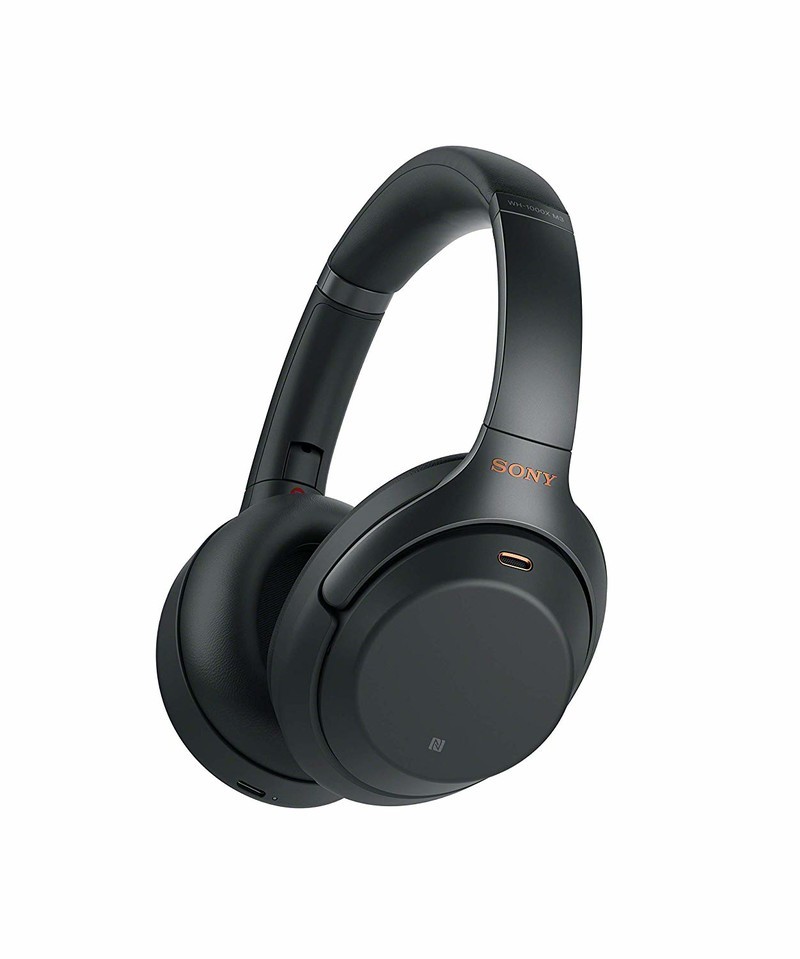
Sony WH1000XM3
Cancel noise expertly
$348 at Amazon
Pros
- QN1 processor vastly improves noise-canceling
- 32-bit audio processing
- Charges over USB-C
- Intuitive gesture controls
Cons
- Bulkier than Bose QC35
- Assistant replaces Ambient Sound onboard control
The WH1000XM3 puts all of Sony’s expertise on headphones to use, combining the best active noise canceling we’ve ever heard with great sound quality, excellent battery life, and convenient gesture controls.
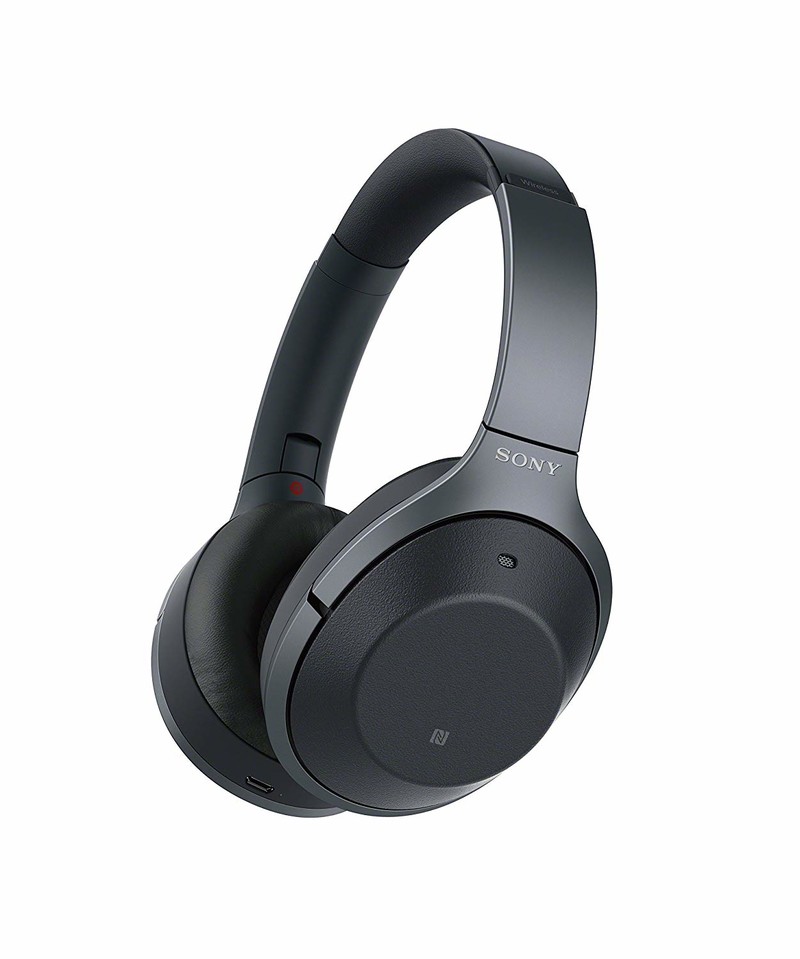
Sony WH1000XM2
Almost as good
$348 at Amazon
Pros
- Still has top-tier noise-canceling
- Can be found for cheaper on the used market
- Can be folded down for easy travel
Cons
- Still uses Micro-USB for charging
- Assistant replaces Ambient Sound onboard control
Sony’s previous generation of ANC headphones still sounds fantastic, with its noise-canceling rivaling that of the popular Bose QC35. If you don’t mind using Micro-USB, these are still a great buy.
They’re extremely similar
The 1000XM3 are the best ANC headphones around, but there wasn’t much to improve on in the first place.
The WH1000XM3 is easily one of our favorite pairs of noise-canceling headphones on the market, but it’s not as different from the previous model as you might think. If you already have the 1000XM2, there’s not much reason to upgrade unless you just want to have the latest and greatest.
From a hardware standpoint, the headphones look almost identical at first glance, but that doesn’t mean the 1000XM3 is unchanged from last year’s design. The cups are a bit slimmer this time around, and the inside of the earpads is more spacious, which translates to better sealing and improved comfort. The headband is also better padded on the M3, and there’s some new accenting around the microphones at the top of each cup.
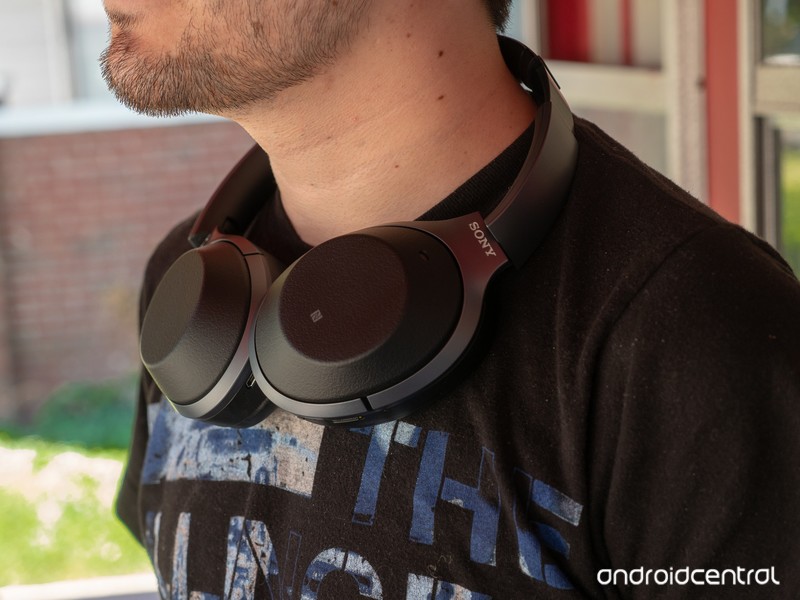
One of the most significant physical changes with the 1000XM3 is the move from Micro-USB to USB-C. This is hugely convenient if you already have other USB-C devices like a phone or laptop, and it allows the M3 to charge significantly faster than the M2 — you can get 5 hours of playback with just a 10-minute charge, where the same top-up on the M2 will only provide 70 minutes of playback.
USB-C and better noise-canceling are basically the only reasons to upgrade if you already have the 1000XM2.
Both headphones feature the same convenient gesture controls on the right cup. You can swipe up or down to adjust volume, left or right to skip tracks, or tap to play or pause music, answer phone calls, and launch Google Assistant. You can also place your hand over the cup to quickly engage Ambient Sound mode on both headphones, then switch back to noise-canceling by simply taking your hand off. Of course, you can also turn on Ambient Sound using the dedicated button on the left cup if you’d rather leave it on for extended periods.
That noise-canceling is the biggest area of improvement with the WH1000XM3. Sony has included its new QN1 processor this year, which allows for 32-bit audio processing and noise-canceling up to four times better than last year’s model — though even with that in mind, the 1000XM2 still does a fantastic job at filtering out both high and low-end frequencies, which many other ANC headphones struggle with.
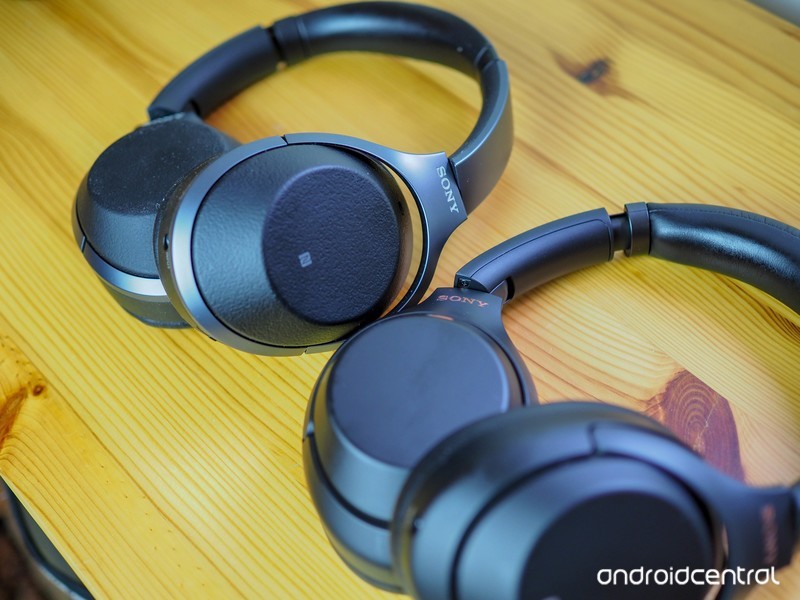
You can tune that noise-canceling through Sony’s Headphones Connect app on either headphone, along with how much sound Ambient Sound mode lets back in. You can also change the EQ on the headphones if you don’t like the out-of-the-box sound profile.
Needless to say, both headphones are among the best noise-canceling options on the market, but if you already have the WH1000XM2, there’s not much reason to upgrade. USB-C charging is convenient, and with the improved noise-canceling the 1000XM3 is an even better choice for frequent travelers, but most of what makes the M3 great is already present on the M2.
Sony WH1000XM3
Cancel noise expertly
$348 at Amazon
The very best noise-canceling headphones on the market
Sony improved nearly every aspect of its 1000X headphones with the M3, from sound quality to noise-canceling, comfort, and USB-C charging. These are well worth the money.
Sony WH1000XM2
Almost as good
Most of what makes the 1000XM3 great is already present in the 1000XM2.
$348 at Amazon
If you don’t mind slower charging through Micro-USB, the WH1000XM2 offers a nearly identical experience as its newer counterpart, and can be found used or refurbished for relatively cheap.
Apple Registers Several New Mac Models in Eurasia Ahead of October 30 Event
Apple has registered new Macs with the Eurasian Economic Commission (EEC) this week, indicating that new models and refreshes could be just around the corner. The filings, discovered by MySmartPrice and French website Consomac, are legally required for any devices with encryption sold in Armenia, Belarus, Kazakhstan, Kyrgyzstan, and Russia.
The Mac model numbers are A1347, A1418, A1419, A1481, A1862, A1993, A2115, A2116, A1466, A1534, A1708, A1932, A1989, A1990. Some of the numbers refer to existing models that are being updated in the registry to merely indicate they come with the latest macOS Mojave operating system, but four of the numbers currently don’t have counterparts in Apple’s Mac lineup. Some have also appeared in Eurasia filings earlier this year.
Apple is expected to to introduce a new entry-level 13-inch MacBook at its October 30 event in New York City. The more affordable Mac would serve as a replacement for the MacBook Air, and while details have been scant about the rumored machine, it could turn out to belong to the 12-inch MacBook family.
It’s not known what the rumored 13-inch MacBook would be priced at, but the MacBook Air sells for $999, a price point Apple has thus far been unable to match with the 12-inch MacBook and the MacBook Pro.

The Mac mini, which has not been updated for more than 1,400 days, is also expected to be refreshed this month, for the first time since 2014. We don’t know a lot about what to expect for the Mac mini update, but upgraded internals and faster processors are a dead cert.
Apple’s iMac range is also due at least a refresh, with current models on sale having not been updated in the last 505 days. It’s not inconceivable that Apple also plans to give its MacBook Pro lineup a processor bump.
Meanwhile, new iPad Pro models announced at the event are expected to adopt an iPhone X-style design with no Home button, slimmer bezels, and a TrueDepth camera system that will enable Face ID for biometric authentication, while a new updated iPad mini could also feature.
Apple’s New York City event on Tuesday, October 30 will take place at the Brooklyn Academy of Music, Howard Gilman Opera House, kicking off at 10:00 a.m. Eastern Time. Apple typically streams the event live on its website and on Apple TV, but for those who are unable to watch, MacRumors will be providing full event coverage both on MacRumors.com and through our MacRumorsLive Twitter account.
Related Roundups: iMac, Mac mini, MacBookBuyer’s Guide: iMac (Don’t Buy), Mac Mini (Don’t Buy), MacBook (Don’t Buy)
Discuss this article in our forums
Tim Cook Calls for US Privacy Law to Protect Citizens From Growing ‘Data Industrial Complex’
Apple CEO Tim Cook has called for a tough new U.S. data protection law to protect user privacy rights in the face of a growing “data industrial complex,” in a passionately delivered speech in Europe.
Cook argued for the law during a keynote speech given today at the 40th International Conference of Data Protection and Privacy Commissioners (ICDPPC), which is being held in Brussels. The following quotes were published by TechCrunch.
Image via Getty
“Our own information — from the everyday to the deeply personal — is being weaponized against us with military efficiency,” warned Cook. “These scraps of data, each one harmless enough on its own, are carefully assembled, synthesized, traded and sold.
“Taken to the extreme this process creates an enduring digital profile and lets companies know you better than you may know yourself. Your profile is a bunch of algorithms that serve up increasingly extreme content, pounding our harmless preferences into harm.”
“We shouldn’t sugarcoat the consequences. This is surveillance,” he added.
Cook went on to commend the recently enacted European Union’s General Data Protection Regulation (GDPR), which places stricter rules on how personal data is handled by businesses and organizations, and argued for a similar law in the U.S. – a call received with applause from the conference audience.
“This year you’ve shown the world that good policy and political will can come together to protect the rights of everyone,” he said. “It is time for the rest of the world, including my home country, to follow your lead. We in Apple are in full support of a comprehensive federal privacy law in the United States.”
Cook said a U.S. privacy law should prioritize data minimization, or “the right to have personal data minimized”, as well as transparency with regard to what is being collected, the right to access that data, and the right to security, which is “foundational to trust.”
It was an honor to be invited to #ICDPPC2018 in Brussels this morning. I’d like to share a bit of what I said to this gathering of privacy regulators from around the world. It all boils down to a fundamental question: What kind of world do we want to live in?
— Tim Cook (@tim_cook) October 24, 2018
In his speech, Cook also drew on Apple’s privacy-first approach to artificial intelligence in contrast to other tech giants, and said he felt the technology held great promise to benefit humanity, but warned that “advancing AI by collecting huge personal profiles is laziness, not efficiency.”
“For artificial intelligence to be truly smart it must respect human values — including privacy. If we get this wrong, the dangers are profound. We can achieve both great artificial intelligence and great privacy standards. It is not only a possibility — it is a responsibility.”
In closing, the Apple CEO criticized tech companies who “endorse reform in public and then resist and undermine it behind closed doors.” He added: “It’s time to face facts. We will never achieve technology’s true potential without the full faith and confidence of the people who use it.”
Apple’s commitment to privacy protection has become one of the company’s guiding principles in recent years, as over against the increasingly publicized data mining practices of tech firms like Facebook and Google, whose CEOs are scheduled to appear at the conference later this week.
Earlier this year, for example, Cook argued for stronger data privacy regulations following what he called the “dire” Facebook and Cambridge Analytica scandal, in which data on 50 million Facebook users was amassed without their consent.
Note: Due to the political nature of the discussion regarding this topic, the discussion thread is located in our Politics, Religion, Social Issues forum. All forum members and site visitors are welcome to read and follow the thread, but posting is limited to forum members with at least 100 posts.
Tag: Tim Cook
Discuss this article in our forums
 AIVAnet