


Jeff Bezos’ master plan is to have no plan
The richest man in the world has been using his wealth in unexpected ways. Jeff Bezos announced this week that Amazon would create an independent company with JPMorgan and Warren Buffett’s Berkshire Hathaway. The new venture seeks to keep employee health-care costs under control and will initially focus on technology that would “provide U.S. employees and their families with simplified, high-quality and transparent healthcare at a reasonable cost.”
That adds health care to the list of industries Bezos has a significant investment in, along with technology, retail, media and aerospace. Considering Amazon’s massive scope and reach, this is hardly a surprising group of categories, but the companies Bezos owns make for a uniquely diverse collection.
He helped start rocket maker Blue Origin in 2000, and said late last year that he would be selling “about a billion (dollars) a year of Amazon stock” to fund the aerospace venture. Blue Origin had its first successful test flight in 2015 and is expected to charge $300,000 per ticket to space in the future.
Bezos also owns The Washington Post, which he bought in 2013 for $250 million (apparently without having negotiated a price nor analyzing the publication’s performance), and invests in myriad smaller businesses through his venture fund, Bezos Expeditions. The latter has backed companies ranging from Google, AirBnb, Twitter, ZocDoc, MakerBot and Workday to Business Insider, the Breakthrough Energy Coalition and Juno Therapeutics, which makes cancer biopharmaceuticals.

The man is also an active philanthropist, having most recently donated $33 million to the Dreamers scholarship program with his wife, MacKenzie. The Bezos foundation, established by his parents, Jackie and Mike, focuses on charitable programs that seek to “elevate the field of education and improve life outcomes for children.”
Other superrich people make similar financial decisions, too — this is by no means an unusual or isolated phenomenon. One person who immediately jumps to mind is Bill Gates, from whom Bezos stole the title of world’s richest. Gates also holds assets outside Microsoft, via his company Cascade Investment, which backs predictable businesses like hotels and the Canadian National Railway. Recently, though, Cascade paid $80 million to build a smart city in Arizona, which is an unusual departure from its typical picks. But it’s still a less surprising bet than Bezos’ new venture, because developing urban architecture is usually more reliably profitable than trying to make America’s health-care system simpler and more transparent.
A more astonishing move came courtesy of Mark Zuckerberg and his wife, Priscilla, when they announced plans to donate 99 percent of their Facebook shares to charity. This amount will be given out during their lifetime, not all at once, via the Chan Zuckerberg Initiative, with a goal of “advancing human potential and promoting equality.”
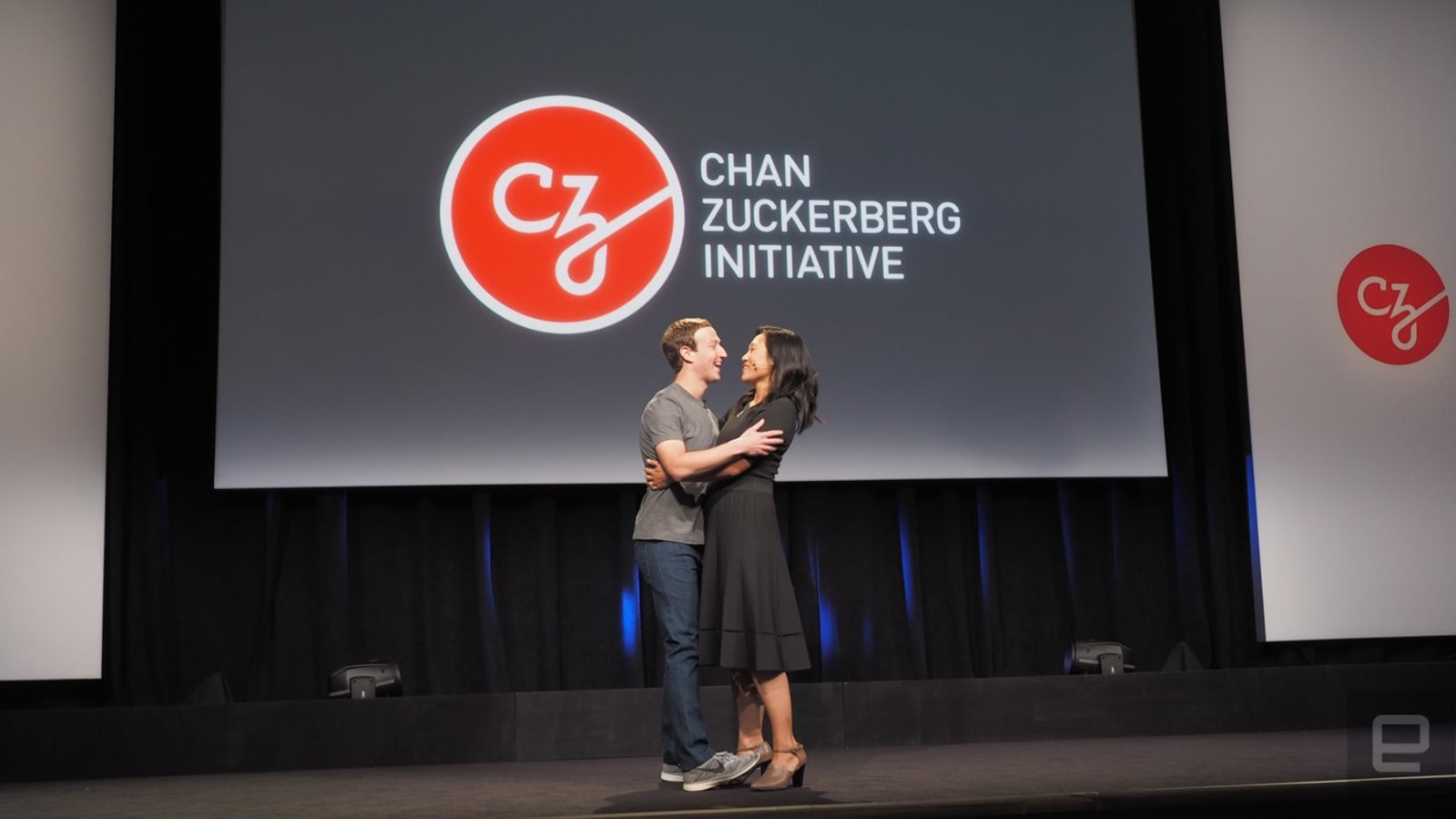
Donating money to a good cause isn’t a surprising decision, even if the scale of the Zuckerbergs’ allotment is. It’s something people with expendable income do, for reasons they may feel strongly about. Like the Bezos family philanthropy, the Bill and Melinda Gates Foundation also focuses on improving children’s lives but funds more than just educational charities. It also supports nutritional and medical efforts to bring food and vaccines to people who need them.
But it’s in business investments where Bezos is appearing to deviate from the likes of Gates, Zuckerberg and other peers like Steve Jobs, Larry Page and Sergey Brin. His recent decisions signal a shift in priorities away from conventional profit-making ventures. While Amazon continues to extend into (relatively) new industries like filmmaking and brick-and-mortar stores, Bezos is funneling his money into his space race against Elon Musk and Sir Richard Branson.
In fact, Bezos appears to be following in the footsteps of Branson, moving into a series of increasingly wide-ranging areas after starting out with a business that made him rich. Of course, there doesn’t yet seem to be a plan for Amazon to start branding these separate businesses the way Virgin Group has by slapping its name on its entertainment, aerospace and health-care arms. Musk, too, has been working on curious endeavors like hyperloops, rockets and flamethrowers, while Tesla continues to struggle to meet orders.
This week’s announcement, together with Bezos’ investment decisions, show us he’s not your typical tech billionaire. He’s not going down the path blazed by Gates or even contemporaries like Zuckerberg or Page. Instead, he’s building an eccentric empire of business non sequiturs more similar to Branson’s or Musk’s. What Bezos wants to do with his money is his prerogative, but it does seem like he’s more willing to take risks and delve into unproven industries than tech billionaires of “old.”
Google launches lightweight Assistant app for slower phones
Android Go is Google’s streamlined OS that is designed to work on entry-level mobile devices. Apps are designed to use less memory and storage space, as well as be less data hungry. Today, Google released a version of its Assistant that is optimized for the Go platform. It’s available for download at the Play Store.
Now, users who have Android Go and the app installed on their mobile devices can ask Google Assistant questions with their voices. However, not all features are available in this streamlined version of Assistant. These include reminders, support for smart home devices and Actions. The app is currently only available in English, but as Android Go is partially aimed at an international audience, it’s likely more supported languages will be added in the future.
It’s really encouraging that Google is paying attention to users who can’t afford (or don’t want) the latest and greatest smartphone. There’s certainly a market for simpler devices, and as mobile devices become more and more expensive, people are hanging on to their existing ones longer. Considering the news that Apple was deliberately slowing older smartphones without notifying the user, it’s nice to see a different solution to this issue being presented.
Via: Android Police
Source: Google
‘Stargate: Origins’ trailer has an ‘Indiana Jones’ feel to it
Stargate: Origins will come to Stargate Command, a new streaming service focused on the franchise, on February 15th. Now MGM has released a full trailer for the show, and it looks pretty spectacular.
Origins will focus on Catherine Langford, the daughter of the person who discovered the Stargate on Earth. In the trailer, she battles Nazis as she fights to figure out what the Stargate is. The show has an Indiana Jones vibe to it, and it looks like a lot of fun.
Here is the official synopsis for the series: “In 1939, Professor Paul Langford and his daughter Catherine are still grappling with the mysteries of the ancient relic they discovered in the Egyptian desert more than ten years ago. With war looming in Europe and funding running out, these brilliant minds are approaching their lowest ebb. Little do they know, answers are about to present themselves in a dangerous form, when the Nazi Occultist Dr. Wilhelm Brücke approaches their facility with a sinister motive. Enlisting the help of two young soldiers, Catherine must use all of her wit and nous as she and her new allies embark on an adventure into the unknown to rescue her father, and save the Earth from an unimaginable darkness.”
The trailer seems to answer a question that quite a few Stargate fans had about the prequel series, which was: Would Catherine go through the Stargate? If so, that is contradicting the current canon of the show, in which Langford recruits archaeologist Daniel Jackson (played by James Spader in the movie and Michael Shanks in the follow-up TV show) to decipher the gate’s symbols. However, it’s also possible that it’s the Nazis who go through the gate, not Catherine. Either way, a solid show is more important than canon, but it will be interesting to see whether there’s a discrepancy.
If you’re interested in catching Stargate: Origins, you can sign up for a subscription to Stargate Command for $25. That nets you access to all of the TV shows, and movies within the franchise, as well as this new show.
Edit: This article previously stated that $25 would net you a lifetime pass to Stargate Command content. The video portion of the subscription will expire on May 25, 2018, according to the FAQ, so it appears the $25 fee is basically to watch the show.
Instagram lets you skip the photos with text-only Stories
Instagram is a photo- and video-centric social network by its very nature, but that doesn’t mean you always want to share images along with your thoughts. And now, you don’t have to. The service is releasing a Type Mode for Stories that, as the name implies, lets you write with a creative flair while skipping the pressure to use pictures. Switch to a new Type section and you can jot down whatever you like while choosing little more than a font style and background. You can produce a deep confessional or a clever transition without having to think about composing a shot, although you can add them (or other flourishes) if you’d like.
The new mode is available in version 30 of Instagram for Android and iOS. And in case you’re wondering, the new text styles are available for overlays in existing modes — Type Mode is just the obvious showcase for them.
Source: Instagram
Data-friendly YouTube Go app is available in 130 more countries
Lately, Google has been putting a lot of focus on its lightweight “Go” Android apps that are meant for countries where good cellular coverage and bandwidth in general is difficult to come by. YouTube Go started out in only one country — sure, it was India, but there were still plenty of other places where the app would be useful. As of today, many more countries will be able to use YouTube Go. More than 130, in fact.
If you haven’t heard of YouTube Go before, it offers the key features of YouTube along with a lot of data management options. Users can download videos at three different quality sizes and share them with other phones without using any data at all. It also features previews, so you can check out a video before streaming or downloading it. The app itself is less than 10MB, and Google specifically made it work with slower phones with less storage, and it works on much older versions of Android — all the way back to 4.1 Jellybean, in fact.
In addition to today’s big rollout, the app is getting a few new features. User requests have led to a sharing revamp; you can now share multiple videos at the same time, and the feature will now be feature on the app’s home page to make the process quicker. Google also enabled high-quality streaming for those times when users have bandwidth to burn. The updated app should be rolling out to many more countries today, but unfortunately Google didn’t provide a full list of where it was now available — your best bet is probably just to check the Play Store.
Facebook promoted conspiracy theories surrounding Amtrak crash
On Wednesday, a train carrying House Republicans collided with a truck. The accident left one person dead and another injured. It’s a tragedy, to be sure, and promoting misinformation around the event is incredibly unhelpful. Which is why it’s so frustrating that Facebook is apparently up to its old tricks; the social network promoted stories in the “People are Saying” section of “Trending News” that were full of conspiracy theories and misinformation, including that Hillary Clinton ordered the crash. The Daily Beast first reported on the issue.
A Facebook spokesperson told Engadget, “Trending includes a separate section of people’s individual posts related to the news event; it’s essentially a comments section. We built this as a way for you to easily see what others are saying around a topic. The type of stuff we were seeing yesterday is a bad experience and we’re going to work to fix the product.” It’s great that Facebook recognizes there’s an issue and will work to correct it. The problem, of course, is haven’t they been doing that for the last couple of years?
The fact is this really should not be happening anymore. Sure, a few stories will fall through the cracks — it’s a big platform after all — but Facebook should have a better handle on the problem by now. Trending news is not a comments section. Facebook comments are a comments section.
That’s not to say solving the fake news problem is easy or simple. The fight is constant, and some have posited that it’s a war that is, in fact, unwinnable. Google took steps earlier this week to clean fake news out of its search “snippets” and Facebook has revamped its News Feed to focus less on articles and more on friend and family updates (though this might actually exacerbate the problem). But if people keep themselves informed about world events through Facebook, and there is misinformation in the Trending News section, that’s a huge problem. And it’s not clear if Facebook is ever going to fix it.
Via: Vanity Fair
Source: The Daily Beast
Google backs a single stylus for all your devices
The Universal Stylus Initiative has found a powerful new ally in Google. Mountain View has officially joined the project’s top-tier backers, which include Intel and Lenovo, giving it the power to participate in USI’s development of an open active stylus standard and to approve its final specifications. A USI stylus will work with any device designed to adopt the standard — you don’t need to configure or to set it up beforehand to be able to use it, and it even remembers your settings even if you switch devices.
USI’s technology works by using a two-way (stylus-to-device and vice-versa) communication mechanism, which can command the stylus to switch to a less noisy frequency to prevent interference. The mechanism also allows preferences (like ink color and style) to be stored in the stylus itself and makes it possible for compatible devices to be able to recognize multiple stylus input. Want to collaborate on a drawing with a friend? The tech will enable you to draw together at the same time.
The fact that Google joined the project likely means future touchscreen Chromebooks and maybe even Pixel devices will support the USI standard. If that’s the case, you’ll be able to use one digital pen not only for multiple Google devices, but also for those made by Dell, Wacom and USI’s other members, in the future.
Source: Universal Stylus Initiative
Uber, Lyft and others pledge to improve urban transportation
With the rise of ride-sharing, alternative fuels and ongoing developments in autonomous vehicle technology, transportation is in the midst of a rather drastic transformation, and how we get around in the not too distant future is likely to be very different than how we get around today. But with so many companies working towards a new transportation future, things could get a little messy. To address that concern, over a dozen companies have now committed to 10 Shared Mobility Principles for Livable Cities, a pledge initiated by Zipcar cofounder Robin Chase.
Among the signatories are Lyft, LimeBike, Uber, Zipcar, Ofo, Mobike and Ola and the Shared Mobility Principles website says, “The future of mobility in cities is multimodal and integrated. When vehicles are used, they should be right-sized, shared, and zero emission.” The principles include some expected goals like promoting equity, engaging with stakeholders and transitioning towards renewable energy. But others paint a collaborative picture that may come as a bit of a surprise. The tenth principle, for example, states, “We support that autonomous vehicles in dense urban areas should be operated only in shared fleets. Shared fleets can provide more affordable access to all, maximize public safety and emissions benefits, ensure that maintenance and software upgrades are managed by professionals, and actualize the promise of reductions in vehicles, parking, and congestion, in line with broader policy trends to reduce the use of personal cars in dense urban areas.”
During a press call yesterday, Joseph Okpaku, Lyft’s vice president of government relations said, “We definitely do envision a future where the vast majority of autonomous vehicle rides will be done as part of a shared network. We think that’s the best way to realize all of the benefits that an autonomous future can bring in terms of rebuilding our cities.” Other principles include goals involving open data, fair user fees, prioritizing people over vehicles and planning cities and transportation alongside each other.
“Transportation is really a gateway to opportunity and cities really have to be places where you want to live, work, and play,” said Chase. “These companies have taken an incredibly bold step by supporting these principles.”
Via: VentureBeat
Source: Shared Mobility Principles
India rejects cryptocurrency, but it isn’t giving up on blockchain
India officially will not treat cryptocurrencies as legal tender and will try to stop their use in payments, according to a Bloomberg report. This isn’t unexpected, given how the country sent tens of thousands of tax notices out after realizing virtual currencies are making $315 million worth of trade per month. While India has finally come out against cryptocurrencies, after repeated warnings that they were “Ponzi schemes,” the government will continue exploring the blockchain’s potential for the future digital economy.
This comes a day after South Korea ultimately decided to regulate, not ban cryptocurrencies, despite its government sharing India’s concern about tax evasion and the subsequent disruption of global trade. Beyond skirting state revenue collection, both countries have logical worries about the safety of cryptocurrency, given how a hacker stole over $500 million from the Tokyo-based exchange Coincheck last week.
Source: Bloomberg
‘Bridge Constructor Portal’ Launches on Mac App Store for $9.99
Headup Games today announced that its Portal spin-off game “Bridge Constructor Portal” is now officially available for players to buy on the Mac App Store for $9.99 [Direct Link]. The game first launched on December 20 on the iOS App Store, Google Play Store, and Steam.
The Mac App Store version of the game is priced to match the other $9.99 desktop version on Steam, coming in at $5 more than the iPhone/iPad app’s $4.99 price tag [Direct Link].
Bridge Constructor Portal is a fusion of the Bridge Constructor and Portal franchises, tasking players with building bridges to connect pathways in order to safely traverse large pits and avoid falling to their death. These puzzles are blended with Portal’s Aperture Laboratories setting, items, and characters. Elements from Portal include the companion cube, repulsion and propulsion gels from Portal 2, and GLaDOS’s narration through all of the player’s successes and failures.
As a new employee in the Aperture Science test lab, it’s your job to build bridges, ramps, slides, and other constructions in 60 test chambers and get the Bendies safely across the finish line in their vehicles.
Make use of the many Portal gadgets, like portals, propulsion gel, repulsion gel, aerial faith plates, cubes, and more to bypass the sentry turrets, acid pools and laser barriers, solve switch puzzles, and make it through the test chambers unscathed.
Now that the game is available across mobile and desktop devices, Headup Games, ClockStone Software, and Valve are looking toward its release on Nintendo Switch, PS4, and Xbox One “very soon.” You can visit the Mac App Store today to download Bridge Constructor Portal [Direct Link], and it can also be downloaded for Apple computers through Steam.
Tag: Valve
Discuss this article in our forums

