


HTC shifts ‘Focus’ to new wireless headset that will take on Oculus
Although HTC still offers the best PC-tethered virtual reality headset (as far as we’re concerned), it seems the company is keen to compete everywhere. Following Oculus’ reveal of its Go standalone headset, HTC unveiled its Vive Focus headset, offering tracking capabilities similar to its high-end namesake, without the need for a smartphone or PC to power it.
At the end of 2017, the state of the virtual reality industry is becoming interesting. Although there is more content than ever before, many users still lament the lack of AAA titles and experiences and there are still far more mobile VR users than those wearing high-end, PC-based headsets like the Oculus Rift and HTC Vive. With that in mind, it makes sense that HTC is looking to release something that will occupy the middle ground.
The long-teased HTC Vive Focus, much like the Oculus Go, appears to target that untapped market segment. It features similar hardware to Oculus’ portable offering, with a built-in processor and display, though HTC claims slightly more impressive specifications. Although we don’t have key details, the Focus is said to sport a “high-resolution AMOLED” display, which could offer better contrast than the Go’s LCD panel. We’re also told that the Focus will be capable of six-degrees-of-freedom (6DOF) movement, which means some form of inside-out positional tracking.
That’s not something offered by the Go and could be a big selling point for HTC’s new headset. Being able to walk around, so-called “roomscale tracking,” was a major component of the HTC Vive’s early success against the Rift. Having the same advantage over the Oculus Go could make the Vive Focus much more popular in turn.
Both the Go and the Focus utilize onboard processing to render their visuals. While we don’t know what powers the Oculus Go, we do know that the HTC Vive Focus will sport a Qualcomm Snapdragon 835, which is a very capable mobile processor. It won’t stand up to a desktop PC’s power, but it should be enough to render some very pretty portable experiences.
The controller is not said to be tracked in the same manner as the headset, only offering three degrees of movement, but there is the potential for supporting more complex controller systems.
In terms of software, HTC hasn’t revealed what the Focus will be compatible with, but did say it could allow for social interaction with other HTC headsets, according to Engadget. With “world-scale” tracking, as HTC describes it, there’s no reason to think it couldn’t support a large part of the existing Vive library of experiences, too.
We don’t have any details on availability or pricing for the HTC Vive Focus as of yet, but it’s expected to debut somewhere around the $200 price point of the Oculus Go. As CNet points out though, it’s possible that the more capable tracking solution could support a slight price hike over the competition.
Editors’ Recommendations
- Oculus Rift vs. Oculus Go — is it still better to be tethered to a PC?
- Oculus Rift vs. HTC Vive: Prices are lower, but our favorite remains the same
- Windows Mixed Reality motion controllers track well but are a little flimsy
- The $400 Oculus Rift promotion makes a dent in the battle with the HTC Vive
- If you have a Gear VR headset, these are the apps and games you’ve got to try
HTC shifts ‘Focus’ to new wireless headset that will take on Oculus
Although HTC still offers the best PC-tethered virtual reality headset (as far as we’re concerned), it seems the company is keen to compete everywhere. Following Oculus’ reveal of its Go standalone headset, HTC unveiled its Vive Focus headset, offering tracking capabilities similar to its high-end namesake, without the need for a smartphone or PC to power it.
At the end of 2017, the state of the virtual reality industry is becoming interesting. Although there is more content than ever before, many users still lament the lack of AAA titles and experiences and there are still far more mobile VR users than those wearing high-end, PC-based headsets like the Oculus Rift and HTC Vive. With that in mind, it makes sense that HTC is looking to release something that will occupy the middle ground.
The long-teased HTC Vive Focus, much like the Oculus Go, appears to target that untapped market segment. It features similar hardware to Oculus’ portable offering, with a built-in processor and display, though HTC claims slightly more impressive specifications. Although we don’t have key details, the Focus is said to sport a “high-resolution AMOLED” display, which could offer better contrast than the Go’s LCD panel. We’re also told that the Focus will be capable of six-degrees-of-freedom (6DOF) movement, which means some form of inside-out positional tracking.
That’s not something offered by the Go and could be a big selling point for HTC’s new headset. Being able to walk around, so-called “roomscale tracking,” was a major component of the HTC Vive’s early success against the Rift. Having the same advantage over the Oculus Go could make the Vive Focus much more popular in turn.
Both the Go and the Focus utilize onboard processing to render their visuals. While we don’t know what powers the Oculus Go, we do know that the HTC Vive Focus will sport a Qualcomm Snapdragon 835, which is a very capable mobile processor. It won’t stand up to a desktop PC’s power, but it should be enough to render some very pretty portable experiences.
The controller is not said to be tracked in the same manner as the headset, only offering three degrees of movement, but there is the potential for supporting more complex controller systems.
In terms of software, HTC hasn’t revealed what the Focus will be compatible with, but did say it could allow for social interaction with other HTC headsets, according to Engadget. With “world-scale” tracking, as HTC describes it, there’s no reason to think it couldn’t support a large part of the existing Vive library of experiences, too.
We don’t have any details on availability or pricing for the HTC Vive Focus as of yet, but it’s expected to debut somewhere around the $200 price point of the Oculus Go. As CNet points out though, it’s possible that the more capable tracking solution could support a slight price hike over the competition.
Editors’ Recommendations
- Oculus Rift vs. Oculus Go — is it still better to be tethered to a PC?
- Oculus Rift vs. HTC Vive: Prices are lower, but our favorite remains the same
- Windows Mixed Reality motion controllers track well but are a little flimsy
- The $400 Oculus Rift promotion makes a dent in the battle with the HTC Vive
- If you have a Gear VR headset, these are the apps and games you’ve got to try
Should you upgrade from the LG G6 to Pixel 2?
The LG G6 and Pixel 2 are both solid phones in their own right, and as such, trying to pick between the two can be difficult.
There have been a lot of great smartphones this year, but because devices such as the Galaxy S8 and iPhone X tend to steal a good chunk of the limelight, it can be easy to let a lot of other solid devices slip under your radar. For a lot of people, the LG G6 was one such phone.

You can now pick up the G6 for as little as $399 if you know where to look, and for that price, you’re getting one heck of a phone. Along with its 18:9 display and minimal bezels, the G6 also features a solid dual-camera setup, slick design, and snappy performance.
However, as great of a deal as the phone currently is, spending a bit more cash to get the Pixel 2 just might be worth it. Here’s what some of our forum users had to say.
Almeuit
11-13-2017 10:14 AM“
I didn’t mind my G6 when I had it… except for the camera. In low light and even mild light I had issues with some major lag/blur. Other then that it was fun (especially the wide angle lens). If I had a choice though my Pixel 2 XL would be my choice still simply due to updates + better camera performance.
Reply
Morty2264
11-13-2017 10:36 AM“
I can certainly understand how you are feeling, OP. With all the great phones out there, it’s so hard to land and stick with just one. The G6 is awesome but yes, the Pixel 2 series… That’s an amazing lineup of phones.
The Pixel 2 (smaller version), to my knowledge, does not have the screen issues that some Pixel 2 XL’s have.
I’m in the mixed camp when it comes to the Pixel 2 XL. Yes,…
Reply
Jeremiah Bonds
11-13-2017 12:22 PM“
G6 was my wife’s favorite phone and I think she still kind of prefers it over the Pixel 2xl. But that’s her, everyone is entitled to their opinions.
Reply
bhatech
11-13-2017 11:04 AM“
G6 was one of the worst flagships I have owned this year, crappy front facing camera and software. Even Samsung software is 1000 times better than what LG puts. LG is just a wanna be Samsung. If you are coming from G6 Pixel 2 is like a great upgrade. I know G6 gets lots of praise mostly it’s priced low and everyone seems to have sympathy for LG because it’s an underdog. But personally not a big…
Reply
Now, we’d like to hear from you – Do you think it’s worth upgrading to the Pixel 2 from the LG G6?
Join the conversation in the forums!
LG G6
- LG G6 review!
- LG G6 specs
- LG G6 vs. Google Pixel: The two best cameras right now
- Everything you need to know about the G6’s cameras
- LG forums
Verizon
Sprint
T-Mobile
AT&T
B&H
T-Mobile’s $200 REVVL Plus comes with a 6-inch display and dual cameras
T-Mobile’s REVVL Plus delivers a big screen on a budget.
T-Mobile unveiled its first self-branded phone — the REVVL — back in August, and the company is now following up with a Plus variant. Like the standard model, the REVVL Plus is aimed at the budget segment, featuring a 6-inch Full HD panel along with dual cameras at the back.
Specs include a 2.0GHz octa-core processor, 2GB of RAM, 32GB of storage, microSD slot, 13MP and 5MP rear cameras arrayed vertically, 8MP front shooter, Android 7.0 Nougat, 3380mAh battery, and a fingerprint sensor at the back. The phone supports T-Mobile’s band 66, along with bands 2, 4, 5, and 12.
Magenta accents around the camera and fingerprint sensors break up an otherwise plain design aesthetic, and the phone has hardware capacitive keys up front. You’ll be able to pick up the REVVL Plus for $0 down and $9 per month with an 18-month JUMP! on Demand lease, or for $8 down and $8 per month for 24 month on the carrier’s Equipment Installment Plan. The phone will retail for $200, and will be heading to stores starting November 17.
Heavy on Features but Light on the Budget – Introducing the T-Mobile REVVL Plus
Rocking a special edition black & magenta color scheme, the new T-Mobile REVVL Plus packs a ton of great features for a fraction of the price you’d expect
Bellevue, Washington — November 13, 2017 — This holiday, treat yo self without breaking the bank! T-Mobile (NASDAQ: TMUS) today unveiled the T-Mobile REVVL Plus – a whole lotta smartphone for not a lotta money. The REVVL Plus features a beautiful 6-inch full HD screen, dual rear-facing 13MP and 5MP cameras and the latest in biometric fingerprint security. What it doesn’t feature is a ridiculous price tag. It’s just $0 down and only $9 a month with an 18-month JUMP! on Demand lease or $8 down and $8 per month for 24 months on T-Mobile’s Equipment Installment Plan (FRP: $200).
“We launched the REVVL family because we listen to our customers,” said John Legere, president and CEO of T-Mobile. “As smartphone prices soar, the REVVL Plus bucks the trend, delivering high-end features – like bigger screens, better cameras, longer battery life, biometric security and more – at an unbeatable price.”
T-Mobile customers push their phones to the limit. They use 34 percent more data than Duopoly customers and are nearly 3x more active on social media. They need hardware that can keep up, so the REVVL line was specifically designed to support their mobile lifestyles with specs like:
- Camera: 13MP & 5MP RFC/8MP FFC
- Battery: 3,380 mAh
- Color: Special edition black with magenta accents
- OS: Android N
- Screen: 6″ FHD IPS display
- RAM: 2GB
- ROM: 32GB and expandable to 128GB
- Bands: CAT 4 LTE Bands 2,4,5,12 & 66
- Security: Fingerprint sensor
- Dimensions: 6.5 x 3.25 x .35 in
- Processor: 2.0 GHz Octa-Core
In August, the T-Mobile REVVL launched nationwide and was a runaway hit, selling nearly 3x more than forecasted, proving that if you listen to what your customers want and build it, they will come.
Customers can snag the REVVL Plus on November 17 in stores nationwide and online in a special edition black and magenta color scheme.

Alexa as a Moto Mod is almost a good idea
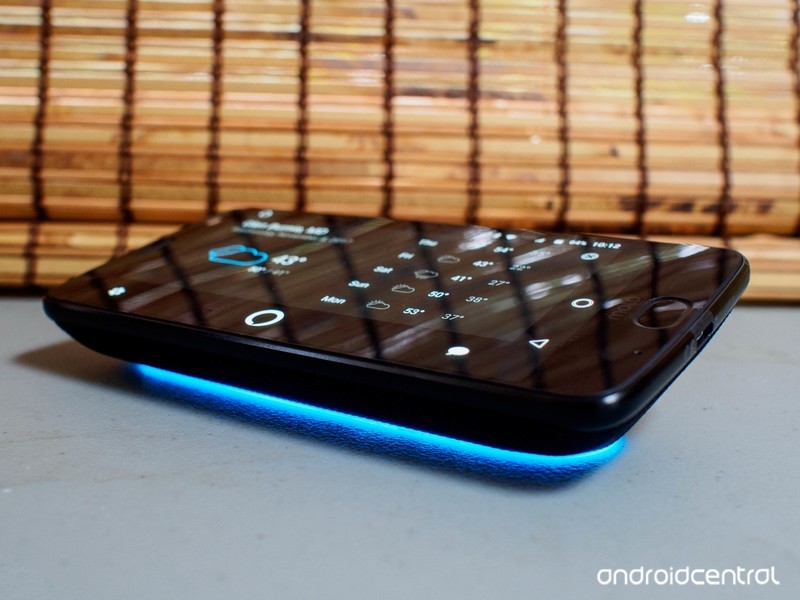
Your Moto phone can now be a mostly functional Amazon Echo. Cool?
The coolest thing about Moto Mods as a concept is the ability to extend the capabilities of your phone with hardware that would be less convenient as a standalone device. When you look at the Projector Mod, the Speaker Mod, and the Gamepad Mod, you see these things perfected as accessories that genuinely improve the experience on both sides of the equation by making each feel like a better product by adding the other half.
And then there’s this Alexa Mod.
See at Best Buy
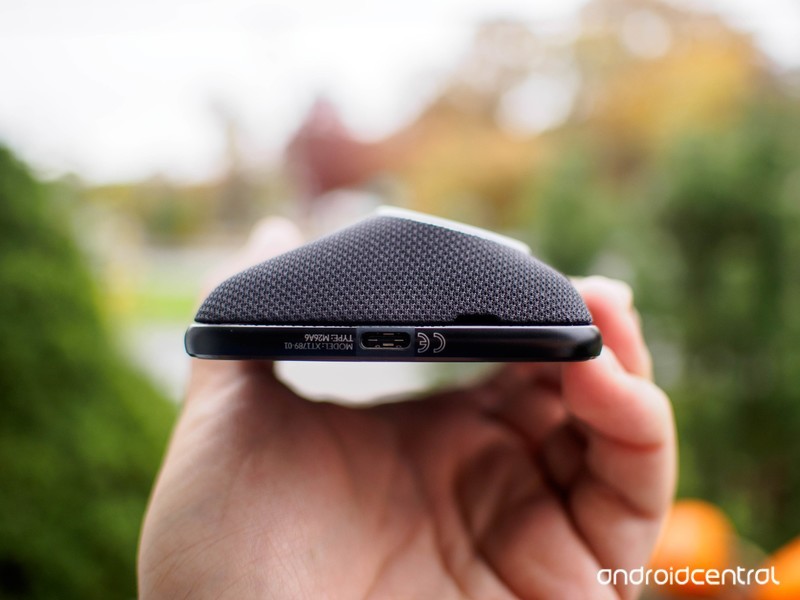
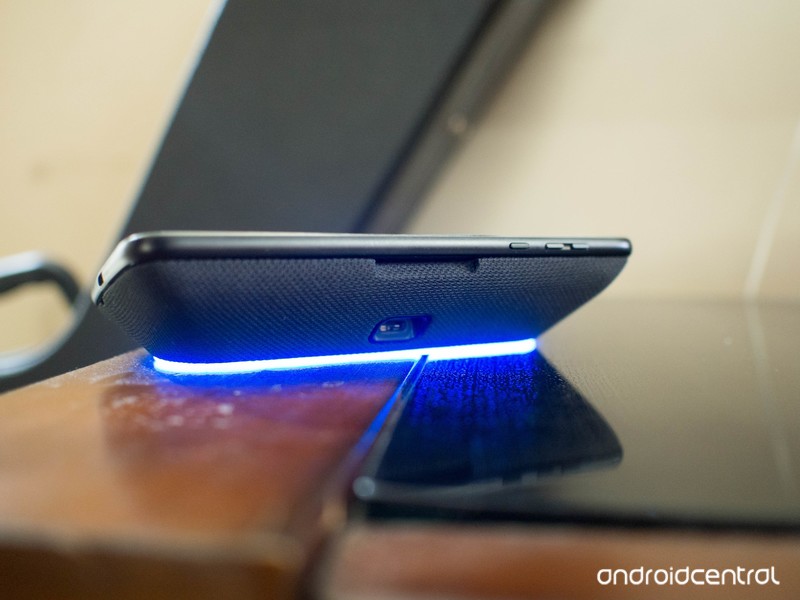
The idea is fairly simple. Attach the Mod, and your phone is now also an Amazon Echo. It works well, too. There’s a notification light ring just like an Echo with microphones that work very close to as well as an Echo and a decent boost in speaker power compared to what the Moto Z2 Force is capable of. There’s some solid integration here as well, the speakers in the mod can be used for anything, not just Alexa services, and when the Mod is attached you get an Alexa button you can tap in the notification tray. All things considered, this is an idea headed in the right direction.
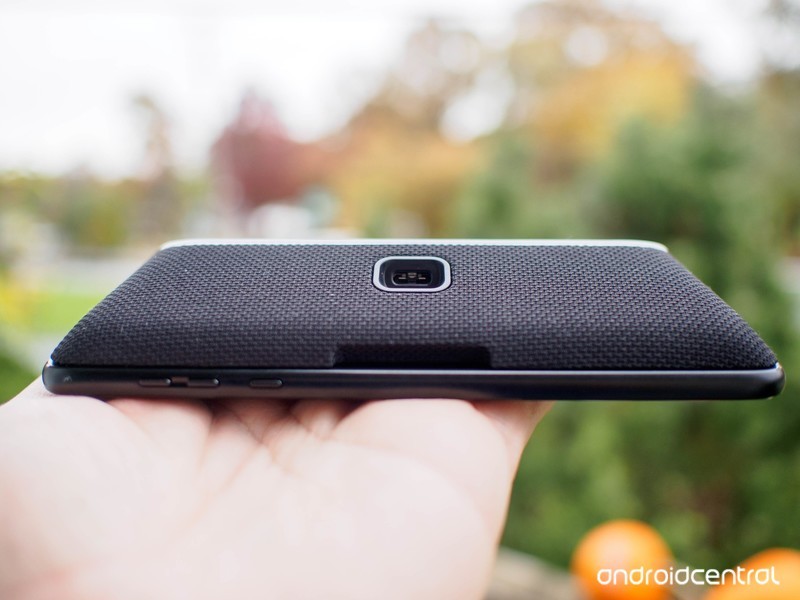
Trying to use this Mod for any real amount of time is where things get confusing and the connection between the two halves starts to break down. For starters, this Mod completely covers the camera on the Moto Z 2 Force. If you want to use this as a connected speaker and suddenly need to take a photo, you have no choice but to clumsily remove the Mod. The design of the Mod also introduces some limitations. It’s designed to be rested on the back, putting the phone at an angle which introduces a ton of glare depending on how you sit. There are no options to adjust this, unless you want to lay the phone down on its face.
This leaning position exposes a USB-C power port on the back of the Mod, which is in theory a great idea. You could effectively leave this plugged in on your bedside table and use it as a dock to charge your phone at night. Just drop the phone in, and suddenly you also have an Amazon Echo in your bedroom when you want it. The downside here is the design of Moto Mods in general. It’s not convenient or easy to remove the mod, and when you connect the pins there’s an occasional chance things don’t line up just so and the phone never starts charging or communicating with the Mod. It looks like it would be a cool bedside dock, but in practice it’s not so great.
My biggest issue with this setup is the execution of Alexa through the Moto Z2 Force. First off, it’s an incomplete experience. You can’t use the “Drop In” feature like you can on an Echo and simple commands for things like radio stations return different results than an Echo would. The thing that makes this extra frustrating? Both of these things work great in the actual Alexa app I have installed on this exact phone. This is a specific disconnect in the permissions Amazon has granted to this Mod as a third-party Alexa device.
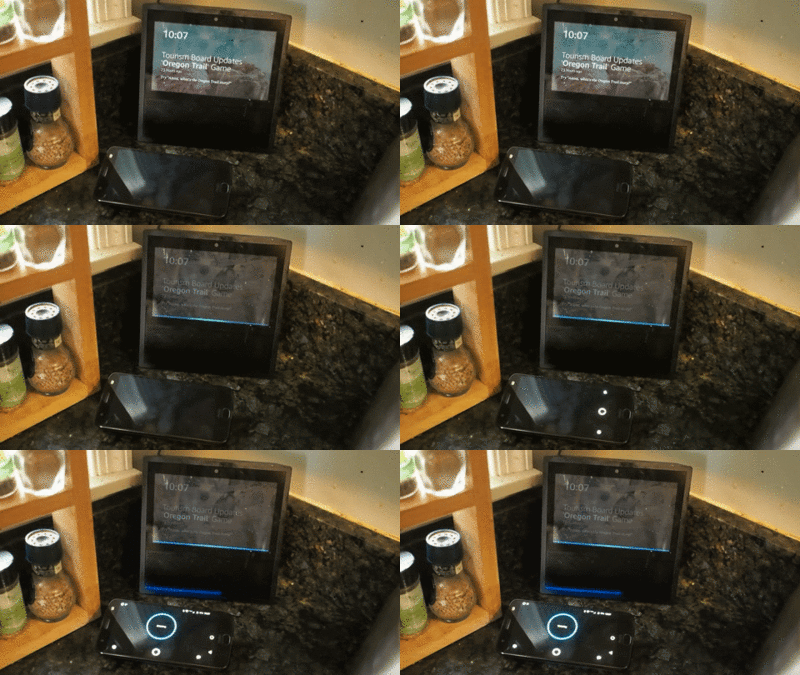
It’s also slightly slower than an actual Amazon Echo. This isn’t likely to be something most people notice, but since I already have Echo devices throughout my house I occasionally found myself in rooms where both the Alexa Mod and the Amazon Echo could hear me. In every test, the Alexa Mod would respond to my request or question at least a full second slower than an actual Amazon Echo.
Finally, there’s the price. Motorola is asking $149.99 for this Mod, and in case you’re unaware, that’s the same price as three Amazon Echo Dot speakers. In fact, you could buy an Echo Dot and the special battery Fremo made to make it portable and a much louder speaker to connect to the Echo Dot and still have at least $50 left compared to the what you would spend on this Alexa Mod for your Moto phone.
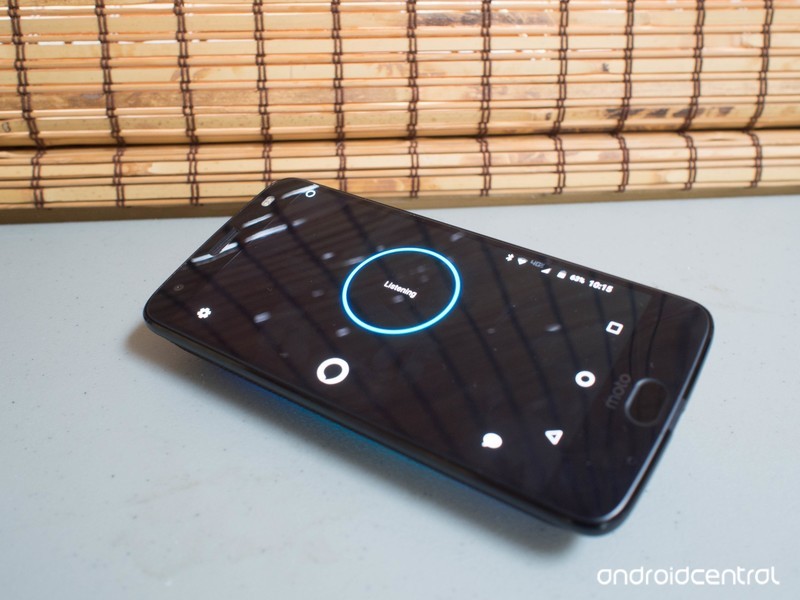
Moto Mods are awesome because they are frequently convenient in a way nothing else can be, and this mod doesn’t feel like it meets that description yet. The integration isn’t quite there, the design is a little questionable, and for what you get it’s prohibitively expensive. A lot of this is actually Amazon’s fault, as aggressive pricing is a bad business decision for Motorola and Amazon at least part of the reason the integration isn’t fully there. Unfortunately, blaming Amazon or Motorola doesn’t make this speaker Mod as cool as it could be. Hopefully with a software update or two, that will change, but for now this is one Mod you should probably pass on.
And remember, it could always be worse.
See at Best Buy
Latest Plex update adds Google Assistant support on Android TV
Available with the new v6.9.0 update.

Plex remains as one of the best ways for accessing your local movies, TV shows, and music files, and in the latest update to v6.9.0 of its Android app, a lot is being added and fixed to make your Plex experience as enjoyable as possible.
The changelog for v6.9.0 is quite lengthy, but one of the biggest additions is support for Google Assistant on Android TV. Google Assistant just debuted on Android TV in late September, so it’s great to see that Plex is already updating its app to take advantage of it.

With Assistant on Plex, you’ll be able to use your voice for searching through your library of content, skip to the next episode of a series you’re watching, etc.
In addition to this, the update also allows you to see the status of your hardware transcoding as an overlay over Plex’s video player, background scanning and thumbnail generation for local playback, a personalization screen for Plex News on mobile, and plenty more. Add this together with more bug fixes than we have time to mention, and you’re looking at a healthy update.
Plex v6.9.0 is available now on the Google Play Store, but if the update isn’t showing up for you quite yet, you can also download the APK file here.
Hulu for Android TV now supports Google Assistant voice commands
AT&T’s Moto Tab is a $300 tablet for watching DirecTV
Available for AT&T customers starting November 17.
Motorola used to be one of the biggest players when it came to Android tablets, but it’s been quite some time since we’ve seen the company dabble with larger-screened devices. Lenovo recently announced the Moto Tab, but despite having the “Moto” branding, this is very much so a Lenovo and AT&T tablet rather than a true Motorola one.

First, let’s talk about specs. The Moto Tab comes equipped with a 10.1-inch Full HD display, dual front-facing Dolby Atmos speakers, Snapdragon 625 processor, 2GB of RAM, 32GB of expandable storage (up to 128GB), Android 7.1 Nougat, and a 7,000 mAh battery.
Lenovo is selling the Moto Tab exclusively through AT&T, and as such, it comes preinstalled with just about every carrier app you can imagine. Along with a host of AT&T applications, DirectTV and DirecTV NOW are also installed – not to mention a dedicated home screen and navigation button that take you right to “TV Mode” (aka DirecTV).
Lastly, Lenovo will also be releasing “Home Assistant” and “Productivity” packages to be sold alongside the Moto Tab. The former is an Alexa speaker that you dock the Moto Tab into, whereas the latter is a foldable keyboard case.


You’ll be able to purchase the Moto Tab from AT&T on November 17 for either $15/month for 20 months on an installment plan or $299 outright without a contract. That’s not an awful deal if you’re someone that’s completely invested into AT&T and DirecTV’s services, but if not, you’d be much better off with something along the lines of the Huawei MediaPad M3 Lite or Amazon Fire Tablet HD 10 for considerably less cash.
Alexa as a Moto Mod is almost a good idea

Ring Doorbell: Which should you buy?
What’s the difference between the four options of Ring Video Doorbell? I’ve used three and can help you pick the right one for your home.
I once said that a $200 doorbell was a very silly thing. I was very, very wrong. Because the Ring Video Doorbell — as well as the Ring 2 and Ring Pro — has very quickly become one of my favorite connected home products. It’s not inexpensive, and it’s not perfect. But it’s paid for itself several times over in terms of safety and security — and just general ease of mind.
For the uninitiated, a Ring Doorbell is a doorbell with a camera. It can detect motion before someone gets anywhere near your door, then alert your smartphone or computer. It has cloud recording (with a subscription fee, of course), so you don’t have to be watching live to see see something that happened. It also has two-way audio — you can hear them, and they can hear you.
Ring also has four options for its doorbells. I’ve used three of them at length, and here’s how I’d approach picking the right one for you:
 Original Ring Video Doorbell ($179 at Amazon.)
Ring Video Doorbell
This one’s the original. It’s not small, and it’s not cheap. But it’s what got the ball rolling for a good many of us.
The OG Ring runs $179 and gives you 720p video and two-way audio, along with basic motion detection and night vision. You can hear the folks at the door, and they can hear you.
It’s got a rechargeable battery, so you don’t have to have it connected to low-voltage wiring to keep the internal battery topped off. But if you’re going to charge over USB, you’re going to have to unscrew the doorbell from the wall plate first. (In other words if you have low-voltage wiring running to the door already, use it!)
If you can get a good deal on the OG Ring, it can still be a decent purchase. Otherwise, I’d take a look at …
See at Ring See at Amazon
 Ring Video Doorbell 2 ($199 at Amazon).
Ring Video Doorbell 2
This is the 2017 update to the original Ring. It’s $20 more at $199, and you get a bit more for that upgrade. For starters, the camera now shoots 1080p video. Then there’s the quick-release removable battery, making it a lot easier to recharge if you don’t have low-voltage wiring rigged up. Plus it’s got interchangeable faceplate, though black and silver are your only options right now.
The whole thing’s a little more boxy than the original Ring, but it’s definitely a good buy.
See at Ring See at Amazon
Ring Video Doorbell Pro
Now we’re starting to get into some sexy tech. The Ring Pro runs $249, which ain’t cheap. But you get something that’s far more inconspicuous on your front porch. That smaller footprint’s a big deal for me.
Along with that, you get 1080p video (on either 2.4GHz or 5GHz Wifi), night vision and motion tracking, and it comes with four swappable face plates.
The biggest difference here is that Ring Pro requires low-voltage wiring. There’s no internal battery, and so your options may be a little limited here. It also means that available power is key — I actually had to upgrade my 1980s low-voltage transformer to get it all to work.
But for my money, this one’s been the best doorbell to date. (And I’ve used all three.)
See at Ring See at Amazon
 The Ring Elite, which requires professional installation. ($499 at Amazon.)
Ring Video Doorbell Elite
If you’re really serious about this stuff — or, more likely, if you’re dealing with new construction — it might be worth taking a look at the Ring Video Doorbell Elite. It’s $500. It’s a “professional-grade solution” that gives you a much more flush look, and it requires professional installation, Ring says. It also uses power over Ethernet (PoE) for the best, most consistent experience.
This one isn’t for everyone — not by a long shot. But it’s also a very cool option to have.
See at Ring See at Amazon
Any words of advice for potential Ring buyers?
Let us know in the comments below!
Misfit Vapor not coming to Amazon until December
Orders that have already been placed will be fulfilled, but not as fast as you might like.
Android Wear watches are rather difficult to recommend to most folks at the moment, but one that hopes to change this is the Misfit Vapor. Misfit first announced the Vapor at CES this past January, but between delayed release dates and accidental listings on Amazon, the leadup to its launch hasn’t been all that smooth.

Misfit launched the Vapor on its own site on October 31, but since then, something strange has happened. The Misfit Vapor was previously listed on Amazon, but it has since been taken down with no way to access the page. Along with being irritating to those that were eager to purchase the watch through Amazon, it also posed as a concern for those that had managed to order the watch through the online retailer.
One user on Twitter reached out to Misfit to see what was going on, and the company responded with the following message:
We will be shipping Vapors to Amazon in December. However, we cannot confirm when exactly they will be able to fulfill your order.
— Misfit (@Misfit) November 6, 2017
What exactly does this mean?
Amazon will likely allow buyers to purchase the Vapor at some point next month, but this doesn’t necessarily mean those that already submitted orders will get their units shipped out by then. It take some time for Amazon to receive a product, process it, and then get it shipped out, so early buyers could be faced with a month or longer delay before actually getting their hands on the Vapor.
Misfit Vapor will finally be released on October 31 for $199
Microsoft sets unambitious but achievable carbon reduction goal
Microsoft has pledged to slash its carbon emissions by 75 percent by 2030, against a 2013 baseline. By pushing its carbon neutrality plans and renewable energy commitments, the target puts the company on track to meet the goals set in the Paris Climate Agreement, and of course puts a big tick in its corporate social responsibility box.
Seventy-five percent over 15 years is not a hugely ambitious target, especially when you consider that Microsoft has had carbon reduction on its agenda since 2009, and that despite the environmental programs it has in place, it only manages a lacklustre score of C- in Greenpeace’s guide to greener electronics (breaking down to a D+ for both energy and resources).
Much of its average performance to date can be attributed to energy hungry cloud computing (which Greenpeace dragged Amazon over the coals for last month), but the company says it’s putting renewed focus on this area. Having already cut energy consumption at its main Redmond campus by nearly 20 percent, Microsoft says it now plans to buy its own clean energy at market rates, and will soon be powering its Puget Sound campus with 100 percent carbon-free power. So while its target of 75 percent over 15 years isn’t aspirational, it is feasible, and in an industry that remains largely laissez faire with environmental matters, any progress is good progress.
Source: Microsoft
 AIVAnet