


Epic giant robot battle scheduled for October 17th
Are you ready for the world’s first giant robot fight? (If your answer to that was “No,” who even are you?) We’ve been waiting for a date for the MegaBots vs. Suidobashi duel, and now it’s finally here. The fight will take place on October 17th, 2016 at 10:00 PM ET. It will be streamed worldwide on Twitch. If you miss the live stream, you can catch it on YouTube and Facebook immediately after the event concludes.
This giant robot battle has been in the works for almost two years and was originally supposed to take place in August. The 16-foot-tall, 12-ton MegaBots Eagle Prime robot was built a team of American engineers, while Kuratas, a 13-footer that weighs 6.5 tons, was built by the Japanese company Suidobashi Heavy Industries. And now they will do battle for our enjoyment; the question is, who will reign supreme?

Source: MegaBotsInc (Twitch)
‘Fortnite’ studio Epic Games sues two alleged cheaters
Earlier this week, Fortnite publisher Epic Games filed a civil suit against two people who were allegedly cheating while playing the game online. They were associated with subscription-based website Addicted Cheats and used its services to hunt down and kill Twitch streamers while they played live, according to Kotaku.
The Addicted Cheats site rents out botting services that help players find and aim at targets. To create those cheats, Epic Games alleged in the civil complaint, the individuals must have had to dive into and modify Fortnite’s source code. Altering it to get an edge in online competition violates the game’s End User License Agreement and the Digital Millennium Copyright Act, the studio claimed.
Dealing with cheaters is a complex tightrope for game publishers. Last year, Ubisoft ramped up their bans for players using code hacks to get an edge in The Division, though the studio opted for permanent bans of first-time Rainbow Six: Siege cheaters. Studios are starting to take aim at the hack creators themselves as GTA V’s publisher Take Two did by sending DMCA notices to a site hosting a popular mod that allowed players to tinker with the online game’s code.
But in this instance, Epic isn’t suing the site to get it off the internet — it’s suing two individuals (complaints here and here provided by Polygon) for copyright infringement, which can carry a penalty of up to $150,000 each. Since the two defendants supply technical support for AddictedCheats.com, perhaps Epic Games is making a particular example of them as an identifiable party that can be painted as responsible for cheating.
According to Epic’s complaint, one defendant had been banned from Fornite nine times, only for him to allegedly register new accounts to continue playing. He was also accused specifically of using Addicted Cheats’ tools to hunting down popular players while they were livestreaming to kill them.
This practice, called ‘stream-sniping,’ is strictly forbidden in the code of conduct for PlayerUnknown’s Battlegrounds, which Epic Games directly cited as inspiration for its very similar Fortnite spin-off Fortnite: Battle Royale. The latter studio forbids cheating — “programs or other processes which may give players an unfair competitive advantage ” — in its EULA, but doesn’t mention stream-sniping. Regardless of the specific criteria Epic feels the two defendants meet to be liable for a lawsuit, it’s definitely intended to scare off potential creators of other hacks.
“When cheaters use aimbots or other cheat technologies to gain an unfair advantage, they ruin games for people who are playing fairly. We take cheating seriously, and we’ll pursue all available options to make sure our games are fun, fair, and competitive for players,” an Epic Games spokseperson told Kotaku.
The Addicted Cheats site has taken this particular Fortnite cheat offline, stating it is “closed for a legal issue.”
Source: Kotaku
Kuo: All iPhone Models in 2018 Likely to Abandon Fingerprint Recognition
All of the iPhones Apple plans to produce in 2018 are likely to abandon the Touch ID fingerprint sensor in favor of facial recognition, KGI Securities analyst Ming-Chi Kuo told investors in a note sent out this evening.
According to Kuo, Apple will embrace Face ID as its authentication method for a competitive advantage over Android smartphones. Kuo has previously said that it could take years for Android smartphone manufacturers to produce technology that can match the TrueDepth camera and the Face ID feature coming in the iPhone X.
We predict all new 2H18F iPhone models will likely abandon fingerprint recognition. We believe this change will allow all new models to realize a competitive advantage via differentiation, on the back of an integrated user experience of full-screen design and TrueDepth Camera/ Facial recognition/ Face ID/ AR applications.
Face ID, says Kuo, will continue to be a major selling point of the new iPhone models in 2018, with Apple planning to capitalize on its lead in 3D sensing design and production.
Kuo’s prediction suggests that all upcoming 2018 iPhones will feature a full-screen design with minimal bezels like the iPhone X, meaning no additional models with the iPhone 8/iPhone 8 Plus design would be produced.
That would spell the end of the line for Touch ID in the iPhone, which has been available as a biometric authentication option since 2013. It’s not clear what that means for the Mac and the iPad, but Kuo has said he expects next year’s iPad Pro models to transition to Face ID.
Should Apple decide to abandon Touch ID, it also means development would potentially end on a rumored under-display Touch ID solution.
Back in September, Kuo predicted 2018 iPhones would fully adopt the TrueDepth camera and facial recognition if Face ID was “well received” by customers, but further research conducted by KGI Securities has led him to believe it will indeed be successful, leading to today’s more definitive prediction.
Kuo believes that Apple’s transition away from Touch ID will also turn Android smartphone manufacturers away from fingerprint recognition. As he said in an earlier note, he expects high-end Android smartphones to “ditch” under-display optical fingerprint recognition in favor of 3D sensing techniques.
Despite Kuo’s prediction, Apple software engineering chief Craig Federighi recently hinted that Apple may not be ready to abandon Touch ID across all its products just yet. While he said Face ID is the future of biometric authentication, he also noted that there are settings where different biometric techniques or combinations of biometrics could make sense.
Related Roundup: iPhone X
Discuss this article in our forums
California’s ‘Jobs of the Future Fund’ wants to tax workplace robots
Why it matters to you
Robots are eating our jobs. This Californian grassroots initiative proposes one possible answer.
Whether it’s immigration, health care, taxes or the environment, there are plenty of topics which drive voters. One that is not quite as much of a hot-button topic as it maybe should be? The impact of automation on employment. As we have covered here on multiple occasions, artificial intelligence and robotics is likely to have a massive impact on jobs, long before we need to start worrying about things like superintelligence and the technological singularity. With that in mind, a San Francisco official is actively pushing for a “robot tax,” and a more thorough examination of what the rise of the robots is likely to mean for us.
What San Francisco supervisor Jane Kim has created is a statewide grassroots coalition called the “Jobs of the Future Fund,” which sets out to create a communal fund that will help ease the transition as robots take on more and more of our jobs. To do this, it proposes that employers who replace humans with robots or algorithms should continue to pay payroll taxes to fund training, education and new opportunities for humans. In this way, workers can benefit from the automation revolution, rather than just those at the very top.
“Many experts predict that millions of American jobs are at high risk of being replaced through automation; some studies found as much as 47 percent,” Julie Edwards, a spokesperson for Kim, told Digital Trends. “We need to start thinking now about how we can smooth this transition to ensure these workers have the training and education they need to continue to access good-paying, middle-class jobs.”
The original idea for the Jobs of the Future Fund was based on a concept first mentioned by former Microsoft co-founder Bill Gates earlier this year, which Kim has picked up and run with. It’s more of a conversation starter than anything, but it’s definitely helping raise awareness of an important issue.
“The changes that automation could bring to our workplaces potentially rival the job losses of the Great Depression,” Edwards said. “This could be the biggest economic challenge our generation will face and it’s critical we build the support among the public, political leaders and employers to get ready for that challenge now.”
If you live in California and want to get involved, you can head over to http://www.jobsofthefuturefund.com and sign up. If you live elsewhere, maybe visit the site and then start hounding your own politicians for something similar!
T-Mobile getting rid of unlimited LTE roaming in Mexico and Canada on November 12
LTE roaming in Mexico and Canada is being downgraded to 5GB/month, and the change takes effect on November 12.
In the summer of 2015, T-Mobile announced its “Mobile without Borders” Un-carrier movement – a program that introduced unlimited calling, texting, and LTE data to Mexico and Canada for subscribers in the U.S. Mobile without Borders isn’t going anywhere, but T-Mobile is making a pretty big change to it that does cut back on its value considerably.

On November 12, T-Mobile will be adjusting the initial Mobile without Borders offer so that customers will only have access to 5GB of LTE data when traveling abroad in Mexico or Canada. Once that 5GB limit is hit, speeds will be throttled down to 128kbps (or 256kbps if you have T-Mobile ONE Plus). This change not only affects T-Mobile ONE customers, but those locked into an older Simple Choice plan as well.
So, what’s the reason for the change? According to T-Mobile, less than one-percent of its customers with Mobile without Borders actually travel to Mexico or Canada and use over 5GB of data while visiting.
The change from unlimited LTE in Mexico and Canada to 5GB/month is not a fun one.
The 5GB data allotment for Mexico and Canada is replenished with every billing cycle. For example, if you use 2GB of LTE data in Mexico or Canada during March, you’ll have 3GB remaining. However, when you get billed again, it’ll go back up to 5GB.
T-Mobile provides usage breakdowns on its website so you can see exactly how this new setup will affect you if you do travel out of the country and use LTE while abroad, and if you’re part of that one-percent that uses more than 5GB of data while visiting Mexico or Canada, you can purchase T-Mobile’s ONE Plus International add-on for $25 extra per line per month to keep your unlimited LTE when in these two countries.
We could see a T-Mobile and Sprint merger by the end of October

Google Store honors trade-in quotes 30 days after you get your new phone
Google is updating its trade-in policy so that customers now have 30 days from the date their new Pixel is delivered to return their old device for the quoted price they were originally given.
Late last month, Google introduced a trade-in program on the Google Store. Buying a new Pixel or Pixel 2 gives you the option to trade in your old phone to help offset the cost of your purchase, and with Google offering as much as $410 for a Pixel XL, it’s one of the better programs of its kind.
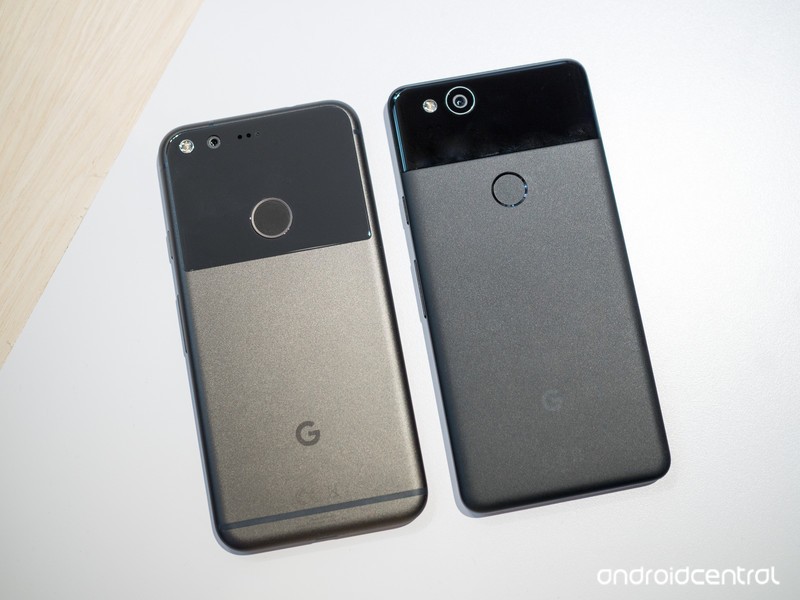
However, shortly after its launch, some confusion surrounding the eligibility of the quoted trade-in prices arose. Earlier this week, Droid Life spotted some conflicting information from Google. Some customers reported that Google representatives told them they had a 30-day window after the quote was offered to trade-in their old phone, but the Made by Google Twitter account was saying that customers actually had 50 days to do this.
This is a small change, but one that will be greatly appreciated by those with Pixel 2 orders not expected to ship until next month.
In other words, it was believed that you had 50 (or 30) days after getting the quote with your new phone purchase to send in your old device. That may not sound like a big deal at first, but with many Pixel 2 preorders not expected to ship out until some point in November, a lot of people started to get worried.
Thankfully, Google has updated its policy to eliminate a lot of potential stress.
Once your new phone is delivered, you’ll have 30 days from that date to return your old phone to get the quote that Google offered when you initially made that purchase. This isn’t the biggest change in the world, but it’s a smart one that Google was right to make. Well done.
Google Pixel 2 and Pixel 2 XL
- Pixel 2 FAQ: Everything you need to know!
- Google Pixel 2 and 2 XL hands-on preview
- Google Pixel 2 specs
- Google Pixel 2 vs. Pixel 2 XL: What’s the difference?
- Join our Pixel 2 forums
Google Store
Project Fi
Verizon
Hulu on Android TV now supports Google Assistant voice commands
Google Assistant support on Hulu for Android TV allows for a lot of new voice controls, but where the heck is the new UI and live TV?

Hulu is a fantastic streaming service, and Android TV is a great platform for media consumption. Unfortunately, the two haven’t been known to play nicely with one another. Hulu has been notoriously slow in the past when it comes to updating its Android TV app with new and current features, so it’s refreshing to see an update for Google Assistant support already being pushed out.

Google Assistant just launched on Android TV late last month, and although the platform already supported voice controls, the introduction of Google Assitant brought the voice functionality more up to par with the Assistant voice controls that you have on your phone, Google Home, etc.
You can use Assistant to pause shows, fast-forward, rewind, etc.
With this latest Hulu update, you can now use Google Assistant on your Android TV for playing/pausing video playback, rewinding/fast-forwarding, and skipping shows in a playlist. It’s not ground-breaking by any stretch of the imagination, but it’s an update that’s definitely appreciated.
The update will change the version number of Hulu for Android TV to 2.1.3, and it officially started rolling out on October 11. Unfortunately, we’re still stuck with the same general app design and no date in sight as to when the Hulu Android TV app will receive the major UI overhaul and live TV support that most of Hulu’s other platforms have already received.
Sigh 😞
NVIDIA Shield Android TV
- Read our Shield Android TV review
- The latest Shield Android TV news
- Shield vs. Shield Pro: Which should I buy?
- Join the forum discussion
- Complete Shield Android TV specs
Amazon
Chinese startup’s ‘8K’ VR headset is surprisingly advanced
As much as I enjoy the occasional VR gameplay, I’ve been waiting for headset manufacturers to boost the pixel density in order to reduce the screen door effect, as well as to widen the FOV (field of view) for a more immersive experience. There’s no doubt that the big names like HTC and Oculus are already working on it, but to my surprise, a Chinese startup by the name of Pimax simply went ahead. At CEATEC, I came across the Pimax 8K headset which not only features an incredible 7,680 x 2,160 resolution (more on that later), but also laser tracking that works with HTC Vive’s base stations, plus an impressive 200-degree FOV which is almost double that of existing offerings.
Before we go any further, yes, the 7,680 x 2,160 resolution here isn’t the “8K” you’re thinking of (that’s 7,680 x 4,320, twice as many pixels), and some went as far as accusing the company of misleading people with the product name. Pimax argues that the “8K” here is to highlight the much higher horizontal resolution which, to be fair, is an industry first. A more accurate way to describe this is that each eye is looking at a 4K (3,840 x 2,160) panel with a 90 Hz refresh rate inside the headset, and if you ask me, this sounds just as impressive in today’s market. Maybe “Pimax 4K Duo” would be less controversial?
Speaking of display panels, unlike the PlayStation VR, the HTC Vive and the Oculus Rift, the Pimax 8K uses CLPL or “customized low persistence liquid” panels instead of OLED. Pimax claims that with CLPL it has “completely eliminated ghosting and improved brightness” (presumably a comparison to traditional LCD). CLPL and OLED apparently only have some minor differences in terms of contrast and color temperature, but the former can achieve a higher pixel density for the same cost. It’s unclear what sub-pixel arrangement has been applied to this CLPL technology, but I’ll update here if I hear back from Pimax about this.

As I waited in line for some hands-on time, I noticed that the demo setup was running on an MSI laptop equipped with an NVIDIA GTX 1080 GPU. I thought: surely that would struggle with an “8K” output? I later found out that Pimax 8K is actually designed for 4K input or less (the prototype was using HDMI, but the final version will likely use DisplayPort instead), and then it upscales the signal to “8K” internally. This means your PC could get away with using just an NVIDIA GTX 980 or GTX 1070, and you’d still be able to enjoy the invisible pixel grid on the displays.
Indeed, the brief session of Fruit Ninja through a Pimax 8K was literally the most immersive VR gameplay I’ve ever had. As soon as I put on the headset, I was amazed by the lack of black border within my vision. For the first time ever, I finally felt like I wasn’t looking into a VR headset! The device felt comfortable to wear and didn’t feel heavy despite its bulky look — unlike the StarVR with a similarly wide 210-degree FOV. Pimax claims that its headset is actually lighter than a Vive, but it has yet to finalize the weight.
As expected, I could not see any sub-pixels thanks to the insanely high display resolution, nor did I notice any ghosting. Interestingly, I only found out after the demo that the laptop was actually just pushing a 2,560 x 1,440 output, but what I saw was still significantly better than what I’m used to on other VR headsets. So far, this whole package is basically everything I’ve ever wanted in a VR system. Head tracking and the Vive-like controller worked fine, too, though I’ll need more hands-on time to assess their reliability.

For those who originally assumed that the Pimax 8K would take an “8K” signal, well, that’s what the higher-end Pimax 8K X is for. This special model is made for the hardcore users who plan to use the headset with at least an NVIDIA GTX 1080 Ti (pending further testing but may require SLI configuration) or the next-gen NVIDIA Volta, and the headset will likely have two DisplayPorts — one for each 4K panel. The image quality here would obviously be better than the upscaled view on the Pimax 8K, but given the demanding hardware requirement for an “8K” output, the Pimax 8K would make more sense for most of us.
In fact, there’s also a more affordable Pimax 5K based on the same headset design but houses two 2,560 x 1,440 CLPL panels instead. Still, this resolution is higher than what PlayStation VR, HTC Vive and Oculus Rift are offering, so this “5K” model will no doubt appeal to those who want to try high-end VR with a smaller budget. At the time of writing this article, this is still available for $349 on Kickstarter if you already have a Vive base station plus controllers, and it’s expecting a January 2018 delivery; though if you want the two base stations plus two controllers as well, you’ll have to fork our an extra $300 and wait until February for the delivery.
As for the Pimax 8K, it’s starting at $499 and is also expecting a January 2018 delivery; but like the Pimax 5K, you’ll need to add $300 for the controllers plus base stations, and expect a February delivery as well. Alas, the higher-end $649 Pimax 8K X is no longer available, but its backers will have to wait until May.
The company added that expansion modules are in development, and these will provide features like inside-out tracking, eye tracking, wireless transmission, scent and more. It’s a highly ambitious move from a startup, but we’ll be happy enough just to see the delivery of the headsets themselves.
Source: Kickstarter, Pimax
Lyft drivers won’t have to switch apps to use Google Maps
If you’ve taken enough Lyft rides, you’ve probably noticed that drivers have to switch to a navigation app before they start driving. It’d be nice if they could just get going, wouldn’t it? They will now: Lyft has added built-in Google Maps navigation to its driver app. Once you’ve buckled up, your drivers can take you to your destination with the same app they used to pick you up. Google Maps is only available in the Android version of the app right now, but it’s “coming soon” for iPhone-toting drivers.
Yes, the odds are that this will only save you and your driver seconds on any given trip. However, this is really part of a broader effort to save as much time as possible for both drivers and passengers. Lyft is clearly betting that all those seconds and minutes will not only please drivers looking to maximize their income, but passengers who’ll be more likely to take Lyft when they’re in a hurry.
Source: Lyft Blog
Cortana may talk users through Windows settings with ‘follow me’
Microsoft tipster Walking Cat spotted a new feature that could be coming to Windows. Called ‘Follow Me,’ it will allow the voice assistant Cortana to verbally walk users through processes, like configuring settings or installing software. While the video in Walking Cat’s original tweet isn’t available to watch in some regions, another was uploaded to YouTube demonstrating the new feature.
The video shows Cortana helping a user hook up a Bluetooth device to Windows. There’s no indication when the feature will get added to the voice assistant’s repertoire, but with the Windows Fall Update possibly coming next week, here’s hoping it’s included.
Via: The Verge, On MSFT
Source: Walking Cat (Twitter)
 AIVAnet