


The Amazon Echo Show just lost one of the few reasons to buy it

With Google pulling support for YouTube video, the Echo Show just lost an arm. Or maybe an arm and a leg. And this isn’t just a flesh wound.
Google and Amazon have apparently found themselves in a little bit of a spat, as reported by The Verge, with the former pulling its fledgling video service (YouTube) off the latter’s latest connected device (Echo Show).
Or to put it another way: The Echo Show just lost one of the only good things going for it.
Amazon Echo Paperweight. pic.twitter.com/jrAcIzgznP
— Phil Nickinson (@mdrndad) September 27, 2017
Let’s rewind for a second and recall this line from my Echo Show Review:
It is an imperfect device that simultaneously excites and occasionally infuriates. It’s yet another example of Amazon beating everyone else to market, but with a product that in a number of ways still feels incomplete.
So in the Echo Show we have a device with tons of potential. The ability to serve as an always-on home hub. Only it doesn’t actually do that yet. And the ability to serve as an always-available, cross-platform communications device with far-field microphones and video. Only nobody’s really using that yet.
And there’s the potential to show any virtually any video at any time — because when it comes to on-demand viewing, YouTube is the only service that really matters — thanks to the 7-inch display. Only now, not so much.
Losing access to YouTube video is a still-smoking wound to a product that was struggling for purpose in the first place.
The reasons behind Google not allowing YouTube on the Echo Show don’t really matter to me. (Though I do find it interesting that there apparently was enough warning for Amazon to update the Echo Show response to “Currently, Google is not supporting YouTube on Echo Show.”) Perhaps it’s something technical. Perhaps it’s in retaliation for Amazon not selling Chromecast (which very much competes with Amazon’s own Fire TV Stick).
But the result is a still-smoking chest wound in an Echo Show that remains, at best, promising. And that absolutely matters. Maybe not to Google — at least not yet. And not really to you or me, unless you’re one of the few who actually owns an Echo Show and relied on it for your YouTube fix.
But if you’re Amazon, you just lost one of the key ways to market the Echo Show to new customers. If you’re one of those potential customers, you just lost a key reason to buy an Echo Show.
And if you’re a proponent of the Internet, you know, actually working, you just got another reason to question Google’s real intentions.
Amazon Echo
- Tap, Echo or Dot: The ultimate Alexa question
- All about Alexa Skills
- Amazon Echo review
- Echo Dot review
- Top Echo Tips & Tricks
- Amazon Echo vs. Google Home
- Get the latest Alexa news
See at Amazon
Sony’s next-gen phone will finally feature an ‘all-new design language’
Sony’s next-generation flagship will sport a bezel-less design.
Sony hasn’t strayed from its OmniBalance design language for some time now, but it looks like that’s finally about to change. On the sidelines of the launch of the Xperia XZ1, Sony India’s managing director Kenichiro Hibi said that the company will introduce an “all-new design language” to better compete with 18:9 devices like the Galaxy Note 8 and the LG V30. To that effect, Sony’s next-generation flagship will feature a bezel-less design.
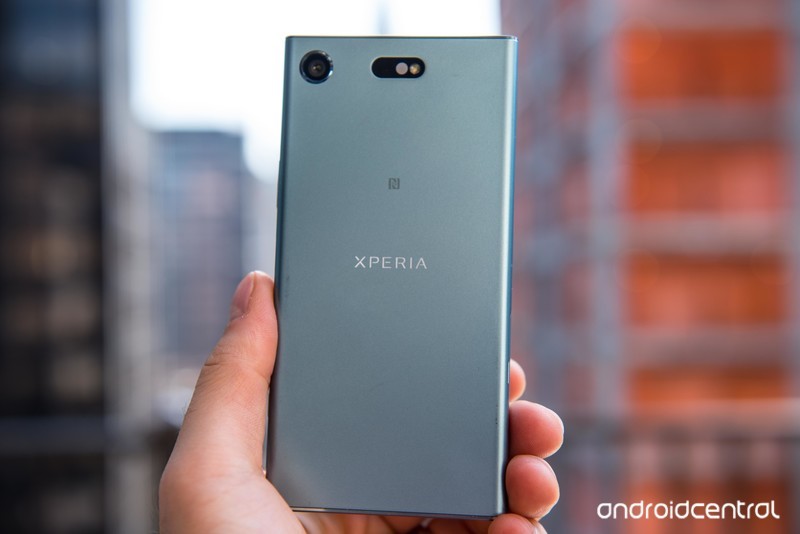
In an interview with Indian Express, Hibi said:
We have deployed an omnibalance design as long as the X series continues to be available in the market. Also, we are planning to launch new generation of products and you can expect a complete new design from the devices.
With Sony unveiling the Xperia XZ1 at IFA last month, we’ll likely have to wait until Mobile World Congress next year to see the company’s first flagship with the new design aesthetic.
What would you like to see from Sony’s upcoming phone? Share your thoughts in the comments below.
Sonos event: What we want, and what we expect to see

Sonos has an event for new hardware coming up on Oct. 4. Here’s what we hope to see from the company in New York City.
When it comes to wireless music at home, nobody does it better than Sonos. (Don’t even try to convince me otherwise. You’re wrong. And I love Chromecast, too.) The darn things indeed are addicting. I started with a Play:1 and quickly bought a Play:5. I sneaked a Play:3 into the bedroom before anyone could tell me not to.
And now, we’ve got new Sonos products on the horizon. OK, at least one, if the leak to a German blogger is to be believed. (And it certainly looks pretty legit. Probably. Or it did before it was taken down.) Maybe more, if we’re lucky.
The point is, I don’t know exactly what to expect from the Oct. 4 event in New York City. But I and others here at Mobile Nations have a few ideas of what we’d like to see. And here they are, in order of facial hair:
Phil Nickinson

Two things I definitely know I want to see: First is microphones and the inclusion of any and all smart assistant things. Alexa. Google Assistant. Siri. Those are table stakes for any sort of smart speaker these days, and Sonos has very much fallen behind on that front. We’ve long been rumored to get these things from the upcoming event. And it certainly looks like it’s going to happen, thanks to that leak, as well as an FCC filing as spotted by Zatz Not Funny. But now I’ve made it official — it has to happen.
Another longstanding request (he said in a demanding sort of internal monologue sort of way) is a speaker that can officially live outside. I’m not talking about a waterproof, leave hidden in the garden sort of speaker, but just something that I can leave on a covered porch or deck and not have to take inside every time the party’s over.
Now I know plenty of folks who say they’ve left a Sonos speaker outside without any issues. But these things are expensive — $200 at minimum — and I want something more official from Sonos before I start leaving my precious music maker in the out-of-doors.
Jared DiPane
 An image from Sonos listed with the FCC, as spotted by Zatz Not Funny.
The main thing that I would love to see from Sonos would be a smaller, much more affordable speaker option. I want to put Sonos speakers in every room of my house, but don’t want to spend a minimum of $200 a pop on them. A small, sub-$100 speaker would make an awesome addition to my bathroom, son’s room, and more.
I’d also love to be able to talk to my speakers instead of having to launch the app. As a whole, the app experience has got better, but still has a lot of room for improvement. Being able to quickly launch a playlist using my voice would make things easier as I move around the house listening to music.
Adam Zeis

While I love having everyone in my house talk to (scream at) Alexa, I don’t necessarily need that functionality on a daily basis. Is it fun to have? Of course. Is it super helpful when you’re cooking or just don’t feel like opening the app? Absolutely. But for me, personally, I can live without it.
What I really would love to see from Sonos — and have been wanting for years — is an outdoor speaker. And I know I’m not alone in this (hi, Phil!). Not just the ability to add an existing made-for-the-outdoors speaker to the Amp — but rather a speaker, like the Play:1 — that can go outside and stay there come rain, snow, wind, or fire. The one thing I dearly miss on my deck in the summer is my Sonos. I used to move a Play:1 from my kitchen as I needed it, but that got to be annoying after a while. So please, Sonos, give me something that can deal with a bit of weather, will ya?
Daniel Bader

I love my Sonos Play:1 and Play:5, and have a couple of each peppered throughout my house. But since I acquired a couple Google Home units, I’ve been using my Sonos speakers significantly less often — perhaps only once or twice a week. Sonos is definitely going to release a speaker with built-in voice assistant support, but it needs to maintain a focus on design and sound quality to win me over. Every time I use the Play:1, I am reminded just how well Sonos combines form and function, and there’s no reason to think that this upcoming speaker, or speakers, won’t maintain that tradition — with some smarts.
Of course, I’d prefer Sonos to hook up with Google’s Assistant over Amazon’s Alexa, largely because the former does more that’s relevant to my life, but either one will be fine. If it goes its own way, though, and develops a first-party voice assistant — well, that would be a terrible plan.
Either way, come Oct. 4, I have no doubt that Sonos will shut up and take my money.
T-Mobile deal brings new features and more LTE to Iowa Wireless customers
Expected to be completed in Q4 2017 or early 2018, T-Mobile’s acquisition of Iowa Wireless means additional features for customers and further expansion for the Un-Carrier.
Rumors regarding a deal between Sprint and T-Mobile have been circulating for what seems like years at this point, and while we wait around to see if anything ever comes of this, T-Mobile has just announced that it will be acquiring all remaining interest in Iowa Wireless.

Also known as iWireless, Iowa Wireless is one of the leading provides for cell service in the central part of the country. iWireless currently services Iowa, western Illinois, and eastern Nebraska, and in the 20 years that the company has been in operation, it’s established 103 physical storefronts and around 75,000 customers.
Iowa Wireless was already acting as an affiliate of T-Mobile’s network, but with this new deal, Iowa Wireless customers will gain access to all of T-Mobile’s Un-Carrier features — including unlimited 4G LTE data, free Netflix subscriptions, free in-flight texting/data, and more.

Advertisement
The deal is expected to be finalized between Q4 of 2017 and early 2018, and T-Mobile says that it will work on expanding LTE coverage for Iowa throughout the rest of 2017 and work on the state’s 600 MHz infrastructure “in the future.”
Per T-Mobile’s CEO and President, John Legere:
We’re taking T-Mobile to every corner of the country and this deal shows our commitment to expanding in the heart of America. We’ve been disrupting the wireless industry for the benefit of consumers for the last five years now and customers in Iowa will be able to experience the benefits firsthand.
Along with providing Iowa Wireless customers with more features and increased coverage, this acquisition also helps T-Mobile get closer and closer to its goal of opening 17,000 combined retail locations before 2017 is up.
Alternative carriers (MVNOS)
- What is an alternative mobile carrier?
- What are the advantages of going with an alternative carrier?
- How to make sure your phone works on a prepaid alternative carrier
- 8 Important Considerations When Switching To An MVNO
- These are the cheapest data plans you can buy in the U.S.
- Mint SIM vs. Cricket Wireless: Which is better for you?

Woot drops the price of a refurbished Google Pixel to as low as $355
The Google Pixel 2 is likely right around the corner, which means now may not appear to be the best time to buy the original Google Pixel, right? Well, it is still a good time to buy, but probably not a brand new one. Whether you are unimpressed by the leaked images and specs of the upcoming Pixel, or just want to have an extra original one for a backup, you won’t want to miss this one-day deal.
Woot currently has refurbished unlocked versions of the Verizon variant for as little as $349.99 (plus a mandatory $5 shipping fee). You can pick between black and silver in both 32GB and 128GB, though we expect that will change as the day progresses. The Pixel is either $349.99 or $399.99, depending on whether you want 32GB or 128GB. The Pixel XL starts at $399.99 for 32GB and goes up to $449.99 for the 128GB.

There is a limit of 3 per customer, and this deal is only available today (if it even lasts that long!). If there is a Pixel configuration that you’ve been eyeing, you’ll want to snatch it up as quickly as you can, or else someone may do it before you.
See at Woot
More from Thrifter
- Use Sugru for cost-effective and easy DIY fixes around the house
- Tips for leveraging Uber as a side-gig
For more great deals be sure to check out our friends at Thrifter now!
The Best Games to Showcase the PSVR

How do you get people hooked on PSVR? With these games, that’s how.
Whenever someone new comes to the home of a VR user there are always the standard questions. What’s it like? Does it hurt? Are aliens secretly collecting the data from your brain through this strange face wrap? Those kinds of things. Once you have settled them all them the inevitable must happen, they want to try it and you want them to try it. Like any enthusiast we want our friends and family to love what we love so we have to try and put our best foot forward.
That is what this article is about; what games do the team here at VRHeads use to make people fall in love with the PSVR? We will take you through what game we chose and why we like it.
Read more at VRHeads
Google matching Apple by lowering prices for some UHD movies to $19.99
Certain UHD titles on Google Play Movies & TV are being lowered from $29.99 down to HD prices of $19.99.
Alongside the announcement of the Apple TV 4K, Apple revealed that it would be upgrading its customers’ HD digital movie purchases from iTunes to UHD quality at no additional cost. This is something that’s been missing from Google Play Movies & TV for quite some time, but it looks like that’s starting to change.
You’ve been able to be purchase UHD movies on Google Play for a while now, but they’ve always featured a considerably higher cost of $29.99 compared to the $19.99 price for most HD titles. However, if you take a quick look through Google Play Movies & TV’s current catalog of feature films, you’ll see that some changes are being made.

Spider-Man: Homecoming is one of the first titles to pop up when opening the Google Play Movies app, and when tapping on it to view the available purchase options, you’ll see that you only have two available — The SD version for $14.99 and the UHD variant for $19.99. In another example, the amazing Baby Driver can be purchased in HD for $14.99 and UHD for $19.99.
This is undoubtedly a big step in the right direction, but these changes aren’t appearing all across the board. Titles like Wonder Woman and Transformers: The Last Knight still cost $29.99 for their UHD versions, and from what we can tell, there doesn’t seem to be any rhyme or reason for the changes that have been made so far — though it could come down to a per-studio deal.
Cheaper UHD titles are something you won’t ever hear me complaining about, but this is only half of the battle for Google. For folks that have already built up extensive digital libraries, having that content upgraded to the highest available quality possible is still essential — especially if people can now purchase those same titles at the same price but in a higher resolution.
The state of 4K content across Google
Russia and the US will work together to build a moon base
There have been rumors that the US and Russia would be teaming up to build a lunar base. Sources within the country told Popular Mechanics that the head of their space organization, Roscosmos, was set to announce a partnership agreement with NASA this week. Now, Roscosmos and NASA have both released statements saying stating the two countries’ shared “common vision for human exploration.”
They go on to say that Russia and the US will cooperate on a Moon program, specifically mentioning the Deep Space Gateway by name. That’s the base NASA plans to build in lunar orbit starting in the 2020s (the statement sets a mid-2020s goal for beginning the project). The release also mentions that other international partners are considering signing onto the lunar base
Roscosmos’ statement also outlines a rough plan to create a set of international technical standards for the lunar space station and beyond. Specifically, both docking ports and life support systems will be based on Russian design; after all, they have a lot more experience running a space station and the current life support systems aboard the ISS are in the Russian section, Zvezda.
Right now, the ISS has different ports for the multiple vehicles that dock with it. The Russian Soyuz capsule uses a different style docking port than the Space Shuttle did — the Americans had to install adapters to convert Shuttle docking ports and allow private craft like SpaceX’s Dragon to connect with them. Collaboration from the ground up, rather than making our own plans and partnering with the Russians at the last minute (like we did with the International Space Station), means that we can establish, collaborate on and coordinate technical specifications, making things easier in the medium and long term.
NASA’s relying on its much-delayed heavy lift rocket, the SLS, to build the Deep Space Gateway, but they’re only planning on launching it once a year. That timeline didn’t seem feasible, and now Roscosmos’s statement sheds some light: Russia’s rockets will help out with the construction. Both agencies, as well as other ISS partners, are tasking their countries’ respective industry partners with creating concept studies of what the Gateway might look like.
This is a big deal for many reasons; working together, despite political tensions, means that our countries are less likely to descend into outright hostilities. Additionally, NASA’s aims have been somewhat unclear for a long time. They laid out ambitious goals without a clear plan on how they were going to achieve them, and without the budget to support them. Since then, the organization has slowly been scaling back. But now, with international agreements of cooperation, it looks like the Deep Space Gateway will happen. And because it’s we have international partners, Congress will be less likely to cancel the project; after all, that’s how the International Space Station scraped by with just one vote.
Via: Twitter
Source: Roscosmos, NASA
SNES Classic Edition review: Worth it for the games alone
The success of last year’s NES Classic Edition clearly took Nintendo by surprise. The company was completely incapable of meeting demand, leaving many people unable to buy what became the must-have gift of the holiday season. Now Nintendo has given its SNES the Classic Edition treatment and promises it’s going to build way more than it did last year.
Having grown up with the SNES (OK, we had a Sega Genesis and my best friend had SNES), it’s easy to assume that everyone knows what it is and why people are so excited that it’s back. After dominating the 8-bit era with the NES, Nintendo came late to the party with its sequel. The SNES launched in ’90 in Japan, ’91 in the US and ’92 in the UK. The Genesis had a two-year head start in almost every country, but Nintendo’s second-generation home console was worth the wait.
The SNES arrived with Super Mario World and F-Zero, among other titles. The former is regarded as one of the greatest games of all time while the latter had faux-3D graphics with fluidity and speed unseen on a console before. For the next five years or so, some special games graced the system: The Legend of Zelda: A Link to the Past, Donkey Kong Country, Super Mario Kart, Metroid, Final Fantasy III, Chrono Trigger, Super Mario RPG, Star Fox. I could go on, but essentially, short of Sonic and a few other Sega exclusives, Nintendo destroyed the competition in terms of quality, with dozens of games that have stood the test of time.
That puts the SNES Classic in different territory than its predecessor, which, nostalgia aside, featured many games that, for obvious reasons, aren’t up to modern standards. While I utterly adore Metroid, trying to introduce someone to the original today is tough. But nearly all the games Nintendo has included in its latest console are as enjoyable today as they were when they were first released.
The experience
The SNES Classic, in the US at least, comes with two controllers, a micro-USB power adapter and 21 games. I tested the UK version, which means it’s visually different (obviously I think it’s prettier, but all of my US colleagues disagree). Europeans just get a micro-USB cable, sans adapter, but all the games are the same. Pretty much any USB adapter will do the trick, for what it’s worth, and I just powered it from a spare USB port on my TV.
I love the original design of the SNES, but I’m not as enamored with the miniaturization. I’ll accept that this is a detail most people won’t care about, but I dislike the fact that the “controller ports” on the front are just for show. To plug in a pad, you have to pull down a flap to reveal the actual ports beneath. With the controllers connected, it looks a little goofy. If you’re the type who unplugs everything after use, then it’s probably not a big deal, but I’m not that sort of person at all.

Other than that, there’s little to complain about. It’s a tiny Super Nintendo, and it looks pretty when the pads aren’t plugged in. My colleague Sean Buckley (who has been playing with the US version for our video review) tells me that the dimensions of his console “are perfect, the colors are spot on, and the power and reset buttons not only work but also feel nearly identical to the respective click and springy tactility of the originals.” Here in Europe, our power button doesn’t spring, but it does make a satisfying “click” when you slide it upward.
If you were to take a random sampling of NES Classic reviews, you’d find two issues repeated everywhere. The first was the length of the controller cables; the second, the reset button on the console itself. Only one of those has been fixed.

The controller is a faithful reproduction of the original. It was the best controller around at the time, and there’s nothing I’d rather play these games on. While the NES Classic controller had a tiny 20-inch cable, the SNES Classic’s has 43 inches to play with. It’s just long enough for my apartment but still probably not up to scratch for the average American living room. Still, it’s a huge improvement.
Sadly, the complaints about the reset button have been ignored. If you want to go back to the menu to change a setting or swap games, you have to get up and press the reset button. Every. Time. Of course, this exactly mimics the original experience, but this was clearly something people didn’t like about the NES Classic and it’s strange that Nintendo didn’t do anything to address it. How simple would it be to make, say, a three-second hold of the start and select buttons return you to the main menu?

Honestly, though, I’m only annoyed for the people I know will hate this. As a kid, almost all the games I played at home were in front of a tiny TV in my brothers’ room. Then, as my eldest brother went to college and the other got a better console, I got to play games in front of a tiny TV in my room. Perhaps out of instinct, I installed the SNES Classic in my bedroom on a “tiny” 28-inch TV. It wasn’t until I was perched on the end of my bed, two feet away from the screen and an hour into Final Fantasy III, that I realized I’d unknowingly copied my mom’s ban on gaming in the living room.
I ended up moving the console to the living room the next weekend for a multiplayer session, but I put it straight back when that was wrapped. At least to me, playing this on my bed, when I know I should be doing homework (or writing this review), just feels right.
Navigating the SNES Classic is similar to its predecessor, which is to say, reset button aside, it’s a pleasure. Games are organized in a simple horizontal line of tiles that can be arranged alphabetically, by release date or by publisher. Like with the NES Classic, you get four “save” slots per game, but now you can also rewind up to 40 seconds from your save point. This sounded useful: Older games can be unforgiving, and being able to quickly save and retry after dying is neat. In reality, though, it’s cumbersome, and I barely used it outside of testing that it worked.
Having to press the reset button, navigate to the correct game and save file, and then rewind means rather than being an instant restart, you’re talking a good 30 seconds or so. Given that it’s an add-in feature and basically cheating, it’s not that important, but it does feel like it could’ve been implemented better.
One unexpected benefit of the rewind system is that your save files essentially become screen savers. If you’re at the home screen doing nothing, the system will cycle through your saves, showing you 40-second gameplay snippets right where you left off. It’s a neat feature, and on more than one occasion I was enticed to jump back into a game because I saw where I’d left off. Also, the menu music on this thing is amazing.


‘Earthbound’ played on the Wii U Virtual Console (left) and the SNES Classic Edition (right)
Another hot NES Classic topic, at least among the enthusiast crowd, was the quality of emulation. The SNES Classic outputs at 720p rather than 1080p, with a choice of display modes. “Pixel perfect” displays just the pixels that the SNES would draw while 4:3 stretches them to what they would’ve looked like on a TV at the time (arguably, the way they were intended to be seen). The final option adds a CRT filter to the 4:3 mode — it’s cute but not convincing. None of these modes will fill your modern 16:9 TV, so you can either have black space on either side of your game or fill them with one of several frames.
The NES Classic was a little worse than playing the original carts through expensive upscaling hardware but way better than the various Virtual Console releases we’d seen on Nintendo’s modern consoles. The same is roughly true here. While we haven’t had time to pore over every original and Virtual Console release, Sean did some side-by-side comparisons and generally found that the emulation was more accurate than the Virtual Console versions.
The games
Such was the impact of the SNES that it’s easy to assume that everyone knows what these games are, and whether they’ll enjoy them. For those who don’t, here’s a rough categorization of what Nintendo is offering.
|
Platformers
Super Mario World, Donkey Kong Country and Yoshi’s Island are three fantastic, and quite different, platformers. Super Mario World is perhaps the pinnacle of 2D Mario games while Yoshi’s Island, by having you control Yoshi rather than Mario, mixes up the gameplay nicely. Donkey Kong Country is probably better known for its then-stunning pre-rendered 3D graphics than its gameplay, but it definitely still holds up. |
Racing games
Super Mario Kart and F-Zero have the most difficult job of all the games on the SNES Classic. Both are faux-3D racing games, being re-released in an era full of highly polished, actual-3D racers that they can be directly compared to. But both are genuinely fun. Super Mario Kart is way less forgiving than all the Kart games that succeeded it, but with a second player it’s a lot of fun. F-Zero X was one of my favorite racing games growing up, and the SNES original is very much an inferior game, but “not being a game that came out on a different console” isn’t a fair complaint — it’s still challenging, and the soundtrack is great. |
|
RPGs
EarthBound, Super Mario RPG and Final Fantasy III are three different takes on the traditional RPG. In EarthBound, you play as an ordinary kid (at least, he starts out ordinary) in an ordinary world. It’s a game that lots of people love, but perhaps because it never came to Europe originally, I have no affection for it. Super Mario RPG is … a Mario RPG. It has a delightful story and a turn-based battle system with some fun timing-based elements. Final Fantasy III (which was actually Final Fantasy VI) was my first game in the series, and in my opinion it’s the best. It has my favorite story, my favorite characters and my favorite soundtrack. If I hadn’t replayed last year, I’m not sure I would’ve been able to give any other game my attention. |
Action RPGs
The Legend of Zelda: A Link to the Past and Secret of Mana are both superb action RPGs with real-time combat. A Link to the Past is always up there in “best games of all time” lists. It’s engrossing and feels like it was made yesterday. Although it’s less well-known, Secret of Mana is worth your time. It combines a fairly complex weapon and magic levelling system with accessible and fun real-time combat, and a pretty great fantasy story. |
|
Metroid
Super Metroid is so good that together with Castlevania: Symphony of the Night, it spawned its own genre. The term Metroidvania originated because “action-adventure video game with an emphasis on exploring more parts of an open-ended world by gaining skills” is something no one wants to say. Super Metroid is truly special. I was hoping to try and speedrun it (it’s a popular game among speedrunners), using the new rewind feature to hone my skills, but as I mentioned, the rewind feature isn’t exactly accessible. |
Kirby
The Kirby series has always embraced weird, so it gets its own section. Kirby’s Dream Course is a quirky golf game that I enjoyed playing for 15 minutes but will honestly probably never play again. I imagine if I owned it 20 years ago I’d love it. Kirby Super Star is mostly a platformer but also sort of a mini-game collection. Everyone I’ve spoken to who had played it before tells me it’s amazing, so I’m going to persist, but it hasn’t clicked yet. |
|
Arcade
These games, while not all specifically released in arcades, all have their roots there. Street Fighter II Turbo: Hyper Fighting is a great Street Fighter port; Super Punch-Out is the best Nintendo boxing game around; Contra III is a run-and-gun shoot-em-up that would be perfect if it wasn’t for the weird faux-3D bits, but even with them, it’s still probably the best Contra game there is. Super Ghouls ‘N Ghosts is an extremely difficult arcade platformer and another game that I apparently no longer have the skill to play. |
Action platformers
God, I hate putting games into genres. Super Castlevania IV, unlike the aforementioned Symphony of the Night, centers on linear stages. It’s a good Castlevania game, which means you spend lots of time wandering around accidentally getting hit by things, swearing at how bad you are and whipping things. I think it’s the second-best game in the series; Sean prefers the original NES game. Either way, it’s good. Mega Man X is a solid Mega Man game. If you like Mega Man, you’ll love it, although I think most will agree it’s not the best in the series. I’m pretty sure I used to be great at this game. I’m really bad now. |
|
Star Fox
I just don’t get Star Fox. I never played the original at the time, I didn’t like the N64 incarnation and I put down the Wii U game after about 30 minutes. Millions of people love it though. It’s a faux-3D rail shooter, and it’s impressive that it ever ran on the SNES. (It’s one of a handful of games that needed more power than the SNES had, so it had an additional processor baked into the cartridge.) I find the low frame rate distracting almost to the point of nausea and the gameplay dull, but please, know that I’m in the minority here. With that in mind, I’m not in a place to talk about Star Fox 2, the previously unreleased sequel that’s getting its debut on the SNES Classic. Cue Sean: “Star Fox 2 takes everything that works about the original game and makes it bigger. Instead of choosing a path on a linear map of levels, players can freely explore an entire sector of space, taking on missions and enemies as they roam around the map. Space battles are no longer on-rails anymore either but open 360-degree experiences. “In fact, the core gameplay of Star Fox 2 almost feels more like Wing Commander and other 1990s Space Sims than its actual predecessor. Even better, the game mixes up the space-shooter formula by allowing the player’s ship to transform into a walking mech — adding a light platforming and puzzle element to the game as well as offering a completely different action gameplay style. There’s way too much going on with this game to get into here — but for longtime fans of the Star Fox series, this lost sequel is a real treat.” (For what it’s worth, I don’t feel nauseous playing Star Fox 2.) |


If it’s not clear from the above, there are a lot of extremely good games included with the SNES Classic. I don’t love all of them, but there’s not a single game on there that someone won’t love. While the NES Classic had more games (30 in total), there was some obvious filler. This time, the 21 games on offer are all high quality, and for $80, you’re getting fantastic value. I found myself spending most of my time with Secret of Mana and Super Punch-Out, mostly because I’ve played a lot of the other games on here too recently, and, as we’ve established, I’m not a Star Fox fan. If you’re coming to this collection fresh or after an extended absence, you’re going to have a blast.
But it’s impossible to please everyone. Lots of people have lots of opinions on which games are and aren’t “essential.” I understand that Nintendo probably carefully balanced the library based on what it thought would be the most popular titles and also tried to include something for everyone. It’s pointless to complain.
Now, time to complain about the games I wish were included. You’d be hard-pressed to find a “best SNES games” list without Chrono Trigger on it, but it’s not included. NBA Jam would’ve made more sense as a sports title than Kirby’s Dream Course, and Aladdin, although not a classic, was played by basically everyone and would’ve earned some serious nostalgia points. Then there are the missing Final Fantasy and Donkey Kong Country games — sure, if you were to make me pick one game from those series, I’d pick the ones Nintendo did, but Final Fantasy II (known as Final Fantasy IV elsewhere) and Donkey Kong Country 2 would add some extra value.
Wrap-up
I’ve been trying to think of the SNES Classic with eyes unclouded by nostalgia. It’s tough to objectively look at games that played a huge part in my childhood, but I’m certain that even if you never played the SNES, there’s a lot of fun to be had here.
Tying the reset button to the console is still an idea best left in the past. The emulation isn’t as good as playing the original thing with dedicated upscaling hardware. And the rewind feature, perhaps the big addition over last year’s console, is poorly implemented. But despite its flaws, the SNES Classic is a competent machine with some great games. I’m not going to grab one for myself, but I will pick one up for my 10-year-old. Hopefully I can pry him away from Minecraft long enough so we can play some of the games I enjoyed when I was his age.
If Nintendo were to offer even 10 of these games in an $80 bundle for the Switch, I’d recommend you pick them up. Sure, the micro-console format here is less convenient than that, but you’re still getting great games and a cute piece of memorabilia as well. If you’re familiar with the console and the games on offer here, then this review is kind of pointless. Nostalgia sells, and if you want the SNES Classic, you’re going to buy one, regardless of what anyone says.
Sean Buckley contributed to this review.
Futuristic racing game ‘Lightfield’ lands on PS4 and Xbox One
If you have a hankering for a different kind of racing game, Lightfield might pique your curiosity. You maneuver around by clinging to objects in a stylized, futuristic environment, with light trails streaming behind you. At any given moment, you can leap off the surface, parkour-style to find the fastest possible line to victory. Visually, it sort of looks like Tron meets Miami Vice, with pastel blue, pink and green colors trailing behind ships.
Players have the option of of three different single-player modes (classic race, exploration mode and time trial). You also get two multiplayer choices: local multiplayer with four-player split-screen and an online mode that lets you find rivals around the world. “The race tracks and environments start out fairly familiar but [get] more and more complex as you progress through the game,” studio Lost in the Garden says.
You’re free to go anywhere, but obviously there’s an ideal racing line that will get you to the finish ahead of others. “It’s like wall running with a spaceship, like a hyperfuturistic and omnidirectional version of parkour,” Lost in the Garden says. It was originally inspired by Slipstream 5000, but the studio added a distinctly abstract vibe with the architecture and color design. The game is now available on the PlayStation 4 and Xbox One for $20 or £16 in the UK.
Via: PlayStation EU (YouTube)
Source: Lost in the Garden
 AIVAnet