


SoundCloud inks deal with Sony Music as streaming service looms
Back in January, SoundCloud and Universal Music Group came to terms on a licensing deal and now the popular music site has inked another agreement. SoundCloud announced today that it has a deal in place with Sony Music Entertainment, which means that the company now has agreements will all three major labels. In late 2014, the audio repository revealed its licensing deal with Warner Music Group and added 20,000 indie labels last summer after hashing out royalty terms with Merlin.
SoundCloud set out to lock down licensing agreements after coming under scrutiny for hosting songs that violated copyright laws. The company has also discussed its plans to launch a streaming service multiple times. That was expected to happen in 2015, but details remains scarce on both features and an arrival date. The press release announcing the agreement with Sony Music mentions “the introduction of subscription services in the US and other markets later this year,” but declines to offer any further info. It’s possible that a pending deal with Sony was causing the delay, so we could be hearing official word on the subscription plans soon enough.
Source: SoundCloud
America accuses Iran of hacking the dam, cyber-squirrels rejoice
As cyber-geddon stories go, Middle Eastern countries hacking into US dams or power grids and making stuff go haywire sounds like the plot for a not-so-subtly racist Hollywood scare flick. But that’s the story we got when news outlets, citing unnamed sources, recently reported the Obama administration would be calling out Iranian hackers as the culprits behind a malicious 2013 breach at a New York dam.
Outlets reported at the time of the disclosure that hackers were “unable to get into the full dam system, but could take control of the flood gates.”
The news drama here hinges on reports that hackers accessed the dam’s floodgate controls. The Bowman Avenue Dam near Rye Brook, New York, whose only purpose is to mitigate flooding, does have a computer-operated sluice gate … er, it does now, anyway.
After the Department of Homeland Security approached the city of Rye about investigating the dam in 2013, Marcus Serrano, Rye city manager, told local press something that’s not making it into this week’s resurgence of stories about Iranian hackers. In local news outlet My Rye, Mr. Serrano said:
“In or about June 2013, a sluice gate was added to the Dam, in order to help control the flow of water and assist with flood mitigation during storm events. The gate was designed to be opened and closed via computer; however, despite a ribbon cutting ceremony, the gate was never fully operational, and remained non-functioning through the DHS investigation. In any event, based on information provided to us, at no time was the sluice gate ever manipulated by unauthorized users outside of the city.
Subsequent to and after taking certain security measures consistent with the DHS report, the City did implement the sluice gate for the first time during a storm event on or about April 30 to May 1, 2014.”
So the damn dam, which in this case was really more like an artist’s rendering of a dam, was operating at less than a minimum. The Iranian “cyberspies” who “had access to [the dam’s] control system” had it only in theory.
It seems like someone’s trying really hard to make Iranian hackers seem more dangerous than bird poop.
Bird poop shut down Indian Point nuclear plant https://t.co/HSkJIXzkPb – Westchester NY
— CyberSquirrel (@CyberSquirrel1) March 3, 2016
If it’s a contest, bird poop is kind of winning. But that’s nothing compared to the most significant and active threat to our nation’s industrial control management systems: sSquirrels.
In a July 2015 comment, John C. Inglis, former deputy director, National Security Agency, said, “I don’t think paralysis [of the electrical grid] is more likely by cyberattack than by natural disaster. And, frankly, the No. 1 threat experienced to date by the US electrical grid is squirrels.”
And he’s right. With our government’s increased focus on threats of cyberterrorist attacks on industrial control systems (like power grids), the data from the sardonic Cyber Squirrel Map proves that Iranian hackers have nothing on the leet haxxor skillz of those bushy-tailed little acorn-hoarding bastards.
To this effect, Cyber Squirrel 1 reminds its readers that “of all the claimed nation-state cyber attacks that have impacted critical infrastructure that we have been made aware of such as the Brazil Blackouts, German Steel Plant event, and the Ukrainian power outages only the US lead Stuxnet operation can be confirmed at this time. We are continuing to look into the December events in the Ukraine.”
When it comes to executing successful infrastructure attack ops, squirrels have any and all government-sponsored hackers beat by a mile. Late last year, the hacker behind Cyber Squirrel began collecting “all unclassified Cyber Squirrel Operations that have been released to the public that we have been able to confirm.”
Squirrel knocks out power of hundreds in Lee County https://t.co/vhukwO2Xyb – Lee County TX
— CyberSquirrel (@CyberSquirrel1) February 22, 2016
According to Cyber Squirrel, as of the beginning of March 2016, there have been 1,139 successful “cyber squirrel” attacks — though the running tally of ops is inclusive of all animals, including birds, rats, raccoons, and snakes.
It remains to be seen whether or not the Obama administration will finger Iranian hackers for the dam that wasn’t really hacked — and what sort of evidence, if any, we’ll get. Since someone’s playing the cyber-attribution blame game here, maybe it’s just that China and Russia got the week off.
Perhaps it’s part of the monster-of-the-week cybersecurity news roadshow, conveniently brought to us by a DHS that just might be desperately trying to look like it’s really doing stuff. The madness around this dam — the way it just doesn’t add up but feels part of the general cybersecurity mood right now — along with the Apple encryption mania, feels like a kind of hysteria in the air, one that news outlets seem to breathe in and catch.
Surely, this dam coming back into the news so circumspect with fact is a harbinger: The next Big Bad to be leveraged for scaring up both legislation and clicks will be the hacking of industrial control systems (and switches).
But the beauty of Cyber Squirrel at a time like this is that it’s all about perspective. That when it comes to domestic cybersecurity, authorities (and infosec) should be giving less attention to vague threats, and more to problems at home — like getting our infrastructure systems properly patched.
In the meantime, for whatever the hell happened (or not) at the Bowman Avenue Dam, my money’s on squirrels.
The next three-person ISS crew is about to leave Earth
Astronaut Jeff Williams and Russian cosmonauts Alexey Ovchinin and Oleg Skripochka have been selected as the crew for Expedition 47 on the International Space Station. They’re scheduled to take off for a six-month stay in orbit at 5:25 PM Eastern Friday. The trio will launch from the Baikonur Cosmodrome in Kazakhstan aboard a Soyuz spacecraft and dock with the station roughly six hours later. You can watch the launch live at NASA Television starting at 4:30 PM Eastern.
This mission marks Williams’ third trip to the ISS and, by the time he returns, he will hold the record for total time in space — a whopping 534 days spent outside the Earth’s gravitational confines. The current 520-day record is held by astronaut Scott Kelly, who just got back from orbit at the start of the month.
Source: NASA
The Sulon Q has insane mixed reality ambitions
Earlier this week, Sulon Technologies unveiled the Sulon Q, which it claims is the world’s first tether-free all-in-one headset that combines AR, VR and spatial computing in a single device. That means that instead of attaching it to a computer, like the Oculus Rift or the HTC Vive, or relying on a smartphone, like the Gear VR, the Q is a computer in and of itself — it even has a battery pack attached. Think of it as wearing a computer on your face. On top of that, it also has a multitude of sensors that promise real-time hand-tracking and environment mapping. It all seems a little far-fetched, which could explain why Sulon released a “Magic Beans” video to demo the tech (see below). We also took the opportunity to speak to Sulon CEO Dhan Balachand here at GDC 2016 and tried the (non-working) headset on our heads.
SULON Magic Beans Demo from Sulon Technologies on Vimeo.
In the aforementioned video, you’ll essentially see a recreation of Jack and the Beanstalk, but set in what appears to be an office. Balachand tells me that the Sulon maps the office in real-time, and is able to overlay the beanstalk imagery on top of what is essentially a video passthrough. But as the story progresses, you’ll see that the ceiling of the office suddenly opens up and a giant appears. The giant then picks you up and you find yourself dangling above. This is the part where AR essentially transitions and works in concert with VR, says Balachand.
“There’s a spatial processing unit inside,” he said. “It actually maps the world by itself and is not sensitive to sunlight or any lighting changes […] That’s innate within the system. That’s its heart.”
To reiterate, the Q is basically a standalone PC. It has an AMD FX-8800 chip processor on board and is overclocked to a boost load of around 3.4 GHz. Other specs include WiFi, Bluetooth, 256GB SSD storage and it even runs Windows 10. “Imagine a floating screen where you’d see a desktop of Windows 10,” said Balachand. “You’d be able to move applications around and start creating a virtual play area.” You can use your hands, but it will also apparently ship with a keyboard and mouse. There are two USB 3 ports at the bottom, a microHDMi output at the top plus a 3.5mm audio jack.
“Say you have a virtual ball and you use your physical leg to kick it,” said Balachand of the Sulon tech. “As you look at the ball, the leg is virtualized and it applies game physics to the ball, giving it curvature and kinematics. It bounces through the environment in real time. There’s no pre-mapping. It’s a virtualized version of the real world. That’s how this is unique.”
Sulon had a demo unit for me to try, but unfortunately it was not a working prototype. Still, I could at least have a feel for it — Balachand says that the unit I tried would be pretty close to the final unit in terms of size and weight. Overall, I thought the fit was nice and snug. There were velcro strips around the top and the sides for flexibility and it didn’t seem heavy at all. The battery pack located on the back of the headset is by far the heaviest part of the whole contraption, but even that didn’t weigh me down. I asked for specifics on battery life, but Balachand says they’re still working out the details on that.
On the whole, I have to say I’m pretty skeptical. I would definitely need to see it in action in order for me to believe that a small computer like this can handle all the processing load necessary to handle AR, VR and hand-tracking. Sulon says they’ll be shipping units in late Spring, so we won’t have long to wait to see if it’s reality or, like Jack and the Beanstalk, just a fairy tale.
‘Below’ is hiding more mysteries than you think
Capybara Games made a classic mistake in the middle of developing its latest game: announcing the release date too early. Capy unveiled Below, a moody and mysterious exploration experience, back in 2013. A year later, the team revealed plans to release it in 2015 on Xbox One and PC.
And then, 2015 came and went.
“Microsoft gave us a really good opportunity to show it for the first time a long time ago,” Capy Creative Director Kris Piotrowski explained during GDC this week. “Then we went home and kind of realized the game was like 100 times bigger and more complex than we anticipated.”
This week, Capy announced that Below would launch in the summer of 2016, and Piotrowski is feeling good about that timeline. The studio revealed the release window in a dramatic presentation at the end of the 2016 Independent Games Festival awards ceremony, which happened to be hosted by Capy co-founder Nathan Vella.
“I felt really weird about it, but I figured I had done [the IGF Awards] three times so I deserved a little bit, like two minutes, three minutes,” Vella said. “It’s great to be able to show the game to our peers, to be able to communicate the sort of stuff we’ve been working on for a while.”
Piotrowski watched Vella from the audience, anxiously anticipating the end of the show and his game’s big, surprise moment. He was nervous; he accidentally downed an entire bottle of wine before the trailer went up. But, once it did, Piotrowski opened Twitter to read the live reactions from Capy fans and people watching the IGF Awards live stream — and the response was overwhelmingly positive. Piotrowski breathed a huge sigh of relief. He hadn’t pushed his fans away. Even with the delay and the studio’s silence, people were still excited to play Below.
“It’s a little bit of a personal game, in a way,” Piotrowski said. “But not really. It’s not like a game about me or anything like that. But there are certain ideas and things out there that I think maybe I’m a bit more sensitive about.”
That’s all Piotrowski will say about Below’s actual content. Everything about it is cloaked in mystery — it’s a procedurally generated exploration game that includes combat, crafting and beautifully dark landscapes. And it’s theatrical: The camera is pulled back almost too far, making the tiny protagonist truly feel like a lost soul wandering a massive, otherworldly cave system. That’s what we know about Below so far, but it’s not all the game has to offer.
“The most exciting aspect of the game hasn’t been announced yet,” Piotrowski said. “There’s a couple of major components of the game that we’re saving for our main launch push. The answer to ‘What lies below?’ is the main thing we’re holding back.”
The game’s theatrical flair makes sense, considering Piotrowski and Vella met in film school. They work well together because they’re strong believers in collaboration, the push and pull of creative flow. Celebrated composer Jim Guthrie is also part of this equation, and he’s created mountains of music for Below that Capy is now picking its way through, seeing what fits where.
“As far as Capy games goes, this is the most complicated beast that we’ve ever tried to slay,” Piotrowski said.
Even the demo on the show floor at GDC was huge — it could easily take one and a half hours to complete, and Vella and Piotrowski were happy to let people take their time with it. Ten minutes with Below simply wouldn’t be enough.
“It always works better when people can kind of take their time and almost imagine that they’re in their living room, just sitting with the game and playing it with a glass of scotch and a huge doober,” Piotrowski said.
The way players respond to Below will be a huge component of the game. Capy wants to cultivate a large community of players who discuss and dissect their unique discoveries and theories about the game. It doesn’t have a cut-and-dry story — Capy will provide the world and a few breadcrumbs, but players will be able to take what they want out of it.
“I think this game has the kind of potential to galvanize a community around it,” Piotrowski said. “I hope that this game is maybe the game that gives Capy a little bit more of like a true legion of fans. We have fans here and there but I feel like we’ve never quite made something that has the depth and mystery of the kinds of games that players like to sink their teeth into and talk about on forums.”
After Below launches in the summer, it sounds like Capy will be glued to Twitter and online forums once again, just like Piotrowski was during the IGF Awards. If things go well, maybe Below will pick up an award of its own on that stage in San Francisco. But, Vella won’t be the one handing out the prize. This year’s trailer was basically his farewell to the ceremony — after three years in a row, he’s done hosting the IGF show.
“Three years is enough,” Vella said.
That’s three years hosting the awards — and (at least) three years developing Below.
Twitch’s cooking show appetizer is a full blown meal now
Twitch’s food experiment with streaming episodes of Julia Child’s The French Chef is getting a lot bigger. The company just announced that starting at 9 PM Eastern / 6 PM Pacific on March 19th it is expanding to stream a documentary about Sriracha, A Taste of History with Walter Staib, Jacques Pépin – Fast Food My Way, Chefs A’Field, the Great Chefs TV series, and Julia and Jacques – Cooking at Home — a collaboration between Julia Child and Jacques Pépin (above).
You might not have heard of any of those other shows, but chances are pretty high that they positively trounce anything Guy Fieri has ever laid a hand on.
Facebook Messenger has a hidden basketball game
March Madness is upon us, bringing dunks and layups galore as 68 college teams vie for the national championship. It’s easy to get swept up in the hype, but if you’re anything like me a trip to the court only ends in disappointment, rather than any spectacular recreation of a trick shot or buzzer beater. Instead, we recommend checking out Messenger Madness, a hidden game built into Facebook’s chat app. Just send a basketball emoji to some friends and you can face off in a swipe-based shooting contest.
At first it’s easy enough. The ball moves after each throw, creating increasingly difficult angles for your digits to contend with. The aim is to nail consecutive baskets and build up a high score that’s insurmountable for your Facebook friends. The problem is that the basket moves from side to side once your score breaches 10, making perfect shots nigh on impossible. But what would be the fun without a little challenge?
Source: Messenger (iOS), (Android)
What to Expect at Apple’s ‘Let Us Loop You In’ Media Event
Apple will hold its first event of 2016 next Monday, and while it won’t be as exciting as last year’s event that saw the launch of the Apple Watch, Apple is planning to introduce several new products. Headlining the event will be the 4-inch iPhone SE, Apple’s first 4-inch iPhone since 2013.
Joining the iPhone SE will be a new 9.7-inch iPad, a range of new Apple Watch bands, and software updates for iOS 9, watchOS 2, tvOS, and OS X El Capitan.
iPhone SE
Apple’s 4-inch iPhone, the “iPhone SE,” is modeled after the iPhone 5s. It is said to be close in size and shape to the iPhone 5s, with the same general dimensions, but rumors say it also includes a display that curves very slightly at the edges, similar to but not as dramatic as the iPhone 6s.
Renderings, cases, and design drawings have disagreed somewhat on the design of the device, with some depicting an aluminum body identical to the iPhone 5s and others depicting more rounded edges like the iPhone 6s to match the rumors of a curved display, leading to questions about the final design of the device.
 A rendering of what the iPhone SE could look like based on current rumors
Because of these mixed rumors and a lack of part leaks, we still don’t know for sure exactly what the iPhone SE will look like, but the most recent information has leaned towards an iPhone 5s-style design.
 iPhone SE renderings created by case maker Spigen
While the iPhone SE may have an external design that matches the iPhone 5s, its internals are modern and up to date. It’s said to include the same A9 processor found in the iPhone 6s, along with either an 8 or 12-megapixel rear camera that supports Live Photos. With the A9, which includes an integrated M9 motion coprocessor, the iPhone SE will support always-on “Hey Siri” functionality.
3D Touch will not be included, because it is a flagship feature of the iPhone 6s, but the iPhone SE will have a Touch ID-enabled Home button and an NFC chip for use with Apple Pay.
It will also include the latest iPhone features like Bluetooth 4.2, fast 802.11ac WiFi and VoLTE. It may also include a 1,642 mAh battery, larger than the battery in the iPhone 5s. The iPhone SE will be available in the same colors as the iPhone 5s – Silver, Gold, Space Gray, and Rose Gold. As for pricing, it the entry-level device may be priced at $400 to $500.
9.7-inch iPad
Apple didn’t refresh the 9.7-inch iPad in September when it introduced the iPad Pro and iPad mini 4, so the tablet is due for an update. While the last two 9.7-inch iPads have been branded as the “iPad Air,” rumors suggest Apple is retiring the iPad Air line.
The new 9.7-inch iPad is said to be branded as an “iPad Pro,” joining the 12.9-inch iPad Pro. Apple’s iPad line will resemble the MacBook Pro line, which is also sold in multiple sizes under the same name.
 A case designed for the new 9.7-inch iPad
As the name implies, the 9.7-inch iPad will adopt many features from the existing iPad Pro, but the general size and shape will continue to be similar to the iPad Air 2. It will include a four-speaker layout for louder, more immersive audio, with two speakers positioned at the top of the device and two speakers positioned at the bottom.
The 9.7-inch iPad will essentially serve as a smaller iPad Pro. It will have a Smart Connector allowing it to support accessories like the Smart Keyboard, and it will feature the same display improvements to enable Apple Pencil functionality. A powerful A9X processor will be included, and it may have an upgraded 12-megapixel camera, the same found in the iPhone 6s. The new iPad may also be the first of Apple’s iPads to have a rear-facing flash.
Pricing on the iPad is said to start at $599 for a 32GB Wi-Fi only model, with a 128GB model and cellular models also available for purchase at higher price points.
Apple Watch Bands
Apple won’t introduce a new Apple Watch at its spring event, but we are expecting to see new Apple Watch bands. Existing bands like the Sport Band, Modern Buckle, and Leather Loop may be available in new colors, and rumors suggest Apple has been working on a new Apple Watch band made from nylon.
Also in the works is a Space Black Milanese Loop to match the Space Black Stainless Steel Apple Watch.

Software Updates
Apple has been working on software updates for Mac, iOS, Apple Watch, and Apple TV 4 since January 11, and it’s likely all four updates will be available shortly after the March event.
iOS 9.3
iOS 9.3 is the biggest update to iOS 9 yet, introducing a new Night Shift feature that cuts down on blue light exposure in the evening for better sleep. For iPhone 6s and 6s Plus users, several apps have new Quick Actions in iOS 9.3.
Weather, Settings, Compass, Health, App Store, and iTunes Store all offer new or improved features when pressed on the Home screen. Settings, for example, offers quick access to Bluetooth, Wi-Fi, and Battery settings, while the App Store offers an option to update all apps.
Subscribe to the MacRumors YouTube channel for more videos.
Several apps have been updated, and there are additional new features. Apple News has support for in-line video, better personalized recommendations, and a landscape view on the iPhone, while Health has an Apple Watch-style “Activity” view. Notes has an option to password protect individual entries with passcode, Verizon subscribers gain access to Wi-Fi calling, and there are new features for education users.
watchOS 2.2
Along with iOS 9.3, watchOS 2.2 introduces support for connecting multiple Apple Watches to a single iPhone. The update also includes an update for the built-in Maps app. Along with a revamped interface and buttons for accessing quick directions to home and work, Maps now supports the Nearby feature first introduced with iOS 9, allowing users to to quickly locate local points of interest.
OS X 10.11.4
OS X 10.11.4 is a minor update to OS X El Capitan, focusing mainly on under-the-hood performance improvements and updates.
New features include support for password protected notes and importing notes from Evernote in the Notes app. OS X 10.11.4 also brings support for viewing Live Photos directly within the Messages app.
tvOS 9.2
tvOS 9.2 is a significant update for the tvOS operating system, bringing several features that have been sorely missing from the fourth-generation Apple TV. It includes support for Bluetooth keyboards and Dictation, introducing two new text entry methods for inputting usernames and passwords.
Subscribe to the MacRumors YouTube channel for more videos.
The update also includes support for grouping apps into folders on the Home screen like on iOS devices, and there’s a new look for the App Switcher interface. In the Photos app, there’s now support for iCloud Photo Library and Live Photos, and there’s a firmware update for the Apple TV remote that adds improved motion sensor performance and support for additional sound bar and receiver hardware.
Perhaps the most useful feature in tvOS 9.2 is Siri search for the App Store, allowing users to ask Siri to find specific apps or categories of apps, such as games. tvOS 9.2 also includes support for MapKit so developers can incorporate maps into their tvOS maps and there are new language options for Siri.
Other Possibilities
Many of Apple’s notebooks are due for a refresh, including the Retina MacBook, the MacBook Air, and the MacBook Pro, but there have been no rumors suggesting we will see updates at the March event.
With no rumors pointing towards a refresh, it’s unlikely to happen, but with Skylake chips available for some machines, such as the MacBook, a Mac-related announcement remains a slim possibility. It is more likely we will see Mac refreshes starting at a later date, perhaps ahead of or at Apple’s June Worldwide Developers Conference.
Related Roundups: iPad Air 3, Apple TV, Apple Watch, watchOS 2, iOS 9, iPhone 5se, iPhone SE, OS X El Capitan
Buyer’s Guide: iPad Air (Don’t Buy), Apple TV (Buy Now), Apple Watch (Neutral)
Discuss this article in our forums
Planet Surfer: Charming, casual, timing-based, space themed fun. [Review]
Overview Planet Surfer is a cool concept with a fun aesthetic; you blast off from planet to planet, matching the color of your planet to the one to which you’re
You can now mark your favorite locations with colorful stickers in Google Maps
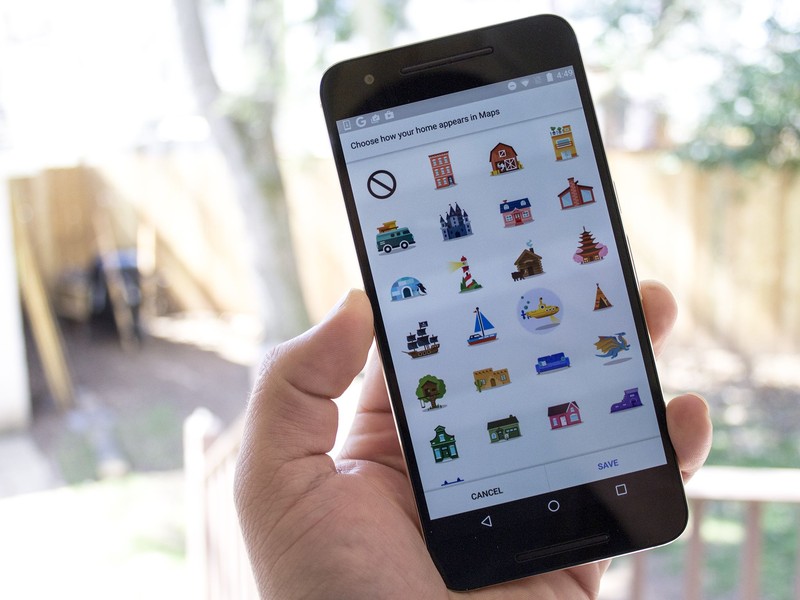
Google Maps users have new options for navigating their way to their destinations. Google is adding colorful stickers that can be used to label and save addresses on the Maps app, such as home and work locations.
The stickers themselves include representations of regular houses or buildings, but there are also more esoteric choices such as igloos, treehouses and even submarines. Google says:
To save home and work addresses and other destinations, just make sure you’re signed into your Google account. Then visit the Your Places tab or type an address, then label it. Once setup, you can just type “home”, “work” or “gym” in the search bar to get directions and navigate quickly and easily from wherever you are.
You can download Google Maps right now from the Google Play Store.

 AIVAnet