


Boost Mobile offers big savings if T-Mobile, AT&T and Verizon customers switch

Boost Mobile, the no-contract carrier that’s owned by Sprint, is offering a new promotion for T-Mobile, AT&T and Verizon customers. Boost Mobile says it can offer savings of up to 50% for those customers if they switch over to the carrier.
Boost Mobile adds:
For a limited time, customers who ditch T-Mobile, AT&T or Verizon for Boost Mobile family plans will get 10GB of high-speed data per line. Plans start at two lines for only $60 a month. In addition to offering high-speed, data-packed family plans, Boost Mobile also will provide a free phone or $50 instant device discount for every line a customer brings over from T-Mobile, AT&T and Verizon. Available for a limited time in participating Boost retail stores, new customers can get up to four free smartphones when activating a family plan.
The promotion that offers the 10GB high-speed data per line will run until April 5.
Source: Boost Mobile

These are the top LG smartphones you need to know

Let’s be completely honest here — LG’s generally known as the other South Korean smartphone company. But if that’s all you think about LG, you’re sorely missing out, as it’s been making really good smartphones that too often fly under the radar. That’s not to say we haven’t seen LG make inroads in the past few years. Google chose it for the Nexus 4 and 5, as well as the new Nexus 5X, and the LG G2 in 2013 marked the start of a new class of flagship device.
LG’s also known for making more than a few forgettable low-end phones. But these, here, truly are the LG smartphones you need to be acquainted with.
Article updated March 2016
LG G5

Pre-orders starting March 2016: The LG G5 arrived earlier in the year than previous G-series phones, making its grand debut at MWC 2016. It also marks yet another new direction for LG, with the G5 taking buttons off the back of the phone and introducing an all new, slightly crazy, modular design.
For the most part the G5 is what you’d expect of an early-2016 flagship product: Snapdragon 820 processor, 5.3-inch QHD display, 32GB internal storage and 4GB of RAM. The cameras aren’t what you’d expect, though, with two of them on the back combining to take genuine wide angle shots if you so wish.
But the modules are one of the highlights: the whole bottom chin of the G5 comes away and can be replaced. Options announced so far include a Bang & Olufsen enhanced-audio module or one with an extended battery and camera controls. It’s an interesting idea that we still don’t know a lot about, but the G5 will certainly grab your attention.
It’s set to go on pre-order from mid-March 2016.
- More: Hands-on with the LG G5
- Discuss the LG G5 in our forums
LG V10

Released October 2015: The V10 represents the beginning of a new range in LGs ever growing smartphone portfolio. While there are elements of the G line present in the overall design, the V10 is something entirely new. It’s big, it’s well-made and it’s got some fantastic camera stuff going on with some incredibly useful manual controls.
One thing that also can’t go unnoticed about the V10 is that second display up top. LG isn’t the first to try adding a second display to the front of a phone (remember than Samsung monstrosity from back in the day?) but to pass it off as just a gimmick would be selling it short. You can customize what goes there, for example, and it’s supposed to be useful. But it also makes the phone even taller.
- More: LG V10 review
- Discuss this phone in our forums
Buy the LG V10 at Amazon
LG G4

Released May 2015: LG’s 2015 top-shelf phone is a pretty good one. It packs a quad-HD display, a specially designed Snapdragon 808 processor, and one of the best cameras you can get in a smartphone today. Plus it’s got a removable 3000mAh battery, expandable storage, and the option for leather backs. What’s not to love, right?
The only real hangup on this phone is the software. While it’s recently been updated to Android 6.0 Marshmallow, LG’s user interface still tries too hard to do too much, and at times it gets to be a bit laggy. That’s not to say LG isn’t improving in the UI department, it’s just that it doesn’t know when to say enough is enough.
Still, the sum of the parts makes the G4 one of the best phones you can buy these days — especially if you shop around and find one at an exceptionally good price.
- Read more on the LG G4
- Discuss this phone in our forums
Buy LG G4 at Amazon
LG Nexus 5X

Released October 2015: Google went back to LG once again for the 2015 Nexus program as part of a two-pronged attack that also involved Huawei. The Nexus 5X is arguably the spiritual successor to the original Nexus 5 and presents Google’s vision in a smaller, less expensive package than the larger Nexus 6P. But it doesn’t lose out terribly on the hardware, despite being cheaper.
It has excellent the Nexus Imprint fingerprint scanner on the rear, a 12.3MP camera that takes very good photos (finally, for a Nexus) and it comes in a couple of colors to keep the kids happy. Whether you should buy it over the other Nexus is a different question, but it’s good to see LG making another one.
- More: The LG Nexus 5X review
- Discuss this phone in our forums
Buy LG Nexus 5X at Amazon Buy LG Nexus 5X at Google
LG G Flex 2

Released in March 2014: The original LG G Flex was one of the first smartphones to sport a flexible display and battery, meaning the damned thing could bend. But other than that it wasn’t all that impressive. And while the G Flex 2 had us initially excited, the reality is this phone was pretty much a dud, thanks to really aggressive throttling of the new Snapdragon 810 processor. The size has actually been scaled down to 5.5 inches, and the screen resolution increased to 1080p. It’s still flexible, meaning you can sit on it without breaking it, and drop it with a little more confidence that you’ll be able to pick it up again and it’ll still work. Part of that durability is in display’s glass as well, having been specially treated by LG. Its camera has gained some fun in the software, with the same excellent optics as the LG G3.
So while there are bits and pieces here that are worth talking about, overall the phone’s a nonstarter.
- Read more on the LG G Flex 2
- Discuss this phone in our forums
Buy the LG G Flex 2 at Amazon

Choosing when to use Google Cast on Android TV
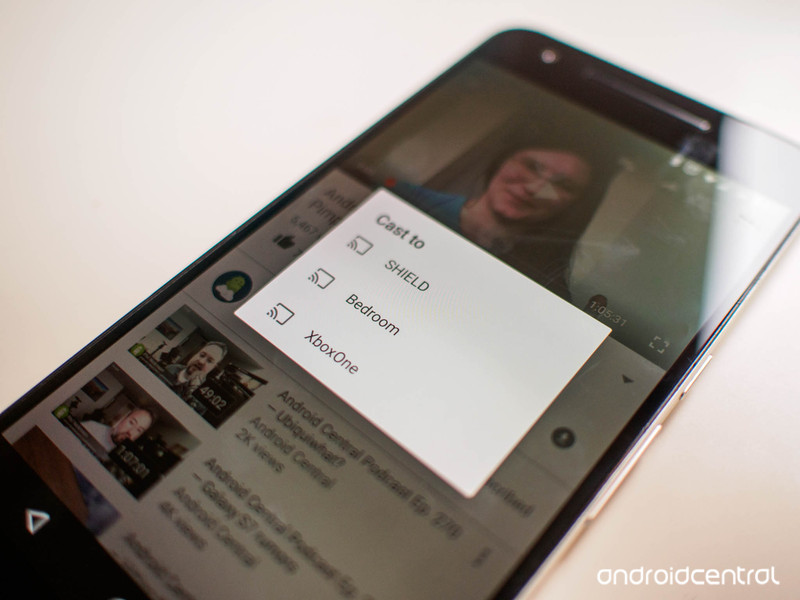
Google Cast and native app performance are rarely the same.
There are few modern streaming technologies as well-executed as Google Cast when it comes to getting a knowledgeable user from wanting to watch something to actually watching it. If you’ve got a Chromecast or Android TV box on the same wireless network, it doesn’t get much simpler for those of us with our phones always in our hands. For users who went the Android TV route for their entertainment center, there are two options for streaming just about everything. You can use the Google Cast mode from your phone, or you can open the native app on Android TV and use your controller to select the video you want to watch.
It turns out these experiences, even on high-end Android TV hardware, are not identical. Here’s what you need to know about choosing the best way to stream.
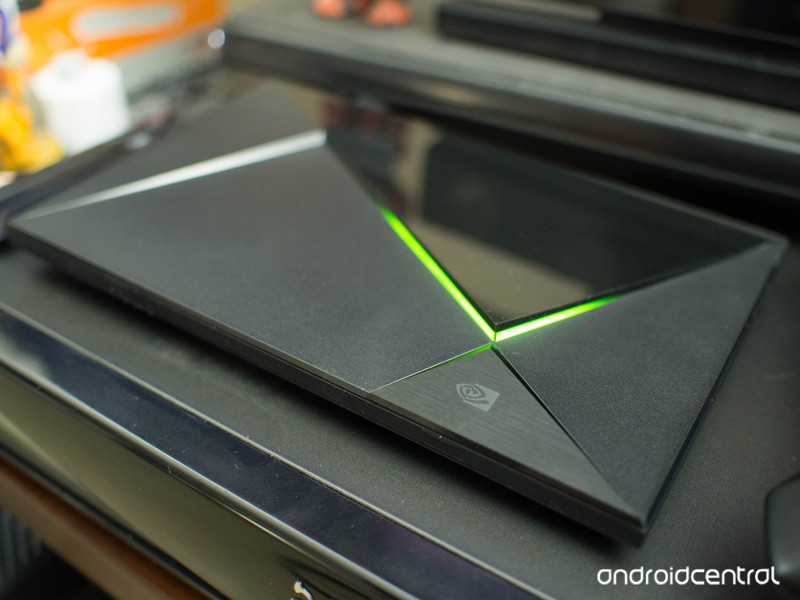
Do you want it fast? Or do you want it good?
Using Google Cast is easily the fastest way to get the video you want onto the television, but it’s not always the best if your goal is quality. For example, Netflix and YouTube over Google Cast frequently will initially opt for a lower video quality and then ramp up gradually over a couple of minutes until an optimal stream has been reached. Even on a strong network with a great connection, this process can start at a miserably low quality and take time to fix. It’s not a big deal when watching the opening music for a TV show, but on a quick YouTube video it can make a big difference in your ability to enjoy the experience.
Native apps are great for instant playback and the highest quality streams, as well as a guaranteed set of immediate controls over the interface.
On an Android TV box, where you have a choice between streaming through a native app and streaming through Google Cast, it’s easy to see the quality difference in the initial stream sequence in many apps. Assuming you have an adequate network connection, a native app on Android TV will start streaming faster and at a noticeably higher quality when compared to Google Cast on the same piece of hardware. The video almost always normalizes after about 30 seconds, unless of course you’re using a Shield TV and the option to stream in 4K is both available and useful to you. Right now that’s not the case for everyone, there are still some noticeable differences in initial performance.
Another issue to keep in mind when using both streaming mechanisms on Android TV is dealing with a Google Cast app that has disconnected on the control phone. It’s a frequent issue that affects many Google Cast-ready apps, but a minor issue overall. The cast controls disappear from your notification tray, and you have to reconnect through the cast icon in the app to regain those controls. It’s the sort of thing that occasionally makes quickly pausing a video somewhat complicated, and for parents of small children that could be the thing that sends you back to using a controller and native apps when you know you’re going to need instant control over whatever it is you are watching.
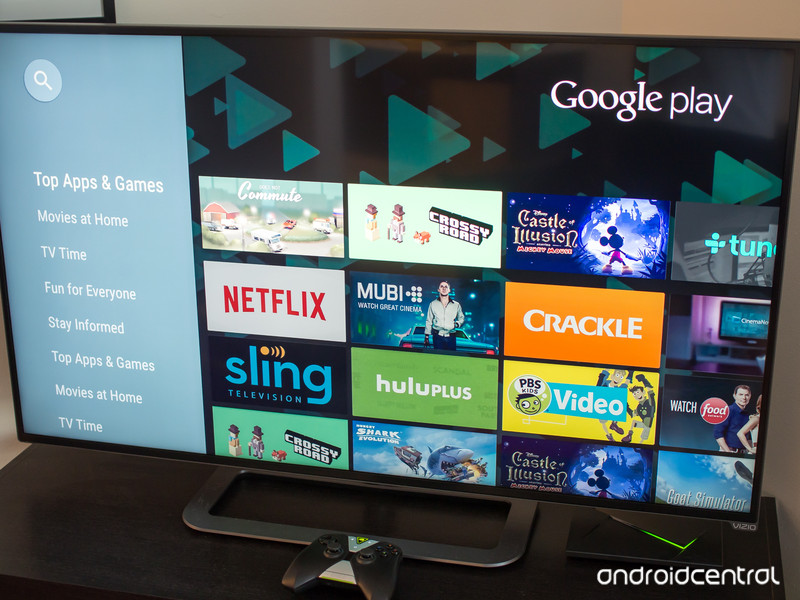
There’s obviously no right or wrong way to stream your videos, but it helps to know which mechanism is going to give you the experience you want. Native apps are great for instant playback and the highest quality streams, as well as a guaranteed set of immediate controls over the interface. Google Cast is without a doubt the most convenient way to put all of your content in one place and make putting that content on your TV an effortless exercise. Now that you know, choosing between the two isn’t as strange as it sounds.
Chromecast and Chromecast Audio
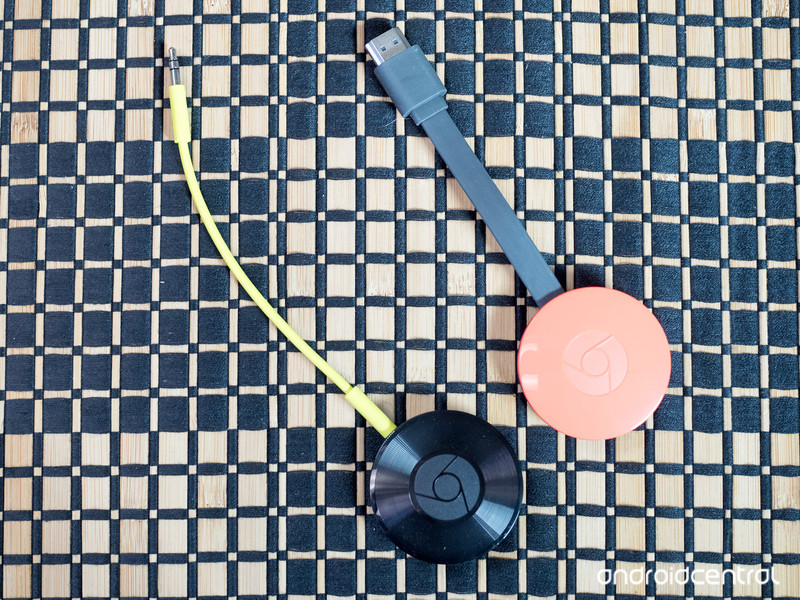
- New Chromecast and Chromecast Audio review
- All the latest Chomecast news
- Join the discussion in our forums
Chromecast:
Google Walmart Best Buy Currys UK
Chromecast Audio:
Google Walmart Best Buy Currys UK

Samsung Galaxy S7 edge preview: The best smartphone Samsung has ever made?
There was a lot of hype surrounding the Samsung Galaxy S7 edge long before it was unveiled at Mobile World Congress in Barcelona, and even more since, but it’s not until you hold the Samsung Galaxy S7 edge in your hand that you really get what the fuss is all about.
Its Quad HD display is considerably larger than last year’s model, at 5.5-inches, but it feels like a conventionally-sized smartphone rather than a behemoth like the iPhone 6s Plus or the Galaxy S6 edge+. And Samsung’s softening of the edges on the, ahem, edge has paid off.
Samsung Galaxy S7 edge design
The Galaxy S7 edge is smooth and premium to the touch. The curved rear matches the screen this time out and that gets away from the stark, sharp and angular edges of last year’s model. It is, in all respects, a better phone.
Some will instantly see this as Samsung’s “S” year, with the S7 edge and standard S7 looking like evolutionary models rather than revolutionary, but the edge feels different in the hand.
READ: Samsung Galaxy S7 preview: Premium for the traditionalists
It also has a number of key differences in feature set and the user experience.
Pocket-lint
The phone is water and dust proof, with IP68 certification. That means it can withstand a dunking to a depth of 1.5 metres for up to 30 minutes. It doesn’t even need a stopper for the Micro-USB port to seal it.
The other physical alteration over the Galaxy S6 edge is that Samsung has reintroduced external storage. This is through a clever two-in-one SIM tray that also has a housing for a microSD card up to 128GB. The tray holds a nano SIM and microSD card, so tucks them both away in the same slot.
It’s worth noting though that while microSD storage has been brought back, Samsung will not be utilising Android Marshmallow’s flex/adoptable storage. The company has decided it would prefer to offer its customers the ability to transfer data and files between devices, phones and computers, and that is at odds with the Google tech.
Samsung Galaxy S7 edge camera
A welcome improvement comes in the form of the rear camera. The sensor actually has less megapixels than on the SGS6 edge, with 12-megapixels instead of 16. But that’s because each pixel on the sensor is larger this time, with 1.4um pixels over 1.2um. The aperture is also larger – at f1.7 – so more light can be read by the sensor than before.
Pocket-lint
This improves low light performance dramatically, with far less noise on an image taken in almost no light at all – which we saw in a pre-brief demo.
Samsung also adopts dual pixel technology for the sensor, with is more common in dedicated cameras and DSLRs. Its purpose is to speed up autofocus abilities, which we also saw in effect during the demo. Where the camera on an SGS6 edge took a while to make an image clear as it automatically focused, the one on the SGS7 edge did so almost immediately.
The final element of the camera that has been altered is that it protrudes less from the rear of the device this time – sticking out by just 0.46mm.
The phone itself has a number of key software features that are new.
Samsung Galaxy S7 edge always-on display
It has a new always-on talent whereby the screen will show a chosen function without you having to turn the device on. That can be the time, date, a calendar, notification, or just a personalised piece of funky art.
Samsung claims that people can often glance at their phone for 80 times or more each day, and generally just to find out a simple piece of information, such as the time or date. The always-on feature – which can be changed or even switched off entirely – means that they won’t waste much battery life when doing so. It takes up, we were told, around 1 per cent of the battery each hour to leave the function showing on the Super AMOLED screen.
Pocket-lint
Samsung Galaxy S7 edge specs: Battery and processor
Speaking of the battery, it has even more rapid charging functionality than its predecessor, is 3,600mAh – capable of viewing up to 13 straight hours of HD video – and supports both wired and wireless charging.
Battery use is also optimised thanks to the new processor, we were told, although we’re yet to test that in the real world. What’s more, it could depend on which model you get as there will be two, each with a different processor depending on region.
The UK and Europe gets Samsung’s own Exynos 8 Octa. That’s an octa-core (2.3GHz quad, 1.6GHz quad) 64-bit, 14nm processor, with super fast LTE speeds.
Samsung claims that the CPU is 30 per cent faster than the processor in the Galaxy S6 edge, while the GPU is a whopping 64 per cent faster.
The other model, which we understand to be heading elsewhere, including the US, will sport a quad-core 64-bit Qualcomm Snapdragon 820 processor. It also has a boosted GPU and a faster X12 moden for LTE speeds of up to 600Mbps, much like the Exynos SoC.
The latter model will feature Qualcomm’s QuickCharge 3.0 technology but both have new, faster wired and wireless charging capabilities.
Samsung Galaxy S7 edge Game Launcher
The GPU on both versions is of particular note because one of the other main new features of the phone that Samsung is keen to promote is its gaming prowess. Indeed, there is a new Game Launcher app that comes pre-installed, which can be tailored to suit gamers’ needs.
Not only can it make all games easier to access from the same hub, it offers additional tools that can be pulled up during a game to enhance the experience. This includes the ability to record gameplay, with a picture-in-picture overlay of the player gurning and talking through it. Screengrabs can be shot and instantly shared. And there are also options to make sure a gaming session is not interrupted by a phone call or the like.
Pocket-lint
The frame rates of games can also be altered to save on battery life. Running a game at 60fps and in full mode will use up the most amount of battery, but dropping the graphical spec and the frame rate to 30fps will be less draining.
Samsung has also added a mini heat sink in the phone, with water cooling, in order to better manage overheating while gaming.
It’s an interesting focus as more and more of us game on the move.
Samsung Galaxy S7 edge sidebar
The Galaxy S7 edge also has more options for the use of its edge sidebar. As well as the contact list that the last model gave access to, the information bar can now be much wider and used by third-parties to deliver new experiences or information. For example, it made for a nice news feed during our demonstration.
Pocket-lint
The edge bar can also be used to store favourite apps or links to pull up quickly (through a left to right swipe). We’re still not entirely sure it justifies the curved display any, but it’s a nice, speedy operation that aids navigation.
In fact, the entire experience, layered on top of Android 6.0, is speedy and nice to use – at least in the 15 minutes we spent with the phone.
Samsung Galaxy S7 edge: Samsung Pay and security
Samsung explained to us that the phone will be Samsung Pay enabled as soon as the service launches in the UK. It has been incredibly successful in the US so far and we understand it will be available here soon, but there isn’t a set date as yet.
Samsung Knox is also on the phone, which will be of particular interest to business users.
First Impressions
It will become more clear when we get a chance to test the Samsung Galaxy S7 edge more fully for an in-depth review, but it definitely feels like a step up from the last model.
The camera is better in low light – one of the most important aspects for smartphone photography considering they get whipped out at parties, etc. And the additional software features seem to be useful rather than tacked on.
Waterproofing will be important to some, while the addition of microSD storage expansion will be very well received indeed – albeit without the adoptable storage feature of Marshmallow.
However, it is the general physical aesthetic of the phone that will impress initially, especially with that bigger screen yet pocket-friendly sizing. This is a flagship phone that could very well be worthy of that position.
Amazon is making a KKK movie led by Joseph Gordon-Levitt
Amazon’s push for original content has seen it expand beyond TV shows and into movies. The company plans to release 12 films a year, which has caught the attention of some of Hollywood’s biggest talents, including Spike Lee and Woody Allen. The Hollywood Reporter reports that for its next project, Amazon has signed Inception and Looper actor Joseph Gordon-Levitt, who will potentially produce and star in a new movie charting the rise of the Ku Klux Klan.
The film is period drama titled K Troop, which is set in the post-Civil War period and tells the story of the eponymous elite US Army group tasked with eliminating the white supremacist group in the 1870s. It’s reported that Levitt will play Major Lewis Merrill, the leader of the division, who built “a sprawling network of informants, including a number of local African-Americans, who risked their lives to piece together the secretive workings of the KKK.”
The movie comes after Nat Turner biopic Birth of a Nation wowed audiences at Sundance last month, inspiring a bidding war between Fox and Netflix (Fox eventually won, signing a record $17.5 million distribution deal). The Ku Klux Klan has also recently made the headlines following remarks from presidential candidate Donald Trump. The project is still in search of a screenwriter, so there’s no word yet on when the film will be released.
Via: The Verge
Source: The Hollywood Reporter
The 21st-century charity that puts Google and VR to good use
How do you get people to care about the world’s problems? More important, how do you get them to care enough to take action? Some nonprofits, like the ASPCA, are fortunate enough to have the perfect mix of cute animals in distress and a sappy Sarah McLachlan song to get the tears running and the donations flowing. But what if your charity lacks the glamour of a pop icon and the heartstrings pull of a wounded puppy? What if your charity’s cause is as mundane as bringing clean water to those who don’t have it? In a world where we have the luxury of opting for a $3 bottle of Fiji Water over Pellegrino, how do you drive home the point that some people have no other choice but to drink water infested with leeches? For an organization like Charity: Water, the answer to that question was a technological one: Take people to the Third World in a virtual reality documentary and show them how their dollars are being spent with real-time data from a Google-funded water sensor.
Founded in 2006, Charity: Water has unconventional roots to match its unconventional fundraising methods. It’s the brainchild of Scott Harrison, a former New York nightclub promoter who, in the early aughts, traded in his luxe partying lifestyle for a volunteer stint in Africa. Since its inception, Charity: Water has raised over $200 million for clean-water projects in 24 countries, the majority of which are concentrated in Africa.
It’s a cause with considerable gravitas. According to recent numbers provided by the World Health Organization, 663 million people around the world rely on unclean sources of drinking water. What’s more sobering is the fatality rate: Of the 1.6 million people who die from diarrheal disease as a result of this water, about 90 percent are children under the age of five. To date, the nonprofit claims to have brought potable water to five million–plus people through 17,000 donor-funded projects. These range from the installation of wells (both hand-dug and drilled) to piped systems, latrines and filtration systems.
For the organization’s chief global water officer, Christoph Gorder, the cause is a personal one. The son of Lutheran missionaries, he was raised until the age of 18 in Nigeria and the Central African Republic, where he experienced, firsthand, life without sanitary water. “We had a hand-dug well in my backyard, and dirty water was just a fact of life,” he says. It was this experience that led Gorder to seek a career in nonprofits and, eventually, a role at Charity: Water, where he’s tasked with figuring out the logistics of upcoming projects and the technologies used to implement them.
“As we were growing up as an organization … one of the challenges that we realized the industry faces was that after you build a water project and you train the local community on how to maintain it, there was very little information available on what happened afterwards,” says Gorder. “How long did it work? How much clean water did it provide? What was the impact on people’s lives?”
That line of thinking, and that need for accountability, stems from the organization’s commitment to transparency. It’s an ethos the young, attractive and well-groomed staff is quick to highlight, whether that’s through its pledge to “prove every completed water project on Google Maps with photos and GPS coordinates,” funneling 100 percent of public donations to field projects or hiring a data scientist to make its fundraising efforts more efficient.
It’s also what led Charity: Water to win a $5 million “Impact Award” grant from Google.org in 2012 to develop and deploy a hand-pump sensor that would monitor and relay data on water flow. As Gorder explains, not only is this useful as a tool to ensure the pumps remain operational, but it can also help speed up response times for repairs.
“These villages are so far away that when their well breaks sometimes, it can be days, weeks, months before they get it fixed,” he says. “And that’s a huge opportunity for us and for all those people.”
For now, only the Charity: Water team and its local project partners can access the sensor data, through a software interface called Dispatch Monitor. But eventually the plan is to make that information available to donors as well, although it’s not yet clear how Charity: Water intends to package it. There is talk of building an app, but first the initial batch of sensors must be fully deployed.
Since the project’s official launch last November, 1,000 of a planned 3,500 sensors have been installed on Afridev hand pumps — the most common pump in Africa, according to Gorder — in rural communities in Ethiopia. Of that number, 700 are actively transmitting hourly water-flow data to the cloud, thanks to an embedded virtual SIM card and “pre-existing roaming agreements with every telecom company in the world.” The other 300 sensors are located in areas with no cell service, a circumstance Gorder says is hard for Charity: Water to plan around. Though the team does conduct surveys via mobile phones to determine a community’s walking distance to a clean-water source before installing a well, there’s still an element of chance in determining wireless coverage.
“We’ll need to move those. We installed them without knowing whether there’s coverage there or not,” says Gorder of the hit-or-miss sensor deployment. The problem stems mainly from unreliable testing conditions in Africa. Anything from a temporarily offline cell tower to unfavorable atmospheric conditions can affect sensor transmission. Then there’s the possibility that cell coverage, which is rapidly growing on the continent, could expand in these very remote locations. Which is why some of these offline sensors may wind up staying put.
Though it’s the product of three years’ work, Charity: Water’s sensor, a massive chunk of black plastic, is visually unremarkable, and that’s by design — the less visually interesting the sensor, the less likely it is to be tampered with. It’s food-grade, meaning it won’t contaminate the water as it passes through, and it’s super-durable — as in bombproof. “You could drive a truck over it and nothing would happen,” says Gorder. The sensor also houses a lithium battery rated to last 12 years. There were plans to adopt a solar-powered solution, but ultimately the team opted for an internal battery, as it was deemed more reliable.
“There’s a precedent for a marketplace to be created out of an open-source technology, which may be one avenue for the sensors.”
Christoph Gorder, Charity: Water
The sensor design and firmware are open source, so anyone interested can visit Charity: Water’s site and download the schematics. And as the team completes further iterations of the sensor’s designs, Gorder says that those, too, will be made freely available. How the project will proceed once the funds run out, however, is unclear. Gorder says he’s exploring two options. One would be mostly a continuation of Charity: Water’s current model — namely, donor contributions. The other would see an outside firm take over the fabrication and deployment of the sensors, and even potentially commercialize it.
To Gorder’s point, the Afridev pump, created in the 1980s as part of a collaboration between the Malawi government, UNICEF, the World Bank and the United Nations Development Program, is public domain, so anyone can access the designs and manufacture them. Today, the majority of these are manufactured in Pakistan and India. “There’s a precedent there for a marketplace to be created out of an open-source technology, which may be one avenue for the sensors,” he says.
While Charity: Water’s sensor project is a nice incentive for donors who’ve already contributed and want to check on the progress of the wells they’ve helped fund, it lacks a certain emotional immediacy. Which is why the team has another technological ace up its sleeve that’s sure to increase donations: a VR documentary entitled The Source.
A lot of fuss is made, by technologists, artists and the tech press, about virtual reality’s potential as an empathy generator. Namely, that by virtue of transporting you to another environment and putting you within somebody else’s shoes, you can actually “feel” what life is like outside of your own head. Whether that’s following a tribe of nomads in Africa or experiencing both perspectives of date rape, the medium has extreme potential to effect change. And to Charity: Water’s credit, The Source is perhaps the best representation to date of that transformative power.
“We had a donor come into the office and we showed him the film. And after taking [the headset] off, he gave a substantial amount of money we weren’t expecting.”
Melissa Burmester, Charity: Water
Filmed on location in Ethiopia last May, The Source has a simple story arc: It’s a before-and-after look at the effect Charity: Water’s efforts have on local communities when a clean-water well is installed. It follows Salam, a 13-year-old girl who goes about her daily life. As a voice-over (done by an English-speaking Ethiopian girl) narrates each scene, we see her collecting leech-infested water from the same reservoir where animals drink and bathe. We see her taking care of her brothers and sisters in the bare-bones hut they call home. We see her eagerly participating at school. We see the drilling rig and crew arrive. And most crucially, we witness the powerful moment when the drill hits water and she and her community get their first taste of clean drinking water.
“We had a donor come into the office who’s already given to us and we showed him the film,” says Melissa Burmester, the VR doc’s director of production. “And after taking [the headset] off, he gave a substantial amount of money that we weren’t expecting. So just little pieces like that continue to reinforce that this is a tool. And it is evoking that response from people that’s causing them to take action, which is the most important part.”
For Burmester, The Source served as a kind of crash course in VR filmmaking; she’d had no prior interest in the medium. As she tells it, Harrison was inspired after seeing Clouds over Sidra, a VR doc that follows a 12-year-old Syrian refugee living in Jordan. “When Scott brought it up, we all looked at him like he was a little bit crazy,” she says of that initial pitch meeting.
Given that Clouds over Sidra, a collaboration between VR studio Vrse and the United Nations, was the impetus for Charity: Water’s own project, Burmester turned to the studio for guidance.
“We had about two days chatting with Vrse, and that was really just pulling together the camera rig,” she says.
But despite Vrse’s expertise in the field, Harrison opted to send an inexperienced crew of four, including Burmester, to Ethiopia for the shoot. His thinking, Burmester explains, was that their passion for the project would surmount any production difficulties they might encounter and translate into authenticity.
“We didn’t want to go in and be like: ‘This is the script, and this is the story, and we’re gonna shoot around it.’ We really wanted to just let it be real, good or bad,” Burmester says.
The shoot, however, was not without its challenges. Burmester says the intense heat would cause the VR camera rig to overheat, forcing the crew to shoot for five minutes at a time and then rush to cool it with battery-powered fans. The logistics of shooting in VR also proved difficult, since the 360-degree filming meant the crew had to constantly find a place to hide. Then there was the matter of water — an integral part of The Source’s story — being hazardous to the rig. Or the potential for the abundant flies to land on a lens and obstruct a shot; or, more comically, the threat of a cow kicking the rig over.
Once filming completed in May of last year, Burmester and her editor Jamie Pent spent months learning how to “stitch” the footage, a term used to describe the blending of the various images captured by a VR rig. Much of this editing was done by trial and error (and heavy research on forums), since dedicated software hadn’t yet become available. Eventually the pair took a rough draft of the film to an outside vendor for the final bout of fine stitching.
Charity: Water debuted the final cut of The Source this past December for an audience of about 400 donors during its annual gala at the Metropolitan Museum of Art. “It was just this flood of emotion that swept the crowd,” says Burmester of the pivotal moment when the drill strikes water in the film. “And it was probably the most rewarding experience I’ve had.”
Harrison even flew to Ethiopia to screen the film for its star, Salam, and her family. It’s a moment the team captured on film.
“When she takes off the headset, she’s got these giant eyes,” Burmester says.
Beyond those private showings, Charity: Water plans to make The Source available for wide release as a free download on the Vrse application, as both a dedicated VR download and 360 video. It’ll also be accessible on Samsung’s Milk VR app, though the team is working on a few bug fixes first.
And it might not be the last VR doc the nonprofit produces. Internal conversations are ongoing to explore more projects, but nothing’s been decided yet. Regardless, she says the team remains enthusiastic about the medium and its humanitarian potential.
“It’s about empathy and sharing good rather than some of the skepticism of people thinking about how VR could possibly be used for bad.”
Image credits: Charity: Water
‘Ghostbusters’ reboot trailer is here
Prime your proton packs, because it’s not long now before the Ghostbusters reboot haunts theaters worldwide. We’ve already seen a few promo photos and set shots from the film, but today we’ve got our first honest-to-goodness trailer. And oh boy, does it have us intrigued. The new supernatural-ass-kicking squad stars Melissa McCarthy, Kristen Wiig, Kate McKinnon and Leslie Jones, all with distinct skills and personalities. The new teaser runs for about two and a half minutes and features plenty of ghouls and other Ghostbuster staples, such as the iconic uniforms, the Ecto-1, and the classic theme tune. July 15th can’t come soon enough.
Source: Ghostbusters (YouTube)
Medium is working on paying its contributors
Getting paid to write is hard, a situation that’s not helped by so many places asking you to work for free. Medium CEO Ev Williams has let slip that he’s working on a way for his service to enable writers and publishers to get paid. In an interview with BBC News, Williams revealed that his team was “just starting to work on that now, actually.” He added that a monetization feature is being built “right now” and will be available before the end of the financial quarter.
Williams doesn’t seem too worried at the thought that a morass of banner adverts would ruin Medium’s minimalistic, text-heavy layout. When asked, he said “there are ways to [advertise] that are respectful of user experience and privacy.” The Twitter co-founder also said that he saw a lot of potential in “premium, subscription or user-paid content,” conjuring up images of a tip jar on each page or a Netflix-like model. That would put it on an equal footing with sites like the New York Times, which keeps the bulk of its reporting behind a paywall.
Medium has established itself as a modern-day replacement for Blogger, at lest for the rarified technology crowd. It’s become the de-facto soapbox for CEOs to espouse their philosophies, as well as giving disgruntled employees a space to blow the whistle. That’s going to change soon enough since the site is going to become the new home for Bill Simmons’ follow-up to the much-loved Grantland. The Ringer will be the first “premium content” website to use Medium’s technology and it’s likely that Simmons and his team will want to be paid. Hopefully, it means that everyone else can be, too.
Via: The Next Web
Source: BBC News, (2)
American Apparel Launching Apple Pay in U.S. Stores
Index has announced that it is upgrading clothing retailer American Apparel’s point-of-sale systems to enable Apple Pay, Android Pay, and other NFC-based mobile payment services at its U.S. stores. The new systems will also include point-to-point encryption (P2PE) and EMV for Chip-and-Signature or Chip-and-PIN cards.
American Apparel, based in Los Angeles, California, is a popular wholesale provider of basic t-shirts and other clothing. As of September 2015, the company operated 227 retail stores in 19 countries, although many of its sales occur online. The retailer exited Chapter 11 bankruptcy in February 2016 with an approved restructuring plan.
American Apparel joins several other popular U.S. brands that have or will adopt Apple Pay by the end of 2016, including Crate & Barrel, Chick-fil-A, Au Bon Pain, Cinnabon, Chili’s, Domino’s, KFC, and Starbucks. Apple Pay is now available at more than 2 million retail locations in the U.S., U.K., Australia, Canada, and China.
Earlier this week, an unconfirmed leaked document revealed MasterCard’s plans to support Apple Pay in Canada, Brazil, Hong Kong, Japan, and Singapore in 2016. Apple previously announced that it will launch Apple Pay in Hong Kong, Singapore, and Spain this year in partnership with American Express.
Related Roundup: Apple Pay
Tag: American Apparel
Discuss this article in our forums
Amazon Expands Echo Family With ‘Amazon Tap’ and ‘Echo Dot’
After launching the Echo over a year ago, today Amazon announced two new additions to the lineup of voice-controlled smart hubs that house the company’s personal assistant Alexa. Users will now be able to purchase a more portable version of Echo with Amazon Tap, and even expand the device’s power into other rooms with Echo Dot.
The $130 Amazon Tap is a more rugged, pick-up-and-go alternative to the original Echo, housing built-in Wi-Fi, Bluetooth, and the company’s Alexa operating system. Instead of interacting with Alexa through always-on functionality, Amazon Tap requires users to tap the microphone button on the front of the speaker to access the service’s voice commands. If connected to Wi-Fi or a mobile hotspot, users will be able to gain access to all of the normal, cloud-based features the Echo grants at home.
Amazon Tap
TechCrunch got a brief hands-on demo of Amazon Tap and came away largely satisfied with its sound quality and battery life:
Amazon demonstrated the sound quality to me before Tap went out today and I can say it did provide an impressive musical experience. Duel-firing Dolby speakers enable Tap to provide rich, 360-degree quality sound.
It’s also meant to tote around and comes with a pretty solid battery life for that purpose. A fully charged Tap will last for up to nine hours of playback or three weeks in standby mode.
Alternatively, Amazon also has created a new household expansion to Echo with Echo Dot. The small, palm-sized device will let users expand the capabilities of Echo to different rooms of their house for $90, or half of Echo’s $180 price tag. Like the flagship Echo product, Echo Dot uses far-field voice recognition to respond to the inquiries of its user while simultaneously being able to detect commands specified towards it over other the din of a room.
 Echo Dot
Echo Dot still may run into issues if it’s asked to perform actions in a separate room, and having two Echo devices in the same location may also cause problems. “Dot is meant for one area at a time,” according to Amazon.
No specific launch date was given for Amazon Tap or Echo Dot, but the company is attempting an interesting release plan for the latter device: users will only be able to buy the $90 Echo Dot from an Echo itself or Amazon Fire TV. The $130 Amazon Tap will be available through the company’s traditional online marketplace.
Tags: Amazon, Amazon Echo
Discuss this article in our forums

