


Google patents AR-based pop-up books
Google has filed a pair of patents with the USPTO that aim to reinvent how we interact with printed media. The first patent is for an “Interactive Book” with motion and pressure sensors embedded within its pages. The sensors would launch visual assets via augmented reality whenever the reader activates them, say, by turning a page. The user wouldn’t need actual AR glasses; instead a small device seated on the book’s spine would project the visuals onto the pages. An embedded speaker would further enhance the onpage action.
Google’s second patent is for the Interactive Book’s spiritual predecessor, the “Media Enhanced Pop-up Book.” Rather than using a micro-projector, the MEPB leverages a phone or tablet to deliver added content. Every page of this book has a secondary, digital page that “opens” vertically on the mobile device. Of course, as with all patents, there is absolutely no guarantee these will actually become real products — or even prototypes, for that matter.
Having multiple online identities is more normal than you think
A few months ago during a family reunion, my husband wanted to show visiting relatives photos of our home renovation. He brought up my Instagram feed on his laptop and started showing family members photos I took of the house. I bristled instantly. Right next to the photos of my kitchen and bathroom were selfies. Lots of selfies. Selfies showing off my makeup, selfies of what I wore, selfies of me in my new glasses. There were also photos of food, my cat and my shoes. Out of the context of an Instagram feed, I came off as narcissistic; self-centered. I was embarrassed.
Though my Instagram account is public, it isn’t meant for my family to see. I felt a little shy admitting this at the time, but I compartmentalize and curate my social media life to an exacting degree. For me, Instagram is for friends and people who know me through the internet. Facebook is for keeping in touch with family and friends, and even then I put co-workers and family members in different groups. Twitter is where I goof around and spout random thoughts on everything from politics to the weather. My audience in each case overlaps to some degree, but they’re not the same.
It’s not just that either. I also have five Twitter accounts and a couple of Instagrams. Some of them are private accounts which I share only with close friends. With some accounts, I focus on specific topics, or spoof accounts I created to make fun of something. (I created this Dupercuts account a few years ago to poke fun at Supercuts, for example.)
It might seem, at first glance, that I have multiple personality disorder. And it might seem confusing to have to juggle so many different sites. But in reality, having multiple social media accounts is pretty common.
“Actually, this was the norm for almost all of internet history,” says danah boyd, a social media researcher for Microsoft Research (she prefers her name to be written in lowercase). She’s also the author of the book It’s Complicated: The Social Lives of Networked Teens, where she explores the way social media affects how teens communicate. The idea of just using Facebook as your primary online identity is actually the exception, she says, not the norm. Even back in the heydays of Usenet and IRC, having multiple identities was something a lot of people did.
“I interviewed a young person last week who was very clear about the need for multiple profiles,” boyd continued. “She used Tumblr to share all sorts of political feminist images with people who cared about that, Instagram to share photos with her classmates, Facebook to interact with everyone she’s ever met, and texting to talk with her closest friends and family.”
“Different sites, different audiences, different purposes.” she said. “Very simple.”
Mallory Johns, our social media editor, shares the same sentiments. She says that the different social accounts reflect different parts of her persona. “Instagram is where everything appears to be perfect and highly filtered, whereas my Snapchat is raw and more visceral,” she said. She even went so far as to create a separate Instagram account just to show off her addiction to french fries. “I thought my friends would get sick of all my food pics.” The same goes for her multiple Tumblr accounts: One is personal, another is a music practice journal, and yet another is for collecting advertising jargon.
“I think it’s a pretty common thing for folks my age and younger,” she said. “For my younger friends, they’ve started making duplicate and triple (private) Instagrams for all their different personas. I also think having multiple social accounts takes the pressure off having a perfect feed of social moments.”
This ties into a relatively recent phenomenon called “finstagrams” that is fairly common with a lot of young people. The idea is that your “official” instagram has tailored photos that are posed and filtered, while your “finstagram” (short for fake instagram) is an unfiltered and uncensored look at your life. They’re usually funnier, more off-the-cuff and mostly just for close friends.
Different sites, different audiences, different purposes.
In a recent informal poll among my Twitter followers, I found that 44 percent out of 80 votes admitted to having more than one Twitter account. That’s not a lot obviously, but it’s still a lot more than I anticipated. Some used those multiple accounts often, while others used mostly one while leaving the rest dormant.
Help me out on a story: Do you have more than one Twitter account?
— Nicole Lee (@nicole) March 1, 2016
In the process of finding out who used multiple accounts, I came across a Twitter user called Ron Diggity, who has at least four other accounts. One was focused on mostly alcoholic beverages while another was about food. I asked him why he had so many, and he simply said that having just one account can lead to “messaging” getting muddled. “Someone interested in one might not be interested in others. You choose your own level of involvement.”
One particular Twitter follower who wishes to be anonymous, added this bit of insight:
“I think Mark Zuckerberg’s notion of people having a single, authentic life is total and utter bullshit. People have diverse, rich lives that aren’t contained within a single idea and personae. The life I lead in front of my family members is not the life I lead when I’m with my friends, which isn’t the life I lead with the people I engage with online.”
People have diverse, rich lives that aren’t contained within a single idea and personae.
All of which to say, that this multiple online identity phenomenon is indicative of how multi-faceted human beings are. To have us all be confined to just a single account, or a single all-in-one persona is confining.
“Think of it this way: would you invite everyone you’ve ever met to your birthday party?,” boyd said. “To your office? To your wedding? Different events involve different segments of your network and involve different protocols and behaviors. The same is true online.”
Play Cupid on Tinder by sharing profiles with your friends
Tinder is slowly rolling out the option to share other people’s profiles with friends via text messaging. A small number of users will spot a “share” icon under some profiles — tapping it lets you send a temporary link to that profile via text. The links expire after 72 hours or five clicks, and the person who receives it can then swipe right on the profile as he or she sees fit.
There is, of course, an option to keep your profile un-sharable; find that in the app’s Discovery Settings.
Ostensibly, this is all so you can show your friends people they might be into, though surely it’ll be used to gossip about all of the surprising folks you see on Tinder — like Lindsey Lohan, Katy Perry or Ashton Kutcher, for example. That said, this may be a good time for people who shouldn’t be on Tinder to update their privacy settings (or delete the app for good, you right-swiping scoundrels).
Source: Tinder
Bumble now lets you find a new BFF
Bumble, the dating app from former Tinder CEO Whitney Wolfe where women make the first move, has launched a new service that will allow users to find a friend as easily as they find romance. The new BFF mode works just like the existing dating UI — save that potential love-interests are replaced with potential friends of the same sex as the user. If both parties swipe right, then they can initiate a conversation with each other. The system will differentiate conversations by color: green for your new bestie, yellow for your new hot date. Bumble has also confirmed to Engadget that “for Bumble BFF, women see women and men see men. We approach every new product feature with safety in mind and we did not want people gamifying the system.”
Source: TechCrunch
MacRumors Giveaway: Win a PowerShadow iPhone Battery Case from Spyder
For this week’s giveaway, we’ve teamed up with Spyder to give three MacRumors winners a chance to win a PowerShadow battery case for the iPhone 6, 6s, 6 Plus, or 6s Plus.
Described as the “world’s thinnest” battery case for Apple’s latest iPhones, the $99 PowerShadow case measures in at 14.5mm thick and includes a 2,750 mAh battery for the iPhone 6/6s version and a 3,500 mAh battery for the iPhone 6/6s Plus version.
In addition to adding extra battery life to an iPhone, the PowerShadow case is made of rubber-coated impact-resistant carbonate to protect the device from drops and it improves water resistance with a unibody design and port plugs. It also has built-in antimicrobial protection and a lip around the edge protects the iPhone’s screen when placed face down.

The PowerShadow case charges through micro-USB, but with an optional PowerShadow Dock ($49.99) the iPhone and the case can be charged at the same time without the need to remove the case from the phone.

Spyder offers the PowerShadow case for the iPhone 6/6s in Black, Titanium, Champagne, and White, while the iPhone 6/6s Plus version is available in Black and Titanium. Both cases are priced at $99, but three MacRumors readers will win a Spyder PowerShadow case at no cost.
To enter to win, use the Rafflecopter widget below and enter an email address. Email addresses will be used solely for contact purposes to reach the winner and send the prize.
You can earn additional entries by subscribing to our weekly newsletter, subscribing to our YouTube channel, following us on Twitter, or visiting the MacRumors Facebook page. Due to the complexities of international laws regarding giveaways, only U.S. residents who are 18 years of age or older are eligible to enter.
a Rafflecopter giveawayThe contest will run from today (March 4) at 11:00 a.m. Pacific Time through 11:00 a.m. Pacific Time on March 11. The winners will be chosen randomly on March 11 and will be contacted by email. The winners have 48 hours to respond and provide a shipping address before new winners are chosen. The prizes will be shipped to the winners for free.
Tags: giveaway, Spyder
Discuss this article in our forums
Stone Tower – a strangely addicting game about stacking rocks. [Review]
Overview – Stacks asymmetrical rocks as high as humanly possible. Play alone or compete against someone else to make a tower that will rend the sky. Developer: Kiraline Inc Price: Free (In-App
Always have power in your pocket with the mophie powerstation mini (review)
Over the past few years smartphone companies have been making our phones bigger and bigger and inexplicably the batteries don’t seem to change much in size. The iPhone 5s was
Five for Friday – Apps to keep your wallet happy.
Unless you’re one of the lucky few that never has to worry about money (in which case I question your motives for clicking on this article), you’re probably looking for
House of Cards Season 4 available on Netflix: Watch on your Android phone or tablet now

If you’re looking for something to do this weekend, clear your schedule because House of Cards Season 4 just hit Netflix. And since we’re pretty well catered for with Netflix apps you can get your fix pretty much wherever you are. Add in a Chromecast and you’re all set to kick back and relax and watch on the big screen.
You can of course also catch up using the Netflix web site on your computer or your Chromebook should you so wish. All 13 new episodes are available at once so grab a snack, tasty beverage and get ready to binge away. They’re around an hour each, so clear your weekend.
And let’s keep the comments a spoiler free zone, shall we.

Google Maps gets a visit from Legend of Zelda’s Link on the web
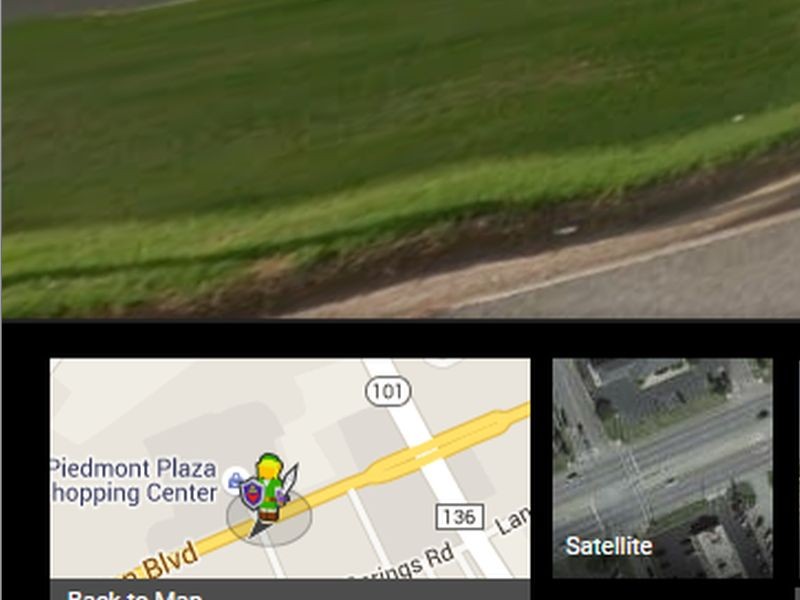
Google Maps is getting a nice Easter egg for the next few days on the web. The familiar peg icon that’s meant to move a user into Street View has been replaced with Link from Nintendo’s Legend of Zelda game series.
Link’s appearance in Google Maps is promoting the release of The Legend of Zelda: Twilight Princess HD remake on Nintendo’s Wii U console. Link even turns around when you move the street view camera 360 degrees. The official Japanese language Zelda Twitter account says that Link will stick around Google Maps for the next five days.
Check out Link on Google Maps

 AIVAnet